Sunday’s coming, and I’m excited. And on this Palm Sunday, we remember our King.
Psalm 118:19-29 gives us the language of a people longing for salvation and rejoicing in the One who brings it: “Blessed is He who comes in the name of the LORD!” (Psalm 118:26). It’s a song/psalm of victory, rescue, and the steadfast love of God that endures forever.
The people cried out “Hosanna!” to Jesus, which is the Hebrew word used in Psalm 118:25 that is translated, “Save us, we pray”. In the time between Psalm 118 being written and Jesus’s Triumphal Entry, “hosanna” had shifted from “Save us, we pray” to a cry of praise to the Lord who had saved them time and again and whose track record led them to believe He would and could save them in their time of need.
While they were crying out “Hosanna”, they also quoted Psalm 118:26: “Blessed is He who comes in the name of the Lord!” They laid down palm branches and their own cloaks as they cried out to Jesus with joy, welcoming Him as King. What Psalm 118 anticipated, Jesus was fulfilling right before their eyes (Luke 24:44).
But something even greater was happening.
Psalm 118 speaks of the festal sacrifice being bound with cords to the horns of the altar (Psalm 118:27). Yet when Jesus came, He wasn’t bound or forced. He came willingly, submitting to His Father’s redemptive plan. He is the true and better sacrifice — the Lamb of God who would take away the sin of the world (John 1:29), the propitiation, atoning sacrifice, to bear the wrath of God on behalf of those He saves (1 John 2:1-2, Romans 3:25). The King they proclaimed was riding into Jerusalem to be the Savior they needed on the cross (Luke 19:10).
Essentially, this is why we gather in worship — not just to remember or commemorate a moment but to respond to Jesus (Romans 12:1). He came to seek and save the lost, to bear our sin, and to make a way for us who are far off to be brought near (1 Peter 2:24, Ephesians 2:13). We get to fix our eyes on our King (Hebrews 12:2) and cry out “Hosanna!”, praising God for saving us by grace through faith in Jesus (Ephesians 2:8-9)! Palm Sunday is not a mere holiday (or holy day) but a reminder of who Jesus is, what He has done, and call us to faith in Him (John 20:31).
That’s also why these “Songs of Sunday” posts exist — to help us prepare our hearts to gather in worship. As we read, reflect, and sing ahead of time, we’re asking the Lord to ready our hearts to worship, to receive His Word, and to respond with faith and joy.
Sunday’s coming.
Jesus is coming again.
Let’s be ready to welcome our King, not just with our lips but with our lives, trusting, rejoicing, and worshiping.
Come and gather with us. Lift your voice and sing out to the Lord. Listen as John points us to Jesus in the Word. Let’s make much of Jesus together.
19 Open to me the gates of righteousness, that I may enter through them and give thanks to the LORD. 20 This is the gate of the LORD; the righteous shall enter through it. 21 I thank you that You have answered me and have become my salvation. 22 The stone that the builders rejected has become the Cornerstone. 23 This is the LORD’s doing; it is marvelous in our eyes. 24 This is the day that the LORD has made; let us rejoice and be glad in it.
25 Save us, we pray, O LORD! O Lord, we pray, give us success!
26 Blessed is He who comes in the name of the LORD! We bless you from the house of the LORD. 27 The LORD is God, and He has made His light to shine upon us. Bind the festal sacrifice with cords, up to the horns of the altar!
28 You are my God, and I will give thanks to You; You are my God; I will extol You. 29 Oh give thanks to the LORD, for He is good; for His steadfast love endures forever!
32 So those who were sent went away and found it just as he had told them. 33 And as they were untying the colt, its owners said to them, “Why are you untying the colt?” 34 And they said, “The Lord has need of it.” 35 And they brought it to Jesus, and throwing their cloaks on the colt, they set Jesus on it. 36 And as he rode along, they spread their cloaks on the road. 37 As he was drawing near—already on the way down the Mount of Olives—the whole multitude of his disciples began to rejoice and praise God with a loud voice for all the mighty works that they had seen, 38 saying, “Blessed is the King who comes in the name of the Lord! Peace in heaven and glory in the highest!” 39 And some of the Pharisees in the crowd said to him, “Teacher, rebuke your disciples.” 40 He answered, “I tell you, if these were silent, the very stones would cry out.”
This phase reflects contains the apostle John’s writings. His gospel and letters teach us how to walk in truth in love. Revelation closes the New Testament with a powerful vision of Jesus’s return and eternal reign.
Phase 4 is the embodiment of two passages from the end of John’s gospel, so we’ll let the Holy Spirit through John explain:
John 20:30-31 —
Now Jesus did many other signs in the presence of the disciples, which are not written in this book; but these are written so that you may believe that Jesus is the Christ, the Son of God, and that by believing you may have life in his name.
John 21:24-25 —
This is the disciple who is bearing witness about these things, and who has written these things, and we know that his testimony is true. Now there are also many other things that Jesus did. Were every one of them to be written, I suppose that the world itself could not contain the books that would be written.
These verses not only represent John’s aim when writing as he was “carried along by the Holy Spirit” (2 Peter 1:21); they represent our heart in seeking to get folks into God’s Word — “so that you may believe that Jesus is the Christ, the Son of God, and that by believing you may have life in his name (John 20:31). Our goal isn’t clicks or likes or to give ribbons for finishing a reading plan. We want to see Jesus high and lifted up. And while there are many books written about Him and “the world itself could not contain the books that would be written” (John 21:25) if every moment of His life on earth were recorded, there is no books greater than those of holy Scripture to introduce us God in flesh than the New Testament.
Let’s dig in together and finish well — let us seek and see Jesus together!
Below, you’ll find brief synopses of each book in this phase to help you understand the scope of the book and most importantly, how it fits into the full Story of the Bible.
When you click on each day’s link, you will find a link to audio, a summary of the chapter, a key verse from the chapter, and opportunities for reflection and outreach.
We’re moving into Paul’s epistles, which we’ll go through chronologically rather than in the order they appear in our Bibles.
The book of Revelation opens with these words: “The revelation of Jesus Christ” (Rev. 1:1). This is not first a book about timelines, symbols, or end-times speculation—it is an unveiling of Jesus. Through vivid imagery and powerful visions, Revelation pulls back the curtain to show what is really true: Jesus is risen, reigning, and returning. Much of its language and imagery draw from the Old Testament—especially books like Daniel, Ezekiel, and Zechariah—so that what may seem strange at first is actually deeply rooted in God’s earlier promises. Because of this, Revelation is not always meant to be read in a strictly literal or step-by-step way like other New Testament books. It is a picture-rich, symbol-heavy book meant to reveal truth, not hide it.
At the center of everything Revelation shows us is Jesus Himself. He is the Son of Man walking among His churches (1:12–13), the Lamb who was slain and yet stands victorious (5:6), the King of kings who rules over history (19:16), and the One who will make all things new (21:5). Revelation reminds us that behind the visible world is a greater reality—one where Christ has already secured the victory through His death and resurrection (Col. 2:15), and where every enemy will ultimately be defeated. No matter how chaotic things may appear, Jesus is not absent. He is reigning now, and He will return to judge evil, rescue His people, and establish His kingdom forever.
Revelation was written to real churches facing real pressure—persecution, compromise, and the temptation to give up. Like the Gospel of John, it calls us to believe—but here, that belief is strengthened in the face of suffering and uncertainty. As we read, we are not trying to decode every symbol or map out every detail. Instead, we are looking to see Jesus more clearly, trust Him more fully, and follow Him more faithfully. This book calls us to endure, to remain faithful, and to worship the One who holds all things in His hands. In the end, Revelation is not meant to confuse us, but to anchor us: Jesus wins—and all who belong to Him will share in His victory.
To help, Jamie Harrison and I (Keith) have been walking through Revelation in a series of Bible studies called The KING is Coming; check them out!
Because Revelation is unique, our daily reading helps will look a little different than the rest of NT260. Instead of only summarizing each chapter, each day will include (1) a brief overview of the chapter to help you follow the flow, and (2) a focused paragraph highlighting what that chapter reveals about Jesus. From there, we’ll continue with a key verse, a personal reflection, and a mission challenge just like the rest of the plan. The goal is not to untangle every detail, but to keep our eyes fixed on Christ—to see Him clearly in every chapter and respond in faith, worship, and obedience.
We’re back in our study of Revelation called The KING is Coming, where we’re taking a verse-by-verse approach to see what the book truly reveals—Jesus Christ Himself. As always, I’m joined by Jamie Harrison, and I’m thankful for the opportunity to walk through this study together. Today, we’ll be looking at the last of Jesus’s letters to the churches, this time turning to the church in Laodicea. This week’s passage is Revelation 3:14-22:
14 “And to the angel of the church in Laodicea write: ‘The words of the Amen, the faithful and true witness, the beginning of God’s creation.
15 “ ‘I know your works: you are neither cold nor hot. Would that you were either cold or hot! 16 So, because you are lukewarm, and neither hot nor cold, I will spit you out of my mouth. 17 For you say, “I am rich, I have prospered, and I need nothing,” not realizing that you are wretched, pitiable, poor, blind, and naked. 18 I counsel you to buy from me gold refined by fire, so that you may be rich, and white garments so that you may clothe yourself and the shame of your nakedness may not be seen, and salve to anoint your eyes, so that you may see. 19 Those whom I love, I reprove and discipline, so be zealous and repent. 20 Behold, I stand at the door and knock. If anyone hears my voice and opens the door, I will come in to him and eat with him, and he with me. 21 The one who conquers, I will grant him to sit with me on my throne, as I also conquered and sat down with my Father on his throne. 22 He who has an ear, let him hear what the Spirit says to the churches.’ ”[1]
Keith Harris: Welcome to this week’s Refresh & Restore Bible study. We are in our The King Is Coming study of the book of Revelation, and today we’re closing out the section on Jesus’s letters to the churches with what’s probably the best known of those — Jesus’s letter to the church in Laodicea.
Today, just as we have been recently, we are here with Jamie Harrison. Hey, Jamie.
Jamie Harrison: Hey Keith. Good to be here with you today doing this Bible study. I feel as though we’ve never left.
Keith: Well, sometimes it can just feel like we’ve recorded two or three of these right in a row.
Jamie: Again, it can feel just like that.
Keith: Sometimes it is that. Before we get into too much banter, let’s dive into the letter to Laodicea. What have you got for us today?
Jamie: Hopefully the Bible has stuff for us and not me.
Keith: Amen. Amen.
Jamie: So the letter to Laodicea — Laodicea, Laodicea — yes, yes — is the toughest letter of all the seven letters to the churches. With Sardis, which was a tough letter — you have Him saying, you know, Jesus says that you’re dead, right? You’re living on a reputation, but you’re dead. But He even gives them a little bit of praise where He says, “Hey, you’ve got some who are still keeping My word.” But with this letter to Laodicea, there is none of that right there. There is no praise at all.
Keith: There’s opportunity, that’s right — but no praise. And for context — we talked about this a little while ago — for context, the church in Laodicea and the church of the Colossians, thirty years prior to this, twenty years prior to this, Paul talked about them in unison. That, you know, you read this person’s letter, y’all read this one. He talked about them well. But here we are a generation or so later, and Jesus says a lot of tough stuff to them.
Jamie: And so, of course, the letter starts off just as the other ones have — with that salutation of “Write to the angel of the church in Laodicea,” which again, the angel — the pastor. And then He gives attributes of Himself. “Thus says the Amen, the faithful and true witness, the originator of God’s creation.” So you get the idea here. The Amen is certainty. Veracity. Christ has the final word, so to speak. The faithful and true witness — He is completely trustworthy. He’s a perfectly accurate witness to the truth of God, so to speak. And the originator of God’s creation — so there’s this heresy that was going on in Laodicea and Colossae that Christ was a created being. And you can look back at Colossians 1:15–19 for that.
Keith: And heresy — that’s a word that means it has been clearly established and understood to be not biblical. And it’s really and truthfully meant to be not biblical — to throw people off, right? And so I just wanted to clarify that. It’s not a word we hear often, because we live in a very permissive society where some people — even pastors — will have sort of a laissez-faire, hands-off, anything-goes attitude. Jesus especially didn’t when He came to the church at Colossae, because He corrected that, like Jamie’s about to do here.
Jamie: And so the originator of God’s creation is — I’ve been here since the beginning. I’m not a created being. I was here at the beginning. “In the beginning was the Word, and the Word was with God, and the Word was God.” And even back in Genesis — it’s “Let us make man.” It’s plural. We were here from the beginning. We created the heavens and the earth. We did those things. And so Jesus corrects this: I’ve been here from the beginning, and what I’m about to say is truth — and has always been — and it is the final word. So He jumps right into it and He says: “I know your works. You are neither cold nor hot. I wish that you were cold or hot.” So in all these letters, you’ll notice that Jesus is personal with these churches. He points out different things that would have been personal to them. Last week we talked about the church in Philadelphia and the earthquakes they had — and being called pillars, something that would not fall apart when the earthquake hits. So it’s very personal to them. And here He gets personal right off the bat. He says, “I know that you’re neither cold nor hot.” What you need to know about Laodicea is that they didn’t have a water source there. They had all of their water piped in through underground aqueducts. And as you can imagine, by the time the water got to them, it was very lukewarm. It wasn’t cold, it wasn’t hot — but in fact, it was dirty and lukewarm.
Keith: In lots of places at the time — if you think about it in the context of the era in which this was written, where this church existed — if they had hot springs, they were renowned for that. People would come to those hot springs. If they had cool, clear water, people would come from miles around to get some of this cool, clear water. But by the time it got to them, it wasn’t either of the valuable water sources, right?
Jamie: Meaning it wasn’t useful, right? And so, of course, the people that live there — you know, you get used to it after a while. I guess your stomach builds up a tolerance to it, whatever the case may be. I don’t know how that works. I’m not a doctor or scientist by any stretch of the imagination or anything like that. But what we do know is that especially with visitors — when they would come to the city — if they would take a drink of the water, they would immediately puke it out. Because of the lukewarmness, because of the dirt and stuff that was in it, it would cause an immediate reaction from the body to puke. Or throw up. Or spit out. Whatever you want to say. And so don’t get lost in the fact that Jesus is being very personal with this church. “Hey, you guys are like this water. You’re not useful.” And because you’re not useful, He goes on in verse 16: “Because you are lukewarm and neither cold nor hot, I am going to vomit you — or spit you — or puke you — whatever you want to call it — out of My mouth.” So again — very, very personal. You guys are not useful to Me. You are something that needs to be thrown up and gotten rid of.
Keith: And the tense of that word in Greek is almost like a snapshot — like a Polaroid. He’s wanting them to get this picture, get this image, and realize — you know, sometimes when we see a spit take or something like that, we might find it humorous in today’s time. But if you’re the one who’s taking something into your mouth that is not what you wanted, not what you were going for — it’s not a pleasant experience. You want to expel it. You don’t want to deal with it. It’s an instantaneous reaction. And Jesus is saying, the way y’all are right now — this is what it will be if it continues. That’s a big deal.
Jamie: And again, He identified Himself as the originator of God’s creation. So this is the Creator of the world saying to you —
Keith: “You’re useless.”
Jamie: Right. And so as we move forward here — a couple more things about Laodicea that will help us put this in context and make sense. They were a very, very wealthy city. They trusted in themselves a lot because of this wealth — as oftentimes happens. And they had three main industries. One of those industries was banking. One of those industries was wool. And one of those industries was medicine. Specifically salve for eyes. Very specifically, they had created this tablet and they would crush it up and put it on the eyes and supposedly it would help you with stuff. And I’m sure it did. I don’t know. I didn’t live back then. But I’m sure it worked to some extent.
Keith: I mean, if you’re famous for something — it’s not like they could go to a market and buy it back then. If people are coming to buy it —
Jamie: Must have worked, right? And so with the wool — obviously you think garments. Banking — you think money. And so again, Jesus being very, very personal with this church, as He goes forward He says in verse 17: “For you say, ‘I am rich. I have become wealthy and need nothing.’” So He gives one side of the coin. You’re rich. I need nothing. I’ve got everything I need. here’s your banking industry. And then He turns around and gives the spiritual counterpart to that. He says, “But you don’t realize that you are wretched, pitiful, poor, blind, and naked.” So He’s going to hit every single industry on this one. You’re poor. You’re blind. And you’re naked.
Keith: And rather than being respected, people are going to pity you. And you just can’t see it.
Jamie: That’s right. And so He goes forward to say: “I advise you to buy from Me gold refined in the fire so that you may be rich.” And I think back to 1 Peter 1:5–7 there, that tells us that fire proves the purity of gold. We know that. But what Peter tells us there in chapter 1 is that it proves the character of our faith. So what is Jesus saying here? “I advise you to buy from Me gold refined in the fire so that you may be rich.” In other words — you live for Me. You have a relationship with Me. You do the things that I’ve called you to do and asked you to do. And when you’re put through the fire of testing, through the fire of trials, through the fire of persecution — you’ll come out on the other side and be with Me for eternity.
Keith: Versus thinking you’re fine by yourself.
Jamie: That’s right.
Keith: And I mean, that’s the case. You think about it — pure gold. He’s giving something of higher value. If you’re in a banking industry, that’s something you’re going to understand. Hey, you’ve got gold — sure. But this is pure, refined gold. This is a higher carat weight, so to speak. So He’s basically saying, “You think you’ve got all this — but I’ve got the real thing.”
Jamie: And think about right now — the time that we live in. January of 2025. Think about the inflation that’s been going on the last few years and how much everything costs. You know how much it’s worth, right? So I think of — just say me personally — financially, every month my wife and I get a check from the school where we work. We know how much we’re going to get paid. We have a budget. We pay the bills. We have X amount for food and things like that. When this inflation hit — it wasn’t the case anymore. All of a sudden, I talked to a lot of people during these last couple of years who have been like, “Man, with the interest rates going up, with the food prices going up, the gas prices going up — I just don’t know what to do. I can’t afford to live anymore. What am I supposed to do?” And it reminds me of this letter. You get to the point where you’re comfortable and you depend on yourself to pay the bills, to get the food that you need — instead of, even when times are good, knowing where it comes from.
Keith: “I am rich. I have prospered. I need nothing.” You get a shift in verb tenses there. “I am currently rich because I have prospered in the past.” And essentially when we get to that point — and it’s much more difficult to seek Christ when things are going well, because you forget how needy you are. And they did.
Jamie: And I think back to — you know — whoever the richest person in the world is right now. I don’t know who it is today. It seems to change from day to day.
Keith: Not us.
Jamie: Definitely not us. But the fact is — according to the Word — you can be the richest man in the world and have nothing if you don’t have Jesus. I think of that song: “I’d rather have Jesus than anything.” You know, “I’d rather have Jesus than silver or gold.” That’s it. And so that’s the idea that Jesus is getting at here. And so He goes on to say, “I advise you to buy from Me gold refined in the fire so that you may be rich, white clothes so that you may be dressed and your shameful nakedness not be exposed.” Now He’s hitting that second industry — that wool industry. Those garments. They had very nice clothes. Because of the wool they produced, the dark wool, the dyed garments. So they thought, “Look at how clothed I am. Look at how nice I look. Look at me. Look at me.” You watch some of those award shows — I don’t think anybody watches anymore — and they come in with their dresses and suits. “Who are you wearing?”
Keith: Walmart.
Jamie: That’s right. Walmart. Whichever one’s on sale. Amazon. China. We don’t care. Just something cheap. But their idea was: “Look at me.” And Jesus says, “But you need to ask Me for white clothes so that you may be dressed and your shameful nakedness not be exposed.” In other words — you don’t even realize you’re naked. I think back to Adam and Eve in Genesis. They didn’t realize they were naked. They were clothed with God’s righteousness in the beginning. They were pure. Without sin. That’s that idea of white. Then in Genesis 3 they sin, and the shame forces them to go get itchy, scratchy leaves and put them on to cover themselves up because their nakedness has been exposed. It’s the exact same idea. Isaiah 20:1–4 gives that same idea of shame for nakedness. Ezekiel 23:29 — two immoral sisters. Revelation 16:15 — another example you can look at.
Keith: There’s something John and I were talking about a couple of weeks ago. It kind of reminds me of Hebrews 4:12–13. You know, a lot of times we talk about the Word of God being living and active, sharper than any two-edged sword, dividing even soul and spirit, joints and marrow, discerning the thoughts and intentions of the heart. A lot of times we talk about that as being the written Word of God. But we were looking at it the other day — in the direct context of Hebrews 4, it’s not talking about the written word. It’s talking about Jesus — the Word. And so He’s already told them in this letter — and again, I never put it together like this — He is the beginning of God’s creation, the originator of it. He’s the Word that was spoken in which everything is made. Everything is held together by the word of His power. And now the church at Laodicea is laid before Him — their sin being naked and exposed, like Hebrews 4:13. He knows the thoughts and intentions of their heart. They need to listen to Him. Because they’re in danger.
Jamie: Yeah. That’s right. And so He tells them — you need these white clothes that come from Me. In Revelation 19:8 it says — this is talking about the church, the bride of Christ: “She was given fine linen to wear, bright and pure, for the fine linen represents the righteous acts of the saints.” These believers — the church — the bride of Christ — will be dressed with God’s grace, with God’s righteousness when we get to heaven and spend eternity with Him. So what do they need? They need His grace. And what do we need now? His grace. And so He goes from there and He’s going to hit that third industry. He says not only do you need white garments, but you need ointment to spread on your eyes so that you may see. So He’s hitting this church hard. You guys sell all this stuff. You think it’s awesome because it fixes your eyes and you’re not blind anymore and you can see better. But no — you’re blind. Even with yourself. You’re blind. He says you need ointment that can only come from Me. In 2 Peter 1:5–9 it says: “For this very reason, make every effort to supplement your faith with goodness, goodness with knowledge, knowledge with self-control, self-control with endurance, endurance with godliness, godliness with brotherly affection, and brotherly affection with love. For if you possess these qualities in increasing measure, they will keep you from being useless or unfruitful in the knowledge of our Lord Jesus Christ. The person who lacks these things is blind and short-sighted and has forgotten the cleansing from his past sins.” So you talk about a direct correlation here. The Word literally says that if you don’t have these things, you’re blind and short-sighted and you’ve forgotten that you’ve been cleansed from your sins.
Keith: Twenty, thirty years ago everything was fine. But now things were fine for so long they forgot. They needed the Lord.
Jamie: And so then He doubles down here — I don’t know if “doubles down” is the right word — but in verse 19 He says: “As many as I love, I rebuke and discipline.” Okay, so in other words — look guys, I know I’m coming down hard on you. I’m speaking the truth to you. But it’s because I love you. It’s because I love you. Now hear that. Because some people will listen to this and say, “Look, there’s God. He’s such a dictator. All He does is bash people.” And I’ve told on this podcast before — my vision of God when I was growing up was a dude sitting on a throne with a pitchfork waiting to throw me into hell the first time I messed up. And then if I got saved and messed up, I had to get saved again and again and again and again and again and again and again — because He was going to throw me into hell every time that I sinned. And He was waiting for it. Like He was literally sitting — you know how you picture a guy crouched down in a video game and he’s waiting on you to come around the corner and then he pounces on you? That’s how I pictured God.
Keith: Like He’s trying to keep you from some fulfillment you were going to get.
Jamie: That’s right. And instead it says: Look — as bad as you guys are — I want to puke you out of My mouth. But in verse 19: “As many as I love, I rebuke and discipline.” So He doubles down on the rebuke. He doubles down on the discipline. But He explains why. It’s because I love you. It’s because I care about you. It’s because I want you to spend eternity with Me. And then He tells them what to do: “So be zealous and repent.” So if you notice, that repent word keeps coming up over and over and over and over in this study.
Keith: The whole Bible, really.
Jamie: And so I think before we move on, it’s imperative to say here — Look guys. And I heard a guy say this one time and it freaked me out when he said it, but now I understand it. He said, “It doesn’t matter what you do. God loves you.” And I was like, whoa. Hold on just a minute. That’s not true. But here’s what he meant. No matter what we’ve done — if we repent, confess Jesus as Lord, believe in our heart beyond a shadow of a doubt that He was raised from the dead — then we’ll be saved. No matter what we’ve done. No matter how bad it is. There’s not much that shocks me anymore being a middle school principal. I hear lots and lots of stories and things that have happened to kids — and things that just make you stare at the wall at night. Keep you up. But all of that stuff I’ve heard that’s been done — if those people ask for forgiveness, Jesus will forgive them.
Keith: And just as it was with the church at Laodicea — He knows the heart. It’s more than words. It’s more than religion. This is genuinely looking at the love God has. And even when it seems like He’s excitable here in His wrath and judgment — He wants to puke them from His mouth — He’s tempered by His love. And they need to get excitable. They need to warm up. They need to be heated — heated to repentance. He’s not saying this trying to scare people into some words. He’s not trying to get an emotional response. He’s trying to remind people that the God who loves them has made a way for them in Jesus. And that if they don’t respond in faith, they’re going to get what He’s promised. It’s not a threat. It’s a reality. He is the way.
Jamie: And that brings the question up that a lot of people ask: “If God is so loving, then why do people go to hell?” If God is so loving — all these things. Here’s the fact: If God didn’t love us, He would not be as patient as He is with us. Everything we’re about to read for the rest of this book of Revelation could happen real quick and in a hurry. Why hasn’t it happened yet? Because He’s still giving us a chance to repent. Right? And so to go along with verse 19 there — “be zealous and repent” — Hebrews 12:5–6 says: “My son, do not take the Lord’s discipline lightly or lose heart when you are reproved by Him, for the Lord disciplines the one He loves and punishes every son He receives.” In other words, the Lord is going to discipline us to get us where we need to be. Sometimes we will go through times of trial. We will go through things in our lives where you go, “Lord, where are You in all this?” But we’re going to grow through it if we remain faithful to Him. We’re going to draw closer to Him through it if we remain faithful. And so the idea there is — repent.
Keith: Sounds kind of silly in the context, but I watched a clip yesterday from an old video where Mr. Rogers — sweater, cardigan, PBS Mr. Rogers — was sitting and listening and talking to a group of parents way back when. Had to be at least the ’80s. As they’re sitting there talking, he’s asking these parents, you know, “Are there some times when you’re raising your kids that you disciplined in a way that you wish you hadn’t?” And these parents are sharing with Mr. Rogers. And you’re expecting him — because he’s always this chill, calm, caring presence — I mean, he epitomizes care in my mind. But he described a time when his boys were young — one who was very boisterous — and there’d be times when he would be so angry at the kid because of something he had done or was doing. But rather than responding in kind in his discipline, he just wrapped his arms around the kid and hugged him up. And I remember sitting there thinking — first off, I can’t imagine Mr. Rogers getting angry in the first place. He literally said he was furious. So I’m like, wow. That’s kind of scary. I think I would be frightened by angry Mr. Rogers. But what he said — just as Jamie was talking about the love and the discipline that comes with the love of God — he said he wrapped his arms around his son because his son’s arms weren’t enough. And so we can’t course-correct on our own. We’re not going to repent if left to our own devices. Left to our own — period. God wraps us up in His love. And sometimes that love He wraps us up in is discipline. But it’s because our arms aren’t enough. His are. And so when you look at this — again, like Jamie said — we get the image of God as this dictator who’s trying to keep us from the fun we want to have or the life we think would be fulfilling. He didn’t have to tell them they were lukewarm. He didn’t have to tell them He wanted to puke them from His mouth. He didn’t have to make Adam and Eve better clothing to cover their shame. He didn’t have to expel them from the garden and let them live. But in love — He did. It’s so important to see there that yes, He’s telling you to repent. Yes, that means you’ve done wrong. He’s telling you out of a heart of love. Because He knows what works best. And He’s trying to keep you from hurting yourself — and others.
Jamie: So the end of this letter here — verse 20 — says: “See, I stand at the door and knock. If anyone hears My voice and opens the door, I will come in to him and eat with him, and he with Me.” And I don’t think there’s much more intimate of a setting than to eat with somebody. It’s a pretty cool thought. You think of the marriage supper of the Lamb and that we’ll all be sitting with Jesus eating that meal together. So that’s the idea. He is standing at the door of this church — which is us believers. He’s knocking. He’s not banging. He’s not forcing the door open. He’s just knocking. And if we’ll open that door, then He’ll come in and we can have a relationship with Him. And guys — that’s powerful. It’s very, very powerful. And again He goes to: “To the one who conquers I will give the right to sit with Me on My throne, just as I also conquered and sat down with My Father on His throne.” In other words — we’ll spend eternity with Him if we conquer. 1 John 5:4–5 — we keep going back to that — who is the one who conquers? It’s the one who is saved. The one who has a relationship with Him. And of course the letter ends the same way the rest have: “Let anyone who has ears to hear listen to what the Spirit says to the churches.” And I think what the Spirit seems to be saying to the churches is: One — if you don’t know Me, it’s time. Two — if you do know Me but you’ve become spiritually lukewarm, spiritually cold, spiritually distant — then it’s time to get right. It’s time to respond. Big John preached again last Sunday — January 5, 2025 — if you want to go back and look at that. His point was every member of the body has a function. Even the appendix has a function — because if it bursts, the whole body goes away. So whether you think you’re the appendix or the kidney — we all have to be doing our job as Christ has called us to do. The idea I get through these seven letters is this: What I think being a Christian is, and what Jesus says being a Christian is, might be two different things. So I need to step back and reflect. What has Jesus called me to do? What am I missing because I’m not listening? And again — if I don’t know Jesus — that’s where we have to start.
Keith: Yeah. And the idea here — and we’re not trying to be cheesy.
Jamie: I’m not a big cheese guy anyway.
Keith: Not trying to do some invitation where music’s playing softly and somebody’s saying—
Jamie: “I surrender all…”
Keith: Definitely not that. But here’s the deal. We’ve got to be clear on the invitation. And I think, you know, out of all the letters to the churches, the church at Ephesus was meant to be written first. The church at Laodicea was meant to be written last. The idea is — He has offered this invitation. He wants to eat with you. He wants to dwell with you. He wants you to confess Him as Lord. It is His desire that all people be saved — but not at the expense of His holiness. He says it’s His desire that all should be saved and come to a knowledge of the truth. He is the faithful and true witness. He is God. And as He offers this — He’s knocking. Not forcing Himself upon you. As one of my FCA kiddos said a while back — “Jesus is a gentleman.” He’s not forcing Himself on anybody. As He stands there at the door and knocks and you hear His voice — understand this: Nothing Jamie and I say in teaching has any lasting power. It’s the Bible that we point you to. If you’ve heard the Bible read here today — If you read it written — You’ve heard His voice. Are you going to open to Him?
And ultimately, as we go through the rest of this book, you can get caught up in end-times stuff. You can seek to have your questions answered. Know who the 144,000 are. When the millennium is. When this is. When that is. But ultimately — if you look for the Revelation and you miss Jesus — Then you had an ear. You had the opportunity to hear. And you left the door closed.
Sojourner — it’s up to you. Jesus is knocking. Are you going to open?
Every year in March, the name St. Patrick is invoked and associated with green clothes, three-leaf clovers, and a plethora of Irish-themed festivities. Legends often circulate about him driving all the snakes out of Ireland or using the clovers to explain the Trinity.
Most of that is more folk tale than history, though. The real Patrick is much more compelling than the myths.
His life tells the story of a young man captured into slavery, transformed by the grace of God, and sent back as a missionary to the people who enslaved him so that they might hear the gospel.
From Captive to Convert
Patrick was born in Britain in the 4th century into a Christian family. His father served as a deacon and other relatives served the church as well. Yet, as Patrick admitted himself, faith didn’t mean much in his youth. He had been raised around Christianity, but he didn’t know Him or follow Him personally.
Everything changed for him when he was about sixteen. Irish raiders attacked the region where he lived, carried him across the sea, and sold him as a slave in Ireland. He was a slave for six long years, working as a shepherd and enduring loneliness, exposure to the elements, and humiliation.
It was during those years that God began working in his heart. Reflecting on that season later in life, Patrick wrote:
“I was sixteen years old and knew not the true God, and I was carried away captive into Ireland… but in that strange land the Lord opened my unbelieving eyes, and although late I called my sins to mind and was converted with my whole heart to the Lord my God.”
The fields and hills of Ireland became the place where Patrick learned to seek the Lord. Removed from the comforts of home and forced into solitude, he turned increasingly to prayer. What began as hardship became the very means by which he came to Christ. He wrote that his faith in Christ deepened because of constant prayer:
“I used to pray many times each day. The love of God and fear of Him increased more and more in me, and my faith grew. In a single day I would pray as many as a hundred times.”
Tragedy, through God’s providence and grace, became the place where Patrick encountered, and was saved by Jesus (more ways than once).
A Call to Return
Patrick was eventually able to escape slavery and return to Britain. Freedom brought relief, but his story with Ireland was not finished. In time he began to sense that God was calling him to Ireland to take the gospel there.
According to Patrick’s own account, this calling came through dreams and visions which compelled him to take the gospel to Ireland rather than seeking revenge or keeping his distance from the land of his suffering. He felt deep concern for those people rather than bitterness. He pursued theological training and prepared for the ministry, despite the fact that he considered himself less educated than many church leaders in his time; once done, he returned to Ireland as a missionary.
Looking back on all this, Patrick wrote:
“Who am I, Lord, and what is my calling, that you have worked with me with such divine power? So that today among the barbarians I might constantly exalt and magnify your name wherever I should be.”
Mission to the “Ends of the Earth”
In the 5th century, Ireland was far beyond the boundaries of the Roman world and was widely considered to be uncivilized. Yet Patrick believed that the Jesus’s Great Commission to make disciples of all nations applied even – and especially – there. Travelling among tribes and villages, he preached the gospel, discipled new believers, and helped establish churches and Christian communities. Over time and as more churches were planted, he trained leaders and helped many turn away from pagan worship to follow Jesus.
He knew the dangers he faced first-hand. Hostilities from local rulers, threats of violence, and the possibility of being re-enslaved were constant realities, yet he continued his work because he believed following Christ and preaching His gospel was worth any cost.
His ministry endured for decades and played a significant role in establishing Christianity in Ireland. In the generations that followed, the Irish church would send missionaries to other parts of Europe, carrying the message of Christ far beyond Patrick’s lifespan and ministry.
Christ With Me
Though the famous hymn “St. Patrick’s Breastplate” was likely written centuries after Patrick lived, its words beautifully reflect the kind of Christ-centered faith that marked his life and ministry:
Christ with me, Christ before me, Christ behind me, Christ in me, Christ beneath me, Christ above me, Christ on my right, Christ on my left, Christ when I lie down, Christ when I sit down, Christ when I arise, Christ in the heart of every man who thinks of me, Christ in the mouth of everyone who speaks of me, Christ in every eye that sees me, Christ in every ear that hears me.
It’s this sort of confidence in Christ’s presence helps explain Patrick’s courage and faith. The young man who once trembled in the Irish countryside as a slave returned years later with boldness, convinced that Jesus went with him wherever he walked.
Lessons from Patrick’s Life
Patrick’s story reminds us that God often works through circumstances we would never choose. The years of slavery that once seemed like a disaster became the very means by which God drew him to faith.
His life also demonstrates the power of the gospel to transform our hearts toward others. He returned to the land of his captors with the hope that they too would know the grace he had received from Christ.
Finally, Patrick’s example reminds believers that the gospel is meant for every people. In an age when many considered the Irish beyond the reach of the church, he believed that Jesus’s command to make disciples extended even to the farthest edges of the known world.
The cultural celebrations surrounding St. Patrick’s Day today often eclipse the real man behind the holiday, yet the historic Patrick deserves to be remembered – not as a figure of myth and legend but as a servant of Christ whose life was marked by humility, courage, and a deep commitment to the gospel. The boy who was once a slave became, by the grace of God, a missionary who helped bring the light of Christ to that very land.
This phase reflects contains the apostle John’s writings. His gospel and letters teach us how to walk in truth in love. Revelation closes the New Testament with a powerful vision of Jesus’s return and eternal reign.
Phase 4 is the embodiment of two passages from the end of John’s gospel, so we’ll let the Holy Spirit through John explain:
John 20:30-31 —
Now Jesus did many other signs in the presence of the disciples, which are not written in this book; but these are written so that you may believe that Jesus is the Christ, the Son of God, and that by believing you may have life in his name.
John 21:24-25 —
This is the disciple who is bearing witness about these things, and who has written these things, and we know that his testimony is true. Now there are also many other things that Jesus did. Were every one of them to be written, I suppose that the world itself could not contain the books that would be written.
These verses not only represent John’s aim when writing as he was “carried along by the Holy Spirit” (2 Peter 1:21); they represent our heart in seeking to get folks into God’s Word — “so that you may believe that Jesus is the Christ, the Son of God, and that by believing you may have life in his name (John 20:31). Our goal isn’t clicks or likes or to give ribbons for finishing a reading plan. We want to see Jesus high and lifted up. And while there are many books written about Him and “the world itself could not contain the books that would be written” (John 21:25) if every moment of His life on earth were recorded, there is no books greater than those of holy Scripture to introduce us God in flesh than the New Testament.
Let’s dig in together and finish well — let us seek and see Jesus together!
Below, you’ll find brief synopses of each book in this phase to help you understand the scope of the book and most importantly, how it fits into the full Story of the Bible.
When you click on each day’s link, you will find a link to audio, a summary of the chapter, a key verse from the chapter, and opportunities for reflection and outreach.
We’re moving into Paul’s epistles, which we’ll go through chronologically rather than in the order they appear in our Bibles.
John
The Gospel of John was written by John the son of Zebedee—one of the twelve apostles — and the author identifies himself as “the disciple whom Jesus loved” (John 13:23, 19:26, 21:24). Early church testimony strongly supports this, and John’s Gospel reads like the work of an eyewitness who carefully chose what to include so readers would see Jesus clearly. John likely wrote from Ephesus in Asia Minor (modern-day Turkey), and the date is commonly placed late in the first century (often around AD 70–100, with many suggesting roughly AD 80–90). John writes with both Jews and Gentiles in mind, often explaining Jewish customs and terms, and he aims for wide circulation beyond one local church setting.
John’s purpose is stated plainly: these things “have been written so that you may believe that Jesus is the Christ, the Son of God, and that by believing you may have life in his name” (John 20:30–31). In the story of salvation, John presents Jesus as God in the flesh—the Word who “became flesh” (John 1:14) — who reveals the Father perfectly (John 14:9) and fulfills the hopes and promises of the Old Testament. John highlights Jesus as the true center of worship and redemption, especially powerful in light of the temple’s destruction, showing that God’s saving presence is found in Jesus himself (John 2:19–21). The climax of that fulfillment comes through Jesus’ crucifixion and resurrection, where the Lamb of God gives His life to save sinners and to bring eternal life to all who believe (John 1:29, 3:16).
John builds his Gospel around powerful “signs” and deep conversations that point beyond miracles to who Jesus truly is. Again and again, Jesus shows that He is not merely a teacher but the divine Savior: the “I Am” who gives light, life, and a sure hope that begins now and lasts forever (John 8:12, 11:25–26, 14:6). John also stresses that believing is not just agreeing with facts — it is trusting Jesus personally, receiving Him, and resting in His saving work (John 1:12, 5:24). The Gospel calls readers to a decision: to come to the Son, to know the Father, and to live—because in Jesus, God has come near to rescue, redeem, and restore.
1 John was written by the apostle John — the “beloved disciple” who witnessed Jesus’ life, death, resurrection, and post-resurrection appearances (1 John 1:1–3; cf. John 13:23; 20:2–10; 21:7, 20). The strong early church testimony and the striking overlap in vocabulary, themes, and tone with John’s Gospel point to the same author, writing with the authority of an elder statesman who is well-known to his readers. John likely wrote from Ephesus to a network of churches in Asia Minor, sometime late in the first century (often dated in the early-to-mid 90s), after the Gospel of John but before the close of John’s life.
John writes to strengthen believers who have been shaken by false teachers and by a painful “going out” from within the church (1 John 2:19). These opponents denied core truths about Jesus — especially that He is the Christ, the Son of God come in the flesh — and their theology spilled into twisted living and broken love (1 John 2:22–23, 4:2–3, 3:10–18). Rather than offering speculation, John calls Christians back to the basics: true doctrine about Christ, obedient living, and sincere love for one another — because “God is light” and “God is love” (1 John 1:5, 4:8). His aim is not to crush tender consciences but to steady them, so they can know they truly belong to God and rejoice in the gospel God has accomplished.
At the heart of 1 John is assurance grounded in what God has done in His Son: Jesus is the atoning sacrifice for our sins and the advocate for believers when we sin (1 John 2:1–2, 4:10). Those who truly know God will not be perfect, but they will be marked over time by walking in the light, confessing sin, obeying Christ’s commands, and loving the brothers and sisters in practical ways (1 John 1:7–9, 2:3–6, 3:16–18). John’s repeated “tests” are not a ladder to earn salvation but a way to recognize real life — because eternal life is found “in his Son,” and John writes “that you may know that you have eternal life” (1 John 5:11–13).
This phase reflects the influence of Peter. The Gospel of Mark is widely understood to preserve Peter’s preaching and eyewitness testimony. Peter’s letters call believers to faithfulness in suffering, holiness in a hostile world, and hope anchored in the return of Christ. Jude echoes those same concerns, warning against false teachers and urging the church to contend for the faith—making it a fitting companion to 2 Peter.
What makes this transition especially meaningful is where Phase 2 ended. Our final reading in Phase 2 was 2 Timothy 4, the ending to Paul’s final letter, written from prison as he awaited martyrdom. In that chapter, Paul asked Timothy to bring John Mark with him, saying, “for he is very useful to me for ministry” (2 Timothy 4:11). That single line carries a beautiful story of restoration. Earlier in Acts, Mark had withdrawn from missionary work, leading to a sharp disagreement between Paul and Barnabas (Acts 13:13, 15:36–40). Yet years later, as Paul’s life and ministry draw to a close, Mark is not only restored — but trusted.
This restoration had already begun. During Paul’s earlier imprisonment, Mark was with him, and Paul instructed the churches to welcome him (Colossians 4:10). By the time Paul writes his final words, Mark is no longer a cautionary tale but a valued coworker.
It is no accident — at least not in the ultimate sense — but neither is it the result of our own brilliant planning. This is one of those quiet God-winks that reminds us the Lord is always telling a bigger story than we realize. As Phase 2 ends with Paul’s final words and his restored confidence in John Mark, Phase 3 begins with Mark’s Gospel. The man once known for faltering becomes the one entrusted with recording Peter’s testimony about Jesus. The gospel that opens this phase is written by a restored servant, shaped by an apostle who knew suffering well, and given to a church learning how to endure faithfully until the end.
Phase 3, then, is not only about persevering in the last days — it is about the God who restores His people, strengthens them through trial, guards them from error, and keeps them faithful until Christ returns.
Below, you’ll find brief synopses of each book in this phase to help you understand the scope of the book and most importantly, how it fits into the full Story of the Bible.
When you click on each day’s link, you will find a link to audio, a summary of the chapter, a key verse from the chapter, and opportunities for reflection and outreach.
We’re moving into Paul’s epistles, which we’ll go through chronologically rather than in the order they appear in our Bibles.
Mark
The Gospel of Mark tells the story of Jesus as the long-promised Savior who has come to bring God’s Kingdom near. From the opening line, Mark moves quickly to show that Jesus is not simply a teacher or miracle worker, but the Son of God who arrives with divine authority (Mark 1:1, 14–15). Rooted deeply in the Old Testament story, Mark presents Jesus as the fulfillment of God’s promises to Israel — One who confronts sin, sickness, demons, and death itself. Yet from the start, Jesus is also misunderstood and opposed, especially by Israel’s leaders, revealing the deep spiritual blindness of the human heart (Mark 2:1–3:6, 4:11–12).
As the story unfolds, Mark emphasizes that Jesus’s identity can only be rightly understood through suffering. Again and again, Jesus reshapes expectations of what the Messiah has come to do. He is the Son of Man with authority, but He is also the suffering Servant who must be rejected, killed, and rise again (Mark 8:31, 10:45). This path to the cross stands at the center of God’s plan of salvation. Jesus triumphs not through power as the world understands it, but through humble obedience, laying down His life as a ransom for many (Mark 14:36, 15:39).
Mark also shows that following Jesus means sharing in this same pattern. True discipleship is not merely believing the right things but living in faithful trust and costly obedience. Those who follow Jesus are called to deny themselves, take up their cross, and follow Him—even in the face of rejection and suffering (Mark 8:34–38). The gospel Mark proclaims climaxes in the crucifixion and resurrection, where Jesus decisively defeats sin and Satan and opens the way for everlasting salvation. In God’s unfolding story, Mark reminds us that the kingdom comes through the cross, and that life is found by following the crucified and risen King.
The letter of 1 Peter was written by the apostle Peter to encourage believers who were suffering because of their faith. From the opening, Peter identifies his readers as God’s chosen people — “exiles” scattered across the provinces of Asia Minor (1 Peter 1:1). Whether that exile language is partly literal or mainly spiritual, the point is clear: Christians live in a world that does not fully welcome them, because their true home and inheritance are with God (1 Peter 1:3–5, 2:11). Peter writes to strengthen weary saints with hope — hope grounded not in easier circumstances, but in the resurrection of Jesus Christ and the sure promise of final salvation when Christ returns (1 Peter 1:3–9, 13).
At the heart of 1 Peter is the pattern of Jesus Himself: suffering now, glory later. Peter reminds believers that their trials do not mean God has abandoned them; rather, suffering for doing good is part of following a crucified and risen Savior (1 Peter 2:21–23, 4:12–13). Jesus’s death is not only an example — it is substitutionary atonement that brings sinners to God (1 Peter 2:24, 3:18). And Jesus’s resurrection and ascension mean evil will not have the final word: Christ has triumphed, and all powers are subject to Him (1 Peter 3:22). Because of what Christ has done, believers have been given new birth into a living hope and are being guarded by God for an inheritance that cannot perish (1 Peter 1:3–5).
That living hope shapes everyday life. Peter calls Christians to holy, love-filled obedience that makes the gospel visible in a hostile culture (1 Peter 1:14–16, 2:11–12). He describes the church as God’s new temple — “living stones” built into a spiritual house — and God’s covenant people: a chosen race, royal priesthood, holy nation, and treasured possession (1 Peter 2:4–10). Then he brings that identity down into the ordinary places where pressure is often felt most — relationships, workplaces, homes, and society — urging believers to do good, to honor authorities rightly, to endure unjust treatment faithfully, and to answer hostility with blessing (1 Peter 2:13–17, 18–20; 3:1–9). In short, 1 Peter teaches Christians how to stand firm in “the true grace of God” (1 Peter 5:12): suffering without losing hope, living holy without becoming harsh, and bearing witness to Jesus while waiting for the day when God will fully vindicate His people.
2 Peter is a final letter written by the apostle Peter near the end of his life, likely from Rome, as he awaited martyrdom (2 Peter 1:12–15). Like his first letter, it is written to believers facing real pressure, but this time the danger comes from within the church rather than from outside persecution. Peter writes as a spiritual father giving last reminders, urging Christians to hold firmly to what they already know and believe. He points them back to the truth they received from the apostles and from Scripture, reminding them that the gospel they trusted is not a clever story but God’s revealed truth (2 Peter 1:16–21).
In the flow of the Bible’s story, 2 Peter helps God’s people live faithfully in the time between Jesus’s first and second coming. Jesus has already accomplished salvation through his death and resurrection, but the church now waits for his return. During this waiting, false teachers arise, twisting grace into an excuse for sin and questioning whether Jesus will really come back (2 Peter 2:1–3, 3:3–4). Peter responds by showing that God’s patience is not weakness but mercy, giving people time to repent before the day of judgment comes (2 Peter 3:8–9). Just as God judged rebellion in the past and rescued the righteous, he will do so again at the end (2 Peter 2:4–9).
2 Peter calls believers to live in light of where the story is headed. Because God has promised a new heaven and a new earth where righteousness dwells, Christians are to grow in holiness, knowledge, and steadfast faith now (2 Peter 1:5–11, 3:11–13). The letter closes by urging believers not to drift or be carried away by error, but to keep growing in the grace and knowledge of Jesus Christ until the day he returns (2 Peter 3:17–18). In this way, 2 Peter strengthens the church to remain faithful to the truth as it waits for the final fulfillment of God’s saving plan.
The book of Jude is a short but urgent letter written by Jude, the brother of James and a half-brother of Jesus (Jude 1, Matthew 13:55). Writing in the mid-60s, Jude addresses believers facing a serious danger from within the church. False teachers had quietly slipped in and were twisting God’s grace into an excuse for sinful living (Jude 4). Jude writes as a servant of Jesus Christ, not appealing to family ties, but calling the church to recognize the seriousness of the moment and to respond with faithfulness and courage.
In the flow of the Bible’s Story, Jude speaks to the life of God’s people after Christ has already accomplished salvation. Because Jesus has secured redemption once for all, believers are now responsible to guard and remain faithful to “the faith that was once for all delivered to the saints” (Jude 3). Jude looks back to God’s past acts of judgment and rescue — from the Exodus to Sodom and Gomorrah — to show that God does not ignore rebellion, even among those who claim to belong to Him (Jude 5–7). These warnings remind the church that rejecting God’s truth always leads to destruction, while trusting Him leads to life.
Jude closes by calling believers to persevere with both truth and mercy. They are to build themselves up in faith, pray in the Holy Spirit, and keep themselves in God’s love as they wait for the return of Jesus Christ (Jude 20–21). At the same time, they are to show mercy to those who are wavering, while refusing to compromise with sin (Jude 22–23). The letter ends with a powerful reminder that God himself is the one who keeps His people from falling and will bring them safely into His presence with great joy (Jude 24–25).
Sunday is the Lord’s day — and it’s good to prepare our hearts to gather to worship Jesus.
Psalm 96, one of the passages we’ll read from Sunday morning, lifts our eyes to the greatness of God, reminding us that “great is the LORD, and greatly to be praised” (Psalm 96:4). He alone stands above every false god and idol because He is the One who made the heavens, the One before whom “splendor and majesty are before him; strength and beauty are in his sanctuary” (Psalm 96:5–6).
That theme of the greatness of God carries through the songs we’ll sing (Psalm 145:3). We’ll declare that there is nothing and no one greater than God (Isaiah 40:25, Psalm 86:8) and that He alone turns graves into gardens (Ezekiel 37:12-14, Romans 8:11). There is nothing better than our blessed hope, our great God and Savior, Jesus Christ — no rival, no replacement, no greater treasure (Titus 2:13, Philippians 3:8, Colossians 2:3).
To say and sing that God is great is one thing, but to begin to perceive and begin to grasp the magnitude of His greatness is another. Consider the words of the hymn “How Great Thou Art”:
And when I think, that God — His Son not sparing — sent Him to die, I scarce can take it in. That on the cross, my burden gladly bearing, He bled and died to take away my sin.
This beautiful gospel truth magnifies His greatness (Romans 5:8, 1 Corinthians 1:18). God didn’t spare His own Son, but sent Him to the cross (Romans 8:32, John 3:16). Jesus, God in flesh, willingly bore our sin, laying down His life and taking away our sin by His blood (John 1:14, Isaiah 53:5-6, John 10:17-18, Ephesians 1:7, 1 Peter 1:18-19). The greatness of God is most clearly seen in the saving work of our great God and Savior Jesus Christ (Titus 2:13, 2 Corinthians 5:21).
That’s why these “Songs for Sunday” posts exist — not to merely list songs, but to help us prepare. We have the opportunity to read God’s Word and reflect ahead of time, asking the Lord to ready our hearts and our homes so that when we sit under the preaching of God’s Word, it falls on good soil — received, applied, and bearing fruit in our lives. This helps us come not as consumers, sitting in an audience for a concert or seeking to be entertained or educated when John opens God’s Word. It helps us come as worshipers, seeking Christ — and preparing our hearts to meet Him.
Sunday’s coming, y’all. Let’s come ready to worship the great God, to rejoice in our great Savior, and to gather together declaring that there truly is nothing and no one better than Jesus!
Won’t you gather with us?
Here are our Scriptures and songs:
Scripture | Psalm 96:1-6 —
1 Oh sing to the Lord a new song; sing to the LORD, all the earth! 2 Sing to the LORD, bless His name; tell of His salvation from day to day. 3 Declare His glory among the nations, His marvelous works among all the peoples! 4 For great is the LORD, and greatly to be praised; He is to be feared above all gods. 5 For all the gods of the peoples are worthless idols, but the LORD made the heavens. 6 Splendor and majesty are before Him; strength and beauty are in His sanctuary.
5 Have this mind among yourselves, which is yours in Christ Jesus, 6 who, though he was in the form of God, did not count equality with God a thing to be grasped, 7 but emptied himself, by taking the form of a servant, being born in the likeness of men. 8 And being found in human form, he humbled himself by becoming obedient to the point of death, even death on a cross. 9 Therefore God has highly exalted him and bestowed on him the name that is above every name, 10 so that at the name of Jesus every knee should bow, in heaven and on earth and under the earth, 11 and every tongue confess that Jesus Christ is Lord, to the glory of God the Father.
This phase will have us reading about Jesus’s life in the gospel of Luke, the formation of the Church in Acts, and walk through the theology found in Paul’s letters that the Church needs to know about and live out the eternal life given by grace through faith in Jesus.
Below, you’ll find brief synopses of each book in this phase to help you understand the scope of the book and most importantly, how it fits into the full Story of the Bible.
When you click on each day’s link, you will find a link to audio, a summary of the chapter, a key verse from the chapter, and opportunities for reflection and outreach.
We’re moving into Paul’s epistles, which we’ll go through chronologically rather than in the order they appear in our Bibles.
Ephesians
Ephesians is a letter written by the apostle Paul around A.D. 60–62 while he was imprisoned in Rome (Ephesians 3:1, 6:20; Acts 28). Although traditionally addressed “to the Ephesians,” the letter was likely intended as a circular letter for several churches in the region of Asia Minor, with Ephesus as its primary hub (Ephesians 1:1). Paul had spent several years ministering in and around Ephesus (Acts 19:10), but the letter’s broad and impersonal tone suggests he is addressing a wider group of believers. Rather than responding to a specific crisis, Paul writes to remind the church who they are in Christ and how they are to live in light of God’s saving work.
At the heart of Ephesians is the breathtaking truth that God is uniting all things in Christ (Ephesians 1:9–10). Paul begins by praising God for the spiritual blessings believers have received “in Christ,” including election, redemption through Christ’s blood, forgiveness of sins, and the sealing of the Holy Spirit (Ephesians 1:3–14). He then reminds readers of what God has done for them personally: though they were once dead in sin, God made them alive by grace through faith—not by works (Ephesians 2:1–10). This saving grace does more than rescue individuals; it creates a new people. In Christ, Jews and Gentiles who were once divided are now reconciled to God and to one another, forming one new humanity and one household of God (Ephesians 2:11–22).
In the story of the Bible, Ephesians lifts our eyes to the cosmic scope of redemption. What God promised throughout the Old Testament has come to fulfillment in Jesus Christ, and the church now stands at the center of God’s plan to display His wisdom and grace to the world—and even to the heavenly powers (Ephesians 3:10–11). Christ reigns over all authority and power, and the church is His body, filled by Him and united under His headship (Ephesians 1:20–23). This new covenant people exists by grace alone and lives for the glory of God, awaiting the final consummation of all things in Christ.
The second half of Ephesians shows how these glorious truths shape everyday life. Because believers have been called into one body, they are urged to walk in unity, holiness, love, and wisdom (Ephesians 4:1–6, 5:1–2). Paul applies the gospel to relationships in the home, the church, and the world, showing what it looks like to live as those who belong to Christ (Ephesians 5:21–6:9). The letter closes with a call to stand firm in spiritual battle, clothed in the armor God provides, relying on His strength rather than our own (Ephesians 6:10–18). Ephesians reminds us that the church does not create its identity—it receives it from Christ—and then lives it out for His glory until He brings all things to completion.
Colossians is a letter written by the apostle Paul, with Timothy alongside him, to believers in the small city of Colossae (Colossians 1:1). Paul likely wrote during his imprisonment, most commonly connected to his Roman imprisonment, around A.D. 60–62 (Colossians 4:3, 10, 18; Acts 28). The letter was carried by Tychicus, and Onesimus traveled with him (Colossians 4:7–9), linking Colossians closely with Philemon and placing it in the same “Prison Letters” cluster as Ephesians. Paul had not personally visited Colossae (Colossians 2:1). Instead, the church seems to have been founded through the ministry of Epaphras, who likely came to faith during Paul’s years in Ephesus and then returned home to proclaim the gospel (Colossians 1:7, Acts 19:10).
Paul writes because a dangerous teaching was unsettling the church and threatening their confidence in Christ. While scholars debate the exact label for the error, the letter itself makes clear what was happening: voices were pressuring believers to look beyond Jesus for spiritual “fullness,” protection, or maturity—through additional spiritual intermediaries, mystical experiences, and a regimen of rules or ascetic practices (Colossians 2:8, 16–23). There are Jewish elements (festivals, Sabbaths) and spiritual/angelic elements (“worship of angels”), along with the sense that special insight or extra steps were needed to be truly secure (Colossians 2:16–18). Epaphras was so concerned that he sought Paul’s help, and Paul responds by pulling the church back to the center: Christ is enough, and nothing must be allowed to diminish His supremacy or the believer’s identity “in Him” (Colossians 2:9–10).
In the overall story of the Bible, Colossians declares with stunning clarity who Jesus is and what His saving work has accomplished. Christ is the image of the invisible God, the creator and sustainer of all things—visible and invisible—and the One through whom God will reconcile all things to Himself (Colossians 1:15–20). He is not one spiritual option among many; He is Lord over every power and authority, and in Him the fullness of deity dwells bodily (Colossians 2:9–10, 15). Because believers are united to Christ, they share in His death and resurrection life: they have been delivered from darkness, forgiven, and brought into the kingdom of the beloved Son (Colossians 1:13–14, 2:11–14). That means they do not need other mediators, rituals, or spiritual add-ons to make them complete—God has already made them full in Christ (Colossians 2:10).
Colossians also shows how a Christ-centered gospel produces a Christ-shaped life. Since believers have been raised with Christ, they are called to set their minds on the things above, put off the old patterns of sin, and put on the new virtues that reflect the character of Jesus—compassion, kindness, humility, patience, love, and thankful worship (Colossians 3:1–17). Paul brings that transformation into everyday relationships and households, showing that the lordship of Christ reaches into the ordinary places of life (Colossians 3:18–4:1). In the end, Colossians is both a warning and an encouragement: don’t be captured by man-made religion or fear-driven spirituality, but hold fast to Christ—the Head of the church, the Savior who reconciles, and the victorious Lord who is sufficient for His people in every way (Colossians 1:18–20, 2:19).
Philemon is a short, one-chapter personal letter from the apostle Paul (with Timothy named alongside him) to a believer named Philemon, a leader in Colossae whose home hosted a local church (Philemon 1–2). It was written during Paul’s imprisonment, most likely in Rome, around A.D. 60–62, at roughly the same time as Colossians, and it travels with the same delivery team—Tychicus and Onesimus (Colossians 4:7–9). That connection matters: when the church in Colossae gathered to hear Colossians read aloud—Christ’s supremacy, the believer’s new identity “in Him,” and the call to put on love and forgiveness (Colossians 1:15–20, 2:9–14, 3:12–14)—Philemon would have heard those truths first, and then received a second letter that applied them to a real situation in his own home.
The situation centers on Onesimus, who had wronged Philemon in some way (likely by running away and possibly causing financial loss), but who encountered Paul and was converted to Christ (Philemon 10, 18). Paul then sends Onesimus back—not merely to “return property,” but to pursue reconciliation shaped by the gospel. The heart of Paul’s appeal is that the gospel transforms people and relationships: Onesimus, once “useless,” has become truly “useful” (Philemon 11), and Philemon is urged to receive him “no longer as a bondservant but more than a bondservant, as a beloved brother” (Philemon 16). Paul could have commanded, but for love’s sake he appeals, even offering to cover any debt Onesimus owes (Philemon 8–9, 18–19). In the story of redemption, Philemon is a small letter with a big message: because Christ has forgiven and reconciled us to God, believers are called to extend that same grace toward one another—letting Jesus be “over us” not only in doctrine, but in everyday obedience, forgiveness, and restored fellowship (Philemon 15–17; cf. Colossians 3:13).
Philippians is a warm, joy-filled letter written by the apostle Paul to the Christians in Philippi, a Roman colony in Macedonia and the first place in Europe where Paul established a church (Acts 16:12–40). From the beginning, this congregation had a special partnership with Paul: Lydia was the first convert, the Philippian jailer was brought to faith through God’s dramatic deliverance, and the church consistently supported Paul’s gospel work through prayer and generous giving (Acts 16:14–15, 33–34; Philippians 1:5, 4:15–16). Paul writes while imprisoned—most likely in Rome around A.D. 60–62—since he mentions the “praetorium” and “Caesar’s household,” and he speaks as though his case could soon end either in release or death (Philippians 1:13, 20–23; 4:22; cf. Acts 28:16, 30–31). The immediate occasion includes the Philippians’ gift sent through Epaphroditus and Paul’s desire to send news back—especially that Epaphroditus recovered from a serious illness and is returning to them (Philippians 2:25–30, 4:10–18).
Even so, Philippians is far more than a thank-you note. Its heartbeat is encouragement—calling believers to live as citizens of a heavenly kingdom in the middle of a proud Roman culture (Philippians 1:27, 3:20). Paul shows what that looks like through repeated themes of gospel-centered unity, humble service, steady joy, and faithful perseverance even in suffering (Philippians. 1:27–30, 2:1–4, 4:4–7). The centerpiece of the letter is the stunning portrait of Jesus in Philippians 2:5–11: though truly divine, Christ humbled Himself, took the form of a servant, and obeyed to the point of death on a cross—therefore God highly exalted Him so that every knee will bow and every tongue confess that Jesus Christ is Lord (Philippians 2:6–11). That Christ-shaped pattern then becomes the model for the church: Paul points to Christ first, and then to living examples like Timothy and Epaphroditus, urging the Philippians to put others first and to labor together for the gospel (Philippians 2:19–30).
Philippians also makes clear that spiritual growth is not passive. Paul presses the church to keep moving forward—never settling into spiritual complacency—because the gospel is too glorious and the world too dangerous for “coasting” (Philippians 1:25, 3:12–16). He warns them about false teachers who would replace Christ with confidence in the flesh, reminding them that righteousness comes through faith in Christ, not law-keeping or religious status (Philippians 3:2–9). Yet even while calling them to effort—“work out your own salvation with fear and trembling”—Paul anchors their confidence in God’s active grace: “for it is God who works in you, both to will and to work for his good pleasure” (Philippians 2:12–13). In short, Philippians teaches a church how to live with deep joy and deep humility, holding tightly to Christ, standing together in unity, and pressing on until the day when their King is fully revealed (Philippians 1:6, 10; 3:14, 20–21).
First Timothy is a pastoral letter from the apostle Paul to his younger coworker Timothy, whom Paul calls his “true child in the faith” (1 Timothy 1:2). Timothy had traveled and ministered alongside Paul for years (Acts 16:1–3, 19:22; Philippians 1:1), and at the time of this letter Paul had left him in Ephesus to help strengthen the church and confront serious problems there (1 Timothy 1:3). Ephesus was a major and influential city, and Paul had already warned that dangerous teachers would arise and draw people away from the truth (Acts 20:29–30). First Timothy addresses that exact kind of threat: teaching that sounded religious but produced confusion, pride, quarrels, and greed rather than love and godliness (1 Timothy 1:4–7, 6:3–10). Although some modern scholars dispute Paul’s authorship, the letter plainly names Paul as its author (1 Timothy 1:1), reflects a strong personal and autobiographical tone, and was received as Pauline and authoritative very early in the church’s life.
The timing likely fits after Paul’s first Roman imprisonment (Acts 28:16, 30–31). On the traditional understanding, Paul was released, continued mission work, and then later faced a second imprisonment that led to his death. In that window, 1 Timothy would fall in the early-to-mid 60s (often dated around A.D. 62–64), written from an unknown location while Timothy labored in and around Ephesus (1 Timothy 1:3, 3:14–15). Paul hopes to come to Timothy, but he writes so Timothy will know “how one ought to behave in the household of God,” which is the church (1 Timothy 3:14–15). In other words, this is not a detached manual—it’s an urgent, fatherly charge to protect the gospel and shepherd God’s people well (1 Timothy 1:18, 6:20–21).
A key thread through the whole letter is that right doctrine produces real-life change. Paul is not mainly interested in winning arguments; he is concerned that the true gospel leads to love from a pure heart, a good conscience, and sincere faith (1 Timothy 1:5). That’s why he keeps returning to the contrast: false teaching fuels empty speculation and moral collapse, but sound teaching produces visible godliness (1 Timothy 1:3–7, 4:6–16, 6:3–14). Paul anchors this in the message of salvation itself—God’s mercy to sinners in Christ (1 Timothy 1:12–16), the one Mediator who gave Himself as a ransom (1 Timothy 2:5–6), and God’s desire for the gospel to go to all peoples (1 Timothy 2:1–7, 4:10). Because the gospel is true, the church must be shaped by it in worship, leadership, relationships, and everyday conduct.
So Paul gives Timothy practical instructions that flow from the gospel: guard the church’s public worship with prayer, unity, and holiness (1 Timothy 2:1–15); appoint qualified overseers and deacons whose lives display maturity and self-control (1 Timothy 3:1–13); train for godliness and model faithful ministry (1 Timothy 4:6–16); honor and care for people wisely—older and younger, widows, elders, and even slaves—so that love and integrity mark the congregation (1 Timothy 5:1–6:2). He also warns against greed and calls believers to contentment, generosity, and a firm grip on “the faith” (1 Timothy 6:6–19). In the end, 1 Timothy is a clear call to protect the purity of the gospel and to show its power in the day-to-day life of the church—so that God’s household reflects God’s character and Christ’s saving work (1 Timothy 3:15–16).
Titus is a short pastoral letter from the apostle Paul to his trusted coworker Titus (Titus 1:1, 4). Like 1 Timothy, it’s written to a ministry partner who is helping establish and stabilize young churches, and it strongly links sound faith with godly living—belief and behavior belong together (Titus 1:1, 2:11–14). Though some modern scholars question Paul’s authorship, the letter clearly identifies Paul as its author (Titus 1:1), fits well with Paul’s theology, and was received early in the church as a Pauline, authoritative writing.
The letter is typically dated to the early-to-mid 60s (around A.D. 62–64), during the period after Paul’s first Roman imprisonment and before a later imprisonment that ended in his death (cf. Acts 28:30–31). Paul had recently ministered on the island of Crete and left Titus there to “put what remained into order” by appointing elders in the churches (Titus 1:5). Paul plans to meet Titus in Nicopolis (Titus 3:12), but in the meantime he writes with urgency and clarity, giving Titus marching orders for healthy church life.
A key reason for the letter is the presence of false teachers—especially those with a strong Jewish flavor (“the circumcision party”), who traffic in “myths” and distorted teaching while producing ungodly lives (Titus 1:10–16). Paul’s concern is not just their ideas but their fruit: they “profess to know God, but…deny him by their works” (Titus 1:16). In a culture known for disorder and immorality (Titus 1:12), that kind of “religion” would blend right in. Paul expects the gospel to do the opposite: to create a people whose lives make the message believable and beautiful (Titus 2:5, 8, 10).
So Titus gives a portrait of a healthy church. It starts with godly leadership—elders who are above reproach, able to teach what is true, and able to correct what is false (Titus 1:5–9). It includes firm handling of error and divisiveness (Titus 1:10–16, 3:9–11). And it presses the gospel into everyday life for everyone in the church—older and younger, men and women, and even servants—so that the church’s conduct “adorns” the doctrine of God our Savior (Titus 2:1–10).
At the heart of the letter are two gospel-rich summaries that show why Christian ethics matter. God’s grace has appeared in Jesus to save and to train His people to renounce ungodliness and live self-controlled, upright lives while waiting for Christ’s return—“our great God and Savior Jesus Christ” (Titus 2:11–14). And salvation is not earned by works, but comes by God’s mercy through the washing and renewal of the Holy Spirit—so believers devote themselves to good works as the fitting fruit of grace (Titus 3:4–8, 14). In short, Titus shows that the gospel doesn’t only rescue sinners—it reshapes communities, builds healthy churches, and sends believers into the world with a credible, compelling witness.
Second Timothy is Paul’s final and most personal pastoral letter to Timothy (2 Timothy 1:1–2). Like 1 Timothy, it addresses ministry in and around Ephesus and the need to guard the gospel against error, but the tone is different: this is a “farewell” letter written with death in view. Paul is imprisoned in Rome again—this time not in relatively open house arrest (Acts 28:16, 30–31), but “chained like a criminal” and expecting execution (2 Timothy 2:9, 4:6–8). Most date it during Nero’s reign, likely in the mid-to-late 60s (about A.D. 64–67).
The heart of the letter is a bold call to persevere in the gospel despite suffering. Paul urges Timothy not to shrink back in fear, not to be ashamed of Christ or of Paul’s chains, and to be willing to suffer for the gospel by God’s power (2 Timothy 1:7–8, 12). Timothy is to guard “the good deposit” of sound teaching “by the Holy Spirit” (2 Timothy 1:13–14), pass that gospel truth on to faithful men who will teach others (2 Timothy 2:2), and do the steady work of ministry even in a hard season (2 Timothy 2:3–7, 4:5).
Because Paul knows time is short, he speaks with clarity about what will threaten Timothy and the church: people who quarrel about words, drift into irreverent babble, and distort the truth (2 Timothy 2:14–18), and a worsening climate of godlessness and opposition in the “last days” (2 Timothy 3:1–9). The primary safeguard is not novelty but Scripture. Timothy is to continue in what he has learned, because the Scriptures are able to make one wise for salvation through faith in Christ, and because “all Scripture is breathed out by God” and equips the servant of God for every good work (2 Timothy 3:14–17).
The letter culminates in Paul’s solemn charge: “preach the word…in season and out of season” with patience and careful teaching (2 Timothy 4:1–5), because a time is coming when many will not endure sound doctrine (2 Timothy 4:3–4). Then, in one of the most moving moments in the New Testament, Paul reflects on his own finished race and sure hope: he is being “poured out,” but he looks ahead to “the crown of righteousness” that the Lord will give to all who love Christ’s appearing (2 Timothy 4:6–8). Even as friends have scattered and only Luke remains (2 Timothy 4:10–11), Paul’s confidence is steady: the Lord will bring him safely into His heavenly kingdom (2 Timothy 4:18). Second Timothy is, in the end, a last word from a spiritual father: hold fast to Christ, treasure the Scriptures, proclaim the gospel, and endure—because Jesus is worth it, and His coming is sure.
We’re back in our study of Revelation called The KING is Coming, where we’re taking a verse-by-verse approach to see what the book truly reveals—Jesus Christ Himself. As always, I’m joined by Jamie Harrison, and I’m thankful for the opportunity to walk through this study together. Today, we’ll be looking at another of Jesus’s letters to the churches, this time turning to the church in Philadelphia. This week’s passage is Revelation 3:7–13:
7 “And to the angel of the church in Philadelphia write: ‘The words of the holy one, the true one, who has the key of David, who opens and no one will shut, who shuts and no one opens.8 “ ‘I know your works. Behold, I have set before you an open door, which no one is able to shut. I know that you have but little power, and yet you have kept my word and have not denied my name. 9 Behold, I will make those of the synagogue of Satan who say that they are Jews and are not, but lie—behold, I will make them come and bow down before your feet, and they will learn that I have loved you. 10 Because you have kept my word about patient endurance, I will keep you from the hour of trial that is coming on the whole world, to try those who dwell on the earth. 11 I am coming soon. Hold fast what you have, so that no one may seize your crown. 12 The one who conquers, I will make him a pillar in the temple of my God. Never shall he go out of it, and I will write on him the name of my God, and the name of the city of my God, the new Jerusalem, which comes down from my God out of heaven, and my own new name. 13 He who has an ear, let him hear what the Spirit says to the churches.’[1]
Keith Harris: Greetings, Sojourners, We’re excited to dive into this letter today. How excited are we?
Jamie Harrison: I am almost as excited as you are. Almost. Almost.
Keith: Too many cups of coffee.
Jamie: Too many cups of coffee — and that’s T-W-O, actually number three. I had one before I got here. This is not good.
Keith: Well, I’m glad you’re excited. Since you’re excited, why don’t you filter that excitement into Revelation 3 — the letter to Philadelphia.
Jamie: This letter — this letter is… it’s a little deep. It’s a little controversial. There’s one particular verse in here that’s the only one I ever hear quoted when people say Jesus is going to come back before the tribulation. It’s always this one.
But I want to say up front — Keith and I have made very clear from the get-go that these kinds of controversial things are not our focus. Our focus is: What does the Bible say about Jesus?
Keith: And we’ve said this at least once every episode. We don’t have the answers to all the popular questions. We’re not seeking to. What we try to do is what I would call good, practical, healthy Bible interpretation — where the clear things are important and the important things are clear. And that which is less clear? That’s above our pay grade. So we’re going to tell you — to the best of our ability — what the Bible says, and do what Nehemiah 8:8 says:
“They read from the book, from the Law of God, clearly, and they gave the sense, so that the people understood the reading.”
That’s what we’re going for — to point people to Jesus. And if something cannot be known, we’ll tell you that. And then we’ll move on.
Jamie: That’s right. Amen. Let’s go.
So as we get started here, remember the letters are all set up kind of in the same order, for the most part. And here we start off again with our salutation: “To the angel of the church in Philadelphia…” — referring to the pastor of said church. And then Jesus is going to jump straight in and give some attributes about Himself. And He says: “The words of the Holy One, the True One, the One who has the key of David, who opens and no one will close, and who closes and no one opens.” (CSB) So He gives quite a few things about Himself here. And just to briefly dive into each one a little bit: First off, He describes Himself as the Holy One. Please understand — this is Jesus declaring that He is God. Don’t ever be confused about that. Some people will say, “Well, Jesus never said He was God.” Well, first off — He did. And second — here’s one example. When He says He is the Holy One, He is declaring that He has full authority as a member of the Godhead. He is God — and that is exponentially important to understand. Jesus has the same authority that God the Father and God the Holy Spirit do.
Keith: Because we’re not talking about three gods. We’re talking about three persons of the One God. Because it says the Holy One, the True One, clarifying that while Jesus is a member of the Trinity — which is just a word we use to describe this multifaceted God — He is one God, and His name is Jesus.
Jamie: And so He goes from there — He says the Holy One, the True One, like Keith said. Now, the city of Philadelphia — not Philadelphia, Pennsylvania, because that didn’t exist yet.
Keith: That’s accurate.
Jamie: Coincidentally, this city was actually destroyed [once] by an earthquake — but we digress. Philadelphia was called “the Gateway to the East.” They were situated on a main route of the imperial post from Rome to the East. So it was a very important city in terms of traffic — people passing through, mail being delivered — things like that. But along this route, because there were so many travelers, there were also many, many temples to other gods.
Keith: Which was very common — not just in the Roman Empire, but especially in the Roman Empire. They wanted to keep people happy, keep people placated. And one way to do that — especially if you’re trying to gather a lot of people together — is to make it easy for them. So you think about cities today that have mosques and temples and synagogues and churches and this and that. It’s along the same vein — gather the people in, get them for your purpose. And, I mean, that’s what gathers them.
Jamie: That’s right. And so Jesus here — when He says the True One — understand: He’s not fake. He’s not man-made. He’s not a copy. He is God. He’s saying, “I’m not like all these other false gods and temples you see along the way. I am God.” Revelation 6:10 refers to Jesus as the One who is holy and true. In other words — again — He is God. So He is making an emphasis here, so that the church in Philadelphia understands: this is who is speaking.
Keith: And I think it’s 1 John 5:20 that says — specifically about Jesus —
“He is the true God, and eternal life.” (ESV)
So this is consistent — same author as Revelation, by the way. The same John who wrote Revelation also wrote 1 John. So the message is consistent: Jesus is God.
Jamie: So then the third attribute He gives here is: “The One who has the key of David, who opens and no one will close, and who closes and no one opens.” (CSB) I just want to briefly hit on this. If you look back at Isaiah 22:15–25, you’ll see kind of where this idea — the “key of David” — comes from. And the story that happens in Isaiah 22 is this: Assyria invades Judah, and the Jewish leaders — instead of calling on God to defend them — they call on Egypt to defend them. And one of those leaders was named Shebna… Shebna? Shebna? However you want to say it.
Keith: Just say it fast.
Jamie: Say it fast. Nobody knows.
Keith: Confidence. That’s the key.
Jamie: That’s right — confidence.
So Shebna used his office for personal gain, and so God removes him and puts Eliakim in his place. And gives him the keys of authority — these “keys of David.” Whoever this steward is has control over the distribution of resources. So again, Shebna uses it for personal gain. Eliakim comes in — he’s a very good man, according to the Bible. But even though he’s a good man, we’re told in the story that he will give way — that his shelf will be removed, so to speak — because he’s still just a man, and he’s not able. He’s not able to do what Jesus can.
So when he’s removed, the keys are going to be given to Jesus. Only Jesus can be trusted with our lives. He is the heir to the throne of David. So when He says, “The One who has the key of David,” that’s what He’s referring to. He is, so to speak, over the house. He is the treasurer. He’s in charge of the distribution of resources. In other words — He’s the man, okay? I think that’s the best way to say it. He has the key.
So if you ever hear anybody else say that they have the key of David — they are a liar.
Keith: And in a very real sense — an antichrist. Not the Antichrist, but an antichrist. If the Bible says this is what Jesus has — and they’re not Jesus, or Eliakim from centuries ago — then they’re lying. And they’re dangerous.
Jamie: Very, very dangerous. And I do encourage — as we go through this study — look in the Word. Don’t take our word for it. We’re big on that when we’re teaching or preaching in church. Our pastor, Big John, is always like, “Man, go back to the Word. Don’t just take my word for it — go to the Word.” So again, that was Isaiah 22:15–25 — check it out, read it for yourself.
Keith: Specifically verse 22 is where that key reference is — that Jesus is pretty much quoting word for word.
Jamie: Absolutely.
So what does Jesus do with these keys of David? Well, it tells us: “The One who has the key of David, who opens and no one will close, and who closes and no one opens.” (CSB) Well, what is He opening and closing? You can look straight to the Bible on this — because again, the Bible is going to tell us what the Bible means. And if you look in Acts 14:27, 1 Corinthians 16:9, 2 Corinthians 2:12, Colossians 4:3–4 — and there are others — but if you look at those, all of them refer to a door being opened for ministry, for the gospel to be spread. So Jesus has the authority — as a full member of the Godhead — to close and open doors. And what doors is He closing and opening? They’re doors to ministry, the spread of the gospel, for you to go and do the works you’ve been placed here to do. Paul talks about this in a couple of his letters — Keith, help me with the exact one — but he wanted to go to a particular country to the East and wasn’t allowed to go.
Keith: Yeah, and at one point in time, he was planning on going to Spain — and we know he didn’t make it there.
Jamie: That’s right. Wanted to go to Rome, but wasn’t allowed to go at that time because the Holy Spirit closed that door. And so that’s the idea we’re looking at here.
So Jesus, once again, is explaining — in three different ways — “I’m part of the Godhead, and I’ve got all authority.” And then He goes on from there and says: “I know your works. Look, I’ve placed before you an open door that no one can close, because you have but little power, yet you’ve kept My Word and have not denied My name.” (CSB) So — you have but little power. He’s opening these doors not because they have wealth, not because they’re a large congregation, not because they have some qualification like X, Y, Z — He opens the door of ministry because of their faith.
Keith: It’s a clear contrast here to [Jesus’s last] letter. If you look back at Matthew 7, Jesus says, “You said you did this in My name, and that in My name — we raised the dead, we prophesied…” And Jesus says, “But I don’t know who you are.” Here, Jesus is saying, “I do know who you are. And I’ve picked you — not because you’re strong in and of yourself — but because I’ve given you a ministry that no one is going to be able to stop.” The contrast is the strength of Jesus that He gives to those He has saved — those He has made alive. That’s what it takes for ministry. It’s not based on your gifting or your ability or your works — because the world will tell you (and a lot of times, even religion will tell you): “Do this, and you earn that.” But Jesus is saying: “You get this because I am this. I used My key. I unlocked the door. They can’t shut it.”
Jamie: That’s right. That’s a huge deal. Very much so.
So He says: “You’ve kept My Word, you’ve not denied My name. Note this: I will make those from the synagogue of Satan, who claim to be Jews and are not, but are lying — I will make them come and bow down at your feet, and they will know that I have loved you.” (CSB) So first — you’ve kept My Word and not denied My name. In other words, they’ve survived persecution. They’ve survived trials. These people are stepping out in faith. They’re doing the things the Lord told them to do. They’ve kept His Word. They’ve survived persecution. They’ve survived trials.
Keith: Which, in contrast, obviously means there are some who — because of the persecution and the trials — denied His name. They just walked away from Him. That was a common practice — not just back in ancient times, but even now. If you’re living in a country that is hostile to the gospel, they will absolutely give you the opportunity to renounce that belief — to say, “No, just kidding. Jesus isn’t my Lord. Allah is,” or “Caesar is,” or whoever. And these people — in the midst of that, having the opportunity — said: “No. Jesus. Period.”
Jamie: That’s right. Period. So with this next verse — verse 9 — talking about the synagogue of Satan, who claim to be Jews and are not, but are lying — you can jump back to Revelation 2:9–10 and you get the same kind of idea. They are Jews outwardly, but not inwardly, so to speak. In other words, they’re not who Jesus would want them to be — who God would want them to be. They’re being led by Satan to persecute these believers. Now, if you’re a Jew reading this letter back during this time, you might say, “Are you trying to say I’m part of the synagogue of Satan?” Well — if you’re doing Satan’s work, then that’s what you are.
Keith: It says what it says.
Jamie: That’s right. And He says: “I will make them come and bow down at your feet, and they will know that I have loved you.” (CSB) You can also look at Philippians 2:5–11 and Revelation 5:11–13 for similar language.
And then He says: “Because you have kept My command to endure, I will also keep you from the hour of testing that is going to come on the whole world, to test those who live on the earth.” (CSB) Then verse 11: “I am coming soon. Hold on to what you have, so that no one takes your crown.” (CSB) And here’s that verse I mentioned earlier — the one that some people quote when they say Jesus is going to come back before the tribulation. It’s this phrase: “I will keep you from the hour of testing…” Now — when you read that, you might assume that it means He’s going to remove you from the trial, that He’ll take you off the face of the earth and move you to heaven before the trial starts. So I think we have to look at that word “keep.” What does it mean? Is Jesus saying, “I’ll take you out of the Great Tribulation”?
Now, mind you — He’s just commended them. There’s no admonition in this letter, no rebuke. It’s all praise. He just told them, “Great job working through persecution. Great job working through trials.” In other words, as Christians — we’re going to go through these things. The Bible’s clear about that. So again, what does the word “keep” mean? This particular Greek word — and Keith, you can pronounce it better than I can…
Keith: I believe it’s tēreō.
Jamie: Sounds great. We’ll go with that. It means: “To cause to continue, to guard, to watch over, to protect.”
So let’s read that verse with each of those meanings plugged in. “I will also cause you to continue from the hour of testing.” “I will guard you from the hour of testing.” “I will watch over you from the hour of testing.” “I will protect you from the hour of testing.” So when you read it that way, it doesn’t sound like you’re being removed. It sounds like you’re being protected through the hour of testing.
So let’s look back at a couple of places where that same word — keep — is used. First, let’s go to John 15:20–21. This is where Jesus is speaking to His disciples. He says: “Remember the word I spoke to you: A servant is not greater than his master. If they persecuted Me, they will also persecute you. If they kept My word, they will also keep yours.” (CSB) There’s that same word — keep. Verse 21: “But they will do all these things to you on account of My name, because they don’t know the One who sent Me.” (CSB) So these two verses say that we’re going to go through persecution — it’s going to happen.
Now jump to John 17:6–19. This is where Jesus is praying for His disciples. And I think it’s important to read this whole section: “I have revealed Your name to the people You gave Me from the world. They were Yours, You gave them to Me, and they have kept Your word. Now they know that everything You have given Me is from You, because I have given them the words You gave Me. They have received them and have known for certain that I came from You. They have believed that You sent Me. I pray for them. I’m not praying for the world but for those You have given Me, because they are Yours. Everything I have is Yours, and everything You have is Mine, and I am glorified in them. I am no longer in the world, but they are in the world, and I am coming to You. Holy Father, protect them by Your name that You have given Me, so that they may be one as We are one. While I was with them, I was protecting them by Your name that You have given Me. I guarded them, and not one of them is lost except the son of destruction…” (CSB)
Keith: — referring to Judas.
Jamie: Right — “so that the Scripture may be fulfilled.” Then He says: “Now I am coming to You, and I speak these things in the world so that they may have My joy completed in them. I have given them Your word. The world hated them because they are not of the world, just as I am not of the world. I am not praying that You take them out of the world, but that You protect them from the evil one.” (CSB)
Keith: That word protect — same word again: tēreō. That’s the word we’re looking at.
Jamie: Exactly. He says: “They are not of the world, just as I am not of the world. Sanctify them by the truth; Your word is truth. As You sent Me into the world, I also have sent them into the world. I sanctify Myself for them, so that they also may be sanctified by the truth.” (CSB) Now, one of the keys to studying the Bible is knowing that the Bible is going to confirm what the Bible says. And if it doesn’t, then it’s probably one of those things that we’re not supposed to know about.
Keith: And when something is only mentioned vaguely, or only mentioned in one place — it depends on how it’s used, whether or not we can be clear about it.
Jamie: Right. So here in Revelation, Jesus says He will “keep” them from the hour of testing. And in John 17, He uses the same word — and He literally says: “I’m not praying that You take them out of the world, but that You keep them from the evil one.” In other words, while they’re going through the tribulation of the world — the persecution — He is protecting them through it, not removing them from it.
Keith: And we’ve been looking at that word keep as a verb — but the noun form of it literally means something like a warden or a guard. It’s related to how we use the phrase “keep an eye on.” And “keep an eye on” doesn’t necessarily mean you rescue someone from everything — it means you make sure they can make it through. If you’re keeping an eye on your kids, you don’t necessarily mow everything down in front of them — even if you want to.
Part of that is them learning how to navigate things, knowing you’re there. As kids grow into adulthood, they’ve got to be able to do things on their own. So, like, if I’m keeping an eye on my kids while they’re cooking, I can’t run over every time they touch the stove knob and slap their hand away. They know I’ve got them — but they’re still learning. And that’s the idea behind this word keep.
Jamie: So I think to kind of finish this out — if you’re still with us (and hopefully you didn’t click off because you disagree with what we just said) — I want to say this: Is Jesus coming back before the Tribulation? Is He coming back halfway through? Is He coming at the end? The answer is: I don’t know. I’m not Him. And He told us that no one knows — only the Father.
Keith: One thing we can definitively say is that He’s not coming back before any tribulation — because we know from the book of Acts, the church has already been going through tribulation. And I think about 1 Peter 5:8–9 — where Peter’s writing to believers who are going through trials and tribulations. He talks about their adversary, the devil, prowling around like a roaring lion, seeking to devour and destroy. And he says: “Resist him, firm in your faith, knowing that the same kinds of suffering are being experienced by your brotherhood throughout the world.” (ESV)
I hear people in the church today talk about, “Well, what are we going to do when persecution sets in?” If you’re living a godly life in the middle of a secular world, you’ve probably experienced it on some level. But all around the world today — and for the last 2,000 years — there are Christians who’ve faced the choice: “Will you renounce Christ and live, or remain faithful and die?” So we can definitively say — whether or not He comes back before the Great Tribulation — there’s already great tribulation happening in a lot of places.
Jamie: A lot of places. Here in America, we’re kind of shielded from that — or spoiled. That’s a better word.
Keith: Spoiled. Good word.
Jamie: So again — the answer is: We don’t know. Sure, I’m rooting for a pre-tribulation return…, but I also have to look at it objectively and say: If believers at the beginning of the church suffered immense persecution… We could talk all day about the torture techniques used on them. Some of it would blow your mind — might even make you puke. The early church suffered.
Keith: And I love how Shane Viner put it when we discussed this a while back. He said, “I want more than anything for the pre-trib view to be right… but it sure is good news to know that if it’s not — He’s got us.” That’s it. That’s such a beautiful sentiment. Do we want Jesus to come and rescue us beforehand? Absolutely. But we can also look at those who are suffering now around the world and say — “He’s still got them. And He’ll still have us — no matter what the world throws our way.” I’ve heard someone say, “The world’s greatest threat — death — brings the Christian’s greatest reward.”
Jamie: So Jesus goes on from there and says again: “I am coming soon. Hold on to what you have, so that no one takes your crown. The one who conquers, I will make a pillar in the temple of My God, and he will never go out again. I will write on him the name of My God, and the name of the city of My God — the New Jerusalem — which comes down out of heaven from My God, and My new name.” (CSB) So here we go — “the one who conquers.” Again, 1 John 5:4–5 tells us the one who conquers is the one who is saved. He says, “I’ll make him a pillar in the temple of My God.” Now, I think it’s interesting — in Philadelphia, they were constantly scared of earthquakes. They were constantly having to evacuate the city. And we mentioned at the beginning that it was actually destroyed by an earthquake in 17 BC. So this language would’ve hit home — when Jesus talks about a pillar. A pillar holds a building up. They had seen buildings collapse — often. So this is personal.
Keith: And ideally, the pillar stays.
Jamie: That’s right. So here Jesus says: “I’ll make you a pillar in the temple of My God.” In other words — this temple will never be destroyed. You will be there forever. And of course, we know this temple isn’t a literal building. Revelation 21:22 tells us that there is no temple in heaven — because Jesus Himself is the temple. We also know that the believers bear His name (Galatians 2:9). He says: “I’ll give you the name of My God, the name of the city of My God — the New Jerusalem — and My new name.” (CSB) Ezekiel 48:35 says the New Jerusalem means: “The LORD is there.” And that’s exactly what we have here in Revelation. The Lord is there. There’s no sun, because He is the light. There’s no temple, because He is the temple. And we will be there forever with Him. Now as far as where it says He’ll write on us His name and His new name — Some people say, “Well, what is that name?” I don’t know. Because He didn’t tell us.
Keith: And if He doesn’t tell us, we’re not supposed to know.
Jamie: That’s right. I can give you a few other verses in Revelation that mention His new name — that’s Revelation 2:17, 3:12, 19:12, and 22:4. Check those out. But again — it doesn’t say what the name is. Who knows? But I know it’s going to be pretty cool — because it comes from Him.
Keith: It’s one of those things like — have you ever tried to explain something to someone, and finally just said, “You had to be there”? Well, this is going to be one of those things. You have to be there — with Him — to know. And that’s good. Because again — we’re talking about a Savior who keeps us through persecution, who gives us perseverance. If we are His, we will be with Him forever. So we don’t have to know everything right now. We can have assurance in this: We know Him. And He knows us.
Jamie: And of course, the last verse: “Let anyone who has ears to hear listen to what the Spirit says to the churches.” (CSB) Or maybe it says, “has ears.” I don’t know. That’s horrible. There’s some guy in the world without ears right now who’s reading the transcript going, “I don’t think that’s very funny.” Yeah, I apologize to you, sir.
Keith: Most of what comes out in these podcasts starts as writing, but this — oddly enough — is meant to be heard. These conversations — while we joke — the idea here is: Don’t just hear what we said. Hear what the Spirit says to the churches. Not just these churches in Revelation — but to your church as well. If you’re saved, you should be part of a local church. And this letter is written to yours, too. Are you going to be like the churches that Jesus rebuked for their works? Or like the ones who had no works at all? Or are you going to be like this church — where Jesus says: “I know that you have little power — but I’ve given you work to do, and you’ve done it.” This letter is meant to apply to your life. Before Jesus gave any of the future stuff in Revelation, He gave these letters — to deal with the now. So… are you part of the synagogue of Satan? Are you claiming to be part of God’s people, but lying? Or are you bowing at His feet, knowing full well that He loves you — and because He loved you, you love Him? With this letter to the church at Philadelphia — dear Sojourner, this is our plea: Seek to apply this. Do you belong to God?
Has He saved you? Have you confessed Him as Lord, and believed in your heart that God raised Him from the dead? Because if you haven’t — You’ve got nothing to hold fast to. If you haven’t — There’s no amount of works, no amount of Bible reading, no obsession with prophecy that can save you. Jesus is the True One. And if He has opened the door to you — no one can shut it. That’s good news.
Alright. We have thoroughly enjoyed this. Jamie, thank you for being here.
Jamie: Oh, thank you.
Keith: We’ll see y’all next week with the last of the letters — the letter to the church in Laodicea.
16 “For God so loved the world, that he gave his only Son, that whoever believes in him should not perish but have eternal life. 17 For God did not send his Son into the world to condemn the world, but in order that the world might be saved through him.[2]
9 In this the love of God was made manifest among us, that God sent his only Son into the world, so that we might live through him. 10 In this is love, not that we have loved God but that he loved us and sent his Son to be the propitiation for our sins.[3]
Merry Christmas Adam, Sojourners!
Why Christmas Adam, you ask? Well, Adam came before Eve, right? Ba-dum-cha!
I’m somewhat sorry to start with a dad joke, but I am who I am. And even a light moment like this can remind us that Christmas meets us in ordinary, human places before leading us to eternal truths. So, with that smile (hopefully) in place, let’s turn our hearts to deeper things.
As we move toward the culmination of Advent and stand on the threshold of Christmas, we pause once more to reflect on the gifts God has given us in the coming of His Son. Over the past few weeks, we’ve traced the steady unfolding of the gospel through hope, peace, and joy. We’ve seen that our hope rests not in circumstances but in the faithful God who keeps His promises. We’ve seen that true peace was secured when Jesus entered our darkness to reconcile us to God. And we’ve seen that real joy is not manufactured by emotion or ease but springs up where God’s mercy is received and trusted. And if this season finds you carrying grief, sorrow, disappointment, or weariness, there is room for that here. The coming of Jesus doesn’t require us to pretend, perform, or put on a happy face. It invites us to come to Him honestly – needy, heavy-laden, and real – and to find that He meets us with mercy (Matthew 11:28-30, Psalm 34:18, Hebrews 4:15-16).
Now, all of those gifts converge in the love of God.
Christmas is the declaration that God’s love is neither distant nor abstract. It took on flesh (John 1:14). The incarnation is not merely the arrival of a baby in Bethlehem; it is the greatest gift ever given – the Son of God sent for sinners like us. Hope, peace, and joy all find their source and fulfillment in Him because they flow from God’s love revealed in Jesus. Without God’s love, there would be no promise kept, no peace secured, and no joy that lasts. Christmas tells us that love has come near (Hebrews 2:14-18).
In this final study in our Christ Has Come series, we’ll consider how Scripture defines that love – not as sentiment, but as saving action. We’ll briefly walk through three key passages that together give us a clear and faithful picture of the love of God revealed in Christmas: Romans 5:8, where God demonstrates His love for sinners; John 3:16-17, where God gives His Son so the world might be saved; and 1 John 4:9-10, where love is defined – not by our response to God but by God’s initiative toward us. As we do, it’s my prayer that we’ll see that Christmas proclaims this staggeringly simple and gloriously true gospel message: God loves, God gives, and God saves.
God Demonstrates His Love (Romans 5:8) …but God shows His love for us in that while we were still sinners, Christ died for us.
This verse doesn’t merely tell us that God loves – it shows us how He loves. His love is not theoretical. It’s not conditional. It’s demonstrated, proven, and displayed throughout history through the death of Jesus (1 John 3:16).
What makes this love so staggering is when it was shown. Paul explains that Jesus didn’t die for good, righteous people or folks who had earned God’s favor. He died for sinners – ungodly people living in rebellion and enmity against God (Romans 5:6-10). Human love, at its best, may sacrifice for someone we feel is worthy, but God’s love belongs to an entirely different category. While we were still estranged, still guilty, still God’s enemies, still unable to fix or save ourselves, God acted. He moved first in love (1 John 4:19).
And it’s important to see that this wasn’t only the love of the Son for us but also the love of the Father. You see, the cross wasn’t a tragic accident or a reluctant sacrifice – it was God’s loving plan of redemption. God demonstrated His love by sending His Son to die in our place (Romans 8:32). The justice and righteousness of God required that sin be dealt with, and Romans 5:9 reminds us why the cross was necessary: “Since, therefore, we have now been justified by His blood, much more shall we be saved by Him from the wrath of God.” God’s love doesn’t ignore sin or minimize judgment. Rather, love moved God to place His righteous wrath against sin upon His own Son, so that sinners like us could be forgiven, justified, and reconciled to Him.
Romans 5:8 teaches us that God’s love isn’t measured by how we feel in a given moment or how well life is going. It’s anchored in an unchanging historical reality: Jesus died for us. Christmas, then, isn’t sentimental but sacrificial. It points us to the cross, where God’s love is demonstrated fully, finally, and forever.
God Gives His Son (John 3:16-17) For God so loved the world, that He gave His only Son, that whoever believes in Him should not perish but have eternal life. For God did not send His Son into the world to condemn the world, but in order that the world might be saved through Him.
If Romans 5:8 shows us how God demonstrates His love, John 3:16-17 helps us understand why – and to what end. The cross doesn’t stand alone as an isolated act of love but flows out of the eternal, gracious heart of the Father. Long before nails pierced flesh, love was already moving. God loved, and so God gave.
“For God so loved the world, that He gave His only begotten Son….” These are probably the most familiar words in all of Scripture, but they lose none of their weight or strength with repetition. They magnify this God-sized love, a love not measured by the size or goodness of the world but in the costliness of the gift He gives. Scripture is clear: God’s love for the world is astonishing not because the world was worthy, but because it was fallen, rebellious, and broken. The wonder of John 3:16 isn’t that God loved something lovable—which would make sense—but that He loved sinners and gave His Son so that they might be saved through Him. That is grace. That is mercy.
And this love isn’t vague. It’s not sentimental. God’s love takes action. He gave His Son – He sent Him into the world to take on flesh, dwell among us, and ultimately to bear the penalty for our sin. The incarnation – Christmas – is an act of love. Christmas tells us that love came near to us, and as we said before, Christmas leads us to the cross, God giving Himself so that sinners might live.
John 3:17 presses this even further because Jesus didn’t enter a morally neutral world awaiting judgment; He entered a world already condemned by sin (John 3:18, 3:36). His first coming wasn’t to add condemnation but to offer rescue (John 12:47). Love sent the Son on a mission of salvation – not ignoring sin but dealing with it fully and finally.
This helps us see the way Christmas and the cross are woven together in God’s redemptive plan. God’s love doesn’t deny judgment but provides salvation from it. The same love that sent Jesus into the world is the love that led Him to lay down His life. And the promise attached to that love is breathtakingly simple: “whoever believes in Him should not perish but have eternal life.” God’s love invites trust. It calls for faith. And it offers life – real, eternal life – to all who believe in Him.
If Romans 5:8 shows us that God loved us while we were still sinners, John 3:16-17 shows us that this love has always been purposeful, redemptive, and saving. Love gives. Love sends. Love saves.
God Defines Love (1 John 4:9-10) In this the love of God was made manifest among us, that God sent His only Son into the world, so that we might live through Him. In this is love, not that we have loved God but that He loved us and sent His Son to be the propitiation for our sins.
If Romans 5:8 shows us when God loved us and John 3:16-17 shows us why He loved us, 1 John 4:9-10 tells us what love truly is. Scripture doesn’t leave love to our imagination or interpretation. It defines it for us. And it does so by pointing, once again, to God’s action in sending His Son.
John tells us that God’s love was “made manifest” – made visible, made known, made unmistakable. Love didn’t remain hidden in God’s heart or vague in His intentions. It was revealed when God sent His only Son into the world so that we, who were dead in our trespasses and sins, might live through Him (Ephesians 2:1-5). Love isn’t about how we feel toward God but about what God has done for us. “In this is love,” John writes, “Not that we have loved but that God has loved us.” Love begins with God. Love moves toward sinners. Love takes the initiative.
This is where Christmas love often gets misunderstood. We tend to think of love primarily in human terms like affection, warmth, or generosity, but Scripture presses us deeper. God’s love is not only demonstrated in sending His Son – it’s defined by His purpose for sending Him: “to be the propitiation for our sins”[4]. That word matters. Propitiation means that Jesus bore the righteous wrath of God against sin, as we discussed earlier, but it also means that He fully satisfied the demands of God’s holy justice (Romans 3:25-26, Isaiah 53:5-6, 2 Corinthians 5:21). Love didn’t ignore our sin. It didn’t excuse our rebellion against God. Love dealt with sin fully and finally by placing its penalty on a sinless substitute.
This is also why no human comparison or analogy could fully capture what God has done – though it can help us feel the weight of it. As a father – as a daddy, I cannot imagine loving anyone enough to give one of my children in their place. My love for my kids outweighs any value anyone else could ever have in my eyes. And even if I could somehow bring myself to offer such a sacrifice, it wouldn’t do any good. My kiddos, like their daddy, are sinners. They couldn’t atone for anyone’s sin. They couldn’t bear God’s righteous wrath. They, like me, can’t even save themselves. We didn’t need a better example or a more inspiring human being—we needed God’s Son. We needed God to put on flesh and dwell among us, live the sinless life we are incapable of living, and die the death we deserve because of our sin. Only a sinless Savior could stand in the place of sinners (Hebrews 4:15, 1 Peter 3:18). Only Jesus could be the propitiation our sins require.
This is the love Christmas proclaims. God didn’t send His Son because we were lovable. He sent Him because we were lost. He didn’t wait for our love but acted in love first. And He didn’t merely show us affection – He provided atonement. Christmas tells us that love came down, took on flesh, and willingly walked toward the cross so that we might live through Him.
Wrapping Up
As this study comes to a close – and Christmas itself arrives – we’re reminded that the love we’ve been considering isn’t something to admire. It’s something to receive. Christmas isn’t only a message to be believed but a Savior to be trusted. And coming to Jesus doesn’t require you to feel “merry”, to force a smile, or to pretend the season isn’t heavy. There is room in Christ for grief, sorrow, anxiety, and whatever burdens you’re carrying (Psalm 34:18, 1 Peter 5:7). He meets us where we are – and He loves us too much to leave us as we are (Hebrews 4:15-16).
For some, this invitation is especially clear. If you find yourself among the lowly – aware of your need, burdened by guilt, weary from sin, or conscious that you can’t save yourself – Christmas holds out real hope. The love of God has come near to sinners in Jesus, near enough to take hold of. And Scripture tells us plainly how to do that: “if you confess with your mouth that Jesus is Lord and believe in your heart that God raised Him from the dead, you will be saved” (Romans 10:9). It really is that simple – and that profound. Look away from yourself and toward Jesus and what He has done. Put your trust – your faith – in Him. And if you do, God’s promise stands firm: “Everyone who calls on the name of the Lord will be saved” (Romans 10:13). What better time to receive Him—and the love that’s been given?
For others, this season is a call not to come for the first time but to remember again. Many of us have been lifted by grace – saved, forgiven, reconciled to God through Christ. And yet even the redeemed can grow weary, distracted, or dulled by the noise of the season. Christmas gently calls us back to the gospel we first believed. It invites us to remember what the Lord has done and to ask Him to remind us again – day by day – of His steadfast love. The love of God in Christ that saved you is the same love that sustains you, comforts you, and carries you forward.
This is the good news Christmas proclaims. Love has come. Love has taken on flesh. Love has walked toward the cross. And love calls sinners to come, believers to remember, and all to rest in Christ – because He is love. So wherever you find yourself this Christmas, lowly or lifted, weary or rejoicing – fix your eyes once more on Jesus. The Promised King has come. And in Him, the greatest gift of love has been given.
[4]Propitiation means that Jesus bore the righteous wrath of God against sin and fully satisfied the demands of God’s holy justice (Romans 3:25–26; Isaiah 53:5–6). At the cross, God did not ignore sin or lower His standard; He dealt with sin completely by placing its penalty on His own Son. Because Jesus satisfied God’s justice, all who trust in Him are justified—declared righteous before God, not because of their works, but because Christ’s righteousness is credited to them (Romans 5:1, 5:9; 2 Corinthians 5:21). This means that God’s love and God’s justice are not in conflict at the cross. In love, God provided what His justice required. Propitiation shows us that salvation is not God choosing between love and holiness, but God expressing both perfectly in Jesus.


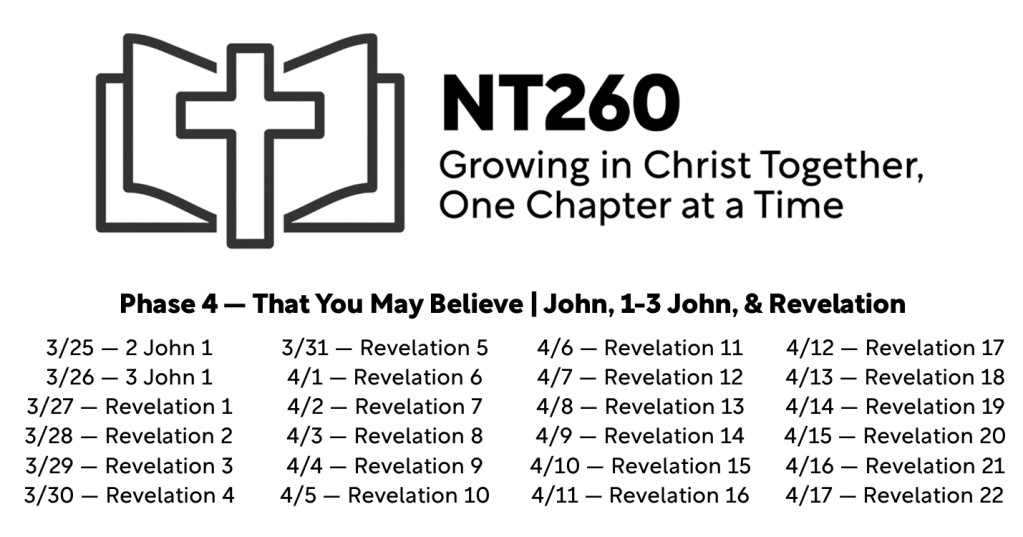
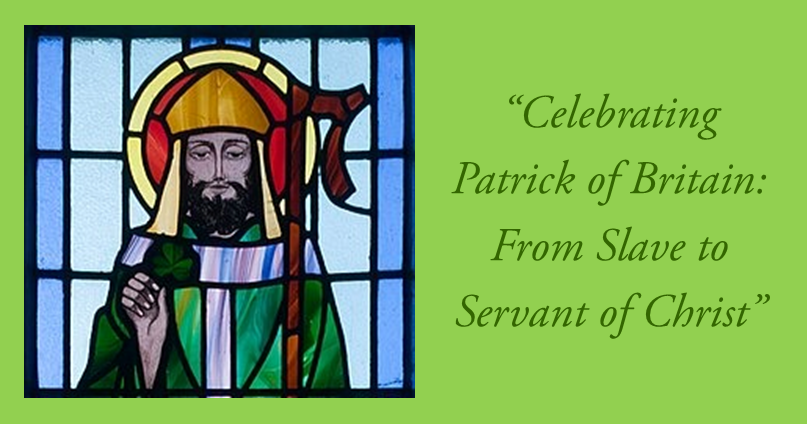
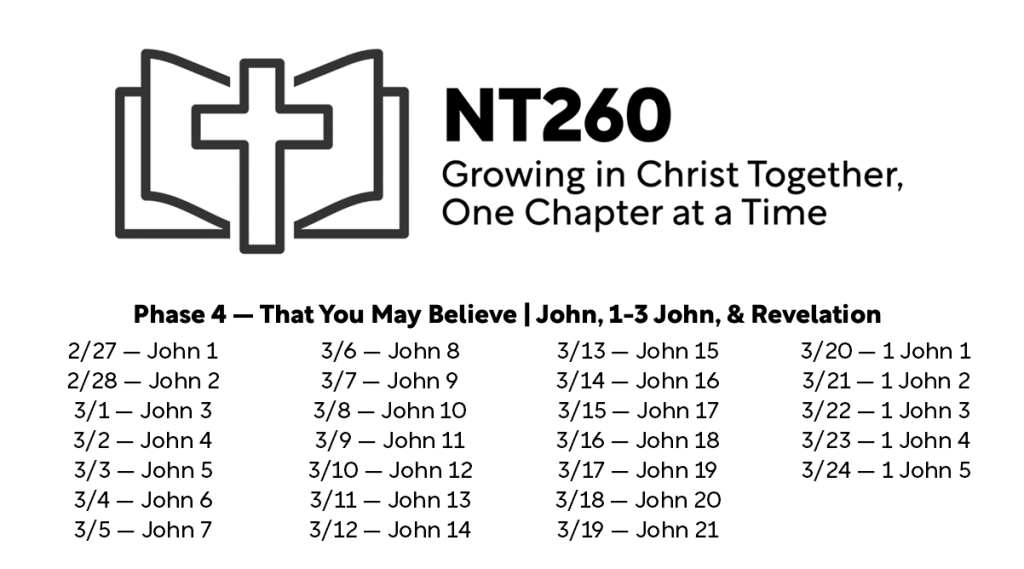
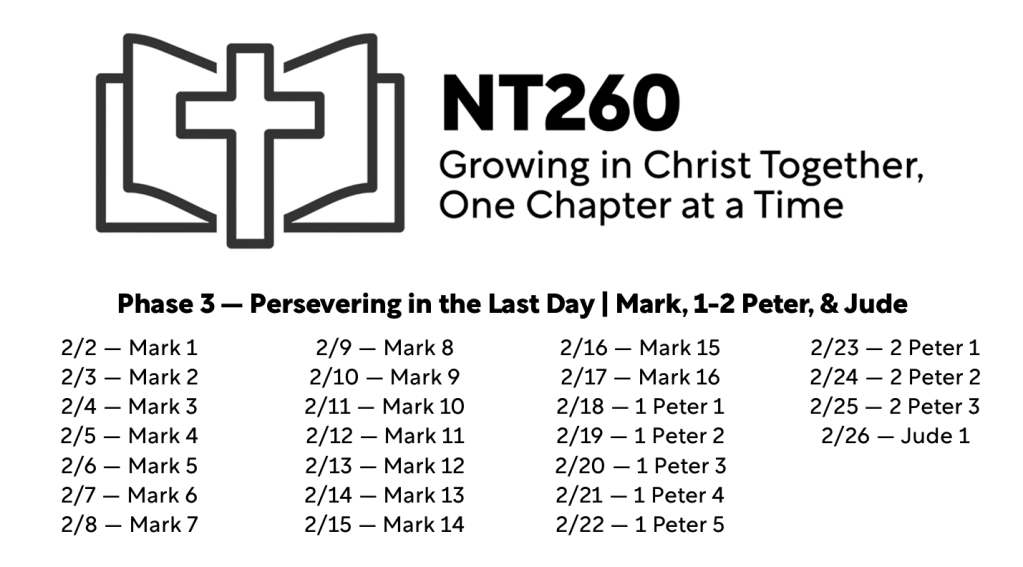

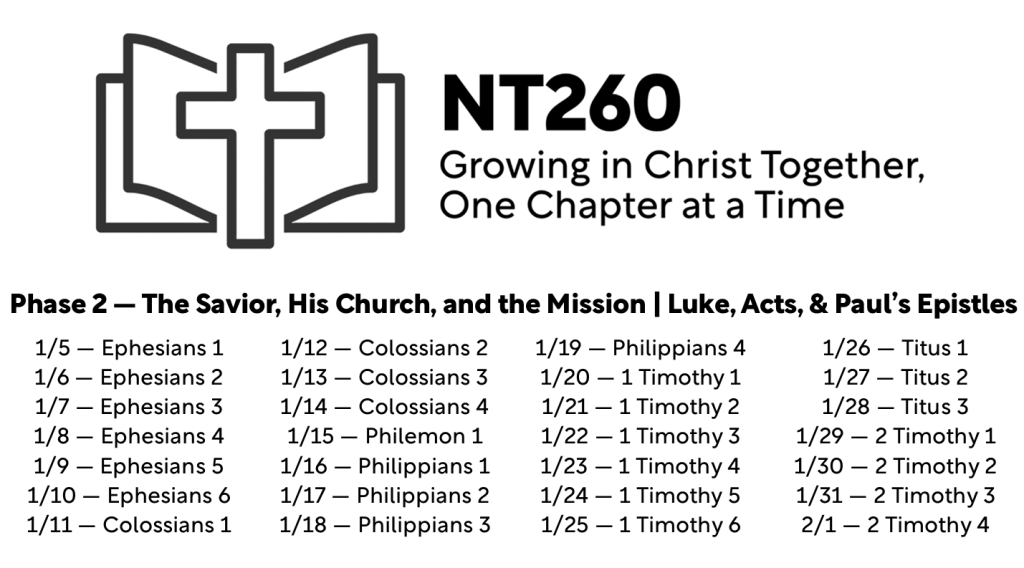

 Just Keith Harris