
Click here for Mark 4 audio:
Read it. Pray it. Share it. Live it.
Mark 4 shows Jesus teaching the crowds with parables — stories that both reveal and expose. From a boat on the Sea of Galilee, He tells the parable of the sower, where the same seed falls on different soils (vv. 1–9). When the disciples ask about it, Jesus explains that the issue isn’t the seed — it’s the hearing heart (vv. 10–13). The seed is “the word” (v. 14), and the soils picture responses: some hearts are hardened and Satan snatches the word away (v. 15); some receive it quickly but fall away when trouble or persecution comes (vv. 16–17); some hear, but the worries of the world, the deceitfulness of riches, and other desires choke it out so it bears no fruit (vv. 18–19). But good soil hears, accepts, and bears fruit — real, lasting fruit that grows from a receptive heart (v. 20). In all of this, Jesus is warning “outsiders” and discipling “insiders,” showing that parables can be both mercy and judgment depending on whether we will truly listen (vv. 11–12; cf. Isaiah 6:9–10).
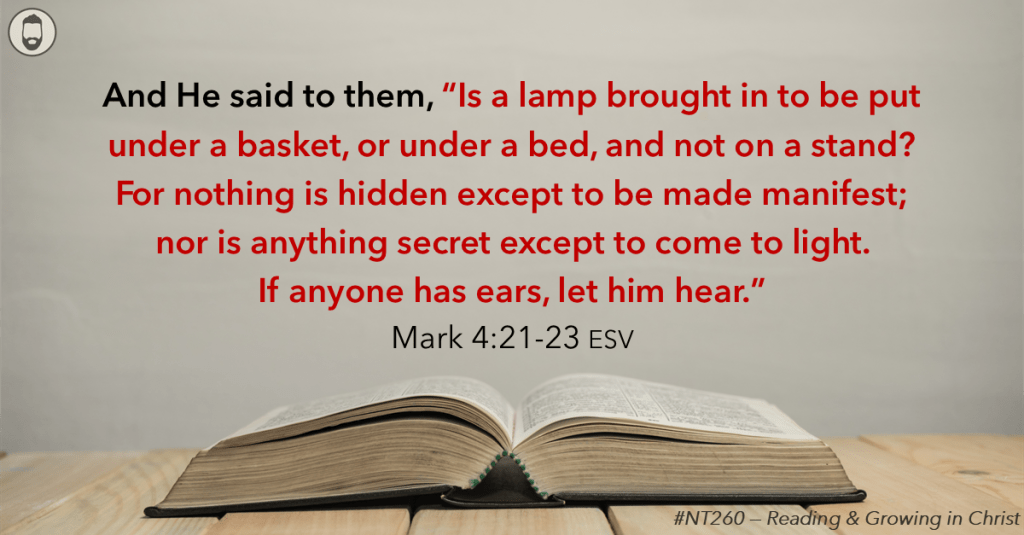
Then Jesus presses the point: what He’s doing is not meant to stay hidden. A lamp isn’t brought in to be buried under a basket — its purpose is to give light (vv. 21–22). So Jesus tells them to “pay attention to what you hear,” because the measure of receptiveness we bring to His word shapes what we receive (vv. 23–25). Next come two kingdom parables that teach patience and hope. The growing seed shows that the kingdom’s growth is real but often quiet — God brings fruit “by itself” in His time, not by our force or control (vv. 26–29). The mustard seed shows the kingdom begins small and unimpressive, yet grows far beyond what anyone expects, becoming a place of shelter and blessing (vv. 30–32). Mark summarizes: Jesus spoke “as they were able to hear it,” and privately explained everything to His disciples (vv. 33–34).
Finally, Mark ties Jesus’ word-parables to a deed-parable. That evening, Jesus takes the disciples across the sea, a violent storm hits, and the boat begins to fill (vv. 35–37). Jesus is asleep — truly human and truly unafraid (v. 38). The disciples wake Him with a question that exposes their fear: “Do you not care…?” (v. 38). Jesus rebukes the wind and commands the sea, and immediately there is calm (v. 39). Then He rebukes their fear and calls them to faith (v. 40). The chapter ends with the right question: “Who then is this…?” — because in Israel’s Scriptures, only God commands the sea (v. 41; cf. Psalm 107:25–30). Mark is helping us see what the disciples are slowly learning: the kingdom is present in Jesus Himself, and His word carries divine authority.
🌀 Reflection:
Mark 4 invites you to examine not just whether you hear Jesus, but how you hear Him (vv. 9, 23–24). Hardness, shallowness, and divided desires can all keep the word from taking root (vv. 15–19). And fear can make us question His care even when He’s in the boat with us (vv. 38–40). Ask the Lord to make your heart “good soil” — to hear, accept, and keep bearing fruit, even in storms.
💬 Mission Challenge:
Sow one small “mustard-seed” act of gospel faithfulness today: share a Scripture, pray with someone, invite a friend to read Mark with you, or encourage a weary believer — trusting God to grow what you cannot control (vv. 26–29, 31–32).
Continue reading in our NT260 plan in the rest of Phase 3 — Persevering in the Last Day.

 Just Keith Harris
1 Comment