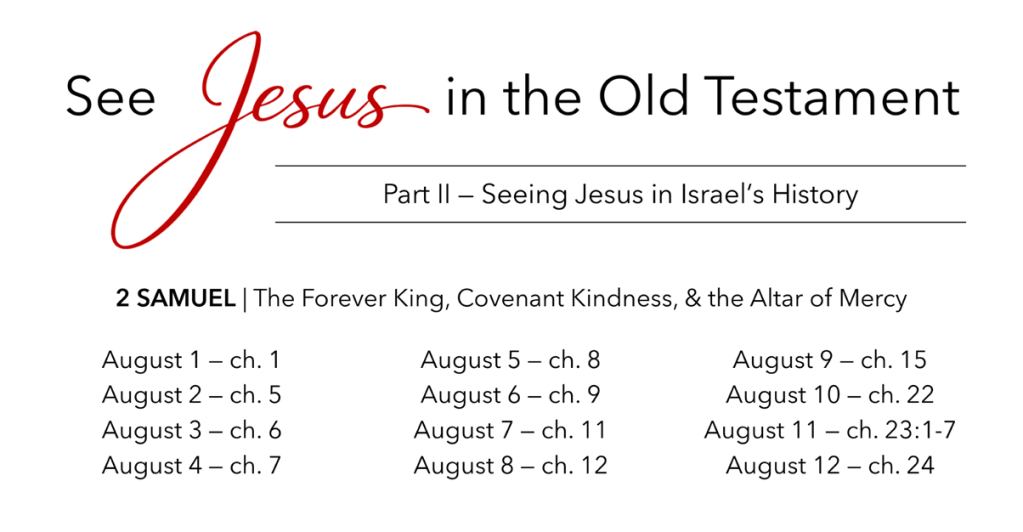
The Fear of the LORD, the Path of Life, and the Wisdom of God
The book of Proverbs teaches us to live wisely in the world God made. Much of its instruction comes from Solomon, the son of David whom God blessed with extraordinary wisdom, alongside sayings from other wise teachers. Its wisdom reaches into everyday life — our words, work, friendships, families, and desires — and begins with the fear of the LORD (Proverbs 1:7).
To fear the LORD is to take Him seriously, humbly receiving His instruction and submitting our lives to His authority. Wisdom involves learning to recognize and follow His ways, while foolishness resists His correction. The opening nine chapters prepare us for the shorter sayings that follow, urging us to seek wisdom and warning us about the cost of refusing it. Throughout the book, we must read these sayings as wisdom for life under God’s rule. They describe how He ordinarily orders life, while Job and Ecclesiastes remind us that faithful living does not guarantee immediate prosperity or freedom from suffering.
Proverbs Section I Overview
Our first readings bring us into a father’s instruction to his son and wisdom’s invitation to all who will listen. Proverbs 1 warns against joining sinners in their pursuit of dishonest gain and calls us to respond to correction. Proverbs 3 teaches us to trust in the LORD with our whole hearts rather than lean on our own understanding, receiving even His discipline as an expression of fatherly love. Proverbs 4 describes two paths and urges us to guard our hearts, recognizing that our desires shape the direction of our lives. Proverbs 5 brings that instruction into marriage, exposing the ruin of adultery and encouraging faithful delight in one’s spouse. These chapters show us that wisdom concerns both the heart and what flows from it. Proverbs 9 gathers the choice before us into two competing invitations: wisdom offers a feast that leads to life, while folly offers stolen pleasures that lead to death. We are called to consider whose voice we are following and where that path will take us.
The scarlet thread leads us toward Jesus, whom the New Testament reveals as the wisdom of God (1 Corinthians 1:24, 30). In Proverbs 8, wisdom is poetically portrayed as a woman calling people to receive instruction, with her place alongside God in creation showing how deeply wisdom belongs to His ordering of the world; this personification should not be read as a direct description of Jesus in every detail or as teaching that He was created. He is the eternal Son through whom all things were made (John 1:1-3). Solomon himself failed to live faithfully by the wisdom he taught, deepening our need for the One greater than Solomon (Matthew 12:42). Jesus perfectly embodies God’s wisdom, and through His death and resurrection, saves sinners who have walked in folly. In Him are hidden all the treasures of wisdom and knowledge (Colossians 2:3).
As we read, ask the Spirit to help us receive correction, turn from the paths of sin, and trust Jesus with every part of our lives. Wisdom’s invitation calls us to more than knowing the right answers — it calls us to walk with the LORD who gives life.
Let’s dive in together and see JESUS in the first section of Proverbs!
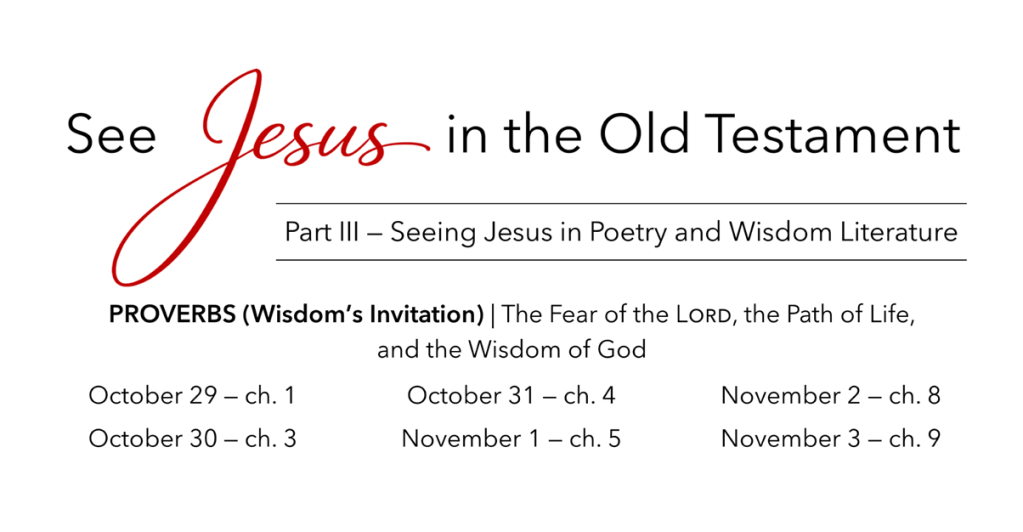
October 29 — Proverbs 1 Proverbs introduces wisdom as skill for godly living rooted in the fear of the LORD, warning against sinners and calling us to receive instruction.
October 30 — Proverbs 3 The wise trust the LORD with all their heart, receive His loving discipline, treasure wisdom above riches, and practice love toward others.
October 31 — Proverbs 4 A father urges his children to prize wisdom, avoid the way of wickedness, guard their hearts, and keep their whole lives on the path of righteousness.
November 1 — Proverbs 5 A father warns that adultery’s seductive path ends in ruin and death, calling his son to covenant faithfulness and joyful delight in his own wife.
November 2 — Proverbs 8 1 David moves from cries of “How long?” to confident praise, trusting God’s steadfast love and faithfulness while deliverance still seems distant.
November 3 — Proverbs 9 Wisdom and Folly offer rival feasts leading to life or death; those who fear the LORD choose wisdom’s table, pointing to Jesus, the Bread of Life.
Continue in the See JESUS in the Old Testament readings with Book II of the Psalms!
1 Proverbs poetically personifies wisdom as a woman calling people to fear the Lord and live according to God’s order. Proverbs 8 does not teach that God’s wisdom — or Jesus — is a created being, nor should every detail be treated as a direct description of Christ. The New Testament nevertheless reveals Jesus as “the wisdom of God” and the eternal One through whom all things were made (John 1:1–3, 1 Corinthians 1:24, Colossians 1:15–17).
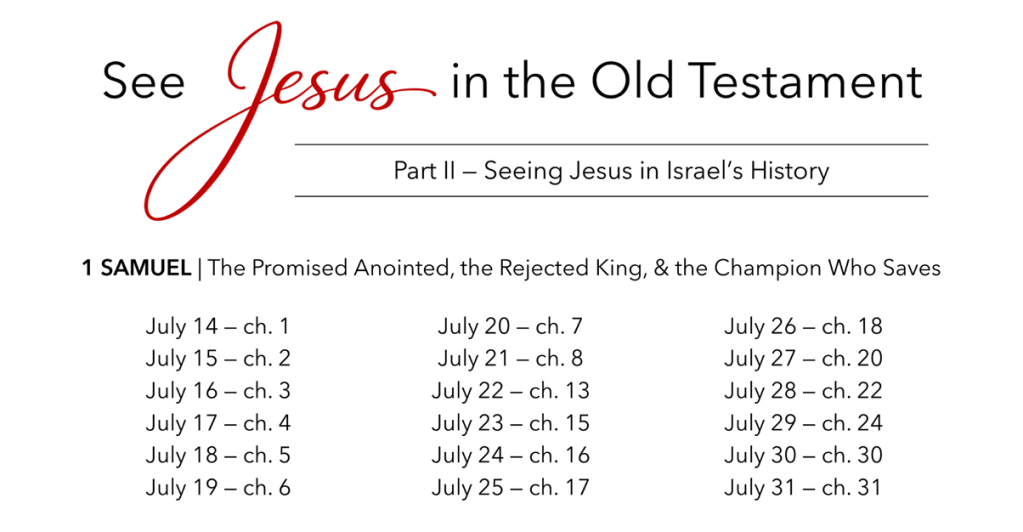
The Anointed Son, the Suffering Savior, and the King of Glory
The book of Psalms gives us words to bring before God in every season of life. There are songs of joy and thanksgiving, laments and cries for help, confessions of sin, and prayers offered when God seems far away. Written by David and other authors across generations of Israel’s history, these 150 Spirit-breathed and inspired songs teach God’s people to pray and worship together. They also carry the Story forward that we have been following: the God who creates, makes promises, delivers His people, and remains faithful even when they are not. In the Psalms, we hear God’s people responding to who He is and what He has done. Their words to God are also His Word to us, teaching us to know Him, trust Him, and bring our hearts before Him in worship.
Because the Psalms are poetry, we need to pay attention to how they communicate. Their writers use figurative language, pictures, comparisons, and lines that repeat or develop a thought to help us understand and feel what they are saying. When David calls God his rock or his shepherd, that imagery helps us see something of God’s strength and care. When a psalmist asks how long suffering will continue, we hear the prayer of someone learning to trust God in the middle of it. The Psalms give us room to grieve, confess, rejoice, and wait. They also shape those responses through the truth of who God is. Even their prayers for judgment teach us to entrust justice to Him rather than take revenge ourselves.
The Psalter — another name for the book of Psalms — is divided into five books: Book I (Psalms 1-41), Book II (42-72), Book III (73-89), Book IV (90-106), and Book V (107-150). We will read selections from each, beginning with Book I.
Book I Overview
Psalms 1 and 2 introduce the whole collection by placing before us the way of the righteous and the reign of God’s anointed King. Together, they call us to delight in God’s Word and take refuge in His Son. Most of the remaining psalms in Book I are attributed to David. Through his prayers and songs, we hear the struggles of God’s appointed king and the faith of a man who needs God’s help. Enemies threaten him, sorrows weigh on him, and his own sin requires forgiveness. Again and again, he turns to the LORD as his refuge.
Here the scarlet thread leads us to JESUS, the greater Son of David. JESUS Himself taught that the Psalms spoke of Him and must be fulfilled (Luke 24:44). He is the truly righteous One whose obedience never failed and the Anointed Son whose Kingdom cannot be overthrown. Our selected readings bring these connections into view: Psalm 2 anticipates His kingship, Psalm 16 points to His resurrection (Acts 2:25-32), and Psalm 22 gives words to the suffering He endured on the cross (Matthew 27:46). Psalm 23’s picture of the LORD caring for His sheep helps us understand JESUS as the Good Shepherd (John 10:11). Psalm 24 celebrates the King of Glory, directing our worship toward the LORD whose greatness no earthly king can match.
As we read Book I, we will encounter both our need and God’s faithfulness: the foolishness of sin, the blessing of forgiveness, the pain of waiting, and the security of belonging to Him. These psalms invite us to trust the Savior who suffered for His people and rose victorious. Ask the Spirit to help you see JESUS in these songs and prayers — and, through His Word, to grow in the knowledge of Him.
The One we are seeking is the Anointed Son, the Suffering Savior, and the King of Glory.
Let’s dive in together and see JESUS in Book I of the Psalms!
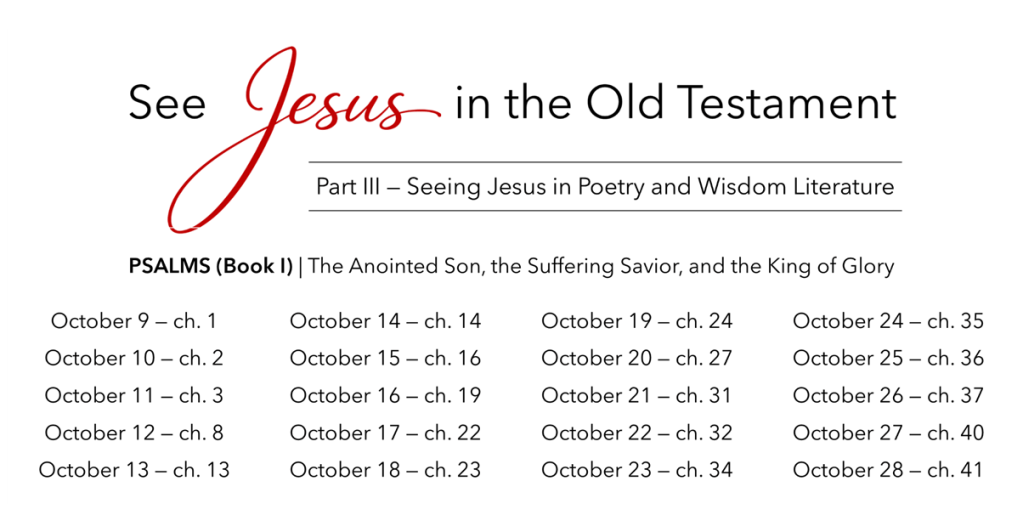
October 9 — Psalm 1 JESUS perfectly embodies the blessed man who delights in God’s Word and flourishes like a watered tree, wholly unlike the wicked.
October 10 — Psalm 2 The nations rebel in vain against the LORD and His Anointed Son, JESUS, whose Kingdom reaches the ends of the earth and offers refuge.
October 11 — Psalm 3 Surrounded by enemies, David trusts the LORD as his shield and deliverer, confident that salvation belongs to God and asking His blessing.
October 12 — Psalm 8 David praises the majesty of God, who crowns humanity with honor and dominion — fulfilled perfectly in the Son of Man who rules over all.
October 13 — Psalm 13 David moves from cries of “How long?” to confident praise, trusting God’s steadfast love and faithfulness while deliverance still seems distant.
October 14 — Psalm 14 David laments humanity’s corruption and the oppression of God’s people yet hopes for salvation, fulfilled in JESUS, who restores His people.
October 15 — Psalm 16 David delights in the LORD as his portion and refuge, looking beyond death to the resurrection of JESUS and everlasting joy in God’s presence.
October 16 — Psalm 19 Creation declares God’s glory, His perfect Word revives and guides, and David asks the LORD, his Rock and Redeemer, to cleanse and guard from sin.
October 17 — Psalm 22 David’s cry of suffering points to Jesus’s crucifixion, while his answered prayer anticipates the risen King’s praise among all people.
October 18 — Psalm 23 David trusts the LORD as his Shepherd, pointing to JESUS, the Good Shepherd whose presence leads His people safely home forever.
October 19 — Psalm 24 The earth belongs to the LORD, and only one with cleans hands may ascend His holy hill — fulfilled by JESUS, the victorious King of Glory.
October 20 — Psalm 27 David seeks the LORD as his light and salvation, desiring His presence above all and waiting to see His goodness despite surrounding enemies.
October 21 — Psalm 31 In deep distress, David entrusts his life and times to the LORD — words JESUS fulfills as He commits His spirit to the Father on the cross.
October 22 — Psalm 32 David celebrates the blessing of forgiven sin, showing that honest confession brings release from guilt and pointing to justification by faith in Christ.
October 23 — Psalm 34 David invites the afflicted to taste the LORD’s goodness and seek refuge in Him, while the righteous sufferer’s unbroken bones point forward to JESUS.
October 24 — Psalm 351 Falsely accused and hated without cause, David asks the LORD to vindicate Him, foreshadowing JESUS, the righteous Sufferer opposed to the world.
October 25 — Psalm 36 David contrasts the godless way of the wicked with the LORD’s immeasurable steadfast love, under whose wings His people find refuge and life.
October 26 — Psalm 37 David calls the righteous to trust, delight in, and wait for the LORD rather than envy evildoers; JESUS promises the meek will inherit the earth.
October 27 — Psalm 40 David praises God for lifting him from the pit, while his obedience points to JESUS, who came to do God’s will as the perfect sacrifice.
October 28 — Psalm 41 Sick, sinful, and betrayed by a close friend, David seeks God’s mercy and restoration, foreshadowing the betrayal Jesus would endure.
1 Imprecatory psalms ask God to judge evil and defend His people. They do not authorize personal vengeance but place justice in God’s hands (Deuteronomy 32:35, Romans 12:19). Christians may pray for evil to end, for enemies to repent, and for Christ’s righteous Kingdom to come, remembering that we escape judgment only through His mercy.
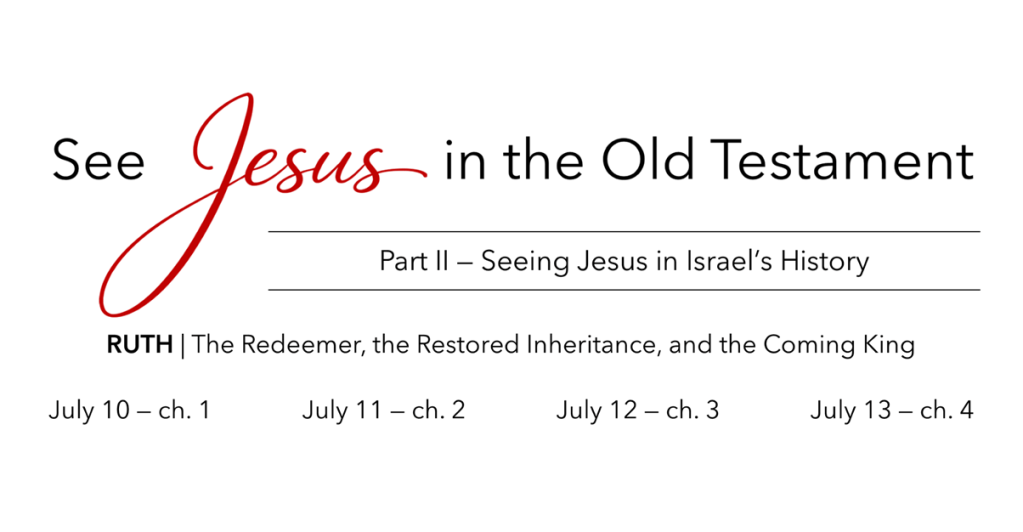
The Righteous Sufferer, the Living Redeemer, and the Wisdom of God
The book of Job wrestles with one of the hardest questions of life: how should we understand suffering when we cannot see what God is doing?
Job is introduced as a righteous and faithful man, yet he suffers devastating loss without knowing the heavenly events behind it. His friends insist that suffering must be the direct result of personal sin, but the book shows how inadequate that explanation can be. Job’s anguish is real, his questions are honest, and his suffering is not neatly explained. Instead, we are taught that our view is limited while God’s wisdom is perfect, calling us to trust Him even when we cannot understand His purposes.
Job’s longing also points forward to Jesus. In his suffering, Job cries out for someone who could stand between himself and God (Job 9:33), speaks of a witness in heaven (Job 16:19), and finally declares, “I know that my Redeemer lives” (Job 19:25). Job didn’t yet possess the full revelation of Christ, but his hope for an advocate, vindicator, and living Redeemer finds its fulfillment in Him nonetheless. Jesus is truly the righteous sufferer, the One who suffered not for His own sin but for ours, and His resurrection gives firm foundation to Job’s hope that death would not have the final word. In Jesus, we see that God’s wisdom and saving purposes reach far beyond what human eyes can see.
While not every chapter of Job is included, these readings have been carefully chosen to highlight the Righteous Sufferer, the Living Redeemer, and the Wisdom of God. You’ll see Job’s faith tested (chs. 1-2), his grief and debates with his friends (chs. 3-4, 9, 14, 16, 22-23), his confession of a living Redeemer (ch. 19), his search for true wisdom (ch. 28), and his final defense (ch. 31). Elihu’s speeches then begin to redirect attention toward God’s greatness (chs. 32-33, 37) before the LORD Himself answers from the whirlwind (chs. 38-41). Job receives no simple explanation for all that happened; instead, he encounters the wisdom, power, and sovereignty of God and responds in humility and trust (ch. 42). The book leaves us not with every question answered — nor does it set out to do that, but we end with a clearer view of the God who is worthy of faith even in suffering and with hope in the Redeemer who lives.
Let’s dive in together and see JESUS in Job!
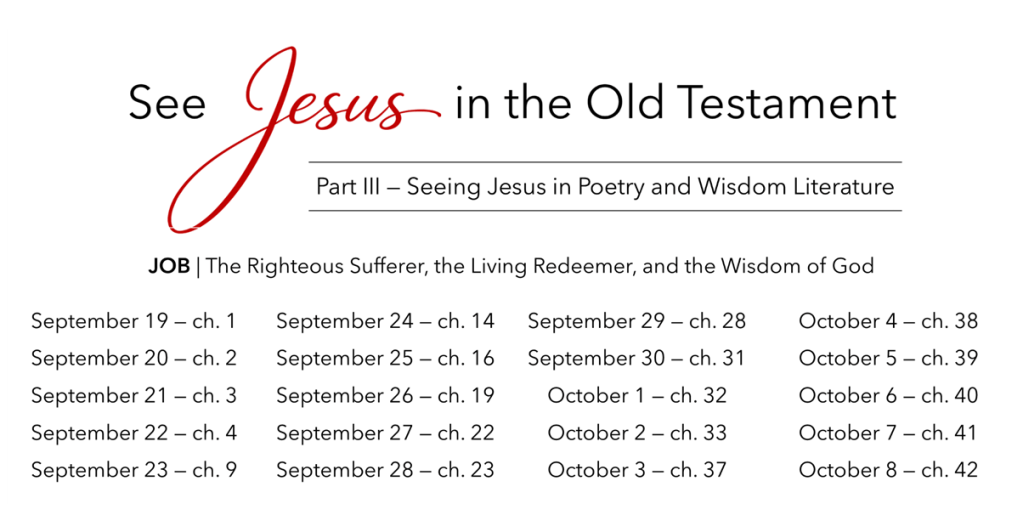
September 19 — Job 1 God permits Satan to test Job, who loses his children, servants, and possessi9ons yet worships the LORD, trusting Him amid overwhelming grief.
September 20 — Job 2 Job holds fast his integrity through bodily affliction, receiving both good and adversity from GOD as his friends come to mourn with him.
September 21 — Job 3 Job gives voice to the darkness of deep suffering, lamenting the day of his birth and longing for the rest he cannot find in life.
September 22 — Job 4 Eliphaz assumes Job’s suffering must prove hidden sin, a mistaken judgment that earthly circumstance always reveals a person’s spiritual standing.
September 23 — Job 9 Unable to contend with the Almighty, Job longs for an arbitrator to plead his case, anticipating Jesus, the one Mediator between GOD and man.
September 24 — Job 14 Job laments the brevity of human life and longs for renewal beyond death, anticipating the resurrection secured by Jesus for all who belong to Him.
September 25 — Job 16 Abandoned and falsely accused, Job looks beyond his miserable comforters to a witness in heaven, anticipating Jesus who intercedes for sufferers.
September 26 — Job 19 Rejected by those closest to him, Job declares that his living Redeemer will vindicate him and that even after death he will see GOD.
September 27 — Job 22 Eliphaz falsely accuses Job of wickedness and urges him to repent, unaware that he himself will need Job’s intercession and GOD’s mercy.
September 28 — Job 23 Unable to find GOD or understand His purposes, Job trusts that He knows his way and will bring him through suffering like refined gold.
September 29 — Job 28 Though people uncover earth’s treasures, true wisdom belongs to GOD, is found ultimately in Jesus, and teaches us to fear Him and turn from evil.
September 30 — Job 31 Job concludes his defense by recounting a life of integrity before GOD and asks Him to hear the charges against him and answer.
October 1 — Job 31 After Job’s friends fall silent, young Elihu speaks in anger, insisting that understanding comes from the Almighty rather than age.
October 2 — Job 33 Though he misrepresents Job, Elihu says GOD may use suffering to warn sinners and describes a mediator, anticipating Jesus’s saving work.
October 3 — Job 37 Elihu points to the storm as a display of GOD’s awesome majesty, calling Job to consider His perfect knowledge, power, justice, and care.
October 4 — Job 38 The LORD answers Job from the whirlwind and questions him about creation, revealing that His sovereign rule is beyond human understanding.
October 5 — Job 39 GOD displays His wisdom and power through the wild creatures He governs and sustains, showing Job that all creation remains under His care.
October 6 — Job 40 Job humbly pledges silence, but the LORD continues, challenging his understanding of justice and displaying His power through Behemoth.
October 7 — Job 41 GOD describes the untamable Leviathan, showing that no creature stands beyond His rule and pointing toward Jesus’s final victory over Satan.
October 8 — Job 42 Job repents before GOD, is vindicated before his friends, intercedes for them, and receives restoration, pointing to the mercy of Jesus.
Continue in the See JESUS in the Old Testament readings with Book I of the Psalms!
The Son of David, the Greater Temple, and Hope Beyond Exile
For the majority of the See JESUS in the Old Testament reading plan, we can simply follow each book with chapters moving sequentially, but the history of Israel’s kings is recorded across 1-2 Kings and 1-2 Chronicles. These books often cover the same periods, just from different angles. So, for this portion of Part II, the readings will move chronologically across these four books of the Bible.
Kings & Chronicles traces Israel’s monarchy from the final days of David through Solomon, the divided kingdom, the fall of Israel, the fall of Judah, and the exile. Read together, they give us two complementary perspectives on the same history. 1-2 Kings emphasizes covenant faithfulness, prophetic warning, and the judgment that comes when kings and people repeatedly turn from the LORD. 1-2 Chronicles looks back on much of that same history with special attention to David’s line, the temple, worship, repentance, and GOD’s continuing promises. Across both, one truth becomes increasingly clear: even the best earthly kings are not enough. Israel needs a righteous Son of David who will faithfully rule GOD’s people and never fail.
That hope points directly to JESUS. The covenant GOD made with David promises an enduring royal line, and throughout these books the Davidic dynasty is preserved even through rebellion, judgment, and exile. Solomon builds the temple and GOD’s glory fills it, but the temple is later defiled and ultimately destroyed. Yet the temple itself points beyond the building to the greater reality of GOD dwelling with His people, fulfilled in JESUS, the true and greater Temple. The failures of Solomon and the kings who follow also sharpen the longing for the greater Son of David — the King of kings who perfectly obeys, reigns forever, and brings the blessing GOD promised to His people and the nations.
These readings move chronologically through that story to highlight the Son of David, the Greater Temple, and Hope Beyond Exile. You’ll see David prepare for the temple and Solomon build it; Solomon’s wisdom, prosperity, and eventual failure; the kingdom divide; prophets like Elijah and Elisha confront idolatry; faithful kings such as Hezekiah and Josiah lead reform; and persistent rebellion against GOD bring first Israel and then Judah into exile. Yet exile is not the end. 2 Kings closes with a surviving heir of David, and 2 Chronicles closes with Cyrus’s decree allowing the people to return and rebuild the temple. The kingdom is broken, the temple is gone, and the people are scattered — but GOD’s promises remain.
The story leaves us looking ahead to JESUS, the true Son of David, the greater Temple, and the King whose Kingdom will never end.
Let’s dive in together and see JESUS in 1-2 Chronicles and 1-2 Kings!
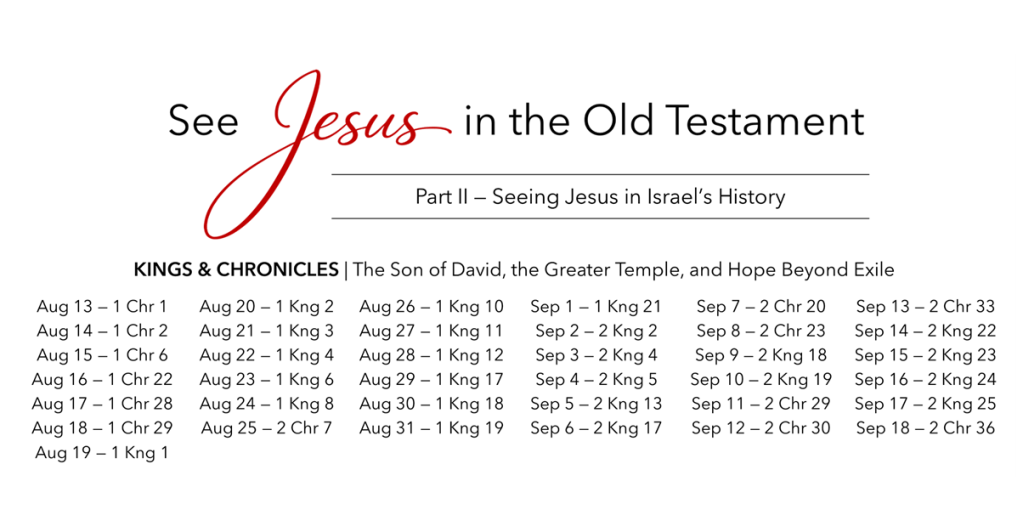
August 13 — 1 Chronicles 1 The genealogy from Adam sets Israel’s story within GOD’s larger plan for all humanity.
August 14 — 1 Chronicles 2 The genealogy narrows to Judah and David’s family line, tracing the promise toward the King GOD would raise up for His people.
August 15 — 1 Chronicles 6 The genealogy of Levi traces the priestly line and temple servants, showing the importance of worship and sacrifice among GOD’s people.
August 16 — 1 Chronicles 22 David prepares Solomon to build the temple, pointing ahead to the greater Son of David who will bring GOD’s presence to His people.
August 17 — 1 Chronicles 28 David charges Solomon to build the temple according to the LORD’s plan, preparing for the place bearing GOD’s name and presence.
August 18 — 1 Chronicles 29 David and the people give willingly for the temple, praising the LORD as the true King whose Kingdom and glory belong to Him forever.
August 19 — 1 Kings 1 Solomon is anointed king as David’s successor, showing the LORD preserving the throne through the son of David He had chosen.
August 20 — 1 Kings 2 David charges Solomon to walk in the LORD’s ways, and Solomon’s kingdom is established as judgment and justice come to David’s house.
August 21 — 1 Kings 3 Solomon asks the LORD for wisdom to rule His people, showing both the promise of David’s son and the need for a King whose wisdom is perfect.
August 22 — 1 Kings 4 Solomon’s kingdom enjoys peace and abundance, giving a glimpse of the blessing GOD’s people long for under the Son of David’s reign.
August 23 — 1 Kings 6 Solomon builds the temple in Jerusalem, preparing a dwelling place for the name and presence of the LORD among His people.
August 24 — 1 Kings 8 Solomon dedicates the temple with prayer and sacrifice, asking the LORD to hear, forgive, and dwell with HIs people according to His covenant.
August 25 — 2 Chronicles 7 The LORD fills the temple with His glory and calls His people to repentance, promising mercy while warning that unfaithfulness will bring judgment.
August 26 — 1 Kings 10 Solomon’s wisdom, wealth, and glory draw the nations to Jerusalem, giving a glimpse of the Kingdom blessing under the Son of David.
August 27 — 1 Kings 11 Solomon turns from the LORD to worship other gods, and the kingdom fractures because even the wisest king cannot keep the covenant.
August 28 — 1 Kings 12 The kingdom divides between Rehoboam and Jeroboam, showing the ruin that comes when GOD’s people reject Him and turn to false worship.
August 29 — 1 Kings 17 God provides for Elijah, the widow, and her son during the famine, showing His power to preserve life when His people have turned from Him.
August 30 — 1 Kings 18 GOD answers Elijah by fire on Mt. Carmel, exposing the emptiness of Baal and calling His people back to Himself.
August 31 — 1 Kings 19 GOD meets Elijah in his fear and weariness, sustaining him and reminding him that His work continues even when His servant feels alone.
September 1 — 1 Kings 21 Ahab and Jezebel’s murder of Naboth exposes the injustice of Israel’s corrupt kings, bringing the LORD’s judgment against their house.
September 2 — 2 Kings 2 The LORD takes Elijah up and confirms Elisha as his successor, showing that His Word and work continue through the servant He appoints.
September 3 — 2 Kings 4 GOD works through Elisha to provide for the needy, give life to the barren, and raise up the dead, displaying His mercy and power in times of need.
September 4 — 2 Kings 5 GOD heals Naaman the Syrian through Elisha, showing grace to an outsider who humbly receives His Word by faith.
September 5 — 2 Kings 13 Even after Elisha’s death, GOD shows mercy to Israel and preserves them because of HIs covenant promises to Abraham, Isaac, and Jacob.
September 6 — 2 Kings 17 Israel is carried into exile because they persistently reject the LORD, showing the ruin that comes from generations of idolatry and unbelief.
September 7 — 2 Chronicles 20 The LORD delivers Judah as Jehoshaphat leads the people to seek Him in prayer and praise, showing that the battle belongs to the LORD.
September 8 — 2 Chronicles 23 The LORD preserves the line of David through Joash and restores him to the throne, showing His faithfulness to keep His covenant promises.
September 9 — 2 Kings 18 Hezekiah trusts the LORD and leads Judah in faithfulness, standing as one of David’s better sons while pointing beyond himself to a greater King.
September 10 — 2 Kings 19 The LORD answers Hezekiah’s prayer and delivers Jerusalem from Assyria, showing that salvation belongs to Him and His Word will not fail.
September 11 — 2 Chronicles 29 Hezekiah reopens the temple and restores worship, calling Judah back to the LORD through cleansing, sacrifice, and praise.
September 12 — 2 Chronicles 30 Hezekiah calls all Israel and Judah to keep the Passover, inviting people to return to the LORD who is gracious and merciful.
September 13 — 2 Chronicles 33 Manasseh’s wickedness brings judgment, but his repentance shows the mercy of the LORD to humble sinners who turn back to Him.
September 14 — 2 Kings 22 Josiah hears the book of the Law and humbles himself before the LORD, showing the power of GOD’s Word to expose sin and call His people back.
September 15 — 2 Kings 23 Josiah leads Judah in covenant renewal and reform, removing idols and restoring the Passover as he seeks to turn the people back to the LORD.
September 16 — 2 Kings 24 Judah’s final kings return to rebellion as Babylon rises against Jerusalem, showing that GOD keeps His promises of judgment against unfaithfulness.
September 17 — 2 Kings 25 Jerusalem falls, the temple is destroyed, and Judah is carried into exile, showing the devastating judgment brought by covenant unfaithfulness.
September 18 — 2 Chronicles 36 Judah’s exile comes after generations of rejecting the LORD’s Word, yet Cyrus’s decree opens a door of hope beyond judgment.
📖 Revelation 7After the terrifying events of Revelation 6, John is given a breathtaking glimpse of hope. Before judgment continues, God reveals that His people are known, sealed, and secure in Christ. The chapter culminates with one of Revelation's most beautiful pictures: the Lamb who was slain is also the Shepherd who leads His people forever.In this episode, Keith Harris and Jamie Harrison discuss:✔️ Why Revelation 7 is an interlude between the sixth and seventh seals✔️ What it means for God's servants to be sealed✔️ The two primary views of the 144,000—and why faithful Christians differ✔️ How John's pattern of hearing one thing and seeing another helps interpret the chapter✔️ The innumerable multitude worshiping before the throne✔️ Why Jesus, the Lamb, is also our Shepherd who leads us to living waterThis chapter reminds us that our greatest hope isn't solving every prophetic question—it's belonging to Christ. Those who trust Him are safe in Him, and one day He will wipe away every tear from their eyes.📖 "For the Lamb in the midst of the throne will be their shepherd, and he will guide them to springs of living water, and God will wipe away every tear from their eyes." (Revelation 7:17, ESV)🔗 If you'd like to see a written version of this podcast, complete with footnotes and cross-references, you can find it here.
We’re back in our study of Revelation called The KING is Coming, where we’re taking a verse-by-verse approach to see what the book truly reveals—Jesus Christ Himself. As always, I’m joined by Jamie Harrison, and I’m thankful for the opportunity to walk through this study together. Today, we’ll be in Revelation 7, where John sees what comes after the opening of the sixth seal. After the wrath and judgment of Revelation 6, this chapter gives us a picture of God’s people being sealed, saved, and gathered before the throne, where the Lamb who was slain is also the Shepherd who leads His people to living water. This week’s passage is Revelation 7:
After this I saw four angels standing at the four corners of the earth, holding back the four winds of the earth, that no wind might blow on earth or sea or against any tree. 2 Then I saw another angel ascending from the rising of the sun, with the seal of the living God, and he called with a loud voice to the four angels who had been given power to harm earth and sea, 3 saying, “Do not harm the earth or the sea or the trees, until we have sealed the servants of our God on their foreheads.” 4 And I heard the number of the sealed, 144,000, sealed from every tribe of the sons of Israel: 5 12,000 from the tribe of Judah were sealed, 12,000 from the tribe of Reuben, 12,000 from the tribe of Gad, 6 12,000 from the tribe of Asher, 12,000 from the tribe of Naphtali, 12,000 from the tribe of Manasseh, 7 12,000 from the tribe of Simeon, 12,000 from the tribe of Levi, 12,000 from the tribe of Issachar, 8 12,000 from the tribe of Zebulun, 12,000 from the tribe of Joseph, 12,000 from the tribe of Benjamin were sealed. 9 After this I looked, and behold, a great multitude that no one could number, from every nation, from all tribes and peoples and languages, standing before the throne and before the Lamb, clothed in white robes, with palm branches in their hands, 10 and crying out with a loud voice, “Salvation belongs to our God who sits on the throne, and to the Lamb!” 11 And all the angels were standing around the throne and around the elders and the four living creatures, and they fell on their faces before the throne and worshiped God, 12 saying, “Amen! Blessing and glory and wisdom and thanksgiving and honor and power and might be to our God forever and ever! Amen.” 13 Then one of the elders addressed me, saying, “Who are these, clothed in white robes, and from where have they come?” 14 I said to him, “Sir, you know.” And he said to me, “These are the ones coming out of the great tribulation. They have washed their robes and made them white in the blood of the Lamb. 15 “Therefore they are before the throne of God, and serve him day and night in his temple; and he who sits on the throne will shelter them with his presence. 16 They shall hunger no more, neither thirst anymore; the sun shall not strike them,nor any scorching heat. 17 For the Lamb in the midst of the throne will be their shepherd, and he will guide them to springs of living water, and God will wipe away every tear from their eyes.”[1]
Keith Harris: Greetings, sojourners.
Here we are, back in our The KING Is Coming study, and today we’re in Revelation 7. Jamie, you got anything preliminary you want to say, or you just want to dive right in?
Jamie Harrison: Let’s just dive right in.
Keith: Let’s do it. So Revelation 7 is following—because, again, it’s been a minute since we recorded—Revelation 6. We see some wrath being poured out.
Jamie: Well, I was sure wondering if Revelation 7 followed Revelation 6. I appreciate you really clarifying that for me.
Keith: You may be joking, but part of what we’re—
Jamie: That is a new development.
Keith: But in looking at this, one of the things that we’re doing—and I said it that way as a sort of reminder—
Jamie: Yes.
Keith: Our point in this study isn’t to answer every question, because every one of our questions is not meant to be answered. The text wasn’t designed that way. We’re seeing what God showed John. And so, when we look at this, we’re looking at what John saw next. And I’ll let you take it from there.
Jamie: Yeah, that’s really important. And I’m glad you went back to chapter 6 just to kind of point out that the last thing we saw was that sixth seal being opened, and this huge earthquake. The sun turns black. The moon becomes like blood. You know, all these different things happen. Stars are falling to the earth. All these things. And every single mountain and island is moved from its place.
So you’re talking about worldwide destruction going on when this sixth seal is busted open. And then the next thing he sees—now, again, it’s very important, just like Keith said—that’s not necessarily the next thing that happens. That’s the next thing he sees.
The next thing he sees are four angels standing at the four corners of the earth, restraining the four winds of the earth so that no wind can blow on the earth or on the sea or on any tree. So, in other words, right after this extremely destructive storm, the next thing he sees is calm. There’s no wind.
Keith: And sees the supernatural reason for why the calm has come. Like, he can see these angels.
Jamie: That’s right. And so what you get here is—you know, we always talk about the calm before the storm—and judgment is coming. And it’s about to come hot and heavy right after this.
And so you kind of get the idea here that everything is calm for a minute because the Lord is about to seal some people who are going to make it through the tribulation. And we can go back to Ezekiel chapter 9. We get the idea of that sealing, what it looks like. Ezekiel has a vision of a slaughter in Jerusalem. That’s going to be chapter 9, verses 4 through 7. I mean, you can read the whole chapter, but kind of where the seal starts is verse 4 there.
And they’re being sealed from judgment. They’re being sealed on their forehead by a mark. So you get the same kind of idea here. Same idea as the Passover, Exodus chapter 12, you know, where they’re sealed by the blood of a lamb from their firstborn being killed there.
And so, in Revelation 14:1, we find out this is the same group of people in Revelation 14. And it says:
Then I looked, and there was the Lamb, standing on Mount Zion, and with him were 144,000 who had his name and his Father’s name written on their foreheads.[2]
And so it looks like that seal is something to do with Jesus’s name and the Father’s name on their foreheads—some type of, what we’re going to learn, spiritual protection from the coming judgment.
Keith: Yeah, and that symbol would have looked like what the Hebrew letter tav looked like at the time of Ezekiel, which some interpret as kind of a cross at an angle or an X. Either which way, it’s obviously pointing forward to Christ and the fact that He—I think it’s John 10, and I think it fits with the end of Revelation 7, not getting ahead—but Jesus being the Good Shepherd, and that He holds His people in His hand, and no one can pluck them from His hand.
The symbolic seal represents the spiritual reality that Jesus has them.
Jamie: Yes and amen. And this group of people that we’re looking at here, they’re being sealed until the number would be completed. Look at chapter 6, verse 11 of Revelation. It says:
So they were each given a white robe, and they were told to rest a little while longer until the number would be completed of their fellow servants and their brothers and sisters, who were going to be killed just as they had been.
Now, you ask, why do we connect those together? Great question. Because in chapter 7, where Keith just read, in verse 14—well, right above, in verse 13—he says, “Hey, who are these people in white robes, and where did they come from?” And he says, “Sir, you know.”
Then he told me these were the ones coming out of the great tribulation. They washed their robes and made them white in the blood of the Lamb.
So each of those connect together to show us that these are the people that are going to be sealed, that are going to be saved, that are going to be persecuted for their faith during the great tribulation, that are going to reach other people for Christ. And when that number is completed, then the Lord’s judgment will be completed directly after.
I hope all that makes sense.
I do want to point out that this is the exact opposite of the mark that we’re going to learn about in Revelation 13, verses 16 through 17, where it says:
16 And it makes everyone—small and great, rich and poor, free and slave—to receive a mark on his right hand or on his forehead, 17 so that no one can buy or sell unless he has the mark: the beast’s name or the number of its name.
And, of course, it’s commonly referred to as the mark of the beast. And so this is the exact opposite. That mark is going to bring judgment.
Keith: Well, and I mean, when you look in the context of Ezekiel 9 to get the understanding there, it’s those who are faithful to God. And the faithfulness to God—in Ezekiel chapters 4 through 7 preceding that—the faithfulness to God is very important in the context of Revelation.
Your mark shows to whom you’re faithful. And so nobody who is faithful to Christ is at risk of being hoodwinked into getting this other one. Your mark shows your allegiance. I think that’s a very important thing there.
Jamie: Absolutely. No doubt about it.
So now we get into the real controversial part, right? What is this 144,000 number? Is there only 144,000 people going to heaven?
And let’s just go ahead and hit that one right off the bat: no. That’s dumb. I don’t know any other way to say it. And I don’t joke anymore. That’s a very serious statement. That’s dumb. There’s way more than 144,000 people going to heaven, and the Bible is going to tell us that here in just a minute.
Keith: And the danger—and really where the idea of only 144,000 people are going to heaven comes from—the fact that different cults, like the Jehovah’s Witnesses, have gained ground, and people are believing what they’ve heard or what they’ve seen on social media, or some random jake-leg—I’m using my quotey fingers—preacher says.
What the Bible says matters. And so when anybody says anything—us, your pastor, especially Jehovah’s Witnesses and jake-leg internet TV preachers—check it with the Bible. That doesn’t pass the test.
Jamie: Yeah, just a lot of people believe whatever’s on social media is true. If it made it on social media, it’s got to be true, right? And that’s also very dumb. I can attest to that personally.
Keith: I mean, last week I saw a picture of a cloud that was shaped like a soldier, including kneeling at his gun. And no cloud ever was that clear. And people are like, “Oh my gosh, look at this sign from God!” And under it was the city of Jackson that did not resemble the city of Jackson, and nobody noticed because they were looking at the soldier in the sky.
Jamie: Wow.
Keith: Don’t get your theology from social media.
Jamie: Correct.
Keith: Or look for truth there at all.
Jamie: Yeah. Just that. Period. The end.
So with the 144,000, there’s two main approaches to that number. One is that it’s a literal number. One is that it’s a figurative number. And so I think the best way to go about it is, let’s look at both. Let’s talk about the—I don’t want to use the word justification—but I’ll use the verses that people use for each. Okay?
And then read the Bible on your own, and ask the Holy Spirit to guide you, and He will guide you into truth.
So the literal number—we’ll start there—and it comes from, you go all the way back to Numbers, where there was a military census performed at different times. And what they would do, Israel would do, is they would count the military-aged males to see how many people they had that were of age and eligible to fight in a war. Okay?
And in Revelation 14:4—remember, Revelation 14 is also talking about this same group of people—it says:
These are the ones who have not defiled themselves with women, since they remained virgins. These are the ones who follow the Lamb wherever he goes. They were redeemed from humanity as the firstfruits for God and the Lamb.
So this is talking about males from the tribes of Israel, and they have been counted as a military census would have been counted.
Keith: Yeah, and I think Numbers 31 is the reference there. In that case, just to clarify, it wasn’t 144,000 in the book of Numbers, right? But the book of Numbers obviously contains a lot of numbers and censuses, and they weren’t always clear, round numbers.
Numbers 31:4-5:
4You shall send a thousand from each of the tribes of Israel to the war.” 5 So there were provided, out of the thousands of Israel, a thousand from each tribe, twelve thousand armed for war.
It’s not always so clear-cut a number.
Jamie: That’s right. And so, again, same thing. Numbers chapter 2, you know, it talks about—it goes through how they camped in the military formation. And this tribe camps here on the east side. This tribe camps on the north side. This tribe on that—the Levites in the middle, where the Ark of the Covenant would have been, the temple would have been—the tabernacle would have been.
And so this, you kind of can go back again to Revelation chapter 14, verse 4, where it says they follow the Lamb wherever He goes. Because as the Spirit—as the glory of God moved, the cloud moved, so the Israelites followed.
And I do think it’s very interesting that Judah is the first tribe listed, and that in Numbers chapter 2, Judah is the first tribe listed. And so there is a connection to who is the Lion of the tribe of Judah, and that would be Jesus. So that is a pretty cool correlation there, where you look at it and go, “Hey, regardless of whether this is an exact number or a figurative number, they’re following the Lion of the tribe of Judah.”
And we’re going to come back to that thought in just a minute. A lot of people also look at Ezekiel chapter 37, where the dry bones become an army. The Lord puts His Spirit in them. That would be the thought of salvation. And so the idea is that this 144,000 number gets saved.
Keith: Well, and I think we need to pause there, because so much conversation—again, a lot of it from these random social media snippets that people put pictures up there and stuff—there is nobody, no matter what their ethnicity, who is going to heaven unless they’ve been saved.
Jamie: Correct.
Keith: In the Old Testament, it was still by grace through faith. Jesus, God in flesh, had not yet become incarnate. But think about Abraham. Abraham believed God, and it was counted to him as righteousness.
Everyone who trusted and called upon the name of the Lord showed faith in Him. And every Israelite who’s ever walked the earth hadn’t got saved.
Jamie: Right.
Keith: Every son of Adam, daughter of Eve, as C. S. Lewis says it—they’re not in heaven. Those who have faith—You look in the book of Numbers. The ground opened up and swallowed thousands. It didn’t catapult them up to heaven. They were in open rebellion.
I think the reading we’re currently looking at, Seeing Jesus in the Old Testament, in our Bible reading plans—yesterday, they were—it was where Phinehas, the Priest came up and literally skewered people who were taking their cult prostitutes and trying to go into the tabernacle with them. And Phinehas is like, “That’s enough.”
And then when people are like, “Dude, why are you acting like this?” God audibly spoke from heaven. He’s like, “Hey, y’all need to be glad he killed those two, because he’s jealous with My jealousy.”
You have God’s people, generically talking about Israel, but you have God’s people—those who, by grace through faith, are saved and, I guess in the context, we say sealed to Him. They belong to Him by grace through faith. No other way.
And so, in any understanding of the 144,000, there’s nobody getting in because they descended from Abraham.
Jamie: Correct.
Keith: Not a one. Zero.
Jamie: Only by the blood of the Lamb.
Keith: Amen.
Jamie: So, just to really briefly, I guess, quickly finish the Ezekiel thought: you know, God puts His Spirit in them to salvation. And then, in Ezekiel 36:24 through 28, Ezekiel 37:24 through 28, you have the Jewish people coming under the new covenant, which would be salvation. But it very distinctly says they will be under one King, and that’s a reference directly to Jesus.
And so, the idea of witnesses—how do we, what makes us think that they’re witnesses? Because this just looks like a list of 144,000 people.
Well, in Revelation chapter 14, again, what we get is that—let’s start in verse 4:
4 These are the ones who have not defiled themselves with women, since they remained virgins. These are the ones who follow the Lamb wherever he goes. They were redeemed from humanity as the firstfruits for God and the Lamb. 5 No lie was found in their mouths; they are blameless.
6 Then I saw another angel flying high overhead, with the eternal gospel to announce to the inhabitants of the earth—to every nation, tribe, language, and people. 7 He spoke with a loud voice: “Fear God and give him glory, because the hour of his judgment has come. Worship the one who made heaven and earth, the sea and the springs of water.”
So you have this proclamation of the gospel, and right before it, we’re told that these 144,000—this number—are the ones redeemed from humanity as the firstfruits. Okay? Firstfruits infers that there’s more fruit.
Keith: Or at least last fruits.
Jamie: That’s right. And so that’s where the idea that they’re witnesses comes from, is that they will be sent forth as a quote-unquote army of witnesses to reach people for the name of Christ.
Keith: And that makes sense because you were talking about—I just found the verse I was looking for—you were talking about until the number has been completed. Matthew 24:14:
And this gospel of the kingdom will be proclaimed throughout the whole world as a testimony to all nations, and then the end will come.
And that’s red letters. That’s Jesus.
Jamie: Yes. So then, let’s talk for a second about, all right, is this a symbolic number? Is it just a number? We know that 12 is the number of completion in the Bible: 12 tribes of Israel, 12 disciples, on and on and on.
Revelation 21:12 through 14, you have that same number 12 come back around with the foundations and things. And so you get the idea that number 12 is just the perfect unity of God’s kingdom.
And I think that Revelation 21 is really important there, because in verses 12 through 14, this is talking about the New Jerusalem:
12 The city had a massive high wall, with twelve gates. Twelve angels were at the gates; the names of the twelve tribes of Israel’s sons were inscribed on the gates. 13 There were three gates on the east, three gates on the north, three gates on the south, and three gates on the west. 14 The city wall had twelve foundations, and the twelve names of the twelve apostles of the Lamb were on the foundations.
And so the idea there being is that the church is unified. It is one in heaven. There is no distinction of male or Greek, Jew or male or female. Do you agree?
Keith: Yeah.
Jamie: Wow. Okay. There’s that. And so, again, is this a symbolic number? Is it a literal number? You know, you walk through it and you look and you go, “All right, 12 is the number of completion. That makes sense to me. I get that.”
We know that the Lion of the tribe of Judah will be leading this group of people. And I want to point out something very important here. And, and, and hopefully this makes sense. If it doesn’t, you can leave Keith a comment and let him know, because I will not be looking at the comments, but Keith will.
Revelation chapter 5—chapter 6. Excuse me. I don’t know what I’m talking about. It is chapter 5. I’m just—wow. Maybe we need to hit the pause button and take a break.
Keith: No, you got it.
Jamie: Okay. So Revelation 5:5, same place it’s always been. This is one of mine and Keith’s favorite Scriptures. It says:
Then one of the elders said to me, “Do not weep. Look, the Lion from the tribe of Judah, the Root of David, has conquered so that he is able to open the scroll and its seven seals.”
Now, who leads the 144,000?
Keith: Jesus.
Jamie: Jesus, the Lion from the tribe of Judah.
Look, the Lion from the tribe of Judah, the Root of David, has conquered so that he is able to open the scroll and its seven seals.”
Okay, so this is what John hears the elder say. He hears him say, “Look, the Lion of the tribe of Judah.” And we know that the 144,000 is led by the Lion of the tribe of Judah.
And then he looks, and in verse 6 it says:
Then I saw one like a slaughtered lamb standing in the midst of the throne and the four living creatures and among the elders. He had seven horns and seven eyes, which are the seven spirits of God sent into all the earth.
And it goes on. He takes the scroll, and He unseals the scroll, and then they have this awesome praise moment there together.
And so the “he hears, and then he looks and sees” connects right together with chapter 7, because watch this: in verse 4 he says, “I heard the number of the sealed.” But watch this in verse 9: “After this, I looked.” So he hears the number, just like he heard, “Look, the Lion from the tribe of Judah,” but he saw one like a slaughtered Lamb. So he looks—or, excuse me, he hears—144,000, 12,000 from each tribe. But he looks, and there’s a vast multitude from every nation, tribe, people, and language—which no one could number—standing before the throne and before the Lamb.
So first off, there goes your 144,000 people are going to be saved, and that’s all.
Keith: Well, and also, this numberless multitude—if it’s all tribes and peoples and languages—there are obviously Jews in there.
Jamie: That is correct. And so the last part of this is, we look and we go, okay, he sees this number. He sees—or sees this group of people that nobody can number standing before the throne. They’re clothed in white robes with palm branches in their hands.
And in verse 14—again, back to the same verse we talked about earlier—he asks, you know, “Who are these people?” And he says they’re the ones coming out of the great tribulation. They’ve washed their robes and made them white in the blood of the Lamb.
So this innumerable number of people are people that come out of the great tribulation, who are persecuted for their faith, most likely killed for their faith—not necessarily all of them, but most likely killed for their faith—persecuted for their faith. They came out of the great tribulation.
In other words, there’s a seal placed on their forehead, and once that number is completed, the Lord’s judgment will come. And so I think we, when you put all these things together—
Keith: Well, I think there’s one more Scripture that goes with that before you put it all together. Romans 11, which talks about the remnant of Israel coming to Christ. Romans 11:25. And I think—and I think the wording of this is particularly helpful for when we put this all together:
Lest you be wise in your own sight, I do not want you to be unaware of this mystery, brothers: a partial hardening has come upon Israel, until the fullness of the Gentiles has come in.
So we’re seeing all these places—Old Testament, New Testament, with future vision for John—talking about till the number has become complete. Now we see the number, and then we see the numberless. Like, it does seem that when we put all this together—again, this isn’t like, there are way more popular theories—
Jamie: Right.
Keith: But sticking with what the Bible says, it seems to reason, “lest you be wise in your own sight,” that where there is a lot of clear evidence in Scripture—a good rule of Bible interpretation is the clear things are important, and the important things are clear. Or, as Alistair Begg says, “The main things are the plain things.” So when Jamie puts all this together, this is coming out of a volume of Scripture.
Jamie: For sure. And again, I go back—I guess the word is, I guess, to say, to put all this together—we have this group of people. And again, it says these are the ones coming out of the great tribulation.
And in verses 15 through 17, you get all these things that they’re going to be protected from. But in verse 15, it says, “For this reason, they are before the throne of God.” For what reason? For the reason they were persecuted for their faith, and they came out of the great tribulation.
So we know this is an innumerable group of people that was persecuted for their faith, and for that reason, they’re before the throne of God and serve Him day and night in His temple.
Which, first off, that’s just—that’s an incredible thought. You know, I was listening to a song—maybe it was yesterday—a song came on, and one of the lyrics were—I can’t remember the exact wording now that I brought it up—but it’s basically that we get to join a song they’re already singing when we get to heaven.
Like, just think about that for a minute. There’s these awesome worship sessions going on in heaven right now as we speak, and one day we’ll be part of the choir.
Keith: And I think we lose sight of that sometimes. And again, the reason for us doing this—we’re not trying to be relevant, not trying to be cool, not trying to be any such thing.
It’s so easy to try to have religion outside of relationship with Jesus. And none of these people who are standing around the throne are there for some religious experience. Religion does not withstand persecution. Right now, around the world—and I was looking at something else Jesus said in Matthew 24:21:
For then there will be great tribulation, such as has not been from the beginning of the world until now, no, and never will be.
Y’all, persecution has been increasing and been going on since Jesus ascended into heaven. You’ve got Stephen, the first martyr, all the way up through—you go through the Roman Empire where they were killing Christians.
Finally get to the point where they realize, “We’ve got to burn this book that they’re preaching from, because killing the folks ain’t stopping it.” And then God puts an end to that persecution.
They meet together. You get the canon of Scripture going. And then every so often, all over the world—like even right now—there are countries in the world where you will be imprisoned for the rest of your life for the preaching of the gospel, be shunned and never be a part of your family again because of the preaching of the gospel.
There are places right now on the continent of Africa where they are killing Christians by the hundreds and thousands. And none of these people are sitting there begging for their life. They’re being witnesses.
Literally, the word that we see for witness in the New Testament—that Greek word is martyrion, where we get our word for martyr. They gave their life to point to the eternal life that comes from the life of Jesus Christ.
They’re not resentful that when they see Him in glory, after they lose their life for Him on earth, they see fulfillment. They see not personal achievement, but their personal Savior.
And y’all, I think we lose that when we spend too much time trying to figure out what exactly is the 144,000. I’m fine if it’s literal. I’m fine if it’s figurative, because I’m going to be standing before Jesus. And I might have a lot of questions when I get up there, but I don’t think they’re going to come to mind as readily.
Jamie: Nope.
Keith: Like, yeah, I don’t—you know, it’s going to be eternity, but I think I’m going to have better things to do.
Jamie: Yeah, I think verse 11 there says:
All the angels stood around the throne, and along with the elders and the four living creatures they fell facedown before the throne and worshiped God….
I think that’s—I think that’s going to be what we’re doing.
Keith: It does say, “forever and ever, amen.” That’s good enough for Randy Travis. That’s good enough for me.
Jamie: Amen. I was going to go into some other things here, but I think, instead, just to close this out, I think to look at—it says back in verse 15:
15 For this reason they are before the throne of God, and they serve him day and night in his temple. The one seated on the throne will shelter them: 16 They will no longer hunger; they will no longer thirst; the sun will no longer strike them, nor will any scorching heat. 17 For the Lamb who is at the center of the throne will shepherd them; he will guide them to springs of the waters of life, and God will wipe away every tear from their eyes.
Now, there’s all kinds of correlations to the Old Testament and Israelites and Greeks being brought together. But I think here’s what I want to point out, is that all of these things that it just listed are judgments that are going to happen. And some of them will affect these people to an extent.
I mean, they’ll no longer hunger—they’re going to be hungry, right? They’re going to be thirsty. The sun’s still going to be hot while they’re here on earth. But all of these protections, all of these things that will no longer happen, happen after they have died for their faith.
Keith: Yeah, the division between the sixth seal and the seventh—that, I mean, you think about—and just as reference for the fact there were those sealed who didn’t go into exile, but that doesn’t mean that no one who went into exile had faith in God.
Look at Daniel, Hananiah, Azariah, Mishael. Like, but when God’s ultimate wrath is poured out, God’s not unjust. If Jesus has borne the wrath, there’s no need for His people to bear the wrath. It’s been borne.
And so I think it’s important, as we close out, to kind of just look at the paradox here. Because the beauty of this—more beautiful than a symmetry of numbers. I know, to some people, numbers and understanding and clarity, it just resonates with their soul. “For the Lamb in the midst of the throne will be their shepherd. He will guide them to springs of living water. God will wipe away every tear from their eyes.” When you look at all this language, it’s Revelation 21. The beauty of eternity being outside of time—you skip, you skip things.
And I think that paradox right there, that thing that doesn’t make sense from an earthly perspective: lambs aren’t shepherds; shepherds are. But Jesus, the Lamb of God who takes away the sins of the world, will be their Shepherd. He’ll be the Shepherd of all who, by grace through faith in Him, are saved by Him from the wrath of God.
And I think the beautiful thing here is what you need to be asking yourself, more so than anything about a number, more so than anything about anything else, is: Who is your shepherd? Who is your Savior? Is your hope in the Lamb?
If thinking about heaven being forever and ever, amen—standing around the throne, around the Lamb, waving palm branches, singing hosanna—if that bores you, you’ve got eternal problems. In fact, as we record this today, the next day is Sunday, the Lord’s Day, when we’re supposed to gather. If the thought of gathering in worship of Jesus tomorrow bores you, you might want to look at the eternal forecast. If you are bored gathering around the Lamb now, maybe you need to analyze, more than you need to theorize, whether you are covered by the blood of the Lamb. And I don’t mean a momentary lapse, or you’ve got something else to do. I mean, you really need to look and see if practicing for heaven here on earth is something that you just can’t stand.
You’re either with Him or you’re not—sealed and saved, or you ain’t.
Thank you. God bless, and we’ll see you next time with Revelation 8.
We’re back in our study of Revelation called The KING is Coming, where we’re taking a verse-by-verse approach to see what the book truly reveals—Jesus Christ Himself. As always, I’m joined by Jamie Harrison, and I’m thankful for the opportunity to walk through this study together. Today, we’ll be turning to Revelation 6, a heavy chapter where the Lamb who was worshiped as worthy in Revelation 5 begins to open the seals of the scroll. As judgment unfolds, this passage presses us to see both the holiness of God’s wrath and the urgency of standing in the grace and mercy of the Lamb. This week’s passage is Revelation 6:
1Now I watched when the Lamb opened one of the seven seals, and I heard one of the four living creatures say with a voice like thunder, “Come!” 2 And I looked, and behold, a white horse! And its rider had a bow, and a crown was given to him, and he came out conquering, and to conquer. 3 When he opened the second seal, I heard the second living creature say, “Come!” 4 And out came another horse, bright red. Its rider was permitted to take peace from the earth, so that people should slay one another, and he was given a great sword. 5 When he opened the third seal, I heard the third living creature say, “Come!” And I looked, and behold, a black horse! And its rider had a pair of scales in his hand. 6 And I heard what seemed to be a voice in the midst of the four living creatures, saying, “A quart of wheat for a denarius, and three quarts of barley for a denarius, and do not harm the oil and wine!” 7 When he opened the fourth seal, I heard the voice of the fourth living creature say, “Come!” 8 And I looked, and behold, a pale horse! And its rider’s name was Death, and Hades followed him. And they were given authority over a fourth of the earth, to kill with sword and with famine and with pestilence and by wild beasts of the earth. 9 When he opened the fifth seal, I saw under the altar the souls of those who had been slain for the word of God and for the witness they had borne. 10 They cried out with a loud voice, “O Sovereign Lord, holy and true, how long before you will judge and avenge our blood on those who dwell on the earth?” 11 Then they were each given a white robe and told to rest a little longer, until the number of their fellow servants and their brothers should be complete, who were to be killed as they themselves had been. 12 When he opened the sixth seal, I looked, and behold, there was a great earthquake, and the sun became black as sackcloth, the full moon became like blood, 13 and the stars of the sky fell to the earth as the fig tree sheds its winter fruit when shaken by a gale. 14 The sky vanished like a scroll that is being rolled up, and every mountain and island was removed from its place. 15 Then the kings of the earth and the great ones and the generals and the rich and the powerful, and everyone, slave and free, hid themselves in the caves and among the rocks of the mountains, 16 calling to the mountains and rocks, “Fall on us and hide us from the face of him who is seated on the throne, and from the wrath of the Lamb, 17 for the great day of their wrath has come, and who can stand?”[1]
Keith Harris: Greetings, sojourners.
This is a heavy chapter, and so I think that’s about all the segue I’ve got there. Jamie, dive in.
Jamie Harrison: All right. So we pick up with the Lamb, who we talked about in the last episode, being the One who was worthy to take the scroll and open it. And He does take the scroll here, and one of the four living creatures says with a voice like thunder. Now, if you remember back from chapter 4, thunder is a sign of judgment to come, and it’s going to be said several times again throughout Revelation every time a judgment is coming. And so the first thing you see here is a white horse. And a lot of people get interested — excuse me — get confused about this rider on a white horse, because in Revelation 19 there’s a rider on a white horse who is Jesus. But this rider on the white horse is given a bow. It doesn’t say a bow and arrows. It just says bow, which is interesting. But he’s got a crown. It’s given to him. Notice the crown is given to him. And he goes out as a conqueror in order to conquer. So remember, the Jews are looking for somebody who will come and conquer and take over. And so this rider comes in as a conqueror to conquer. And so this is most likely a depiction of the Antichrist who is going to come.
And so the entire world is going to follow him. They’re going to be obsessed with him. He is going to go for a peace in the world. That’s going to be his—we’ll just say—the way he kind of takes power is, “I’ll bring peace to the world, and I can do this and that.” And it’s not going to be through war. We’re going to do it in a peaceful manner through treaties and stuff. And so if you go to Daniel chapter 9, in Daniel 9:27[2], he says:
He will make a firm covenant with many for one week, but in the middle of the week he will put a stop to sacrifice and offering. And the abomination of desolation will be on a wing of the temple, until the decreed destruction is poured out on the desolator.”
So he’s going to make a covenant of peace. He’s going to do it in a peaceful manner, not by war. But it’s going to be a false peace, which I think is key to point out and talk about. Then you go back to Matthew 24, which is where Jesus is talking about the end times and what that will look like. And in Matthew 24, verse 4, it says:
4 Jesus replied to them, “Watch out that no one deceives you. 5 For many will come in my name, saying, ‘I am the Messiah,’ and they will deceive many.
And so that’s who we have here—somebody who’s going to deceive.
Keith: Well, and just in case you’re wondering where we get some of this stuff too, this isn’t just commentary or interpretation that we’re spouting out back to you. You look at the language there—I think it’s in verse 2—where it describes this rider on the white horse. The Spirit of God has told us twice here, like in quick succession, that he is coming to conquer because people aren’t going to realize it. It says, “He came out conquering and to conquer.” That’s what he was doing when people thought he was bringing peace. And I’m speaking of it in past tense, but many believe this is a future thing here. “…conquering and to conquer”—that’s his purpose. And the Spirit of God has to tell us. This is another reason why many look at this to be the Antichrist, because he’s coming imitating Christ. Like Jamie said, he’s also riding a white horse. He’s imitation. This is Great Value imitation here. And he had a crown, and that was given to him because he doesn’t have dominion. Just like the song in Revelation 5: dominion belongs to the Lamb, to Him who sits on the throne. He allows him this opportunity, but He also allows us a glimpse at what he’s really doing—coming out conquering with the purpose to conquer.
Jamie: And I think there we talk about the rider holds a bow. Again, it doesn’t say bow and arrow. It just says bow, meaning there’s no fight that’s going to take place. He’s going to give this false peace, again by a covenant, like it says in Daniel.
Keith: Symbolic.
Jamie: That’s right. And we know it’s false. We know in Daniel it also says there will be a war. Matthew says there will be wars and rumors of wars, and we’ll get into that a little bit more. So we know three-and-a-half years in, that false peace is going to go away, and he’s going to show his true self.
Keith: You say three-and-a-half years in—that’s referencing the seven-year period known as the Great Tribulation, correct?
Jamie: Correct. Okay, so the crown that he’s wearing here—I found it interesting that the word here in Greek for crown, and Keith, you’ll have to tell me if I’m pronouncing this correctly, stephanos. Is that accurate?
Keith: Yes. Reminds me of Stefano from Days of Our Lives that my mom and grandmother used to watch. You know, he was dead and alive and dead and alive and dead and alive.
Jamie: Yeah, that’s the guy. It’s my cousin. So that is the victor’s crown, okay? That’s like a laurel wreath that they would give you if you were an athlete and you won the race or whatever. So it’s given to you for your victory. It’s a laurel wreath. Again, in Revelation 19:12, the word that’s used for crown is diadēma—the kingly crown. And this crown only belongs to the King. And so that’s how we know that this rider is not Jesus. Not only the fact that he’s coming in order to conquer and to conquer, and he’s bringing about evil—that’s obvious in and of itself—but the fact that the crown is going to be given to him. Which means, most likely, the world is going to elect him as their leader, whether it’s through maybe the United Nations or something and he becomes a leader of that—however you want to look at that. He’s going to become the leader, elected by the people despite the cost—despite what it’s’s going to cost them. They’re going to elect him as leader. So again, I just want to point out: this is not Jesus. Jesus is not given His crown.
Keith: And to clarify, when you say “elect” there, you’re not trying to make some political prophecy. They’re going to back this guy. He’s coming with his own agenda, in his own way. God’s allowing him to do this to bring about these things that have been prophesied. But folks are just in his corner. They’re going to get what they want.
Jamie: And I think—I don’t want to spend much time talking about this—but there’s something people forget. Every leader who has ever existed has been placed in leadership, or allowed to be placed in leadership, by God for His purposes. And in Romans, He said, “Pray for your leaders”—all your leaders—because God placed them there. So, you know, we say, “Oh, we need to get back to being a praying nation.” Here in America, I agree with that. We do need to pray more. All of us do. All believers do. And non-believers—first get saved, and then pray. Obviously it doesn’t work in reverse order. But praying is important. God’s going to put in charge who He wants in charge.
Keith: And in this case right here, He is coming as the Lion, bringing judgment. And part of doing this is giving people what they wanted in the first place. That’s right. I mean, it’s no different than the book of Judges, when there was no king in Israel and people did what was right in their own eyes. Or 1 Samuel, when they wanted a king like everybody else. He’s giving them what they wanted in judgment. And that’s a big part of this.
Jamie: And what’s really — I’m jumping way ahead of myself here — but what’s really interesting is you would say, “Well, the people didn’t even know that’s what they were doing.” They didn’t know. But it says right at the end of the chapter that they actually cry out to the rocks, asking the rocks to fall on them. And they say, “Fall on us and hide us from the face of the One seated on the throne, from the wrath of the Lamb, because the great day of their wrath has come, and who is able to stand?” So the people are going to recognize this is the wrath of God and are going to continue to support the Antichrist. They’re going to continue to worship the Antichrist. They’re going to take the mark of the beast willingly.
Keith: Willingly being tricked.
Jamie: Correct. And will most likely say some kind of vow that says there is no other god but him — the Antichrist.
Keith: Which is not a new thing. People have been doing that — going along to get along, getting what they want out of it — for centuries. Roman Empire, Persian Empire, Greek Empire — I know I’m out of order historically — Babylonian Empire. They’re getting what they want, getting what they asked for here.
Jamie: Which is why people say, “Be careful what you ask for. You might just get it.” So that’s the first seal. The first seal most likely is going to set the course of events in motion. First seal — sorry, I said scroll. There’s only one scroll. The first seal is going to set in motion the Antichrist coming to power. And then we get to the second seal. This is the second seal. He hears the second living creature say, “Come,” and another horse goes out. So these are — a lot of people call these the Four Horsemen of the Apocalypse, right? This horse is a fiery red horse, and its rider is allowed to take peace from the earth so that people will slaughter one another, and a large sword was given to him. And so obviously this one’s very simple. This rider represents war. I mean, this red—blood, right? People are going to die. They’re going to be killed. And again, back in Matthew 24, they’re going to be killed and kill each other. Verses 6 and 7:
6 You are going to hear of wars and rumors of wars. See that you are not alarmed, because these things must take place, but the end is not yet. 7 For nation will rise up against nation, and kingdom against kingdom. There will be famines, and earthquakes in various places. 8 All these events are the beginning of labor pains.
So understand that Jesus is telling us this. And right after that He’s going to talk about persecution happening. So I need people to understand that, as we’re looking at these seals, if this happens in our lifetime, we will be here for this. This will happen with Christians present on the earth. According to Jesus, Christians will be here.
Keith: And this is going to be the point where some of y’all are like, “Hold on. We are pre-trib rapturists.” Now here’s the deal. There is nobody who wants a pre-trib rapture—yes, Lord—more than us two. When we look at this, we’re not trying to fit any of this into a camp. We’re trying to take this verse by verse. Do I want a pre-trib rapture? Yes. But let’s look at a little bit of reality here. And I’m not trying to take a rabbit trail. You need to look at passages like Matthew 24, which is Jesus talking. Jesus trumps your favorite Bible preacher. He does. Jesus trumps your favorite prophecy preacher. Jesus trumps all of that. But I want you to think about some other folks here in the Bible. Look at 1 Peter chapter 5, where he describes tribulation being experienced by the brothers throughout the world. I want you to understand Peter died in the midst of an act of tribulation and persecution in Rome. Paul—the whole idea of a peaceful, prosperous life—it didn’t seem like the apostle Paul, through his service to the Lord, earned health, wealth, and prosperity. You need to understand, as long as there’s been a church, they have experienced persecution. And again, who trumps your favorite Bible preacher? Jesus. He said in John chapter 16, “In this world you will have tribulation, but take heart. I have overcome the world.” So when we look at this, we’re not trying to make a prophetic stance here. We’re just following the text. And it does seem like—
Jamie: John 16
Keith: Jamie’s checking my reference here, which is always a good thing.
Jamie: John 15—that’s what I was looking at. Jesus says:
Remember the word I spoke to you: ‘A servant is not greater than his master.’ If they persecuted me, they will also persecute you. If they kept my word, they will also keep yours.
And so, you know, it’s this whole section here. Persecution is predicted.
Keith: And John 16—the one I was talking about—double-checking the reference there—the end of the chapter, verse… Excuse me. Thirty-three. I knew it was a double number there.
I have said these things to you, that in me you may have peace. In the world you will have tribulation. But take heart; I have overcome the world.”
So the idea here is we follow the text. Jesus talks about persecution that is going to come. Now, when it comes to the Great Tribulation here—that’s what Jesus was referencing in Matthew 24. What we’re looking at here with these seals in Revelation 6, like Jamie said, it does seem like the church is still going to be present in this time.
Jamie: That’s right. So we move to the third seal. When He opens the third seal, the third living creature says, “Come.” And he looks, and this time there’s a black horse, and its rider holds a set of scales in his hand. And he heard someone say, “A quart of wheat for a denarius and three quarts of barley for a denarius, but do not harm the oil and the wine.” And so the idea you get here is that there’s going to be worldwide famine and worldwide war from the second seal. And so you think a natural outcome of a worldwide war is going to be famine. I was just talking yesterday or two days ago — on Thanksgiving Day — asking about my grandmother, who recently passed, had a ration book left over from World War II.
Keith: Oh, wow.
Jamie: And I was asking if they knew what happened to it, because it was real cool, you know, just a cool thing to look at, talk about, whatever. But because the world was at war, the people at home were given ration booklets. You know, you could get so much sugar, so much bread, so much butter — whatever it was — and that’s all you could get. And so what’s going to happen here in this third seal is that you’re going to have worldwide famine. The war is going to obviously destroy the food supply, because when you have war — think about in modern times — we’re blowing crap up. And so when you’re blowing stuff up, it is going to harm the food supply, the water supply, all of those things. And it’s going to cause, I’m going to say, rationing by governments, which is going to drive prices up. We’ve experienced that here for sure. Inflation, I think, was up 24%. It’s risen another 2% now. I don’t think it’s rising at the moment we’re talking right now. But still, you go to Walmart — somebody say amen — and you buy one bag of nothing, and it’s $127,423.62. And then you get home and you’re like, “Wow, I didn’t even buy enough to eat a snack.” So — but we’re talking about, like, there’s a country — and I can’t remember the exact name of the country. I want to say it’s Zimbabwe — that they would walk around literally with wheelbarrows full of their currency to buy a loaf of bread.
Keith: It was like that in lots of places in Europe. I remember reading The Hiding Place, talking about how their currency became worthless. But man, what it reminds me of—and this might be the only economic term I can remember from my high school economics class, Mr. Nez Watson. He told all of us, “Scarcity exists.” And that’s in normal times, right? This is abnormal. So economic scarcity leading to actual scarcity of provisions—that’s a byproduct, like you say, of war. And so extreme measures would have to take place to survive. And I think that’s part of the implication here. Many will not survive.
Jamie: That’s correct. And so to kind of get, I guess, a little bit more specific, in case you’re wondering where we’re coming up with this, where it says, “A quart of wheat for a denarius.” Remember that a denarius is a day’s wages during this time. So you’re talking about somebody working an entire day to be able to buy one quart of wheat, which would maybe feed one person—definitely not enough for a family. So if you’re a dad, you work an entire day—you know, twelve hours, however long that is. War is going on, so it might be longer. And it’s only enough to buy just enough to feed one person. During this time you would have gotten anywhere from eight to twelve quarts of wheat for a denarius, to kind of put that in perspective. The three quarts of barley—we know that barley is normally fed to animals because it’s low in nutrients. It’s cheaper than wheat, and they’ll eat it. And so here it says that a denarius will get you three quarts of barley. Now that would be enough to feed a small family, but it’s very low in nutrients, so it’s not going to keep you alive very long. So again, back to what Keith said, people are going to start dying. And now, “Don’t harm the oil and the wine.” There’s a lot of possible interpretations here. Maybe the rich people will have plenty of it, or it’ll be some type of luxury that has to be protected because people are going to be killing for it. Oil does a lot. Oil, obviously, you’d use it to make bread. Wine—for cooking, to purify water—all these things. But it’s the idea that “don’t harm the oil and wine.” I lean toward, you’re going to have to protect it because there ain’t going to be much of it out there.
Keith: Well, it also might be because some folks are going to think, “No, this isn’t really happening.” They’re going to be the people who are more insulated from it. I was reading about a time—this was toward the end of the first century—when the emperor Domitian, because there was a shortage of grain, was going to have the vineyards cut down and use that fertile farmland for planting grain. And the rich gave such a backlash that he said, “Never mind.” Pour it up. Drink up, guys. So this might have some kind of social aspect to it as well. Because it always happens like that. The ones who are most affected in these times are the weaker, the poor, the less affluent. There are some people who are going to think they’re insulated from this. But as we continue, the insulation gets thinner.
Jamie: So the fourth seal is opened, and this time we get this pale green horse, and its rider is named Death, and Hades is following after him. They’re given authority over a fourth of the earth to kill by the sword, by famine, by plague, and by the wild animals of the earth. So here’s where we get confirmation that death is going to occur. Now notice it says they’re given authority over a fourth of the earth. It doesn’t say that they’re going to kill a fourth of the people on the earth, but they can. It is being allowed at this time.
Keith: And we’ll see that percentage change, and it’s based on what they’re allowed—what authority is given.
Jamie: That’s correct. And back in Matthew 24, in verse 7, which we read just a second ago, He says again:
For nation will rise up against nation, and kingdom against kingdom. There will be famines, and earthquakes in various places.
Some manuscripts and some translations also add in “epidemics” or “pestilences” in various places. Again, Jesus confirms before Revelation is even written that these things are going to happen. He tells us these things are going to happen.
Keith: And when you say “some manuscripts,” to clarify there, it’s not different versions of the Bible. Some fragments that we have of some manuscripts would have included footnotes or notes in the margin where, more than likely, through pastoral oversight, someone was looking and going, “Okay, Matthew 24, Revelation 6—these go together.” And they probably just kind of jotted down “pestilence” over in the margin, so to speak. And when we get a little piece of a fragment, it’s like, “Oh look, there’s a word there.”
Jamie: Yep, that is correct. So the word here for “pale green horse” is chlōros, which is where the word chlorophyll comes from. And it basically describes a pale, ashen green characteristic of a decomposing corpse.
Keith: Yeah, and just to clarify, that word is used four times in the New Testament. Three of those times it’s just translated “green.” This isn’t stuff we’re making up. But yeah, hopefully you haven’t seen a bunch of decomposing corpses. They don’t look good.
Jamie: Correct.
Keith: And this passage right here always makes me think of the movie Tombstone, with Johnny Ringo describing the situation: “Death’s coming, and hell’s coming with it.” I mean, people use this like they’re bringing some sort of vengeance. People are victims of these. Ain’t nobody steering the pale rider, so to speak. This is the judgment being poured out—the wrath of the Lamb, as they’re going to recognize later on. This is no joke. Nothing to play with.
Jamie: Not at all. And so, like Keith has already said, the rider’s name is Death, so death is coming, and Hades is following after him. Hades is seen as the place of the dead. So the idea there being death claims the body, and Hades is going to collect the soul. Not a good thing at all. And then he mentions four means of extermination: The sword—which is obviously war. Hunger—famine. Death by plagues, infections, diseases. And unrestrained beasts of the earth. So there is a lot going on here. And “unrestrained beasts of the earth”—what does that mean? Who knows? I guess the animals start going crazy because of all the war that’s going on. If their habitats are being blown up and destroyed, they start coming into the cities. Who knows what it’ll look like? I just know you don’t want to run up on one of them.
Keith: A hungry, starving, domesticated animal will go back to its nature.
Jamie: Correct. And then we get to the fifth seal. Here in the fifth seal you see a group of people under the altar that have been slaughtered because of the Word of God and the testimony they’ve given. So you go to Revelation 5:8, and you see where the saints’ prayers are ascending to God. It’s the same idea. These are the saints who have been slaughtered, most likely during the Tribulation. And they cry out with a loud voice and ask God, “How long until You judge those who live on the earth and avenge our blood?” It’s like, “God, what are You waiting for? Why are You holding off on this?” But here’s the response. It says they were each given a white robe and told to rest a little while longer until the number would be completed of their fellow servants and their brothers and sisters who were going to be killed just as they had been. So there are going to be more believers who are going to be killed for their faith. That number is not completed yet. But also there are going to be more people who are going to be saved. And that number is not completed. Once the number of people who are going to be saved are saved—that’s the end.
Keith: And so the idea there is God, in His sovereignty, is in charge of this. But you need to look—God, in His grace and mercy, is still in the business of saving people. We could cry out and be like, “You know, we do…” Like I say, “Man, do I want a pre-trib rapture?” But if I had my way, then, “Well, God, You’ve saved enough folks. You’ve saved me. Go on and rescue me.” But in this right here, you look—obviously they’re still going to be here. It says, “Until that number should be complete who were to be killed”—future—”as those who were crying out had been”—past. And so we know this could have happened in John’s day. People had already been martyred in the thousands. We’ve got tens of thousands who have been martyred within the last year. We talked about Nigeria in some news here recently. We know in a lot of Middle Eastern countries, a lot of Asian countries, there are a lot of things going on. That goes back to the 1 Peter passage—that these things have been experienced by the brotherhood around the world. People are being persecuted. People are being killed for their faith. And that’s the thing here. It’s not just Christians who have died. These are people who were slain for the Word of God, for the witness they had borne. Just a reminder there—that word witness. If you go back to the first chapter of the book of Acts, that Greek word is where we get the English word martyr. This is not a passive thing. These people are actively involved in evil, actively persecuting the Lamb, taking it out on those who belong to the Lamb, and killing them. This is not just a passive evil-on-evil sort of crime here. It’s like, “You know what? We don’t want this.” And I think that’s also—and I’m not trying to get ahead again—but we’ve mentioned it several times: The wrath of the Lamb. That’s a weird way of saying it. Because we’ve already talked about that. What they’re getting right now ain’t the Lamb. They’re getting the Lion. But still, man, people have such a hatred for Jesus being who the Bible says He is. They’re all right with Him being a good person. They’re all right with Him being a good teacher. But they’re not all right with somebody being willing to die for their sins. I mean, you take guys like—what’s his name from the American Revolution? Thomas Paine. Man did such great things for the founding of this republic. But you get that dude talking about Jesus, like in his book The Age of Reason. That dude had a hatred for the Lamb of God. He had a hatred for the idea of Him being crucified for sin. He had a hatred for the idea that a holy God could call him a sinner. And he was tame compared to the evil that’s going to be poured out on these martyrs—and soon-to-be martyred.
Jamie: No doubt. And then we get to the sixth seal. And a violent earthquake occurs to the point that the sun turns black like sackcloth made of hair, the entire moon becomes like blood, the stars of heaven fall to the earth as a fig tree drops its unripe figs when shaken by a high wind, the sky is split apart like a scroll being rolled up, and every mountain and island are moved from their places. Catastrophic. I mean, we could get into the technicalities of all this, but in order for every island and mountain to be moved from its place, all the earth’s fault lines would have to begin to—
Keith: Yes. Yes.
Jamie: —all over the world. You’re talking about a global earthquake. And this is just the first of three. There’s three of these that’s going to happen. Now remember, the timeline of Revelation is just what John saw next. So the three that are mentioned—maybe it’s the same one mentioned three times. Maybe it’s three different ones. We don’t know. It doesn’t say. It doesn’t say, “This happens, then this happens, then this happens.” It’s what John saw next. But worst-case scenario, it’s three different earthquakes of this magnitude. The sun becoming black like sackcloth made of hair. The moon turning to blood. I read in several places that this could obviously—an earthquake of this magnitude would cause volcanic eruptions all over the place, which would cause ash and debris to blow into the atmosphere, which could possibly make the sun look like that.
Keith: And I mean, you think it’s definitely sackcloth made of hair. It’s talking about the sun being occluded. Something in between.
Jamie: That’s right. And then you’ve got some kind of asteroid or meteor shower that happens with the stars falling to the earth. The sky recedes like a scroll. Who knows what that means? We just know it ain’t gonna look like it looks right now by any stretch of the imagination. And when those earth’s plates begin to shift, the whole earth is going to be realigned in that moment. No island, no mountain—nothing—is going to be in the same place. To the point that the kings of the earth—we’re talking about the rulers of the earth—all the way down to every slave and every free person and everybody in between are going to hide in caves. They’re going to hide among the rocks of the mountains. They’re going to say to the mountains and the rocks, “Please fall on us and hide us from the face of the One who is seated on the throne and from the wrath of the Lamb, because the great day of their wrath has come, and who is able to stand?” So I just want to go back to the point that the people recognize this is the wrath of God. They recognize, “Okay, Jesus told us this was going to happen.”
Keith: Well, and recognize the wrath of God—but what specific God it is. They ain’t talking generic.
Jamie: They know the Lamb. The wrath of the Lamb. And, you know, I’ll just say this. God’s judgment is going to come. You know you can’t withstand His wrath. But that’s not why you get saved. And I hope, if you’re not saved, you’re listening to this. I heard a pastor the other day on a little clip say they had listened to something about what hell was going to look like, and a person came down and said, “I don’t know anything about heaven, but I know I don’t want to go to hell.” And that’s a good first step. Hear me—that’s a good first step. We don’t get saved because we don’t want to go to hell. We don’t get saved because we don’t want to experience God’s judgment. We get saved because we have a genuine love for the Lamb. Right?
Keith: We talked a little bit ago about how these people are willingly following the leader here in the first seal. People must willingly follow the Lamb. This Jesus isn’t a byproduct of heaven. If you listened last week when we looked at Revelation 5, there’s a reason why we don’t know about the scenery, about anything more than Him who’s seated on the throne. He occludes everything. More so than sackcloth made of hair will occlude the sun in those seals. I think of Paul’s language in Philippians chapter 3, when he talks about the surpassing worth of knowing Christ.
Jamie: And to jump in there, when we’re talking through Revelation, if you get more excited about what these horses represent, or these locusts represent, or whatever represents, than you do the fact that Jesus is the King of kings and the Lord of lords, then we have to step back and look at our relationship with Christ and ask, number one, “Do I even have one?” Because the joy of heaven is being with Him.
Keith: And I think, I guess if we’re looking at this in that context… Jamie, if you were living in this time—we don’t want this to happen in our lifetime. Church folks will sing, “Come, Jesus, come,” in a heartbeat. But “Come, Jesus, come”—this comes too.
Jamie: I’d say all hell is going to break loose. Which actually…
Keith: It is. But I mean, heaven. Right? And that’s the thing here. When you look at this, if you were living through Revelation 6, which seal would you be found in? Would you be found in the fifth seal, where you have all of these people who have been saved by the blood of the Lamb, who are crying out to their Sovereign Lord, holy and true, knowing that ushering in the judgment He’s bringing about? Or are you in those who are talking about the wrath of the Lamb and you’re not affiliated with Him? Essentially, like Jamie said, it’s not for fire insurance. It’s not to scare hell out of you or heaven into you. Do you look at this Lamb of God and see Him for who He is—the King of kings, the Lord of lords? If you don’t have a relationship with Him, that lordship isn’t to be found when you’re under His boot, so to speak. It’s to be found now. It says in Romans chapter 10, verse 9:
…because, if you confess with your mouth that Jesus is Lord and believe in your heart that God raised him from the dead, you will be saved.
Revelation is clear. He is the Sovereign Lord. He’s in charge. He gave authority over a fourth of the earth to experience His judgment. Thus far in the book of Revelation, He’s got authority over one hundred percent of everything that’s ever been. The scroll—that’s the deed to everything that is—is His. He can open the seals. Where do you stand in light of the Lord? I think that’s a good place to end. Where do you stand? Because there’s going to come a day where the question is asked here at the end of Revelation 6: “For the great day of their wrath has come, and who is able to stand?” It’s better to stand in His grace and mercy now than under His judgment ever. I think that’s it for us. We’ll pick up with Revelation 7 next week.
The Forever King, Covenant Kindness, and the Altar of Mercy
2 Samuel records the reign of David, God’s chosen king, and continues the story begun in 1 Samuel (see our overview of 1 Samuel). Under David’s rule, Israel is united, Jerusalem becomes the nation’s capital, and God establishes His covenant with David, promising that his throne and kingdom would endure forever. Though David proves to be a faithful king in many ways, his grievous sin with Bathsheba reminds us that even Israel’s greatest king cannot perfectly fulfill God’s purposes. Yet God’s covenant stands, pointing beyond David to Jesus Christ, the greater Son of David, whose Kingdom truly will never end.
These readings have been carefully chosen. You’ll see the Forever King in David’s reign (chs. 1, 5-8) and especially in God’s covenant promse (ch. 7), which ultimately finds its fulfillment in Jesus. You’ll see Covenant Kindness in David’s gracious welcome of Mephibosheth (ch. 9), a beautiful picture of mercy extended because of a covenant. Finally, you’ll see the Altar of Mercy in the closing chapter (ch. 24), where judgment is stopped through sacrifice on Araunah’s threshing floor — the very place the temple would later stand. Together, these readings show that while David was a great king, he was only a shadow of the greater King to come. Jesus Christ is the true Son of David, whose everlasting Kingdom, perfect covenant faithfulness, and once-for-all faithfulness accomplish forever what David’s reign could only foreshadow.
Let’s dive in together and see Jesus in 2 Samuel!
August 1 — ch. 1 David mourns Saul and Jonathan, showing honor even in grief as the kingdom begins to pass to the LORD’s anointed.
August 2 — ch. 5 David is anointed king over all Israel and establishes Jerusalem, as the LORD exalts him and gives His people victory through him.
August 3 — ch. 6 David brings the ark to Jerusalem with exuberant joy, rejoicing before the LORD as God’s presence comes near His people.
August 4 — ch. 7 God promises David a lasting kingdom and a Son whose throne will be established forever, pointing to Jesus, the forever King from David’s line.
August 5 — ch. 8 The LORD gives David victory over his enemies and establishes his reign, showing the strength and justice of the kingdom God promised.
August 6 — ch. 9 David shows covenant kindness to Mephibosheth, welcoming the helpless son of Jonathan to his table like one of his own sons.
August 7 — ch. 11 David’s sin against Bathsheba and Uriah exposes the failure even of Israel’s greatest king and the need for a righteous Son of David.
August 8 — ch. 12 God confronts David’s sin through Nathan, showing both the seriousness of sin and the mercy of God toward the repentant.
August 9 — ch. 15 Absolam steals the hearts of Israel and drives David from Jerusalem, showing the sorrow and division brought by sin within the king’s house.
August 10 — ch. 22 David praises the LORD as his rock, refuge, and deliverer, looking to the God who saves His king and shows steadfast love to His anointed.
August 11 — 23:1-7 David’s final words look ahead to a righteous ruler whose reign will be like morning light, pointing to Jesus, the true King from David’s line.
August 12 — ch. 24 David’s sin brings judgment on Israel, but God shows mercy at the altar, pointing to the need for sacrifice where wrath is turned away.
Continue in the See JESUS in the Old Testament readings as we the books of 1-2 Kings and 1-2 Chronicles!
The Promised Anointed, the Rejected King, and the Champion Who Saves
1 Samuel records Israel’s transition from the period of the judges to the establishment of the monarchy. God raises Samuel up as prophet, priest, and judge to lead His people during a time of spiritual decline. When Israel demands a king “like all the nations”, they reject the LORD as their true King. God grants their request by giving them Saul, but Saul’s repeated disobedience reveals that Israel’s greatest need is not merely a human king but one who will faithfully submit to God’s Word. Throughout the book, God sovereignly directs ordinary events and extraordinary moments alike to accomplish His purposes and prepare the way for His chosen king.
1 Samuel repeatedly points us to Jesus Christ. Hannah’s song anticipates the LORD’s anointed before David takes the throne (1 Samuel 2:10). Samuel anoints David, the man after God’s own heart, while Saul — the rejected king — demonstrates the tragic consequences of refusing God’s commands. David’s victory over Goliath is more than a story of courage; as Israel’s representative champion, he wins a victory the people could not achieve for themselves, foreshadowing Jesus defeating sin and death on behalf of His people. David’s patient refusal to seize Saul’s throne also reminds us that God’s Kingdom advances according to God’s timing and ways.
While not every chapter of 1 Samuel is included, these readings have been carefully chosen to highlight the Promised Anointed, the Rejected King, and the Champion Who Saves. You’ll follow Samuel’s miraculous birth and faithful ministry (chs. 1-7), Israels’ demand for a king (ch. 8), Saul’s rise and rejection (chs. 13, 15), David’s anointing and victory over Goliath (chs. 16-17), his covenant friendship with Jonathan (ch. 20), his years as a faithful fugitive (chs. 22, 24, 30), and the death of Saul (ch. 31). As 1 Samuel closes, David has been anointed but has not yet taken the throne. God has made His choice, and the stage is set for the reign of His chosen king. Even so, David is only a shadow of the greater Anointed One to come — Jesus Christ, the perfect King and Champion who saves His people and whose Kingdom will never end.
Let’s dive in together and see Jesus in 1 Samuel!
July 14 — ch. 1 God hears Hannah’s prayer and gives her Samuel, preparing to raise up a prophet who will lead Israel during a time of spiritual need.
July 15 — ch. 2 Hannah praises the LORD who brings down the proud and raises up the humble, looking ahead to His anointed King.
July 16 — ch. 3 God calls Samuel as His prophet, raising up a faithful voice in a time when His Word was rare.
July 17 — ch. 4 Israel treats the ark like a weapon instead of trusting the LORD, and God allows their defeat to show His presence cannot be manipulated.
July 18 — ch. 5 God humbles Dagon and afflicts the Philistines, showing that He alone is the living God and no idol can stand before Him.
July 19 — ch. 6 The Philistines return the ark with guilt offerings, confessing the LORD’s power even as Israel must learn to honor Him as holy.
July 20 — ch. 7 God delivers Israel from the Philistines as Samuel leads them in repentance and prayer, showing that victory comes by returning to the LORD.
July 21 — ch. 8 Israel rejects the LORD as King by demanding a king like the nations, revealing their need for a better King than the one they ask for.
July 22 — ch. 13 Saul disobeys the LORD and loses his dynasty before it began, showing that Israel needs a king whose heart fully belongs to God.
July 23 — ch. 15 Saul’s rebellion exposes his rejected kingship, showing that outward obedience cannot replace a heart submitted to the LORD.
July 24 — ch. 16 God chooses David and anoints him as king, showing that the LORD looks on the heart and provides the ruler His people truly need.
July 25 — ch. 17 David defeats Goliath as Israel’s champion, pointing to Jesus, the greater Champion who saves His people from the enemy they could not defeat.
July 26 — ch. 18 David rises in favor with the people while Saul grows jealous and fearful, showing the conflict between the LORD’s anointed and the rejected king.
July 27 — ch. 20 Jonathan shows covenant loyalty to David, protecting the LORD’s anointed even at great cost to himself.
July 28 — ch. 22 Saul’s violence against the priests exposes the corruption of his kingship, while David begins to gather the distressed and needy around him.
July 29 — ch. 24 David spares Saul’s life, trusting the LORD to judge between them rather than taking the kingdom into his own hand.
July 30 — ch. 30 God strengthens David in distress and uses him to recover what was lost, showing the LORD’s faithfulness to preserve His anointed.
July 31 — ch. 31 Saul dies in defeat, bring his rejected kingship to a tragic end and preparing the way for the king God had chosen.
Continue in the See JESUS in the Old Testament readings as we read the book of 2 Samuel!
1 The words of Agur son of Jakeh. The oracle. The man declares, I am weary, O God; I am weary, O God, and worn out. 2 Surely I am too stupid to be a man. I have not the understanding of a man. 3 I have not learned wisdom, nor have I knowledge of the Holy One. 4 Who has ascended to heaven and come down? Who has gathered the wind in His fists? Who has wrapped up the waters in a garment? Who has established all the ends of the earth? What is His name, and what is His son’s name? Surely you know!
5 Every word of God proves true; He is a shield to those who take refuge in him.[1]
Proverbs 30:1-5
Greetings Sojourners,
What a joy it is to get to write to you today and share a bit of testimony with you. I must admit that I find myself joyful today – as joyful as I am tired, which, as you will see, is quite a lot.
Let me begin by saying, “GOD is good!” He is good because that’s who He is (Psalm 34:8, Psalm 100:5, James 1:17), and His goodness is not contingent on whether or not I feel like He’s been particularly good to me in a given moment; He’s good – all the time! These past few weeks have given me the opportunity to reflect and look at God’s goodness as well as His consistency and character and how I have seen Him work and move in my life, and as I’m not particularly special, I can say with confidence that He can and will work in your life as well.
The passage we open with is one that always tickles me as much as it humbles me. So, before we hit the musings I have prepared, let’s meditate on the Word to set us off.
Firstly, we don’t really know who Agur son of Jakeh is, to whom Proverbs 30 is attributed. But as neither he nor the Lord saw fit to tell us much about him, we will look instead to the Lord he introduces us to.
Secondly, it’s okay if the way Proverbs 30 begins makes you chuckle a bit. Lord willing, we will all grow up enough to be able to laugh at our own mistakes and ignorance. I’ve surely been weary, and I’ve definitely been “weary” and “worn out” because of my own stupidity. So, when Agur declares both his weariness and that he is surely “too stupid to be a man” and that he has “not the understanding of a man,” that is actually a good place to begin in wisdom. Sometimes people begin with their résumé, trying to prove why they are wise and why their wisdom should be heeded. Agur’s résumé is that he learned wisdom the hard way – through lessons bought rather than merely taught.
If you don’t think Proverbs 30 is particularly humorous, I would wager that you might be a young or thick-headed man or a woman who is having to deal with one or the other. I’m kidding – mostly. What I want you to see here is the basis for what comes next, namely, the way Agur’s words in the Old Testament point us to Christ.
He admits his ignorance and the weariness that comes from it. And he does so in order to show that what he knows of God, “the Holy One”, does not come from himself but that it has been revealed to him by God Himself. That’s an important distinction, and that leads us to our third point from Proverbs 30: God reveals Himself to man through His Word (Psalm 19:7-11, 2 Timothy 3:16-17, Hebrews 1:1-2).
Look at the series of rhetorical questions that Agur asks and see how they build on the magnificent power of God, the mighty Creator who has graciously made Himself known to lowly folks like me and you and Agur. The beauty to me is how each of these rhetorical questions can, and ultimately should, be answered with a clear “the Lord JESUS”.
Who has ascended to heaven and come down? The Lord Jesus. Jesus Himself told Nicodemus in John 3:13 that “No one has ascended into heaven except He who descended from heaven, the Son of Man”, and He gave that information as part of the invitation to see Him lifted up, “that whoever believes in Him may have eternal life” (John 3:15).
Who has gathered the wind in His fists? The Lord Jesus – God Himself – is the only One with such power. The very same God who can measure “the waters in the hollow of His hand” (Isaiah 40:12) is He who “was pierced for our transgressions” (Isaiah 53:5).
Who has wrapped up the waters in a garment? Who has established all the ends of the earth? The Lord Jesus – the God who invented water – is the only one who can make it do what He commands (John 1:1-3, Colossians 1:15-17, Hebrews 1:3). This is seen in Job’s reply to Bildad when he speaks of the might of God, who binds up the waters in His clouds and controls the boundaries of sea and sky (Job 26:8).
What is His name, and what is His son’s name?Surely you know! JESUS!
His name is Jesus, and that’s the beauty of making Himself known to us and offering salvation to all who trust in Him. It’s seen clearly in Proverbs 30:5: “Every word of God proves true; He is a shield to those who take refuge in Him.” Every promise He makes is kept. Every prophecy He gives is fulfilled. He is who the Bible says He is, and we can trust Him, take refuge in Him, and know full well that He will take care of His own (John 10:27-30, Romans 8:38-39, 1 Peter 5:6-7).
That’s why Agur’s words are such a fitting place for me to begin. Weariness has a way of exposing how little we understand, but the Word of God lifts our eyes from our limits to the Lord who makes Himself known. That’s exactly what I’ve needed this past year: for the Word of God to lift my eyes from what I couldn’t understand to the God who has made Himself known and proved Himself faithful.
Ultimately, that’s what I want to talk about today – a testimony of the trustworthy God, not because my experiences prove Him trustworthy, but because He has told us who He is in His Word. What I share today does not add to the Word, but it does my heart good to look back and be able to say, “Look! Here is where Jesus shielded me! Here is where He proved Himself to be true and loved me!” If you don’t listen to a single word past here, you’ve lost nothing because His Word in Proverbs 30:1-5 is more than sufficient to point you to Him. What comes next is likely more for me than you anyway.
To segue into these musings, I’m going to, as my father-in-law says from time to time, “put a little English on it”. What I mean is that I want to set out with a clear thesis to keep me on track and, hopefully, help me muse more than ramble as I share about how God has cared for me over this past year (and ultimately over the course of my life).
So, let me begin where the Lord has so often shown me His goodness most clearly: my marriage.
Musing on Marriage
This may sound weird coming from a man, but I like romance. I enjoyed – and still do enjoy – pursuing and wooing Candice like I did when we were dating. I liked learning about her while we were dating and found it kind of exciting to get to chase after the woman whom I thought then was the most magnificent person I’d ever met. After 22+ years of pursuing her, I have found that she is indeed more than my 19-year-old brain could have fathomed at the time.
Over the years, the pursuit waned as, well, I got lazy and convinced myself that once I had married her, I had caught her. That’s true in a sense, but a lasting marriage doesn’t quite work like that. We were grown when we started out, true. But we’ve been growing and changing, individually and together. Sometimes these changes are for the better; other times, well, let’s just say they are changes.
Thankfully, God has let me realize, like Agur, that I’m too stupid to be a man. The wisdom I have doesn’t come from some sage source of me just being smart; it comes from the Lord being gracious enough to let me outlive my ignorance. I joke often when I preach or teach and marriage comes up that Candice had a stupid and lazy husband the first ten years she was married, and she has had a better husband for the second ten years – and she’s had the same husband the whole time. God convicted me of my ignorance and has allowed me to see the error of my ways, with Candice loving me enough to hold me accountable to the man she knew I was supposed to be. She paused long enough for me to catch up, and the pursuit is on. Lord willing, it will continue until death parts us.
This time last year, Candice had her hands full. She had been waiting on me hand and foot for about a week before I ever made it to the hospital last June. It was scary for me to find myself unable to walk or even feed myself, but it was probably scarier for her as every added thing she took on to do for me that I couldn’t do for myself likely looked like something she’d have to do for the long haul. The first post that I wrote on the subject, “Reflections on the Goodness of God from My Hospital Bed”, was actually our first collaboration – Candice typing and me looking over her shoulder to try and say what we were writing. I felt humiliated and emasculated at the time, but looking back, it was such a beautiful picture of the love Christ has for His bride, the Church, in that He is strong where we are weak and cares for His own selflessly because He loves her (Ephesians 5:25-32, 1 John 3:16-18).
Once I finally got home, I thought everything would magically fall back into the way things were, but that’s not how life works. Sometimes the way things were is simply in the past. I still needed help, and she was adamant that I would take the help whether I was smart enough to realize it or not. This is honestly the first time that I’ve thought about it, but as tired and scared as she was, I can’t remember a time when she complained about it. The strength I needed, she had, and that added strength came from the Lord – given to my wife, my helper, to love me and help me when I could not help myself (Genesis 2:18, Ecclesiastes 4:9-10).
Rather than focus solely on the past, I think it’s helpful for us to move forward to more recent times. Yes, there were new firsts – walking hand in hand without me needing to be guided, dancing without me having to hold on to her for support. Little by little, all those firsts became regular. The most recent memorable moment to muse on was actually a second rather than a first, though.
We celebrated our 20th wedding anniversary on June 17. We already knew it wasn’t going to be our typical “go somewhere to eat and do date-stuff” kind of anniversary in Oxford or Jackson or Memphis. For our 10th anniversary, we flew out to Colorado, and it just wasn’t going to work out to do something like that this year. We snuck in some time while I worked in Jackson for a week, and we were planning on getting in a date when we went to Hattiesburg to see Keri at the end of drum major camp. But, as far as the actual anniversary went, it was going to be us and Xander – not because we couldn’t get someone to watch him but because I’d been away for a week and we were glad to spend that time with him.
The morning of our anniversary, I had an appointment and Candice had summer school. We had planned on the three of us going out to eat for lunch and then going to church later that evening since it was Wednesday. I had quite a surprise when I picked them up for lunch. For weeks, Candice had been secretly working on her wedding dress, and she was wearing it – the very same wedding dress from 20 years earlier – when I picked them up. One of my core memories is seeing her in that dress when the doors opened during our wedding, and I was transported back there. Rather than being trapped in the past, though, I was transfixed by the timeline in between – the tears, the laughter, the pain, the pleasure, the kids, the houses, the jobs, the life. Most surprisingly, she was worried I’d be embarrassed. Never. She’s my bride. We went to eat and then to the church for an impromptu vow renewal – no pomp or party, but a genuine renewal of the covenant we had made with each other. The difference was that we know now what we didn’t know then, and we still responded with “I do” – (special thanks to John and Sara Goldwater, Michael Curry, Sammy Carollo, and my best man and wingman, Xander, for helping us make that happen).
I understand more of Ephesians 5:32 than I did at 19 years old: “This mystery is profound, and I am saying that it refers to Christ and the church.” I understand the love Jesus has for His bride more because I’ve begun learning what it is to live for your bride rather than merely being willing to die for her. Candice’s care for me showed me love received, and this season has pressed me to consider more deeply what Christ-like love requires of me as her husband. I know what it is to be willing and eager to hold fast to your wife. And, in my weakness, I have also learned more of what it is to be the church: loved, served, held, and helped by Christ when I cannot help myself. I’ve learned the depths of love that I couldn’t know without relationship with Christ and without relationship with Candice.
I’ve found a good and excellent wife and obtained favor from the Lord (Proverbs 18:22, 31:10-12). I rejoice in the wife of my youth more today than I did 20 years ago (Proverbs 5:18-19). And I understand love more deeply than I ever could from romance alone because what the Lord can build and show in relationship is deeper than what we can manufacture on our own.
Marriage is deeper than romance, but that does not make romance less beautiful. It gives romance roots. It turns affection into faithfulness. It turns vows into a life. And, by the grace of God, it lets a husband look at his wife after twenty years and say with assurance, “The Lord has been good to me.”
And just as the Lord used marriage to remind me that love is deeper than romance, He used missions to remind me His work is bigger than my strength.
Musing on Missions
One of the things that bothered me the most about having to go into the hospital last summer is that I was missing a mission trip with our Christ Community youth to go to New Mexico and help a church with their VBS. When the swelling first started in my feet and joints, I was convinced that I would go to the doctor, get some medicine, and essentially walk it off in time for the mission trip. Actually, that’s the only thing that convinced me to go to the doctor in the first place, as I had a little over a week from the onset of symptoms to when we would leave on the trip. Needless to say, once I got admitted into the hospital, I was starting to think I wasn’t going to get to go – as I said, I’m too stupid to be a man, or in this case, just stupid enough.
The plan had been for the four of us to go, but no amount of convincing was going to make Candice go. She was determined to stay with me. So, we sent Keri with our church family to go farther away than she’d ever been from us. We watched Life360 doggedly – not because we didn’t trust the chaperones, whom we know love her as if she were their own, but because we simply weren’t there (although the amount of pictures Shonna and Sara sent of Keri made us feel like we were). Even those pictures were part of God’s gift of the church to us. We could send our daughter farther away than she’d ever been because we knew she wasn’t going alone. She was with family – not by our blood, but by the blood of Jesus (Mark 3:34-35, Ephesians 2:19, 1 John 3:14-18). Shonna and Sara sharing pictures with us did more than help us feel included; it reminded us that the Lord has given our kiddos spiritual aunts, uncles, brothers, and sisters who love them because they love Him.
The first night they called during their worship time slayed me. Sara Goldwater FaceTimed, and I got to see all of my church kiddos and Keri one by one, and they had picked songs to sing that night for worship that they thought would minister to me. They were right. “Battle Belongs” reminded me that God is my fortress and mighty to save; “Firm Foundation (He Won’t)” reminded me that Jesus is my rock and foundation who will never fail; and “Because He Lives” reminded me who holds the future. I wept as I worshiped.
That night was one of the clearest reminders I’ve ever had that the church is a gift. I already knew that doctrinally. I had preached and taught that the church is the body of Christ, the family of God, brothers and sisters joined together in Jesus. But that night, it was clear. I wasn’t in the room (or even the same state) with them. I wasn’t useful to them in any way. I wasn’t leading or serving them. I was a thousand miles away in a hospital bed, weak and weeping, and the Lord used His people to carry me. Their voices became a mercy to me. Their love became a reminder that Candice and I weren’t alone. Jesus was with us, and one of the ways He made that plain was through His church (Galatians 6:2, 1 Thessalonians 5:11, Hebrews 10:24-25). But as grateful as I was for that gift, I was still hurting.
The next night I was in my feelings – which honestly was understandable – and I asked to talk to John after their worship time. I laid out my struggles, and he gave me some tough, pastoral love by telling me that while I wasn’t on the mission I had planned to be on, I was still on mission. He also told me I needed to ask God to help me figure out how to join in with His mission where I was.
Praying with nurses and phlebotomists, preaching Sunday worship in the cafeteria of the rehab, and looking for ways to minister from a walker or wheelchair was definitely not the mission I had signed up for, but it was where God had me – and where He hadn’t sent anyone but me.
That was last summer’s mission field. This summer, by God’s grace, the mission field looked very different.
The past eight days have been spent with some of our Christ Community kiddos and adults on mission in South Dakota. And this year, by God’s grace, I got to go. We drove over 1,200 miles there over two days. We partnered with Redemption Church in Piedmont, South Dakota to do VBS/backyard Bible club in the mornings and soccer camp in the afternoons at a park near the church. It was beautiful to get to see our people serve the Lord.
Now, don’t get the illusion that I’m about to say that I was some vital part of this; I wasn’t. This past year has shown me clearly that I am not necessary for ministry or missions to happen; Jesus is. He equips those He sends for the mission they have. When I started in pastoral work at Christ Community, one of my goals was for me not to be in a position to be indispensable. I didn’t want there to be anything that couldn’t be done if I were to fall off the end of the earth. Well, for all intents and purposes, I might as well have last summer. No area where God has called me to serve at CCC went without. People stepped up and did the work by God’s grace and power. Just as the mission trip went on without me, so did our weekly worship gatherings, and what a beautiful thing to behold because Jesus is better than anything I’ve got to offer. That’s part of why the church is such a gift: the work doesn’t rise and fall on any one person, because Jesus Himself is the Head, and He gives gifts to His people for the building up of the body (1 Corinthians 12:4-7, 12-27; Ephesians 1:22-23, 4:11-16).
I even got to see a beautiful picture of love in the midst of the mission. I got to be the one to do the Bible teaching at the backyard Bible club, and during the second day, a chicken showed up. Now, that might not seem like a big deal to you, but let me tell you, it’s hard to be more interesting to kids than a chicken randomly walking up in the middle of town. The third day was the gospel emphasis where we wanted to make sure we were very clear with the kiddos about who Jesus is, what He has done, and how to be saved. I had semi-jokingly told the other adults that, if that chicken showed back up, I was going to take the kiddos over to a shade tree and teach the lesson Sermon-on-the-Mount-style and that I didn’t care which one of them got rid of it, but that they were to relocate it somehow if it showed back up.
And show up it did!
I led the children over to the tree, and my bride took a poster we had made for soccer camp with the Lord’s Prayer written on it and fought that chicken back the whole time I was teaching God’s Word to the kiddos. If you had told me 20 years ago that part of God’s mission or my wife’s love for me or for the Lord would involve beating a chicken back with the Lord’s Prayer, I would’ve lacked the scope or imagination to understand. But now I know!
One of the evenings of the mission trip, this became real to me in a powerful way. I got to come home from the hospital on June 25, 2025, after having been in there 18 days and 19 hours. Candice videoed me going from the car into the house that day, legs emaciated and wobbly with her afraid I was going to topple over and me afraid I wouldn’t make it up the steps and in the door. On June 25, 2026, I was walking up and down a trail in the shadow of Mt. Rushmore, tears filling my eyes at the goodness of God and a testimony of what He can do (“Hope in Jesus Does Not Put Us to Shame”).
That’s getting at the heart of missions anyway. It’s not about having the strongest people in the right places; it’s about a strong Savior sending weak people to tell other weak people where life, forgiveness, hope, and rescue can be found (Matthew 28:18-20, Acts 1:8, 2 Corinthians 5:18-20).
No, I’m not necessary for any bit of God’s mission to be carried out. He is essential, and I’m an accessory. But praise be to God, He lets me participate. He doesn’t need me, but He wants me. And if He can use me in a hospital bed, a rehab cafeteria, a backyard Bible club, a soccer field, or even under a shade tree while my wife battles poultry with the Lord’s Prayer, then surely He can use whatever weakness, circumstance, or opportunity He places in front of any of us to point people to Jesus!
And that brings me to the thread running underneath all of these musings: my walk with Christ. Marriage and missions have both reminded me that Jesus is faithful, and this past year has helped me see anew that He has never left me, never forsaken me, and never wasted a step.
Wrapping Up by Musing on My Walk with Christ
When I was a kid, there were certain things that were always around my great-grandmother Grandma Simmons’s house. One of them was the “Footprints in the Sand” poem, which hung in several places. I’m not going to quote it here, but you probably know the gist. A person looks back over the course of their life and sees footprints in the sand. Sometimes there are two sets. Other times, there is only one set. When looking back, they cry out to God feeling as if those times with one set of footprints were Him abandoning them, but they find out that the Lord had never left them – those were the times He was carrying them.
I think about that poem differently the older I get. Part of that is because I remember Grandma Simmons’s testimony. She had lived long enough, struggled enough, prayed enough, and seen enough of the Lord’s kindness to consistently counsel her children, grandchildren, and great-grandchildren that God had sustained her, cared for her, and taken care of her all the days of her life.
I don’t care if the footprints were side-by-side, if there was only one set because He was carrying me, or if, as John Goldwater says, there were drag marks where the Lord just took me and put me where He would have me. I am thankful that I can look back and see His footprints throughout my life. I am thankful that He cares for me. I am thankful that He has a plan for my life. And I am thankful that one day, when this life is over, the same feet I have followed will be the feet where I bow in worship (Deuteronomy 31:8, Psalm 37:23-24, Hebrews 13:5, Revelation 5:9-14).
That’s where I find myself right now in my walk with Christ. I’m trying to make sure I’m where He would have me to be, doing what He would have me to do, and pursuing Him above everything else – or at least striving to pursue Him above all else (“Thankful: Learning to Number Our Days”).
Back in 2015, I burned out and quit ministry because I let my identity get wrapped up in what I did – in being “Pastor Keith”. I don’t want to do that again. I don’t want to confuse calling with identity. I don’t want to confuse serving Jesus with being seen serving Jesus. I don’t want to wrap my identity up in ministry, writing, preaching, teaching, leading worship, or any other good thing Jesus lets me do.
Now, that does not make those callings unimportant. God has clearly called me to be a husband, father, brother, uncle, son, teacher, pastor, worship leader, and writer. I want to be faithful in all of those things. I want to be the husband God has called me to be for Candice and the daddy Keri and Xander need. I want to be a pastor among the flock God has called me to serve. I want to disciple well. I want to work at my job in a way that honors Him. I want to write and teach and sing and serve in ways that point people consistently to Jesus.
There’s a quote often attributed to William Carey that hits me hard: “I’m not afraid of failure; I’m afraid of succeeding at things that don’t matter.” I don’t want to build a busy life, or even a visibly fruitful ministry life, only to realize that I succeeded at things Jesus wasn’t calling me to chase. I don’t want to succeed at the wrong things. I don’t want to gain attention and lose faithfulness. I don’t want to be impressive; I want to be faithful to my Lord.
So, I find myself at a crossroads of sorts. Is God calling me somewhere else? Is He calling me to dig in where I am? I don’t know. And, honestly, it’s okay that I don’t know yet.
I know Him.
I know His Word is true. I know He is a shield to those who take refuge in Him.
I know He is good when I am weak. I know marriage is deeper than romance. I know His mission is bigger than my strength.
I know the church is a gift — not a building, not a program, not a place for religious spectators, but a blood-bought family where burdens are borne, prayers are lifted, children are loved, the gospel is preached, and weak saints are carried by God’s grace (“Light Momentary Afflictions, Eternal Weight of Glory”).
I know hope in Jesus doesn’t fail, even while I’m still learning to walk forward.
Right now, I’m leaning into Him. I’m digging into His Word, not merely to study to preach or teach, but to spend time with Him. I’m seeking His strength to be faithful in the life He has given me, even while I’m still learning what that looks like.
And because this is not merely my story, maybe that is the challenge for you, too, dear Sojourner.
Are you pursuing Christ, or only the life you hope He will bless? Are you seeking His Kingdom, or asking Him to strengthen your own? Are you resting in your identity in Jesus, or trying to build one out of your roles, productivity, ministry, family, reputation, or success?
Are you where He would have you to be? Are you doing what He would have you to do?
I don’t know what the next year holds. A year ago, I couldn’t have imagined much of what this year would bring. But I know the One who holds it. I know His name. I know His Son’s name. Surely you know….
His name is Jesus!
He has carried me, corrected me, humbled me, strengthened me, and loved me. He has shown me His goodness in hospital rooms, in my marriage, through His church, carrying out His mission, in weakness, in recovery, and in all the steps in between. And if He has taught me anything through this past year, it is this: He is worthy, He is faithful, and He is enough.
The Redeemer, the Restored Inheritance, and the Coming King
The book of Ruth takes place during the dark days of the judges, yet it tells a remarkably hopeful story of God’s providence and covenant kindness. After famine, loss, and tragedy leave Naomi and Ruth seemingly without hope, God quietly works through ordinary people and ordinary events to accomplish His purposes. Unlike many books of the Old Testament, Ruth contains no dramatic miracles or prophetic visions. Instead, it reveals how God’s sovereign hand is often at work behind the scenes, guiding the lives of His people and showing His steadfast love through their faithfulness to one another.
At the heart of the story is redemption. Ruth, a Moabite widow, finds refuge among God’s people and is redeemed by Boaz, her kinsman-redeemer. His willingness to act on behalf of Ruth and Naomi restores what had been lost and secures a future they could not provide for themselves. In this way, Boaz points beyond himself to Jesus, the greater Redeemer, who rescues His people and brings them into the family of God. Throughout the book, the covenant kindness (Hebrew – chesed) shown by Ruth and Boaz reflects the steadfast love and mercy of God Himself, a love ultimately displayed in its fullness through Jesus.
Because we will be reading the whole book, you will follow the story from beginning to end. You’ll see the Redeemer in Boaz’s gracious work on behalf of Ruth and Naomi, the Restored Inheritance in God’s reversal of their loss and emptiness, and the Coming King in the genealogy that concludes the book. Set immediately after Judges, Ruth provides a hopeful answer to the chaos of those days, tracing the line that leads to King David — and ultimately to JESUS, the Son of David, through whom God’s promise to bless all nations is fulfilled. Ruth herself, like Rahab before her, stands in the genealogy of Jesus (Matthew 1:5), reminding us that God’s redeeming grace extends to people from every nation who trust and have faith in Him.
Let’s dive in together and see Jesus in Ruth!
July 10 — ch. 1 Naomi returns to Bethlehem in grief and emptiness, while Ruth clings to her and takes refuge among the people of the LORD.
July 11 — ch. 2 God provides for Ruth and Naomi through Boaz, a worthy man whose kindness gives them hope in their time of need.
July 12 — ch. 3 Ruth seeks refuge through Boaz as her redeemer, trusting him to act with covenant faithfulness on her behalf.
July 13 — ch. 4 Boaz redeems Ruth and restores Naomi’s inheritance, carrying forward the family line that will lead to David and ultimately to Jesus.
Continue in the See JESUS in the Old Testament readings as we read the book of 1 Samuel!