“From Sinners to the Savior: Lessons from the Lineage of Jesus” — a Refresh & Restore Bible Study

Matthew 1:1-17
The book of the genealogy of Jesus Christ, the son of David, the son of Abraham.

Abraham was the father of Isaac, and Isaac the father of Jacob, and Jacob the father of Judah and his brothers, and Judah the father of Perez and Zerah by Tamar, and Perez the father of Hezron, and Hezron the father of Ram, and Ram the father of Amminadab, and Amminadab the father of Nahshon, and Nahshon the father of Salmon, and Salmon the father of Boaz by Rahab, and Boaz the father of Obed by Ruth, and Obed the father of Jesse, and Jesse the father of David the king.

And David was the father of Solomon by the wife of Uriah, and Solomon the father of Rehoboam, and Rehoboam the father of Abijah, and Abijah the father of Asaph, and Asaph the father of Jehoshaphat, and Jehoshaphat the father of Joram, and Joram the father of Uzziah, and Uzziah the father of Jotham, and Jotham the father of Ahaz, and Ahaz the father of Hezekiah, 10 and Hezekiah the father of Manasseh, and Manasseh the father of Amos, and Amos the father of Josiah, 11 and Josiah the father of Jeconiah and his brothers, at the time of the deportation to Babylon.

12 And after the deportation to Babylon: Jechoniah was the father of Shealtiel, and Shealtiel the father of Zerubbabel, 13 and Zerubbabel the father of Abiud, and Abiud the father of Eliakim, and Eliakim the father of Azor, 14 and Azor the father of Zadok, and Zadok the father of Achim, and Achim the father of Eliud, 15 and Eliud the father of Eleazar, and Eleazar the father of Matthan, and Matthan the father of Jacob, 16 and Jacob the father of Joseph the husband of Mary, of whom Jesus was born, who is called Christ.[1]


"Worthy is the Lion, the Slain Lamb Who Lives" from Revelation 5 (The KING is Coming) Refresh & Restore | A JustKeithHarris.com Podcast

📖 Revelation 5:1–14In this episode of The King is Coming, Keith Harris and Jamie Harrison continue into the throne room of heaven—and what unfolds in Revelation 5 is one of the most powerful and familiar scenes in all of Scripture. A scroll appears in the right hand of the One seated on the throne, sealed with seven seals. A mighty angel asks a question that echoes through heaven and earth: Who is worthy to open the scroll?At first, no one is found—and John weeps. But then everything changes. The Lion of the tribe of Judah has conquered… and when John turns, he sees not a lion, but a Lamb standing as though slain—and alive.Together, Keith and Jamie discuss:✔️ The significance of the sealed scroll and why only the rightful heir can open it✔️ The difference between ability and worthiness—and why no one but Jesus qualifies✔️ Why John hears “Lion” but sees a slain Lamb—and what that reveals about Christ✔️ How Jesus conquers not by force, but through His death and resurrection✔️ The connection to the Passover Lamb and the redemption of God’s people✔️ The overwhelming worship of heaven declaring Jesus alone is worthyThis chapter is the turning point: the Lamb who was slain is alive—and He alone is worthy to carry out God’s plan.“Worthy is the Lamb who was slain, to receive power and wealth and wisdom and might and honor and glory and blessing!” (Revelation 5:12)🔗 If you would like to see a written version of this podcast, complete with footnotes and cross-references, you can find it here.
  1. "Worthy is the Lion, the Slain Lamb Who Lives" from Revelation 5 (The KING is Coming)
  2. "Before the Throne of God Above" from Revelation 4 (The KING is Coming)
  3. " Lukewarm Yet Not Without Hope: Jesus’s Letter to the Church at Laodicea" (The KING is Coming)

Merry Christmas, Sojourners!

One thing that I love about Christmas is that people are abnormally willing to be open to talk about Jesus. Much of the year, people’s attitudes toward Scripture or gospel can be very Scrooge-like, very “Bah! Humbug!” But for a few weeks in one month out of the year, people’s hearts swell like the Grinch’s after encountering Cindy-Lou-Who.

Another thing I love about Christmas is the way this season produces stories. As I type, The Polar Express is on in the background, a narrative of a young boy regaining the childlike sense of wonder and hope. I will no doubt watch It’s a Wonderful Life on Christmas day, a fairly new tradition at the Harris household, and follow good old George Bailey finding that his life has more blessings than curses and realizing the value and impact a single life can have. I’ll even watch one of my favorite Christmas stories chronicling John McClain’s daring rescue during the hijacking of Nakatomi Corporation’s Christmas party. More than those fictional stories, though, I love the stories that come from real life, from real people.

Christmas is a time of joy and celebration, but for many, it is a time of mourning, grieving, and faking-it-till-you-make-it. As I have talked with folks about this in recent years, I find that the thing that bridges the gap between those two groups – the joyful and the weary – is their stories. Even those who are mourning have stories and memories of bygone traditions. There are funny and happy memories, and yes, sad ones, too, that come out during this season. Those memories can kind of weave together into the tapestry of who we are. They become part of our story.

Jesus’s story is not different in that aspect because part of becoming flesh and dwelling among us (John 1:14) is the sin and death we need rescuing from. His Story is of the perfect and sinless Savior deigning to live among – to live for and on behalf of – those He came to save. In order for Isaiah’s prophecy that “those who dwelt in a land of deep darkness, on them has light shone” (Isaiah 9:2), Jesus needed to come and shine in the darkness, and we need to be reminded that the “darkness has not overcome” Him (John 1:4)!

So today, let’s take a moment and look at Jesus’s Story, specifically the Story of the lineage God chose to make Jesus a part of. Sometimes we look at stories in the Bible and feel inadequate. Rest assured that Jesus’s lineage as seen in Matthew 1:1-17 is full of people just like us – people who needed a Savior like Him!

Once upon a time, there was a great and powerful King. He was foretold of old to be a hero who would come from His far away country to redeem and win back His lost love. His Story is one of romance as He left His palace to rescue His Bride. His lineage hailed back to other…great…well, um….

One of the things I love about God’s Word is how it does not fall into the temptation of prettying things up or rewriting them to be more acceptable to folks’ sensibilities. Yes, Jesus is the great King – the King of kings who was prophesied for centuries to come from heaven and rescue His people. Yes, Jesus’s Story is one of romance, where He left His throne on high and traded it for a lowly manger in a tumble-down stable. But His lineage? It wasn’t filled with kings and queens, although there were a few sprinkled in toward the middle. It wasn’t filled with flawless heroes – the flaws are many. No, Jesus’s family tree was filled with regular sinners with real sin and problems – people like me and you.

This Bible study will look at the women emphasized in Jesus’s family tree who point us to Him in specific ways. We won’t go into their full stories, but I will give you the cross-references so you can check them out directly from Scripture.

Tamar (v. 3)
…and Judah the father of Perez and Zerah by Tamar….

The first woman mentioned is Tamar (v. 3), and her story is found in Genesis 38. Tamar was Judah’s – you know, Judah as in the lion of the tribe of – she was his daughter-in-law. Originally, she was married to Judah’s oldest son, Er, until “the Lord put him to death” because he was “wicked in the sight of the Lord” (Genesis 38:7). By levirate marriage customs, it became the responsibility of Judah’s second son, Onan, to father children on behalf of his deceased big brother. But Onan was selfish and wicked, refusing to fulfill his duty; the Lord put him to death as well (Genesis 38:10). Judah promised his youngest son, Shelah, to Tamar when he came of age but had no intention of ever fulfilling that promise. Tamar, left without hope of bearing children, took matters into her own hands. Disguised as a prostitute, she tricked Judah into sleeping with her. Her actions were scandalous – and so were Judah’s.

 So, why is Tamar mentioned in Jesus’s genealogy? Her story shows us God’s providence and mercy in bringing about His purposes despite human sin. Tamar’s inclusion reminds us that God can use even the most broken situations to fulfill His promises. Judah’s declaration, “She is more righteous than I” (Genesis 38:26), points to her determination to preserve the family line, a role God used in the lineage of Jesus. Her child that would be Jesus’s earthly ancestor was marked by a scarlet string around his foot. It brings to mind the way that God used her story and the stories of people like her almost like a scarlet thread of salvation running through His Story.

Rahab (v. 5)
…and Salmon the father of Boaz by Rahab….

The second woman is Rahab (v. 5), whose story is found in Joshua 2:1-21, 6:17, and 6:22-25, with further mentions in Hebrews 11:31 and James 2:25. Rahab wasn’t one of God’s chosen people. She was a Canaanite from Jericho, known for her sinful profession. But she had heard of the God of Israel and believed in His power. She protected His spies, siding with the Lord and marking her house with a scarlet cord as a sign of her faith and obedience. When Jericho’s mighty walls fell by the power of God and the city was taken, Rahab and her family were spared.

Why would someone like Rahab be included in Jesus’s official lineage? Her faith in God is the answer. Rahab’s faith stood out like a scarlet cord, demonstrating that salvation is not about where you come from but about the one you put your faith in – in the God you trust. Her inclusion reminds us of God’s grace and His power to redeem and use anyone for His glory. Rahab’s life became part of the story of salvation history, pointing us to the greater salvation found in Jesus, who rescues all who place their faith in Him.

Ruth (vv. 5-6)
…and Salmon the father of Boaz by Rahab,
and Boaz the father of Obed by Ruth,
and Obed the father of Jesse,
and Jesse the father of David the king.

The third woman is Ruth (v. 5), whose story is told in the book of the Bible bearing her name. Like Rahab, Ruth wasn’t one of God’s chosen people. She was a Moabite, descended from incest between Lot and his daughter (Genesis 19:30-37). When famine struck Israel, Ruth’s husband Mahlon and his family came to Moab for refuge, but tragedy followed. Ruth’s father-in-law, brother-in-law, and husband all died, leaving Ruth and her mother-in-law in dire straits. Despite her own loss, Ruth chose to return to Israel with Naomi, declaring, “Your people shall be my people, and your God my God” (Ruth 1:16). She returned with Naomi to Bethlehem – yes, the Christmas Bethlehem – and met Boaz, a kinsman-redeemer who married her and restored their family’s inheritance.

Why is Ruth mentioned in Jesus’s genealogy? Ruth’s story is one of God’s grace extending beyond Israel to include the nations. Her faith and devotion to God stand as a testament to His redeeming love. Her role as David’s great-grandmother and an ancestor of Jesus reminds us that God’s plan of salvation always included people from every nation.

The Wife of Uriah (vv. 6-7)
… and Jesse the father of David the king.
And David was the father of Solomon by the wife of Uriah….

The fourth woman is not named directly but is referred to as “the wife of Uriah” (v. 6). Her story is found in 2 Samuel 11:1-25. Her name was Bathsheba, and she was the wife of Uriah the Hittite, one of David’s mighty men. King David, in a moment of temptation and sin, saw Bathsheba bathing on her roof and had her brought to him so that he could sleep with her. She became pregnant, and David attempted to cover his sin by arranging Uriah’s murder. His actions were heinous, and the wages of his sin brought tragedy to his family and others.

Why is Bathsheba included in Jesus’s genealogy? The mention of her as “the wife of Uriah” highlights David’s sin and the brokenness of humanity. Jesus being a descendent of David and rightful king as his heir is meant to be a good and special thing, but “by the wife of Uriah” highlights David’s sin. Yet God’s promises are unshaken. Through Bathsheba came Solomon, the king who would build the temple, pointing forward to the great King, Jesus – who everyone, all who sin, need as Savior. That includes kings. Bathsheba’s inclusion reminds us of God’s power to bring beauty from ashes and fulfill His covenant despite human failure.

Mary (v. 16)
…and Jacob the father of Joseph the husband of Mary,
of whom Jesus was born, who is called Christ.

The fifth and final woman is Mary (v. 16). Her story is found in Luke 1:26-38 and Matthew 1:18-25. Mary was a young woman of humble means, betrothed (like engaged but more intentional and binding) to Joseph. When the angel Gabriel announced to her that she would conceive by the Holy Spirit, she responded in faith and submission: “Behold, I am the servant of the Lord; let it be to me according to your word” (Luke 1:38). The fact that she was a virgin fulfilled the prophecy of Isaiah 7:14, demonstrating that Jesus’s conception was a miraculous act of God.

Why is Mary included in Jesus’s genealogy? Well, first how can one be born without a mother? God could have chosen to come and save in any way He wanted, but to come as the baby of a mother is one of the oldest promises in the Book. Genesis 3:15 promises victory of the “seed” of woman over the serpent, over Satan. Victory over our sin comes from her seed as well. Furthermore, Mary’s role here points to God’s grace. She bore the Savior of the world, yet she also needed Him as her Savior (Luke 1:47). Her inclusion highlights the miracle of the incarnation: God becoming flesh to dwell among us (John 1:14). Mary’s life, from the miraculous conception to standing at the foot of Jesus’s cross during his crucifixion (John 19:25), consistently points us to Jesus, to the Savior, and the fulfillment of God’s promises.

Wrapping Up

Why does the Bible recognize the sins and sinners in Jesus’s lineage? Simply put: because it all really happened. Sin happens. All people “have sinned and fall short of the glory of God” (Romans 3:23). None of us – not a single person in the history or future of the world – deserve to be in Jesus’s family tree, not even the great King David. But faith in God, trusting in Him, His work, and His steadfast love, is woven through that lineage like a scarlet cord. Looking at the sin and faith in Jesus’s genealogy reminds us that none are worthy of saving. That’s why He came. Jesus Himself said He came to “seek and save the lost” (Luke 19:10).

So, as you gather with family and friends and notice some rough-looking fruit in your family tree – or whether you notice the same by looking in your own mirror – realize that Jesus is more than the reason for the season. He’s more than a holiday. He’s the King. He’s the Savior. He’s the Christ. He is God. And He came to save sinners like me and you.

While Jesus is more than a holiday, He offers His salvation to us as a gift. There is no season like this one that highlights something important about gift giving: it’s no good if the gift is not received.

Won’t you receive Him?

The Bible tells us that “all who…receive Him,” who believe in His name, He gives “the right to become children of God” (John 1:12). The Bible also shows us what that belief looks like. In Romans 10:9, it says, “if you confess with your mouth that Jesus is Lord and believe in your heart that God raised Him from the dead, you will be saved.” This goes beyond mere words or understanding the concept of who He is – it’s giving Him your life, ceding control to Him as Lord and trusting that His death on the cross paid the penalty for your sin and His resurrection gives you eternal life in Him.

That’s good news.

That’s a wonderful gift, freely given but not cheap. Won’t you receive it – receive Him? Merry Christmas, dear Sojourner, and I pray that God blesses you and yours this season — not necessarily with the traditional holiday trappings but absolutely by seeing Him for who He is in your lives.


[1] The Holy Bible: English Standard Version (Wheaton, IL: Crossway Bibles, 2016), Matthew 1:1-17.

Good News of Great Joy | December 9 — “The Cost of Discipleship”

Luke 9 challenges us to examine the cost of following Jesus. Discipleship requires humility, dependence on God, and a willingness to sacrifice. The Transfiguration reminds us that Jesus is God, while the feeding of the five thousand shows His power to provide for every need. As we prepare our hearts during Advent, may we reflect on what it means to take up our cross daily and follow the One who is both Savior and King. Let us trust in His sufficiency and walk in faith and obedience.

Luke 9:51 is an important verse in Luke’s narrative because it shows that Jesus never wavered in His purpose for being on earth. While it seems like Jerusalem and His crucifixion are a long way off at this point in Luke, we see here that Jesus “set His face” to go there. From this point to Luke 19, the cross was set in Jesus’s gaze and was not only where He was headed but where He purposefully headed toward. As we journey there with Him over these next weeks, let us set our face toward Him.

"Worthy is the Lion, the Slain Lamb Who Lives" from Revelation 5 (The KING is Coming) Refresh & Restore | A JustKeithHarris.com Podcast

📖 Revelation 5:1–14In this episode of The King is Coming, Keith Harris and Jamie Harrison continue into the throne room of heaven—and what unfolds in Revelation 5 is one of the most powerful and familiar scenes in all of Scripture. A scroll appears in the right hand of the One seated on the throne, sealed with seven seals. A mighty angel asks a question that echoes through heaven and earth: Who is worthy to open the scroll?At first, no one is found—and John weeps. But then everything changes. The Lion of the tribe of Judah has conquered… and when John turns, he sees not a lion, but a Lamb standing as though slain—and alive.Together, Keith and Jamie discuss:✔️ The significance of the sealed scroll and why only the rightful heir can open it✔️ The difference between ability and worthiness—and why no one but Jesus qualifies✔️ Why John hears “Lion” but sees a slain Lamb—and what that reveals about Christ✔️ How Jesus conquers not by force, but through His death and resurrection✔️ The connection to the Passover Lamb and the redemption of God’s people✔️ The overwhelming worship of heaven declaring Jesus alone is worthyThis chapter is the turning point: the Lamb who was slain is alive—and He alone is worthy to carry out God’s plan.“Worthy is the Lamb who was slain, to receive power and wealth and wisdom and might and honor and glory and blessing!” (Revelation 5:12)🔗 If you would like to see a written version of this podcast, complete with footnotes and cross-references, you can find it here.
  1. "Worthy is the Lion, the Slain Lamb Who Lives" from Revelation 5 (The KING is Coming)
  2. "Before the Throne of God Above" from Revelation 4 (The KING is Coming)
  3. " Lukewarm Yet Not Without Hope: Jesus’s Letter to the Church at Laodicea" (The KING is Coming)
  4. "Kept Through the Trial: Jesus's Letter to the Church at Philadelphia" (The KING is Coming)
  5. Christ Has Come: The Promised King & His Gift of Love" (Advent 2025)

The Sending of the Twelve (9:1-9)[1]

And he called the twelve together and gave them power and authority over all demons and to cure diseases, and he sent them out to proclaim the kingdom of God and to heal. And he said to them, “Take nothing for your journey, no staff, nor bag, nor bread, nor money; and do not have two tunics. And whatever house you enter, stay there, and from there depart. And wherever they do not receive you, when you leave that town shake off the dust from your feet as a testimony against them.” And they departed and went through the villages, preaching the gospel and healing everywhere.

Now Herod the tetrarch heard about all that was happening, and he was perplexed, because it was said by some that John had been raised from the dead, by some that Elijah had appeared, and by others that one of the prophets of old had risen. Herod said, “John I beheaded, but who is this about whom I hear such things?” And he sought to see him.

The Feeding of the Five Thousand (9:10-17)[2]

10 On their return the apostles told him all that they had done. And he took them and withdrew apart to a town called Bethsaida. 11 When the crowds learned it, they followed him, and he welcomed them and spoke to them of the kingdom of God and cured those who had need of healing. 12 Now the day began to wear away, and the twelve came and said to him, “Send the crowd away to go into the surrounding villages and countryside to find lodging and get provisions, for we are here in a desolate place.” 13 But he said to them, “You give them something to eat.” They said, “We have no more than five loaves and two fish—unless we are to go and buy food for all these people.” 14 For there were about five thousand men. And he said to his disciples, “Have them sit down in groups of about fifty each.” 15 And they did so, and had them all sit down. 16 And taking the five loaves and the two fish, he looked up to heaven and said a blessing over them. Then he broke the loaves and gave them to the disciples to set before the crowd. 17 And they all ate and were satisfied. And what was left over was picked up, twelve baskets of broken pieces.

Peter’s Confession and Jesus’s Transfiguration (9:18-36)[3]

18 Now it happened that as he was praying alone, the disciples were with him. And he asked them, “Who do the crowds say that I am?” 19 And they answered, “John the Baptist. But others say, Elijah, and others, that one of the prophets of old has risen.” 20 Then he said to them, “But who do you say that I am?” And Peter answered, “The Christ of God.”

21 And he strictly charged and commanded them to tell this to no one, 22 saying, “The Son of Man must suffer many things and be rejected by the elders and chief priests and scribes, and be killed, and on the third day be raised.”

23 And he said to all, “If anyone would come after me, let him deny himself and take up his cross daily and follow me. 24 For whoever would save his life will lose it, but whoever loses his life for my sake will save it. 25 For what does it profit a man if he gains the whole world and loses or forfeits himself? 26 For whoever is ashamed of me and of my words, of him will the Son of Man be ashamed when he comes in his glory and the glory of the Father and of the holy angels. 27 But I tell you truly, there are some standing here who will not taste death until they see the kingdom of God.”

28 Now about eight days after these sayings he took with him Peter and John and James and went up on the mountain to pray. 29 And as he was praying, the appearance of his face was altered, and his clothing became dazzling white. 30 And behold, two men were talking with him, Moses and Elijah, 31 who appeared in glory and spoke of his departure, which he was about to accomplish at Jerusalem. 32 Now Peter and those who were with him were heavy with sleep, but when they became fully awake they saw his glory and the two men who stood with him. 33 And as the men were parting from him, Peter said to Jesus, “Master, it is good that we are here. Let us make three tents, one for you and one for Moses and one for Elijah”—not knowing what he said. 34 As he was saying these things, a cloud came and overshadowed them, and they were afraid as they entered the cloud. 35 And a voice came out of the cloud, saying, “This is my Son, my Chosen One; listen to him!” 36 And when the voice had spoken, Jesus was found alone. And they kept silent and told no one in those days anything of what they had seen.

Healing the Boy with an Unclean Spirit (9:37-45)[4]

37 On the next day, when they had come down from the mountain, a great crowd met him. 38 And behold, a man from the crowd cried out, “Teacher, I beg you to look at my son, for he is my only child. 39 And behold, a spirit seizes him, and he suddenly cries out. It convulses him so that he foams at the mouth, and shatters him, and will hardly leave him. 40 And I begged your disciples to cast it out, but they could not.” 41 Jesus answered, “O faithless and twisted generation, how long am I to be with you and bear with you? Bring your son here.” 42 While he was coming, the demon threw him to the ground and convulsed him. But Jesus rebuked the unclean spirit and healed the boy, and gave him back to his father. 43 And all were astonished at the majesty of God.

But while they were all marveling at everything he was doing, Jesus said to his disciples, 44 “Let these words sink into your ears: The Son of Man is about to be delivered into the hands of men.” 45 But they did not understand this saying, and it was concealed from them, so that they might not perceive it. And they were afraid to ask him about this saying.

Lessons on Discipleship (9:46-62)[5]

46 An argument arose among them as to which of them was the greatest. 47 But Jesus, knowing the reasoning of their hearts, took a child and put him by his side 48 and said to them, “Whoever receives this child in my name receives me, and whoever receives me receives him who sent me. For he who is least among you all is the one who is great.”

49 John answered, “Master, we saw someone casting out demons in your name, and we tried to stop him, because he does not follow with us.” 50 But Jesus said to him, “Do not stop him, for the one who is not against you is for you.”

51 When the days drew near for him to be taken up, he set his face to go to Jerusalem. 52 And he sent messengers ahead of him, who went and entered a village of the Samaritans, to make preparations for him. 53 But the people did not receive him, because his face was set toward Jerusalem. 54 And when his disciples James and John saw it, they said, “Lord, do you want us to tell fire to come down from heaven and consume them?” 55 But he turned and rebuked them. 56 And they went on to another village. 57 As they were going along the road, someone said to him, “I will follow you wherever you go.” 58 And Jesus said to him, “Foxes have holes, and birds of the air have nests, but the Son of Man has nowhere to lay his head.” 59 To another he said, “Follow me.” But he said, “Lord, let me first go and bury my father.” 60 And Jesus said to him, “Leave the dead to bury their own dead. But as for you, go and proclaim the kingdom of God.” 61 Yet another said, “I will follow you, Lord, but let me first say farewell to those at my home.” 62 Jesus said to him, “No one who puts his hand to the plow and looks back is fit for the kingdom of God.”


[1] Jesus sends His twelve disciples to preach the gospel of the Kingdom of God and heal the sick. He gives them power and authority over demons and diseases and instructs them to travel lightly, relying on God’s provision. They obey His commands and go from village to village, proclaiming the good news and performing miracles, demonstrating that the power comes from Jesus alone.

[2] When the apostles return, Jesus takes them to a quiet place, but a crowd follows. Moved with compassion, Jesus teaches them and heals their sick. The disciples urge Jesus to send the crowd away for food, but He tells them, “You give them something to eat” (v. 13). With five loaves and two fish from a boy’s sack lunch, Jesus miraculously feeds the crowd of about five thousand men, producing twelve baskets of leftovers. This miracle highlights Jesus’ sufficiency and His ability to meet every need.

[3] Jesus asks His disciples who people say He is, and Peter declares, “The Christ of God” (v. 20). Jesus then predicts His suffering, death, and resurrection, emphasizing the cost of following Him: taking up one’s cross daily. Shortly after, Jesus takes Peter, James, and John up a mountain, where He is transfigured. His face and clothes shine with glory as Moses and Elijah appear, discussing His upcoming departure. God’s voice affirms Jesus, saying, “This is my Son, my Chosen One; listen to him!” (v. 35). This moment strengthens the disciples’ understanding of Jesus’ divine identity and mission.

[4] Upon returning from the mountain, Jesus encounters a father pleading for help for his demon-possessed son. The disciples are unable to cast out the demon, but Jesus rebukes it and the boy is healed instantly. This event reveals the disciples’ lack of faith and their need to depend on Jesus fully. Jesus again foretells His death, but the disciples fail to grasp its significance.

[5] The disciples argue about who is the greatest, but Jesus teaches that true greatness comes through humility and service. He rebukes their need and desire to be the greatest. When a Samaritan village rejects Jesus, He discourages retaliation, calling His followers to mercy. Finally, Jesus challenges those who want to follow Him to prioritize the Kingdom of God above all else, demonstrating the sacrificial nature of discipleship.

Songs for Sunday, December 8, 2024 @ Christ Community Church

Sunday’s coming, and I’m ready. I need it.

I usually start off with “Sunday’s coming, and I’m excited”, but I’m not always excited. I don’t want to be disingenuous or depressing. The reality of that phrase “Sunday’s coming” is rooted in Jesus’s resurrection and His return. The reality of this fallen world is that there is sorrow and terror and unspeakable things; so I look to the hope that comes from Jesus’s resurrection, the expectation of peace that comes with His return, and echo my earlier sentiment: I’m ready. I need it.

This week’s Advent theme is peace.

If there was ever a week that I longed for peace, it has been this one. It seems that there are more pieces and shambles than peace. My heart has cried out, “Come, Lord Jesus” (Revelation 22:20), more in the past few days than in some time. I have prayed and pleaded with Him, seeking to intercede for folks I love, asking Him to pick up the broken pieces and mend mournful and sorrowful hearts giving His indescribable peace numerous times (1 Timothy 2:1, Psalm 147:3, Isaiah 61:1, Philippians 4:7, John 14:27). I pray it even now.

Peace is in short supply here on Earth, but it is in overflowing abundance in heaven where Christ is!

Look at the way Colossians 1:19-20 describes the peace of our Lord Jesus Christ:

For in Him all the fullness of God was pleased to dwell, and through Him to reconcile to Himself all things, whether on earth or in heaven, making peace by the blood of His cross.

Read that last part again: “making peace by the blood of His cross”.

Isaiah gave us a picture of this centuries before Jesus’s life, His crucifixion:

But He was pierced for our transgressions; He was crushed for our iniquities; upon Him was the chastisement that brought us peace, and with His wounds we are healed.

Isaiah 53:5

Read the part about peace again: “upon Him was the chastisement that brought us peace”.

Jesus makes peace. Jesus bears the sin, shame, and sorrows that we have a brings peace instead. Jesus is the Prince of Peace and gives peace to His people (Isaiah 9:6-7, Luke 2:14).

This is the reason I have been pleading with Him on behalf of hurting people (2 Corinthians 1:3-4, Philippians 4:6-7). This is the reason I come to Him in prayer. Peace is His (John 14:27). It is in short supply in our broken, sinful, fallen world — in this world of death and destruction (Romans 8:22), but in Jesus is Light (John 8:12), in Jesus is Love (1 John 4:9-10), in Jesus is Salvation (Acts 4:12, John 14:6), in Jesus there is peace (John 16:33). He manufactures it. He holds the trademark and copyright. Peace belongs to Him. Peace comes from Him. Peace is part of who He is (Ephesians 2:14, Isaiah 9:6).

When I think about how people desire peace in the world today, I am reminded of the reason that comic books were so great a draw for me as a kid. There was nothing like seeing someone in their most desperate moment have the hero swoop down in between them and danger. Superman was always my favorite. You could have a train bearing down on you, and he could fly down, take the impact of the train, and never even slide toward you. He could catch bullets with his hands. He could do, well, whatever danger and come out unscathed and unhurt. But Superman isn’t real. Comic book rescues are make believe, barely a genre away from fairy tales and nursery stories.

There is danger in this world. There is destruction. There is death. There is no caped crusader swooping in to save the day, and even if there was, he or she can only save some. They are limited. Regardless, the fact that they are fictional limits them altogether.

Jesus, however, is real. He did not swoop in and come out unscathed. He came and lived the life we couldn’t live — remaining sinless through it all (Hebrews 4:15, 2 Corinthians 5:21). God put on flesh and lived here on the earth with us (John 1:14) and then bore our sin and shame on the cross (1 Peter 2:24, Isaiah 53:5-6), taking the full brunt of God’s wrath due our sin, and paying the ultimate price for the wages of our sin (Romans 3:23-25, 6:23). We deserve death, and Jesus did that for us (Romans 5:8, 1 Peter 3:18).

In comic books, like in soap operas, death is just a momentary hindrance. A few strokes of the pen can come up with some cavalier and clever explanation for why the hero wasn’t really dead. Not Jesus, though. He really died (John 19:30, 34; Mark 15:37). He was buried (Mark 15:46). But, praise be to God, He rose from the dead (Matthew 28:5-6, 1 Corinthians 15:3-4)! We have looked at passages above that show how He made our peace and brings us peace by His chastisement and cross (Isaiah 53:5, Colossians 1:19-20, Romans 5:1), but He keeps that peace because He is alive (Romans 8:34, Hebrews 7:25, Revelation 1:18).

One of the coolest, most awe-inspiring hero scenes in a movie comes at the end of The Passion of the Christ. This is just a movie’s representation, but it points to the awesome reality and real life event of Jesus’s resurrection. Check it out here:

Whatever troubles and sorrows plague you now have an expiration date. Jesus is alive. Jesus is coming. Jesus has made a way for us to have peace in Him and is the only One who can give it.

Won’t you look to Him in your time of need?

That’s why we are singing about how we are in awe of Him tomorrow. We don’t sing to and praise Him out of some religious obligation; no, we have just never seen anything like Him. We have never experienced anything like Him. This world has troubles and tribulations, but He has already overcome this world (John 16:33).

So, tomorrow, we at Christ Community invite you to come and seek the Prince of Peace with us. We invite you to come and read from His Word. We invite you to come and hear His Word sung — and to lift your own voice to sing as well. We invite you to sit under the preaching of His Word. We invite you, more than anything, to come to Him. His is worthy. He is willing to save. And what’s better news than that?


Here are our Scriptures and songs:

  • Advent Reading | Peace

As the second candle of peace shines, consider the profound peace brought by Jesus, the Prince of Peace, mentioned in Isaiah 9:6-7 and Luke 2:14. His birth signifies reconciliation between God and humanity, offering a deep, lasting peace found only in a personal relationship with Christ. His teachings guide us towards peace with God, ourselves, and others. Let this candle inspire a desire for reconciliation and peacemaking in a divided world.

This portion of Advent also draws attention to Bethlehem. Reflecting on Bethlehem’s seemingly insignificant setting reminds us of God’s penchant for using ordinary places for extraordinary purposes. In this portion of Advent, amidst feelings of insignificance, remember that God loves you dearly. Take a moment to pause, acknowledging how God specializes in using the small and insignificant for His glory. Pray that God uses you for His purpose—to bring peace and reconciliation to those around you, to bring people to Him.


Have this mind among yourselves, which is yours in Christ Jesus, who, though he was in the form of God, did not count equality with God a thing to be grasped, but emptied himself, by taking the form of a servant, being born in the likeness of men. And being found in human form, he humbled himself by becoming obedient to the point of death, even death on a cross. Therefore God has highly exalted him and bestowed on him the name that is above every name, 10 so that at the name of Jesus every knee should bow, in heaven and on earth and under the earth, 11 and every tongue confess that Jesus Christ is Lord, to the glory of God the Father.


I will extol You, my God and King, and bless Your name forever and ever. Every day I will bless You and praise Your name forever and ever. Great is the LORD, and greatly to be praised, and His greatness is unsearchable.


Join us in our Good News of Great Joy advent readings:

"Worthy is the Lion, the Slain Lamb Who Lives" from Revelation 5 (The KING is Coming) Refresh & Restore | A JustKeithHarris.com Podcast

📖 Revelation 5:1–14In this episode of The King is Coming, Keith Harris and Jamie Harrison continue into the throne room of heaven—and what unfolds in Revelation 5 is one of the most powerful and familiar scenes in all of Scripture. A scroll appears in the right hand of the One seated on the throne, sealed with seven seals. A mighty angel asks a question that echoes through heaven and earth: Who is worthy to open the scroll?At first, no one is found—and John weeps. But then everything changes. The Lion of the tribe of Judah has conquered… and when John turns, he sees not a lion, but a Lamb standing as though slain—and alive.Together, Keith and Jamie discuss:✔️ The significance of the sealed scroll and why only the rightful heir can open it✔️ The difference between ability and worthiness—and why no one but Jesus qualifies✔️ Why John hears “Lion” but sees a slain Lamb—and what that reveals about Christ✔️ How Jesus conquers not by force, but through His death and resurrection✔️ The connection to the Passover Lamb and the redemption of God’s people✔️ The overwhelming worship of heaven declaring Jesus alone is worthyThis chapter is the turning point: the Lamb who was slain is alive—and He alone is worthy to carry out God’s plan.“Worthy is the Lamb who was slain, to receive power and wealth and wisdom and might and honor and glory and blessing!” (Revelation 5:12)🔗 If you would like to see a written version of this podcast, complete with footnotes and cross-references, you can find it here.
  1. "Worthy is the Lion, the Slain Lamb Who Lives" from Revelation 5 (The KING is Coming)
  2. "Before the Throne of God Above" from Revelation 4 (The KING is Coming)
  3. " Lukewarm Yet Not Without Hope: Jesus’s Letter to the Church at Laodicea" (The KING is Coming)
  4. "Kept Through the Trial: Jesus's Letter to the Church at Philadelphia" (The KING is Coming)
  5. Christ Has Come: The Promised King & His Gift of Love" (Advent 2025)

Good News of Great Joy: Advent Readings from the Gospel of Luke

I believe that Luke’s words to Theophilus in the beginning of his gospel sum up what we are trying to do with this resource – to present to you “a narrative of the things that have been accomplished among us, just as those who were eyewitnesses and ministers of the Word have delivered to us” (Luke 1:1-2). There are twenty-four chapters in Luke’s narrative, and between December 1st and 24th (Christmas Eve), we have time to look at the full account of Jesus’s life.

We want to give you the opportunity to look at the whole Story of Jesus – not just the divine swaddled baby in the manger, but the young boy who taught the teachers in the temple, the man who served rather than being served, and the Savior who died and rose again “in accordance with the Scriptures” (1 Corinthians 15:3-4).

Luke addressed his gospel to Theophilus, a name combining the words Theos (God) and philos (love) to mean “lover of God”. Some speculate whether or not Theophilus was an individual or just Luke’s name for those who love God, but it is my hope that whether or not you begin this journey through Luke’s gospel a lover of God, you will find yourself on Christmas day enamored and enraptured in love, “waiting for our blessed hope, the appearing of the glory of our great God and Savior Jesus Christ, who gave Himself for us to redeem us” (Titus 2:13-14).

Won’t you join us?


Below, you can find audio for each day’s reading as well as brief commentary if needed for understanding, or you can download a pdf of the entire reading guide here:

"Worthy is the Lion, the Slain Lamb Who Lives" from Revelation 5 (The KING is Coming) Refresh & Restore | A JustKeithHarris.com Podcast

📖 Revelation 5:1–14In this episode of The King is Coming, Keith Harris and Jamie Harrison continue into the throne room of heaven—and what unfolds in Revelation 5 is one of the most powerful and familiar scenes in all of Scripture. A scroll appears in the right hand of the One seated on the throne, sealed with seven seals. A mighty angel asks a question that echoes through heaven and earth: Who is worthy to open the scroll?At first, no one is found—and John weeps. But then everything changes. The Lion of the tribe of Judah has conquered… and when John turns, he sees not a lion, but a Lamb standing as though slain—and alive.Together, Keith and Jamie discuss:✔️ The significance of the sealed scroll and why only the rightful heir can open it✔️ The difference between ability and worthiness—and why no one but Jesus qualifies✔️ Why John hears “Lion” but sees a slain Lamb—and what that reveals about Christ✔️ How Jesus conquers not by force, but through His death and resurrection✔️ The connection to the Passover Lamb and the redemption of God’s people✔️ The overwhelming worship of heaven declaring Jesus alone is worthyThis chapter is the turning point: the Lamb who was slain is alive—and He alone is worthy to carry out God’s plan.“Worthy is the Lamb who was slain, to receive power and wealth and wisdom and might and honor and glory and blessing!” (Revelation 5:12)🔗 If you would like to see a written version of this podcast, complete with footnotes and cross-references, you can find it here.
  1. "Worthy is the Lion, the Slain Lamb Who Lives" from Revelation 5 (The KING is Coming)
  2. "Before the Throne of God Above" from Revelation 4 (The KING is Coming)
  3. " Lukewarm Yet Not Without Hope: Jesus’s Letter to the Church at Laodicea" (The KING is Coming)

I’m Thankful to Jesus for Being My Advocate — Gratitude & Hope Challenge | November 22

I’m thankful to Jesus for being my Advocate!

I touched on the subject of Jesus as our Advocate in the last entry in the #DailyWisdomChallenge, so I guess this has been on my mind and heart for a few weeks now.

Sin brings guilt, shame, and condemnation. our enemy, Satan, is quick to accuse us, pointing out our failures and declaring us unworthy before God (Revelation 12:10). But in 1 John 2:1-2, we are reminded of the incredible hope we have in Jesus as our Advocate. An advocate is someone who pleads on behalf of another, and Jesus does this perfectly for us. When we sin, He intercedes for us before the Father — not by minimizing our sin but by pointing to His finished work on the cross!

Jesus is described as “the righteous”, the One who lived a sinless life and was perfectly obedient to the Father. Because of His righteousness, He could offer Himself as the perfect sacrifice for our sins. John tells us that Jesus is the “propitiation for our sins” — a wrath-bearing atonement. On the cross, Jesus took upon Himself the punish our sins deserved, fully satisfying God’s justice and turning away His righteous wrath (Romans 3:25-26). His blood covers us, and through Him, we are forgiven and cleansed (1 John 1:7).

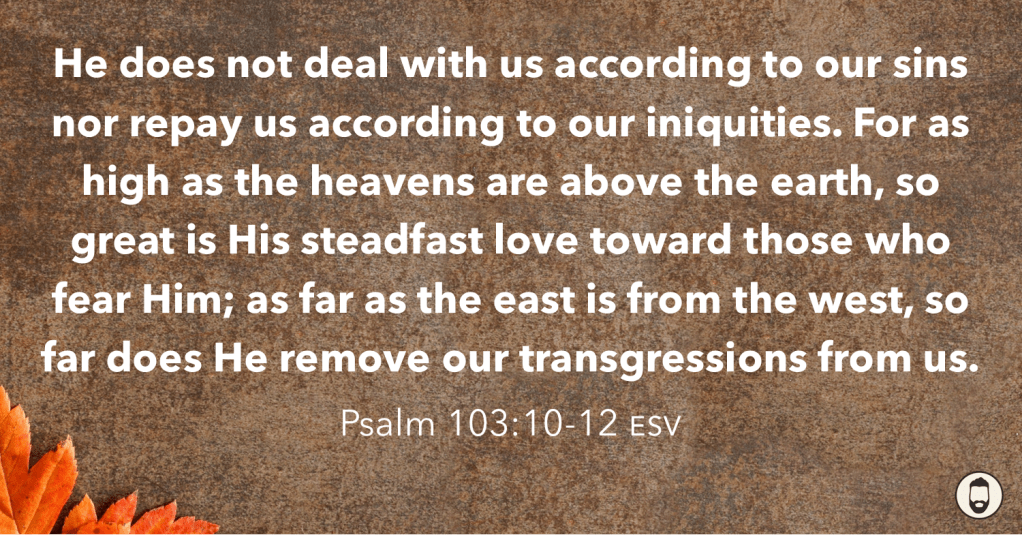
Now, when God looks at us, He sees us through the righteousness of His Son. Jesus speaks on our behalf, declaring that our debt has been paid in full and that we belong to Him. Because of Jesus, God does not deal with us according to our sin but according to His grace and mercy (Psalm 103:10-12).

Today, I am thankful that I don’t have to stand before God in my own strength or righteousness. When I fail, Jesus is my Advocate, reminding me that my sin has been dealt with once and for all.

If you are in Christ, this is true for you, too. Let this truth silence the voice of guilt and shame — the voice of our accuser, and fill your heart with gratitude to the Savior who stood in our place.

If you are not in Christ, understand that you stand before God as judge and represent yourself. There’s more than enough evidence of our sin to convict. Turn your life over to Jesus, confess Him as Lord and put your trust in Him. He will save all who call on Him (Romans 10:9-10, 13)!

That’s good news!

All through the month of November, our Christ Community Church family is focusing on what we are thankful for and expressing our thanks to our “great God and Savior Jesus Christ, who gave Himself for us to redeem us” (Titus 2:13-14).

This, like the #DailyWisdomChallenge we went through in October, is a challenge from our pastor John Goldwater — the #GRATITUDEandHOPEchallenge — where we have the opportunity to post Bible passages that move us to thanksgiving or in which we find hope. May this lead you to be grateful and find your hope in Jesus!

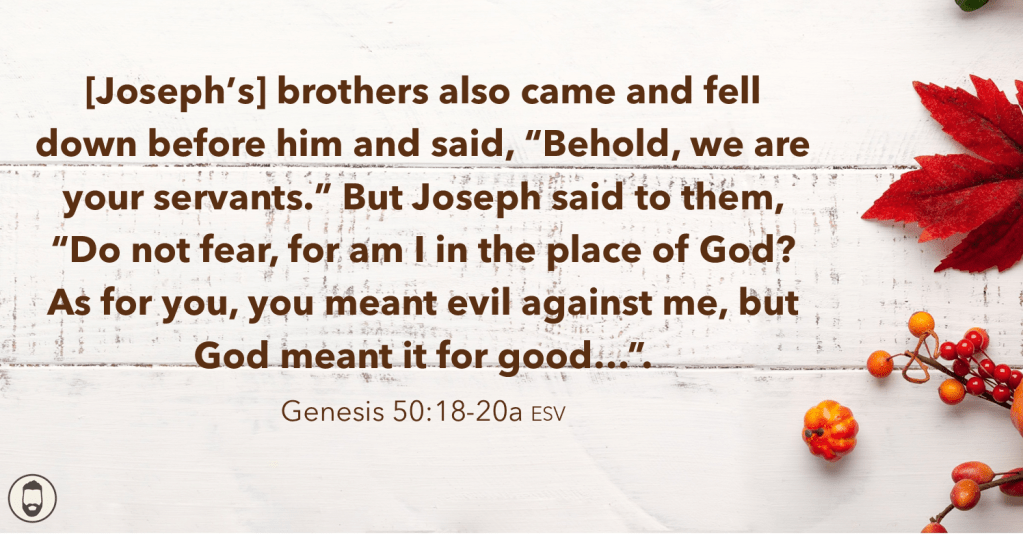
I’m Thankful Evil Meant Against Me Can Be Turned for Good — Gratitude & Hope Challenge | November 21

I’m thankful evil meant against me can be turned for good!

Joseph’s story is one of God’s sovereign grace working through even the darkest circumstances. As a young man, Joseph was betrayed by his brothers who sold him into slavery out of jealousy (Genesis 37:28). He was taken to Egypt where he endured years of hardship, including false accusations and imprisonment (Genesis 39:20). Yet, through it all, God was with him, blessing him with favor and wisdom.

This is not a health, wealth, prosperity gospel sort of story. Joseph was a slave and a prisoner through all of this blessing. No, this is God blessing Joseph despite the circumstances his brothers and Potiphar’s wife put him in. Over time, because of God blessing, Joseph rose to a position of great power in Egypt, ultimately saving countless lives — including his own family — by preparing for a severe famine (Genesis 41:39-41, 45:5-7).

When Joseph’s brothers feared his vengeance after their father’s death, Joseph responded with mercy and a profound trust in God’s purposes. He acknowledged the evil intent behind their actions but pointed to God’s greater plan: “You meant evil against me, but God meant it for good.” What his brothers intended for harm, God used to save lives and fulfill His promises.

This truth reminds us that God is sovereign over every situation. Even when others act with malice, God can take what is meant for evil and use it to accomplish His good purposes (Romans 8:28). Joseph’s story points us to the ultimate example of this: Jesus. The cross, intended as a tool of destruction, death, and shame, was the means of salvation for all who trust in Him (Acts 2:23-24).

Today, I’m thankful for a God who is always at work, even in the most painful and unjust situations. He is faithful to bring good from what seems hopeless. How might God be using the challenges in your life to accomplish His purposes, both for your good and His glory?

Trust Him. He’s got a plan for your life (and your troubles)!


Lord, thank you for taking care of us even when others mean us harm. Thank you for the example of Your working in Joseph’s life and the reminder You gave us in Your Word of Your faithfulness. Help us to see that this is not a story of how to get blessed but a means for us to give You glory with our lives. Help us to be like Joseph and look to You in times of hardship and then respond to those who did us wrong like Joseph did — like You did on the cross when You asked the Father to forgive them. Amen.

All through the month of November, our Christ Community Church family is focusing on what we are thankful for and expressing our thanks to our “great God and Savior Jesus Christ, who gave Himself for us to redeem us” (Titus 2:13-14).

This, like the #DailyWisdomChallenge we went through in October, is a challenge from our pastor John Goldwater — the #GRATITUDEandHOPEchallenge — where we have the opportunity to post Bible passages that move us to thanksgiving or in which we find hope. May this lead you to be grateful and find your hope in Jesus!

Songs for Sunday, November 17, 2024 @ Christ Community Church

Sunday is coming, and I can hardly wait!

Most often, I write the “Songs for Sunday” post on late Friday night or early Saturday mornings because that’s when I get to shift gears in my brain from the weights of the work week to rest and reset on the weekend. That shift helps me get my focus and my priorities back in their proper places. It also serves as a good reminder that Sunday morning worship does not begin on Sunday morning but in the days, and especially the night, before. This week, however, I find myself with surplus time on Friday and a muse to motivate me earlier.

Friday mornings are my favorites of the week because I GET to start with student-led Bible study at school in our FCA/FCS (Fellowship of Christian Athletes/Students). These kids are on fire for Jesus and show it by getting up week after week and sharing testimonies, passages of Scripture, devotions, and sometimes sermons. They challenge me because they are braver than I am. It’s easy to stand up in church and proclaim the Word. It’s a whole other thing to stand up in front of 40-50 peers at school and share your faith. The teachers and staff who show up are superfluous other than getting to silently witness them share their faith. And share their faith they do, compelled to do so by the love of Christ they have experienced and want others to be able to experience, too (2 Corinthians 5:14).

This morning’s devotion stood out to me on two accounts. First, the young lady boldly shared what God had brought her through and the assurance she had in His Word that He would continue to bring her through and would bring others through. Second, she talked about how spending time with God in His Word was a necessity — as vital to maintaining eternal life as oxygen is to life in general. To illustrate that importance she used Colossians 3:16:

“Let the Word of Christ dwell in you richly, teaching and admonishing one another in all wisdom, singing psalms and hymns and spiritual songs, with thankfulness in your hearts to God.”

This is the verse that stays at the forefront of my mind in praying through and planning the Scriptures and songs we will use in our worship gatherings. I have written on it often in these “Songs for Sunday” devotionals. But it hit freshly this morning, and I rejoice in that because I — like we all do — need to be reminded again and again of the grace God gives us.

On Sunday mornings, it is not enough to use the bible, to mention it from time to time, and merely have songs based on it. No, we need it to “dwell in [us] richly”, being the substance of our teaching, our admonishing, and our singing. This is not just for Sunday morning, though. We need to have the Word dwell richly in us throughout the week — Sunday worship spurring us on to continue throughout the week.

We want our songs to be filled with the Word. Psalms meaning that we sing directly from Scripture; hymns meaning we sing and expound the great doctrines found in the Word; and spiritual songs that share our mutual testimony as those who were dead in their trespasses but have been made alive together in Christ.

We want all that we read, say, and sing to be centered on the gospel of Jesus Christ — the good news of all He has done (1 Corinthians 15:3-4, Colossians 1:13-14), is doing (Romans 8:28-29, Philippians 1:6), and has promised to do (John 14:2-3, Revelation 21:3-4)!

And we want it — no, we need it to be like that every other day, too.

I am thankful to have been reminded of this today. Rather than singing a refrain of George Jones’s “Finally Friday” like I normally do, I find myself singing “O Come, O Come Emmanuel”, thinking about the good news that He has come and looking forward to Him coming again to receive us to Himself.

What about you?

I hope as you have read this you have been encouraged to get into the Word — to have it dwell in you richly and to impact your life and faith. I hope it motivates you to make plans to gather with other believers on Sunday morning as believers have done since the stone was rolled aside from Jesus’s empty tomb.

If you do not have a church home and are in the Grenada, MS area, we would love to have you at Christ Community. John will open the Word to feed us what God has for us. The praise team will lead us in singing and reading from the Word. And the choir, the congregation, will lift praise and worship to an audience of one — the One who died for us and rose again — the One who lives and cares for us even now — the One who has come and is coming again.

Won’t you gather with us?


Here are our Scriptures and songs:

15And I (Paul) said, ‘Who are you, Lord?’ And the Lord said, ‘I am Jesus whom you are persecuting. 16But rise and stand upon your feet, for I have appeared to you for this purpose, to appoint you as a servant and witness to the things in which you have seen me and to those in which I will appear to you, 17delivering you from your people and from the Gentiles—to whom I am sending you 18to open their eyes, so that they may turn from darkness to light and from the power of Satan to God, that they may receive forgiveness of sins and a place among those who are sanctified by faith in me.’


But far be it from me to boast except in the cross of our Lord Jesus Christ, by which the world has been crucified to me, and I to the world.


50I tell you this, brothers: flesh and blood cannot inherit the Kingdom of God, nor does the perishable inherit the imperishable. 51Behold! I tell you a mystery. We shall not all sleep, but we shall all be changed, 52in a moment, in the twinkling of an eye, at the last trumpet. For the trumpet will sound, and the dead will be raised imperishable, and we shall be changed. 53For this perishable body must put on the imperishable, and this mortal body must put on immortality. 54When the perishable puts on the imperishable, and the mortal puts on immortality, then shall come to pass the saying that is written:

“Death is swallowed up in victory.”
55“O death, where is your victory?
O death, where is your sting?”

56The sting of death is sin, and the power of sin is the law. 57But thanks be to God, who gives us the victory through our Lord Jesus Christ.


I’m Thankful for the FREE GIFT of Eternal Life — Gratitude & Hope Challenge | November 14

I’m thankful for the FREE GIFT of Eternal Life!

If you are reading this, I have good news for you: Jesus Saves! I hope that you’ll read on and see what it means to receive the FREE GIFT He offers us in salvation. If you’ve already received the gift, keep on reading anyway and be reminded of what you’ve been given.

Let’s look at what it means to be saved, why we need to be saved, and how you can be saved.

What It Means to Be Saved

Imagine someone swimming who has gone out over their head and is drowning. They cry out for a lifeguard to help. Thankfully, the lifeguard hears them and is able to rush to their rescue, pulling them to safety on the shore. That person has been saved from drowning.

This could also apply to someone who has been stuck in a burning building and fallen unconscious from inhaling all the smoke. Firefighters are called to the building and discover them. The firefighter picks up this totally helpless individual, carries them out of the building, and gets them to the paramedics. The firefighter and paramedics have saved this person from certain death.

In the same way, God provided Jesus to save or rescue every sinner who puts their trust in Him. No matter what we have done or who we are, Jesus can save us. Through Jesus, we find salvation by and eternal life by putting our faith and trust in Him.

The Bible describes this in John 3:16

“For God so loved the world, that He gave His only Son, that whoever believes in Him should not perish but have eternal life.”

Why We NEED to Be Saved

You might be thinking: well, it makes sense for someone drowning or trapped in a burning building to need to be saved, but what about me?

The Bible teaches us that all of us have sinned. Sin is an archery term that describes missing the bullseye. The bullseye is perfection and goodness. We might try to do right and good, but we fail at that. God is right and good, and our missing the mark or failing in this way separates us from Him.

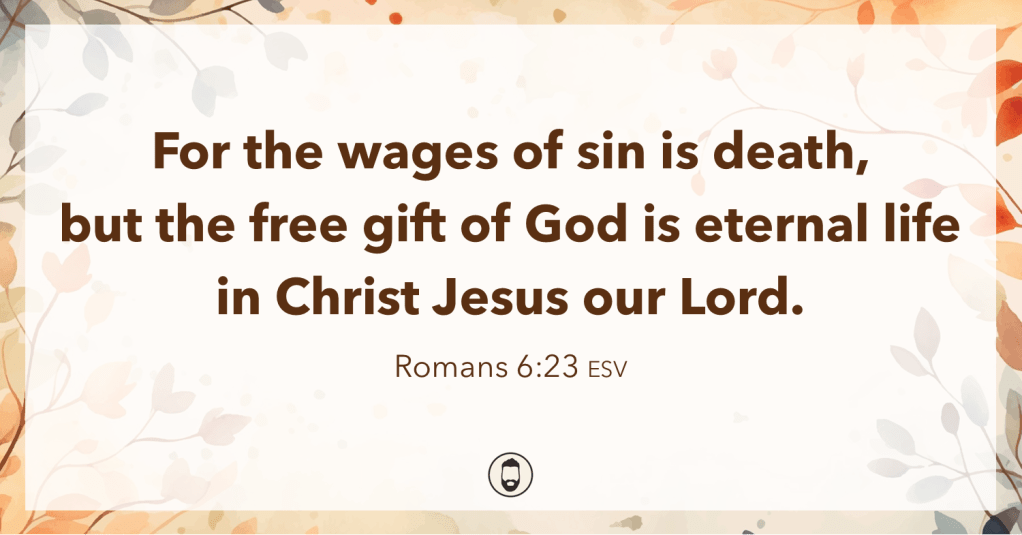
Romans 6:23 tells us that the “wages of sin is death”. This means that our sin has earned us death and that there is nothing we can do to earn our way out of it. Thankfully, that is not the end of Romans 6:23; check out the full verse: “For the wages of sin is death, but the free gift of God is eternal life in Christ Jesus our Lord.” God has made a way for us! Just as John 3:16 tells us above, Jesus paid the penalty for our sin. He died in our place and offers us life instead. That’s good news!

How You Can Be Saved

The only way for us to be saved is to turn from our sins (and the punishment we deserve because of them) to Jesus and put our faith and trust in Him. We turn from our sin because we realize that we are in trouble and deserve death because of them. We turn to Jesus because we realize that, just like the person who was drowning or trapped in the burning building, we cannot save ourselves. 

To put our faith and trust in Him means that we believe that Jesus fully paid the penalty for our sins and offers us forgiveness. The Bible teaches us that Jesus “Himself bore our sins in His body on the tree (the cross)” (1 Peter 2:24). Here is how the Bible tells us we can be saved:

“if you confess with your mouth that Jesus is Lord and believe in your heart that God raised Him from the dead, you will be saved. For with the heart one believes and is justified, and with the mouth one confesses and is saved.” (Romans 10:9-10)

This is what it means when we say put our faith and trust in Jesus; we confess Him as Lord and give our lives over to Him, trusting that He knows best and acknowledge He is God, asking Him to take charge of our lives. We tell Him that we believe He is who the Bible says He is: the Savior who died for our sins and rose again. If we do this, not just saying some magic words but genuinely believing and seeking Him, the Bible tells us that we are saved!


Lord, thank you for offering salvation that is free to all who believe but cost so much at the cost of Your Son. Thank You for raising again and offering that life to all who believe and confess You as Lord. Thank You.

All through the month of November, our Christ Community Church family is focusing on what we are thankful for and expressing our thanks to our “great God and Savior Jesus Christ, who gave Himself for us to redeem us” (Titus 2:13-14).

This, like the #DailyWisdomChallenge we went through in October, is a challenge from our pastor John Goldwater — the #GRATITUDEandHOPEchallenge — where we have the opportunity to post Bible passages that move us to thanksgiving or in which we find hope. May this lead you to be grateful and find your hope in Jesus!

I’m Thankful for God’s Forgiveness — Gratitude & Hope Challenge | November 12

These verses are a beautiful picture of God’s forgiveness and are good reminders for those who are saved to see what the “free gift of eternal life” is in light of the “wages of [our] sin” (Romans 6:23). We are going to briefly unpack these verses, and Lord willing, you will be moved to be thankful as well.

“He does not deal with us according to our sins nor repay us according to our iniquities.” This is a beautiful example of the otherness of God. I know that term sounds weird, but when we talk about God, it is important to remember that He is not like us. This otherness is really linked to His holiness, meaning that He is entirely set apart and above us in His worth, splender, and perfection. God is God, and we are not. 

Human beings deal with each other according to their sin and iniquity. If someone has wronged us or someone close to us, it is likely that we will forever treat them differently because of it. Even if we forgive, we are quick to let folks know we won’t forget. If we catch someone in a lie, they will forever be defined as a liar (even though we have been guilty of the same). The sin is a defining point for us because we don’t want to fall victim of it again. Yet God does not deal with US that way. 

That “us” is very important here because it is a distinction from how others are dealt with. This is not the us v. them where we make ourselves to be righteous (Romans 3:10-12). No, this is referencing the difference between those who have believed and put their faith in God and have been saved by grace through faith in Jesus (Ephesians 2:8-9) and those who have not (John 3:18). He does not deal with “us” according to our sin because Jesus has paid for our sin (1 Peter 2:24). Our sin does not define us because He defines us based on our relationship with Jesus (2 Corinthians 5:17, 21; Romans 8:1). 

“For as high as the heavens are above the earth, so great is His steadfast love toward those who fear Him….” Here we see the otherness of God again. This is literally the 6,000 mile view, one that God sees easily from His vantage point that we might struggle with from ours. 6,214 miles above our vantage point is when the earth stops being the earth; that’s literally how high the heavens are above the earth. God’s steadfast love – His never-stopping, never-failing, never-giving-up, everlasting love – is astronomically greater than our human hearts can fathom or feature (Isaiah 55:8-9). 

This qualifies the “us” from the last section because the “us” is made up of those who fear the Lord – those who follow and worship Him, those who have been saved by Him (Psalm 25:12-14). It also builds on the last section specifically because it shows that God not only has decided not to “deal with us according to our sins or repay us according to our iniquities” because He has paid the penalty for them (2 Corinthians 5:21) but did this because He loves us (John 3:16, Ephesians 2:4-5). This love is foreign to us because in our sinfulness we want to repay evil with evil, sin with sin (Matthew 5:44-45, 1 Peter 3:9). God is different. He loved us and saved us from our sin when we were still in it – when we still deserved death and hell; that “demonstrates” how much higher His love is than ours (Romans 5:8).

“…[A]s far as the east is from the west, so far does He remove our transgressions from us.” I love the contrast of imagery between the atmospheric levels of love in the last section and the global stretch of His forgiveness in this one. It is really cool to see how God specifically created the earth in such a way that it illustrates this, too. If His love requires a 6,000 foot view, His forgiveness requires understanding of what infinity is. You see, if you set out westward here on earth, you will go infinitely west. West will never start being east, and vice versa. God infinitely removes our sin from us. It is gone. Period. Finito. Over with. It is finished.

When Jesus forgives, He can allow Himself to forget because when He saves us He will not lose us. The eternal life He gives is, well, eternal. The change He produces in people’s lives is continual because it stems from His love and faithfulness, not ours. So, He doesn’t have to deal with us “according to our sins” because they have been infinitely removed. They have been paid for and we cannot repossess them. He has the receipt and is not taking returns. 

This is good news. It is nearly incomprehensible for us because we know the weight and evil nature of our sin (Psalm 51:3-5, Jeremiah 17:9). Yet He loved us and became the propitiation (wrath bearing sacrifice that trades the punishment due our sin for the favor due His Son) for our sin (Romans 3:23-25; 1 John 2:1-2, 4:10). 

What about you? Have you experienced the forgiveness of God? Will you stand before Him and have Him see Jesus’s blood and righteousness or stand before Him in your sin? 


Thank You, Lord, for offering forgiveness and salvation through Your Son Jesus.

Thank You, Lord, for Your astronomical love and the way you help us to see what You have done for us.

All through the month of November, our Christ Community Church family is focusing on what we are thankful for and expressing our thanks to our “great God and Savior Jesus Christ, who gave Himself for us to redeem us” (Titus 2:13-14).

This, like the #DailyWisdomChallenge we went through in October, is a challenge from our pastor John Goldwater — the #GRATITUDEandHOPEchallenge — where we have the opportunity to post Bible passages that move us to thanksgiving or in which we find hope. May this lead you to be grateful and find your hope in Jesus!

I’m Thankful for God’s Faithfulness — Gratitude & Hope Challenge | November 7

I’m thankful for God’s faithfulness!

Sometimes when Christ-followers say Jesus is our everything or that He is everything to us, it can sound a bit cliche. But for those who are in Christ, it is not just a statement we make; it is the foundation of our hope — the foundation of our life in Him.

When we are saved, He takes us from death to life (Ephesians 2:1-5). He takes our sin and exchanges it for His righteousness (2 Corinthians 5:21). Our old life passes away in His death and new life is born through His resurrection (2 Corinthians 5:17, Colossians 3:9-10, Ephesians 4:17-24). He builds us up and establishes us (Colossians 2:6-7).

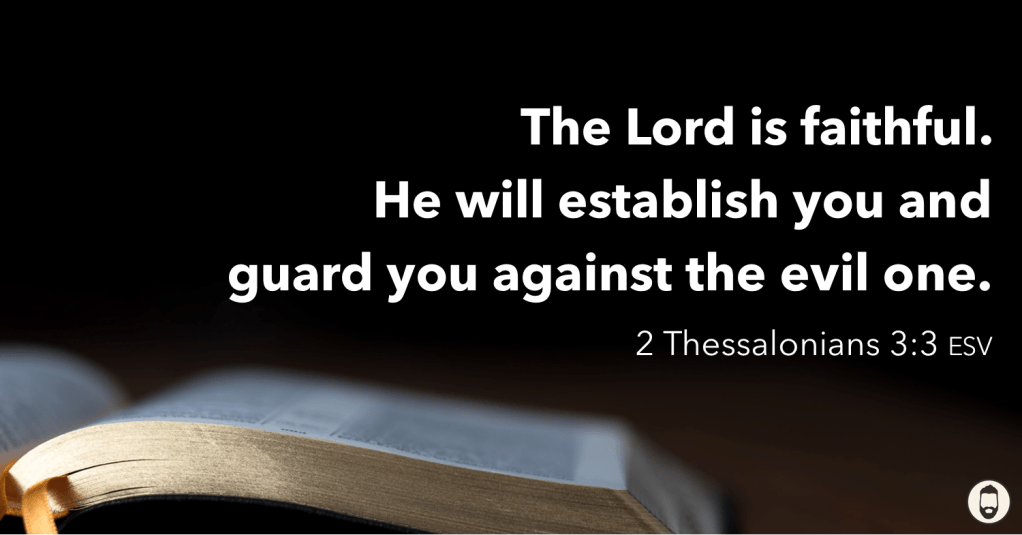
Not only is Jesus faithful in salvation, but He is faithful in keeping us and protecting us. Think about it: if we can trust Him to do what He says and save us — if He can bring us from death to life in Him, isn’t He powerful enough to protect us and “guard [us] against the evil one”?

The answer is yes.

As the author of Hebrews put it: “He who promised is faithful” (Hebrews 10:23). And I sure am thankful He is!


Thank You, Lord, for being the One who never fails, never lies, and never changes. When He say You will do something, You do it. When You promise, You fulfill it. When You love, You don’t let go. There is no one else in the universe faithful like You — definitely not us! Thank You for being faithful to build us up and protect us from evil. Amen.

All through the month of November, our Christ Community Church family is focusing on what we are thankful for and expressing our thanks to our “great God and Savior Jesus Christ, who gave Himself for us to redeem us” (Titus 2:13-14).

This, like the #DailyWisdomChallenge we went through in October, is a challenge from our pastor John Goldwater — the #GRATITUDEandHOPEchallenge — where we have the opportunity to post Bible passages that move us to thanksgiving or in which we find hope. May this lead you to be grateful and find your hope in Jesus!