Good News of Great Joy | December 15 — “The Joy of God Over the Lost Being Found”

Luke 15 reveals the heart of God toward sinners—a heart full of compassion, mercy, and rejoicing. As we prepare for Christmas, these parables remind us of God’s relentless pursuit of the lost and His joy when they return to Him. The shepherd, the woman, and the father represent God’s care for every sinner, no matter how far they have strayed.

"Before the Throne of God Above" from Revelation 4 (The KING is Coming) Refresh & Restore | A JustKeithHarris.com Podcast

📖 Revelation 4:1–11In this episode of The King is Coming, Keith Harris and Jamie Harrison move beyond Jesus’s letters to the churches and into the next part of John’s vision. In Revelation 4, John is invited through an open door into heaven—and what he sees is the throne room of God.At the center of everything is a throne, and seated on it is the Lord in all His glory. From this point forward in Revelation, the throne becomes the focal point of the entire book.John describes the scene the best way he can: the brilliance of precious stones, a rainbow surrounding the throne, flashes of lightning and thunder, and a crystal-like sea before it. Surrounding the throne are twenty-four elders and four living creatures who never cease to worship the Lord.Together, Keith and Jamie discuss:✔️ Why Revelation 4 marks a shift from the letters to the churches to John’s heavenly vision✔️ What the throne room reveals about God’s authority and security over all things✔️ Why John uses comparisons (“like” and “as”) to describe the glory he sees✔️ The mystery of the twenty-four elders and what we can—and cannot—know✔️ The constant worship of the living creatures crying “Holy, holy, holy”✔️ Why heaven’s worship centers on God simply because He is worthyIn the throne room, everything points to one truth: God alone is worthy of worship.“Worthy are you, our Lord and God, to receive glory and honor and power, for you created all things, and by your will they existed and were created.” (Revelation 4:11)🔗 If you would like to see a written version of this podcast, complete with footnotes and cross-references, you can find it here.
  1. "Before the Throne of God Above" from Revelation 4 (The KING is Coming)
  2. " Lukewarm Yet Not Without Hope: Jesus’s Letter to the Church at Laodicea" (The KING is Coming)
  3. "Kept Through the Trial: Jesus's Letter to the Church at Philadelphia" (The KING is Coming)
  4. Christ Has Come: The Promised King & His Gift of Love" (Advent 2025)

The Parable of the Lost Sheep (15:1-7)[1]

Now the tax collectors and sinners were all drawing near to hear him. And the Pharisees and the scribes grumbled, saying, “This man receives sinners and eats with them.”

So he told them this parable: “What man of you, having a hundred sheep, if he has lost one of them, does not leave the ninety-nine in the open country, and go after the one that is lost, until he finds it? And when he has found it, he lays it on his shoulders, rejoicing. And when he comes home, he calls together his friends and his neighbors, saying to them, ‘Rejoice with me, for I have found my sheep that was lost.’ Just so, I tell you, there will be more joy in heaven over one sinner who repents than over ninety-nine righteous persons who need no repentance.

The Parable of the Lost Coin (15:8-10)[2]

“Or what woman, having ten silver coins, if she loses one coin, does not light a lamp and sweep the house and seek diligently until she finds it? And when she has found it, she calls together her friends and neighbors, saying, ‘Rejoice with me, for I have found the coin that I had lost.’ 10 Just so, I tell you, there is joy before the angels of God over one sinner who repents.”

The Parable of the Prodigal Son (15:11-32)[3]

11 And he said, “There was a man who had two sons. 12 And the younger of them said to his father, ‘Father, give me the share of property that is coming to me.’ And he divided his property between them. 13 Not many days later, the younger son gathered all he had and took a journey into a far country, and there he squandered his property in reckless living. 14 And when he had spent everything, a severe famine arose in that country, and he began to be in need. 15 So he went and hired himself out to one of the citizens of that country, who sent him into his fields to feed pigs. 16 And he was longing to be fed with the pods that the pigs ate, and no one gave him anything.

17 “But when he came to himself, he said, ‘How many of my father’s hired servants have more than enough bread, but I perish here with hunger! 18 I will arise and go to my father, and I will say to him, “Father, I have sinned against heaven and before you. 19 I am no longer worthy to be called your son. Treat me as one of your hired servants.” ’ 20 And he arose and came to his father. But while he was still a long way off, his father saw him and felt compassion, and ran and embraced him and kissed him. 21 And the son said to him, ‘Father, I have sinned against heaven and before you. I am no longer worthy to be called your son.’ 22 But the father said to his servants, ‘Bring quickly the best robe, and put it on him, and put a ring on his hand, and shoes on his feet. 23 And bring the fattened calf and kill it, and let us eat and celebrate. 24 For this my son was dead, and is alive again; he was lost, and is found.’ And they began to celebrate.

25 “Now his older son was in the field, and as he came and drew near to the house, he heard music and dancing. 26 And he called one of the servants and asked what these things meant. 27 And he said to him, ‘Your brother has come, and your father has killed the fattened calf, because he has received him back safe and sound.’ 28 But he was angry and refused to go in. His father came out and entreated him, 29 but he answered his father, ‘Look, these many years I have served you, and I never disobeyed your command, yet you never gave me a young goat, that I might celebrate with my friends. 30 But when this son of yours came, who has devoured your property with prostitutes, you killed the fattened calf for him!’ 31 And he said to him, ‘Son, you are always with me, and all that is mine is yours. 32 It was fitting to celebrate and be glad, for this your brother was dead, and is alive; he was lost, and is found.’ ”


[1] Tax collectors and sinners drew near to hear Jesus, but the Pharisees and scribes grumbled because He welcomed them. In response, Jesus told three parables, starting with the lost sheep. A shepherd leaves 99 sheep to search for one that is lost, and when he finds it, he rejoices greatly. Jesus explains that there is more joy in heaven over one sinner who repents than over 99 who think they need no repentance.

[2] A woman loses one of her ten silver coins and diligently searches for it, lighting a lamp and sweeping her house. When she finds it, she calls her friends and neighbors to rejoice with her. Jesus emphasizes that the same joy occurs among the angels of God over one sinner who repents.

[3] A father has two sons. The younger demands his inheritance, leaves home, and squanders it in reckless living. Reduced to feeding pigs and longing to eat their food, he comes to his senses and decides to return to his father, confessing his sin. The father, seeing him from afar, runs to embrace him, clothes him with a robe, places a ring on his finger, and celebrates his return with a feast.

The older son, however, becomes angry, refusing to join the celebration. He protests that he has always been faithful but was never given such a feast. The father gently reminds him that all he has belongs to him, but it is right to celebrate because the lost son has been found.

Good News of Great Joy | December 8 — “Faith Comes by Hearing”

Luke 8 highlights the transformative power of God’s Word and the necessity of faith. Jesus shows His authority over nature, demons, sickness, and death, calling us to trust Him in all circumstances. As Advent draws near, let us cultivate hearts like good soil—ready to receive God’s Word, bear fruit, and live by faith. May this season remind us that Jesus brings hope, healing, and new life to all who believe.

"Before the Throne of God Above" from Revelation 4 (The KING is Coming) Refresh & Restore | A JustKeithHarris.com Podcast

📖 Revelation 4:1–11In this episode of The King is Coming, Keith Harris and Jamie Harrison move beyond Jesus’s letters to the churches and into the next part of John’s vision. In Revelation 4, John is invited through an open door into heaven—and what he sees is the throne room of God.At the center of everything is a throne, and seated on it is the Lord in all His glory. From this point forward in Revelation, the throne becomes the focal point of the entire book.John describes the scene the best way he can: the brilliance of precious stones, a rainbow surrounding the throne, flashes of lightning and thunder, and a crystal-like sea before it. Surrounding the throne are twenty-four elders and four living creatures who never cease to worship the Lord.Together, Keith and Jamie discuss:✔️ Why Revelation 4 marks a shift from the letters to the churches to John’s heavenly vision✔️ What the throne room reveals about God’s authority and security over all things✔️ Why John uses comparisons (“like” and “as”) to describe the glory he sees✔️ The mystery of the twenty-four elders and what we can—and cannot—know✔️ The constant worship of the living creatures crying “Holy, holy, holy”✔️ Why heaven’s worship centers on God simply because He is worthyIn the throne room, everything points to one truth: God alone is worthy of worship.“Worthy are you, our Lord and God, to receive glory and honor and power, for you created all things, and by your will they existed and were created.” (Revelation 4:11)🔗 If you would like to see a written version of this podcast, complete with footnotes and cross-references, you can find it here.
  1. "Before the Throne of God Above" from Revelation 4 (The KING is Coming)
  2. " Lukewarm Yet Not Without Hope: Jesus’s Letter to the Church at Laodicea" (The KING is Coming)
  3. "Kept Through the Trial: Jesus's Letter to the Church at Philadelphia" (The KING is Coming)
  4. Christ Has Come: The Promised King & His Gift of Love" (Advent 2025)

The Parable of the Sower and the Lamp (8:1-21)[1]

Soon afterward he went on through cities and villages, proclaiming and bringing the good news of the kingdom of God. And the twelve were with him, and also some women who had been healed of evil spirits and infirmities: Mary, called Magdalene, from whom seven demons had gone out, and Joanna, the wife of Chuza, Herod’s household manager, and Susanna, and many others, who provided for them out of their means.

And when a great crowd was gathering and people from town after town came to him, he said in a parable, “A sower went out to sow his seed. And as he sowed, some fell along the path and was trampled underfoot, and the birds of the air devoured it. And some fell on the rock, and as it grew up, it withered away, because it had no moisture. And some fell among thorns, and the thorns grew up with it and choked it. And some fell into good soil and grew and yielded a hundredfold.” As he said these things, he called out, “He who has ears to hear, let him hear.”

And when his disciples asked him what this parable meant, 10 he said, “To you it has been given to know the secrets of the kingdom of God, but for others they are in parables, so that ‘seeing they may not see, and hearing they may not understand.’ 11 Now the parable is this: The seed is the word of God. 12 The ones along the path are those who have heard; then the devil comes and takes away the word from their hearts, so that they may not believe and be saved. 13 And the ones on the rock are those who, when they hear the word, receive it with joy. But these have no root; they believe for a while, and in time of testing fall away. 14 And as for what fell among the thorns, they are those who hear, but as they go on their way they are choked by the cares and riches and pleasures of life, and their fruit does not mature. 15 As for that in the good soil, they are those who, hearing the word, hold it fast in an honest and good heart, and bear fruit with patience.

16 “No one after lighting a lamp covers it with a jar or puts it under a bed, but puts it on a stand, so that those who enter may see the light. 17 For nothing is hidden that will not be made manifest, nor is anything secret that will not be known and come to light. 18 Take care then how you hear, for to the one who has, more will be given, and from the one who has not, even what he thinks that he has will be taken away.”

19 Then his mother and his brothers came to him, but they could not reach him because of the crowd. 20 And he was told, “Your mother and your brothers are standing outside, desiring to see you.” 21 But he answered them, “My mother and my brothers are those who hear the word of God and do it.”

Jesus Calms the Storm (8:22-25)[2]

22 One day he got into a boat with his disciples, and he said to them, “Let us go across to the other side of the lake.” So they set out, 23 and as they sailed he fell asleep. And a windstorm came down on the lake, and they were filling with water and were in danger. 24 And they went and woke him, saying, “Master, Master, we are perishing!” And he awoke and rebuked the wind and the raging waves, and they ceased, and there was a calm. 25 He said to them, “Where is your faith?” And they were afraid, and they marveled, saying to one another, “Who then is this, that he commands even winds and water, and they obey him?”

The Healing of the Demoniac (8:26-39)[3]

26 Then they sailed to the country of the Gerasenes, which is opposite Galilee. 27 When Jesus had stepped out on land, there met him a man from the city who had demons. For a long time he had worn no clothes, and he had not lived in a house but among the tombs. 28 When he saw Jesus, he cried out and fell down before him and said with a loud voice, “What have you to do with me, Jesus, Son of the Most High God? I beg you, do not torment me.” 29 For he had commanded the unclean spirit to come out of the man. (For many a time it had seized him. He was kept under guard and bound with chains and shackles, but he would break the bonds and be driven by the demon into the desert.) 30 Jesus then asked him, “What is your name?” And he said, “Legion,” for many demons had entered him. 31 And they begged him not to command them to depart into the abyss. 32 Now a large herd of pigs was feeding there on the hillside, and they begged him to let them enter these. So he gave them permission. 33 Then the demons came out of the man and entered the pigs, and the herd rushed down the steep bank into the lake and drowned.

34 When the herdsmen saw what had happened, they fled and told it in the city and in the country. 35 Then people went out to see what had happened, and they came to Jesus and found the man from whom the demons had gone, sitting at the feet of Jesus, clothed and in his right mind, and they were afraid. 36 And those who had seen it told them how the demon-possessed man had been healed. 37 Then all the people of the surrounding country of the Gerasenes asked him to depart from them, for they were seized with great fear. So he got into the boat and returned. 38 The man from whom the demons had gone begged that he might be with him, but Jesus sent him away, saying, 39 “Return to your home, and declare how much God has done for you.” And he went away, proclaiming throughout the whole city how much Jesus had done for him.

The Healing of the Woman and Raising of Jairus’s Daughter (8:40-56)[4]

40 Now when Jesus returned, the crowd welcomed him, for they were all waiting for him. 41 And there came a man named Jairus, who was a ruler of the synagogue. And falling at Jesus’ feet, he implored him to come to his house, 42 for he had an only daughter, about twelve years of age, and she was dying.

As Jesus went, the people pressed around him. 43 And there was a woman who had had a discharge of blood for twelve years, and though she had spent all her living on physicians, she could not be healed by anyone. 44 She came up behind him and touched the fringe of his garment, and immediately her discharge of blood ceased. 45 And Jesus said, “Who was it that touched me?” When all denied it, Peter said, “Master, the crowds surround you and are pressing in on you!” 46 But Jesus said, “Someone touched me, for I perceive that power has gone out from me.” 47 And when the woman saw that she was not hidden, she came trembling, and falling down before him declared in the presence of all the people why she had touched him, and how she had been immediately healed. 48 And he said to her, “Daughter, your faith has made you well; go in peace.”

49 While he was still speaking, someone from the ruler’s house came and said, “Your daughter is dead; do not trouble the Teacher any more.” 50 But Jesus on hearing this answered him, “Do not fear; only believe, and she will be well.” 51 And when he came to the house, he allowed no one to enter with him, except Peter and John and James, and the father and mother of the child. 52 And all were weeping and mourning for her, but he said, “Do not weep, for she is not dead but sleeping.” 53 And they laughed at him, knowing that she was dead. 54 But taking her by the hand he called, saying, “Child, arise.” 55 And her spirit returned, and she got up at once. And he directed that something should be given her to eat. 56 And her parents were amazed, but he charged them to tell no one what had happened.


[1] Jesus teaches about the varied responses to God’s Word through the parable of the sower. The seed symbolizes God’s Word, and the soils represent different hearts: some reject it, others fall away under trials, and some are distracted by life’s worries. Only good soil—those who hear, retain, and obey the Word—bears fruit (v. 15). Jesus also compares His Word to a lamp, meant to shine and transform lives. He concludes that His true family are those who hear and obey the Word.

[2] While crossing the Sea of Galilee with His disciples, Jesus calms a fierce storm with a simple command, revealing His authority over nature. The disciples, amazed and fearful, ask, “Who then is this, that he commands even winds and water, and they obey him?” (v. 25). This miracle shows Jesus as God, the Lord of Creation, as even the weather obeys Him.

[3] Jesus heals a man possessed by a legion of demons in the region of the Gerasenes (or Gadarenes). The demons recognize Jesus as “Son of the Most High God” (v. 28) and beg not to be sent into the abyss and instead enter a herd of pigs, which rush into the sea and drown. The man, now healed and in his right mind, becomes a witness to Jesus’ power and grace. Despite this miracle, the townspeople, frightened by what has happened, ask Jesus to leave their region.

[4] A desperate father, Jairus, pleads with Jesus to heal his dying daughter. On the way, a woman suffering from a long-term illness touches the fringe of Jesus’ garment and is healed instantly. Jesus tells her, “Daughter, your faith has made you well; go in peace” (v. 48). Shortly after, Jairus’s daughter dies, but Jesus tells him, “Do not fear; only believe” (v. 50). His healing of the woman and raising of Jairus’s daughter demonstrates His power over both disease and death.

Good News of Great Joy | December 3 — “Prepare the Way for the Lord”

John’s message of repentance reminds us to prepare our hearts for Jesus and our need for Him as Savior. Jesus’s baptism reveals His humility and obedience, while the genealogy affirms that Jesus is the Savior of the world. During Advent, let us reflect on how Jesus fulfills every promise and calls us to live as His faithful followers.

"Before the Throne of God Above" from Revelation 4 (The KING is Coming) Refresh & Restore | A JustKeithHarris.com Podcast

📖 Revelation 4:1–11In this episode of The King is Coming, Keith Harris and Jamie Harrison move beyond Jesus’s letters to the churches and into the next part of John’s vision. In Revelation 4, John is invited through an open door into heaven—and what he sees is the throne room of God.At the center of everything is a throne, and seated on it is the Lord in all His glory. From this point forward in Revelation, the throne becomes the focal point of the entire book.John describes the scene the best way he can: the brilliance of precious stones, a rainbow surrounding the throne, flashes of lightning and thunder, and a crystal-like sea before it. Surrounding the throne are twenty-four elders and four living creatures who never cease to worship the Lord.Together, Keith and Jamie discuss:✔️ Why Revelation 4 marks a shift from the letters to the churches to John’s heavenly vision✔️ What the throne room reveals about God’s authority and security over all things✔️ Why John uses comparisons (“like” and “as”) to describe the glory he sees✔️ The mystery of the twenty-four elders and what we can—and cannot—know✔️ The constant worship of the living creatures crying “Holy, holy, holy”✔️ Why heaven’s worship centers on God simply because He is worthyIn the throne room, everything points to one truth: God alone is worthy of worship.“Worthy are you, our Lord and God, to receive glory and honor and power, for you created all things, and by your will they existed and were created.” (Revelation 4:11)🔗 If you would like to see a written version of this podcast, complete with footnotes and cross-references, you can find it here.
  1. "Before the Throne of God Above" from Revelation 4 (The KING is Coming)
  2. " Lukewarm Yet Not Without Hope: Jesus’s Letter to the Church at Laodicea" (The KING is Coming)
  3. "Kept Through the Trial: Jesus's Letter to the Church at Philadelphia" (The KING is Coming)
  4. Christ Has Come: The Promised King & His Gift of Love" (Advent 2025)

The Ministry of John the Baptist[1]

In the fifteenth year of the reign of Tiberius Caesar, Pontius Pilate being governor of Judea, and Herod being tetrarch of Galilee, and his brother Philip tetrarch of the region of Ituraea and Trachonitis, and Lysanias tetrarch of Abilene, during the high priesthood of Annas and Caiaphas, the word of God came to John the son of Zechariah in the wilderness. And he went into all the region around the Jordan, proclaiming a baptism of repentance for the forgiveness of sins. As it is written in the book of the words of Isaiah the prophet,

“The voice of one crying in the wilderness: ‘Prepare the way of the Lord, make his paths straight. Every valley shall be filled, and every mountain and hill shall be made low, and the crooked shall become straight, and the rough places shall become level ways, and all flesh shall see the salvation of God.’ ”

He said therefore to the crowds that came out to be baptized by him, “You brood of vipers! Who warned you to flee from the wrath to come? Bear fruits in keeping with repentance. And do not begin to say to yourselves, ‘We have Abraham as our father.’ For I tell you, God is able from these stones to raise up children for Abraham. Even now the axe is laid to the root of the trees. Every tree therefore that does not bear good fruit is cut down and thrown into the fire.”

10 And the crowds asked him, “What then shall we do?” 11 And he answered them, “Whoever has two tunics is to share with him who has none, and whoever has food is to do likewise.” 12 Tax collectors also came to be baptized and said to him, “Teacher, what shall we do?” 13 And he said to them, “Collect no more than you are authorized to do.” 14 Soldiers also asked him, “And we, what shall we do?” And he said to them, “Do not extort money from anyone by threats or by false accusation, and be content with your wages.”

15 As the people were in expectation, and all were questioning in their hearts concerning John, whether he might be the Christ, 16 John answered them all, saying, “I baptize you with water, but he who is mightier than I is coming, the strap of whose sandals I am not worthy to untie. He will baptize you with the Holy Spirit and fire. 17 His winnowing fork is in his hand, to clear his threshing floor and to gather the wheat into his barn, but the chaff he will burn with unquenchable fire.”

18 So with many other exhortations he preached good news to the people. 19 But Herod the tetrarch, who had been reproved by him for Herodias, his brother’s wife, and for all the evil things that Herod had done, 20 added this to them all, that he locked up John in prison.

The Baptism of Jesus[2]

21 Now when all the people were baptized, and when Jesus also had been baptized and was praying, the heavens were opened, 22 and the Holy Spirit descended on him in bodily form, like a dove; and a voice came from heaven, “You are my beloved Son; with you I am well pleased.”

The Genealogy of Jesus[3]

23 Jesus, when he began his ministry, was about thirty years of age, being the son (as was supposed) of Joseph, the son of Heli, 24 the son of Matthat, the son of Levi, the son of Melchi, the son of Jannai, the son of Joseph, 25 the son of Mattathias, the son of Amos, the son of Nahum, the son of Esli, the son of Naggai, 26 the son of Maath, the son of Mattathias, the son of Semein, the son of Josech, the son of Joda, 27 the son of Joanan, the son of Rhesa, the son of Zerubbabel, the son of Shealtiel, the son of Neri, 28 the son of Melchi, the son of Addi, the son of Cosam, the son of Elmadam, the son of Er, 29 the son of Joshua, the son of Eliezer, the son of Jorim, the son of Matthat, the son of Levi, 30 the son of Simeon, the son of Judah, the son of Joseph, the son of Jonam, the son of Eliakim, 31 the son of Melea, the son of Menna, the son of Mattatha, the son of Nathan, the son of David, 32 the son of Jesse, the son of Obed, the son of Boaz, the son of Sala, the son of Nahshon, 33 the son of Amminadab, the son of Admin, the son of Arni, the son of Hezron, the son of Perez, the son of Judah, 34 the son of Jacob, the son of Isaac, the son of Abraham, the son of Terah, the son of Nahor, 35 the son of Serug, the son of Reu, the son of Peleg, the son of Eber, the son of Shelah, 36 the son of Cainan, the son of Arphaxad, the son of Shem, the son of Noah, the son of Lamech, 37 the son of Methuselah, the son of Enoch, the son of Jared, the son of Mahalaleel, the son of Cainan, 38 the son of Enos, the son of Seth, the son of Adam, the son of God.


[1] Luke begins by situating John’s ministry within the historical context of Roman and Jewish leaders, showing how God’s Word came to John, not to elite political or religious figures. John’s ministry fulfilled Isaiah’s prophecy, calling people to repent and prepare for the Lord (Isaiah 40:3-5). He baptized them as a sign of repentance, warning about God’s coming judgment and teaching them how to live faithfully. When questioned, John pointed to the coming Messiah (vv. 4-6).

[2] Jesus was baptized by John as an example for us, not for repentance and obedience because He is without sin (2 Corinthians 5:21). When He came out of the water, the heavens opened, and the Holy Spirit descended on Him like a dove. God the Father declared, “You are my beloved Son; with you I am well pleased” (v. 22). This moment revealed Jesus as God’s Son and the promised Savior, with the Father, Son, and Holy Spirit all present.

[3] Luke traces Jesus’ lineage back to Adam, emphasizing that He is the Savior for all people, not just the Jews. This genealogy highlights Jesus’s identity as the Son of God and fulfills the requirements for the Messiah, showing His divine authority and His connection to humanity.

I’m Thankful to Jesus for Being My Advocate — Gratitude & Hope Challenge | November 22

I’m thankful to Jesus for being my Advocate!

I touched on the subject of Jesus as our Advocate in the last entry in the #DailyWisdomChallenge, so I guess this has been on my mind and heart for a few weeks now.

Sin brings guilt, shame, and condemnation. our enemy, Satan, is quick to accuse us, pointing out our failures and declaring us unworthy before God (Revelation 12:10). But in 1 John 2:1-2, we are reminded of the incredible hope we have in Jesus as our Advocate. An advocate is someone who pleads on behalf of another, and Jesus does this perfectly for us. When we sin, He intercedes for us before the Father — not by minimizing our sin but by pointing to His finished work on the cross!

Jesus is described as “the righteous”, the One who lived a sinless life and was perfectly obedient to the Father. Because of His righteousness, He could offer Himself as the perfect sacrifice for our sins. John tells us that Jesus is the “propitiation for our sins” — a wrath-bearing atonement. On the cross, Jesus took upon Himself the punish our sins deserved, fully satisfying God’s justice and turning away His righteous wrath (Romans 3:25-26). His blood covers us, and through Him, we are forgiven and cleansed (1 John 1:7).

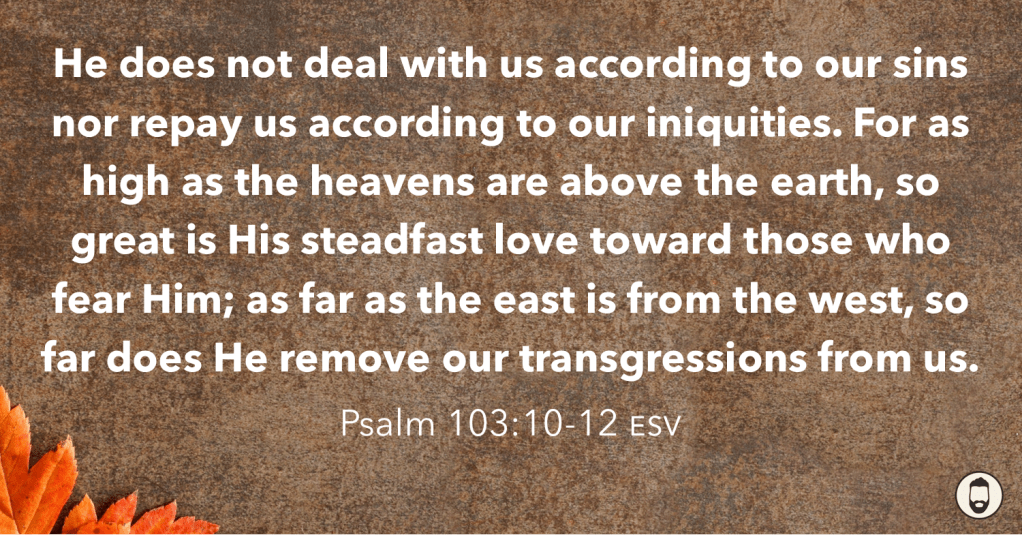
Now, when God looks at us, He sees us through the righteousness of His Son. Jesus speaks on our behalf, declaring that our debt has been paid in full and that we belong to Him. Because of Jesus, God does not deal with us according to our sin but according to His grace and mercy (Psalm 103:10-12).

Today, I am thankful that I don’t have to stand before God in my own strength or righteousness. When I fail, Jesus is my Advocate, reminding me that my sin has been dealt with once and for all.

If you are in Christ, this is true for you, too. Let this truth silence the voice of guilt and shame — the voice of our accuser, and fill your heart with gratitude to the Savior who stood in our place.

If you are not in Christ, understand that you stand before God as judge and represent yourself. There’s more than enough evidence of our sin to convict. Turn your life over to Jesus, confess Him as Lord and put your trust in Him. He will save all who call on Him (Romans 10:9-10, 13)!

That’s good news!

All through the month of November, our Christ Community Church family is focusing on what we are thankful for and expressing our thanks to our “great God and Savior Jesus Christ, who gave Himself for us to redeem us” (Titus 2:13-14).

This, like the #DailyWisdomChallenge we went through in October, is a challenge from our pastor John Goldwater — the #GRATITUDEandHOPEchallenge — where we have the opportunity to post Bible passages that move us to thanksgiving or in which we find hope. May this lead you to be grateful and find your hope in Jesus!

I’m Thankful for Salvation in Christ Alone by Grace Alone through Faith Alone — Gratitude & Hope Challenge | November 19

I’m thankful for salvation in Christ alone by grace alone through faith alone!

What makes grace so amazing? It’s that God saves us not because of who we are or what we’ve done but because of who He is. In our sin, we are spiritually dead, unable to save ourselves. But God, rich in His mercy and overflowing with His love, makes us alive through Jesus. Salvation is not something we can earn; it is a gift of God’s grace that must be received through faith in Jesus (alone).

This means that our works, our goodness, or even our religious or church activities cannot save us. No one can ever be good enough to meet God’s perfect standard (Romans 3:10, 23) but Jesus (1 John 2:1-2). He lived the sinless life we couldn’t live, died the death we deserved on the cross, and rose again to offer us new life. When we trust in Jesus — put our faith in Him believing that He is enough and that He died and rose again, we are forgiven, made alive, and welcomed into God’s family through adoption (John 1:12, Romans 10:9-10).

Faith is not about trying harder to fix ourselves but about turning to Jesus and trusting Him fully.

Grace means that God does what we cannot do. Jesus makes the dead alive, the lost found, and the broken whole. That’s good news!

Today, if you’ve not experienced this grace, I invite you to put your faith and trust in Jesus. if you’ve already trusted in Christ, let your heart overflow with thankfulness for the gift that you did not earn but He gave freely — salvation by grace alone through faith alone in Christ alone!

This is why I’m thankful, and this is why I have hope. What about you?

All through the month of November, our Christ Community Church family is focusing on what we are thankful for and expressing our thanks to our “great God and Savior Jesus Christ, who gave Himself for us to redeem us” (Titus 2:13-14).

This, like the #DailyWisdomChallenge we went through in October, is a challenge from our pastor John Goldwater — the #GRATITUDEandHOPEchallenge — where we have the opportunity to post Bible passages that move us to thanksgiving or in which we find hope. May this lead you to be grateful and find your hope in Jesus!

I’m Thankful for the Ministry of the Word of God — Gratitude & Hope Challenge | November 17

I’m thankful for the ministry of the Word of God!

As I sit here and see the way I worded that statement, it makes it sound like I’m thankful for ministry — like preaching ministry. I am, but that is not what I am talking about. What I’m saying here is that I am thankful for the way the Word of God ministers TO us and THROUGH us — for the way the Spirit of God moves through His Word.

Colossians 3:16 is a passage that I think about multiple times a week as I am planning worship services and/or preparing to preach. This verse comes at the end of the section of Colossians where Paul has just taught that we are to take off the old self, putting to death the sins that plague our lives, and putting on the new self “which is being renewed after the image of its Creator” (Colossians 3:10).

Colossians 3:16 flows out of that new life in Christ as much as compassion, kindness, humility, meekness, patience, forgiveness, and love do. Letting the Word of Christ dwell in us richly is part of that new life because God uses His Word to teach us how to live and correct sin, to teach us what to believe and correct heresy, to equip us for His work or rebuke our deviations from His plan for us (2 Timothy 3:16-17). This shows that the place of the Word is more than a 15 minute devotion in the morning or at night and a couple hours on Sunday mornings. It is meant to be integral to the lives of the individual members of Christ’s church and the substance of the gathering when the members come together as a local church.

In those gatherings, the Word informs our faith and practice. That’s good news! Too often folks try to twist and turn the Word to make it work for them, but God has given us everything we need to know about Him and how to live in His Word. For example, in Colossians 3:16 alone, we find the substance of what we are to sing and in what mind and heart-set we should sing it. I’m thankful for that because this means we give God what He wants and do not have to wonder whether what we are doing fits that plan.

Furthermore, “the Word” is the term John uses to describe Jesus in John 1:1-14. It does, of course, refer to the written Word, the Scriptures, and to the words of Christ recorded in the gospels, but to John, the Word was/is God. That’s good news for us, too, because we are not being led by some dusty old religious book but instead by the “living and active” Word of God (Hebrews 4:12) — by God Himself by extension.

I’m thankful for the Word of God because I know that I am hearing from Him when I read or listen to it (2 Timothy 3:16-17, Hebrews 4:12). I’m thankful because I am not at the mercy of some religious official leading me one way or the other because God Himself is leading me — literally speaking to me — through His Word by His Spirit (John 16:13, 1 Corinthians 2:12-13). I’m thankful because God Himself has promised in His Word that He is our teacher (John 14:26, Psalm 32:8). No other religious words, no other religion, works like that. No other God is so powerful and insightful, yet personal and inviting (Isaiah 40:13-14, Psalm 145:18-19).


Lord, thank You for Your written Word. Thank You for revealing Yourself to us through it. Thank You for being the Word and making sure we know how to be saved. Thank You for teaching, correcting, training, and rebuking us. Thank You for ministering to us Yourself and telling us what You want from us and how You want us to interact with You and each other. Amen.

All through the month of November, our Christ Community Church family is focusing on what we are thankful for and expressing our thanks to our “great God and Savior Jesus Christ, who gave Himself for us to redeem us” (Titus 2:13-14).

This, like the #DailyWisdomChallenge we went through in October, is a challenge from our pastor John Goldwater — the #GRATITUDEandHOPEchallenge — where we have the opportunity to post Bible passages that move us to thanksgiving or in which we find hope. May this lead you to be grateful and find your hope in Jesus!

I’m Thankful for the FREE GIFT of Eternal Life — Gratitude & Hope Challenge | November 14

I’m thankful for the FREE GIFT of Eternal Life!

If you are reading this, I have good news for you: Jesus Saves! I hope that you’ll read on and see what it means to receive the FREE GIFT He offers us in salvation. If you’ve already received the gift, keep on reading anyway and be reminded of what you’ve been given.

Let’s look at what it means to be saved, why we need to be saved, and how you can be saved.

What It Means to Be Saved

Imagine someone swimming who has gone out over their head and is drowning. They cry out for a lifeguard to help. Thankfully, the lifeguard hears them and is able to rush to their rescue, pulling them to safety on the shore. That person has been saved from drowning.

This could also apply to someone who has been stuck in a burning building and fallen unconscious from inhaling all the smoke. Firefighters are called to the building and discover them. The firefighter picks up this totally helpless individual, carries them out of the building, and gets them to the paramedics. The firefighter and paramedics have saved this person from certain death.

In the same way, God provided Jesus to save or rescue every sinner who puts their trust in Him. No matter what we have done or who we are, Jesus can save us. Through Jesus, we find salvation by and eternal life by putting our faith and trust in Him.

The Bible describes this in John 3:16

“For God so loved the world, that He gave His only Son, that whoever believes in Him should not perish but have eternal life.”

Why We NEED to Be Saved

You might be thinking: well, it makes sense for someone drowning or trapped in a burning building to need to be saved, but what about me?

The Bible teaches us that all of us have sinned. Sin is an archery term that describes missing the bullseye. The bullseye is perfection and goodness. We might try to do right and good, but we fail at that. God is right and good, and our missing the mark or failing in this way separates us from Him.

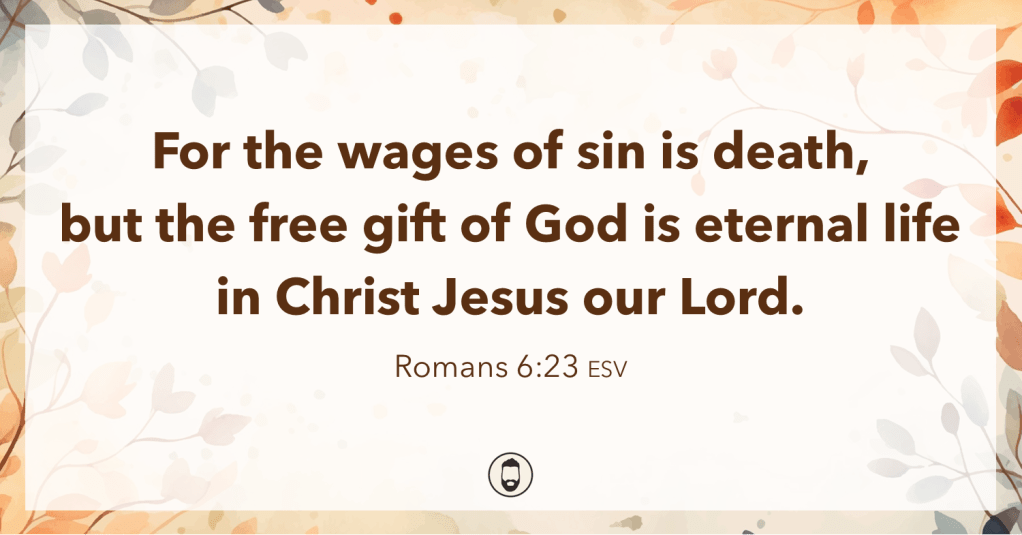
Romans 6:23 tells us that the “wages of sin is death”. This means that our sin has earned us death and that there is nothing we can do to earn our way out of it. Thankfully, that is not the end of Romans 6:23; check out the full verse: “For the wages of sin is death, but the free gift of God is eternal life in Christ Jesus our Lord.” God has made a way for us! Just as John 3:16 tells us above, Jesus paid the penalty for our sin. He died in our place and offers us life instead. That’s good news!

How You Can Be Saved

The only way for us to be saved is to turn from our sins (and the punishment we deserve because of them) to Jesus and put our faith and trust in Him. We turn from our sin because we realize that we are in trouble and deserve death because of them. We turn to Jesus because we realize that, just like the person who was drowning or trapped in the burning building, we cannot save ourselves. 

To put our faith and trust in Him means that we believe that Jesus fully paid the penalty for our sins and offers us forgiveness. The Bible teaches us that Jesus “Himself bore our sins in His body on the tree (the cross)” (1 Peter 2:24). Here is how the Bible tells us we can be saved:

“if you confess with your mouth that Jesus is Lord and believe in your heart that God raised Him from the dead, you will be saved. For with the heart one believes and is justified, and with the mouth one confesses and is saved.” (Romans 10:9-10)

This is what it means when we say put our faith and trust in Jesus; we confess Him as Lord and give our lives over to Him, trusting that He knows best and acknowledge He is God, asking Him to take charge of our lives. We tell Him that we believe He is who the Bible says He is: the Savior who died for our sins and rose again. If we do this, not just saying some magic words but genuinely believing and seeking Him, the Bible tells us that we are saved!


Lord, thank you for offering salvation that is free to all who believe but cost so much at the cost of Your Son. Thank You for raising again and offering that life to all who believe and confess You as Lord. Thank You.

All through the month of November, our Christ Community Church family is focusing on what we are thankful for and expressing our thanks to our “great God and Savior Jesus Christ, who gave Himself for us to redeem us” (Titus 2:13-14).

This, like the #DailyWisdomChallenge we went through in October, is a challenge from our pastor John Goldwater — the #GRATITUDEandHOPEchallenge — where we have the opportunity to post Bible passages that move us to thanksgiving or in which we find hope. May this lead you to be grateful and find your hope in Jesus!

I’m Thankful for God’s Forgiveness — Gratitude & Hope Challenge | November 12

These verses are a beautiful picture of God’s forgiveness and are good reminders for those who are saved to see what the “free gift of eternal life” is in light of the “wages of [our] sin” (Romans 6:23). We are going to briefly unpack these verses, and Lord willing, you will be moved to be thankful as well.

“He does not deal with us according to our sins nor repay us according to our iniquities.” This is a beautiful example of the otherness of God. I know that term sounds weird, but when we talk about God, it is important to remember that He is not like us. This otherness is really linked to His holiness, meaning that He is entirely set apart and above us in His worth, splender, and perfection. God is God, and we are not. 

Human beings deal with each other according to their sin and iniquity. If someone has wronged us or someone close to us, it is likely that we will forever treat them differently because of it. Even if we forgive, we are quick to let folks know we won’t forget. If we catch someone in a lie, they will forever be defined as a liar (even though we have been guilty of the same). The sin is a defining point for us because we don’t want to fall victim of it again. Yet God does not deal with US that way. 

That “us” is very important here because it is a distinction from how others are dealt with. This is not the us v. them where we make ourselves to be righteous (Romans 3:10-12). No, this is referencing the difference between those who have believed and put their faith in God and have been saved by grace through faith in Jesus (Ephesians 2:8-9) and those who have not (John 3:18). He does not deal with “us” according to our sin because Jesus has paid for our sin (1 Peter 2:24). Our sin does not define us because He defines us based on our relationship with Jesus (2 Corinthians 5:17, 21; Romans 8:1). 

“For as high as the heavens are above the earth, so great is His steadfast love toward those who fear Him….” Here we see the otherness of God again. This is literally the 6,000 mile view, one that God sees easily from His vantage point that we might struggle with from ours. 6,214 miles above our vantage point is when the earth stops being the earth; that’s literally how high the heavens are above the earth. God’s steadfast love – His never-stopping, never-failing, never-giving-up, everlasting love – is astronomically greater than our human hearts can fathom or feature (Isaiah 55:8-9). 

This qualifies the “us” from the last section because the “us” is made up of those who fear the Lord – those who follow and worship Him, those who have been saved by Him (Psalm 25:12-14). It also builds on the last section specifically because it shows that God not only has decided not to “deal with us according to our sins or repay us according to our iniquities” because He has paid the penalty for them (2 Corinthians 5:21) but did this because He loves us (John 3:16, Ephesians 2:4-5). This love is foreign to us because in our sinfulness we want to repay evil with evil, sin with sin (Matthew 5:44-45, 1 Peter 3:9). God is different. He loved us and saved us from our sin when we were still in it – when we still deserved death and hell; that “demonstrates” how much higher His love is than ours (Romans 5:8).

“…[A]s far as the east is from the west, so far does He remove our transgressions from us.” I love the contrast of imagery between the atmospheric levels of love in the last section and the global stretch of His forgiveness in this one. It is really cool to see how God specifically created the earth in such a way that it illustrates this, too. If His love requires a 6,000 foot view, His forgiveness requires understanding of what infinity is. You see, if you set out westward here on earth, you will go infinitely west. West will never start being east, and vice versa. God infinitely removes our sin from us. It is gone. Period. Finito. Over with. It is finished.

When Jesus forgives, He can allow Himself to forget because when He saves us He will not lose us. The eternal life He gives is, well, eternal. The change He produces in people’s lives is continual because it stems from His love and faithfulness, not ours. So, He doesn’t have to deal with us “according to our sins” because they have been infinitely removed. They have been paid for and we cannot repossess them. He has the receipt and is not taking returns. 

This is good news. It is nearly incomprehensible for us because we know the weight and evil nature of our sin (Psalm 51:3-5, Jeremiah 17:9). Yet He loved us and became the propitiation (wrath bearing sacrifice that trades the punishment due our sin for the favor due His Son) for our sin (Romans 3:23-25; 1 John 2:1-2, 4:10). 

What about you? Have you experienced the forgiveness of God? Will you stand before Him and have Him see Jesus’s blood and righteousness or stand before Him in your sin? 


Thank You, Lord, for offering forgiveness and salvation through Your Son Jesus.

Thank You, Lord, for Your astronomical love and the way you help us to see what You have done for us.

All through the month of November, our Christ Community Church family is focusing on what we are thankful for and expressing our thanks to our “great God and Savior Jesus Christ, who gave Himself for us to redeem us” (Titus 2:13-14).

This, like the #DailyWisdomChallenge we went through in October, is a challenge from our pastor John Goldwater — the #GRATITUDEandHOPEchallenge — where we have the opportunity to post Bible passages that move us to thanksgiving or in which we find hope. May this lead you to be grateful and find your hope in Jesus!

I’m Thankful for the Gospel — Gratitude & Hope Challenge | November 1

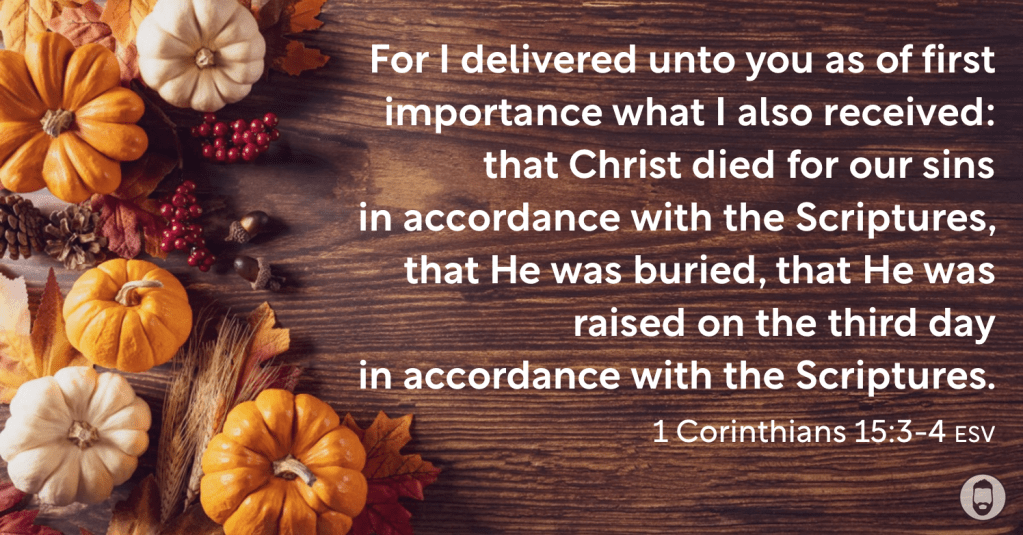
I’m thankful for the gospel — the good news of Jesus Christ — that tells us that He died for our sins on the cross we deserved, was buried, and rose from the dead defeating death, hell, and the grave.

That’s good news!

Literally, that’s what the word “gospel” means: good news!


Lord, thank you for the good news that we do not have to remain dead in our sins. Thank you for being willing to send Your Son to die in our place and giving the opportunity to come to You by grace through faith in Jesus and be made alive in Him.

All through the month of November, our Christ Community Church family is focusing on what we are thankful for and expressing our thanks to our “great God and Savior Jesus Christ, who gave Himself for us to redeem us” (Titus 2:13-14).

This, like the #DailyWisdomChallenge we went through in October, is a challenge from our pastor John Goldwater — the #GRATITUDEandHOPEchallenge — where we have the opportunity to post Bible passages that move us to thanksgiving or in which we find hope. May this lead you to be grateful and find your hope in Jesus!

Daily Wisdom Challenge — Proverbs 31

Here we are FINALLY finished with the #DailyWisdomChallenge! What took some 31 days, only took me 56. But this challenge is not about an amount of time or some mark we check off, is it? No, it is about getting God’s Word in us and through us — Him producing results and us giving Him our time, minds, and lives to spend time with Him in His Word and share it with other. I have enjoyed spending this time with Him and sharing Him and His Word with you.

This last proverb is one that has been on my mind. I have typed and retyped this post because I just couldn’t seem to articulate it — to get my words right. Today, it is what it is and ain’t what it ain’t. Let’s dive in.

Much of Proverbs 31 (vv. 10-31) is about the virtuous wife/woman. I was tempted to pick some verses from that section and speak well of my wife, which I do as often as I can because she is amazing. But Proverbs 31:8-9 is about using our voices — in this case, my voice and platform — to speak for those who have no one to speak for them. I will always speak up and advocate for Candice, but what of those who have no advocate?

It might help to understand what it means to advocate for someone. Let’s break it down. There are two forms of the word, both spelled the same; one is a verb (meaning to support or speak in for — or in favor of — someone or something) and a noun (meaning one who supports or speaks for someone or something). To use both in a sentence: an advocate advocates for people or issues. That’s the English teacher take on it, but we need a more pastoral perspective here.

In 1 John 2:1-2 give us a good picture of Jesus as our Advocate (the ESV even using that exact word):

My little children, I am writing these things to you so that you may not sin. But if anyone does sin, we have an advocate with the Father, Jesus Christ the righteous. He is the propitiation for our sins, and not for ours only but also for the sins of the whole world.

In this brief passage, we see Jesus almost as an advocate or defense attorney in courtroom. We know that Satan is known as the “accuser” in Revelation 12:10 and is “day and night” putting our sin in the form of an accusation or case against us “before our God”. Satan wants God to look at our sin and cast us out as he was so long ago. He wants to hurt God by showing Him how His children sin against Him and others. He also wants to hurt us and see us destroyed (1 Peter 5:8). We really don’t need an accuser to understand this because just like our great-great-great-great-uncle Cain, our sin cries out like Abel’s shed blood (Genesis 4:10), and God knows it, too.

Who would stand as an advocate for one who is clearly guilty? How many courtroom dramas have feature hot shot defense attorneys remarking that only a fool would ask their client if they are guilty. In this case, we know we are guilty. All have sinned (Romans 3:23) and none stand before God as righteous in their own standing (Romans 3:10). Yet John clearly says that those who are in Christ who sin (which includes any and everyone who has ever and will ever be saved) has an advocate: Jesus Christ the righteous.

Jesus stands for us when our sin cries out against us, reminding the Father that He has cast our sin as far as the east is from the west (Psalm 103:12).

Jesus stands for us when the accuser comes before the Father and reminds him that He has exchanged our sin and shame for His righteousness and standing as a son (1 Corinthians 5:21).

He speaks for us when the recollection of our sin silences us and shuts the mouth of accuser, reminding us that He has saved us and him that his doom is sure.

What a joy it is to have someone speak for you when you are in trouble (Psalm 34:17)! What a relief it is to have someone advocate for you to receive help in your time of trouble (Psalm 46:1)!

That’s the point of our final proverb together: use the voice and platform God has given us to be an advocate for those in need and in trouble, people who do not have anyone to speak for them. Worldly wisdom says mind your business and stay in your lane when it comes for helping folks in precarious situations. God’s wisdom says speak up for those who have no one to speak up for them (“the destitute”) and no voice of their own (“the mute”). God’s wisdom says that we are to “defend the rights of the poor and needy” — to make sure that people can get the help they need.

Now, the argument that comes up here is always something like “What about those who are misusing the help they receive?” or some citing of something like 2 Thessalonians 3:10 and some variation of “if you don’t work, you don’t eat”. Remember this is not a blanket statement of foolishness or reckless speech; it says “judge righteously” right here in the proverb. But we are to err on the side of help rather than stinginess — advocating for help rather than silence.

So, what about you? Are you silent for the suffering or speaking for them to receive help? Does Jesus the righteous advocate for you and yet you remain silent for others?

This is the culmination, not only of the #DailyWisdomChallenge for me, but the pinnacle of the challenge of whether I will yield to God’s wisdom or roll with the world’s. John has challenged us to speak and share God’s Word with others. Now, God in His Word has challenged us to speak and share God’s Word FOR others, too.

Won’t you join me?

For the month of October (and finally finished 25 days into November), we are answering the challenge John Goldwater, pastor of Christ Community Church in Grenada, MS, laid out — the #DailyWisdomChallenge. Each day, we are going to read through a chapter of Proverbs corresponding to the day of the month.

This fits with what we have studied in Colossians, specifically Colossians 3:1-2, namely that we should seek “the things that are above, where Christ is” and set our minds like a thermostat “on things that are above, not on things that are on earth”. Imagine what a month meditating on God’s Word daily can do for us.

Won’t you join us on this #DailyWisdomChallenge and set your minds on Christ?