This phase will have us reading about Jesus’s life in the gospel of Luke, the formation of the Church in Acts, and walk through the theology found in Paul’s letters that the Church needs to know about and live out the eternal life given by grace through faith in Jesus.
Below, you’ll find brief synopses of each book in this phase to help you understand the scope of the book and most importantly, how it fits into the full Story of the Bible.
When you click on each day’s link, you will find a link to audio, a summary of the chapter, a key verse from the chapter, and opportunities for reflection and outreach.
We’re moving into Paul’s epistles, which we’ll go through chronologically rather than in the order they appear in our Bibles.
Galatians
The letter to the Galatians (check out this cool visual summary from the Bible Project) was written by Paul to churches in the Roman province of Galatia who were facing a spiritual crisis. After Paul preached the gospel of grace, other teachers arrived saying Gentile believers had to be circumcised and keep parts of the Mosaic law to belong to God’s people. Paul writes with urgency to defend the true gospel and his apostolic message, warning that any “different gospel” is no gospel at all (Galatians 1:6–9). His aim is pastoral and clear: believers are made right with God not by works of the law but by faith in Jesus Christ (Galatians 2:15–16).
Galatians shows how Christ’s cross brings a new era of freedom and life. Jesus bore the curse of the law so that blessing might come to the nations and the Spirit be given through faith (Galatians 3:13–14). Paul explains the law’s temporary role—it guarded and pointed to Christ—but now that Christ has come, we are God’s children by faith and clothed with Christ (Galatians 3:24–27). This freedom is not for selfishness but for love: “through love serve one another” (Galatians 5:13–14). The Christian life is life in the Spirit, where the desires of the flesh are put to death and the Spirit produces his good fruit—love, joy, peace, and more (Galatians 5:16–25). At the center stands the cross, which reshapes our identity and boasts (Galatians 2:20, 6:14).
In the story of salvation, Galatians declares that the promise to Abraham is fulfilled in Christ: Jew and Gentile are one family, justified by faith and adopted as sons through the Son (Genesis 12:3; Galatians 3:8, 3:26–29, 4:4–7). The gospel does not add law to Christ; it gives Christ alone by grace, and with him the Spirit who makes us new. Because Jesus has set us free, we stand firm in that freedom, walking by the Spirit and bearing one another’s burdens until the day of glory (Galatians 5:1, 5:16, 6:2).
Paul writes 1 Thessalonians to a young church he planted in a strategic, bustling city and had to leave sooner than he wanted (Acts 17:1–10). After sending Timothy to check on them, Paul hears a mostly good report—but also real concerns: grief over believers who had died, questions about the day of the Lord, ongoing persecution, and a few idle members refusing to work (1 Thessalonians 3:1–6, 4:13, 5:1–11, 4:9–12). With a warm pastoral tone, he defends the integrity of the gospel workers (1 Thessalonians 2), thanks God for their evident faith, love, and hope (1 Thessalonians 1:2–3), and urges them to keep growing in holiness, especially in sexual purity and brotherly love (1 Thessalonians 4:1–8, 9–12).
A major theme is Christ’s return—the “coming” of Jesus appears in every chapter (1 Thessalonians 1:10, 2:19, 3:13, 4:13–18, 5:23). Paul comforts grieving believers: those who have died “in Christ” will rise first, and together with the living they will be caught up to meet the Lord—and “so we will always be with the Lord” (1 Thessalonians 4:14–17). He reassures them that the day of the Lord will not overtake them like a thief because they belong to the day, not the night (1 Thessalonians 5:1–5, 9–10). In light of this hope, he calls the church to a steady, everyday obedience—respecting leaders, helping the weak, rejecting idleness, praying constantly, and testing everything by God’s Word (1 Thessalonians 5:12–22).
In the story of salvation, 1 Thessalonians looks back to Jesus’ death and resurrection as the ground of our hope and forward to His coming as the goal of our hope (1 Thessalonians 4:14, 5:9–10). The God who chose and called them is faithful; He Himself will sanctify them completely and keep them blameless at the coming of the Lord Jesus (1 Thessalonians 1:4, 5:23–24). Until that day, the church waits with active faith, steadfast love, and durable hope—turning from idols to serve the living and true God and to wait for His Son from heaven (1 Thessalonians 1:3, 9–10).
Paul’s second letter to the Thessalonians comes soon after the first and meets a church still under pressure. Persecution had not let up, and a false claim had spread that “the day of the Lord” had already come, leaving some shaken and afraid (2 Thessalonians 1:4, 2:1–2). Paul reassures them: when Jesus returns, He will bring justice—rest for His people and judgment on those who oppose the gospel (2 Thessalonians 1:5–10). He prays that God would make them worthy of their calling and glorify the name of Jesus in them, even as they suffer (2 Thessalonians 1:11–12).
Building on 1 Thessalonians, Paul clarifies what must happen before the Lord’s coming: a rebellion and the revealing of “the man of lawlessness,” whom Jesus will overthrow by the breath of His mouth at His appearing (2 Thessalonians 2:3–8; cf. 1 Thessalonians 4:13–18, 5:1–11). Until that day, the church must “stand firm and hold to the traditions” taught by the apostles, trusting the Lord to comfort and strengthen their hearts (2 Thessalonians 2:15–17). Paul also addresses a practical problem—idleness—commanding believers to work quietly and earn their own living, and instructing the church to correct those who refuse to obey (2 Thessalonians 3:6–12, 14–15). In the story of salvation, 2 Thessalonians keeps our eyes fixed on Christ’s certain return and calls us to steady, holy, hope-filled lives while we wait (2 Thessalonians 3:5, 13).
Paul writes 1 Corinthians to a gifted but divided church in a major port city shaped by status, rhetoric, and idolatry (Acts 18:1–11). After hearing troubling reports and receiving their questions, he calls them back to the gospel—to humble unity and holy living (1 Corinthians 1:10–13, 5:1–2, 7:1, 11:18). From the start, Paul centers everything on “Christ crucified,” God’s wisdom and power, not human show (1 Corinthians 1:18–25, 2:1–2). Because they belong to Jesus, they must stop boasting in leaders, flee sexual sin, and remember they are God’s temple where the Spirit dwells (1 Corinthians 3:16–17, 5:1–13, 6:18–20). Love—not pride or personal rights—must shape their life together (1 Corinthians 8:9–13, 13:1–7).
Paul also answers practical questions about marriage and singleness (1 Corinthians 7), food and idolatry (1 Corinthians 8–10), and gathered worship (1 Corinthians 11–14). He urges them to build up the church: take the Lord’s Supper in a worthy way, honor one another, and use spiritual gifts for the common good, not for display (1 Corinthians 11:23–26; 12:4–7; 14:12, 26). The famous “love chapter” shows that without love, even the greatest gifts amount to nothing (1 Corinthians 13:1–3). Above all, Paul insists on the bodily resurrection of Jesus and its hope for believers; because Christ is raised, our faith is not empty, our labor is not in vain, and we will be raised imperishable (1 Corinthians 15:3–4, 20–22, 51–58).
In the story of salvation, 1 Corinthians shows the gospel forming a holy people in a worldly place. The church is God’s family, Christ’s body, and the Spirit’s temple—set apart to reflect His character (1 Corinthians 1:2, 3:16, 12:12–27). So we lay down our rights for the weak (1 Corinthians 8:11), pursue love (1 Corinthians 14:1), and do all to the glory of God (1 Corinthians 10:31). Standing on the sure foundation—Jesus Christ our Lord—we work together for the advance of the gospel until He comes (1 Corinthians 3:11; 16:13–14, 22–24).
This phase will have us reading about Jesus’s life in the gospel of Luke, the formation of the Church in Acts, and walk through the theology found in Paul’s letters that the Church needs to know about and live out the eternal life given by grace through faith in Jesus.
Below, you’ll find brief synopses of each book in this phase to help you understand the scope of the book and most importantly, how it fits into the full Story of the Bible.
When you click on each day’s link, you will find a link to audio, a summary of the chapter, a key verse from the chapter, and opportunities for reflection and outreach.
Luke
Luke is the first part of a two-volume story (with Acts) written to give believers confidence about Jesus and the good news (Luke 1:1–4; Acts 1:1–2). Early Christians understood the author to be Luke, a physician and coworker of Paul (Col. 4:14; 2 Tim. 4:11). He writes to Theophilus—and to a wider audience—to show that Jesus is the promised Savior for all people: Jews and Gentiles, the poor and the powerful, the outcast and the insider (Luke 2:10–11; 4:18–19; 19:10). Big themes include prayer, the Holy Spirit, costly discipleship, warnings about riches, and God’s grace that lifts the lowly (Luke 1:52–53; 3:21–22; 6:20–26; 11:1–4; 12:32–34).
As a Gospel, Luke reads like an ancient biography centered on Jesus’ public ministry, death, and resurrection. It moves from the temple in Jerusalem to Galilee and back again, with a long “journey to Jerusalem” where Jesus heads to the cross (Luke 9:51). Luke’s style is vivid and orderly, weaving in songs, parables unique to him (e.g., the Good Samaritan; the Prodigal Son), and many scenes of table fellowship that show who belongs in God’s family (Luke 7:36–50; 10:25–37; 15:1–32). Throughout, Jesus is the Spirit-anointed Son of Man who teaches, heals, forgives, and welcomes sinners (Luke 4:1, 14, 18; 5:20–32).
In the big story of the Bible, Luke shows God keeping his promises to Israel and opening salvation to the nations. Jesus fulfills the Scriptures, suffers, rises, and sends his followers out with the Spirit’s power (Luke 24:44–49; Acts 1:8). The kingdom has arrived in Jesus’ words and works, yet we still wait for its fullness—so we live awake, generous, prayerful, and bold in witness until he returns (Luke 11:2; 12:32–40; 21:34–36).
The book of Acts is Luke’s sequel to his Gospel, written to Theophilus and to a broader audience of early Christians (Acts 1:1; Luke 1:3). Tradition and internal evidence identify Luke, the beloved physician and companion of Paul (Col. 4:14; 2 Tim. 4:11; Philem. 24), as the author. He carefully investigated eyewitness testimony and recorded an orderly account of the risen Christ’s work through His apostles (Luke 1:2–3; Acts 1:21–22). Most likely written in the early 60s A.D., Acts gives believers certainty that the gospel is true and that Christianity is the fulfillment of God’s promises, not a new or dangerous sect (Luke 24:44–47; Acts 24:14–15).
At its heart, Acts shows how the ascended Jesus continues His mission by sending the Holy Spirit to empower His church. The book’s key verse, Acts 1:8, provides its outline: the gospel spreads from Jerusalem (Acts 2:1–47), into Judea and Samaria (Acts 8:4–25), and then outward to the ends of the earth, symbolized by Paul’s ministry in Rome (Acts 28:30–31). Along the way, Luke highlights miracles (Acts 3:1–10; 19:11–12), persecution (Acts 4:1–22; 7:54–60), and the unstoppable advance of God’s Word (Acts 12:24; 19:20). Through it all, Acts demonstrates that nothing—not prison, plots, or shipwrecks—can hinder the spread of the gospel (Acts 5:41–42; 27:23–25).
Acts emphasizes both continuity and fulfillment. Jesus’ death and resurrection fulfill the Scriptures (Acts 2:25–36; 13:32–33), and His exaltation confirms Him as both Lord and Christ (Acts 2:36). The Holy Spirit marks the arrival of the new age of salvation (Acts 2:16–21; Joel 2:28–32) and unites Jews and Gentiles into one people of God (Acts 10:44–48; 15:7–11). Like Jesus in Luke’s Gospel, His followers perform miracles, face opposition, and walk in obedience to God’s plan (Luke 4:18–19; Acts 3:6–8; 14:8–10; Luke 23:4; Acts 26:31–32). The church’s mission is shown to be both ancient—rooted in God’s promises to Israel (Acts 3:25–26)—and worldwide, extending to “all who are far off” (Acts 2:39).
In the Story of the Bible, Acts is the bridge between Christ’s finished work and the church’s Spirit-empowered witness. It records the first thirty years of gospel proclamation, showing how God’s plan of salvation moves from Jerusalem to Rome and beyond (Acts 1:8; 9:15; 13:47). Acts assures us that the risen Christ still reigns, His Spirit still empowers, and His mission still advances until the day He returns (Acts 2:33; 7:55–56; 28:28). The same Spirit who emboldened Peter, Stephen, and Paul continues to strengthen the church today to proclaim Jesus Christ as Lord to the ends of the earth (Acts 4:31; 20:24; 28:31).
This phase will have us reading Matthew, Luke, and Hebrews. These books were written for Jewish-background believers and help us see Jesus as the promised King and fulfillment of the Old Testament. Matthew presents Jesus as the Son of David. James gives wisdom for living out our faith. And Hebrews explains how Jesus completes the story of God’s covenant people.
Below, you’ll find brief synopses of each book in this phase to help you understand the scope of the book and most importantly, how it fits into the full Story of the Bible.
When you click on each day’s link, you will find a link to audio, a summary of the chapter, a key verse from the chapter, and opportunities for reflection and outreach.
Matthew
The Gospel of Matthew is the first book in the New Testament and helps us see that Jesus is the promised Savior. Matthew, one of Jesus’ twelve disciples and a former tax collector, likely wrote this account to help his fellow Jews see that Jesus is the Messiah. He uses many Old Testament references to show how Jesus fulfilled God’s promises, and he points to Jesus as the Son of David and rightful King.
Matthew’s Gospel is filled with both what Jesus did and what He taught (Matthew 4:23). It includes well-known passages like the Sermon on the Mount (Matthew 5–7), the parables of the kingdom (Matthew 13), and the Great Commission (Matthew 28:18–20). As we read, we see Jesus healing, forgiving, teaching, and confronting the religious leaders. Though rejected by many, Jesus is shown to be the King who came to save—not just Israel, but the whole world.
This Gospel reminds us that Jesus is Immanuel—God with us—from beginning to end (Matthew 1:23, 28:20). It shows how Jesus brings God’s kingdom near and calls us to follow Him. Matthew connects the Old Testament to the New and invites us to believe in the One who died for our sins and rose again in victory. The story of Jesus is good news for all people, and His mission continues through us today.
The letter of James was written by James the Just, the half-brother of Jesus (Matt. 13:55) and a leader in the church at Jerusalem (Acts 15:13). Once an unbeliever (John 7:5), James came to faith after the risen Christ appeared to him (1 Cor. 15:7). Known for his wisdom and integrity, James wrote to Jewish Christians scattered outside Israel, likely due to persecution (Acts 11:19). This makes James one of the earliest New Testament writings, probably in the mid-40s AD—just a few years after Jesus’ resurrection. The letter is filled with strong, practical teaching for believers who were suffering trials, facing poverty, and struggling with division.
James’s main message is clear: real faith is shown by real obedience. He urges his readers not just to hear God’s Word but to do it (ch. 1:22–25). Like the wisdom books of the Old Testament—especially Proverbs—James is full of vivid pictures, direct commands, and memorable sayings. He addresses the power of the tongue (ch. 3:1–12), the danger of favoritism (ch. 2:1–7), the need for patient endurance (ch. 5:7–11), and the call to care for the poor (ch. 1:27; 2:14–17). Throughout, James points believers to seek “wisdom from above” (ch. 3:17), to pray with faith (ch. 5:13–18), and to live with humility before God (ch. 4:6–10).
In the story of the Bible, James calls God’s people to live out the new life they have received in Christ. His letter echoes the teaching of Jesus, especially the Sermon on the Mount (Matt. 5–7), and reminds the church that faith and works are not enemies but friends—true faith always produces the fruit of obedience (ch. 2:17, 26). James urges believers to endure trials with hope, resist the pull of the world, and show mercy, because the Judge is standing at the door (ch. 5:9). Until Christ returns, we are to live as wise, wholehearted disciples whose lives point others to the mercy and power of our Savior.
Hebrews
Hebrews is a Spirit-breathed sermon turned letter, written to weary believers to lift their eyes to Jesus. Its author remains unknown—Origen famously concluded, “only God knows.” What we do know is that the book’s majesty is unmistakable. As Wayne Grudem observes, “The majestic glory of Christ shines forth from the pages of the epistle to the Hebrews so brightly that no believer who reads it should ever want to question its place in the canon.” Indeed, there is no other book in Holy Scripture more clearly breathed out by God’s Spirit. The Spirit’s fingerprints are evident in every line as the writer draws deeply from the Old Testament to show that Jesus is the final and complete Word from God.
Written to Christians—likely from a Jewish background—facing discouragement, pressure, and even persecution, Hebrews urges them to persevere (ch. 10:32-36). They were tempted to drift back toward familiar religious traditions (ch. 2:1, 3:12), but the writer shows them a better way. Jesus is better than angels (ch. 1:4), better than Moses (ch. 3:3), and the better High Priest (ch. 4:14-15). He mediates a better covenant through His once-for-all sacrifice (ch. 8:6, 9:11-14, 10:10). Through rich exposition, urgent warnings, and heartfelt encouragements, Hebrews calls the church to “hold fast” (ch. 10:19-22)and to draw near to God with confidence, because Jesus Himself is our anchor (ch. 6:19-20).
In the New Testament, Hebrews is a “word of exhortation” (Heb. 13:22)—what we might call a pastoral sermon—full of both deep theology and practical application. It moves in a rhythm: teaching about Christ’s supremacy, then urging believers to respond with endurance and faith (ch. 12:1-2). The letter’s structure reflects its purpose: to strengthen believers by fixing their hope firmly on Christ (ch. 3:6, 10:23) and calling them to live faithfully until the end (ch. 3:14, 12:28). Along the way, it uses powerful Old Testament imagery—priests, sacrifices, covenants, and the tabernacle—to show that all of Scripture points to Jesus (ch. 9:23-28).
In the Story of the Bible, Hebrews ties the threads together. God spoke through the prophets in many ways, but now He has spoken definitively through His Son (Heb. 1:1–2). Jesus is the final Word (ch. 1:3), the great High Priest (ch. 7:23-25), and the perfect Sacrifice who has opened the way into God’s presence (ch. 10:19-20). By His death and resurrection, we have a cleansed conscience (ch. 9:14), a new covenant (ch. 8:10-12), and a living hope (ch. 6:19). Hebrews calls us to run the race with endurance (ch. 12:1), to keep our eyes fixed on Jesus (ch. 12:2), and to encourage one another until He returns in glory (ch. 10:24-25).
It’s been a month since I’ve been able to write one of these, and my heart is full looking forward to gathering with my faith family this Sunday. The Scriptures we will read and the songs we will sing declare what the weary world — and our own weary hearts — need to hear: GOD is with us.
I know it’s not Christmas (and it’s hard to even think about it in the midst of a Mississippi summer), but I am reminded of what the prophet Isaiah said about Jesus’s coming — He would come and be the Light that would pierce the darkness:
“The people who walked in darkness have seen a great light…. For to us a child is born, to us a Son is given….” (Isaiah 9:2,6)
Jesus is that Son, the promised Emmanuel (which means God with us). He isn’t distant or disinterested. No, Jesus is the God who stepped into our world, entered our pain, and walked among sinners. He bore the weight of our sin and carried our sorrows. But even more than being with us, Jesus is also for us.
“But if anyone does sin, we have an advocate with the Father, Jesus Christ the righteous. He is the propitiation for our sins, and not for ours only but also for the sins of the whole world.”
That word advocate means someone who speaks on your behalf, who stands beside you when you have no defense of your own. One day, we’ll stand before the Holy God of the universe to answer for our works — for our sin. It’s hard to imagine the crushing weight of the volume of our sin or how we could ever bear it (Psalm 38:4, Romans 3:23). But before we can be under that crushing weight, our advocate steps up. When our Judge asks how we plead, our advocate speaks up, but He doesn’t just plead for us — He points to His own finished work on the cross (John 19:30, Hebrews 10:12-14) — to His blood that covers and blots out our sin (Isaiah 1:18, Colossians 2:13-14, Revelation 1:5). He doesn’t speak up to ask God to forgive or overlook; He says He’s already paid for our sin — paid in full (Romans 8:1, 33-34; 2 Corinthians 5:21).
Those who are saved know that Jesus is our righteousness. He is our covering. And He is our confidence before the Father. As we’ll read in Colossians 2:13-15 this Sunday, we’ll find that the very same God who is our advocate and defends us is the same God who died for us.
That’s why we can sing “O Come, O Come Emmanuel” — because we need Him and can know He’s returning just as He’s already come to us. We can sing “Great I Am” because Jesus is not merely the babe in the manger but God Almighty come to us. We can sing “Jesus Paid It All (O Praise the One)” because our sins, not in part but the whole, were nailed to the cross and the debt of our sin paid in full. And we can sing “Thank You Jesus for the Blood” because His blood wasn’t a mere payment for sin committed but the means by which we are brought near to God.
So, this Sunday come with hope. Come with need. Come with thanksgiving. And come ready to worship the One who is God with us, our Advocate, and our Savior. We will read from God’s Word together (1 Timothy 4:13) and lift our voices to proclaim the gospel to one another as we offer praise to God (Colossians 3:16). We will sit under the teaching of God’s Word as John points us to Jesus (John 20:31). We will have the opportunity for a few hours to get a brief glimpse into the glory that awaits when we find our faith becoming sight (1 Peter 1:8-9, 2 Corinthians 4:17-18) when we come at last to be with Jesus for eternity (Revelation 21:3-4).
2The people who walked in darkness have seen a great light; those who dwelt in a land of deep darkness, on them has light shone. 3You have multiplied the nation; you have increased its joy; they rejoice before you as with joy at the harvest, as they are glad when they divide the spoil. 4For the yoke of His burden, and the staff for His shoulder, the rod of His oppressor, you have broken as on the day of Midian. 5For every boot of the tramping warrior in battle tumult and every garment rolled in blood will be burned as fuel for the fire. 6For to us a child is born, to us a son is given; and the government shall be upon His shoulder, and His name shall be called Wonderful Counselor, Mighty God, Everlasting Father, Prince of Peace. 7Of the increase of His government and of peace there will be no end, on the throne of David and over His Kingdom, to establish it and to uphold it with justice and with righteousness from this time forth and forevermore. The zeal of the LORD of hosts will do this.
13And you, who were dead in your trespasses and the uncircumcision of your flesh, God made alive together with Him, having forgiven us all our trespasses, 14by canceling the record of debt that stood against us with its legal demands. This He set aside, nailing it to the cross. 15He disarmed the rulers and authorities and put them to open shame, by triumphing over them in Him.
We’re continuing in our study of Revelation called The KING is Coming. Today, we will be diving into Jesus’s letter to the church at Pergamum. Once again, I am thankful for Jamie Harrison and the opportunity to do this study together. This week’s passage is Revelation 2:18-29:
18 “And to the angel of the church in Thyatira write: ‘The words of the Son of God, who has eyes like a flame of fire, and whose feet are like burnished bronze. 19 “ ‘I know your works, your love and faith and service and patient endurance, and that your latter works exceed the first. 20 But I have this against you, that you tolerate that woman Jezebel, who calls herself a prophetess and is teaching and seducing my servants to practice sexual immorality and to eat food sacrificed to idols. 21 I gave her time to repent, but she refuses to repent of her sexual immorality. 22 Behold, I will throw her onto a sickbed, and those who commit adultery with her I will throw into great tribulation, unless they repent of her works, 23 and I will strike her children dead. And all the churches will know that I am he who searches mind and heart, and I will give to each of you according to your works. 24 But to the rest of you in Thyatira, who do not hold this teaching, who have not learned what some call the deep things of Satan, to you I say, I do not lay on you any other burden. 25 Only hold fast what you have until I come. 26 The one who conquers and who keeps my works until the end, to him I will give authority over the nations, 27 and he will rule them with a rod of iron, as when earthen pots are broken in pieces, even as I myself have received authority from my Father. 28 And I will give him the morning star. 29 He who has an ear, let him hear what the Spirit says to the churches.’[1]
Keith Harris: Greetings, Sojourners, Welcome back to The King is Coming.[2] My name is Keith, and I’m joined once again by my friend and co-host, Jamie Harrison. Jamie, how’s it going, man?
Jamie Harrison: It’s going great. I’m looking forward to walking through another letter to the churches in Revelation.
Keith: Yeah, me too. We are now in the fourth of the seven churches, and this is the letter to Thyatira. This is the longest of the seven letters, even though Thyatira is probably the least-known of the seven cities. So, let’s jump in. This is the longest of the seven letters, and it starts with Jesus identifying Himself in a striking way: “The Son of God, who has eyes like a flame of fire and whose feet are like burnished bronze.” Jamie, what stands out to you in this introduction?
Jamie: Man, I love how every letter begins with one of the descriptions of Jesus from chapter 1. And this one — “eyes like fire, feet like bronze” — it’s strong. It’s intense. His gaze pierces through everything. The eyes of fire speak to His ability to see right through hypocrisy. And the feet of bronze are strong, stable, pure — He’s coming with authority and judgment.
Keith: Yeah, and I think that’s really important for what He’s about to say to this church. Because on the one hand, He has some really good things to say. He says, “I know your works — your love, your faith, your service, your endurance.” And then He says, “Your later works exceed the first,” so they’re growing. But on the other hand, there’s this deep compromise going on.
Jamie: Yeah, this is one of those churches where you see a really mixed picture. Like, they’ve got some great stuff going on. And it’s interesting that love is mentioned — because that wasn’t the case in Ephesus. In Ephesus, they had truth but no love. Here in Thyatira, they have love — but they’re lacking in truth.
Keith: That’s a great observation. Jesus tells them, “I see your love and your faith and your service and your endurance.” Those are all things we’d celebrate in a church today. But then comes verse 20: “But I have this against you, that you tolerate that woman Jezebel….”
Jamie: That’s a heavy name to drop.
Keith: Yeah. Most scholars believe “Jezebel” isn’t her actual name — it’s a symbolic reference to the Old Testament queen Jezebel from 1 and 2 Kings, who led Israel into idolatry and sexual immorality. She influenced King Ahab and the people to turn away from God.
Jamie: So this person in Thyatira — whoever she really was — was doing something similar. Claiming to be a prophetess, teaching false doctrine, and leading people into sin under the guise of spiritual insight. That phrase, “the deep things of Satan,” shows just how off-track it had gotten.
Keith: Exactly. And Jesus doesn’t just say she’s wrong — He says she’s dangerous. She’s seducing His servants. He says, “I gave her time to repent, but she refuses.” That’s both terrifying and gracious. Jesus gave her an opportunity to turn around.
Jamie: Right, and that’s important. He’s not quick to judge — He gives space for repentance. But when someone refuses, judgment is coming. And He says He’ll throw her on a sickbed, bring great tribulation on those who commit adultery with her, and even strike her children dead. That’s intense.
Keith: It is. But that’s the seriousness of sin in the church — especially sin that’s being taught and normalized. Jesus says this judgment will serve as a warning: “All the churches will know that I am He who searches mind and heart.” He’s not just looking at outward appearances.
Jamie: And that’s so needed in today’s world. We live in a time when churches are often pressured to tolerate sin in the name of love. But Jesus shows us here that real love doesn’t tolerate what’s destructive to His people. He calls His church to purity — not just kindness, but truth and holiness.
Keith: Yes — love without truth leads to compromise. And truth without love leads to cold legalism. Jesus is calling Thyatira to hold both — to grow in love and to stand in truth. And for those who haven’t bought into this false teaching, He says: “I don’t lay on you any other burden — just hold fast to what you have until I come.”
Jamie: That’s such a gracious word from Jesus — “I don’t lay on you any other burden.” Just hold fast. That’s the call. Sometimes in the middle of confusion or pressure or even division in the church, the call is just to cling tightly to Jesus and remain faithful.
Keith: Yeah, and I love that the letter ends with promises — not just warnings. He says: “The one who conquers and who keeps My works until the end, to him I will give authority over the nations.” That’s a big promise.
Jamie: It is. And it’s drawn from Psalm 2 — that idea of ruling the nations with a rod of iron, breaking them like earthen pots. That’s messianic language, and Jesus is sharing that reign with His people. It’s a picture of participating in His authority, His victory, and His kingdom.
Keith: Absolutely. It’s incredible that Jesus says those who stay faithful — who “conquer” by persevering in obedience — will reign with Him. And then He adds: “I will give him the morning star.” There’s a lot of debate about what exactly that means, but I think it points back to Jesus Himself.
Jamie: Yeah — Revelation 22:16 says Jesus is “the bright morning star.” So when He says, “I will give you the morning star,” He’s giving Himself. That’s the ultimate reward: not just reigning, not just escaping judgment, but having Jesus Himself.
Keith: That’s such a good word. He’s not just promising relief from suffering or an escape from persecution. He’s promising Himself. And that makes sense with the tone of this whole letter. The people in Thyatira needed clarity — and Jesus gives them that. He says, “I see what’s good. I see what’s dangerous. And I’m calling you to stay faithful.”
Jamie: Yeah, and that ending refrain is still the same: “He who has an ear, let him hear what the Spirit says to the churches.” That means this message isn’t just for Thyatira — it’s for us too.
Keith: Exactly. Jesus wants His whole church to hear this. In a world where compromise is so easy — where it’s tempting to tolerate false teaching in the name of unity or kindness — Jesus reminds us that love and truth must go together. And that He’s coming. So hold fast.
Jamie: That’s the key — hold fast to what we’ve been given, stay faithful to the truth, and trust that Jesus sees, Jesus judges rightly, and Jesus rewards those who overcome.
Keith: Amen. That’s a good word. Anything else you’d want to say to listeners before we wrap this one up?
Jamie: Just that encouragement — don’t let the pressure to “go along” with something false wear you down. Jesus sees your faithfulness. He knows. Hold fast. He is worth it.
Keith: He is.
Thank you, Jamie. And thank you for listening to The King is Coming. We’ll be back next week as we move into the letter to the church in Sardis. Until then, hold fast — and keep your eyes on Jesus.
[2] We’re trying out something a little different and giving a condensed transcript to make it easier to read, but if you want the full Bible study, click the podcast link above or click here.
As I write this, I am on my seventh day of my current hospital stay. This hospitalization — or even the illness really — is not the subject of my reflections but merely a backdrop. However, I will give enough details for clarity and hopefully none for complaint.
Many of you most likely do not know that I am in the hospital, and that is because I don’t care for that sort of attention. Outside of the Christ Community prayer group and a few personal messages, I have not shared much. Ultimately, this is pride — not trying to hide things necessarily, but some difficulties are hard to share even when you should (2 Corinthians 12:9). So I’m sharing now.
Two weeks ago (May 29), I woke up with what I thought to be gout flare ups in both feet. This was odd as gout typically manifests in just one, isolated joint. I already knew that I am an atypical sort of guy, so I just was going to roll with the weird. Within an hour, both feet were fully swollen up to the ankle. By lunch, my left wrist and the little finger joint on the right hand had joined in with swelling and pain.
The next morning (May 30) I awoke to walking being nearly impossible because of excruciating pain in both feet. I needed assistance eating because the pain in both hands was nearly as bad. I still managed to walk to the bathroom a few times. Little did I know I would only walk one more time the following day.
The next Monday (June 2), Candice took me to an orthopedic doctor in Oxford. They performed x-rays and examinations that revealed my feet were “full of arthritis”, meaning there was no space in my foot not taken up by inflammation which explained why walking or even standing, and the doctor scheduled a wide array of labs to be run and started me on a steroid pack. The following day (June 3), Kevin took me to Oxford to get the labs run. And the wait began.
Long story short, steroids brought little relief and the lab results were largely inconclusive except to say that wide spread inflammation was occurring in my body. By the end of the week (June 6), the total joints inflamed and in pain expanded to both knees, the right hip, and eventually both shoulders. We went to the hospital that night and ended up staying (and are still here).
Ultimately, there is no official diagnosis, but what is known is:
There was gout involved.
Even though there initially was thought to be some sort of infection, none was found.
My body had an autoimmune response and was fighting against itself causing the wide spread inflammation to all the joints.
God is still seated on His throne, still loves me, still cares for me, can heal me if He so chooses, and — for whatever reason — has me where I need to be even if it’s not where I want to be (Romans 8:28, 2 Corinthians 4:16-17).
The reason I am writing this is because in the midst of the worst two weeks of my life, I have consistently seen and experienced the goodness of God on display (Psalm 27:13) and want to share that. So, with no further ado, let me share with you about the goodness of God.
Reflection #1 — An Excellent Wife I Have Found
10 An excellent wife who can find? She is far more precious than jewels. 11 The heart of her husband trusts in her, and he will have no lack of gain. 12 She does him good, and not harm, all the days of her life.
Proverbs 31:10-12
So far (and for the rest of this), Candice is typing instead of me. I have gained about 95% usage of my left arm and hand back and only about 75% of my right arm and hand (which also has an IV in a less-than-helpful position). This is the first collaboration of this sort Candice and I have ever done, and judging by how much she hates that she’s having to type out a reflection thanking God for her and bragging on her, this may be our last.
Over the last two weeks, Candice has tirelessly (despite exhaustion and being as overwhelmed and scared as I have been) cared for me night and day. She has advocated for me with doctors (even ferociously at times), fed me, bathed me, and loved me through this time. While I was humiliated for being so unable to do for myself, her love humbled me and reminded me that wedding vows spoken by young adults prove out by the deeper-than-romance love that God can foster between a husband and a wife.
This has not been easy for her. She didn’t expect it to be. The love that she has shown me, even as she types this now through her own tears, has preached the gospel of Jesus’s love for His Church more eloquently and effectively than my words ever could (Ephesians 5:32). Her selfless actions and unrelenting care were more than “word or talk”, showing her love “in deed and in truth” (1 John 3:18).
I could not, should I live a thousand years, hope to ever repay or match her show of love and care (although I can’t wait to get to go home and try). She’s more precious than treasure (Proverbs 31:10), has all of my trust, is my favorite person and the love of my life, and has shown real-life love more than I could have ever dreamed of 22 years ago.
Reflection #2 — God Exulted Over Me With Loud Singing
The LORD your God is in your midst, a mighty One who will save; He will rejoice over you with gladness; He will quiet you by His love; He will exult over you with loud singing.
Zephaniah 3:17
We were supposed to be on a mission trip with our Christ Community youth group in New Mexico right now, but obviously we are not.
I am immensely thankful that God allows me to be one of the pastors at Christ Community, and getting to serve and disciple our kiddos is one of the greatest joys of my life. Needless to say, a large portion of my heart has been in New Mexico while my body has been confined to this hospital bed.
Sara Goldwater worked it out with Candice that they would FaceTime us so that we could participate in some of their nightly worship times. I knew we needed that, but at the time I was so mentally, physically, and emotionally overwhelmed I almost said no. Thankfully, I didn’t because the kiddos and adult leaders who are so dear to my heart ministered to me more that night than I ever have to them.
The time they spent singing and songs they chose were so carefully, lovingly, and thoughtfully arranged that by the end I was ugly crying and raising the only hand I could in worship of God.
The first song they chose was “Battle Belongs“, reminding that God is our fortress, mighty to save, and has already won the only battle that eternally matters through the cross and His empty tomb (Colossians 2:14-15).
The second song was “Firm Foundation (He Won’t)“, reminding me that Jesus is my rock and firm foundation, who has never failed in all of history, will never fail in the time that remains, and will protect and keep me through the storms of this life (Matthew 7:24-25). It brought to mind a quote from Charles Spurgeon (who dealt with debilitating gout and health problems that often left him bedridden for longer than I have been):
I have learned to kiss the waves that throw me up against the Rock of Ages.
After a verse and chorus of “Because He Lives“, and being reminded that I know who holds the future, the mission team humbled me and loved me in a way that was nearly overwhelming. They passed the phone around and one-by-one spoke something meaningful, encouraging, personal, and loving. To say that I was wrecked is a vast understatement. I was reminded of Zephaniah’s words to Israel above about how, even in times of trials and exiles, God was still in their midst, still mighty to save, still rejoicing over them. But it’s the last part of Zephaniah 3:17 that was so poignant and clear to me that night as it describes God Himself quieting His people, those He loves, by exulting over them with loud singing. I experienced God singing over us by His mission team singing over me. That memory will stay with me from here on out.
Reflection #3 — Built Up and Burdens Borne
Therefore encourage one another and build one another up, just as you are doing.
1 Thessalonians 5:11
Bear one another’s burdens, and so fulfill the law of Christ.
Galatians 6:2
We have experienced such a great outpouring of love, concern, care, and prayer from our family, faith family, and friends. Difficult times are often lonely times, but that has not been our experience. I could not begin to recount all of the text messages and phone calls. Family (both biological and church) have come to sit and visit to lift spirits. The days leading up to the hospital stay, Candice did not have to cook as well as care for me because God has people in our life who took care of that, even being so thoughtful as to find out some foods our kiddos would like and sending us to the hospital with our own vending machine stockpile so as to not go without at all.
Sometimes it is not until after tragedy or loss that people step up in this way. I have often wondered why we do not share more freely how we feel with people while they are still with us. However, I do not have to wonder anymore because God has used the kindness and care of our families and friends to show His goodness toward us.
Without hesitation, Katherine and my parents have taken care of Xander for the entirety of the hospital stay, keeping him busy and worry-free while Candice and I were living out the opposite. Candice’s dad wanted to show appreciation for our helping him through similar health difficulties that we may experience the way he felt when cared for. And as far as helping bear our burdens, Kevin got me in and out of the vehicle and wheelchair multiple times, and he and Daddy literally carried me out of the house the day I went to the hospital.
Keri was still able to go with our church on the mission trip, and we did not have to doubt for a second that she would be cared for, looked after, and loved like she was their own (because that’s how our faith family loves). We received many text messages at various times making sure that we knew she was being cared for looked after (while still letting her be the independent young woman she is). We are thankful for the spiritual aunts, uncles, and cousins who have adopted our kiddos and love them.
While tangible shows of care and physical presence are big, nothing has moved me more than the sheer volume of people praying for us. Too often, we treat prayer like the least we can do, but what more can you do than seek God Most High on behalf of someone? I felt like the man in Mark 2:1-12 whose friends carried him on the roof of where Jesus was, removed a section, and lowered their friend to where Jesus could help him. It’s humbling to know that so many were willing to approach the throne of grace and seek mercy from the King on my behalf (Hebrews 4:16). It is the most they could do, and they did it tirelessly.
When you are feeling alone in sickness and pain, it’s too easy to be isolated, but God in His goodness, as reminded us at every turn, that He is with us and has given us family, friends, and a faith family to remind us of that.
Reflection #4 — Lord From Sorrows Deep I Call
Why are you cast down, O my soul, and why are you in turmoil within me? Hope in God; for I shall again praise Him, my salvation and my God.
Psalm 42:11
Sunday night/the wee hours of Monday morning was probably the longest of my life thus far. I have been avoiding pain medication as much as possible, but should have taken it sooner that night. The pain got to be too much, and coincided with a night requiring multiple lab draws with arms too swollen to find veins. I had just become overwhelmed.
In normal circumstances, I use the Dwell app (an audio Bible/Scripture meditation app) to take my mind off of difficulties or trials, but I could not work my phone or hold a Bible in my hands. My mind was so frantically distracted that I found it difficult to bring Scripture to mind. I laid in the dark, pleading with the Lord, praying for help or relief or whatever.
Now, if you know Candice, sleep has always been very precious to her. If you know hospitals at night, you know sleep is for well people at home. However, Candice stood over my bed for hours, playing various playlists of Scripture verses to help me fix my mind on things above, on Jesus, “not on things that are on earth” (Colossians 3:1-2). She played “psalms and hymns and spiritual songs” to help the “Word of Christ dwell in [me] richly” more than the pain that overwhelmed me physically (Colossians 3:16).
Dark times can cloud our vision. Sometimes hope is eclipsed by temporary trials. But for those who have been saved by grace through faith in our great God and Savior Jesus Christ, “suffering produces endurance”, “endurance produces character”, “character produces hope”, and “hope does not put us to shame, because God’s love has been poured into our hearts through the Holy Spirit who has been given to us” (Romans 5:3-5). My hope remains because it is not fickle, moveable, earthly hope; my hope is a person. My hope’s name is Jesus. And I can cast “all [my] anxieties on Him, because He cares for [me]” (1 Peter 5:7).
One of the clearest evidences of God’s goodness is that He has given us His Word — not only to reveal Himself, but to renew our minds, anchor our hearts, and strengthen us in every season of life. In His mercy, God does not leave us to be shaped by the world around us, but transforms us through the renewal of our minds so that we can discern His will and walk in it (Romans 12:2). His Word brings comfort and life in the midst of affliction, reviving our hearts when they are weary (Psalm 119:50). When our minds are fixed on Him through the promises of Scripture, He surrounds us with perfect peace (Isaiah 26:3). Rather than letting anxiety consume us, He invites us to bring everything to Him in prayer, and as we dwell on what is true and good, His peace guards our hearts and minds in Christ (Philippians 4:6-8). In trials, His Word gives strength and courage, equipping us for every step of obedience (Joshua 1:8-9). Because Scripture is breathed out by God, it thoroughly equips us for every good work — not just in easy seasons, but especially when life is hard (2 Timothy 3:16-17). When we delight in His Word and meditate on it daily, we become like trees planted by water — stable, nourished, and fruitful no matter the conditions around us (Psalm 1:2-3). And as we not only hear His Word but live it out, we experience His blessing and see more clearly who He is (James 1:22-25). In spiritual battle, His Word is our sword (Ephesians 6:17), and even Jesus, in the wilderness of temptation, showed us that we do not live by bread alone, but by every word that comes from the mouth of God (Matthew 4:4).
Every verse is a testimony to His kindness — He has not left us in the dark, but has spoken light and truth to sustain us.
That night, when my body had failed me and there was no strength to attempt to battle for myself, God sustained me with His Word. It was a refreshing reminder of His goodness, goodness I learned of from His Word and experience anew through His Word again and again. Here are some examples of both song and Scripture playlists:
I do not (we do not) write this seeking sympathy or trying to complain. I am thankful to have a God who does not leave me nor forsake me (Hebrews 13:5, Deuteronomy 31:6) but instead meets me in my darkness with His light (John 1:5, Psalm 18:28).
On the way to the hospital last Friday night, Kevin reminded me of Satan’s words to God when seeking to tear apart Job’s life to make him curse God (Job 1:8-12, 2:3-6). Now, I am far from Job, and I am not saying this is all some elaborate test of my faith. The consequences of the Fall on the world and within human bodies (death, decay, sickness, etc.) is enough. But if you think on Satan’s rationale for needing to hurt Job, his earthly logic seems sound:
9 Then Satan answered the Lord and said, “Does Job fear God for no reason? 10 Have you not put a hedge around him and his house and all that he has, on every side? You have blessed the work of his hands, and his possessions have increased in the land. 11 But stretch out your hand and touch all that he has, and he will curse you to your face.”
Job 1:9-11
and,
3 And the LORD said to Satan, “Have you considered my servant Job, that there is none like him on the earth, a blameless and upright man, who fears God and turns away from evil? He still holds fast his integrity, although you incited me against him to destroy him without reason.” 4 Then Satan answered the Lord and said, “Skin for skin! All that a man has he will give for his life. 5 But stretch out your hand and touch his bone and his flesh, and he will curse you to your face.”
job 2:3-5
Kevin reminded me that Satan knew that by attacking Job’s health it could fundamentally affect how he lived and thought. So Satan was right — insomuch as the things of this earth being all that there are. His logic, at face value, was sound. However, what Satan discounted — what he always overlooks in his passion and sinful pride — is that the LORD is not of this world. The Creator of all that is, the King of kings and Lord of lords is not bound by the logic of a being He created because He Himself is Truth.
When He saves people, He fundamentally changes them from the inside out, making them new creations not religious converts (2 Corinthians 5:17). His change in those He saves is not a mere change of mind but truly a change from death to life, delivering them from “the domain of darkness” to the “kingdom of His beloved Son, in whom we have redemption, the forgiveness of sins” (Colossians 1:13-14).
I am not Job. But I have been saved by grace through faith in Jesus (Ephesians 2:8-9). My faith has wavered at times these last two weeks, I have forgotten who and whose I am, but praise God when all else is stripped away and I find myself at rock bottom, Jesus is the Rock (Psalm 18:2, 1 Corinthians 10:4).
I have to remind myself that God is no more or less good if He chooses to heal me immediately and/or completely or if whatever purpose He allows this to go on. He is good because that is who He is.
God is good all the time.
And all the time God is good.
As difficult as this period is (and seems to continue to be), I can rejoice that in the midst of sickness and pain I have seen the goodness of God and can see more clearly the sweetness and beauty of Jesus’s return when He will dwell with His people, wiping away their last tears with His nail-scarred hand as well as wiping away death, mourning, crying, and pain (Revelation 21:3-4). All of those things have an expiration date that is set and sure.
The goodness of God has no expiration date.
We are thankful to have the opportunity to share with you and would appreciate your prayers. If anything has helped you, lifted your spirits, or helped you see the goodness of God in Christ, then I’m glad to be where I am. And I am learning to be content that whatever season I find myself in I am not alone for He is with me.
3 He was despised and rejected by men, a man of sorrows and acquainted with grief; and as one from whom men hide their faces he was despised, and we esteemed him not.
4 Surely he has borne our griefs and carried our sorrows; yet we esteemed him stricken, smitten by God, and afflicted. 5 But he was pierced for our transgressions; he was crushed for our iniquities; upon him was the chastisement that brought us peace, and with his wounds we are healed. 6 All we like sheep have gone astray; we have turned—every one—to his own way; and the LORD has laid on him the iniquity of us all.
The Original Context
Isaiah 53 is one of the clearest prophecies in the Old Testament about the coming of a Suffering Servant – One who would be rejected, bear sorrow, and ultimately carry the guilt of others. Verses 3-6 portray this Servant as misunderstood and mistreated. The people saw His suffering and assumed it was punishment from God for His own sins, but Isaiah pulls back the curtain: the Servant wasn’t suffering for His own wrongs – He was bearing the griefs, sorrows, transgressions, and iniquities of others.
This wasn’t punishment for failure. It was substitution. God laid the guilt of His people on this Servant. He was pierced, crushed, chastised – not because of what He had done but because of what we have done. It’s the language of atonement. It is one life being laid down to bring peace and healing to many.
Fulfillment in Jesus
Jesus is the Suffering Servant who Isaiah foretold. He was despised and rejected by His own people. He wept over the unbelief in Jerusalem (Luke 19:41), was betrayed by a friend (Luke 22:47-48), and was abandoned by His disciples (Matthew 26:56). He was beaten, mocked, and crucified – pierced by nails and crushed under the weight of humanity’s sin and the wrath of God against that sin.
But this was neither accidental nor tragic. Jesus didn’t die a victim of injustice but as a willing substitute, the Lamb of God who takes away the sin of the world (John 1:29). It was the purpose for which He came: “Christ died for our sins in accordance with the Scriptures” (1 Corinthians 15:3). At the cross, Jesus bore our griefs and carried our sorrows. Our rebellion against God became His burden. The punishment that brought us peace was laid upon Him. And by His wounds, we are healed – not just physically or emotionally, but spiritually and eternally.
Hope for Today
Good Friday is not a tragedy – it is a triumph through sacrifice.
Good Friday reminds us that salvation isn’t something we earn but something we receive. The weight of our guilt was laid on Jesus. Our wandering hearts find a home in Him who died that we may live.
We are all like sheep – wayward, distracted, self-reliant (or trying to be), but the Shepherd became the Lamb and was led to the slaughter for our sake. If today feels heavy, let it. The cross was no small thing. But don’t stop at sorrow – look through it to see the love of God on full display.
If you have ever felt too sinful to be forgiven, too broken to be loved, or too far gone to be reached – Isaiah 53 is for you. Your sin is not too much for the Savior. The Servant of Isaiah 53 – Jesus Christ – came for sinners just like me and you.
You are not alone in your brokenness and sin. You are not stuck in your guilt. You are not without hope. Jesus was pierced for you. And those who put their faith in Him are forgiven, healed, and brought near.
So come and behold the Lamb – despised and rejected yet full of mercy and grace. Let your heart rest in the peace He purchased with His blood.
Come to the cross.
Let your heart be pierced by His mercy.
Marvel that God would do this for you.
And remember: while Good Friday ended in death, it opened the door to life because Sunday’s coming!
22 The stone that the builders rejected has become the cornerstone. 23 This is the LORD’s doing; it is marvelous in our eyes. 24 This is the day that the LORD has made; let us rejoice and be glad in it.
25 Save us, we pray, O LORD! O LORD, we pray, give us success!
26 Blessed is he who comes in the name of the LORD! We bless you from the house of the LORD.
27 The LORD is God, and he has made his light to shine upon us. Bind the festal sacrifice with cords, up to the horns of the altar!
The Original Context
Psalm 118 was likely sung during one of Israel’s major festivals, like Passover. It was a song of thanksgiving – a declaration of God’s steadfast love and salvation. The image of the “stone that the builders rejected” (v. 22) captured Israel’s story: once overlooked and often oppressed, now lifted up by the Lord to a place of prominence and purpose. God had done something unexpected and wonderful, and the people were called to rejoice.
In its immediate context, this passage may have celebrated a king’s return to the temple after a victory, or perhaps commemorated God’s steadfast love and deliverance of His people. Verses 25-27 echo the cries of those longing for salvation, welcoming the one who comes in God’s name and leading the sacrifice to the altar in thanksgiving.
Fulfillment in Jesus
Centuries later, as Jesus rode into Jerusalem on a donkey, the people cried out these very words:
“Hosanna! Blessed is He who comes in the name of the Lord!”
Their cry of “Hosanna!” literally means “Save us now!” and is the Hebrew word from the beginning of v. 25. They waved palm branches and welcomed Jesus as the promised King. Yet they did not realize the kind of salvation He had come to bring – not military or political victory, but a deeper, eternal rescue.
Jesus is the true and better cornerstone – the One whom the religious “builders” rejected but God exalted (Matthew 21:42, Acts 4:11). He is the foundation of a new and everlasting temple, not made with hands but built through His body, the church (Ephesians 2:19-22). And he did not merely lead the sacrifice to the altar – He Himself was the festal sacrifice. He was not led in by a priest but rode into Jerusalem willingly. He did not have to be bound with cords because He “humbled Himself by becoming obedient to the point of death, even death on a cross” (Philippians 2:8).
The light of God’s salvation has Indeed shone on us through Jesus. And it is beautiful and marvelous to behold.
Hope for Today
Palm Sunday is a call to see the faithfulness of God in action. What He promised, He fulfilled. The long-awaited King came. The cornerstone was set. The sacrifice was made.
And because “He who promised is faithful” (Hebrews 10:23), we too can hold fast to the confession of our hope without wavering. Even when we feel rejected, overlooked, or uncertain, we can trust that God is building something good and glorious, even when we cannot fully see it yet.
So today, don’t glance at this moment in Jesus’s story – step into it. Cry out to Him with “Hosanna!” knowing full well that He has saved and will save, knowing that He will meet you in your time of need. Lift your voice in praise and cry out “Blessed is He who comes in the name of the Lord!” knowing that He was promised to come and that He did – and that He will again! And let your heart rest in the Savior who was once rejected but now reigns forevermore!
As we walk together through Holy Week, I invite you to journey not only through the events that led to the cross and the empty tomb, but also through the ancient promises and prophecies that pointed us there long before Jesus ever entered Jerusalem. This devotional booklet is titled He Who Promised is Faithful because that simple truth, drawn from Hebrews 10:23, is an anchor for our hope in Jesus:
Let us hold fast the confession of our hope without wavering, for He who promised is faithful.
The Scriptures you’ll find in these pages are not just poetic and prophetic – they are promises kept. Each Old Testament passage reveals something about God’s heart, His holiness, and His plan. And every one of them finds its “Yes” and “Amen” in Jesus (2 Corinthians 1:20). The writers of the New Testament didn’t treat the Old Testament as merely background noise – they believed it testified to the coming Messiah, fulfilled in Jesus, and still speaks to us today.
These brief devotions are here to help explain and illuminate those texts, like the leaders in Nehemiah 8:8 did when “they read from the book, from the Law of God, clearly, and…gave the sense, so that the people understood the reading.”
My prayer is that you will not stop at the devotions, though, but be drawn into God’s Word and asking His Spirit to open your eyes to the beauty of Jesus in all of Scripture. And as you do, remember what this Holy Week ultimately points us to: not just events of the past but the glorious promise of what is to come – of Who is coming again.
So open your Bible. Read slowly. Marvel at God’s goodness. Let the promises fulfilled in Christ strengthen your faith and stir your worship as we prepare to celebrate the resurrection and long for His return.
You can click the links for each day’s podcast episode or devotion or download a copy below:
📖 Revelation 4:1–11In this episode of The King is Coming, Keith Harris and Jamie Harrison move beyond Jesus’s letters to the churches and into the next part of John’s vision. In Revelation 4, John is invited through an open door into heaven—and what he sees is the throne room of God.At the center of everything is a throne, and seated on it is the Lord in all His glory. From this point forward in Revelation, the throne becomes the focal point of the entire book.John describes the scene the best way he can: the brilliance of precious stones, a rainbow surrounding the throne, flashes of lightning and thunder, and a crystal-like sea before it. Surrounding the throne are twenty-four elders and four living creatures who never cease to worship the Lord.Together, Keith and Jamie discuss:✔️ Why Revelation 4 marks a shift from the letters to the churches to John’s heavenly vision✔️ What the throne room reveals about God’s authority and security over all things✔️ Why John uses comparisons (“like” and “as”) to describe the glory he sees✔️ The mystery of the twenty-four elders and what we can—and cannot—know✔️ The constant worship of the living creatures crying “Holy, holy, holy”✔️ Why heaven’s worship centers on God simply because He is worthyIn the throne room, everything points to one truth: God alone is worthy of worship.“Worthy are you, our Lord and God, to receive glory and honor and power, for you created all things, and by your will they existed and were created.” (Revelation 4:11)🔗 If you would like to see a written version of this podcast, complete with footnotes and cross-references, you can find it here.
We’re continuing in our study of Revelation called The KING is Coming. Today, we will be diving into the context of Jesus’s letters to the seven churches (and to us). Once again, I am thankful for Jamie Harrison and the opportunity to do this study together. This weeks passage is Revelation 1:9-20:
9 I, John, your brother and partner in the tribulation and the kingdom and the patient endurance that are in Jesus, was on the island called Patmos on account of the word of God and the testimony of Jesus. 10 I was in the Spirit on the Lord’s day, and I heard behind me a loud voice like a trumpet 11 saying, “Write what you see in a book and send it to the seven churches, to Ephesus and to Smyrna and to Pergamum and to Thyatira and to Sardis and to Philadelphia and to Laodicea.” 12 Then I turned to see the voice that was speaking to me, and on turning I saw seven golden lampstands, 13 and in the midst of the lampstands one like a son of man, clothed with a long robe and with a golden sash around his chest. 14 The hairs of his head were white, like white wool, like snow. His eyes were like a flame of fire, 15 his feet were like burnished bronze, refined in a furnace, and his voice was like the roar of many waters. 16 In his right hand he held seven stars, from his mouth came a sharp two-edged sword, and his face was like the sun shining in full strength. 17 When I saw him, I fell at his feet as though dead. But he laid his right hand on me, saying, “Fear not, I am the first and the last, 18 and the living one. I died, and behold I am alive forevermore, and I have the keys of Death and Hades. 19 Write therefore the things that you have seen, those that are and those that are to take place after this. 20 As for the mystery of the seven stars that you saw in my right hand, and the seven golden lampstands, the seven stars are the angels of the seven churches, and the seven lampstands are the seven churches.[1]
Keith Harris: Greetings, Sojourners, We’re about to dive into the meat of the book of Revelation, looking here at the background. The cool thing about this, Jamie, that I like is there are places in Revelation that you have wonder Does this symbolize something? or Is this ___?, but if you look at this in a Bible with red letters for the words of Jesus, you notice that in this section Jesus Himself explains what elements like the lamp stands and stars are – He tells us here what they symbolize so we don’t have to wonder.
That’s good news for us because Jesus gave these letters to specific churches – and they even may apply to us today.
Jamie, take it away!
Jamie Harrison: Alright. Last week, I did say at one point that we were about to pray, and I never did. So I apologize for that and want to start with prayer before we jump in:
Lord, thank You. Thank You for being our Father. Thank You for loving us. We just give You praise. We give You honor. And, Lord, we pray that You would open Your Word to us as we read today and discuss. We pray that it would be only truth that comes out, not conjecture. God, I pray that if anybody is listening and they don’t know You that through Your Word and Your Word only they would come to know You. Lord, we just thank You and give You praise. In Jesus’s name, Amen.
So, let’s start in v. 9. We won’t really discuss v. 9 too terribly much; I just think it’s interesting that v. 9 is one of several verses in the Bible that show that the prosperity gospel[2] is incorrect. It says,[3] “I, John, your brother and partner in the affliction, Kingdom, and endurance that are in Jesus…” and then goes on to explain where he (John) is because of the “testimony” of Christ. That he’s on an island, and he’s doing backbreaking work everyday.
Keith: …exiled, imprisoned….
Jamie: …completely. And an island meaning it’s surrounded by water so there’s nowhere to go except death. He’s there because of this testimony.
I just want to point out, y’all, that if you’re listening to people preach or whatever, and they’re telling you that if you’re not doing this and you’re not doing that you must not be right with God [regarding your health or your financial status or how prosperous you are on earth]…know that’s dumb.
Keith: Right. This is John, the gospel writer, the disciple whom Jesus loved. You would think that if there is a prosperity track, he’d be on it. But considering how this is so different, like you said, from the prosperity gospel, how he is in this place that no one would sanely want to be in and he received this treasure, these visions. It’s such a cool thing.
Jamie: That’s how it starts there. And then it goes into (v. 10) “I was in the Spirit on the Lord’s day, and I heard a loud voice behind me like a trumpet….” And I do think that’s cool. Again, I won’t spend a whole lot of time [on trumpets right now], we will moving forward…, but trumpets were used back in the Old Testament for like a warning, a call to war, and things like that, right?
Keith: And heralds.
Jamie: So, this is like a voice saying, hey, you better listen up.
Keith: It obviously got his attention.
Jamie: Right. So, here, Jesus gets his attention telling him to write down what he sees and send it to the seven churches, specifically naming them. The seven churches, you know, people try to make some kind of symbolic thing about them being seven of them and this and that, but this really is a logistical thing. These cities were not too terribly far apart. They were all along kind of the main routes where people would travel.
The churches at that time, I guess you could say that they were really the center point of the dissemination of information. Information kind of went from these hubs out to the rest of the world.
Keith: And you know Laodicea was a sister church of Colossae, and so on.
Jamie: Right, right. Notice when it says when John looks (in v. 12). This is one of those things – “Then I turned to see whose voice it was that spoke to me” – that reminds us that the timeline of Revelation is what John saw next. He hears the voice, turns, and sees (vv. 12-13) “seven golden lampstands, and among the lampstands was one like the Son of Man”. Then he goes on to give a description.
At first you look at it and think, well, there’s seven lampstands; what in the world are those seven lampstands? Again, it’s like Keith said earlier, it’s really cool because the Bible always is going to confirm what the Bible says. It’s going to give us the answer if we’re meant to know the answer.
Keith: If we are meant to know.
Jamie: That’s correct. And right there in v. 20 of Revelation 1, the second half there, it says, “The seven stars are the angels of the seven churches, and the seven lampstands are the seven churches.” So, literally, when he turned, what he was the seven churches – the seven golden lampstands. And then he sees Jesus. He’s dressed in a robe with a golden sash….
Keith: That’s the part that really hits me. In this, as Jesus is walking in the midst of them…. We know that Adam and Eve had a very special thing that was squandered there in the garden where God came and walked in the garden with them in the cool of the day, but when Jesus before His ascension says, “and, lo, I am with you always” (Matthew 28:20), He is in the midst of His churches – in the midst of the presence of His bride here on earth.
It kind of makes me think He’s disseminating information, like you say, but He had something specific to say to these churches. It’s to us all generically, but to Ephesus, to Smyrna, to all those specifically, He had a word that He wanted those churches, those local congregations to hear.
Jamie: That’s right. And that being said, I think it begs the question: is Jesus walking through our churches today? I think that’s something to think about. If he’s not the center of the body, then we’ve stepped wrong somewhere.
Keith: Well, that question kind of builds into: is your church His – or yours?
Jamie: Yeah, that’s tough.
I saw a clip of a guy preaching the other day, and he said [to his congregation] that he had asked them for a watch a year ago and that they hadn’t bought him that watch yet. He asked why they were still broke and poor and busted – busted, that’s his word, what he said. That’s false gospel and has nothing to do with the Bible. That has nothing to do with anything. It’s supposed to all be about Jesus, and He isn’t at the center, then we really got to do something different.
Keith: That’s got me thinking about the way that some of these foolish false preachers – the way they talk to their church. That’s not how Jesus talks to His Bride. We’re going to get into these letters and see some tough stuff that He says to them – and thereby us – but, man, it’s for a purpose.
The guy you spoke of called them broke, busted, ignorant, all these things. Jesus – He says to the church at Laodicea (in Revelation 3:17) that they thought they were rich, that they thought they were prospering. He tells them they aren’t looking for Him and that they’re really wretched, pitiable, poor, blind, and naked. Jesus isn’t trying to bust them down and get a namebrand watch – not trying to get rich off them. The church is rich because of Christ. Or it’s poor and bankrupt without Him.
Jamie: Amen.
So, let’s jump into the description of Christ here. It says He’s dressed in a robe with a golden sash around His chest – that’s kind of like a high priest, or someone with authority. Jesus is the high priest. So, that’s the idea there.
And then, his hair (v. 14) – the hair of his head was as white as wool, white as snow. His eyes like a fiery flame. That’s a little scary, almost. I mean we know the white represents purity, holiness, wisdom, all these things. But that flame of fire, you know, His eyes like a fiery flame, that one should kind of set us down a little bit – the omniscience of God, He’s all knowing, all seeing. Hebrews 4:13 would be a good verse to look at.
But think about it like this when it talks about these eyes like a fiery flame. What we’re seeing is…. Picture this person that you’ve come into contact with in life that just has the look. You know the parent look, the coach look that has….
Keith: …gravitas….
Jamie: That’s it. They just have this look, and it seems to literally reach into the depths of your soul and you feel like you’ve got to look away. You can’t look at them. Jesus’s look here is like that on steroids.
Keith: I read where a preach said that’s why you should wear a suit and tie. It gives gravitas. Jesus didn’t get His gravitas in this scene because of the sash around His chest or His hair. It’s who He is. It’s His presence.
Jamie: That’s it. And it is not only gazing into the depths of our soul, but think about it bigger picture: it’s this penetrating gaze into the depths of His church, which is us as individuals but joined together. I think it’s important to bring that out that He is looking at His bride. He is looking at His church like we were discussing earlier. And He’s looking and going, well, they’re doing really great in these areas…look at that endurance…and look at these people what they’re doing for Me…. Then, (as in the case of the letter to Ephesus) He’s like but you’ve lost your first love.
This gaze is extremely uncomfortable and should make us step back and rethink things and lead us to repentance.
Keith: That’s the thing: lead us to repentance. He’s not tearing them down. He’s not tearing them up. He’s building them up because His people will recant. His people will change and follow Him. If not, then you get the other things He promises….
Jamie: Right, right – which is nothing good.
So, in v. 15: “His feet were like fine bronze as it is fired in a furnace, and His voice like the sound of cascading waters.” Just kind of think about that for a second – that fine bronze. The alter of burnt offering (in the tabernacle and temple in the Old Testament) are covered with bronze, and it’s this divine judgment idea. This divine judgment on the church.
And His voice like the sound of “cascading waters” – think about that for a second. Everybody knows what that sounds like. Like you’re at a waterfall or something and hear that water. Think about it from John’s perspective. He’s on an island. These waves are crashing into the rocks of the island. That’s kind of his background noise all day long. That’s the idea here. This is what it sounds like.
It says in v. 16 that “He had seven stars in His right hand; a sharp double-edged sword came from His mouth, and His face was shining like the sun at full strength.” Which…let me back up and not get too far ahead of myself. So, we’re going to find out in just a minute that the “seven stars in His right hand” – He tells us in v. 20 – those are the angels of the seven churches, those are the pastors. The right hand of course is considered the hand of might, power, and strength.
Keith: The word “angel” there (in v. 20) means messenger (and can refer to people as well as heavenly beings – context helping you see the difference). So it’s not saying that these people who have been adopted into the family of God and charged by Him to care for a local congregation have been demoted to angelic beings. He’s saying that they are His messengers.
That’s something to consider, again, when asking whether Jesus is walking in the midst of your church. Is your pastor giving the information from the Word of God that Jesus – the Word of God – has give for His church, or is he giving some other message? That’s a tough question.
Jamie: It is. To hit on that for a minute, I know when I started preaching I thought I had to have all the right words and say all the right things to get people to come to know Christ – and almost like a play on emotions type of thing, you know? Set the mood just right. All that stuff, right? What I’ve learned as I’ve grown in Christ is, first off, I need to ask forgiveness from some people for some people for some of the stuff I said and did as a “young” preacher, but the fact is that the Word saves (Romans 10:17), you know? If we’re preaching and people aren’t hearing more from the Word than from us, we’ve got it backwards. The Word speaks for itself. The Word builds up.
Keith: Which is the purpose of having pastors if you look at Ephesians 4.
Jamie: So, I just challenge you guys as you’re listening: surround yourself with people who are in the Word. Make sure you are in a Bible-believing, Bible-preaching church. Not a manipulative thing.
Keith: And if you listen to this and you’re a pastor. I think that the way our lead pastor at Christ Community (John Goldwater) put it when we were talking a couple weeks ago is that if you win someone with an argument, you’ve got to keep them with an argument. You win somebody with emotion, you’ve got to keep them with emotion. But if you see someone won to Christ, then He will keep them.
So, when we see here that He’s got these stars, these pastors, who He’s got.
Jamie: That’s it. So, after it tells us about the pastors (stars) being in His right hand, it says that this “double-edged sword” came from His mouth, which we will actually get to later in Revelation when we discuss the final battle. We have a few cross-references for it Ephesians 6:17 and Revelation 19:15. Check those out. But that sword is the Word of God in His judgement, and it’s going to be the Word of God…
Keith: …Hebrews 4:12-13….
Jamie: …and that is how He is going to pronounce His final judgment with that double-edged sword – with the Word – coming from His mouth. Again, we don’t want to get ahead of ourselves. We’ll get there.
It says His face is shining like the sun at full strength. Now, we can’t even fathom this and imagine this because we can’t look into the sun for too long because we’ll go blind.
Keith: Let us clarify. Disclaimer: don’t look into the sun.
Jamie: That is correct. Please don’t try it. I tried when I was younger. That’s probably why I squint when I look at things now. Or it just could be that I’m getting old – not as old as Keith, but I am getting old. He is definitely older than I am.
So, looking into His face there, shining like the sun at full strength. Think about this magnificent glory of God – this magnificent brilliance and radiance that’s so glorious it can’t be concealed. It’s shining like nothing you’ve ever seen before. Think Matthew 17:1-13 at [Jesus’s] Transfiguration and what they saw, but this is that on…I don’t even know, right?
Keith: In person. In it’s fullness.
Jamie: I always go back to Moses in Exodus 34:29-35 where, you know, he sees the glory of God. But he only sees Him from His back. After seeing Him, though, [Moses’s] face is so bright the Israelites make him put a veil over his face because they can’t handle [the brightness of Moses’s face after his even glimpsing God]. We can’t look on the glory of God. It would kill us. It would legitimately kill us. We can’t handle that.
Keith: And so to this extent, the Moses example is the moon. Jesus here in Revelation 1 shows the real source of the light on his face. Jesus is light.
Jamie: And we say all that to say this: when you’re looking at somebody like this – which again we can’t fathom – the One who is about to speak has 100% authority. We know that it’s Jesus who is about to speak. When John sees Him, his immediate reaction is to fall at His feet like a dead man.
Keith: This is different when you see people in the Bible encounter angels. They cower in fear, but John just fell as if dead. His entire living faculties fail him.
Jamie: I think it’s the expression. When we look at, you know, our wife or I’m going to specify here: if you’re a husband looking at your wife or a wife looking at your husband. When you say, oh, they took my breath away. [Seeing Jesus like this] took his breath.
Keith: All of it. Here’s the deal, too, though. John knows Him, right? So, the husband/wife analogy is so much clearer because this isn’t John seeing some amazing creature and being afraid. He’s looking face-to-face at Him who died and said “behold, I am alive forevermore” (v. 18). This is a huge deal, especially for John late in his life, outliving most, if not all, the apostles, and now he sees his friend. He sees his Lord. That’s huge.
Jamie: That’s exactly it. Jesus looks at John and is like, hey, don’t be afraid; I’m the first and the last, the living One.
Check out Isaiah 41:4, 44:6, 48:12, but again, some of these things it’s hard to even talk about. The first, the last, the living One. The last time a lot of people that were around and saw Jesus, He was dying on a cross. Not everybody saw Him after He was resurrected.
Keith: Many did, but not all.
Jamie: So, He’s declaring Himself [as] the living One. I was dead, but look, I’m alive forever and ever. I hold the keys to death and Hades. You could have a whole conversation on [these keys]; if anyone ever tells you they have [these keys or any like them], they’re a liar. Jesus has the keys to death and Hades. Jesus has the keys to the house of David (which we’re going to see later on in Revelation).
Keith: If anyone claims to have something that belongs to Jesus only they are not one of the stars (pastors) of the church. They’re definitely false teachers. They’re wolves who are in sheep’s clothing, trying to look like a pastor but leading to the devil whose goal it is to steal and kill and destroy. So, in the context of this conversation [and looking at the description of who Jesus is and the power He alone claims], any who claim what Jesus alone has is dangerous. They are of their father, the devil, and are a liar like him. They are not to be trusted. They are to be avoided at all costs.
That’s a tough statement to make because when you have conversations like this, people want to say, well, you can’t judge. Well, you judge not lest you be judged. Jesus Himself said they are ravenous wolves in sheep’s clothing. The devil is prowling like a roaring lion, seeking whom he can devour, who he can destroy…. You want to avoid what Jesus says avoid, what the Bible says avoid.
Jamie: You’re supposed to test the spirit by the Spirit. I think that’s where a lot of people – like the video I mentioned a little while ago, the pastor was saying y’all want to buy me a watch. The really disturbing thing about this video – and the dude points it out – there’re people in the background going, “Amen”, “Come on”, “Preach it”, like…get out. If you’re saying “Amen” to that, the spirit that is within you is not the spirit of God, it’s the spirit of man. And that’s what Keith’s saying: we are supposed to test the spirit by the Spirit; we are supposed to look at the fruit that’s coming off the tree.
Look, if somebody’s supposed to be your spiritual leader…. So many are supposedly spiritual leaders who are beating their spouse and doing crazy stuff – like, how can you lead me if you’re not following Christ yourself?The Bible specifically tells us that’s how it’s supposed to be.
I know we were going to go through (and it was actually my idea to try to get through) the letter to Ephesus, but we’re probably at a good place to stop in just a second.
Keith: I think we are at a good place to stop. And not because we don’t want to get to the letter to Ephesus, but because there’s a reason this part of Revelation 1 is here. It’s not just exposition to help you understand the rest of it. It’s part of the revelation – part of understanding whose the churches are, whose the pastors are – or whose they aren’t.
Jamie: A good place to end this today is going to be those last three verses [in Revelation 1]. Where we’re starting at the end of v. 17 where Jesus says,
“Don’t be afraid. I am the First and the Last, and the Living One. I was dead, but look – I am alive forever and ever, and I hold the keys of death and Hades. Therefore write what you have seen, what is, and what will take place after this. The mystery of the seven stars you saw in my right hand and of the seven golden lampstands is this: The seven stars are the angels of the seven churches, and the seven lampstands are the seven churches.”
We’ve discussed that already, but I want to go back to the way Jesus describes Himself: “I am the First and the Last, and the Living One. I was dead, but look – I am alive forever and ever, and I hold the keys of death and Hades.” Philippians 2:9-11 say:
“For this reason God highly exalted him and gave him the name that is above every name, so that at the name of Jesus every knee will bow—in heaven and on earth and under the earth—and every tongue will confess that Jesus Christ is Lord, to the glory of God the Father.”
I really want to press this home. This whole revelation is about Jesus Christ. This whole revelation is supposed to make us look towards Jesus Christ, and if it makes you look anywhere else, then we’ve got to start over from the beginning. Jesus’s name is the name that is above every name. It is the name. And at His name every knee will bow, every tongue will confess that Jesus is Lord.
Watch this, now, this is important; we’re going to go to Romans 10:9-13. This is our favorite verse at Christ Community. We make sure we say it every time that we’re gathered together. People often ask and say that they’d like to have a relationship with Christ – how does that happen? Romans 10:9-13 tells us how:
“If you confess with your mouth, ‘Jesus is Lord,’ and believe in your heart that God raised him from the dead, you will be saved. One believes with the heart, resulting in righteousness, and one confesses with the mouth, resulting in salvation. For the Scripture says, Everyone who believes on him will not be put to shame,, since there is no distinction between Jew and Greek, because the same Lord of all richly blesses all who call on him. For everyone who calls on the name of the Lord will be saved.”
Now, let’s put all this together from what we just read in Revelation where Jesus says He’s the first and the last, the living One. In other words, He’s saying I was dead but I’ve come back to life now. That’s the key to salvation. If you confess with your mouth “Jesus is Lord” and believe in your heart God raised Him from the dead – without this there is no Christianity. Without the resurrection it’s pointless – a waste of our time.
Here’s what I want to point out to everybody listening, ok? Whether you want to or not, at some point in your life, you are going to confess that Jesus is Lord. You are going to confess that He was raised from the dead and He’s alive forevermore.
Keith: …because you are going to be faced with Him – irrefutable face-to-face evidence
Jamie: That’s exactly right. And that’s what Philippians 2 tells us. It doesn’t say every believer will confess. It says everyone. Everyone.
Keith: …on the earth and under it….
Jamie: And that’s everybody who is, who was, and who ever will be. So, I challenge you to look at these verses, Confess with your mouth that Jesus is Lord – which means giving everything over to Him, trusting in Him completely to lead, guide, and direct you in the right way. To say that you’re going to trust Him with every little thing that’s going on in your life. And that you believe in your heart that God raised Him from the dead. That’s how to be saved.
Keith: That’s the faith we talked about – that trust.
Jamie: That’s it. And, honestly, it’s one of two choices. You can say it because you want to or….
Keith: …because you have to and it’s out of subjection that the King has come.
Jamie: And He is coming.
Keith: I think that’s a good place to stop. I urge you to check out…the Scripture references for yourself, and as we prepare to look at these letters to the churches over the next few weeks, be prepared to examine your own heart – not to be critical but to be biblical.
And we’ll catch you with the letter to the church at Ephesus next week! Thank you and God bless!

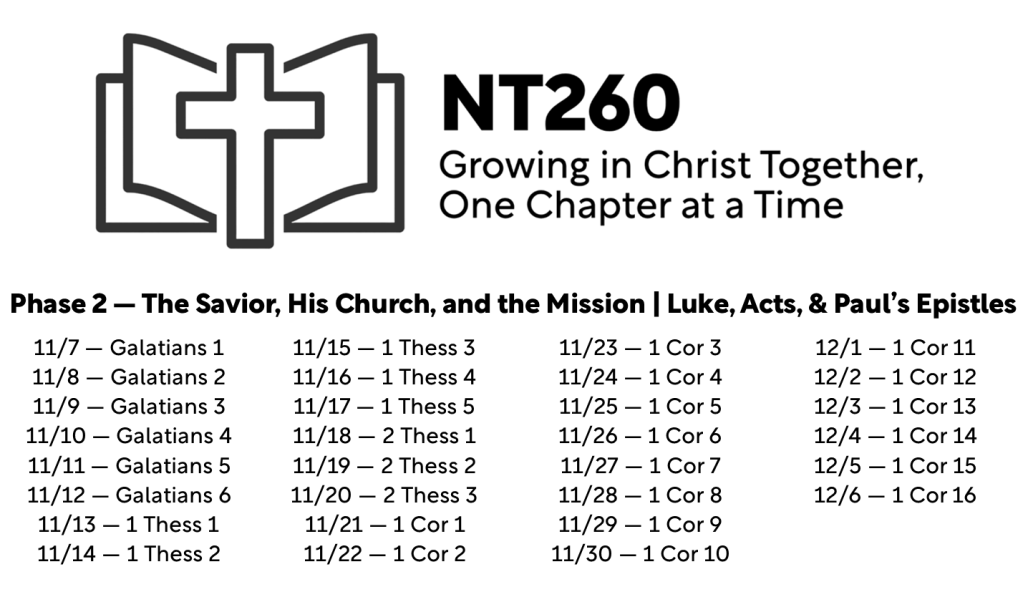





 Just Keith Harris