1 Who has believed what he has heard from us? And to whom has the arm of the Lord been revealed? 2 For He grew up before Him like a young plant, and like a root out of dry ground; He had no form or majesty that we should look at Him, and no beauty that we should desire Him. 3 He was despised and rejected by men, a man of sorrows and acquainted with grief; and as one from whom men hide their faces He was despised, and we esteemed Him not.
4 Surely He has borne our griefs and carried our sorrows; yet we esteemed Him stricken, smitten by God, and afflicted. 5 But He was pierced for our transgressions; He was crushed for our iniquities; upon Him was the chastisement that brought us peace, and with His wounds we are healed. 6 All we like sheep have gone astray; we have turned – every one – to His own way; and the Lord has laid on Him the iniquity of us all.
Isaiah 53:1-6
“An Old Testament Portrait of Christ” by Robert Morman
I remember going to various churches when I was in my teens, and it was always there. That one framed picture of Jesus. You know the one. I have jokingly called it the Swedish-Pageant-Sash Jesus. He is there with blue eyes and flowing hair. His robes are white, and he wears either a red or blue sash that goes from his shoulder across his chest and around his side. He looks like he is either in a pageant or in a commercial for some hair product. He looks amazing – almost heavenly. There is usually one other picture in most churches – Jesus on the cross. It is a sanitized picture of the crucifixion. It is usually Jesus nailed to the cross looking to Heaven. For the most part, he looks normal and in good physical condition, but when we read the words of Isaiah 53, we see a completely different Jesus described.
Verse 2 says, “He [Jesus] had no form or majesty that we should look at him, and no beauty that we should desire him.” Appearance wise, there was nothing that stood out about Jesus. In His time, He would look exactly like most normal working class or even poor people in that area of the world. He wouldn’t have stood out in the marketplace. Isaiah 53 doesn’t stop there with Jesus. This is a prophecy about what would occur to the Messiah. He is called “a man of sorrows” and one “acquainted with grief”, so well acquainted with grief that it is recorded that He sweat drops of blood in the garden because of what He knew was going to occur to Him. He carried our sins. Verse 4 says it best, “he has borne our griefs and carried our sorrows.” Every sin was on Him. A sinless Savior feeling the weight of an eternity of sin. That is tremendous grief and sorrow.
Verse 5 foretells what would occur to him. “He was pierced for our transgressions.” From the flogging to the crown of thorns, to the nails, to the spear in his side, every piercing was caused by us. “He was crushed for our iniquities.” Jesus most likely would have fallen as he carried the crossbeam he would soon be nailed to. This piece of the device of torment and death would have fallen on him. Depending on the source, the beam would have weighed 75-125 lbs. Imagine falling multiple times with that weight on you, then getting up and doing it again. All of this combined with the beating Jesus would have received and his lack of sleep, food, and water would have made Him look almost inhuman in appearance. But why? Why would this occur? Verse 6,” The Lord has laid on him the iniquity of us all.” Christ was sent to die because of what we have done. Every sin, big and small, was laid on Him by the Father. Jesus was mangled and marred for us at the will of the Father. This should drive us to adore Jesus more and more.
To close, let’s read the lyrics of the hymn “O Sacred Head, Sore Wounded”[i]:
“In thy most bitter passion My heart to share doth cry. With thee for my salvation Upon the cross to die. Ah, keep my heart thus moved To stand thy cross beneath, To mourn thee, well-beloved, Yet thank thee for thy death.”
Reflection Questions:
How do vv. 2-6 describe Jesus different than the pictures you are used to seeing of Him?
How does reading through these verses in Isaiah 53 help us understand why Jesus came to earth and why He died for our sins on the cross?
📖 Revelation 4:1–11In this episode of The King is Coming, Keith Harris and Jamie Harrison move beyond Jesus’s letters to the churches and into the next part of John’s vision. In Revelation 4, John is invited through an open door into heaven—and what he sees is the throne room of God.At the center of everything is a throne, and seated on it is the Lord in all His glory. From this point forward in Revelation, the throne becomes the focal point of the entire book.John describes the scene the best way he can: the brilliance of precious stones, a rainbow surrounding the throne, flashes of lightning and thunder, and a crystal-like sea before it. Surrounding the throne are twenty-four elders and four living creatures who never cease to worship the Lord.Together, Keith and Jamie discuss:✔️ Why Revelation 4 marks a shift from the letters to the churches to John’s heavenly vision✔️ What the throne room reveals about God’s authority and security over all things✔️ Why John uses comparisons (“like” and “as”) to describe the glory he sees✔️ The mystery of the twenty-four elders and what we can—and cannot—know✔️ The constant worship of the living creatures crying “Holy, holy, holy”✔️ Why heaven’s worship centers on God simply because He is worthyIn the throne room, everything points to one truth: God alone is worthy of worship.“Worthy are you, our Lord and God, to receive glory and honor and power, for you created all things, and by your will they existed and were created.” (Revelation 4:11)🔗 If you would like to see a written version of this podcast, complete with footnotes and cross-references, you can find it here.
[i] F. L. Cross and Elizabeth A. Livingstone, eds., The Oxford Dictionary of the Christian Church (Oxford; New York: Oxford University Press, 2005), 670.
2 The people who walked in darkness have seen a great light; those who dwelt in a land of deep darkness, on them has light shone. 3 You have multiplied the nation; You have increased its joy; they rejoice before you as with joy at the harvest, as they are glad when they divide the spoil. 4 For the yoke of His burden, and the staff for His shoulder, the rod of His oppressor, You have broken as on the day of Midian. 5 For every boot of the tramping warrior in battle tumult and every garment rolled in blood will be burned as fuel for the fire. 6 For to us a child is born, to us a Son is given; and the government shall be upon His shoulder, and His name shall be called Wonderful Counselor, Mighty God, Everlasting Father, Prince of Peace. 7 Of the increase of His government and of peace there will be no end, on the throne of David and over his kingdom, to establish and to uphold it with justice and with righteousness from this time forth and forevermore. The zeal of the Lord of hosts will do this.
Isaiah 9:2-7
“The Eternal Salvation and Kingdom of GOD” by John Goldwater
Isaiah the prophet is given an incredible vision of the eternal salvation and kingdom that GOD will bring. GOD’s fight will bring light to darkness, hope to gloom, and victory to defeat. All these wonderful transformations will be accomplished by His power and experienced by His people. GOD Himself will accomplish all that He promises.
In Isaiah 8:19-22, the prophet describes those who have forsaken GOD and His Word in favor of occult practices. This practice of abandoning GOD and seeking spirits, sages, philosophies, religions, sciences, theories, or just man-centered feelings and wisdom, is still a practice prevalent in modern times. These twin sin of abandoning GOD and seeking others always and inevitably leads to darkness, hopelessness, and fruitlessness. And this is the backdrop into which GOD announces His coming eternal salvation and kingdom.
Isaiah 9:1-3 identifies the people and the place where GOD’s great initiative will first impact the earth. Ground zero of GOD’s great work will be the northern section of Israel, “Zebulun and the land of Naphtali…beyond the Jordan, in Galilee of the Gentiles” (Isaiah 9:1). These lands were devastated by the cruel Assyrian invaders and the residents there suffered greatly. The people described as the distressed, the lightly esteemed, the heavily oppressed, the Gentiles, the people who walked in darkness, and those who lived in death’s shadow. It’s just like GOD to take on the lowest people in toughest places during the darkest darkness, so that His light and glory will shine brightest.
This mighty and gracious act of GOD is meant to be experienced by His people. The light of GOD’s glory is meant to be seen and felt. They “have seen a great light…Upon them a light has shined” (Isaiah 9:2). The bright future of those who put their trust in GOD will not be hidden forever, eventually the darkness will flee in the light of the brilliant dawning of GOD’s saving power. GOD’s brilliant victory over darkness brings an ever-increasing joy. Joy like a bountiful harvest and joy like soldiers coming home from war will sweep away the years of want, suffering, and shame.
Isaiah 9:4-7 describe the perfect Savior and King in action. Verses 4, 5, and 6 all start with the word “For” to confirm that it is GOD alone who causes this victory, therefore it is to GOD alone to receive glory and honor. GOD will destroy the power of the enemy to oppress and burden His people. Just like the prophecy of Genesis 3:15, the special born Son who will crush the head of the serpent, implies, there cannot be lasting peace if there is a lasting enemy. Like when GOD struck down the Egyptians and the Midianites, He again will break the power of the His enemies. Furthermore, He brings an end to war itself. The uniforms and the gear used for war will become useless except for burning. This is all GOD’s doing.
GOD’s mission, His fight, is going to take place in close quarters and in the filth of this world. The Child born and the Son given will be none other than the Mighty GOD, God the Warrior, and Everlasting Father. These titles cannot rightfully and especially not biblically be address to any other being but GOD, the One True GOD. He will enter the fray and penetrate the darkness. He will be King at His birth and even His vulnerability is stronger than man’s strength (Isaiah 7:14, Matthew 2:1-2, 1 Corinthians 1:25). His wisdom and counsel will be unstoppable because He is the Wonderful Counselor. The idea of Wonderful here carries describes that which is beyond human and worldly understanding. He is the Prince, the Ruler, of peace (Genesis 14:18, Psalm 110:4, Hebrews 7:1-3). He manufactures peace like a car manufacturer makes cars (Colossians 1:19-20). GOD, the Wonderful Counselor, Mighty GOD, Everlasting Father, and Prince of Peace (note He is both Father and Son=Prince), will both Give His Son and the Child born will be GOD with us, Immanuel – God with us. Because of this mysterious, gracious, and glorious incarnation the victory is assured.
The loving governance that He brings will rest on His shoulders and will last forever. For those who hope for real justice and righteousness to rule this world, hold it is coming. GOD will fulfill His promises through His Son JESUS. JESUS was born of the tribe of Judah and of the family line of David (Genesis 49:10, 2 Samuel 7:12-16, Romans 1:2-4). JESUS is the Child born, He is the Son given, He is the Word made flesh (John 1:1, 14), and He is the personification of the “Zeal of the LORD of hosts” (Isaiah 9:7). Take time this season to think about how wonderful it is that GOD Himself, the perfect Savior and King, came to establish His Eternal Salvation and Kingdom.
“Joy to the world! The LORD is come; Let earth receive her King!”[i]
Reflection Questions:
Reflecting on v. 2, how does it describe the powerful impact of the light of Christ on places and people in darkness and despair?
Think on the titles and roles of Jesus in vv. 6-7. What do they tell us about who Jesus is?
📖 Revelation 4:1–11In this episode of The King is Coming, Keith Harris and Jamie Harrison move beyond Jesus’s letters to the churches and into the next part of John’s vision. In Revelation 4, John is invited through an open door into heaven—and what he sees is the throne room of God.At the center of everything is a throne, and seated on it is the Lord in all His glory. From this point forward in Revelation, the throne becomes the focal point of the entire book.John describes the scene the best way he can: the brilliance of precious stones, a rainbow surrounding the throne, flashes of lightning and thunder, and a crystal-like sea before it. Surrounding the throne are twenty-four elders and four living creatures who never cease to worship the Lord.Together, Keith and Jamie discuss:✔️ Why Revelation 4 marks a shift from the letters to the churches to John’s heavenly vision✔️ What the throne room reveals about God’s authority and security over all things✔️ Why John uses comparisons (“like” and “as”) to describe the glory he sees✔️ The mystery of the twenty-four elders and what we can—and cannot—know✔️ The constant worship of the living creatures crying “Holy, holy, holy”✔️ Why heaven’s worship centers on God simply because He is worthyIn the throne room, everything points to one truth: God alone is worthy of worship.“Worthy are you, our Lord and God, to receive glory and honor and power, for you created all things, and by your will they existed and were created.” (Revelation 4:11)🔗 If you would like to see a written version of this podcast, complete with footnotes and cross-references, you can find it here.
[i] George Thomas Kurian, Nelson’s New Christian Dictionary: The Authoritative Resource on the Christian World (Nashville, TN: Thomas Nelson Publishers, 2001).
Oh sing to the Lord a new song, for He has done marvelous things!His right hand and His holy arm have worked salvation for Him.The Lord has made known His salvation;He has revealed His righteousness in the sight of the nations.He has remembered His steadfast love and faithfulness to the house of Israel. All the ends of the earth have seen the salvation of our God.
Make a joyful noise to the Lord, all the earth; break into joyous song and sing praises!
Psalm 98:1-4
Did you know that Isaac Watt’s hymn “Joy to the World” was not intended to be a Christmas carol? Watts wrote it with the intention of having a hymn show praise to God for His care for His people with a New Testament perspective, specifically a focus on the return of Christ. But just as the New Testament begins with the birth of Christ – Emmanuel, God with us – “Joy to the World” will forever be associated with Jesus’s first coming. It will forever be associated with Christmas.
Psalm 98 is the inspiration for “Joy to the World” and is a psalm celebrating God’s continual salvation for Israel and all the times that “His steadfast love and faithfulness” were bestowed on them. But all of that – all the times God showed up and moved in Israel’s history, all the powerful examples of His continued care for them – was on display for the Gentiles, on display for “all the earth”. That’s good news!
When we look at the world around us, there is not a lot of good news to be found – and definitely very little “good news of great joy”, and even less good news that is meant “for all the people” (Luke 2:10). But with Jesus comes “Joy to the World”. Jesus makes Psalm 98 true because He is the culmination of the “marvelous things” God has done – God in flesh (John 1:14)! Jesus is God’s salvation “made known”! Jesus is God’s righteousness revealed! God truly “remembered His steadfast love and faithfulness to the house of Israel” by sending them the Messiah, and praise be to God, “all the ends of the earth” can see and experience “the salvation of our God” through Him!
This year’s Advent guide is named after the hymn “Joy to the World”, but it is also – not a subtitle, but another title entirely – named after a line from “O Holy Night”: “a thrill of hope the weary world rejoices”. There seems to be a lot more weary in the world today than joy, but we need to be reminded that the Lord has come, and He is coming again. So, this is our effort to help you be able to rejoice in this weary world – to help you fix your eyes on Jesus rather than the trouble of the day (Hebrews 12:2, Matthew 6:34).
📖 Revelation 4:1–11In this episode of The King is Coming, Keith Harris and Jamie Harrison move beyond Jesus’s letters to the churches and into the next part of John’s vision. In Revelation 4, John is invited through an open door into heaven—and what he sees is the throne room of God.At the center of everything is a throne, and seated on it is the Lord in all His glory. From this point forward in Revelation, the throne becomes the focal point of the entire book.John describes the scene the best way he can: the brilliance of precious stones, a rainbow surrounding the throne, flashes of lightning and thunder, and a crystal-like sea before it. Surrounding the throne are twenty-four elders and four living creatures who never cease to worship the Lord.Together, Keith and Jamie discuss:✔️ Why Revelation 4 marks a shift from the letters to the churches to John’s heavenly vision✔️ What the throne room reveals about God’s authority and security over all things✔️ Why John uses comparisons (“like” and “as”) to describe the glory he sees✔️ The mystery of the twenty-four elders and what we can—and cannot—know✔️ The constant worship of the living creatures crying “Holy, holy, holy”✔️ Why heaven’s worship centers on God simply because He is worthyIn the throne room, everything points to one truth: God alone is worthy of worship.“Worthy are you, our Lord and God, to receive glory and honor and power, for you created all things, and by your will they existed and were created.” (Revelation 4:11)🔗 If you would like to see a written version of this podcast, complete with footnotes and cross-references, you can find it here.
Here are the links to the daily Scripture readings & devotions:
HOPE
Lighting the first candle of hope means looking forward to the promised Savior, as foretold in Isaiah 7:14 and Romans 15:12-13. This hope isn’t just a wish—it’s a sure expectation based on God’s promises. Seeing God’s faithfulness in fulfilling ancient prophecies during Christ’s birth offers hope for everyone, not just for personal salvation but for a world seeking restoration that comes from Him.
We find hope in God’s faithfulness to keep His promises. We worship a God who planned to forgive our sins through Jesus Christ long before Bethlehem, as foretold in Scriptures centuries earlier. Advent reminds us of God’s promises fulfilled in Christ, assuring us of His unchanging faithfulness and securing our hope in Him. And Advent reminds us Gd has promised Jesus’s return. “He who promised is faithful” (Hebrews 10:23).
As the second candle of peace shines, consider the profound peace brought by Jesus, the Prince of Peace, mentioned in Isaiah 9:6-7 and Luke 2:14. His birth signifies reconciliation between God and humanity, offering a deep, lasting peace found only in a personal relationship with Christ. His teachings guide us towards peace with God, ourselves, and others. Let this candle inspire a desire for reconciliation and peacemaking in a divided world.
This portion of Advent also draws attention to Bethlehem. Reflecting on Bethlehem’s seemingly insignificant setting reminds us of God’s penchant for using ordinary places for extraordinary purposes. In this portion of Advent, amidst feelings of insignificance, remember that God loves you dearly. Take a moment to pause, acknowledging how God specializes in using the seemingly small and insignificant for His glory. Pray that God uses you for His purpose—to bring peace and reconciliation to those around you, to bring people to Him.
As the candle of joy, the third candle, shines, remember the angel’s message of “good news of great joy” in Luke 2:10-11. This Gospel isn’t just duty; it’s a reason for deep delight in God’s work through Jesus Christ. It’s a lasting joy rooted in Christ’s hope, surpassing fleeting happiness. This joy invites you to live joyfully, sharing the transformative joy of knowing Christ with others.
In the same way, the Gospel reminds us to find our joy in Christ rather than in temporary pursuits. Embrace the deep joy found in knowing Christ, sharing this good news of great joy with those around you.
As the fourth candle, the candle of love, shines, ponder God’s profound love revealed through Christ’s birth and sacrifice, echoing 1 John 4:10. Reflect on John 3:16 and Romans 5:8, recognizing the Gospel as the ultimate display of God’s unconditional love. This divine love calls for embracing it fully and extending it sacrificially to others, as highlighted in Ephesians 5:2. Let Christ’s love inspire you to practice radical love in your relationships, mirroring His example.
The heart of Christmas lies in God’s immense love shown by sending His Son, Jesus, as the ultimate gift. This Advent phase illuminates the depth of the Father’s love, echoing the truth found in 1 John 4:10. Amidst the festivities, remember that Christmas revolves around God’s extraordinary love revealed through the sacrificial gift of His beloved Son for unworthy sinners like us.
The Christ candle marks the culmination of Advent, embodying hope, peace, joy, and love of Jesus. He is the heart of the Gospel message, representing hope for humanity’s reconciliation with God. Embrace His presence, allowing His light to shine through your life, illuminating the world with the Gospel’s transformative power.
Jesus’ birth led to His sacrificial death, offering us new life through His resurrection. He is our sole hope, the Way, the Truth, and the Life. Amid the Christmas hustle, ponder the profound impact of Christ’s birth in history, changing humanity forever.
This Christmas Eve, reflect on His birth, mourn the necessity of His death, celebrate His resurrection, and gather with fellow believers to worship Him.
If you would like to sign-up to receive weekly devotions and other content, enter your email address in the box below and click the “subscribe” button:
I have been thinking a lot about the Church over the past few weeks, and since this past week has been Thanksgiving, I have been thanking God for the Church.
I genuinely am thankful for the Church. I am genuinely thankful for the local church, Christ Community in Grenada, MS, God has called me and my family to join. I am not talking about a building or traditions or religious rites. I’m not even talking about worship services. No, the Church is more than all of that. You can have all of those things without Christ, but there is no Church apart from Him.
Without Christ, there is no body. The parts, the people, that make up the Church would still be dead in their trespasses and sins without Christ (Ephesians 2:1-2), but “God, being rich in mercy, because of the great love with which He loved us, even when we were dead in our trespasses, made us alive together with Christ – by grace you have been saved” (Ephesians 2:4-5). The “together” there in those verses is not talking about the Church but the way that God in Christ saves people, giving them new life – the life that Jesus has to give us because of His resurrection. The unity of the Church, the togetherness if you will, comes from all believers of all of time being knit together into a body, a “spiritual house” made of “living stones” (1 Peter 2:5) – that is the Church. And Jesus loves the Church in such a way that He calls her His Bride (Ephesians 5:32, Revelation 21:9).
A bride is someone special, someone to be treasured. I have a picture of my wife on our wedding day on my phone and in our home. I even have one at work. I officiated a wedding ceremony this past weekend, and as the groom and I were standing in place waiting for the time when we would walk up to his place, I told him to look for the moment when his bride came out of the doors – I told him that would and should be a moment engrained in his memory for the rest of his life. I still remember the moment that the back doors of Duck Hill Baptist opened and showed me Candice adorned in her wedding dress. Now, I have a pretty vivid memory of most things, but this is different. I can smell the flowers. I can remember the feeling of my breath catching in my chest, the heavy thumping of my heart. I can hear the sound of the creaking wood of the pews as people rose. But most of all, I remember our eyes meeting across the room and being afraid to blink because I was afraid I would miss something. I am thankful for that memory – more so, I am thankful for my bride.
If that is such a powerful memory for a foolish and fallible husband, how much more powerfully does Christ feel about His Bride, the Church? How should we feel about her?
First, if we are Christ-followers, we should be thankful for the Church, too — thankful that God has made us a part of His Bride (Romans 12:3-5). Jesus saving us is no little thing. This is why religion fails to capture what it is to know Christ.
Second, if we are Christ-followers, we should be a member of a local church. This is the embassy from which we serve the Lord (2 Corinthians 5:20). When the Bible uses the term “member” like in Romans 12:4-5 and 1 Corinthians 12:12, it is not talking about members of an organization like the Burger King Kids Club or Kiwanis or something. This ain’t that. This is member like a part of a body. It is an attachment religion or organization cannot imitate. You’ve heard folks talk about being the hands and feet of Jesus? Well, the local church is where those hands and feet are connected to the head, Jesus (Ephesians 4:15-16).
Lastly, if we are Christ-followers, we should love the Church (and our local church). Yes, there are problems that stem from sinful people. But Jesus saved all the members of His Bride. He loved us and died for us while we were yet sinners (Romans 5:8). What if we lived among our brothers and sisters in Christ – our fellow members of the body of Christ – with the love He shows to us? What about with the forgiveness and forebearance? Religion is not about that. Religion is about rules and regulations. Jesus is about grace.
Tomorrow is the Lord’s day, and as I said above, I’m excited. I’m excited to worship our resurrected King, Jesus Christ. I’m excited to gather with my brothers and sisters around the world as the Church gathers, but I’m also excited to gather with my brothers and sisters in the local church. I’m excited to sit under the preaching of our pastor, John Goldwater. I’m excited to hear the voices of my brothers and sisters in the praise team and congregation teaching and admonishing me with psalms hymns and spiritual songs (Colossians 3:16, Ephesians 5:19).
Won’t you join us?
Here are our Scriptures & songs:
Scripture | Isaiah 53:1-6 —
1 Who has believed what he has heard from us? And to whom has the arm of the Lord been revealed? 2 For he grew up before him like a young plant, and like a root out of dry ground; he had no form or majesty that we should look at him, and no beauty that we should desire him. 3 He was despised and rejected by men, a man of sorrows and acquainted with grief; and as one from whom men hide their faces he was despised, and we esteemed him not.
4 Surely he has borne our griefs and carried our sorrows; yet we esteemed him stricken, smitten by God, and afflicted. 5 But he was pierced for our transgressions; he was crushed for our iniquities; upon him was the chastisement that brought us peace, and with his wounds we are healed. 6 All we like sheep have gone astray; we have turned—every one—to his own way; and the Lord has laid on him the iniquity of us all.
Song | There Was Jesus — Scripture Inspiration: Colossians 1:15-21, Philippians 2:5-11, Matthew 7:24-27, Matthew 11:28-30, Psalm 51:7-8, Hebrews 13:8, John 14:6, 2 Corinthians 4:4, Ephesians 2:1-5, Hebrews 11:9-14, Colossians 3:16, Psalm 23, Isaiah 43:2, Revelation 1:8
7 He was oppressed, and he was afflicted, yet he opened not his mouth; like a lamb that is led to the slaughter, and like a sheep that before its shearers is silent, so he opened not his mouth. 8 By oppression and judgment he was taken away; and as for his generation, who considered that he was cut off out of the land of the living, stricken for the transgression of my people? 9 And they made his grave with the wicked and with a rich man in his death, although he had done no violence, and there was no deceit in his mouth.
10 Yet it was the will of the Lord to crush him; he has put him to grief; when his soul makes an offering for guilt, he shall see his offspring; he shall prolong his days; the will of the Lord shall prosper in his hand. 11 Out of the anguish of his soul he shall see and be satisfied; by his knowledge shall the righteous one, my servant, make many to be accounted righteous, and he shall bear their iniquities. 12 Therefore I will divide him a portion with the many, and he shall divide the spoil with the strong, because he poured out his soul to death and was numbered with the transgressors; yet he bore the sin of many, and makes intercession for the transgressors.
📖 Revelation 4:1–11In this episode of The King is Coming, Keith Harris and Jamie Harrison move beyond Jesus’s letters to the churches and into the next part of John’s vision. In Revelation 4, John is invited through an open door into heaven—and what he sees is the throne room of God.At the center of everything is a throne, and seated on it is the Lord in all His glory. From this point forward in Revelation, the throne becomes the focal point of the entire book.John describes the scene the best way he can: the brilliance of precious stones, a rainbow surrounding the throne, flashes of lightning and thunder, and a crystal-like sea before it. Surrounding the throne are twenty-four elders and four living creatures who never cease to worship the Lord.Together, Keith and Jamie discuss:✔️ Why Revelation 4 marks a shift from the letters to the churches to John’s heavenly vision✔️ What the throne room reveals about God’s authority and security over all things✔️ Why John uses comparisons (“like” and “as”) to describe the glory he sees✔️ The mystery of the twenty-four elders and what we can—and cannot—know✔️ The constant worship of the living creatures crying “Holy, holy, holy”✔️ Why heaven’s worship centers on God simply because He is worthyIn the throne room, everything points to one truth: God alone is worthy of worship.“Worthy are you, our Lord and God, to receive glory and honor and power, for you created all things, and by your will they existed and were created.” (Revelation 4:11)🔗 If you would like to see a written version of this podcast, complete with footnotes and cross-references, you can find it here.
15 But the free gift is not like the trespass. For if many died through one man’s trespass, much more have the grace of God and the free gift by the grace of that one man Jesus Christ abounded for many. 16 And the free gift is not like the result of that one man’s sin. For the judgment following one trespass brought condemnation, but the free gift following many trespasses brought justification. 17 For if, because of one man’s trespass, death reigned through that one man, much more will those who receive the abundance of grace and the free gift of righteousness reign in life through the one man Jesus Christ.
18 Therefore, as one trespass led to condemnation for all men, so one act of righteousness leads to justification and life for all men. 19 For as by the one man’s disobedience the many were made sinners, so by the one man’s obedience the many will be made righteous. 20 Now the law came in to increase the trespass, but where sin increased, grace abounded all the more, 21 so that, as sin reigned in death, grace also might reign through righteousness leading to eternal life through Jesus Christ our Lord.
📖 Revelation 4:1–11In this episode of The King is Coming, Keith Harris and Jamie Harrison move beyond Jesus’s letters to the churches and into the next part of John’s vision. In Revelation 4, John is invited through an open door into heaven—and what he sees is the throne room of God.At the center of everything is a throne, and seated on it is the Lord in all His glory. From this point forward in Revelation, the throne becomes the focal point of the entire book.John describes the scene the best way he can: the brilliance of precious stones, a rainbow surrounding the throne, flashes of lightning and thunder, and a crystal-like sea before it. Surrounding the throne are twenty-four elders and four living creatures who never cease to worship the Lord.Together, Keith and Jamie discuss:✔️ Why Revelation 4 marks a shift from the letters to the churches to John’s heavenly vision✔️ What the throne room reveals about God’s authority and security over all things✔️ Why John uses comparisons (“like” and “as”) to describe the glory he sees✔️ The mystery of the twenty-four elders and what we can—and cannot—know✔️ The constant worship of the living creatures crying “Holy, holy, holy”✔️ Why heaven’s worship centers on God simply because He is worthyIn the throne room, everything points to one truth: God alone is worthy of worship.“Worthy are you, our Lord and God, to receive glory and honor and power, for you created all things, and by your will they existed and were created.” (Revelation 4:11)🔗 If you would like to see a written version of this podcast, complete with footnotes and cross-references, you can find it here.
12 Put on then, as God’s chosen ones, holy and beloved, compassionate hearts, kindness, humility, meekness, and patience, 13 bearing with one another and, if one has a complaint against another, forgiving each other; as the Lord has forgiven you, so you also must forgive. 14 And above all these put on love, which binds everything together in perfect harmony.
📖 Revelation 4:1–11In this episode of The King is Coming, Keith Harris and Jamie Harrison move beyond Jesus’s letters to the churches and into the next part of John’s vision. In Revelation 4, John is invited through an open door into heaven—and what he sees is the throne room of God.At the center of everything is a throne, and seated on it is the Lord in all His glory. From this point forward in Revelation, the throne becomes the focal point of the entire book.John describes the scene the best way he can: the brilliance of precious stones, a rainbow surrounding the throne, flashes of lightning and thunder, and a crystal-like sea before it. Surrounding the throne are twenty-four elders and four living creatures who never cease to worship the Lord.Together, Keith and Jamie discuss:✔️ Why Revelation 4 marks a shift from the letters to the churches to John’s heavenly vision✔️ What the throne room reveals about God’s authority and security over all things✔️ Why John uses comparisons (“like” and “as”) to describe the glory he sees✔️ The mystery of the twenty-four elders and what we can—and cannot—know✔️ The constant worship of the living creatures crying “Holy, holy, holy”✔️ Why heaven’s worship centers on God simply because He is worthyIn the throne room, everything points to one truth: God alone is worthy of worship.“Worthy are you, our Lord and God, to receive glory and honor and power, for you created all things, and by your will they existed and were created.” (Revelation 4:11)🔗 If you would like to see a written version of this podcast, complete with footnotes and cross-references, you can find it here.
It seems that as I grow older (although not yet old), it seems that things take a little longer. As Indiana Jones says, “It ain’t the years; it’s the mileage.” This has been especially the case with our Bible studies. Essentially, I mean that I am getting to a stage of life where I am more convinced – maybe convicted – that if something is worth doing, it is worth doing well. Part of that is, as I grow older and my responsibilities and opportunities grow, too, is that I do not have to get everything done. I do not have to check every box on my to-do list. The Lord knows what He wants me to do and how much time each task of His will take. So, I trust that as I spend my time each week nothing is wasted if I spend that time pursuing Him and looking to serve Him well in all areas of my life. Part of that is daily choosing to take off the old self and put on Christ. Just as each day starts with rising from bed, taking off the bed clothes, rinsing off the old in the shower, and putting on what I need for the day – deodorant, clothes, a decent volume of hairspray, bifocals – I must consciously lay out in my mind and meditate on what it means to put on Christ before heading out to meet the day.
My wife is a pro when it comes to laying out what needs to be put on the next day and how what is taken off is to be cleared away. The kids and I are blessed to have her remind us, more of them than me as their trainability leaves her more hopeful, to lay out our clothes for the next day and to remove the old to be washed or discarded as needed. When we do this, there are no distractions or detours when it comes to getting ready. When we listen to her and follow instructions, we can get up, take off the old, and put on the new. It just works. When we get off course, it seems like everything goes awry. Socks cannot be found. Shoes have been misplaced. Questions of whether we even have pants to wear or if homework is in the backpack instead of on the coffee table or if everyone’s teeth are brushed…. It never fails that precious time has been wasted, we are close to running late, or something has been left. It would all be so simple if we just laid out what we need to put on and take with us the next day. Could it be that walking with Christ is somehow similar?
Our past few Bible studies (The Tough Love of Colossians 3, Be Killing Sin & There’s No Such Thing as Imitation Fruit) have walked through the parts of Colossians 3 that tell us how we need to take off the old self and remove the sin that clings to us like dirt. We have also studied who we are supposed to be – “God’s chosen ones, holy and beloved” (Colossians 3:12) — Who are You? parts one & two Now, we are getting to the practical part of walking with Christ: what to wear.
Because of its practical nature, this Bible study has been hard for me to complete. I want it to be clear. I need to be clear, especially considering that this list of things to “put on” is not a list of practical tips for a better life. In fact, they cannot truly be put on if one is not saved. I do not say this to exclude people. I also do not say that to include. I say it to invite people to come to Christ. I also say that to hopefully help you understand that the Christian life – a life that has been taken from dead in sin to alive in Christ – cannot, hear me canNOT be lived apart from Christ. The commandments will beat you down, suffocate, and smother you because they are meant to be accomplished through God’s power given by His Spirit to those who have put their faith in the Son. So, a big part of this study is helping you understand again what it is to be in Christ. If you find you are not in Him, I would love to help you come to know Him! And if you are in Christ, dear Sojourner, I want to help you lay out what you need to put on, namely Christ, so that you can build helpful habits (not self-help but continual parts of your relationship with Him) that will strengthen your walk with Christ and fulfill what Paul prayed for the Colossians (and I for you) in Colossians 1:10, that you may “walk in a manner worthy of the Lord, fully pleasing to him: bearing fruit in every good work and increasing in the knowledge of God”. So, what to wear?
What to Wear (vv. 12-14)
Those three words – what to wear – can be either a question (as in what should I wear? or what I am supposed to wear?) or an instruction telling us what we need to wear for a certain occasion or for a certain event or activity. This ain’t that, but the analogy is helpful. Our righteousness (because of our sin) is the equivalent of putting on dress clothes after wallowing in mud – without taking a shower or so much as hosing off. The dress clothing will obviously be made dirty because we ourselves are unclean. We can compare putting on Christ then, at least to a small degree, to putting on fresh clothes after being cleaned by Him. In this analogy, Jesus is the one who cleans us and provides us with the clothing to cover us. Jesus justifies those whom He saves and covers their sin and shame with His blood, making them clean.
Paul explained to the church at Ephesus that learning and being taught in Christ helps us learn what it is “to put off your old self, which belongs to your former manner of life and is corrupt through deceitful desires, …and to put on the new self, created after the likeness of God in true righteousness and holiness” (Ephesians 4:21-24). That is the image Paul is trying to get across to us throughout Colossians 3:5-14. Our sinful flesh belongs to the way we used to be before Jesus saved us. We need to take it off. That old life is our grave clothes. Think about it like this: do you think Lazarus (who had been dead in his tomb long enough that his decomposing body had begun to stink – John 11:39) kept on wearing his grave clothes? That would have surely been lovely and appetizing at Martha’s dinner party the week before Jesus’s crucifixion and resurrection (John 12:1-2). Nothing says, “Let’s eat”, like the smell of something dead. No, the grave clothes had been discarded – Lazarus went from death to life and came out of his tomb at Jesus’s command (John 11:43-44)! Grave clothes are for the dead. The old self and its former manner of life are products of the wages of our sin – death (Romans 6:23). It is time for those who are alive (Colossians 2:13, Ephesians 2:4-5) to put on Christ. But what does that even mean?
First, we need to understand that putting on Christ is not something that we take on and off. Salvation and the new life that comes from Jesus saving us – from Him taking us who were dead in our sins and making us alive in Him – are reality. They are more than change in status; they are change of nature and our state of existence. Salvation is not something that can be lost because it was not accomplished by us. I know it sounds weird, but salvation is kind of a paradox. Those who are born again have been saved, are being saved, and will be saved by Jesus. There is the moment of salvation when the Spirit convicted of sin, and we repented of that sin and confessed Jesus as Lord. He is continually sanctifying us (a Bible word that the Holy Spirit is supernaturally making us more like Jesus in the new self and less like the old self) and saving us in our daily lives. And He will ultimately save us by taking us from this life into His presence!
Second, putting on Christ means that there will be evidence – fruit – of a relationship with Jesus. This is something that we have looked at in earlier sections of Colossians. In Colossians 1:10, Paul spoke to the Colossian church telling them what he had been praying for them, namely that they “walk in a manner worthy of the Lord” and bear “fruit in every good work”. Their continual walk with Him grows them, provides them opportunities to serve Him, and produces fruit in their lives. In Colossians 2:6, Paul told them that they are to walk in Christ as they received Him. Again, the walk – the life – bears fruit that proves it. This is like our talking about putting on Christ and taking off the grave clothes. Dead people have no sign of life. They are dead. Think about what we refer to as vital signs: pulse, respiration, etc. They are vital to life because without them we are dead. In that same way, the fruit of Jesus changing our lives is the vital signs of our walking with Him. He took our heart of stone and gave us a heart of flesh (Ezekiel 36:26). His works are not written on stone tablets but on and through our hearts (2 Corinthians 3:3). James made this clear by saying that our faith will be proven – not earned – by works (James 2:14-26). There are outward signs of inward change, or we are dead.
This is important, and I do not want you to be able to miss this. Putting on Christ is not putting on a show. As I have already told you, trying to do the things that come from new life in Christ will weigh you down and beat you down if you have not been saved. That is what religion is and can be. Nothing will burn you out and make you want to quit quicker than trying to accomplish what only God’s Spirit can accomplish. If there is no fruit, there is no life. Jesus told His disciples a parable about a fruitless tree in Luke 13:6-9. A man owning a vineyard had a fig tree that was of fruit-bearing age for three years, yet it never produced a single fig. The vineyard owner told the worker in charge of the fig tree to cut it down because it was a waste of space and soil. The worker convinced the owner to give it one more year, a year where he would try all he could to make the tree healthy and produce fruit, but if at the end of that year there was no fruit, the tree would be cut down because it was dead. So, it is with us. Those connected to Christ – connected to the Vine – produce fruit because of the life He gives (John 15:5). But any who profess to be alive in Christ who are altogether fruitless, they are still dead in their sins (John 15:6).
I know this might sound harsh and judgmental. This section in particular is most of what has taken so long for this Bible study to develop because I do not want you to be beat down with a religious argument. I do not want you to think that I am putting qualifications on you that you cannot meet – or thinking that I am able to give you things to do in and of myself. So, if you are looking at your life and do not see any fruit of Jesus saving you, this is not me trying to hurt your feelings; it is a gift from God if you can come to realize that you are dead in your sins. Turn to Jesus and be saved (Isaiah 45:22)! Behold, “now is the favorable time”, “now is the day of salvation” (2 Corinthians 6:2)! Religion can beat you down, but the mighty hand of God can lift you up (1 Peter 5:6). If you see no fruit of Christ in your life – if you see none of His life and only yours, I beg and plead with you to look to Him, repent of your sin, confess Him as Lord, and believe on Him. He will surely save you.
If you look at your life and see fruit, no matter how small, let us look and see what He would have us wear.
What We Put on When We Put on Christ (vv. 12-14)
This is our wardrobe if we put on Christ: compassion, kindness, humility, patience, enduring care, forgiveness, and love. They stem from what we see in Jesus. Each can be clearly associated with Him, just as the sins of Colossians 3:5-9 are clearly associated with us in our sin. So, I want to treat these words – these articles of clothing as they are presented here – similarly to how we walked through the sins. In those verses, and today’s, I used the same lexicon and Greek dictionary for all the words to present their definitions fairly and not whitling the context to fit any agenda. Even when there are not quotations in the definitions, the information comes from Spiros Zodhiates’ The Complete Word Study Dictionary: New Testament[1]. More importantly, I want to show you every verse in the New Testament (and a few from the Septuagint, a Greek translation of the Old Testament from the 3rd century b.c.) that contains these words. As I said in that earlier section, this may seem nerdy and/or boring, but I want you to see what the fruit is supposed to look like. I want you to see what the new life in Christ is supposed to be. I want to show you Him:
“compassionate hearts” οἰκτιρμός (oiktirmós) — This word is “the pity or compassion which one shows for the suffering of others”. It is not as strong as the word usually used to describe God’s mercy, ultimately because we are not capable of such. But it is a result of having received mercy! The word for hearts here is essentially the word for our insides, meaning that this compassion is not just something we show. As above in mentioning compassion because of receiving mercy from Jesus, this compassion comes from inside of us – out of the new life in Jesus. It is fruit.
Romans 12:1 – I appeal to you therefore, brothers, by the mercies of God, to present your bodies as a living sacrifice, holy and acceptable to God, which is your spiritual worship.
2 Corinthians 1:3 – Blessed be the God and Father of our Lord Jesus Christ, the Father of mercies and God of all comfort….
Philippians 2:1 – So if there is any encouragement in Christ, any comfort from love, any participation in the Spirit, any affection and sympathy….
Hebrews 10:28 – Anyone who has set aside the law of Moses dies without mercy on the evidence of two or three witnesses.
1 Chronicles 21:13 (Septuagint[2]) – Then David said to Gad, “I am in great distress. Let me fall into the hand of the Lord, for His mercy is very great, but do not let me fall into the hand of a man.”
2 Chronicles 30:9 (Septuagint) – For if you return to the Lord, your brothers and your children will find compassion with their captors and return to this land. For the Lord your God is gracious and merciful and will not turn away His face from you, if you return to Him.”
Psalm 50:3(Septuagint) – Have mercy on me, O God, according to Your steadfast love; according to your abundant mercy blot out my transgressions.
Zechariah 7:9 (Septuagint) – “Thus says the Lord of hosts, Render true judgments, show kindness and mercy to one another….
“kindness” χρηστότης (chrēstótēs) — This word is translated as “good”, “kindness”, and “gentleness”. It is kind of hard to explain this word with a simple definition. This word is a byproduct of having received grace. The grace of God spreads through one’s whole self, softening the sharp edges of our personalities and mellowing out what was once harsh. It is the word used in Luke 5:39 to talk about why the old wine is better – because it has mellowed with age. This word is not really describing actions but is a description of character. It is fruit.
Romans 2:4 – Or do you presume on the riches of His kindness and forbearance and patience, not knowing that God’s kindness is meant to lead you to repentance?
Romans 3:2 – All have turned aside; together they have become worthless; no one does good, not even one.”
Romans 11:22 – Note then the kindness and the severity of God: severity toward those who have fallen, but God’s kindness to you, provided you continue in His kindness. Otherwise you too will be cut off.
Galatians 5:22 – But the fruit of the Spirit is love, joy, peace, patience, kindness, goodness, faithfulness….
Ephesians 2:7 – …so that in the coming ages He might show the immeasurable riches of His grace in kindness toward us in Christ Jesus.
Titus 3:4 – But when the goodness and loving kindness of God our Savior appeared….
“humility” ταπεινοφροσύνη (tapeinophrosúnē) — We all think we understand humility or being humble, but sometimes we are falsely humble. Zodhiates does a good job with this explanation by saying this word is the “esteeming of ourselves small, inasmuch as we are so, the correct estimate of ourselves”. To illustrate, this sort of humility is seen in the sinner who realizes he or she is unworthy of the grace of God, confesses that sin to God, and repents of it. This word is especially important to the Colossian church because a fake religious version of this was already mentioned in Colossians 2:18 and 2:23 with the word “asceticism”. This was a fake humility that was meant to make people look holier than they were. The genuine form of this humility cannot be faked. It is fruit.
Acts 20:19 – …serving the Lord with all humility and with tears and with trials that happened to me through the plots of the Jews….
Ephesians 4:2 – …with all humility and gentleness, with patience, bearing with one another in love….
1 Peter 5:5 – Likewise, you who are younger, be subject to the elders. Clothe yourselves, all of you, with humility toward one another, for “God opposes the proud but gives grace to the humble.”
“meekness” πραΰτης (praǘtēs) — There really is not a good translation of this word since “meekness” in English is usually associated with being weak or coming from a position of weakness. This ain’t that. Prautes comes from a position of power. It is a heart and mind that demonstrates gentleness and grace because the person knows who they are – more importantly whose they are. It is a confident action. It is fruit.
1 Corinthians 4:21 – What do you wish? Shall I come to you with a rod, or with love in a spirit of gentleness?
2 Corinthians 10:1 – I, Paul, myself entreat you, by the meekness and gentleness of Christ – I who am humble when face to face with you, but bold toward you when I am away!
Galatians 5:23 – …gentleness, self-control; against such things there is no law.
Ephesians 4:2 – …with all humility and gentleness, with patience, bearing with one another in love….
2 Timothy 2:25 – …correcting his opponents with gentleness. God may perhaps grant them repentance leading to a knowledge of the truth….
Titus 3:2 – …to speak evil of no one, to avoid quarreling, to be gentle, and to show perfect courtesy toward all people.
James 1:21 – Therefore put away all filthiness and rampant wickedness and receive with meekness the implanted word, which is able to save your souls.
James 3:13 – Who is wise and understanding among you? By his good conduct let him show his works in the meekness of wisdom.
1 Peter 3:15 – …but in your hearts honor Christ the Lord as holy, always being prepared to make a defense to anyone who asks you for a reason for the hope that is in you; yet do it with gentleness and respect….
“patience” μακροθυμία (makrothumía) — This word is different than we might typically think of regarding patience. Or at least it differs from how we mean patience sometimes. It is less about endurance – just getting through something – than it is about faith or respect for others. It is what the KJV translators called long-suffering – a sense of “self-restraint before proceeding to action”. It is the quality one would have if they were able to avenge themselves after being done wrong but instead refraining to do so. It is fruit.
Romans 2:4 – Or do you presume on the riches of His kindness and forbearance and patience, not knowing that God’s kindness is meant to lead you to repentance?
Romans 9:22 – What if God, desiring to show His wrath and to make known His power, has endured with much patience vessels of wrath prepared for destruction….
Galatians 5:22 – But the fruit of the Spirit is love, joy, peace, patience, kindness, goodness, faithfulness….
Ephesians 4:2 – …with all humility and gentleness, with patience, bearing with one another in love….
Colossians 1:11 – …being strengthened with all power, according to His glorious might, for all endurance and patience with joy….
1 Timothy 1:16 – But I received mercy for this reason, that in me, as the foremost, Jesus Christ might display His perfect patience as an example to those who were to believe in Him for eternal life.
2 Timothy 3:10 – You, however, have followed my teaching, my conduct, my aim in life, my faith, my patience, my love, my steadfastness….
2 Timothy 4:2 – …preach the Word; be ready in season and out of season; reprove, rebuke, and exhort, with complete patience and teaching.
Hebrews 6:12 – …so that you may not be sluggish, but imitators of those who through faith and patience inherit the promises.
James 5:10 – As an example of suffering and patience, brothers, take the prophets who spoke in the name of the Lord.
1 Peter 3:20 – …because they formerly did not obey, when God’s patience waited in the days of Noah, while the ark was being prepared, in which a few, that is, eight persons, were brought safely through the water.
2 Peter 3:15 – And count the patience of our Lord as salvation, just as our beloved brother Paul also wrote to you according to the wisdom given him….
Flowing out of these qualities or attributes are some that are written out in phrases or sentences rather than in words we can break down easily and define. The first of those is “bearing with one another” (Colossians 3:13). The compassion, kindness, humility, meekness, and patience are to be shown to others, especially to your brothers and sisters in Christ, and especially in the context of the local church. There are so many factors and factions in this world competing with and antagonizing the local church. May it not be so that we are warring against one another inside the local church (or that we claim Christ and are not a part of a local church). Yes, churches are made up of people – sinners saved by grace, but sometimes we live and act as if we have never received the grace and mercy of Christ ourselves. This is part of what Paul is talking about here. The fruit of receiving grace and mercy is extending it to others. Oh, what our faith families would be like if we showed grace to one another regularly instead of just when there are extraordinary burdens that need bearing!
Part of bearing with one another is the next quality: “if one has a complaint against another, forgiving each other” (Colossians 3:13). This one is tough! So often, we want to look at how we are to confront people (biblically or sinfully), but it is clear here that is more fruitful to just forgive. I think about times, especially a few of recent that I find myself suddenly convicted of, when I wanted to confront someone over some slight or hurt against me. How arrogant and selfish I am sometimes! What gives me the right to confront and call folks to the carpet when Jesus has been so forgiving – so merciful to me? That is part of forbearance: passing over sins. But to do that means that we must “in humility count others more significant than” ourselves (Philippians 2:3). Forgiveness is not easy. It is not meant to be. It is meant to be fruit of Jesus forgiving us – “as the Lord has forgiven you, so you also must forgive” (Colossians 3:13). That kind of tears down our selfish and prideful arguments of who deserves better or who needs to know ___. Paul tells the Colossian church, and us today, that we must forgive, not should forgive, or could forgive if ___. This is imperative. This is fruit.
Wrapping Up
The last item of clothing or last part or quality of putting on Christ really brings the whole outfit together. It is kind of like how my school kids pick at me when I am dressed well (which is not very often). They tell me I need to do a “fit check”. It is usually when I wear a sport coat or a vest that draws attention to my clothing – that item takes the clothes and makes an outfit (again, as I am told by knowledgeable and well-meaning sophomores). Love, Paul tells us, should be “put on” above all the others (Colossians 3:14). The Greek word translated “love” here is one you are likely familiar with: agape. This is the love with which God loves. We only know it and can show it if we have received God’s love – that John 3:16 sort of love where God “gave His only begotten son that whosoever believes in Him shall not perish but have everlasting life.” This is the love that God demonstrated “in that while we were still sinners, Christ died for us” (Romans 5:8). It is unexplainable. But, then again, isn’t all love too complex to put into words? Thankfully, those who are putting on Christ have His Word to depend on and explain Him to us and others. Just as John 3:16 and Romans 5:8 show us some aspects of God’s agape toward those He saves, it serves us well to look at the Word to see how His love bears fruit in our lives and helps us to love others. I am tempted here, because I have gone longer than originally planned, to snip at some verses, but as Dane Ortlund rightly says, “the safest way to theological fidelity is sticking close to the biblical text.”[3] So, we will take a good-sized chunk of 1 John 4 – not to break apart for more Bible study but to build us up to see why agape “binds everything together in perfect harmony” (Colossians 3:14). Look at 1 John 4:7-19:
7 Beloved, let us love one another, for love is from God, and whoever loves has been born of God and knows God. 8 Anyone who does not love does not know God, because God is love. 9 In this the love of God was made manifest among us, that God sent his only Son into the world, so that we might live through him. 10 In this is love, not that we have loved God but that he loved us and sent his Son to be the propitiation for our sins. 11 Beloved, if God so loved us, we also ought to love one another. 12 No one has ever seen God; if we love one another, God abides in us and his love is perfected in us.
13 By this we know that we abide in him and he in us, because he has given us of his Spirit. 14 And we have seen and testify that the Father has sent his Son to be the Savior of the world. 15 Whoever confesses that Jesus is the Son of God, God abides in him, and he in God. 16 So we have come to know and to believe the love that God has for us. God is love, and whoever abides in love abides in God, and God abides in him. 17 By this is love perfected with us, so that we may have confidence for the day of judgment, because as he is so also are we in this world. 18 There is no fear in love, but perfect love casts out fear. For fear has to do with punishment, and whoever fears has not been perfected in love. 19 We love because he first loved us.
Love, complex and simple. But in the context of putting on Christ, it is fruit. 1 John 4:19 sums that up aptly. We are capable of agape only if we have received agape. Those who are chosen of God, holy and beloved (Colossians 3:12) can have compassion welling up within them because God has had compassion on them because He loves them. They can be kind because God, in His love, has been kind to them. They can humbly look at themselves for who they are because who they are is loved by God. They can demonstrate grace and mercy appropriately because God in love pours grace and mercy in immeasurable proportions into their lives. They can patiently endure ___ because God has been, is, and will be patient with them because that is what He does for His beloved. We can bear with others and forgive them because Jesus loved us enough to forgive us and continues to do so as we need it.
Putting on Christ, then, is taking the love He gave us and turning it back toward others. Putting on Christ is showing the love and care Christ has for His Bride, the Church, toward our own local churches. Putting on Christ is showing His gospel love to the world by sharing His gospel so that people will come to know Him. Putting on Christ is more of Him and less of us until we get to the point where we see Him face-to-face – the point where we will not need to put on Christ because He will be right there with us!
[2] The Septuagint is a Greek translation of the Old Testament in the 3rd-2nd centuries BC by Jewish scholars who understood Hebrew (and Greek) better than anyone who has lived in the last 1,800 years.
[3] Dane Ortlund, Gentle and Lowly: The Heart of Christ for Sinners and Sufferers (Wheaton, IL: Crossway, 2020), 14.
Today, I have been contemplating a somewhat odd question: what if all of this Jesus stuff really matters?
*Spoiler Alert* It does!
So often, we approach “church” stuff with a religious bent. Worship ends up feeling like work. Praise is treated like penance to balance the scales of our wrongs and rights. Like so much of the activity in our lives, we can kind of go on autopilot and just go through the motions. But if Jesus is real, and He absolutely is, the religious use of His name to kind of stamp it on is a sad lifeless form or idolatry at best, and at worst, it is a stinging dart of the evil one distracting us from the God who saves.
This past week, I have had the privilege to see God move. I am blessed to see Him move often as He saves people — bringing them from death to life (Ephesians 2:1-5) — and changes their lives by working in them through His Spirit and producing fruit in their lives (Galatians 5:22-23, Ephesians 4:22-24). This week has shown me the power of what genuine faith in Jesus produces in people’s lives. I saw a group of high school students volunteer their time to pray for God to move in the lives of students, teachers, administrators, and parents. I saw them study and prepare to share their faith and God’s Word, willingly standing in front of their peers. I saw kids and adults hand-in-hand and heart-in-heart praying and crying out to God together asking Him to move in our community. I saw adults volunteer their time and money without any desire for recognition. I saw the difference between religion and relationship, real and artificial, and it is beautiful.
The Scriptures and songs we will, Lord willing, read and sing tomorrow point toward real moments in heaven around the throne. They show the worthiness of God. Creatures we cannot imagine are crying out in song, reveling in the righteousness and holiness of the Living God. Elders are casting their crowns down before the King, recognizing He is more worthy than they are. Recognition and honor and worship are poured out toward the Lamb, celebrating and rejoicing in His finished work on the cross, His empty tomb, and all He is still doing and will do.
How will what we offer tomorrow morning stack up? What if all of this Jesus stuff really matters?
First, it affects our hearts today! I remember a friend of mine preaching at a BSU gathering many years ago say that too many of us treat Jesus like a fuzzy bearded guy whose lap we sit on Sunday to ask for things and act good while we live like hell the rest of the week. If you are saved, you have been brought from death to life. Dead people and living people carry themselves quite differently! If you are saved — alive in Christ, prepare your hearts for gathering to worship Him tomorrow. We often cite Hebrews 10:23-25 to nudge people not to neglect attending worship, but there is more to it. We need to “hold fast the confession of our hope” (Hebrews 10:23) today. We need to trust in God’s promises today. We need to “consider how to stir up one another to love and good works” (Hebrews 10:24) today. And we need to prepare and plan to “meet together” (Hebrews 10:25) today.
Second, it anticipates His working now and in the worship gathering tomorrow! In my years serving in churches, I have heard many joke that preachers only work on Sundays and Wednesdays. God is never off — never on vacation or sabbatical or taking a sick day. Are you praying to ask Him to save people today? That might disrupt your Saturday plans because He might give you opportunities to share His gospel. Are you praying for Him to save people in our worship gathering tomorrow? That might disrupt your status quo, too. Good. May we see Him work and change us and grow us and build up His church — on Saturdays as well as Sundays!
Lastly, it means that attending the worship gathering tomorrow will be different than the norm for you and yours. I urge you to truly consider this. Pray for God to prepare your heart. Ask Him to show you things in His Word — and read it! Ask Him to help you approach the Lord’s day like it truly matters. Ask Him to grant you repentance for all the times it hasn’t mattered to you. Then, come and gather. Sing the songs. Read the Scripture. Actively listen. Ask God to move on your heart and bring lasting change.
I warn you, though: He might grant what you ask! Your status quo will be turned upside down, but you will be in communion with the King of kings! Your life will be changed — for the better, with eternal ramifications!
My prayer for you — and for me and mine — is that God will move on our hearts and show us He is real, for Him to impress on us just how holy and worthy He is.
I hope to gather with you tomorrow!
Here are our Scriptures & songs:
Scripture | Revelation 4:8-11 —
8 And the four living creatures, each of them with six wings, are full of eyes all around and within, and day and night they never cease to say,
“Holy, holy, holy, is the Lord God Almighty, who was and is and is to come!”
9 And whenever the living creatures give glory and honor and thanks to him who is seated on the throne, who lives forever and ever, 10 the twenty-four elders fall down before him who is seated on the throne and worship him who lives forever and ever. They cast their crowns before the throne, saying,
11 “Worthy are you, our Lord and God, to receive glory and honor and power, for you created all things, and by your will they existed and were created.”
6 And between the throne and the four living creatures and among the elders I saw a Lamb standing, as though it had been slain, with seven horns and with seven eyes, which are the seven spirits of God sent out into all the earth. 7 And he went and took the scroll from the right hand of him who was seated on the throne. 8 And when he had taken the scroll, the four living creatures and the twenty-four elders fell down before the Lamb, each holding a harp, and golden bowls full of incense, which are the prayers of the saints. 9 And they sang a new song, saying,
“Worthy are you to take the scroll and to open its seals, for you were slain, and by your blood you ransomed people for God from every tribe and language and people and nation, 10 and you have made them a kingdom and priests to our God, and they shall reign on the earth.”
11 Then I looked, and I heard around the throne and the living creatures and the elders the voice of many angels, numbering myriads of myriads and thousands of thousands, 12 saying with a loud voice,
“Worthy is the Lamb who was slain, to receive power and wealth and wisdom and might and honor and glory and blessing!”
13 And I heard every creature in heaven and on earth and under the earth and in the sea, and all that is in them, saying,
“To him who sits on the throne and to the Lamb be blessing and honor and glory and might forever and ever!”
14 And the four living creatures said, “Amen!” and the elders fell down and worshiped.
📖 Revelation 4:1–11In this episode of The King is Coming, Keith Harris and Jamie Harrison move beyond Jesus’s letters to the churches and into the next part of John’s vision. In Revelation 4, John is invited through an open door into heaven—and what he sees is the throne room of God.At the center of everything is a throne, and seated on it is the Lord in all His glory. From this point forward in Revelation, the throne becomes the focal point of the entire book.John describes the scene the best way he can: the brilliance of precious stones, a rainbow surrounding the throne, flashes of lightning and thunder, and a crystal-like sea before it. Surrounding the throne are twenty-four elders and four living creatures who never cease to worship the Lord.Together, Keith and Jamie discuss:✔️ Why Revelation 4 marks a shift from the letters to the churches to John’s heavenly vision✔️ What the throne room reveals about God’s authority and security over all things✔️ Why John uses comparisons (“like” and “as”) to describe the glory he sees✔️ The mystery of the twenty-four elders and what we can—and cannot—know✔️ The constant worship of the living creatures crying “Holy, holy, holy”✔️ Why heaven’s worship centers on God simply because He is worthyIn the throne room, everything points to one truth: God alone is worthy of worship.“Worthy are you, our Lord and God, to receive glory and honor and power, for you created all things, and by your will they existed and were created.” (Revelation 4:11)🔗 If you would like to see a written version of this podcast, complete with footnotes and cross-references, you can find it here.
12 A glorious throne set on high from the beginning is the place of our sanctuary. 13 O LORD, the hope of Israel, all who forsake you shall be put to shame; those who turn away from you shall be written in the earth, for they have forsaken the LORD, the fountain of living water. 14 Heal me, O LORD, and I shall be healed; save me, and I shall be saved, for you are my praise. 15 Behold, they say to me, “Where is the word of the LORD? Let it come!” 16 I have not run away from being your shepherd, nor have I desired the day of sickness. You know what came out of my lips; it was before your face. 17 Be not a terror to me; you are my refuge in the day of disaster. 18 Let those be put to shame who persecute me, but let me not be put to shame; let them be dismayed, but let me not be dismayed; bring upon them the day of disaster; destroy them with double destruction!
19 For in him all the fullness of God was pleased to dwell, 20 and through him to reconcile to himself all things, whether on earth or in heaven, making peace by the blood of his cross.
3 Blessed be the God and Father of our Lord Jesus Christ! According to his great mercy, he has caused us to be born again to a living hope through the resurrection of Jesus Christ from the dead, 4 to an inheritance that is imperishable, undefiled, and unfading, kept in heaven for you, 5 who by God’s power are being guarded through faith for a salvation ready to be revealed in the last time.
So often, we can get lost in carrying out what we call “church”. We talk about going to church, church buildings, church services. There are times when we try to get specific and explain that the Church, the Bride (Ephesians 5:25-27, Revelation 19:7-9) and body (Romans 12:4-5, 1 Corinthians 12:27, Ephesians 4:11-16) of Christ, is not an organization or a building or a religious activity but a people who have been saved by grace through faith in Jesus.
Thinking of the Church as anything less messes us up. We can start to think of it from a religious perspective instead of a 1)Biblical one, or 2)one that is rooted in a relationship with Jesus and what He has done in us. If the Bible teaches that the Church is more that the world sees it, it is important that those who are saved see it “with the eyes of [our] hearts enlightened” so that we remember that the differences between being a member of an organization or a member of the Church, the body of Christ, lie in having hope in Christ (Ephesians 1:18).
The good news is that there is good news — the gospel! Our hope lies in Jesus alone because He alone can give hope. We do not have to worry about keeping our minds right when thinking of the church under our own power because those who are in Christ are “transformed by the renewal of their mind” (Romans 12:2) and part of having new life in Christ is Him renewing “the spirit of [our] minds…after the likeness of God in true righteousness and holiness” (Ephesians 4:23-24). You see, the same good news that brings us to Christ sustains us because it is all about Jesus — who He is, what He is done, and what He is still doing because He is risen as He said (Matthew 28:6).
The gospel is good news — literally, it is what the word means, but it is only good news once we understand the deadly reality we are in because of sin. The Bible is clear that “all have sinned and fall short of the glory of God” (Romans 3:23). That sin separates us from God (Isaiah 59:2) and deserves the penalty of death (Romans 6:23). We have no works that can redeem us, nothing worthy in us to save us. The reality of our sinfulness is that when we stand before God at the end of our lives, God would be just and right to condemn us to the penalty we deserve. The only thing that can make any difference in that is if we put our faith in Jesus, confess Him as Lord, and believe in Him (Romans 10:9-10).
If the day we stand before God played out like a courtroom, all the evidence would be presented. Any and all humans would be guilty without hope of appeal. And those who are in Christ would plead nothing other than guilty (1 John 1:8-9). But before the sentence of death and hell is passed and the gavel slams down with an eternal level of finality, our Advocate speaks up and says that we have been cleared of all charges. The guilty can be declared innocent because Jesus has “forgiven us all our trespasses”, He has cancelled “the record of debt that stood against us with its legal demands” by “nailing it to the cross” (Colossians 2:13-14)! He bore the wrath due our sin (Romans 3:24-25 Galatians 3:13, 1 Thessalonians 1:10) and covered us with His righteousness (Hebrews 9:11-14, 1 Peter 1:18-19)!
I know I have said it several times, but that’s good news!
So, tomorrow, the Church will gather all around the world as it has on the first day of the week since Resurrection Sunday. There will be many who set out to go to church. Many will seek a religious experience. Some will go out of guilt. Others will attend because they think there is a divine roll book and perfect attendance will gain them entrance into heaven. But the Church, those who have been saved by the grace and mercy of Jesus Christ, has the opportunity to gather and worship Him, to sit under the teaching of His Word, to lift our voices in praise, and to be the Church.
What about you?
If you are saved, now is a good time to pray and set your focus on Christ! Prepare your heart for gathering and worshiping tomorrow by doing it today!
If you are not saved, that does not have to be bad news. Some of those Scriptures linked above tell how to be saved very clearly! Check out Romans 10:9-13:
…because if you confess with your mouth that Jesus is Lord and believe in your heart God raised Him from the dead, you will be saved. For with the heart one believes and is justified, and with the mouth one confesses and is saved. For the Scripture says, “Everyone who believes in Him will not be put to shame.” For there is no distinction between Jew and Greek; for the same Lord is Lord of all, bestowing His riches on all who call on Him. For “everyone who calls on the name of the Lord will be saved.”
If you want to be saved, repent of your sin and believe on Christ. Confess Him as Lord and give your life to Him. The Bible tells us that, if anyone does this — if anyone puts their faith in Christ, they are saved.
That’s good news!
Here are our Scriptures & songs:
Scripture | Luke 18:9-14 —
9 He also told this parable to some who trusted in themselves that they were righteous, and treated others with contempt: 10 “Two men went up into the temple to pray, one a Pharisee and the other a tax collector. 11 The Pharisee, standing by himself, prayed thus: ‘God, I thank you that I am not like other men, extortioners, unjust, adulterers, or even like this tax collector. 12 I fast twice a week; I give tithes of all that I get.’ 13 But the tax collector, standing far off, would not even lift up his eyes to heaven, but beat his breast, saying, ‘God, be merciful to me, a sinner!’ 14 I tell you, this man went down to his house justified, rather than the other. For everyone who exalts himself will be humbled, but the one who humbles himself will be exalted.”
1 And you were dead in the trespasses and sins 2 in which you once walked, following the course of this world, following the prince of the power of the air, the spirit that is now at work in the sons of disobedience— 3 among whom we all once lived in the passions of our flesh, carrying out the desires of the body and the mind, and were by nature children of wrath, like the rest of mankind. 4 But God, being rich in mercy, because of the great love with which he loved us, 5 even when we were dead in our trespasses, made us alive together with Christ—by grace you have been saved— 6 and raised us up with him and seated us with him in the heavenly places in Christ Jesus, 7 so that in the coming ages he might show the immeasurable riches of his grace in kindness toward us in Christ Jesus. 8 For by grace you have been saved through faith. And this is not your own doing; it is the gift of God, 9 not a result of works, so that no one may boast. 10 For we are his workmanship, created in Christ Jesus for good works, which God prepared beforehand, that we should walk in them.
9 And so, from the day we heard, we have not ceased to pray for you, asking that you may be filled with the knowledge of his will in all spiritual wisdom and understanding, 10 so as to walk in a manner worthy of the Lord, fully pleasing to him: bearing fruit in every good work and increasing in the knowledge of God; 11 being strengthened with all power, according to his glorious might, for all endurance and patience with joy; 12 giving thanks to the Father, who has qualified you to share in the inheritance of the saints in light. 13 He has delivered us from the domain of darkness and transferred us to the kingdom of his beloved Son, 14 in whom we have redemption, the forgiveness of sins.
15 He is the image of the invisible God, the firstborn of all creation. 16 For by him all things were created, in heaven and on earth, visible and invisible, whether thrones or dominions or rulers or authorities—all things were created through him and for him. 17 And he is before all things, and in him all things hold together. 18 And he is the head of the body, the church. He is the beginning, the firstborn from the dead, that in everything he might be preeminent. 19 For in him all the fullness of God was pleased to dwell, 20 and through him to reconcile to himself all things, whether on earth or in heaven, making peace by the blood of his cross.
1 Then Jesus spoke to the multitudes and to His disciples, 2 saying: “The scribes and the Pharisees sit in Moses’ seat. 3 Therefore whatever they tell you to observe, that observe and do, but do not do according to their works; for they say, and do not do. 4 For they bind heavy burdens, hard to bear, and lay them on men’s shoulders; but they themselves will not move them with one of their fingers. 5 But all their works they do to be seen by men. They make their phylacteries broad and enlarge the borders of their garments. 6 They love the best places at feasts, the best seats in the synagogues, 7 greetings in the marketplaces, and to be called by men, ‘Rabbi, Rabbi.’ 8 But you, do not be called ‘Rabbi’; for One is your Teacher, the Christ, and you are all brethren. 9 Do not call anyone on earth your father; for One is your Father, He who is in heaven. 10 And do not be called teachers; for One is your Teacher, the Christ. 11 But he who is greatest among you shall be your servant. 12 And whoever exalts himself will be humbled, and he who humbles himself will be exalted.
📖 Revelation 4:1–11In this episode of The King is Coming, Keith Harris and Jamie Harrison move beyond Jesus’s letters to the churches and into the next part of John’s vision. In Revelation 4, John is invited through an open door into heaven—and what he sees is the throne room of God.At the center of everything is a throne, and seated on it is the Lord in all His glory. From this point forward in Revelation, the throne becomes the focal point of the entire book.John describes the scene the best way he can: the brilliance of precious stones, a rainbow surrounding the throne, flashes of lightning and thunder, and a crystal-like sea before it. Surrounding the throne are twenty-four elders and four living creatures who never cease to worship the Lord.Together, Keith and Jamie discuss:✔️ Why Revelation 4 marks a shift from the letters to the churches to John’s heavenly vision✔️ What the throne room reveals about God’s authority and security over all things✔️ Why John uses comparisons (“like” and “as”) to describe the glory he sees✔️ The mystery of the twenty-four elders and what we can—and cannot—know✔️ The constant worship of the living creatures crying “Holy, holy, holy”✔️ Why heaven’s worship centers on God simply because He is worthyIn the throne room, everything points to one truth: God alone is worthy of worship.“Worthy are you, our Lord and God, to receive glory and honor and power, for you created all things, and by your will they existed and were created.” (Revelation 4:11)🔗 If you would like to see a written version of this podcast, complete with footnotes and cross-references, you can find it here.



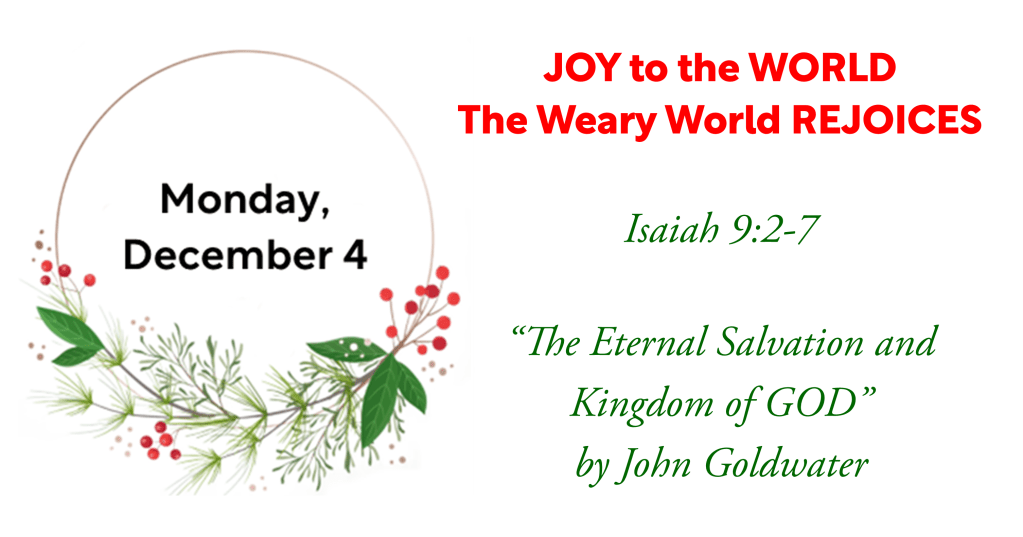




 Just Keith Harris