Peter continues showing how exiles live out the gospel in everyday relationships. Wives are called to a respectful, pure, Christ-first posture toward their own husbands—so that even an unbelieving husband might be “won without a word” by a life that quietly shows the beauty of the gospel (vv. 1–2). Peter isn’t banning hairstyles, jewelry, or nice clothes; he’s warning against living for appearances and urging a deeper beauty—the “hidden person of the heart,” marked by a gentle and quiet spirit that God calls precious (vv. 3–4). He points to holy women who “hoped in God” as examples, including Sarah’s respectful honor toward Abraham, and he calls wives to do good without being controlled by fear (vv. 5–6). Husbands, meanwhile, are commanded to live with their wives in an understanding way—honoring them, protecting rather than intimidating, and remembering they are spiritual equals: “heirs with you of the grace of life” (v. 7; cf. Genesis 1:27, Galatians 3:28). A husband’s neglect here doesn’t just harm his marriage—it can hinder his prayers (v. 7).
From the home, Peter widens to the whole church: unity of mind, sympathy, brotherly love, tender hearts, and humility—especially when suffering hits (v. 8). Instead of paying back insult for insult, believers are called to bless, because we ourselves were called by grace and will receive God’s blessing (v. 9). Peter roots this in Psalm 34: real “good days” aren’t found by winning every conflict, but by guarding the tongue, turning from evil, pursuing peace, and living under the attentive eyes and ears of the Lord (vv. 10–12; cf. Psalm 34:12–16). Even so, doing good doesn’t guarantee we won’t suffer. But if we suffer for righteousness, we are blessed—so we refuse fear, honor Christ as Lord in our hearts, and stay ready to explain the hope we have with gentleness and respect (vv. 13–16; cf. Isaiah 8:12–13). Peter’s logic is simple: it’s better to suffer for doing good (if God wills it) than to suffer for doing evil (v. 17).
Then Peter anchors everything in Jesus. Christ suffered once for sins—the righteous for the unrighteous—to bring us to God (v. 18). His unjust suffering was not defeat but the pathway to victory: resurrection, proclamation of triumph over evil powers, and ascension to God’s right hand where all authorities are subject to Him (vv. 18–22). Peter connects Noah’s day to baptism: just as God saved a small remnant through judgment, baptism points to salvation—not by washing dirt off the body, but as an appeal/pledge to God for a good conscience, grounded in the resurrection of Jesus Christ (vv. 20–21; cf. Titus 3:5, Ephesians 2:8). So when believers are slandered or pressured, we remember: the risen Jesus reigns, and our suffering will not be the final word (v. 22).
🌀 Reflection: When you feel misunderstood or mistreated, what’s your “default response”—retaliation, fear, silence, or steady hope? Ask the Lord to make your life (and your words) a calm, clear witness that honors Christ as holy—even under pressure (vv. 9, 14–16).
💬 Mission Challenge: Bless someone who has been sharp with you: pray for them by name, speak well of them where you normally wouldn’t, and look for one concrete way to do them good this week (vv. 9, 11; cf. Romans 12:17–21).
Peter begins with the basic rhythm of Christian growth: put off what destroys love and community—malice, deceit, hypocrisy, envy, slander—and crave what nourishes new life (vv. 1–2). Like a newborn who wants milk, believers should hunger for the “pure spiritual milk” of God’s Word, because the Word is how God grows His people up in salvation (v. 2; cf. 1:23–25). And if we’ve truly “tasted that the Lord is good,” that hunger won’t feel forced—it will feel like the normal appetite of someone made new (v. 3; cf. Psalm 34:8).
Then Peter lifts our eyes to who we are together in Christ. Jesus is the living Stone—rejected by people but chosen and precious to God—and everyone who comes to Him is being built into God’s new temple: living stones becoming a spiritual house and a holy priesthood offering spiritual sacrifices through Jesus (vv. 4–5). Christ is the cornerstone God laid in Zion, the One who will never shame those who trust Him (v. 6; cf. Isaiah 28:16). But the same Stone becomes a stumbling block to those who reject Him, fulfilling Scripture (vv. 7–8; cf. Psalm 118:22, Isaiah 8:14). For believers, though, the identity is stunning: a chosen race, a royal priesthood, a holy nation, God’s own possession—rescued from darkness into light so we can proclaim His excellencies (vv. 9–10; cf. Exodus 19:5–6, Hosea 2:23).
Because we belong to God, we live differently in a world that treats us like outsiders. As sojourners and exiles, we must fight the inward war—refusing sinful desires that wage war against the soul—and aim for outward witness: honorable conduct that even enemies can’t ignore (vv. 11–12; cf. Matthew 5:16). Peter applies that exile-witness to everyday life: submit to governing authorities “for the Lord’s sake,” do good to silence foolish accusations, and live as free people who use freedom to serve God (vv. 13–17; cf. Romans 13:1–7). He also speaks to those with the least social power—servants suffering unjustly—calling them to endure with God in view, because this is part of the Christian calling (vv. 18–20). And here’s the heart: we endure by looking at Jesus—sinless, non-retaliating, entrusting Himself to the just Judge—who not only modeled righteous suffering but bore our sins on the tree to free us from sin and bring us to righteousness (vv. 21–24; cf. Isaiah 53:5–9, Deuteronomy 21:22–23, Romans 12:19). Once we were wandering sheep, but now we’ve returned to the Shepherd and Overseer of our souls (v. 25; cf. Isaiah 53:6, John 10:11).
🌀 Reflection: Where are you most tempted to “blend in” as an exile—by feeding old sins, chasing comfort, or answering hostility with retaliation? Ask the Shepherd to re-align your life with the Cornerstone so your choices make His light visible (vv. 1–3, 11–12, 21–23).
💬 Mission Challenge: Do good on purpose today: choose one practical act of kindness toward someone who may misunderstand you, criticize you, or overlook you—and do it “for the Lord’s sake,” praying God uses it to point them to Him (vv. 12, 15–16).
Peter writes to believers who are “elect exiles”—chosen by God, yet scattered in a world that doesn’t fully feel like home (vv. 1–2). Their salvation is the work of the triune God: the Father set His covenant love on them beforehand, the Spirit set them apart as God’s holy people, and the Son brought them into the covenant through His cleansing blood (v. 2; cf. Exodus 24:3–8). Because of God’s great mercy, they have been born again into a living hope through the resurrection of Jesus—an unbreakable future inheritance that cannot perish, stain, or fade, guarded in heaven while God also guards them by His power through faith until that salvation is fully revealed when Christ returns (vv. 3–5).
That sure hope doesn’t erase suffering, but it changes what suffering means. Trials are real and painful, yet temporary, and God uses them like fire that refines gold—proving faith genuine and preparing believers for praise, glory, and honor at Jesus’s revelation (vv. 6–7). Even without seeing Jesus now, Christians love Him, trust Him, and rejoice with a joy that is deeper than circumstances because the gospel is already bringing them toward the “outcome” God promised—full salvation (vv. 8–9). This salvation was the long-awaited plan of God: the prophets searched and spoke of the sufferings of Christ and the glories to follow, and now, by the Holy Spirit, that good news has been announced to us—so amazing that even angels long to look into it (vv. 10–12).
Because this future grace is certain, Peter calls believers to live like who they are in Christ. They must set their hope fully on Christ’s return, fight the old desires of former ignorance, and pursue holiness because their Father is holy (vv. 13–16; cf. Leviticus 19:2). And they should walk with reverent fear—not dread, but awe and seriousness—because they were ransomed from empty ways not with silver or gold but with the precious blood of Christ, the spotless Lamb planned before the foundation of the world and revealed “for your sake” (vv. 17–21; cf. Exodus 12, Isaiah 53:7, John 1:29). Having been born again through God’s living, abiding word, Christians are to love one another earnestly from a pure heart—because people fade like grass, but the Word that preached the gospel to us endures forever (vv. 22–25; cf. Isaiah 40:6–8).
🌀 Reflection: Where have you been acting like this world is your permanent home—letting fear, old desires, or pressure shape you more than your living hope? Ask the Lord to steady your heart in your “exile” and to make your life look like someone ransomed by Jesus’s precious blood (vv. 14–19).
💬 Mission Challenge: Encourage an “exile” today: text or call someone who is weary or suffering and point them to their living hope in the risen Jesus—reminding them that God is guarding them and their inheritance until Christ returns (vv. 3–5, 7).
Mark 6 opens with a sobering contrast: Jesus is astonishing in wisdom and power, yet He is rejected by the people who think they know Him best. In Nazareth, they can’t get past His ordinary background — “Is not this the carpenter…?”—and they “took offense at him” (vv. 2–3). Jesus names the pain plainly: a prophet is often dishonored at home (v. 4). Mark then gives that hard line—Jesus “could do no mighty work there” (v. 5) — not because His power is weak, but because He does not force signs on hardened hearts; their unbelief leads to less light, not more (vv. 5–6). Yet Jesus keeps moving, teaching village to village, and He extends His work through His disciples (vv. 6–7).
Jesus sends the Twelve out two-by-two with authority over unclean spirits, telling them to travel simply — no extra supplies — so they must depend on God’s provision through hospitality and stay focused on the mission (vv. 7–10). Their message is clear: “people should repent” (v. 12). And if a town refuses to receive them, they shake off the dust as a sober testimony: rejecting the messengers is rejecting the King who sent them (v. 11). Mark then places John the Baptist’s death in the middle of the chapter as a dark warning: faithful prophets are not always honored; sometimes they are punished (vv. 14–29). Herod’s guilty conscience, Herodias’s hatred, and a foolish oath at a self-glorifying banquet end in a righteous man’s blood (vv. 20–28). The shadow is unmistakable: what happened to John points forward to what opposition will try to do to Jesus.
But Mark refuses to leave us in the darkness. When the apostles return, Jesus calls them to rest — yet compassion interrupts the retreat when He sees the crowds “like sheep without a shepherd,” and He begins teaching them “many things” (vv. 31–34). Then He feeds them in the wilderness with five loaves and two fish, satisfying them so fully there are twelve baskets left over (vv. 38–44). The point is not just that Jesus can do miracles, but that He shepherds God’s people the way God promised — providing Word and bread in a deserted place (vv. 34, 41–42). That same night, Jesus goes to pray, sees His disciples straining in the wind, and comes to them “walking on the sea” (vv. 46–48). Their fear is met with His presence and His voice: “Take heart; it is I. Do not be afraid” (v. 50). Yet Mark adds a humbling note: they were “utterly astounded” because they still “did not understand about the loaves,” and “their hearts were hardened” (vv. 51–52). Finally, wherever Jesus lands—Gennesaret and beyond — people rush the sick to Him, and “as many as touched…were made well” (vv. 53–56). The Kingdom is advancing, even as rejection grows.
🌀 Reflection: Mark 6 asks a piercing question: will familiarity make you miss Jesus? Nazareth stumbled over what was ordinary (v. 3), and even the disciples struggled to connect what they had seen with who Jesus truly is (v. 52). Ask the Lord to soften your heart so you don’t just admire Jesus’s works — you trust Jesus Himself, especially when winds are against you (vv. 48–50).
💬 Mission Challenge: Go encourage someone who is weary or afraid by sharing Mark 6:50 in your own words—remind them that Jesus sees, Jesus comes near, and Jesus speaks peace to frightened hearts (vv. 48–50).
Mark 5 shows Jesus bringing freedom where no human strength can help. On the eastern side of the Sea of Galilee, He meets a man living among tombs — isolated, tormented, and self-destructive, impossible to restrain even with chains (vv. 1–5). The demons know exactly who Jesus is: “Jesus, Son of the Most High God” (v. 7). Jesus commands them out, and when they identify themselves as “Legion,” Mark emphasizes the overwhelming evil that had enslaved this man (vv. 8–9). Jesus permits the demons to enter a herd of pigs, and the herd rushes into the sea and drowns — an unforgettable picture of the destroyer’s intent and of Jesus’ complete authority (vv. 11–13). But the man is found “clothed and in his right mind” (v. 15). Shockingly, the townspeople beg Jesus to leave (v. 17), while the restored man begs to stay with Him (v. 18). Jesus sends him instead as a witness: “Go home…tell them how much the Lord has done for you, and how he has had mercy on you” (v. 19). He obeys, proclaiming in the Decapolis what Jesus did, and “everyone marveled” (v. 20).
Back on the Galilean side, Mark weaves two miracles together to highlight one message: Jesus restores “life” to the helpless, regardless of status (vv. 21–43). Jairus, a synagogue ruler, begs Jesus to save his dying daughter (vv. 22–24). On the way, an unnamed woman — ceremonially unclean for twelve years, impoverished by doctors, and pushed to the margins — touches Jesus’ garment in faith (vv. 25–28). She is immediately healed (v. 29), and Jesus draws her out, not to shame her, but to turn a secret healing into a personal welcome: “Daughter…go in peace” (v. 34). Then the worst news arrives: Jairus’s daughter has died (v. 35). Jesus speaks the same antidote He has been giving all along: “Do not fear, only believe” (v. 36; cf. 4:40). He goes in with Peter, James, and John (v. 37), takes the girl by the hand — overcoming impurity rather than being defiled — and raises her with a simple command, “Talitha cumi” (vv. 41–42). The final detail is tender and grounding: “give her something to eat” (v. 43). The One who commands demons and death is also gentle, present, and personal.
🌀 Reflection: Mark 5 shows two kinds of fear: fear that pushes Jesus away (vv. 15–17), and fear that drives desperate people to His feet (vv. 22–23, 33). Jesus meets the broken with mercy and calls them to faith (vv. 34, 36). Where do you see yourself today — pushing Him out because His power disrupts your “normal,” or coming to Him because you know only He can make you whole?
💬 Mission Challenge: Tell one person this week “how much the Lord has done for you” in a simple, specific way — one mercy, one rescue, one answered prayer, one sustaining grace — and invite them to meet Jesus for themselves (vv. 19–20).
Mark 4 shows Jesus teaching the crowds with parables — stories that both reveal and expose. From a boat on the Sea of Galilee, He tells the parable of the sower, where the same seed falls on different soils (vv. 1–9). When the disciples ask about it, Jesus explains that the issue isn’t the seed — it’s the hearing heart (vv. 10–13). The seed is “the word” (v. 14), and the soils picture responses: some hearts are hardened and Satan snatches the word away (v. 15); some receive it quickly but fall away when trouble or persecution comes (vv. 16–17); some hear, but the worries of the world, the deceitfulness of riches, and other desires choke it out so it bears no fruit (vv. 18–19). But good soil hears, accepts, and bears fruit — real, lasting fruit that grows from a receptive heart (v. 20). In all of this, Jesus is warning “outsiders” and discipling “insiders,” showing that parables can be both mercy and judgment depending on whether we will truly listen (vv. 11–12; cf. Isaiah 6:9–10).
Then Jesus presses the point: what He’s doing is not meant to stay hidden. A lamp isn’t brought in to be buried under a basket — its purpose is to give light (vv. 21–22). So Jesus tells them to “pay attention to what you hear,” because the measure of receptiveness we bring to His word shapes what we receive (vv. 23–25). Next come two kingdom parables that teach patience and hope. The growing seed shows that the kingdom’s growth is real but often quiet — God brings fruit “by itself” in His time, not by our force or control (vv. 26–29). The mustard seed shows the kingdom begins small and unimpressive, yet grows far beyond what anyone expects, becoming a place of shelter and blessing (vv. 30–32). Mark summarizes: Jesus spoke “as they were able to hear it,” and privately explained everything to His disciples (vv. 33–34).
Finally, Mark ties Jesus’ word-parables to a deed-parable. That evening, Jesus takes the disciples across the sea, a violent storm hits, and the boat begins to fill (vv. 35–37). Jesus is asleep — truly human and truly unafraid (v. 38). The disciples wake Him with a question that exposes their fear: “Do you not care…?” (v. 38). Jesus rebukes the wind and commands the sea, and immediately there is calm (v. 39). Then He rebukes their fear and calls them to faith (v. 40). The chapter ends with the right question: “Who then is this…?” — because in Israel’s Scriptures, only God commands the sea (v. 41; cf. Psalm 107:25–30). Mark is helping us see what the disciples are slowly learning: the kingdom is present in Jesus Himself, and His word carries divine authority.
🌀 Reflection: Mark 4 invites you to examine not just whether you hear Jesus, but how you hear Him (vv. 9, 23–24). Hardness, shallowness, and divided desires can all keep the word from taking root (vv. 15–19). And fear can make us question His care even when He’s in the boat with us (vv. 38–40). Ask the Lord to make your heart “good soil” — to hear, accept, and keep bearing fruit, even in storms.
💬 Mission Challenge: Sow one small “mustard-seed” act of gospel faithfulness today: share a Scripture, pray with someone, invite a friend to read Mark with you, or encourage a weary believer — trusting God to grow what you cannot control (vv. 26–29, 31–32).
Mark 3 begins with the final — and climactic — conflict scene that’s been building since Mark 2 (2:1–3:6). Jesus enters the synagogue and sees a man with a withered hand, while His opponents watch like prosecutors, hoping to catch Him “working” on the Sabbath so they can accuse Him (vv. 1–2). Jesus calls the man forward and asks a question that exposes what their rules have done to their hearts: is the Sabbath for doing good and saving life, or for doing harm and killing (vv. 3–4)? Their silence shows their hardness, and Jesus looks at them with anger and grief — because they can’t see that God’s law was never meant to crush mercy (vv. 5; cf. 2:27). Jesus heals the man publicly, and the response is chilling: the Pharisees immediately join with the Herodians — unlikely allies — to begin plotting how to destroy Him (v. 6; cf. Psalm 2:2).
Even as opposition hardens, Jesus’ fame spreads. Crowds pour in from all over — Galilee, Judea, Jerusalem, Idumea, beyond the Jordan, and even regions like Tyre and Sidon — pressing in so tightly a boat has to be ready (vv. 7–10). Demons recognize exactly who He is and fall down, crying out “You are the Son of God,” but Jesus silences them — He will reveal Himself on His terms, not through unclean spirits (vv. 11–12). Then Jesus goes up on a mountain and appoints the Twelve, symbolizing a reconstituted Israel: they are called first “to be with him” and then to be “sent out” to preach and to confront evil with His authority (vv. 13–15). Mark even names them — right down to Judas, who will betray Him — showing that this new community will be formed in the real world, with real weakness, under Jesus’ patient oversight (vv. 16–19).
The chapter closes with two painful misunderstandings — one from “outside” and one from “inside.” Jesus’ family hears what’s happening and tries to restrain Him, saying He’s out of His mind (vv. 20–21). Meanwhile, scribes from Jerusalem escalate the accusation: they can’t deny His power, so they call it satanic, claiming He’s empowered by Beelzebul (v. 22). Jesus answers with clear logic — Satan wouldn’t sabotage Satan — and then gives the deeper truth: He is the stronger One who binds the strong man and plunders his house (vv. 23–27). That’s why the warning is so severe: to look at the Spirit’s work in Jesus and label it demonic is to reject the only source of forgiveness (vv. 28–30). Finally, Jesus redefines family: the true “insiders” are those who gather around Him and do God’s will — obedience that now means listening to and following Jesus (vv. 31–35).
🌀 Reflection: Mark 3 shows how close someone can be to Jesus — and still be far from Him. The Pharisees were near the synagogue and the Scriptures, but their hearts were hard to mercy (vv. 2, 5). Even Jesus’ family was near by blood, yet stood “outside” while the true family sat around Him to hear and obey (vv. 31–35). Pray for a tender heart that loves what God loves: truth and mercy, holiness and compassion.
💬 Mission Challenge: Choose one concrete act of mercy this week: do good and bring life to someone in need — check on a hurting neighbor, serve a burdened family, encourage someone who feels like an outsider — so they taste the restoration Jesus brings (vv. 4–5, 34–35).
Mark 2 opens with a packed house in Capernaum as Jesus “was preaching the Word” (vv. 1–2). Four friends tear open a roof to bring a paralyzed man to Jesus, and Jesus does something shocking first: He forgives the man’s sins (vv. 3–5). The scribes immediately recognize the weight of that claim — only God can forgive sins — so they accuse Jesus of blasphemy in their hearts (vv. 6–7). Jesus answers their unspoken thoughts and then proves His point with a visible miracle: He tells the man to rise and walk, showing that “the Son of Man has authority on earth to forgive sins” (vv. 8–12). The crowd is left amazed, but the bigger issue is now out in the open: Jesus is exercising God’s own authority.
Then the tension grows. Jesus calls Levi (Matthew), a tax collector, and Levi immediately follows (vv. 13–14). Soon Jesus is eating in Levi’s house with “tax collectors and sinners,” which offends the Pharisees and their scribes because table fellowship felt like acceptance (vv. 15–16). Jesus responds with a picture that cuts through religious pretending: doctors go to sick people — He came to call sinners, not the self-assured (v. 17). Next, people challenge Jesus about fasting, but Jesus says His presence is like a wedding — this is a time for joy, though He hints that days are coming when He will be “taken away” (vv. 18–20). His “new cloth/new wine” word pictures make the point: Jesus isn’t a patch on old religion; He brings a new era that can’t be contained by manmade traditions (vv. 21–22).
Finally, the Sabbath controversy surfaces. The disciples pluck grain as they walk, and the Pharisees call it unlawful (vv. 23–24). Jesus points to David eating the bread of the Presence in a moment of real need, showing that God’s Word never meant to treat people like machines (vv. 25–26). Then He declares the heart of Sabbath: it’s a gift for human good, not a crushing burden (v. 27). And He ends with a claim that ties back to the forgiveness scene: “the Son of Man is lord even of the Sabbath” (v. 28). In other words, Jesus isn’t merely interpreting God’s law — He stands over it with divine authority.
🌀 Reflection: It’s possible to be in the room with Jesus and still miss what you most need. The paralytic needed healing, but Jesus went deeper first — forgiveness (v. 5). The scribes knew the right theology (“only God can forgive”), but they refused the right conclusion about Jesus (vv. 7, 10). Ask the Lord for the kind of honest faith that comes to Jesus for the deepest need — not just a better life, but a cleansed heart.
💬 Mission Challenge: Look for one person who feels “too far gone,” “too messy,” or “not church material,” and move toward them with mercy — invite them to coffee, a meal, or simply conversation — so they can see what Mark 2 shows: Jesus welcomes sinners to be made whole (vv. 15–17).
Mark begins fast: this is “the beginning of the gospel of Jesus Christ, the Son of God” (v. 1). John the Baptist arrives as the promised messenger, calling people to repent and be baptized as they confess their sins (vv. 2–5; cf. Isaiah 40:3, Malachi 3:1). John makes it clear that he is not the main point — Someone greater is coming, and He will baptize with the Holy Spirit (vv. 7–8). Then Jesus steps into the story, is baptized, and heaven itself speaks: the Father declares Jesus His beloved Son, and the Spirit descends on Him (vv. 9–11; cf. Psalm 2:7, Isaiah 42:1). Right away, Jesus is driven into the wilderness to be tempted, showing that His mission includes open conflict with Satan — but He is not alone, and He stands firm (vv. 12–13).
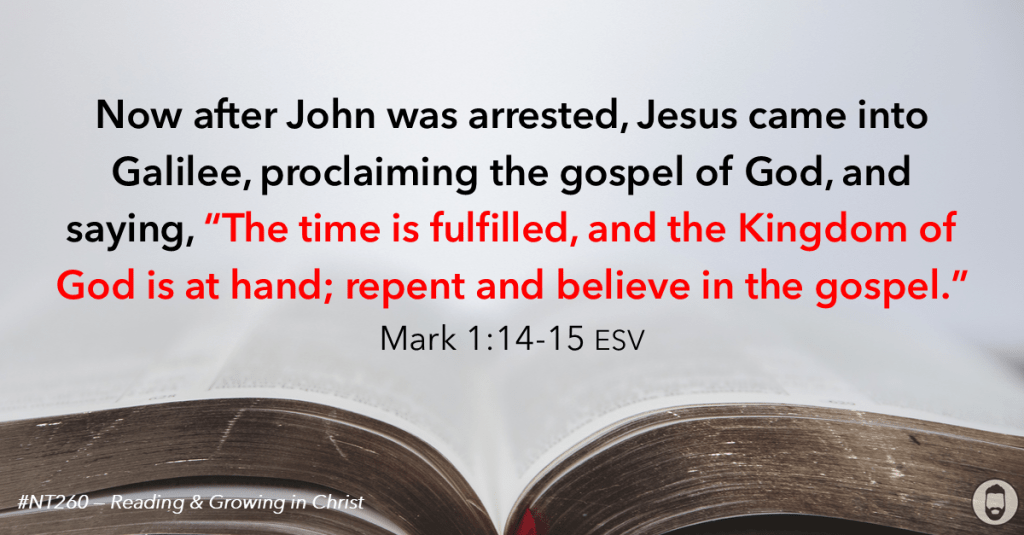
After John is arrested, Jesus begins proclaiming “the gospel of God” with a clear call: the Kingdom is near — repent and believe (vv. 14–15). He immediately calls disciples to follow Him and to become “fishers of men,” and they leave everything to go with Him (vv. 16–20). What follows is a rapid set of scenes showing Jesus’ authority: His teaching stuns the synagogue because it carries divine weight, and even unclean spirits must obey Him (vv. 21–28). That authority becomes mercy as He heals Peter’s mother-in-law, then many in the whole town, and He casts out demons — yet He refuses to let the demons define His identity (vv. 29–34). Even with crowds pressing in, Jesus rises early to pray, then keeps moving to preach in other towns, because that is why He came (vv. 35–39). Finally, Jesus touches a man with leprosy — something that would have made others recoil — and His touch cleanses the leper instead of defiling Himself (vv. 40–42). The healed man spreads the news, and the crowds grow even more — yet Mark keeps reminding us: Jesus’ miracles matter, but His primary mission is to proclaim God’s saving reign (vv. 38–39, 45).
🌀 Reflection: Mark 1 doesn’t let us treat Jesus like an inspiring teacher we can take or leave. He is the beloved Son with heaven’s approval (v. 11), the King announcing God’s reign (v. 15), and the Savior with authority over sin, sickness, and darkness (v. 27, 34). The question is simple and searching: am I only amazed by Him, or am I actually following Him (vv. 18, 20)?
💬 Mission Challenge: Pray for one person who needs the hope of the gospel, and then take one step toward them today — send a message, start a conversation, or offer to pray — so your life points to Jesus’ call: “repent and believe” (v. 15).
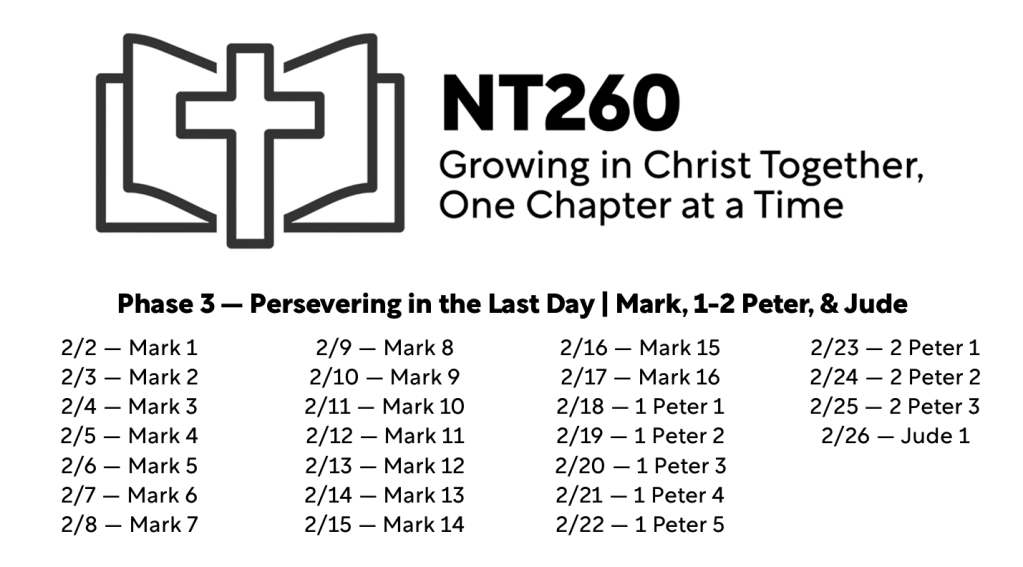
This phase reflects the influence of Peter. The Gospel of Mark is widely understood to preserve Peter’s preaching and eyewitness testimony. Peter’s letters call believers to faithfulness in suffering, holiness in a hostile world, and hope anchored in the return of Christ. Jude echoes those same concerns, warning against false teachers and urging the church to contend for the faith—making it a fitting companion to 2 Peter.
What makes this transition especially meaningful is where Phase 2 ended. Our final reading in Phase 2 was 2 Timothy 4, the ending to Paul’s final letter, written from prison as he awaited martyrdom. In that chapter, Paul asked Timothy to bring John Mark with him, saying, “for he is very useful to me for ministry” (2 Timothy 4:11). That single line carries a beautiful story of restoration. Earlier in Acts, Mark had withdrawn from missionary work, leading to a sharp disagreement between Paul and Barnabas (Acts 13:13, 15:36–40). Yet years later, as Paul’s life and ministry draw to a close, Mark is not only restored — but trusted.
This restoration had already begun. During Paul’s earlier imprisonment, Mark was with him, and Paul instructed the churches to welcome him (Colossians 4:10). By the time Paul writes his final words, Mark is no longer a cautionary tale but a valued coworker.
It is no accident — at least not in the ultimate sense — but neither is it the result of our own brilliant planning. This is one of those quiet God-winks that reminds us the Lord is always telling a bigger story than we realize. As Phase 2 ends with Paul’s final words and his restored confidence in John Mark, Phase 3 begins with Mark’s Gospel. The man once known for faltering becomes the one entrusted with recording Peter’s testimony about Jesus. The gospel that opens this phase is written by a restored servant, shaped by an apostle who knew suffering well, and given to a church learning how to endure faithfully until the end.
Phase 3, then, is not only about persevering in the last days — it is about the God who restores His people, strengthens them through trial, guards them from error, and keeps them faithful until Christ returns.
Below, you’ll find brief synopses of each book in this phase to help you understand the scope of the book and most importantly, how it fits into the full Story of the Bible.
When you click on each day’s link, you will find a link to audio, a summary of the chapter, a key verse from the chapter, and opportunities for reflection and outreach.
We’re moving into Paul’s epistles, which we’ll go through chronologically rather than in the order they appear in our Bibles.
Mark
The Gospel of Mark tells the story of Jesus as the long-promised Savior who has come to bring God’s Kingdom near. From the opening line, Mark moves quickly to show that Jesus is not simply a teacher or miracle worker, but the Son of God who arrives with divine authority (Mark 1:1, 14–15). Rooted deeply in the Old Testament story, Mark presents Jesus as the fulfillment of God’s promises to Israel — One who confronts sin, sickness, demons, and death itself. Yet from the start, Jesus is also misunderstood and opposed, especially by Israel’s leaders, revealing the deep spiritual blindness of the human heart (Mark 2:1–3:6, 4:11–12).
As the story unfolds, Mark emphasizes that Jesus’s identity can only be rightly understood through suffering. Again and again, Jesus reshapes expectations of what the Messiah has come to do. He is the Son of Man with authority, but He is also the suffering Servant who must be rejected, killed, and rise again (Mark 8:31, 10:45). This path to the cross stands at the center of God’s plan of salvation. Jesus triumphs not through power as the world understands it, but through humble obedience, laying down His life as a ransom for many (Mark 14:36, 15:39).
Mark also shows that following Jesus means sharing in this same pattern. True discipleship is not merely believing the right things but living in faithful trust and costly obedience. Those who follow Jesus are called to deny themselves, take up their cross, and follow Him—even in the face of rejection and suffering (Mark 8:34–38). The gospel Mark proclaims climaxes in the crucifixion and resurrection, where Jesus decisively defeats sin and Satan and opens the way for everlasting salvation. In God’s unfolding story, Mark reminds us that the kingdom comes through the cross, and that life is found by following the crucified and risen King.
The letter of 1 Peter was written by the apostle Peter to encourage believers who were suffering because of their faith. From the opening, Peter identifies his readers as God’s chosen people — “exiles” scattered across the provinces of Asia Minor (1 Peter 1:1). Whether that exile language is partly literal or mainly spiritual, the point is clear: Christians live in a world that does not fully welcome them, because their true home and inheritance are with God (1 Peter 1:3–5, 2:11). Peter writes to strengthen weary saints with hope — hope grounded not in easier circumstances, but in the resurrection of Jesus Christ and the sure promise of final salvation when Christ returns (1 Peter 1:3–9, 13).
At the heart of 1 Peter is the pattern of Jesus Himself: suffering now, glory later. Peter reminds believers that their trials do not mean God has abandoned them; rather, suffering for doing good is part of following a crucified and risen Savior (1 Peter 2:21–23, 4:12–13). Jesus’s death is not only an example — it is substitutionary atonement that brings sinners to God (1 Peter 2:24, 3:18). And Jesus’s resurrection and ascension mean evil will not have the final word: Christ has triumphed, and all powers are subject to Him (1 Peter 3:22). Because of what Christ has done, believers have been given new birth into a living hope and are being guarded by God for an inheritance that cannot perish (1 Peter 1:3–5).
That living hope shapes everyday life. Peter calls Christians to holy, love-filled obedience that makes the gospel visible in a hostile culture (1 Peter 1:14–16, 2:11–12). He describes the church as God’s new temple — “living stones” built into a spiritual house — and God’s covenant people: a chosen race, royal priesthood, holy nation, and treasured possession (1 Peter 2:4–10). Then he brings that identity down into the ordinary places where pressure is often felt most — relationships, workplaces, homes, and society — urging believers to do good, to honor authorities rightly, to endure unjust treatment faithfully, and to answer hostility with blessing (1 Peter 2:13–17, 18–20; 3:1–9). In short, 1 Peter teaches Christians how to stand firm in “the true grace of God” (1 Peter 5:12): suffering without losing hope, living holy without becoming harsh, and bearing witness to Jesus while waiting for the day when God will fully vindicate His people.
2 Peter is a final letter written by the apostle Peter near the end of his life, likely from Rome, as he awaited martyrdom (2 Peter 1:12–15). Like his first letter, it is written to believers facing real pressure, but this time the danger comes from within the church rather than from outside persecution. Peter writes as a spiritual father giving last reminders, urging Christians to hold firmly to what they already know and believe. He points them back to the truth they received from the apostles and from Scripture, reminding them that the gospel they trusted is not a clever story but God’s revealed truth (2 Peter 1:16–21).
In the flow of the Bible’s story, 2 Peter helps God’s people live faithfully in the time between Jesus’s first and second coming. Jesus has already accomplished salvation through his death and resurrection, but the church now waits for his return. During this waiting, false teachers arise, twisting grace into an excuse for sin and questioning whether Jesus will really come back (2 Peter 2:1–3, 3:3–4). Peter responds by showing that God’s patience is not weakness but mercy, giving people time to repent before the day of judgment comes (2 Peter 3:8–9). Just as God judged rebellion in the past and rescued the righteous, he will do so again at the end (2 Peter 2:4–9).
2 Peter calls believers to live in light of where the story is headed. Because God has promised a new heaven and a new earth where righteousness dwells, Christians are to grow in holiness, knowledge, and steadfast faith now (2 Peter 1:5–11, 3:11–13). The letter closes by urging believers not to drift or be carried away by error, but to keep growing in the grace and knowledge of Jesus Christ until the day he returns (2 Peter 3:17–18). In this way, 2 Peter strengthens the church to remain faithful to the truth as it waits for the final fulfillment of God’s saving plan.
The book of Jude is a short but urgent letter written by Jude, the brother of James and a half-brother of Jesus (Jude 1, Matthew 13:55). Writing in the mid-60s, Jude addresses believers facing a serious danger from within the church. False teachers had quietly slipped in and were twisting God’s grace into an excuse for sinful living (Jude 4). Jude writes as a servant of Jesus Christ, not appealing to family ties, but calling the church to recognize the seriousness of the moment and to respond with faithfulness and courage.
In the flow of the Bible’s Story, Jude speaks to the life of God’s people after Christ has already accomplished salvation. Because Jesus has secured redemption once for all, believers are now responsible to guard and remain faithful to “the faith that was once for all delivered to the saints” (Jude 3). Jude looks back to God’s past acts of judgment and rescue — from the Exodus to Sodom and Gomorrah — to show that God does not ignore rebellion, even among those who claim to belong to Him (Jude 5–7). These warnings remind the church that rejecting God’s truth always leads to destruction, while trusting Him leads to life.
Jude closes by calling believers to persevere with both truth and mercy. They are to build themselves up in faith, pray in the Holy Spirit, and keep themselves in God’s love as they wait for the return of Jesus Christ (Jude 20–21). At the same time, they are to show mercy to those who are wavering, while refusing to compromise with sin (Jude 22–23). The letter ends with a powerful reminder that God himself is the one who keeps His people from falling and will bring them safely into His presence with great joy (Jude 24–25).





 Just Keith Harris