NT260 | Phase 1 — Jesus, the Promised King

This phase will have us reading Matthew, Luke, and Hebrews. These books were written for Jewish-background believers and help us see Jesus as the promised King and fulfillment of the Old Testament. Matthew presents Jesus as the Son of David. James gives wisdom for living out our faith. And Hebrews explains how Jesus completes the story of God’s covenant people.

Below, you’ll find brief synopses of each book in this phase to help you understand the scope of the book and most importantly, how it fits into the full Story of the Bible.

When you click on each day’s link, you will find a link to audio, a summary of the chapter, a key verse from the chapter, and opportunities for reflection and outreach.


Matthew

The Gospel of Matthew is the first book in the New Testament and helps us see that Jesus is the promised Savior. Matthew, one of Jesus’ twelve disciples and a former tax collector, likely wrote this account to help his fellow Jews see that Jesus is the Messiah. He uses many Old Testament references to show how Jesus fulfilled God’s promises, and he points to Jesus as the Son of David and rightful King.

Matthew’s Gospel is filled with both what Jesus did and what He taught (Matthew 4:23). It includes well-known passages like the Sermon on the Mount (Matthew 5–7), the parables of the kingdom (Matthew 13), and the Great Commission (Matthew 28:18–20). As we read, we see Jesus healing, forgiving, teaching, and confronting the religious leaders. Though rejected by many, Jesus is shown to be the King who came to save—not just Israel, but the whole world.

This Gospel reminds us that Jesus is Immanuel—God with us—from beginning to end (Matthew 1:23, 28:20). It shows how Jesus brings God’s kingdom near and calls us to follow Him. Matthew connects the Old Testament to the New and invites us to believe in the One who died for our sins and rose again in victory. The story of Jesus is good news for all people, and His mission continues through us today.


James

The letter of James was written by James the Just, the half-brother of Jesus (Matt. 13:55) and a leader in the church at Jerusalem (Acts 15:13). Once an unbeliever (John 7:5), James came to faith after the risen Christ appeared to him (1 Cor. 15:7). Known for his wisdom and integrity, James wrote to Jewish Christians scattered outside Israel, likely due to persecution (Acts 11:19). This makes James one of the earliest New Testament writings, probably in the mid-40s AD—just a few years after Jesus’ resurrection. The letter is filled with strong, practical teaching for believers who were suffering trials, facing poverty, and struggling with division.

James’s main message is clear: real faith is shown by real obedience. He urges his readers not just to hear God’s Word but to do it (ch. 1:22–25). Like the wisdom books of the Old Testament—especially Proverbs—James is full of vivid pictures, direct commands, and memorable sayings. He addresses the power of the tongue (ch. 3:1–12), the danger of favoritism (ch. 2:1–7), the need for patient endurance (ch. 5:7–11), and the call to care for the poor (ch. 1:27; 2:14–17). Throughout, James points believers to seek “wisdom from above” (ch. 3:17), to pray with faith (ch. 5:13–18), and to live with humility before God (ch. 4:6–10).

In the story of the Bible, James calls God’s people to live out the new life they have received in Christ. His letter echoes the teaching of Jesus, especially the Sermon on the Mount (Matt. 5–7), and reminds the church that faith and works are not enemies but friends—true faith always produces the fruit of obedience (ch. 2:17, 26). James urges believers to endure trials with hope, resist the pull of the world, and show mercy, because the Judge is standing at the door (ch. 5:9). Until Christ returns, we are to live as wise, wholehearted disciples whose lives point others to the mercy and power of our Savior.


Hebrews

Hebrews is a Spirit-breathed sermon turned letter, written to weary believers to lift their eyes to Jesus. Its author remains unknown—Origen famously concluded, “only God knows.” What we do know is that the book’s majesty is unmistakable. As Wayne Grudem observes, “The majestic glory of Christ shines forth from the pages of the epistle to the Hebrews so brightly that no believer who reads it should ever want to question its place in the canon.” Indeed, there is no other book in Holy Scripture more clearly breathed out by God’s Spirit. The Spirit’s fingerprints are evident in every line as the writer draws deeply from the Old Testament to show that Jesus is the final and complete Word from God.

Written to Christians—likely from a Jewish background—facing discouragement, pressure, and even persecution, Hebrews urges them to persevere (ch. 10:32-36). They were tempted to drift back toward familiar religious traditions (ch. 2:1, 3:12), but the writer shows them a better way. Jesus is better than angels (ch. 1:4), better than Moses (ch. 3:3), and the better High Priest (ch. 4:14-15). He mediates a better covenant through His once-for-all sacrifice (ch. 8:6, 9:11-14, 10:10). Through rich exposition, urgent warnings, and heartfelt encouragements, Hebrews calls the church to “hold fast” (ch. 10:19-22)and to draw near to God with confidence, because Jesus Himself is our anchor (ch. 6:19-20).

In the New Testament, Hebrews is a “word of exhortation” (Heb. 13:22)—what we might call a pastoral sermon—full of both deep theology and practical application. It moves in a rhythm: teaching about Christ’s supremacy, then urging believers to respond with endurance and faith (ch. 12:1-2). The letter’s structure reflects its purpose: to strengthen believers by fixing their hope firmly on Christ (ch. 3:6, 10:23) and calling them to live faithfully until the end (ch. 3:14, 12:28). Along the way, it uses powerful Old Testament imagery—priests, sacrifices, covenants, and the tabernacle—to show that all of Scripture points to Jesus (ch. 9:23-28).

In the Story of the Bible, Hebrews ties the threads together. God spoke through the prophets in many ways, but now He has spoken definitively through His Son (Heb. 1:1–2). Jesus is the final Word (ch. 1:3), the great High Priest (ch. 7:23-25), and the perfect Sacrifice who has opened the way into God’s presence (ch. 10:19-20). By His death and resurrection, we have a cleansed conscience (ch. 9:14), a new covenant (ch. 8:10-12), and a living hope (ch. 6:19). Hebrews calls us to run the race with endurance (ch. 12:1), to keep our eyes fixed on Jesus (ch. 12:2), and to encourage one another until He returns in glory (ch. 10:24-25).


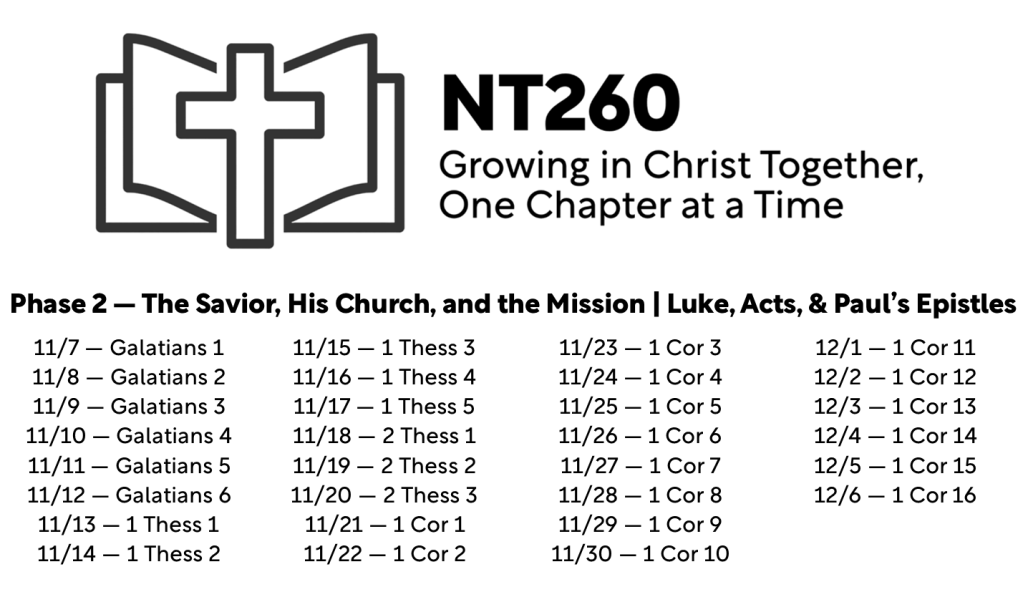
Continue reading in our NT260 plan with Phase 2 — The Savior, His Church, and the Mission.

#RomansChallenge | July 31 – 16:17-27

Click here for Romans 16:17-27 audio:


Read it. Pray it. Share it. Live it.

As Paul closes his letter, he gives a sobering warning to watch out for those who cause division and promote teachings that go against sound doctrine (v. 17). These individuals, driven by selfish appetites, use smooth talk and flattery to deceive the naive (v. 18). But Paul urges the church to be wise in what is good and innocent in what is evil, confident that God will soon crush Satan under their feet (vv. 19–20; cf. Gen. 3:15).

A brief set of greetings from Paul’s companions (vv. 21–23), including Timothy and Tertius (Paul’s scribe), reminds us that Paul ministered within a community of believers. Finally, Paul ends with a beautiful doxology, praising the God who strengthens His people through the gospel, the mystery once hidden but now revealed to the nations through Scripture to bring about the obedience of faith (vv. 25–26). All glory belongs to the only wise God, forever through Jesus Christ (v. 27).

🎯 Theme: Be alert to division and deception, cling to the gospel, and glorify the God who saves through Christ.

🌀 Reflection: The gospel that began with God’s promise in Genesis ends here with a shout of praise. Are your eyes open to falsehood, and is your heart anchored in the glory of Christ?

💬 Mission Challenge: Ask God to show you someone who may be spiritually naive or wavering, and gently guide them back to the truth of the gospel (v. 18; Gal. 6:1). Boldly declare Romans 16:27 in your own words to someone today.

#RomansChallenge | July 30 – 16:1-16

Click here for Romans 16:1-16 audio:


Read it. Pray it. Share it. Live it.

Paul ends his letter by commending and greeting a diverse group of believers who have labored faithfully for the gospel. He introduces Phoebe, a servant of the church and a generous supporter of many, likely the one delivering this letter (vv. 1–2). He honors Priscilla and Aquila, who risked their lives for him, and acknowledges house churches, early converts like Epaenetus, hard workers like Mary and Persis, and fellow prisoners Andronicus and Junia, who were in Christ before Paul (vv. 3–13).

Many names reflect a wide range of backgrounds—men and women, Jews and Gentiles, slaves and free—showcasing the unity of the church in Christ. Paul’s repeated affirmations (“beloved,” “fellow worker,” “approved in Christ”) highlight how gospel faithfulness is measured not by status but by service (vv. 8–12). He ends with a call to greet one another with a holy kiss and reminds them of the love of the wider church (vv. 16).🎯 Theme: Christian fellowship crosses every barrier—social, ethnic, and geographic. Gospel relationships are not merely friendships but partnerships in the mission of Christ.

🎯 Theme: Christian fellowship crosses every barrier—social, ethnic, and geographic. Gospel relationships are not merely friendships but partnerships in the mission of Christ.

🌀 Reflection: How are you investing in gospel friendships? Who in your life could you thank or encourage today for their partnership in the Lord?

💬 Mission Challenge: Choose one person from your church or community who has been faithfully serving behind the scenes. Write them a note of thanks for their service in Christ—and include a gospel tract or invite them to join you in reaching others with the good news.

#RomansChallenge | July 29 – 15:14-33

Click here for Romans 15:14-33 audio:


Read it. Pray it. Share it. Live it.

Paul closes the main body of his letter by affirming the Roman believers’ spiritual maturity—commending their goodness, knowledge, and ability to instruct one another (v. 14). Still, he reminds them boldly of their shared calling, especially his own unique role as a minister to the Gentiles (vv. 15–16). Describing his ministry in priestly terms, Paul presents the Gentiles as an offering made holy by the Spirit (v. 16). He boasts only in what Christ has accomplished through him—by word, deed, miraculous signs, and the Spirit’s power—as he preached from Jerusalem all the way to Illyricum (vv. 18–19).

Paul’s aim has always been to preach the gospel where Christ is not yet known (v. 20; cf. Isa. 52:15), which explains why he had not yet visited Rome (v. 22). Now, with his work in the east complete, he hopes to visit them on his way to Spain (vv. 23–24, 28). But first, he must carry a financial gift from the Gentile churches in Macedonia and Achaia to the poor believers in Jerusalem—an offering of unity and gratitude (vv. 25–27). Paul asks for prayer: for protection from hostile unbelievers, for the offering to be received well, and for the joy of finally visiting the Romans in the blessing of Christ (vv. 30–32). He ends with a word of peace (v. 33).

🎯 Theme: Gospel ministry requires partnership, boldness, and sacrifice—and the unity of believers across cultural and geographic lines is part of God’s plan for His glory.

🌀 Reflection: How might God use your life as an offering for His glory—set apart and sanctified for gospel purposes? What are you holding back that might be used for His mission?

💬 Mission Challenge: Identify a missionary or church planter who is actively reaching unreached people. This week, write them a note of encouragement, pray fervently for their work, and consider giving to support the advance of the gospel.

#RomansChallenge | July 28 – 15:1-13

Click here for Romans 15:1-13 audio:


Read it. Pray it. Share it. Live it.

Paul calls on the “strong” to bear with the “weak” (v. 1), urging believers to imitate Christ, who did not please Himself but bore our reproach for the glory of God (v. 3). Rather than demanding our own way, we are called to build up others (v. 2), to live in harmony (v. 5), and to welcome one another as Christ welcomed us (v. 7). The Scriptures were given to instruct us, and through them God brings endurance, encouragement, and hope (v. 4).

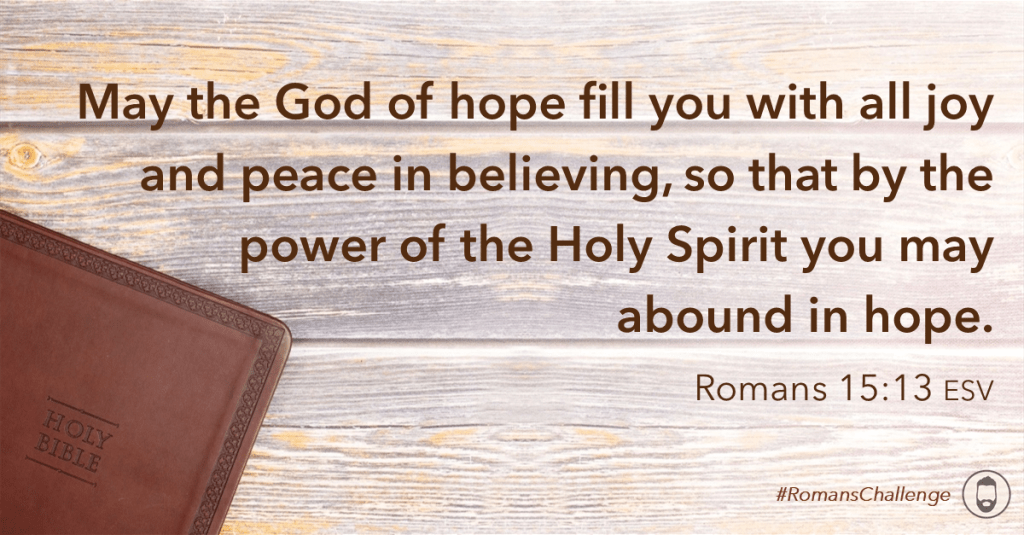
Christ came as a servant to the Jews to fulfill God’s promises and to bring salvation to the Gentiles, so that all people might glorify God (vv. 8–9). Paul strings together Old Testament passages (vv. 9–12) showing that this inclusion was always God’s plan. He ends with a prayer: that the God of hope would fill believers with joy, peace, and overflowing hope by the power of the Holy Spirit (v. 13).

🎯 Theme: Christ’s example calls us to selfless unity, mutual encouragement, and a shared hope in God.

🌀 Reflection: If Jesus bore reproach for us and welcomed us into God’s family, how can we withhold love or unity from fellow believers? True Christian strength shows itself in humility and a desire to build others up.

💬 Mission Challenge: Reach out this week to someone outside your cultural, racial, or generational circle—share a meal, a prayer, or your testimony—and demonstrate the unifying hope of the gospel.

#RomansChallenge | July 27 – 14:14-23

Click here for Romans 14:14-23 audio:


Read it. Pray it. Share it. Live it.

Paul affirms that nothing is unclean in itself (v. 14), but warns that if someone believes it to be unclean, they must not violate their conscience. Love is the greater priority, and if exercising your freedom in Christ causes distress or spiritual harm to another believer, you are no longer walking in love (v. 15). God’s kingdom is not about food and drink, but righteousness, peace, and joy in the Holy Spirit (v. 17).

We should aim for peace and mutual upbuilding rather than insisting on our own rights (v. 19). Though all things may be clean, it is wrong to cause someone else to stumble (v. 20). Whatever does not proceed from faith is sin (v. 23)—so we are called to walk in love, governed not only by truth, but by the spiritual good of others.

🎯 Theme: Love limits liberty—Christians must not use their freedom in ways that harm the faith of others or dishonor the gospel.

🌀 Reflection: We live in a world obsessed with personal rights, but Christ calls us to prioritize the spiritual health of others over our preferences. Real love lays down liberty for the sake of a brother or sister in Christ (vv. 15, 20).

💬 Mission Challenge: Consider someone in your life who may be struggling in their faith. Look for a way this week to build them up with grace and encouragement (v. 19), even if it means giving up a freedom you enjoy to help them grow in Christ.

#RomansChallenge | July 26 – 14:1-13

Click here for Romans 14:1-13 audio:


Read it. Pray it. Share it. Live it.

In the church at Rome, some believers were struggling over matters of conscience—like whether it was okay to eat certain foods or observe special days (vv. 2, 5). Paul calls those with stronger faith to welcome those who are weak in faith—not to argue over opinions (v. 1), but to walk in love. Whether someone eats or abstains, honors a special day or sees all days alike, what matters is that they do it in honor of the Lord and give thanks to God (v. 6).

We belong to Jesus in life and in death (v. 8), and each of us will give an account to God (vv. 10–12). That truth humbles us. Instead of judging each other, we’re called to stop putting stumbling blocks in the way of others (v. 13). Our unity in Christ matters more than our personal preferences or freedoms.

🎯 Theme: Believers must welcome one another in love, avoiding judgment and division over disputable matters of conscience.

🌀 Reflection: In a world that loves to argue and divide, the church is called to a higher standard—grace. Are your convictions anchored in honoring Christ, or are they a source of pride and judgment toward others? Love makes room for differences when Christ is the goal.

💬 Mission Challenge: This week, reach out to a believer whose practices or preferences differ from yours. Ask questions, listen with humility, and look for a way to honor Christ together—especially in front of a watching world (vv. 1, 3, 6, 13).

#RomansChallenge | July 25 – 13:1-14

Click here for Romans 13:1-14 audio:


Read it. Pray it. Share it. Live it.

Paul reminds believers that God is ultimately in control—even over earthly governments. Christians are called to be subject to the governing authorities, because every authority is instituted by God (v. 1). To resist lawful authority is to resist God’s design, inviting judgment (v. 2). Government, when functioning rightly, serves to restrain evil and promote good (vv. 3–4). That’s why believers are to pay taxes and give honor and respect where it is due (vv. 6–7).

But Paul doesn’t stop with civil responsibility—he moves to our spiritual debt: love (v. 8). Loving others fulfills the law because it keeps us from doing wrong to our neighbors (vv. 9–10). And since the day is at hand and our salvation is nearer now than ever (v. 11), we must cast off the works of darkness and put on the armor of light (v. 12). That means walking in holiness (v. 13) and clothing ourselves with the character of Christ, making no provision for sinful desires (v. 14).

🎯 Theme: God calls us to honor authority, love others, and live in the light of Christ’s return.

🌀 Reflection: Are you awake to the time you’re living in? With eternity drawing near, our lives should be marked by obedience, love, and holiness. Putting on Christ daily changes how we think, act, and engage the world.

💬 Mission Challenge: Reach out to someone who holds a different viewpoint—politically, culturally, or spiritually—and show them honor, not hostility. Let your love be genuine, and pray for an open door to share the hope you have in Christ (vv. 7–10, 14).

.

#RomansChallenge | July 24 – 12:9-21

Click here for Romans 12:9-21 audio:


Read it. Pray it. Share it. Live it.

Paul offers a rapid-fire list of what love looks like when it is genuine and rooted in Christ. He calls believers to abhor what is evil and hold fast to what is good (v. 9), to love one another with brotherly affection and outdo one another in showing honor (v. 10), and to serve the Lord with zeal and spiritual fervor (v. 11). Genuine love rejoices in hope, remains patient in tribulation, and perseveres in prayer (v. 12). It shares with the saints and extends hospitality (v. 13), blesses those who persecute us (v. 14), and walks in empathy and humility (vv. 15–16). Rather than seeking revenge or responding with evil, believers are called to live peaceably with all (v. 18), to leave vengeance to God (v. 19), and to overcome evil with good—even feeding our enemies if they are hungry (vv. 20–21).

🎯 Theme: Real love reflects Jesus in both devotion to others and kindness toward enemies.

🌀 Reflection: God’s mercy calls us not just to feel love, but to live it boldly and sincerely—even when it’s difficult. When we respond to hatred with kindness, we put the gospel on display.

💬 Mission Challenge: Intentionally bless someone who has wronged you or someone you find difficult to love—pray for them, serve them, or share the gospel with them as an act of overcoming evil with good (vv. 14, 20–21).

.

#RomansChallenge | July 23 – 12:1-8

Click here for Romans 12:1-8 audio:


Read it. Pray it. Share it. Live it.

Because of God’s great mercy, we are called to present our lives as living sacrifices in worship to Him (vv. 1–2). This means being transformed by the renewing of our minds and not conforming to the patterns of the world. Paul urges believers to think humbly and rightly about themselves, recognizing that every member of the church has been given different spiritual gifts by grace (vv. 3–8). Whether it’s teaching, serving, leading, giving, or showing mercy, we are all part of one body in Christ and should use our gifts for the good of others.

🎯 Theme: When we respond to God’s mercy by offering ourselves in worship, He uses us to build up the body of Christ.

🌀 Reflection: A transformed life begins with a renewed mind and a surrendered heart. God doesn’t just want part of us—He wants all of us, and He uses each of us differently for His glory.

💬 Mission Challenge: Ask someone this week how you can serve or pray for them, and look for an opportunity to use one of your gifts to bless them in Jesus’s name.