This phase will have us reading Matthew, Luke, and Hebrews. These books were written for Jewish-background believers and help us see Jesus as the promised King and fulfillment of the Old Testament. Matthew presents Jesus as the Son of David. James gives wisdom for living out our faith. And Hebrews explains how Jesus completes the story of God’s covenant people.
Below, you’ll find brief synopses of each book in this phase to help you understand the scope of the book and most importantly, how it fits into the full Story of the Bible.
When you click on each day’s link, you will find a link to audio, a summary of the chapter, a key verse from the chapter, and opportunities for reflection and outreach.
Matthew
The Gospel of Matthew is the first book in the New Testament and helps us see that Jesus is the promised Savior. Matthew, one of Jesus’ twelve disciples and a former tax collector, likely wrote this account to help his fellow Jews see that Jesus is the Messiah. He uses many Old Testament references to show how Jesus fulfilled God’s promises, and he points to Jesus as the Son of David and rightful King.
Matthew’s Gospel is filled with both what Jesus did and what He taught (Matthew 4:23). It includes well-known passages like the Sermon on the Mount (Matthew 5–7), the parables of the kingdom (Matthew 13), and the Great Commission (Matthew 28:18–20). As we read, we see Jesus healing, forgiving, teaching, and confronting the religious leaders. Though rejected by many, Jesus is shown to be the King who came to save—not just Israel, but the whole world.
This Gospel reminds us that Jesus is Immanuel—God with us—from beginning to end (Matthew 1:23, 28:20). It shows how Jesus brings God’s kingdom near and calls us to follow Him. Matthew connects the Old Testament to the New and invites us to believe in the One who died for our sins and rose again in victory. The story of Jesus is good news for all people, and His mission continues through us today.
The letter of James was written by James the Just, the half-brother of Jesus (Matt. 13:55) and a leader in the church at Jerusalem (Acts 15:13). Once an unbeliever (John 7:5), James came to faith after the risen Christ appeared to him (1 Cor. 15:7). Known for his wisdom and integrity, James wrote to Jewish Christians scattered outside Israel, likely due to persecution (Acts 11:19). This makes James one of the earliest New Testament writings, probably in the mid-40s AD—just a few years after Jesus’ resurrection. The letter is filled with strong, practical teaching for believers who were suffering trials, facing poverty, and struggling with division.
James’s main message is clear: real faith is shown by real obedience. He urges his readers not just to hear God’s Word but to do it (ch. 1:22–25). Like the wisdom books of the Old Testament—especially Proverbs—James is full of vivid pictures, direct commands, and memorable sayings. He addresses the power of the tongue (ch. 3:1–12), the danger of favoritism (ch. 2:1–7), the need for patient endurance (ch. 5:7–11), and the call to care for the poor (ch. 1:27; 2:14–17). Throughout, James points believers to seek “wisdom from above” (ch. 3:17), to pray with faith (ch. 5:13–18), and to live with humility before God (ch. 4:6–10).
In the story of the Bible, James calls God’s people to live out the new life they have received in Christ. His letter echoes the teaching of Jesus, especially the Sermon on the Mount (Matt. 5–7), and reminds the church that faith and works are not enemies but friends—true faith always produces the fruit of obedience (ch. 2:17, 26). James urges believers to endure trials with hope, resist the pull of the world, and show mercy, because the Judge is standing at the door (ch. 5:9). Until Christ returns, we are to live as wise, wholehearted disciples whose lives point others to the mercy and power of our Savior.
Hebrews
Hebrews is a Spirit-breathed sermon turned letter, written to weary believers to lift their eyes to Jesus. Its author remains unknown—Origen famously concluded, “only God knows.” What we do know is that the book’s majesty is unmistakable. As Wayne Grudem observes, “The majestic glory of Christ shines forth from the pages of the epistle to the Hebrews so brightly that no believer who reads it should ever want to question its place in the canon.” Indeed, there is no other book in Holy Scripture more clearly breathed out by God’s Spirit. The Spirit’s fingerprints are evident in every line as the writer draws deeply from the Old Testament to show that Jesus is the final and complete Word from God.
Written to Christians—likely from a Jewish background—facing discouragement, pressure, and even persecution, Hebrews urges them to persevere (ch. 10:32-36). They were tempted to drift back toward familiar religious traditions (ch. 2:1, 3:12), but the writer shows them a better way. Jesus is better than angels (ch. 1:4), better than Moses (ch. 3:3), and the better High Priest (ch. 4:14-15). He mediates a better covenant through His once-for-all sacrifice (ch. 8:6, 9:11-14, 10:10). Through rich exposition, urgent warnings, and heartfelt encouragements, Hebrews calls the church to “hold fast” (ch. 10:19-22)and to draw near to God with confidence, because Jesus Himself is our anchor (ch. 6:19-20).
In the New Testament, Hebrews is a “word of exhortation” (Heb. 13:22)—what we might call a pastoral sermon—full of both deep theology and practical application. It moves in a rhythm: teaching about Christ’s supremacy, then urging believers to respond with endurance and faith (ch. 12:1-2). The letter’s structure reflects its purpose: to strengthen believers by fixing their hope firmly on Christ (ch. 3:6, 10:23) and calling them to live faithfully until the end (ch. 3:14, 12:28). Along the way, it uses powerful Old Testament imagery—priests, sacrifices, covenants, and the tabernacle—to show that all of Scripture points to Jesus (ch. 9:23-28).
In the Story of the Bible, Hebrews ties the threads together. God spoke through the prophets in many ways, but now He has spoken definitively through His Son (Heb. 1:1–2). Jesus is the final Word (ch. 1:3), the great High Priest (ch. 7:23-25), and the perfect Sacrifice who has opened the way into God’s presence (ch. 10:19-20). By His death and resurrection, we have a cleansed conscience (ch. 9:14), a new covenant (ch. 8:10-12), and a living hope (ch. 6:19). Hebrews calls us to run the race with endurance (ch. 12:1), to keep our eyes fixed on Jesus (ch. 12:2), and to encourage one another until He returns in glory (ch. 10:24-25).
It’s been a month since I’ve been able to write one of these, and my heart is full looking forward to gathering with my faith family this Sunday. The Scriptures we will read and the songs we will sing declare what the weary world — and our own weary hearts — need to hear: GOD is with us.
I know it’s not Christmas (and it’s hard to even think about it in the midst of a Mississippi summer), but I am reminded of what the prophet Isaiah said about Jesus’s coming — He would come and be the Light that would pierce the darkness:
“The people who walked in darkness have seen a great light…. For to us a child is born, to us a Son is given….” (Isaiah 9:2,6)
Jesus is that Son, the promised Emmanuel (which means God with us). He isn’t distant or disinterested. No, Jesus is the God who stepped into our world, entered our pain, and walked among sinners. He bore the weight of our sin and carried our sorrows. But even more than being with us, Jesus is also for us.
“But if anyone does sin, we have an advocate with the Father, Jesus Christ the righteous. He is the propitiation for our sins, and not for ours only but also for the sins of the whole world.”
That word advocate means someone who speaks on your behalf, who stands beside you when you have no defense of your own. One day, we’ll stand before the Holy God of the universe to answer for our works — for our sin. It’s hard to imagine the crushing weight of the volume of our sin or how we could ever bear it (Psalm 38:4, Romans 3:23). But before we can be under that crushing weight, our advocate steps up. When our Judge asks how we plead, our advocate speaks up, but He doesn’t just plead for us — He points to His own finished work on the cross (John 19:30, Hebrews 10:12-14) — to His blood that covers and blots out our sin (Isaiah 1:18, Colossians 2:13-14, Revelation 1:5). He doesn’t speak up to ask God to forgive or overlook; He says He’s already paid for our sin — paid in full (Romans 8:1, 33-34; 2 Corinthians 5:21).
Those who are saved know that Jesus is our righteousness. He is our covering. And He is our confidence before the Father. As we’ll read in Colossians 2:13-15 this Sunday, we’ll find that the very same God who is our advocate and defends us is the same God who died for us.
That’s why we can sing “O Come, O Come Emmanuel” — because we need Him and can know He’s returning just as He’s already come to us. We can sing “Great I Am” because Jesus is not merely the babe in the manger but God Almighty come to us. We can sing “Jesus Paid It All (O Praise the One)” because our sins, not in part but the whole, were nailed to the cross and the debt of our sin paid in full. And we can sing “Thank You Jesus for the Blood” because His blood wasn’t a mere payment for sin committed but the means by which we are brought near to God.
So, this Sunday come with hope. Come with need. Come with thanksgiving. And come ready to worship the One who is God with us, our Advocate, and our Savior. We will read from God’s Word together (1 Timothy 4:13) and lift our voices to proclaim the gospel to one another as we offer praise to God (Colossians 3:16). We will sit under the teaching of God’s Word as John points us to Jesus (John 20:31). We will have the opportunity for a few hours to get a brief glimpse into the glory that awaits when we find our faith becoming sight (1 Peter 1:8-9, 2 Corinthians 4:17-18) when we come at last to be with Jesus for eternity (Revelation 21:3-4).
2The people who walked in darkness have seen a great light; those who dwelt in a land of deep darkness, on them has light shone. 3You have multiplied the nation; you have increased its joy; they rejoice before you as with joy at the harvest, as they are glad when they divide the spoil. 4For the yoke of His burden, and the staff for His shoulder, the rod of His oppressor, you have broken as on the day of Midian. 5For every boot of the tramping warrior in battle tumult and every garment rolled in blood will be burned as fuel for the fire. 6For to us a child is born, to us a son is given; and the government shall be upon His shoulder, and His name shall be called Wonderful Counselor, Mighty God, Everlasting Father, Prince of Peace. 7Of the increase of His government and of peace there will be no end, on the throne of David and over His Kingdom, to establish it and to uphold it with justice and with righteousness from this time forth and forevermore. The zeal of the LORD of hosts will do this.
13And you, who were dead in your trespasses and the uncircumcision of your flesh, God made alive together with Him, having forgiven us all our trespasses, 14by canceling the record of debt that stood against us with its legal demands. This He set aside, nailing it to the cross. 15He disarmed the rulers and authorities and put them to open shame, by triumphing over them in Him.
We’re continuing in our study of Revelation called The KING is Coming. Today, we will be diving into Jesus’s letter to the church at Pergamum. Once again, I am thankful for Jamie Harrison and the opportunity to do this study together. This week’s passage is Revelation 2:18-29:
18 “And to the angel of the church in Thyatira write: ‘The words of the Son of God, who has eyes like a flame of fire, and whose feet are like burnished bronze. 19 “ ‘I know your works, your love and faith and service and patient endurance, and that your latter works exceed the first. 20 But I have this against you, that you tolerate that woman Jezebel, who calls herself a prophetess and is teaching and seducing my servants to practice sexual immorality and to eat food sacrificed to idols. 21 I gave her time to repent, but she refuses to repent of her sexual immorality. 22 Behold, I will throw her onto a sickbed, and those who commit adultery with her I will throw into great tribulation, unless they repent of her works, 23 and I will strike her children dead. And all the churches will know that I am he who searches mind and heart, and I will give to each of you according to your works. 24 But to the rest of you in Thyatira, who do not hold this teaching, who have not learned what some call the deep things of Satan, to you I say, I do not lay on you any other burden. 25 Only hold fast what you have until I come. 26 The one who conquers and who keeps my works until the end, to him I will give authority over the nations, 27 and he will rule them with a rod of iron, as when earthen pots are broken in pieces, even as I myself have received authority from my Father. 28 And I will give him the morning star. 29 He who has an ear, let him hear what the Spirit says to the churches.’[1]
Keith Harris: Greetings, Sojourners, Welcome back to The King is Coming.[2] My name is Keith, and I’m joined once again by my friend and co-host, Jamie Harrison. Jamie, how’s it going, man?
Jamie Harrison: It’s going great. I’m looking forward to walking through another letter to the churches in Revelation.
Keith: Yeah, me too. We are now in the fourth of the seven churches, and this is the letter to Thyatira. This is the longest of the seven letters, even though Thyatira is probably the least-known of the seven cities. So, let’s jump in. This is the longest of the seven letters, and it starts with Jesus identifying Himself in a striking way: “The Son of God, who has eyes like a flame of fire and whose feet are like burnished bronze.” Jamie, what stands out to you in this introduction?
Jamie: Man, I love how every letter begins with one of the descriptions of Jesus from chapter 1. And this one — “eyes like fire, feet like bronze” — it’s strong. It’s intense. His gaze pierces through everything. The eyes of fire speak to His ability to see right through hypocrisy. And the feet of bronze are strong, stable, pure — He’s coming with authority and judgment.
Keith: Yeah, and I think that’s really important for what He’s about to say to this church. Because on the one hand, He has some really good things to say. He says, “I know your works — your love, your faith, your service, your endurance.” And then He says, “Your later works exceed the first,” so they’re growing. But on the other hand, there’s this deep compromise going on.
Jamie: Yeah, this is one of those churches where you see a really mixed picture. Like, they’ve got some great stuff going on. And it’s interesting that love is mentioned — because that wasn’t the case in Ephesus. In Ephesus, they had truth but no love. Here in Thyatira, they have love — but they’re lacking in truth.
Keith: That’s a great observation. Jesus tells them, “I see your love and your faith and your service and your endurance.” Those are all things we’d celebrate in a church today. But then comes verse 20: “But I have this against you, that you tolerate that woman Jezebel….”
Jamie: That’s a heavy name to drop.
Keith: Yeah. Most scholars believe “Jezebel” isn’t her actual name — it’s a symbolic reference to the Old Testament queen Jezebel from 1 and 2 Kings, who led Israel into idolatry and sexual immorality. She influenced King Ahab and the people to turn away from God.
Jamie: So this person in Thyatira — whoever she really was — was doing something similar. Claiming to be a prophetess, teaching false doctrine, and leading people into sin under the guise of spiritual insight. That phrase, “the deep things of Satan,” shows just how off-track it had gotten.
Keith: Exactly. And Jesus doesn’t just say she’s wrong — He says she’s dangerous. She’s seducing His servants. He says, “I gave her time to repent, but she refuses.” That’s both terrifying and gracious. Jesus gave her an opportunity to turn around.
Jamie: Right, and that’s important. He’s not quick to judge — He gives space for repentance. But when someone refuses, judgment is coming. And He says He’ll throw her on a sickbed, bring great tribulation on those who commit adultery with her, and even strike her children dead. That’s intense.
Keith: It is. But that’s the seriousness of sin in the church — especially sin that’s being taught and normalized. Jesus says this judgment will serve as a warning: “All the churches will know that I am He who searches mind and heart.” He’s not just looking at outward appearances.
Jamie: And that’s so needed in today’s world. We live in a time when churches are often pressured to tolerate sin in the name of love. But Jesus shows us here that real love doesn’t tolerate what’s destructive to His people. He calls His church to purity — not just kindness, but truth and holiness.
Keith: Yes — love without truth leads to compromise. And truth without love leads to cold legalism. Jesus is calling Thyatira to hold both — to grow in love and to stand in truth. And for those who haven’t bought into this false teaching, He says: “I don’t lay on you any other burden — just hold fast to what you have until I come.”
Jamie: That’s such a gracious word from Jesus — “I don’t lay on you any other burden.” Just hold fast. That’s the call. Sometimes in the middle of confusion or pressure or even division in the church, the call is just to cling tightly to Jesus and remain faithful.
Keith: Yeah, and I love that the letter ends with promises — not just warnings. He says: “The one who conquers and who keeps My works until the end, to him I will give authority over the nations.” That’s a big promise.
Jamie: It is. And it’s drawn from Psalm 2 — that idea of ruling the nations with a rod of iron, breaking them like earthen pots. That’s messianic language, and Jesus is sharing that reign with His people. It’s a picture of participating in His authority, His victory, and His kingdom.
Keith: Absolutely. It’s incredible that Jesus says those who stay faithful — who “conquer” by persevering in obedience — will reign with Him. And then He adds: “I will give him the morning star.” There’s a lot of debate about what exactly that means, but I think it points back to Jesus Himself.
Jamie: Yeah — Revelation 22:16 says Jesus is “the bright morning star.” So when He says, “I will give you the morning star,” He’s giving Himself. That’s the ultimate reward: not just reigning, not just escaping judgment, but having Jesus Himself.
Keith: That’s such a good word. He’s not just promising relief from suffering or an escape from persecution. He’s promising Himself. And that makes sense with the tone of this whole letter. The people in Thyatira needed clarity — and Jesus gives them that. He says, “I see what’s good. I see what’s dangerous. And I’m calling you to stay faithful.”
Jamie: Yeah, and that ending refrain is still the same: “He who has an ear, let him hear what the Spirit says to the churches.” That means this message isn’t just for Thyatira — it’s for us too.
Keith: Exactly. Jesus wants His whole church to hear this. In a world where compromise is so easy — where it’s tempting to tolerate false teaching in the name of unity or kindness — Jesus reminds us that love and truth must go together. And that He’s coming. So hold fast.
Jamie: That’s the key — hold fast to what we’ve been given, stay faithful to the truth, and trust that Jesus sees, Jesus judges rightly, and Jesus rewards those who overcome.
Keith: Amen. That’s a good word. Anything else you’d want to say to listeners before we wrap this one up?
Jamie: Just that encouragement — don’t let the pressure to “go along” with something false wear you down. Jesus sees your faithfulness. He knows. Hold fast. He is worth it.
Keith: He is.
Thank you, Jamie. And thank you for listening to The King is Coming. We’ll be back next week as we move into the letter to the church in Sardis. Until then, hold fast — and keep your eyes on Jesus.
[2] We’re trying out something a little different and giving a condensed transcript to make it easier to read, but if you want the full Bible study, click the podcast link above or click here.
Actually, excited is probably an understatement. I’m overjoyed, ecstatic, elated, exhilarated, thrilled, rejoicing, and grateful beyond words to be HOME after 18 days and 19 hours in the hospital and rehab. It has been so sweet to be with Candi and the kiddos and things that feel…normal. Now, I am looking forward to being with my faith family at Christ Community on Sunday.
I find myself a bit overwhelmed as I type this out because there is so much that I want to say. It was the same with praying about and picking the Scripture and music for Sunday; everything seemed right and good and appropriate. Thankfully, there’s just nothing better to sing about than Jesus’s finished work on the cross (Hebrews 10:12), His empty tomb (Luke 24:6-7), and His imminent return (Revelation 22:12, Acts 1:11) — about the living hope we have in Jesus (1 Peter 1:3)!
Concerning that living hope, there is a verse that has been on my heart and mind since I have been sick. It’s the verse I share with people who are going through trials to point them to Jesus, so as I preached to myself, it’s the verse I brought to mind to meditate on and remember. When I got to preach in the rehab unit last Sunday, it’s the verse that I shared with my fellow rehabbers to point them to Jesus. That verse is Nahum 1:7.
The LORD is good, a stronghold in the day of trouble; He knows those who take refuge in Him.
“The LORD is good….” That’s who He is, not a mere adjective to describe His actions or tendencies. He cares for His people (1 Peter 5:7). He blesses those who trust in Him (Jeremiah 17:7). He has steadfast love toward His people (Psalm 103:11, Lamentations 3:22-23) and does good to them (Romans 8:28).
“The LORD [is] a stronghold in the day of trouble….” He is a fortress (Psalm 18:2). He is the protector of His people (Psalm 91:1-2). A fortress is a walled structure designed to protect. The specific type the original language references here is a like a mountain stronghold — not walls built out of bricks or blocks by men but the natural relentless strength God built into the mountains when He created them.
In the day of trouble, we can turn to the Lord and know that He’s got us and we are safe (Psalm 46:1). But here’s how strong our God is: He’s strong enough and big enough to keep us in the palm of His hand (John 10:28-29). And even though He’s so strong that no one could ever pluck us from the palm of His hands, He’s gentle and caring enough that by those same mighty hands, He will lift us up because He cares for us (1 Peter 5:6-7, Isaiah 40:11).
“The LORD…knows those who take refuge in Him.” Now, this is beautiful. If you were to be somewhere in Europe or somewhere where the remains (and sometimes ruins) of castles and fortresses exist, those fortresses would not know if you ran into them for refuge. They aren’t alive. And, as I said, some of them are ruins, meaning their ability to provide fortitude has an expiration date. The Lord is different. Those who put their faith and trust in Him are known by Him (2 Timothy 2:19, John 10:14). This is more than knowing about us or knowing who we are; this is intimate knowledge (Psalm 139:1-4). This is deep knowledge of who a person is. Our God is so good that He not only provides refuge but that the refuge provided in our times of deepest trouble comes with Him knowing who we are and comforting us by His very presence and salvation (Psalm 46:1, Psalm 34:18, Zephaniah 3:17, Isaiah 12:2).
This verse hit hard when we had church in the rehab last Sunday. Some were afraid that they’d never regain movement in their body because of a stroke. Some that their broken back might not heal fully or that another injury might mean paralysis. Others were there as caretakers and feeling inadequate about their ability to comfort their loved one while also feeling totally out of control and incapable to do anything to help. But it was good to know that there is a God who saves (Isaiah 45:21, Titus 3:4-6). There is a God who loved them enough to send His Son to die on their behalf (John 3:16, Romans 5:8) and raise from the dead to offer them new life in Him (Romans 6:4-5, 2 Corinthians 5:17).
It was good news to know that if God can save our souls, healing our bodies is small potatoes (Psalm 103:1-5).
It was good news to know that God never leaves us or forsakes us (Deuteronomy 31:6, Hebrews 13:5) even when we find ourselves more alone than ever before in our lives — that we can take refuge in Him right where we are and know that He knows us, our needs, and how to give us the strength and grace we need (Matthew 6:8, 2 Corinthians 12:9, Isaiah 40:29-31).
And it’s good news for all of us as well. If you have put your trust in God — confessed Jesus as Lord and believed God raised Him from the dead and are saved (Romans 10:9-10), He knows you and cares for you, too (John 10:14, 1 Peter 5:7).
I know I’ve said it at least a dozen times, but y’all, that’s good news! And it’s that good news — the good news of our great God and Savior Jesus Christ that we’re singing, reading, and preaching about Sunday.
So if you’re weary, hurting, searching, or could just use some good news — come. Not just to attend a church service, but to come to Jesus. He is the refuge we come to and the risen King who is our living hope. We’ll gather to worship Him, read and sing of His cross and resurrection, and have John remind us from God’s Word the good news — the gospel — of Jesus.
13 He has delivered us from the domain of darkness and transferred us to the kingdom of his beloved Son, 14 in whom we have redemption, the forgiveness of sins. 15 He is the image of the invisible God, the firstborn of all creation. 16 For by him all things were created, in heaven and on earth, visible and invisible, whether thrones or dominions or rulers or authorities—all things were created through him and for him. 17 And he is before all things, and in him all things hold together. 18 And he is the head of the body, the church. He is the beginning, the firstborn from the dead, that in everything he might be preeminent. 19 For in him all the fullness of God was pleased to dwell, 20 and through him to reconcile to himself all things, whether on earth or in heaven, making peace by the blood of his cross.
3 Blessed be the God and Father of our Lord Jesus Christ! According to his great mercy, he has caused us to be born again to a living hope through the resurrection of Jesus Christ from the dead, 4 to an inheritance that is imperishable, undefiled, and unfading, kept in heaven for you, 5 who by God’s power are being guarded through faith for a salvation ready to be revealed in the last time.
5:1 Therefore, since we have been justified by faith, we have peace with God through our Lord Jesus Christ. 2 Through him we have also obtained access by faith into this grace in which we stand, and we rejoice in hope of the glory of God. 3 Not only that, but we rejoice in our sufferings, knowing that suffering produces endurance, 4 and endurance produces character, and character produces hope, 5 and hope does not put us to shame, because God’s love has been poured into our hearts through the Holy Spirit who has been given to us.
📖 Revelation 4:1–11In this episode of The King is Coming, Keith Harris and Jamie Harrison move beyond Jesus’s letters to the churches and into the next part of John’s vision. In Revelation 4, John is invited through an open door into heaven—and what he sees is the throne room of God.At the center of everything is a throne, and seated on it is the Lord in all His glory. From this point forward in Revelation, the throne becomes the focal point of the entire book.John describes the scene the best way he can: the brilliance of precious stones, a rainbow surrounding the throne, flashes of lightning and thunder, and a crystal-like sea before it. Surrounding the throne are twenty-four elders and four living creatures who never cease to worship the Lord.Together, Keith and Jamie discuss:✔️ Why Revelation 4 marks a shift from the letters to the churches to John’s heavenly vision✔️ What the throne room reveals about God’s authority and security over all things✔️ Why John uses comparisons (“like” and “as”) to describe the glory he sees✔️ The mystery of the twenty-four elders and what we can—and cannot—know✔️ The constant worship of the living creatures crying “Holy, holy, holy”✔️ Why heaven’s worship centers on God simply because He is worthyIn the throne room, everything points to one truth: God alone is worthy of worship.“Worthy are you, our Lord and God, to receive glory and honor and power, for you created all things, and by your will they existed and were created.” (Revelation 4:11)🔗 If you would like to see a written version of this podcast, complete with footnotes and cross-references, you can find it here.
I’m home from the hospital after several weeks (18 days and 19 hours) and so glad and thankful!
Being with Candice, Keri, and Xander again has been absolutely wonderful. It’s not just about being back at our house; it’s about being with them. They are my home. Sharing meals, watching movies, hearing them laugh—just being with them—reminds me of what I’m working toward in recovery. I don’t want them to have to be my babysitters and caretakers; I’m ready to get back to being husband, daddy, son, brother, Uncle Keith – full and whole.
And this past Sunday, I got to be back with my Christ Community family. What a gift. I was overwhelmed—in the best way possible. There were tears, but they were tears of joy. So many encouraged me with their words, their hugs, and especially their voices. When I was too overcome to sing during “Nothing Without You,” I heard my sisters Nikki and Shonna lifting their voices and carrying the song—and carrying me with it. And when our church gathered around to pray for me and others longing for healing, James 5:13–15 came to life. John anointed me with oil, the church prayed, and I was deeply moved by the tangible presence of God’s people doing what His Word calls us to do.
If you haven’t already, I’d encourage you to look back at the two previous writings I shared from the hospital. They were part of my processing in real time, and I hope they encourage you:
Now that I’m home and healing (and awaiting more doctor appointments), I want to walk through the passage that held me through the hardest nights. Romans 5:1–5 has been like an anchor for me. These verses walk us through what it means to have peace with God, to stand in grace, and to find real, lasting hope—even when life hurts. This passage has met me where I’ve been—sometimes flat on my back, sometimes inching forward with shaky steps, but always needing the kind of hope that doesn’t put us to shame. It’s not theoretical to me anymore—it’s lived truth. And I want to walk through it with you, verse by verse, to see again what I’ve been reminded of: that Jesus is our peace, Jesus gives us access to grace, Jesus brings joy even in our suffering, and Jesus is our unshakable hope.
Jesus is Our Peace (v. 1)
Verse 1 starts with the word “Therefore”, signaling that this is building on what came before in Romans 3-4. Paul had previously shown that no one is justified — made right with God — by good works or keeping the Law but only by faith in Jesus (Romans 3:28, 4:5). Romans 5:1 shows the result of being justified and saved by grace through faith in Jesus: peace with God.
This isn’t merely some inner calm or warm fuzzy feeling. It’s not circumstantial peace. This is peace that “surpasses all understanding” (Philippians 4:7) — a settled reality that, for those who are saved, the war we waged against God in our sin is over. We once lived as enemies of God (Romans 5:10), alienated and hostile in mind (Colossians 1:21). But now, through Christ, the conflict is resolved in Him. There is no more wrath for those who are in Christ (Romans 5:9). The gavel has fallen. The verdict is in. And the Judge is also the Savior who made peace by the blood of His cross (Colossians 1:20).
The peace we see here in v. 1 is peace through our Lord Jesus Christ. It doesn’t come through human effort, morality, or religion. It is through a Person — Jesus — who took our punishment upon Himself (Isaiah 53:5), died in our place (Romans 4:25), and rose again to give us life and right standing before God (Romans 4:24-25).
Coming home from the hospital reminded me how vital this peace truly is. While my body is still healing and I’m learning new limits and routines, I have peace that’s not dependent on my strength or stability—peace that holds even when I feel weak or uncertain. When you’re going through trials, peace with God means everything. This peace has sustained me through days I couldn’t lift my arms or stand without help, through nights of tears and questions. But it never left. It never failed. No, He never left or failed. This is not pointing to my circumstances but a reality that extends to all of the trials of this life. This peace with God means your soul is safe no matter the circumstances affecting your body or earthly life. Jesus has made a way for us to come to the Father, not out of fear, but as beloved children (John 14:6, Romans 8:15). We get the peace that a child feels when they, terrified in the middle of the night, run and are embraced in the arms of their parents. Knowing Jesus has made a way for us to run to the Father is about the truest idea of peace there is.
Jesus Gives Us Access to Grace (v. 2a)
Paul builds on the peace we now have with God by saying that through Jesus, we have access to grace — and not just a momentary taste, but a continual standing in it. This is the grace of God that justifies us (Romans 3:24), the grace of God that saves (Ephesians 2:8), and the grace of God that sustains us (2 Corinthians 12:10).
It’s grace, so it’s not something we’ve earned, and it’s not something we could ever keep on our own. This grace is a place we stand because Jesus holds us there.
That word “access” in v. 2 is rich in meaning. It describes being brought into the presence of royalty by someone with the right to do so. That’s what Jesus has done for us. He doesn’t just bring us peace with God — He brings us into the throne room of grace (Hebrews 4:16). And because of Him, we don’t stand in fear or shame but in favor, the favor Jesus earned and deserves, welcomed and secure in relationship with God (Romans 5:1-2, Ephesians 1:6, Hebrews 4:16).
I think about this truth often now that I’m home and trying to rebuild strength. There were weeks I couldn’t physically stand—I had to be lifted, guided, even fed. Yet even then, I never stopped standing in grace. Not once. Not when I was flat on my back, not when I was wheeled down hallways to therapy, not when I cried out to God in pain and weakness. His grace held me. His grace still holds me.
This is where the theology meets real life—especially when you’re walking through suffering. Grace is not a place we earn; it’s what we receive because of Jesus – because of what He earned. My standing in grace isn’t special or unique to me; everyone who has been saved by Jesus is still standing in His grace (2 Corinthians 12:9-10, 1 Peter 5:10, Romans 8:18). This is part of the beauty of being in Christ. If you are in Christ, your position with God is not fragile. It’s not based on your performance or dependent on your condition. Jesus has secured it and sustains it by His grace (John 10:28-29, Philippians 1:6, Romans 8:38-39).
Jesus Brings Joy Even in Our Suffering (vv. 2b-4)
This section of Romans 5:1-5 is where people get caught up because Paul says something pretty shocking: not only do we rejoice in our hope — we rejoice in our sufferings.
Yup, read that again. We are supposed to rejoice in our hope. But we are also supposed to rejoice in our sufferings.
If you think that sounds strange, and can even be offensive if taken out of the context of Romans 5 (which is something we need to be especially careful with here). Paul denying the reality of pain. Paul knew pain deeply. He knew beatings, imprisonment, sickness, shipwrecks, rejection, and weakness (2 Corinthians 11:24–28). What the Spirit through Paul is doing here is showing us that, in Christ, even our pain has a purpose. We rejoice in our sufferings not because it feels good but because we know what God can and is doing through it.
Let’s break it down.
First, we rejoice in the “hope of the glory of God”. This is the secure promise that one day we will see Jesus face-to-face and be fully transformed into His likeness (1 John 3:2, Colossians 3:4). That’s not a vague wish — it’s a guaranteed future secured by the finished work of Jesus. It gives us eternal perspective and lifts our heads to look forward beyond our present troubles (2 Corinthians 4:17-18, Romans 8:18).
Paul goes further. He says we can also rejoice now, in the middle of our trials. Why? Because suffering shapes us:
“suffering produces endurance” — the Spirit works in us to give the strength to persevere, holding us when things are hard
“endurance produces character” — a tested, refined faith that isn’t superficial but rooted in Christ and who He is making us to be
“character produces hope” — again, a hope not based on circumstances or fickle, earthly, hypothetical hope but built on who Jesus is, what He’s done, and all He’s promised
Over the last few weeks in the hospital, I’ve seen this unfold in ways I couldn’t have expected. Lying in a hospital bed with no ability to move, no answers, and nothing but time and pain forced me to lean into Jesus like never before. I found that suffering is a classroom—not one I signed up for, but one in which the Spirit was a very present teacher. He reminded me that I wasn’t alone (Psalm 139:7–10, Isaiah 41:10, Matthew 28:20), that He had not abandoned me, and that He was working something in me I could never have built on my own (Romans 8:28, James 1:2–4). He’s shown me how He gives strength when I am beyond weak (2 Corinthians 12:9-10, Isaiah 40:29-31), producing something in me I couldn’t manufacture on my own (Romans 5:3-5).
Only a fool would revel in the difficulties or try to enjoy the pain and suffering. No, this is rejoicing in the loving hands of God that lift us up out of the mire and difficulty (Psalm 40:1-3, 1 Peter 5:6-7) and hold us safe and secure in Him (John 10:28-29, Romans 8:38-39). It is rejoicing in knowing that we can look to the horizon and see the beauty of eternity with Jesus (Revelation 21:3-4), knowing that every speedbump and tribulation is something that can draw us closer to Jesus and make us more like Him (2 Corinthians 4:16-18; Romans 8:17-18, 29). Let me be clear: this isn’t the result of grit—it’s the fruit of grace. Joy in suffering is not natural, but it is supernatural. It’s a gift from God to His people who are held fast by Jesus.
Jesus is Our Unshakable Hope (v. 5)
After walking us through the path of suffering, endurance, and character, Paul arrives at the bold and beautiful conclusion of that paragraph: hope does not put us to shame.
In a world of letdowns, empty promises, and fragile dreams, that’s a stunning calm. But Paul isn’t talking about generic, hypothetical optimism. He’s talking about Jesus — and He’s unshakable.
Why doesn’t this hope disappoint? Because it’s grounded in the love of God, not in the shifting sand of circumstances. Paul says that God’s love has been poured into our hearts. That verb there translated “poured” isn’t a trickle — it’s a flood. Through the Holy Spirit, given to every believer, God pours out His love — not just toward us, but into us. The very presence of God’s Spirit is assurance that we belong to Him (Ephesians 1:13-14), and that His love for us is not distant but deeply personal and present. His Spirit is inside those He saves – not some concept or ethereal force but a Person, God within us.
In Jesus, you’re not holding onto hope, white knuckling it and hoping everything might work out okay. In Christ, hope is holding onto you (Hebrews 6:19-20), secured by the Spirit (Ephesians 1:13-14) and sealed in the love of God (Romans 8:38-39). When your strength fails, He doesn’t (Isaiah 40:28-31). When your feelings falter, His love doesn’t (Lamentations 3:22-23, 2 Timothy 2:13). Even when you don’t feel hopeful, you can trust that the Spirit is at work in you, reminding you who you are and Whose you are (Romans 8:16, Galatians 4:6).
I’ve needed that reminder every day this month. There were moments when I wondered what the future held.
I was reminded of David Miller who suffered from muscular atrophy from his teenage years and lost the use of every muscle in his body until he was bound in a wheelchair. I think of his testimony about the aftermath of his son being paralyzed in a wreck. He told me that he sat by his son’s hospital bed — in his own wheelchair, a wheelchair identical to the one his son would have to use — and sang the hymns of the faith, quoted Scripture over his son (as he couldn’t hold a Bible), and thanked God for giving him decades to live in a wheelchair like that so that he could help his son.
A month in the hospital can’t compare to lives like theirs. Yet God showed me that, if He could handle their trials and give them endurance, character, and hope, He can handle any and every trial that His children will go through. God’s goodness, protection, and care aren’t limited to Spurgeon or Miller, though; think of all the people He carried through trials in the Bible.
Job was carried through Satan attacking his family, health, and sanity (Job 1–2).
Joseph was carried through betrayal, slavery, and prison to save his family and many others (Genesis 37, 39–50).
Moses was carried through forty years in the wilderness with a complaining people (Exodus 3–Numbers 20).
Hannah was carried through years of barrenness and deep grief (1 Samuel 1–2).
David was carried through hiding in caves and fleeing for his life before becoming king (1 Samuel 18–31).
Elijah was carried through exhaustion, fear, and depression under a broom tree (1 Kings 19).
Jeremiah was carried through persecution and tears while faithfully proclaiming God’s Word (Jeremiah 20, Lamentations 3).
Hananiah, Mishael, and Azariah (a.k.a. Shadrach, Meshach, and Abednego) were carried through the fiery furnace and came out without even smelling like smoke (Daniel 3).
Daniel was carried through the lion’s den with unshakable faith, not receiving so much as a nibble from hungry lions (Daniel 6).
Mary was carried through scandal, fear, and wonder as she bore the Son of God (Luke 1–2).
Peter was carried through the shame of denying his Savior and restored by Jesus Himself (Luke 22:54–62, John 21:15–19).
Paul was carried through imprisonments, beatings, and shipwrecks for the sake of the gospel (2 Corinthians 11:24–28, Acts 27).
Our God is not just the God of our mountaintop faith—He’s the God who meets us in the valley, walks with us through the fire, and floods our hearts with His love even when we feel empty. Doubts creep in. Trials come and go and sometimes never go away on earth, but God keeps pouring out His love. He does it because He is good and He is God and He is faithful. His hope doesn’t put us to shame.
Wrapping Up
Romans 5:1-5 isn’t a feel-better-formula or some kind of positive thinking strategy — it’s a gospel-soaked promise from the living God. It is real peace, real grace, real joy, real hope—and every bit of it comes through Jesus.
If you’re reading this and you’ve never trusted in Jesus for salvation—if you don’t know what it’s like to have peace with God or hope that holds firm even when life falls apart—hear this clearly: you don’t have to stay where you are. Jesus invites you to come to Him. His Word says, “If you confess with your mouth that Jesus is Lord and believe in your heart that God raised Him from the dead, you will be saved” (Romans 10:9).
This isn’t about fixing yourself or cleaning yourself up first — it’s about trusting the One who already paid the price to redeem you. The Bible promises that “everyone who calls on the name of the Lord will be saved” (Romans 10:13). That invitation is for you.
Come to Jesus. Lay down your burdens. Trust in His finished work on the cross. Let Him pour His love into your heart by His Spirit and anchor your life in a hope that never puts you to shame.
And if you already belong to Jesus, but you find yourself weary or hurting, don’t forget what the Holy Spirit has taught you in Romans 5.
You have peace with God — He’s not against you.
You stand in grace — you are held and sustained by him.
Your suffering is not pointless — He is producing endurance, character, and a hope that is alive because He is alive.
You may feel weak (or very well be weak), but the Spirit of God lives in you.
Your circumstances may shift, but Jesus never will.
So, hold on, and more than that — let hope, let Jesus hold you. You are seen. You are loved. And in Christ, you are not alone and never forsaken (Hebrews 13:5, Romans 8:38–39).
Thank you for reading. While I hope my story and testimony will help others who are struggling or going through trials, I know that the Word of God offers better and lasting hope — for “faith comes from hearing and hearing from the Word of Christ” (Romans 10:17). If you are struggling or going through trying times, look at the many, many cross-references; click on them and let God’s Word encourage and comfort you. And may you encounter the God of the Bible, our great God and Savior Jesus Christ, in your time of need.
23 During those many days the king of Egypt died, and the people of Israel groaned because of their slavery and cried out for help. Their cry for rescue from slavery came up to God. 24 And God heard their groaning, and God remembered his covenant with Abraham, with Isaac, and with Jacob. 25 God saw the people of Israel—and God knew.
This is the passage we closed with in the adult Bible study at Christ Community last Sunday, and the beauty of it has captivated me. For context and to understand the magnitude of these verses, we’ve got to get the lay of the land in Exodus 1-2.
Genesis ends with all of Israel’s family (the person Israel, aka Jacob) in Egypt after God providentially took the evil done to Joseph by his brothers and put him in a position to “preserve life” (Genesis 45:5, cf. Genesis 50:20). God used Joseph and gave him the ability to interpret dreams, which let Egypt enjoy plenty when the world around them faced famine (Genesis 47:13-26). Joseph was second only to Pharaoh, and God preserved Israel (the Hebrews/people group), moving them to the land of Goshen in Egypt (Genesis 47:27).
Now, fast forward many generations there in Egypt and “there arose a new king over Egypt, who did not know Joseph” (Exodus 1:8). This king found himself surrounded by God’s people who He had providentially made to be “fruitful” and “increased greatly”, growing “exceedingly strong, so that the land was filled with them” (Exodus 1:7, cf. Genesis 1:28). This king was worried about the position this great people group could put him in and was afraid of losing his power, so he decided to “set taskmasters over them to afflict them with heavy burdens” (Exodus 1:11). He made God’s people His slaves, but “the more they were oppressed, the more they multiplied and the more they spread abroad” (Exodus 1:12). Even in the midst of turmoil and trial, God was keeping His promise to Abraham that He would make his offspring number like the stars of the heavens (Genesis 15:5) and the sand on the seashore (Genesis 22:17), and bless all the nations of the earth through his offspring (Genesis 18:18, 22:18, cf. Galatians 3:8). In the midst of terrible oppression, He who promised was faithful (Hebrews 10:23, cf. Lamentations 3:22-23).
The trouble in Egypt rose to from oppression to murder and semi-genocide as Pharaoh commanded that baby Hebrew boys be cast into the Nile (Exodus 1:22). The bulk of Exodus 2 is God providentially saving Moses from death in the Nile, using that same river to float him to a life where he would be adopted by Pharaoh’s daughter (Exodus 2:1-10).
It’s an understatement to say that the Israelites were experiencing terrible things. Atrocities. Evil. Wickedness.
Sometimes, we find ourselves in times of trials and troubles when it seems like no relief is coming and that no one sees or notices. We can easily feel isolated and alone. These are the times when people begin to ask the question whether or not God cares or even knows — asking, why won’t He do something?(Psalm 10:1, Habakkuk 1:2-3)
This was surely how Israel felt by the end of Exodus 2. They “groaned because of their slavery and cried out for help” (Exodus 2:23). Just as the load of their taskmasters burdened them, they were burdened with grief and despair. Where was the God who brought them from a land of famine to the land of plenty? Why bring them there if only to leave them and forsake them? But God never leaves nor forsakes His people (Joshua 1:5, Hebrews 13:5, 2 Corinthians 4:9, Deuteronomy 31:6).
Look at what God had for Israel (and has for us) in Exodus 2:23-25.
“Their cry for rescue from slavery came up to God.” (v. 23b)
This wasn’t a formal prayer or some polished religious petition. It was a groan (v. 24) — a raw cry made out of desperation. Yet it came up to God. That is grace (Romans 8:26-27).
Their pain wasn’t lost in transmission or ignored by God. He’s not aloof or distant when His people suffer (Psalm 139:1-2, Exodus 3:7). Look at how David puts it in Psalm 34:17-18:
“When the righteous cry for help, the LORD hears and delivers them out of all their troubles. The LORD is near to the brokenhearted and saves the crushed in spirit.”
The cries of God’s people — His children — always find His ear, even when our words run out and all we have left is a groan (Romans 8:26). We need to know that our cries don’t disappear into silence — they rise to God (1 Peter 3:12, Isaiah 65:24, Psalm 55:17).
“And God heard their groaning….” (v. 24a)
Let me say it again: God hears. He heard them, and He can hear you.
When the Israelites groaned under the weight of slavery, it didn’t go unnoticed. Their pain was not wasted. God isn’t like Pharaoh who heard and ignored. He is a Father who bends low to listen (Psalm 116:1-2, Isaiah 64:4). This should encourage us in prayer because God is never too busy, too disinterested, or too far away (Psalm 145:18, Jeremiah 33:3). He hears the whisper of the wounded and the shout of the desperate (Psalm 10:17).
“…and God remembered His covenant with Abraham, with Isaac, and with Jacob.” (v. 24b)
When it says “remembered” here, it does not mean that God is recalling something He had momentarily forgotten or lost track of. It means God was about to act (Exodus 6:5-6).
To “remember” in the biblical sense here is covenant language. It means God is faithful to what He has promised (Hebrews 10:23). Even after generations of silence, God had not abandoned His people or His Word. He made a covenant to bless them and bring them to the land He had promised (Genesis 15:18-21, Exodus 3:6-8), and He was preparing to fulfill it.
When we feel forgotten, we can rest in this:
“God is not man, that He should lie, or a son of man, that He should change His mind. Has He said, and will He not do it? Or has He spoken, and will He not fulfill it?” (Numbers 23:19)
God made promises to Abraham, to Isaac, and to Jacob. He remembers. He fulfills His promises (Psalm 105:8-10, Luke 1:72-73). Sometimes, we can almost be afraid to hope (maybe I’m speaking from where I am now), but God’s memory is perfect and His promises are sure.
“God saw the people of Israel — and God knew.” (v. 25)
These are some of the most tender words of all. God saw. He didn’t just hear — He saw their suffering, saw them (Genesis 16:13, Psalm 33:13-15). And God knew. He knew their pain, their burdens, their brokenness. This is the kind of knowing that moves the heart of God toward His people. It’s intimate. It’s personal. It’s the same kind of knowing we see in Jesus, who looked at the crowds and had compassion on them (Matthew 9:36, Mark 6:34).
You are not invisible to God. Wait, I need to say that to myself: I am not invisible to God. He sees. He knows. And because of Jesus — our Savior who bore our griefs and carried our sorrows (Isaiah 53:4) — we can be sure that He enters into our suffering with us (Hebrews 4:15).
Exodus 2:23-25 shows us something precious about the heart of God. The Israelites were enslaved, burdened, and groaning under cruel oppression, yet God was not distant. He heard them. He remembered His covenant with them. He saw them. And He knew them.
The ultimate fulfillment of that covenant — the promise to bless all nations through Abraham’s offspring — was Jesus (Galatians 3:16, Genesis 22:18)! He is the same God — the covenant-keeping God who never changes (Hebrews 13:8, Malachi 3:6) — who still hears, still sees, and still knows today.
These past three weeks have been some of the hardest in my life. Pain, immobility, weakness, and unknowns have left me stripped of my independence and strength. I have needed help to do the most basic of things. But what I’ve learned — or perhaps what I’ve been lovingly reminded — is that though I have limits, God does not. Though I am weak, He is strong (2 Corinthians 12:9-10). Though I have groaned, He has heard. Though I have wrestled in the dark, He has seen. And when I’ve felt confused, broken, lost, or even forgotten by doctors and insurance companies these last three days, He has known — not just facts about my situation, but He knows me because I am His (Nahum 1:7, John 10:14).
This is not unique to me. That’s who God is. He invites the weary and the burdened to come — to to a system or religion but to Him:
[Jesus said] “Come to me, all who labor and are heavy laden, and I will give you rest. Take my yoke upon you, and learn from me, for I am gentle and lowly in heart, and you will find rest for your souls. For my yoke is easy, and my burden is light.” (Matthew 11:28-30)
God isn’t merely aware of your pain — He cares (1 Peter 5:6-7, Psalm 55:22). He is not powerless to act — He sent His Son, Jesus Christ, to take on your greatest burden: sin and death. On the cross, Jesus bore our sins and carried our sorrows (Isaiah 53:4). He died to pay for our sins, and He rose again to offer us life — real, eternal, abundant life (John 10:10, Romans 6:4). If God could hear the groans of Israel in Egypt and set in motion their deliverance through Moses, how much more should we see His heart in the Deliverer He sent us — Jesus.
So, what do you do when you find yourself groaning, crying out, and feeling forgotten?
You call upon the name of the Lord:
“For everyone who calls on the name of the LORD will be saved.” (Romans 10:13)
Salvation isn’t about cleaning yourself up or fixing your own problems. It’s about trusting the One who can save despite your need of cleansing and sin. The Bible says:
“If you confess with your mouth that Jesus is Lord and believer in your heart that God raised Him from the dead, you will be saved.” (Romans 10:9)
This isn’t salvation from a mere problem or seeking to be lifted out of a trial. This is taking us and bringing us from dead in sin to alive in Christ (Ephesians 2:1-5). This is taking us from lost to found (Luke 15:24). This is taking us from the darkness and bringing us into His light (1 Peter 2:9, Colossians 1:13-14). If God can do that, what is a little trial or sickness or tribulation (2 Corinthians 4:17-18)?
So, if you’re weary — if you’re burdened — if you’re groaning under the weight of suffering — come to Jesus. He sees, hears, knows, and saves.
And for those who are already in Christ, let this be a fresh reminder: our God is not absent in affliction. He is near to the brokenhearted (Psalm 34:18). His Spirit intercedes with groanings too deep for words (Romans 8:26). He will never leave you nor forsake you (Hebrews 13:5). And one day, He will wipe every tear from your eyes and swallow up death, pain, and sorrow forever (Revelation 21:4, Isaiah 25:8).
As I write this, I am on my seventh day of my current hospital stay. This hospitalization — or even the illness really — is not the subject of my reflections but merely a backdrop. However, I will give enough details for clarity and hopefully none for complaint.
Many of you most likely do not know that I am in the hospital, and that is because I don’t care for that sort of attention. Outside of the Christ Community prayer group and a few personal messages, I have not shared much. Ultimately, this is pride — not trying to hide things necessarily, but some difficulties are hard to share even when you should (2 Corinthians 12:9). So I’m sharing now.
Two weeks ago (May 29), I woke up with what I thought to be gout flare ups in both feet. This was odd as gout typically manifests in just one, isolated joint. I already knew that I am an atypical sort of guy, so I just was going to roll with the weird. Within an hour, both feet were fully swollen up to the ankle. By lunch, my left wrist and the little finger joint on the right hand had joined in with swelling and pain.
The next morning (May 30) I awoke to walking being nearly impossible because of excruciating pain in both feet. I needed assistance eating because the pain in both hands was nearly as bad. I still managed to walk to the bathroom a few times. Little did I know I would only walk one more time the following day.
The next Monday (June 2), Candice took me to an orthopedic doctor in Oxford. They performed x-rays and examinations that revealed my feet were “full of arthritis”, meaning there was no space in my foot not taken up by inflammation which explained why walking or even standing, and the doctor scheduled a wide array of labs to be run and started me on a steroid pack. The following day (June 3), Kevin took me to Oxford to get the labs run. And the wait began.
Long story short, steroids brought little relief and the lab results were largely inconclusive except to say that wide spread inflammation was occurring in my body. By the end of the week (June 6), the total joints inflamed and in pain expanded to both knees, the right hip, and eventually both shoulders. We went to the hospital that night and ended up staying (and are still here).
Ultimately, there is no official diagnosis, but what is known is:
There was gout involved.
Even though there initially was thought to be some sort of infection, none was found.
My body had an autoimmune response and was fighting against itself causing the wide spread inflammation to all the joints.
God is still seated on His throne, still loves me, still cares for me, can heal me if He so chooses, and — for whatever reason — has me where I need to be even if it’s not where I want to be (Romans 8:28, 2 Corinthians 4:16-17).
The reason I am writing this is because in the midst of the worst two weeks of my life, I have consistently seen and experienced the goodness of God on display (Psalm 27:13) and want to share that. So, with no further ado, let me share with you about the goodness of God.
Reflection #1 — An Excellent Wife I Have Found
10 An excellent wife who can find? She is far more precious than jewels. 11 The heart of her husband trusts in her, and he will have no lack of gain. 12 She does him good, and not harm, all the days of her life.
Proverbs 31:10-12
So far (and for the rest of this), Candice is typing instead of me. I have gained about 95% usage of my left arm and hand back and only about 75% of my right arm and hand (which also has an IV in a less-than-helpful position). This is the first collaboration of this sort Candice and I have ever done, and judging by how much she hates that she’s having to type out a reflection thanking God for her and bragging on her, this may be our last.
Over the last two weeks, Candice has tirelessly (despite exhaustion and being as overwhelmed and scared as I have been) cared for me night and day. She has advocated for me with doctors (even ferociously at times), fed me, bathed me, and loved me through this time. While I was humiliated for being so unable to do for myself, her love humbled me and reminded me that wedding vows spoken by young adults prove out by the deeper-than-romance love that God can foster between a husband and a wife.
This has not been easy for her. She didn’t expect it to be. The love that she has shown me, even as she types this now through her own tears, has preached the gospel of Jesus’s love for His Church more eloquently and effectively than my words ever could (Ephesians 5:32). Her selfless actions and unrelenting care were more than “word or talk”, showing her love “in deed and in truth” (1 John 3:18).
I could not, should I live a thousand years, hope to ever repay or match her show of love and care (although I can’t wait to get to go home and try). She’s more precious than treasure (Proverbs 31:10), has all of my trust, is my favorite person and the love of my life, and has shown real-life love more than I could have ever dreamed of 22 years ago.
Reflection #2 — God Exulted Over Me With Loud Singing
The LORD your God is in your midst, a mighty One who will save; He will rejoice over you with gladness; He will quiet you by His love; He will exult over you with loud singing.
Zephaniah 3:17
We were supposed to be on a mission trip with our Christ Community youth group in New Mexico right now, but obviously we are not.
I am immensely thankful that God allows me to be one of the pastors at Christ Community, and getting to serve and disciple our kiddos is one of the greatest joys of my life. Needless to say, a large portion of my heart has been in New Mexico while my body has been confined to this hospital bed.
Sara Goldwater worked it out with Candice that they would FaceTime us so that we could participate in some of their nightly worship times. I knew we needed that, but at the time I was so mentally, physically, and emotionally overwhelmed I almost said no. Thankfully, I didn’t because the kiddos and adult leaders who are so dear to my heart ministered to me more that night than I ever have to them.
The time they spent singing and songs they chose were so carefully, lovingly, and thoughtfully arranged that by the end I was ugly crying and raising the only hand I could in worship of God.
The first song they chose was “Battle Belongs“, reminding that God is our fortress, mighty to save, and has already won the only battle that eternally matters through the cross and His empty tomb (Colossians 2:14-15).
The second song was “Firm Foundation (He Won’t)“, reminding me that Jesus is my rock and firm foundation, who has never failed in all of history, will never fail in the time that remains, and will protect and keep me through the storms of this life (Matthew 7:24-25). It brought to mind a quote from Charles Spurgeon (who dealt with debilitating gout and health problems that often left him bedridden for longer than I have been):
I have learned to kiss the waves that throw me up against the Rock of Ages.
After a verse and chorus of “Because He Lives“, and being reminded that I know who holds the future, the mission team humbled me and loved me in a way that was nearly overwhelming. They passed the phone around and one-by-one spoke something meaningful, encouraging, personal, and loving. To say that I was wrecked is a vast understatement. I was reminded of Zephaniah’s words to Israel above about how, even in times of trials and exiles, God was still in their midst, still mighty to save, still rejoicing over them. But it’s the last part of Zephaniah 3:17 that was so poignant and clear to me that night as it describes God Himself quieting His people, those He loves, by exulting over them with loud singing. I experienced God singing over us by His mission team singing over me. That memory will stay with me from here on out.
Reflection #3 — Built Up and Burdens Borne
Therefore encourage one another and build one another up, just as you are doing.
1 Thessalonians 5:11
Bear one another’s burdens, and so fulfill the law of Christ.
Galatians 6:2
We have experienced such a great outpouring of love, concern, care, and prayer from our family, faith family, and friends. Difficult times are often lonely times, but that has not been our experience. I could not begin to recount all of the text messages and phone calls. Family (both biological and church) have come to sit and visit to lift spirits. The days leading up to the hospital stay, Candice did not have to cook as well as care for me because God has people in our life who took care of that, even being so thoughtful as to find out some foods our kiddos would like and sending us to the hospital with our own vending machine stockpile so as to not go without at all.
Sometimes it is not until after tragedy or loss that people step up in this way. I have often wondered why we do not share more freely how we feel with people while they are still with us. However, I do not have to wonder anymore because God has used the kindness and care of our families and friends to show His goodness toward us.
Without hesitation, Katherine and my parents have taken care of Xander for the entirety of the hospital stay, keeping him busy and worry-free while Candice and I were living out the opposite. Candice’s dad wanted to show appreciation for our helping him through similar health difficulties that we may experience the way he felt when cared for. And as far as helping bear our burdens, Kevin got me in and out of the vehicle and wheelchair multiple times, and he and Daddy literally carried me out of the house the day I went to the hospital.
Keri was still able to go with our church on the mission trip, and we did not have to doubt for a second that she would be cared for, looked after, and loved like she was their own (because that’s how our faith family loves). We received many text messages at various times making sure that we knew she was being cared for looked after (while still letting her be the independent young woman she is). We are thankful for the spiritual aunts, uncles, and cousins who have adopted our kiddos and love them.
While tangible shows of care and physical presence are big, nothing has moved me more than the sheer volume of people praying for us. Too often, we treat prayer like the least we can do, but what more can you do than seek God Most High on behalf of someone? I felt like the man in Mark 2:1-12 whose friends carried him on the roof of where Jesus was, removed a section, and lowered their friend to where Jesus could help him. It’s humbling to know that so many were willing to approach the throne of grace and seek mercy from the King on my behalf (Hebrews 4:16). It is the most they could do, and they did it tirelessly.
When you are feeling alone in sickness and pain, it’s too easy to be isolated, but God in His goodness, as reminded us at every turn, that He is with us and has given us family, friends, and a faith family to remind us of that.
Reflection #4 — Lord From Sorrows Deep I Call
Why are you cast down, O my soul, and why are you in turmoil within me? Hope in God; for I shall again praise Him, my salvation and my God.
Psalm 42:11
Sunday night/the wee hours of Monday morning was probably the longest of my life thus far. I have been avoiding pain medication as much as possible, but should have taken it sooner that night. The pain got to be too much, and coincided with a night requiring multiple lab draws with arms too swollen to find veins. I had just become overwhelmed.
In normal circumstances, I use the Dwell app (an audio Bible/Scripture meditation app) to take my mind off of difficulties or trials, but I could not work my phone or hold a Bible in my hands. My mind was so frantically distracted that I found it difficult to bring Scripture to mind. I laid in the dark, pleading with the Lord, praying for help or relief or whatever.
Now, if you know Candice, sleep has always been very precious to her. If you know hospitals at night, you know sleep is for well people at home. However, Candice stood over my bed for hours, playing various playlists of Scripture verses to help me fix my mind on things above, on Jesus, “not on things that are on earth” (Colossians 3:1-2). She played “psalms and hymns and spiritual songs” to help the “Word of Christ dwell in [me] richly” more than the pain that overwhelmed me physically (Colossians 3:16).
Dark times can cloud our vision. Sometimes hope is eclipsed by temporary trials. But for those who have been saved by grace through faith in our great God and Savior Jesus Christ, “suffering produces endurance”, “endurance produces character”, “character produces hope”, and “hope does not put us to shame, because God’s love has been poured into our hearts through the Holy Spirit who has been given to us” (Romans 5:3-5). My hope remains because it is not fickle, moveable, earthly hope; my hope is a person. My hope’s name is Jesus. And I can cast “all [my] anxieties on Him, because He cares for [me]” (1 Peter 5:7).
One of the clearest evidences of God’s goodness is that He has given us His Word — not only to reveal Himself, but to renew our minds, anchor our hearts, and strengthen us in every season of life. In His mercy, God does not leave us to be shaped by the world around us, but transforms us through the renewal of our minds so that we can discern His will and walk in it (Romans 12:2). His Word brings comfort and life in the midst of affliction, reviving our hearts when they are weary (Psalm 119:50). When our minds are fixed on Him through the promises of Scripture, He surrounds us with perfect peace (Isaiah 26:3). Rather than letting anxiety consume us, He invites us to bring everything to Him in prayer, and as we dwell on what is true and good, His peace guards our hearts and minds in Christ (Philippians 4:6-8). In trials, His Word gives strength and courage, equipping us for every step of obedience (Joshua 1:8-9). Because Scripture is breathed out by God, it thoroughly equips us for every good work — not just in easy seasons, but especially when life is hard (2 Timothy 3:16-17). When we delight in His Word and meditate on it daily, we become like trees planted by water — stable, nourished, and fruitful no matter the conditions around us (Psalm 1:2-3). And as we not only hear His Word but live it out, we experience His blessing and see more clearly who He is (James 1:22-25). In spiritual battle, His Word is our sword (Ephesians 6:17), and even Jesus, in the wilderness of temptation, showed us that we do not live by bread alone, but by every word that comes from the mouth of God (Matthew 4:4).
Every verse is a testimony to His kindness — He has not left us in the dark, but has spoken light and truth to sustain us.
That night, when my body had failed me and there was no strength to attempt to battle for myself, God sustained me with His Word. It was a refreshing reminder of His goodness, goodness I learned of from His Word and experience anew through His Word again and again. Here are some examples of both song and Scripture playlists:
I do not (we do not) write this seeking sympathy or trying to complain. I am thankful to have a God who does not leave me nor forsake me (Hebrews 13:5, Deuteronomy 31:6) but instead meets me in my darkness with His light (John 1:5, Psalm 18:28).
On the way to the hospital last Friday night, Kevin reminded me of Satan’s words to God when seeking to tear apart Job’s life to make him curse God (Job 1:8-12, 2:3-6). Now, I am far from Job, and I am not saying this is all some elaborate test of my faith. The consequences of the Fall on the world and within human bodies (death, decay, sickness, etc.) is enough. But if you think on Satan’s rationale for needing to hurt Job, his earthly logic seems sound:
9 Then Satan answered the Lord and said, “Does Job fear God for no reason? 10 Have you not put a hedge around him and his house and all that he has, on every side? You have blessed the work of his hands, and his possessions have increased in the land. 11 But stretch out your hand and touch all that he has, and he will curse you to your face.”
Job 1:9-11
and,
3 And the LORD said to Satan, “Have you considered my servant Job, that there is none like him on the earth, a blameless and upright man, who fears God and turns away from evil? He still holds fast his integrity, although you incited me against him to destroy him without reason.” 4 Then Satan answered the Lord and said, “Skin for skin! All that a man has he will give for his life. 5 But stretch out your hand and touch his bone and his flesh, and he will curse you to your face.”
job 2:3-5
Kevin reminded me that Satan knew that by attacking Job’s health it could fundamentally affect how he lived and thought. So Satan was right — insomuch as the things of this earth being all that there are. His logic, at face value, was sound. However, what Satan discounted — what he always overlooks in his passion and sinful pride — is that the LORD is not of this world. The Creator of all that is, the King of kings and Lord of lords is not bound by the logic of a being He created because He Himself is Truth.
When He saves people, He fundamentally changes them from the inside out, making them new creations not religious converts (2 Corinthians 5:17). His change in those He saves is not a mere change of mind but truly a change from death to life, delivering them from “the domain of darkness” to the “kingdom of His beloved Son, in whom we have redemption, the forgiveness of sins” (Colossians 1:13-14).
I am not Job. But I have been saved by grace through faith in Jesus (Ephesians 2:8-9). My faith has wavered at times these last two weeks, I have forgotten who and whose I am, but praise God when all else is stripped away and I find myself at rock bottom, Jesus is the Rock (Psalm 18:2, 1 Corinthians 10:4).
I have to remind myself that God is no more or less good if He chooses to heal me immediately and/or completely or if whatever purpose He allows this to go on. He is good because that is who He is.
God is good all the time.
And all the time God is good.
As difficult as this period is (and seems to continue to be), I can rejoice that in the midst of sickness and pain I have seen the goodness of God and can see more clearly the sweetness and beauty of Jesus’s return when He will dwell with His people, wiping away their last tears with His nail-scarred hand as well as wiping away death, mourning, crying, and pain (Revelation 21:3-4). All of those things have an expiration date that is set and sure.
The goodness of God has no expiration date.
We are thankful to have the opportunity to share with you and would appreciate your prayers. If anything has helped you, lifted your spirits, or helped you see the goodness of God in Christ, then I’m glad to be where I am. And I am learning to be content that whatever season I find myself in I am not alone for He is with me.
We’re excited to spend the month of June diving into the book of Acts—one chapter each day—as we follow the Spirit-empowered mission of the early Church. This isn’t just a reading challenge. It’s a call to live out the gospel.
Each day, we’re walking through the ACTS Challenge:
A – Abide in the Word Read one chapter a day and ask, “What does this teach me about Jesus and His gospel?”
C – Commit to Prayer Pray in response to what you read. Pray for boldness and the Spirit to work in your life like He did in the early Church.
T – Tell Someone Share something from your reading—online, in person, with family, or your church.
S – Serve in the Spirit Ask God to help you live out the gospel each day in tangible ways.
Read it. Pray it. Share it. Live it.
What to Expect in Each Daily Post:
Each day, we’ll post a short devotion that includes:
A brief summary of that day’s chapter in Acts
A core theme or truth drawn from the passage
A personal reflection to help you think through what God is teaching you
A practical mission challenge to help you live out what you’re learning
We believe God’s Word is powerful—and that reading Acts together as the Church will deepen our faith, grow our courage, and prepare us to join God in His mission right where we are.
Let’s walk through Acts together—one chapter, one day at a time.
(📱Prefer listening? Each day’s chapter is available in audio format, so you can hear the Word even if you’re on the go!)
We’re continuing in our study of Revelation called The KING is Coming. We took a break for our He Who Promised is Faithful readings during Holy Week but are glad to be back at it. Today, we will be diving into Jesus’s letter to the church at Pergamum. Once again, I am thankful for Jamie Harrison and the opportunity to do this study together. This week’s passage is Revelation 2:12-17:
12 “And to the angel of the church in Pergamum write: ‘The words of him who has the sharp two-edged sword. 13 “ ‘I know where you dwell, where Satan’s throne is. Yet you hold fast my name, and you did not deny my faith even in the days of Antipas my faithful witness, who was killed among you, where Satan dwells. 14 But I have a few things against you: you have some there who hold the teaching of Balaam, who taught Balak to put a stumbling block before the sons of Israel, so that they might eat food sacrificed to idols and practice sexual immorality. 15 So also you have some who hold the teaching of the Nicolaitans. 16 Therefore repent. If not, I will come to you soon and war against them with the sword of my mouth. 17 He who has an ear, let him hear what the Spirit says to the churches. To the one who conquers I will give some of the hidden manna, and I will give him a white stone, with a new name written on the stone that no one knows except the one who receives it.’”[1]
Keith Harris: Greetings, Sojourners,
Today’s letter to the church at Pergamum is tough, Jamie. And, so speaking, I turn it over to you because this is a lot.
Jamie Harrison: It is a lot, so y’all buckle up and stay buckled up – especially if you are driving and listening to this Bible study. No reading while driving.
Keith: Click it or ticket.
Jamie: Yeah, I’ve heard that somewhere.
Just a quick reminder of the similarities between each letter. Each letter is going to start with that same salutation. Write to the angel of the church, this week in Pergamum. Then we’re going to look at what Jesus says about Himself, His attributes. Then we’re going to get maybe something about their works, some praise and then admonition – something they need to work on (in all but two of the churches). Then, that same universal admonition to let anyone who has ears to hear, listen to what the Spirit says to the churches. Finally, we’ll get a promise.
Before we start, in the first letter, we really talked a lot about listening to what the Spirit is saying, not just to the church at Ephesus or Smyrna, now Pergamum, but what He is saying to the Church today as a whole and to our local church body. What is He saying? And as a part of your local church body, what is He saying to you?
Keep those things in mind as we dive into this letter because I think this letter hits on a lot of stuff that’s probably affecting us today. So, here we go.
Jesus starts off by saying something about Himself does not have the best positive connotation to it.
Keith: Yes, it is not the portrait of Jesus people would like to paint. But, nevertheless, it’s the one He gives us here.
Jamie: In the letter to Smyrna, we get that He is the first and the last. In the letter to Ephesus, He’s the One who holds the seven stars and who walks among the golden lamp stands. In Pergamum, all He says about Himself is, “Thus says the One who has the sharp, double-edged sword” (v. 12)[2], which again, does go back to ch. 1:16 where He had seven stars in His right hand and a sharp double-edged sword came from His mouth. I think it’s interesting that the sword comes from His mouth because I want to – I’m kind of jumping ahead of myself real quick. Turn to Revelation 19:19, and I’m going to read a couple of verse, actually starting in verse 11 of Revelation 19 (and go through v. 13):
11 Then I saw heaven opened, and there was a white horse. Its rider is called Faithful and True, and with justice he judges and makes war. 12 His eyes were like a fiery flame, and many crowns were on his head. He had a name written that no one knows except himself. 13 He wore a robe dipped in blood, and his name is called the Word of God.
If any of this sounds familiar, it’s because, again, in Revelation 1, that’s how He is described. He is called the Word of God. We know that the sword is the Word of God.
14 The armies that were in heaven followed him on white horses, wearing pure white linen. 15 A sharp sword came from his mouth, so that he might strike the nations with it. He will rule them with an iron rod. He will also trample the winepress of the fierce anger of God, the Almighty. 16 And he has a name written on his robe and on his thigh: King of Kings and Lord of Lords.
And then we get this horrible supper of God where all these people are wiped out who were gathered together. And then in verse 21, it says,
The rest were killed with the sword that came from the mouth of the rider on the horse, and all the birds ate their fill of their flesh.
So, this sharp double-edged sword that comes from His mouth is what eventually will end everything. That’s the sword He chooses – that’s, excuse me, the attribute He chooses to describe Himself with here (in the letter to the church at Pergamum). So, if you’re listening to this, and you’re in Pergamum, this is not good news. It’s terrifying.
Keith: I mean, there is the admonition opportunity for repentance, but their current standing without repentance is not good at all. That sword Jesus speaks of is pointed at Pergamum.
Jamie: It is pointed at Pergamum.
He goes from there to the works and the praise that He’s going to give. He tells them (in v. 13), “I know where you live – where Satan’s throne is. Yet you are holding on to my name and did not deny your faith in me.” Please don’t mistake that when He says, “where Satan’s throne is,” to think He means hell. Satan wasn’t (isn’t) cast into hell yet. That has not happened. He was cast down to earth.
Keith: And hell doesn’t have a throne. Satan is going to be inmate number one there.
Jamie: That’s correct, and we’ll see that actually in Revelation 19 and 20 when we get there, that he’ll be one of the first couple beings cast into hell. But what it’s talking about when it says that the satanic throne – Satan’s throne…. Literally, during this time, Pergamum was considered the headquarters of Satanic opposition. That would have been a literal thing. It was a gentile base for false religion. They had a throne there that was a throne-shaped altar that looked like Zeus at the acropolis, the city’s highest peak, a throne-shaped altar to Zeus.
Then a lot of people from all over the [Roman] empire at that time would come to a palace that was built for Asclepius – the god of healing. His symbol was a rod in his hand and a snake wrapped around the rod, kind of like what we see on the back of ambulances and things like that today. That was what he held, that was his symbol, the snake-wrapped rod. People would come from all over the empire to sleep in his temple to get touched by one of the numerous non-venomous snakes that would be slithering around on the floor. Just to repeat, they would intentionally and willingly sleep on a floor that was covered in snakes in hopes that a snake would slither on them. Just because they are non-venomous doesn’t mean they don’t bite. They thought this would heal them.
So, that’s where Satan’s throne comes in. Because literally, that’s what it was considered to be during that time – not a good place to be. I would imagine if you were a Christian there at the time, and Jesus says “yet you are holding on to my name” and “did not deny [their] faith in [Him], even in the days of Antipas…who was put to death” among them. That’s a big deal. It’s really cool, like, hey, these awful things are going on around you…. We understand how easy it is now to get drawn away or moved away from Christ – we have to say this is ok because it’s what everybody says, and I don’t want to offend anybody…. These guys didn’t do that. They stuck with Jesus. They didn’t deny their faith even though all these things were going on around them. Even though it might seem easy that a snakebite might heal you, they trusted in Him.
Keith: Well, it’s like how sometimes people want to take things into their own hands. In our churches today, there’s no Christian culture in the world. Everything is in the realm held by, how does Paul say it in Ephesians 2? The prince of the power of the air (Ephesians 2:2)? I imagine this was a really terrible things because I know when we have conversations with people about what the Bible says about things, people find great offense.
This isn’t a pastor, this isn’t a Christian, this isn’t some church guy, preacher saying, hey, I think the worldliness you are involved in is satanic. This is Jesus. He says that this whole idea there, whether it’s Zeus or Asclepius, what you’re dealing with here is Satan. This is heavy. This is not, oh, well, I just believe something different. Jesus says He is the only way and everything else is opposed to me. He ain’t playing here.
Jamie: Let me interject here. I was having a conversation with a young man who had been talking to one of his buddies who claimed to be a Christian who said at the same time said he doesn’t believe everything the Bible says. Well, it’s either all or none. There’s no in between. I think me and you – or it might’ve been me and Kevin one, I can’t remember…but if there’s anything in the Bible that you’re not going to believe it would be the resurrection of Christ because that’s the most far-fetched thing, right? Jesus rose again. That’s the basis of Christianity. If you believe that, everything else is believable. So, with the Bible, it’s either all or it’s nothing. We can’t add. We can’t take away from the Word of God. He wrote it. All Scripture is breathed out by God. All of it. So, I just wanted to interject that before we move forward.
Keith: I mean, the sword coming from His mouth is what He said. I think this is a very good example that sometimes – and I don’t even want to use sometimes because it sounds like I’m trying to make it more palatable – Jesus doesn’t speak on a basis of what’s going to make us more comfortable or happy or what’s going to fit in, He’s God. He’s the Creator. He’s the Author of life. He speaks and it is – or it ain’t.
Jamie: Yeah. So, there’s not your truth or my truth. Is that what you’re saying?
Keith: We don’t have to say what I’m saying. The whole idea is what Jesus said. In John 14:6, Jesus said, “I am the way, the truth, the life, and no one comes to the Father but by me.” So, when He is talking here to the church at Pergamum and telling them what they’ve experienced and that He knows their living in a terrible place – that this is where the throne-shaped alter is, again where Satan dwells. Jesus tells them they’ve done well despite all of that, but that there’ve been casualties as well, which is I think that’s where you are headed next.
Jamie: Yes. So, the very next thing He says, is but I have a few things against you. With Ephesus, He had one thing: they had lost their first love. With Smyrna, they had nothing. Now we get to Pergamum, and it’s like, hey, here are a few things against y’all. So, let’s go through these.
He says that there are some who hold to the teachings of Balaam, who taught Balak to place a stumbling block in front of the Israelites, to eat meat sacrificed to idols and commit sexual immorality. What He’s talking about there is the story of Balaam. If you go back to Numbers 22-25, you’ll get the whole story. Balaam was this guy who was called a seer of the gods – kind of like a pagan divination expert.
Keith: And just to clarify, I had heard Balaam – the story of Balaam and the donkey – preached many times in my childhood. I was a grown man before I read it fully for myself, which is on me, but Balaam was always treated like a hero in those sermons. Balaam was not of God’s people (Numbers 22:5–6). Balaam was not a prophet of the God (2 Peter 2:15; Jude 11; Revelation 2:14). He was a mess (Numbers 31:16).
Jamie: Mmm Hmmm. I firmly believe that he would have absolutely cursed Israel had God allowed him to (Numbers 22:12, 20–22; Numbers 23:11). So, that’s what you get when you read the story. You get introduced to Balaam. He comes and is asked to curse Israel (Numbers 22:5–6). He gets on his donkey, and there’s an angel in the way who is about to kill him (Numbers 22:21–23). The donkey just quits (Numbers 22:24–27). He beats the donkey (Numbers 22:27–28). Then the donkey talks to him; that’s where you get that whole conversation from (Numbers 22:28–30). That all happened to remind Balaam that God is in control and that he should do what He said (Numbers 22:31–35).
Keith: It doesn’t matter where the money is, where the fame is, where the fortune is…. When the God speaks, the lowercase g gods have to bow in subjection.
Jamie: Right. So, in looking at the oracles that Balaam gives, he gives three different ones, and in all three he ends up blessing Israel because the Lord will not allow him to curse them (Numbers 23:5–12; 23:16–24; 24:2–9). The first one was at a place that was known as the high places of Baal—a cultic center for the worship of Baal (Numbers 22:41). The second oracle takes place atop Mt. Pisgah, and so that is where all the heavenly omens were made or astrological observations were made—things like that, everything that people would have looked at during that time to see signs and things of that nature (Numbers 23:13–14). If that sounds familiar.
Keith: It unfortunately does.
Jamie: The third place is on Peor, which is another cultic center of worship (Numbers 23:28). So, all three places he takes him, where Balaam tells him to meet him, are places of Baal—places that are against God (Numbers 22:41; 23:14; 23:28). What you end up happening is Balaam advises Balak to be friendly to Israel, share his women with them, things like that (Numbers 31:16; Revelation 2:14), and…
Keith: And if you draw them in, you’ll destroy them from the inside out.
Jamie: That’s right, and Israel ends up following along. By the way, you can check out Numbers 31:16 to see where Balaam tells him to be friendly with them and Numbers 25:1-9 you get this horrible story of Israel having sexual relations with these Moabites and eating meat sacrificed to idols. These Moabite women are encouraging them to do it. As we were just talking about before we got started, they make it all the way to the entrance to the tabernacle.
Keith: One guy is planning on taking his Moabite cult prostitute right up inside the tabernacle to show Israel what’s up.
Jamie: That’s right, and at that point, a plague had started because of what was going on. That is until Phineas drives a spear through the man and the woman and ends the plague. 24,000 Israelites are killed in this plague.
So, when Jesus tells the church there that they are holding to the teaching of Balaam (Revelation 2:14), Balaam taught Balak to place a stumbling block in front of the Israelites (Numbers 31:16). It’s like they were telling folks that they see they follow Jesus but add this or take away this (Galatians 1:6–9). We could name so many examples of this, but none of it is ok. If you are placing a stumbling block in front of people—placing something that is not biblically accurate—you are causing them to fall away (Romans 16:17; Matthew 18:6–7). I think that’s part of why James says that not everyone needs to be a teacher. You’ve got to be careful (James 3:1).
Keith: It’s definitely why Jesus says you can’t serve two masters.
Jamie: That’s correct. Especially when you’re teaching children. If you don’t know God’s Word and you’re not studying God’s Word, don’t teach children – don’t teach adults for that matter, but definitely don’t teach children.
Keith: That’s another reason, and I know we said this in the first or second part of this study, if you don’t know, say, “I don’t know.” There’s no shame in saying that you have to look something up because you don’t want to cause somebody to stumble.
And I mean the issue here is you have two pictures. They could very well have that zeal of Phinehas—not saying go run people through with spears, but God Himself said that Phinehas was jealous with His jealousy (Numbers 25:10–13). You can dwell where Satan’s throne is. You can dwell where Satan dwells and hold fast to the name of Christ and not deny your faith even when people are getting killed (Revelation 2:13), or you can go the way of Balaam and go along to get along (Revelation 2:14; Numbers 31:16). I think there’s probably—and I’m definitely not welcoming terrible persecution—but when persecution sets in, those who have faith in Christ hold fast unto death, like we saw with Smyrna last week (Revelation 2:10), or they cut bait and fish. They either join the culture or go further into Christ. What he’s telling the church at Pergamum is that they have some folks playing with some stuff they don’t need to be playing with, telling them specifically to go back and test the Scriptures and see what happened to Balak and Balaam (Numbers 25:1–3; 2 Peter 2:15; Jude 11).
Jamie: It didn’t work out so well. Specifically, what was going on during that time in Rome – to help make this understandable, is you’ve got – in order to join the guilds or unions like we were talking about in Smyrna, you would have the people in Rome and in Pergamum having to take a little pinch of incense and put it on the altar to affirm their loyalty to Caesar, the emperor. And that is spiritual fornication, obviously, because when you do that, you’re saying Caesar is lord. Then they would be able to have a job and things like that. So that’s what was specifically going on, but not only were they committing spiritual fornication, they were committing adultery, too. It says, “In the same way, you also have those who hold to the teaching of the Nicolaitans” (v. 15), which we mentioned back in the letter to Ephesus was a group of people who believed in giving in to sensual pleasure, basically elevating what they want over anybody, anytime, whoever, whenever, type of thing – as long as it feels good to you, it’s good.
If it feels good, it’s good. That’s not the case because what feels good for 20-30 seconds is not always good for you. I think it’s pretty clear here that God has a design, God has a way, and specifically, God Himself – Jesus – is talking to these folks telling them that this is not they way He called them to be. Come to Him. Don’t go toward Balaam or Nicholas. Follow Him, not the world. You can’t serve both.
You start to notice a common thread here through these letters, and you’ll see it in the next one to Thyatira, is sexual immorality. Think about how this applies today with easy access to pornography. You know when I was coming up and computers first came out, we got one in our house, and I remember everybody at school saying you have to have a subscription to look at that type of stuff. They will talk about it. Now you just click on there and you can look at whatever you want. Pick your own category – whatever you like to see.
Keith: At the time we are recording this, this is the week after Twitter, or X, decided to be a pro-porn platform, and the comment on that is, in the state of Mississippi as well in some other states in the United States, there’s been some legislature that was meant to make it more difficult for people to access porn so that people, especially in their formative years, aren’t building pathways in their brains looking at this stuff. Now, one of the big three social media platforms (out of the originals) is allowing people to be free to put porn on there. It is their right as American citizens – as part of their freedom of speech… but I guess the word from Jesus would be to those who have ears to hear would be to ask what rights do you have in Christ. It may be permitted by the government, but what honors Him? What glorifies Him?
This is the kind of crossroads they were at. It’s where we are right now.
Jamie: That’s right, and there’s a lot more we could say on that. I guess we shall digress at this time.
Keith: Because of the same opportunity that’s given to the church at Pergamum, if we’re going to talk about the things today, the same opportunity is offered to people today: repentance.
Jamie: Exactly. That’s exactly what the next verse says. Repent! Man, if you’re addicted to sexual immorality type stuff, be it literally, physically, or just emotionally – whatever the case is, repent. Now does that mean that after you repent, you’ll never fall into that temptation again? No, it doesn’t. Then, you repent.
Keith: What did John the Baptist tell the Pharisees? Bear fruit in keeping with repentance (Matthew 3:8)?
Jamie: That’s right. It’s constant vigilance. That’s part of sanctification, becoming more like Christ. He tells them repent or else He will come to them quickly and fight against them with the sword of His mouth. Look again, fight against them with the sword of His mouth. We just read in Revelation 19 where basically He just speaks a word.
Keith: The ESV says, “war against them.” That word is what we’re alluding to.
Jamie: One word and they’re done. That’s how serious it is. Repent. Otherwise, if you don’t, this is what is going to happen. Jesus is going to come quickly and take them out. I mean, there’s no nice way to say that, but it’s exactly what He’s saying here. And if there’s ever been anything to fear, it would be Jesus with a sword out of His mouth.
Keith: He’s very effective in His warfare.
Jamie: He is. 100% accuracy. And that’s real warfare, not video game warfare. It’s real life.
Keith: This isn’t figurative. We’ve been talking about not being able to serve two masters. What Jesus is telling them – and us – is that you’re either of His Kingdom or of the kingdom of the world. That doesn’t mean anyone is going to lose their salvation, but sometimes we have these warnings from God’s Word that show us that it takes more than saying some words or “making a decision” or an emotional response and not confessing Jesus as Lord. Jesus being Lord means endure unto death. It doesn’t mean sinless perfection. It does mean bearing fruit in keeping with repentance. This is where the church at Pergamum was. They were at a crossroads. They either keep heading toward the throne of Satan, the side he is dwelling on or change. We’ll see when we get to Revelation 19 and 20…I think the words of the hymn by Martin Luther, “A Mighty Fortress is Our God”: “one little word will fell him”. When Jesus speaks – that is when He says it is finished, nothing can stay His sword.
Jamie: That’s heavy. Heavy.
So, after this admonition, we get the universal admonition: Let anyone who has ears to hear, listen to what the Spirit says to the churches. We asked at the beginning what the Spirit is saying to you now. Remember these letters are to us now as well as to these churches. Where are you at? Have we allowed stuff to come in that shouldn’t be there? Do we need to clean house, so to speak? And if you do, man, repent. Don’t be embarrassed of it. Don’t let your feelings of guilt hold you back. Repent.
Keith: That’s right. There’s no condemnation on the other side of repentance, but only condemnation without it.
Jamie: So then we get to our final promise to the one who conquers. Remember 1 John 5:4-5 there. The one who conquers being those who are saved.
He says He will give some of the hidden manna. What’s He talking about there? John 6:35 – Jesus declares Himself the Bread of Life. He gives salvation. He says He will also give the one who conquers a white stone with a new name inscribed on it that no one knows but the one who receives it. That’s cool. Now I’m going to tell you guys really quick that what the stone that has a new name that nobody knows. No, I’m not. It says nobody knows it. So again, if the Bible doesn’t give the answer, we’re probably not meant to know the answer.
Keith: The one who receives it. I just think about the beautiful picture there of the new beginning, that clean slate – literally, in this case. And the God who saves is the God who adopts and the things that came before are done away with. He has borne the wrath we deserve. He bore our sin on the cross that we deserved. He adopts us and gives us a new name. We’re His.
Jamie: Amen. And that white stone, I want to point out really quick. They used to hold the games in Pergamum back then, so win athletes would win, they would be given a white stone as part of the prize. That white stone was their admission ticket, so to speak, to the winner’s celebration after the games were over. So, you know, whether that is what Jesus is what Jesus is referencing here or not – I don’t know. Historically speaking, it’s possible. I just want to point out how cool it is. If you think about this, put together, if He’s giving us a white stone with a new name that no one knows but the one who receives it, that’s our admission ticket – our ticket to get into eternity with Him. He gives us salvation. He gives us eternal life with Him. He’s going to adopt us in like you said – as His children, as co-heirs with Christ. That is awesome. That is good news. And I like ending on good news because this letter did not have a whole lot of good news in it except in the end when Jesus told them that despite all the bad, they could repent and spend eternity with Him. That. Is. Good. News.
Keith: Amen.
Well, we will continue this next time with the letter to the church at Thyatira. I hope that this has been fruitful for you and given you more than food for thought. Again, just to reiterate, admonitions are painful and uncomfortable, but the admonition to repent, just as Jamie said, is good news. Dear Sojourner, we leave you. Have a good week and God bless!
Let me clarify, specifically, what I’m thinking about Sunday coming being good news. I’m talking about the Lord’s Day, but I’m also talking about the Day of the Lord when He comes and gets His people.
This world is hard and full of tribulations and sorrows. There is good, and that can only be attributed to Jesus, but there is a lot of…well, a lot.
There’s a lot of pain. A lot of questions. A lot of reasons to feel weary, overwhelmed, or even undone. But Sunday is coming — JESUS is coming. And that’s good news.
It’s good news for us because Sunday is the Lord’s Day — the first day of the week when we remember that Jesus rose from the dead, victorious over sin and death. It’s also good news because it reminds us that the Day of the Lord is still ahead — when He will come again, right every wrong, wipe away every tear, and bring His people home.
Until that Day comes, we live in the tension, in a broken world with hopeful hearts. We are people who still struggle. We still suffer. And unfortunately we still sin. Yet by grace we have a great high priest — Jesus Christ — who not only reigns from the throne but invites us to draw near as we see in Hebrews 4:14-16:
14 Since then we have a great high priest who has passed through the heavens, Jesus, the Son of God, let us hold fast our confession. 15 For we do not have a high priest who is unable to sympathize with our weaknesses, but one who in every respect has been tempted as we are, yet without sin. 16 Let us then with confidence draw near to the throne of grace, that we may receive mercy and find grace to help in time of need.
This is the throne of the King of kings, the One who is seated high and holy (Revelation 4), yet He still welcomes sinners and sufferers who have been saved by grace through faith in Him to come boldly. We don’t draw near because we’ve got it all together—we draw near because Jesus does.
This Sunday at Christ Community, Lord willing, we will lift our eyes to the throne, beginning with Psalm 24, asking “Who is this King of Glory?” and joyfully answering, “The LORD of hosts, He is the King of Glory!” (Psalm 24:10)
And then, together, we’ll join the worship of heaven found in Revelation 4 and 5 where saints and angels cry out that Jesus alone is worthy of worship and “holy, holy, holy is the Lord God Almighty”!
You may not feel worthy to approach His throne—I know I don’t. So let’s settle that here: we’re not. But He is. He is worthy of worship, worthy of being sought, worthy of glory, praise, and honor. And He, the Worthy One, has invited us.
He wants us to approach. Because He “has passed through the heavens” (Hebrews 4:14) and sympathizes “with our weaknesses” (Hebrews 4:15). Because He loves us and cares for us and wants to give us the mercy we need and to help us find the grace we need “to help in time of need” (Hebrews 4:16).
He wants us.
And because He does, we can approach His throne with the confidence of a toddler approaching their mommy or daddy’s bed to ask for water at three in the morning. If earthly parents and caretakers can show grace like that, how much more will our “great God and Savior Jesus Christ” (Titus 2:13)?
So let’s approach together. Let’s lay our burdens down. Let’s seek Him and make much of Him. We may not always feel like it. Everything in life may seem to be pulling us back. But we get to do this. And we need to—if for no other reason than that He wants us to.
1The earth is the LORD’s and the fullness thereof, the world and those who dwell therein, 2for He has founded it upon the seas and established it upon the rivers.
3Who shall ascend the hill of the LORD? And who shall stand in His holy place? 4He who has clean hands and a pure heart, who does not lift up his soul to what is false and does not swear deceitfully. 5He will receive blessing from the LORD and righteousness from the God of his salvation. 6Such is the generation of those who seek Him, who seek the face of the God of Jacob. Selah.
7Lift up your heads, O gates! And be lifted up, O ancient doors, that the King of Glory may come in. 8Who is this King of Glory? The LORD, strong and mighty, the LORD, mighty in battle! 9Lift up your heads, O gates! And lift them up, O ancient doors, that the King of Glory may come in. 10Who is this King of Glory? The LORD of hosts, He is the King of Glory! Selah
8And the four living creatures, each of them with six wings, are full of eyes all around and within, and day and night they never cease to say,
“Holy, holy, holy, is the Lord God Almighty, who was and is and is to come!”
9And whenever the living creatures give glory and honor and thanks to him who is seated on the throne, who lives forever and ever, 10the twenty-four elders fall down before him who is seated on the throne and worship him who lives forever and ever. They cast their crowns before the throne, saying,
11“Worthy are you, our Lord and God, to receive glory and honor and power, for you created all things, and by your will they existed and were created.”
8And when he had taken the scroll, the four living creatures and the twenty-four elders fell down before the Lamb, each holding a harp, and golden bowls full of incense, which are the prayers of the saints. 9And they sang a new song, saying,
“Worthy are you to take the scroll and to open its seals, for you were slain, and by your blood you ransomed people for God from every tribe and language and people and nation, 10and you have made them a kingdom and priests to our God, and they shall reign on the earth.”
11Then I looked, and I heard around the throne and the living creatures and the elders the voice of many angels, numbering myriads of myriads and thousands of thousands, 12saying with a loud voice,
“Worthy is the Lamb who was slain, to receive power and wealth and wisdom and might and honor and glory and blessing!”
13And I heard every creature in heaven and on earth and under the earth and in the sea, and all that is in them, saying,
“To him who sits on the throne and to the Lamb be blessing and honor and glory and might forever and ever!”
14And the four living creatures said, “Amen!” and the elders fell down and worshiped.






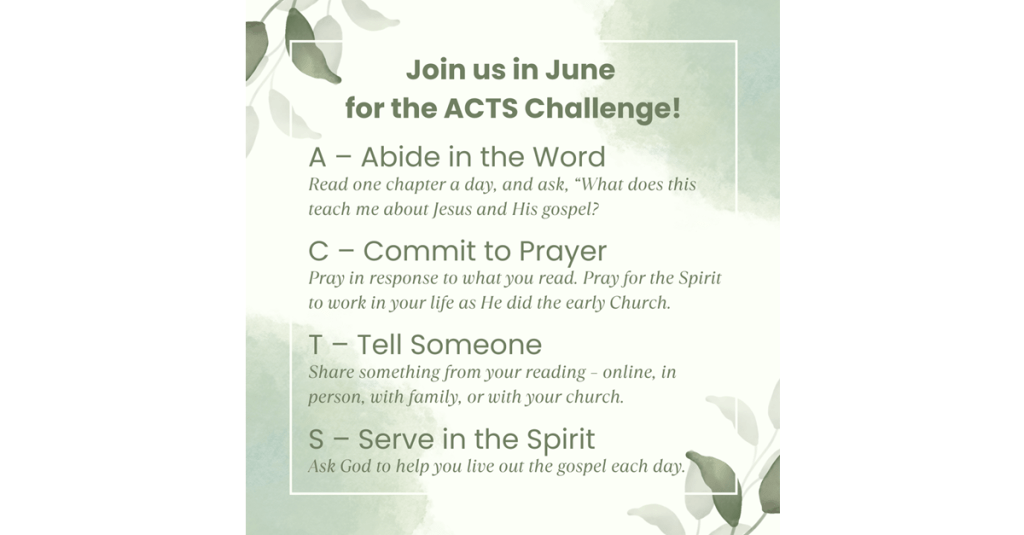
 Just Keith Harris