“Taste and See God’s Goodness for Yourself” from Psalm 34 (#dailyPSALMSchallenge)

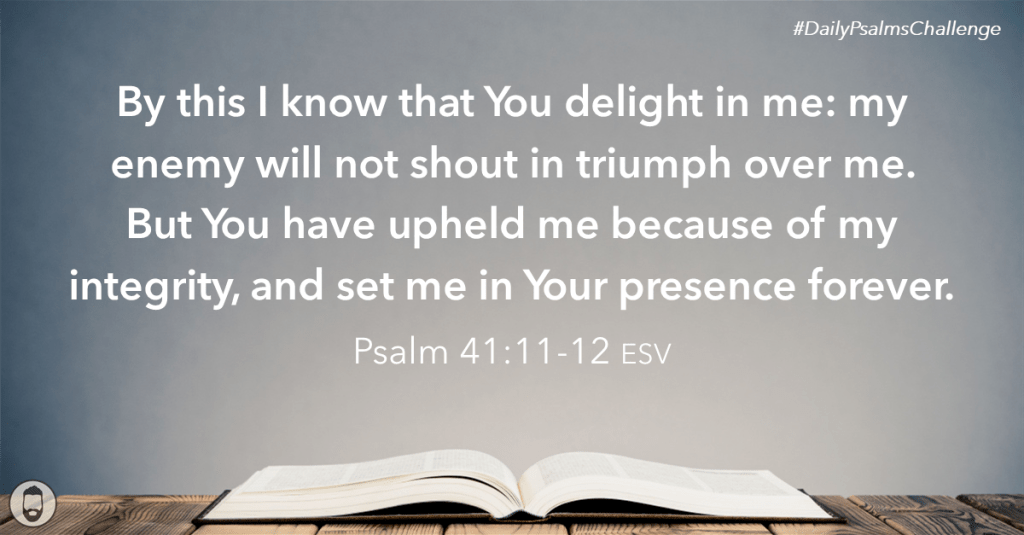
Oh, taste and see that the LORD is good! Blessed is the man who takes refuge in Him!

Psalm 34:8

Psalm 34 is an invitation for joyful trust in the Lord. This psalm was written by David after God delivered him from the king of Gath in 1 Samuel 21:10-15 when he, as the inscription says “changed his behavior”, pretended to be out of his mind (1 Samuel 21:13). These events obviously had a profound impact on David’s life as the result is this overflow of his gratitude and praise. 

David begins with a commitment to continual worship: “I will bless the Lord at all times; His praise shall continually be in my mouth” (v. 1). He doesn’t stop at his own personal prayer, though; he calls others to join him and “magnify the Lord” with him and “exalt” the name of the Lord “together” (v. 3). Worship is meant to be shared communally, and our joy in God is deepened when we proclaim His goodness with others who have experienced it firsthand.

David shares his testimony from that event: “I sought the Lord, and He answered me and delivered me from all my fears” (v. 4). God’s faithfulness is not theoretical for him but proven by his experience with God. It is also proven in David’s life as he says that those who trust the Lord “are radiant” (v. 5), reflecting His light and joy even in the midst of difficult circumstances.

One of the most well-known verses comes next in this psalm (v. 8): “Oh, taste and see that the Lord is good!” This is more than an intellectual acknowledgment of God’s goodness but a call to come and experience it firsthand. Just as tasting food gives direct knowledge of its flavor, trusting the Lord allows us to personally experience His faithfulness and provision.

Speaking of firsthand experience, David confidently assures us that those who fear the Lord will lack nothing they truly need (vv. 9-10). Fear of the Lord is a common theme in Scripture and means having a reverence for Him, obeying Him, and trusting in His wisdom and care over our own. God is trustworthy. He watches over His people and hears their cries (v. 15), being “near to the brokenhearted” and saving “the crushed in spirit” (v. 18). Even and especially in affliction, God is present and faithful in “the afflictions of the righteous” and “delivers” them “out of them all” (v. 19). 

Psalm 34 concludes with the reminder that God is His people’s redeemer (v. 22). None – not a single one – of “those who take refuge in Him will be condemned (v. 22). That’s good news for those who take refuge in Him.

Seeing Jesus in Psalm 34

Psalm 34 finds its ultimate fulfillment in Jesus, the One who fully tasted human suffering, yet remained without sin (Hebrews 4:15). John applies v. 20 (“He keeps all His bones; not one of them is broken”) to Jesus on the cross, showing Him as the righteous One who suffered on our behalf. 

Furthermore, part of tasting and seeing that the Lord is good for those who are saved is knowing that no one who takes refuge in Jesus Christ, our Redeemer, will face condemnation (Romans 8:1). That’s good news!

Reflection

Have you personally tasted and seen the goodness of God in your life?

How have you been delivered from trials and suffering by the mighty hand of God?

Let Psalm 34 be an encouragement for you to experience the goodness of God firsthand. Take refuge in Him. Trust Him. Find comfort in His goodness and care.

The #dailyPSALMSchallenge gives us the opportunity to start 2025 in God’s Word by digging into a psalm a day. Each day will identify a key passage for us to meditate on as well as seeking to help us see Jesus in the psalm and reflect on what we have read.

Won’t you take the challenge?

“Walking Faithfully in a Wicked World” from Psalm 26 (#dailyPSALMSchallenge)

But as for me, I shall walk in my integrity; redeem me, and be gracious to me. My foot stands on level ground; in the great assembly I will bless the LORD.

Psalm 26:11-12

Psalm 26 is a prayer of confidence and commitment to walking in integrity before God. David appeals to God for vindication, affirming his trust and faithfulness in the midst of a corrupt world. His prayer reflects a heart committed to holiness, worship, and reliance on God’s steadfast love and faithfulness (without which neither David nor us would be able to be holy or stand before God).

David begins with a declaration of his integrity and trust (v. 1). His pleas that follow are not self-righteous boasting but again a plea to God based on God’s consistent character and faithfulness. David knows God and understands how God had worked and was currently working in his life. This is why David openly invited God to test his heart and mind, knowing that God’s steadfast love and faithfulness are ever before him (vv. 2-3).

In vv. 4-5, Psalm 26 transitions to a rejection of worldly wickedness and hypocrisy (similar to the contrast in Psalm 1). He refuses to associate with evildoers and hypocrites, distancing himself from their schemes. His separation of sin is paired with his love for worshiping the Lord. His heart is set on the “habitation of God’s house” and the glory of God’s presence (vv. 6-8). He declares his innocence symbolically through the washing of his hands and offering thanksgiving to God.

David also expresses his confidence in God’s justice, asking to be separated from sinners in judgment (vv. 9-10). His trust in God leads him to reaffirm his commitment to walk in integrity. He concludes with further confidence that his feet stand on level ground and that he will bless the Lord in the great assembly (vv. 11-12).

Seeing Jesus in Psalm 26

Psalm 26 ultimately points to Jesus as the true Man of integrity. While David’s integrity was obviously imperfect, Jesus perfectly fulfilled God’s standard of holiness and righteousness. He lived without sin, fully trusting in His Father and walking blamelessly.

Jesus also fulfills David’s longing for the “habituation of God’s house” and the “place where [His] glory dwells” (v. 8). In Christ – Emmanuel (God with us), we have access to the presence of God, believers becoming the temple where His Spirit dwells (Ephesians 2:22). 

Reflection

As followers of Jesus, we are called to live lives of integrity, not on our own merits or abilities but empowered by His Spirit. Our confidence is not in our own righteousness but in the perfect righteousness of Christ, who enables us to walk faithfully before God.

Psalm 26 challenges us to live that life of integrity. Ask yourself the following questions and reflect on them.

Are you willing to invite God to examine your heart and mind as David did?

Do you distance yourself from sin while pursuing the joy of worship and fellowship with God’s people?

How does the integrity of Jesus encourage and empower you to walk faithfully before God?

Take time to pray, asking God to test your heart, deepen your love for Him, and guide you in integrity. Rejoice in Jesus’s righteousness, which covers and sustains you as you bless the Lord in the assembly of His people.

The #dailyPSALMSchallenge gives us the opportunity to start 2025 in God’s Word by digging into a psalm a day. Each day will identify a key passage for us to meditate on as well as seeking to help us see Jesus in the psalm and reflect on what we have read.

Won’t you take the challenge?
“Trusting the God of Our Salvation” from Psalm 25 (#dailyPSALMSchallenge)

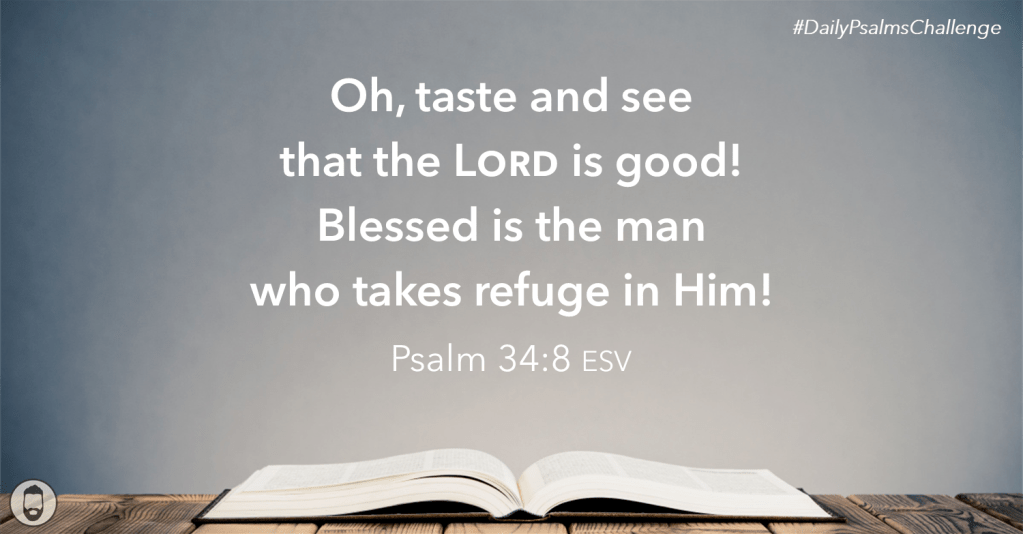
Make me to know Your ways, O LORD; teach me Your paths. Let me in Your truth and teach me, for You are the God of my salvation; for You I wait all the day long.

Psalm 25:4-5

Psalm 25 is a heartfelt prayer of dependence on God’s guidance, forgiveness, and protection. David pours out his soul, expressing trust in God while seeking to be delivered from enemies, wisdom for life, and mercy for past sin. This is an acrostic poem, meaning that (for the most part) each verse beginning with a Hebrew letter A-Z (actually aleph א to tav ת), and emphasizes themes like trust, humility, and God’s covenant faithfulness.

David opens the psalm by lifting his soul to the Lord and declaring His trust in Him (vv. 1-2). This is active trust, not passive – a confident reliance on God’s character and promises. He boldly asks that he not be put to shame, knowing that those who wait on the Lord will not be disappointed in that regard (v. 3).

The heart of Psalm 25 is David’s plea for guidance and instruction. He desires to know God’s ways, to walk in His truth, and to live in obedience to Him (vv. 4-5). This humble plea reflects an awareness of his (and our) limitations and the need for God’s wisdom. David’s cry also reveals his teachable spirit, acknowledging that true wisdom comes only from the Lord.

David transitions to seeking forgiveness for his sins, particularly the sins of his youth (vv. 6-7). People often remark that it seems odd that David would be known as a man after God’s own heart when he very clearly is a sinner; vv. 6-7 give a good indication for what set him apart, namely repenting of his sin and seeking God’s mercy and steadfast love. David consistently holds to the consistency of God’s character and His steadfast love. It is also important to note that David acknowledges that God’s forgiveness is given and not earned – that it flows from God’s goodness and covenant faithfulness (v. 11).

In vv. 8-14, David highlights God’s character as good, upright, and faithful. He notes that God teaches sinners, leads the humble, and reveals His covenant to those who fear Him. This reverent fear fosters intimacy with God, described in v. 14 as “the friendship of the LORD”.

Psalm 25 concludes with David praying for deliverance from his troubles, enemies, and sins. He asks God to guard his soul and to preserve him through integrity and uprightness as he waits on the Lord (vv. 15-21). Finally, David expands his prayer to include all of Israel, asking God to redeem His people from their troubles (v. 22).

Seeing Jesus in Psalm 25

Psalm 25 finds its ultimate fulfillment in Jesus. David’s plea for forgiveness points us to the cross, where Jesus bore the penalty for sin and secured mercy for sinners. Only Jesus lived with perfect trust, humility, and obedience to God’s will, walking the path of righteousness without flaw or error.

As the God of our salvation, Jesus delivers us from sin and leads us in paths of righteousness. Like David, we can lift our souls to Him, confident that He will guide us, forgive us, and guard our lives for His glory.

Reflection

Psalm 25 calls us to trust God fully, seek His guidance, and rest in His mercy. As you do so, reflect on the following questions. 

Are you daily asking God to teach you His ways and lead you in His truth? 

Do you trust in God’s forgiveness, even for the sins of your youth? 

How does the promise of God’s friendship encourage you to walk in humility and obedience?

Lift your soul to the Lord today. Confess your need for His guidance, forgiveness, and protection. Wait on Him, knowing that He is faithful to answer and to redeem. Through Christ, you can walk in His paths with confidence and hope.

The #dailyPSALMSchallenge gives us the opportunity to start 2025 in God’s Word by digging into a psalm a day. Each day will identify a key passage for us to meditate on as well as seeking to help us see Jesus in the psalm and reflect on what we have read.

Won’t you take the challenge?

Songs for Sunday, January 12, 2025 @ Christ Community Church

Sunday’s coming, and I’m excited!

When I say that, I’m not talking about some sort or religious obligation for attending church or anything like that. My mind is drawn to my need for Jesus and the fact that He would deign to accept one like me.

There were times in my life when thinking of Sunday was more religious than relationship, but the older I get and the more I think about all that Jesus has done (and is doing and will do), the more I think of Sunday like the imagery in Hebrews 4:14-16.

The writer of Hebrews begins this section talking about Jesus as the “great high priest”. That phrase can definitely be acquainted with religious ideas and temple life and sacrifices, but Jesus is something different.

High priests are typically “chosen from among men” and “appointed to act on behalf of men in relation to God” (Hebrews 5:1). Jesus is different. He is God become man to be the sacrifice for men to be able to come to God.

High priests would typically need to “offer sacrifice” for their own sins “fust as [they do] for those of the people” (Hebrews 5:3). Jesus is different. He has no sins to sacrifice for because He “has been tempted as we are, yet without sin” (Hebrews 4:15). He is the Lamb of God bearing our sin.

High priests worked and worked and worked on behalf of the people before God, but all of their work was just a shadow of what was to come. Jesus is different. Jesus is all substance, and no shadow, being Himself “the source of eternal salvation to all who obey Him, being designated by God a high priest after the order of Melchizedek” (Hebrews 5:9-10).

Because Jesus is different, we are not limited to showing up for some religious observances over and over again, dwelling only in the suburbs of God’s grace and partaking only of shadows. Because Jesus is our high priest, He has made a way for us not just to be in relation to God but for us to be able to approach Him — to go directly to “the throne of grace” (Hebrews 4:16).

For those bringing their animals for the high priest to slaughter and make atonement for their sins, the idea of approaching God’s throne would be a frightening thing. Think of Isaiah’s “woe is me” talk when he had a vision of the holy, holy, holy God seated on His throne; he knew he was unclean and unworthy to look upon “the King, the LORD of hosts” (Isaiah 6:1-5)! The King of kings seated on the throne is still holy, holy, holy and we are still sinners. the King of kings seated on the throne is the divine word who discerns “the thoughts and intentions” of our hearts, laying us bare — “naked and exposed to the eyes of Him to whom we must give an account” (Hebrews 4:12-13).

Yes, Jesus is the King of kings.

Yes, Jesus is holy, holy, holy.

Yes, Jesus is Lord.

No, we are not any of those things and neither worthy nor holy. We are not God, and most of us could not stand even alongside Isaiah to state our “woe” in God’s presence. But Jesus is also our high priest! He has made atonement for our sins! He has made a way for us to come before Him (John 14:6, 2 Corinthians 5:21, 1 John 2:1-2)!

This is why the imagery of Hebrews 4:14-16 is so heavy on my mind. I have the opportunity and privilege to approach the throne of grace in my time of need. Because I have confessed Jesus as Lord and believed upon Him — but my trust in Him to save me, I have assurance to be able to approach Him without fear of death and punishment because He Himself has “bore [my] sins in His body on the tree, that [I] might die to sin and live to righteousness” (1 Peter 2:24). I don’t have to say “woe is me” because He put Himself through woes on my behalf.

Because of this, I can approach His throne with the confidence of a child waking a parent in the middle of the night for a drink of water. I can turn to Him with the assurance that I not only may approach Him for help but be confident that I will “receive mercy and find grace to help in time of need” (Hebrews 4:16).

That’s good news!

But it’s not just good news for me. It is good news for all who trust in Him, all who are saved by grace through faith in Him.

So, Sunday’s coming, and we have the opportunity to gather together on the first day of the week — the Lord’s day — and remember His death, burial, and resurrection. We have the opportunity to gather with brothers and sisters who have been saved by grace through faith and approach the throne of our Lord together, confident that His grace and mercy are enough, sufficient, and eternally flowing toward those He loves.

If this doesn’t describe you, know that there is good news and grace enough for you, too. Your sin can be forgiven. You can be saved. There is grace enough and room enough and good news enough for you and all who call on His name.

You won’t find anything relgiously impressive. You won’t find impressive priests or practices. You won’t find perfect people. You will find a bunch of sinners — and hypocrites — whose only hope is Jesus. He is who will will read about. He is who we will sing about. He is who we will preach about. And that’s because He’s our only hope. He’s our King. He’s our God. He made a way for us and there is no place we’d rather be than gathered around His throne in a small picture of how we will get to be when this world passes away and He gathers His people to Himself.

Won’t you join us?


Here are our Scriptures and songs:

14Since then we have a great high priest who has passed through the heavens, Jesus, the Son of God, let us hold fast our confession. 15For we do not have a high priest who is unable to sympathize with our weaknesses, but One who in every respect has been tempted as we are, yet without sin. 16Let us then with confidence draw near to the throne of grace, that we may receive mercy and find grace to help in time of need.


4We were buried therefore with Him by baptism into death, in order that, just as Christ was raised from the dead by the glory of the Father, we too might walk in newness of life.
5For if we have been united with Him in a death like His, we shall certainly be united with him in a resurrection like His. 6We know that our old self was crucified with Him in order that the body of sin might be brought to nothing, so that we would no longer be enslaved to sin. 7For one who has died has been set free from sin.


Good News of Great Joy | December 17 — “Faith, Forgiveness, & Readiness for the Kingdom”

Luke 17 challenges us to live with faith, humility, and readiness for Christ’s return. During Advent, as we await the celebration of Christ’s first coming and look forward to His second, we are reminded to extend forgiveness, grow in faith, and remain steadfast in our service to Him. The healing of the ten lepers encourages us to cultivate gratitude, recognizing that every blessing is a gift from God. Like the Samaritan, let us return to Christ with thankful hearts.

Finally, Jesus’ teaching on the Kingdom of God calls us to examine our priorities and live expectantly for His return. This Advent season, may we keep our eyes fixed on Christ, ready for His Kingdom, and faithful in every good work He has entrusted to us.

Christ Has Come: The Promised King & His Gift of Peace (Advent 2025) Refresh & Restore | A JustKeithHarris.com Podcast

Christ Has Come – Week 3Episode Title: The Promised King & His Gift of JoyLuke 1:39–56In this Advent episode of Christ Has Come, Keith Harris turns to Luke 1 and invites us to slow down and listen to the joy that begins stirring before Bethlehem. Long before angels sing to shepherds, joy breaks the silence in the hill country of Judea—through a Spirit-filled confession, a leaping child, and the worshipful song of a young woman who trusts the promises of God.Together, we explore:What biblical joy is—and what it isn’t, distinguishing it from fleeting happiness or emotional highs.How joy appears before the word is even spoken, as John the Baptist leaps for joy in Elizabeth’s womb at the presence of the unborn Messiah.Why Mary’s joy is rooted not in circumstances but in God’s mercy, as she magnifies the Lord and rejoices in God her Savior.The meaning and message of the Magnificat, a Scripture-saturated song that celebrates God’s great reversal—lifting the lowly, filling the hungry, and humbling the proud.How Mary’s joy points beyond herself to Jesus, the promised King who fulfills God’s covenant promises and secures lasting joy through His saving work.This episode reminds us that joy is not something we manufacture—it’s something we receive, and it grows wherever Jesus is trusted. Advent teaches us that true joy is found not in having life figured out, but in the presence of Christ and the mercy He brings.If you would like to see a written version of this study, complete with footnotes and cross-references, you can find it here.
  1. Christ Has Come: The Promised King & His Gift of Peace (Advent 2025)
  2. Christ Has Come: The Promised King & His Gift of PEACE (Advent 2025)
  3. Christ Has Come: The Promised King & His Gift of HOPE (Advent 2025)
  4. Thankful: Learning to Number Our Days (Refresh & Restore)
  5. "Strengthen What Remains: Jesus's Letter to the Church at Sardis" (The KING is Coming)

Jesus Teaches on Forgiveness and Faith (17:1-10)[1]

And he said to his disciples, “Temptations to sin are sure to come, but woe to the one through whom they come! It would be better for him if a millstone were hung around his neck and he were cast into the sea than that he should cause one of these little ones to sin. Pay attention to yourselves! If your brother sins, rebuke him, and if he repents, forgive him, and if he sins against you seven times in the day, and turns to you seven times, saying, ‘I repent,’ you must forgive him.”

The apostles said to the Lord, “Increase our faith!” And the Lord said, “If you had faith like a grain of mustard seed, you could say to this mulberry tree, ‘Be uprooted and planted in the sea,’ and it would obey you.

“Will any one of you who has a servant plowing or keeping sheep say to him when he has come in from the field, ‘Come at once and recline at table’? Will he not rather say to him, ‘Prepare supper for me, and dress properly, and serve me while I eat and drink, and afterward you will eat and drink’? Does he thank the servant because he did what was commanded? 10 So you also, when you have done all that you were commanded, say, ‘We are unworthy servants; we have only done what was our duty.’ ”

Jesus Heals Ten Lepers (17:11-19)[2]

11 On the way to Jerusalem he was passing along between Samaria and Galilee. 12 And as he entered a village, he was met by ten lepers, who stood at a distance 13 and lifted up their voices, saying, “Jesus, Master, have mercy on us.” 14 When he saw them he said to them, “Go and show yourselves to the priests.” And as they went they were cleansed. 15 Then one of them, when he saw that he was healed, turned back, praising God with a loud voice; 16 and he fell on his face at Jesus’ feet, giving him thanks. Now he was a Samaritan. 17 Then Jesus answered, “Were not ten cleansed? Where are the nine? 18 Was no one found to return and give praise to God except this foreigner?” 19 And he said to him, “Rise and go your way; your faith has made you well.”

The Coming of the Kingdom of God (17:20-37)[3]

20 Being asked by the Pharisees when the kingdom of God would come, he answered them, “The kingdom of God is not coming in ways that can be observed, 21 nor will they say, ‘Look, here it is!’ or ‘There!’ for behold, the kingdom of God is in the midst of you.”

22 And he said to the disciples, “The days are coming when you will desire to see one of the days of the Son of Man, and you will not see it. 23 And they will say to you, ‘Look, there!’ or ‘Look, here!’ Do not go out or follow them. 24 For as the lightning flashes and lights up the sky from one side to the other, so will the Son of Man be in his day. 25 But first he must suffer many things and be rejected by this generation. 26 Just as it was in the days of Noah, so will it be in the days of the Son of Man. 27 They were eating and drinking and marrying and being given in marriage, until the day when Noah entered the ark, and the flood came and destroyed them all. 28 Likewise, just as it was in the days of Lot—they were eating and drinking, buying and selling, planting and building, 29 but on the day when Lot went out from Sodom, fire and sulfur rained from heaven and destroyed them all— 30 so will it be on the day when the Son of Man is revealed. 31 On that day, let the one who is on the housetop, with his goods in the house, not come down to take them away, and likewise let the one who is in the field not turn back. 32 Remember Lot’s wife. 33 Whoever seeks to preserve his life will lose it, but whoever loses his life will keep it. 34 I tell you, in that night there will be two in one bed. One will be taken and the other left. 35 There will be two women grinding together. One will be taken and the other left.” 37 And they said to him, “Where, Lord?” He said to them, “Where the corpse is, there the vultures will gather.”


[1] Jesus warned His disciples about the inevitability of stumbling blocks but emphasized the seriousness of causing others to sin. He taught that forgiveness must be extended even if a person sins against you repeatedly. When the disciples asked for greater faith, Jesus explained that even faith as small as a mustard seed can accomplish great things. Using a parable, He reminded them that obedience to God is their duty, and they should not expect rewards for doing what is required.

[2] As Jesus traveled to Jerusalem, ten lepers called out to Him for mercy. He told them to go and show themselves to the priests, and as they went, they were healed. Only one, a Samaritan, returned to thank Jesus. Jesus commended his faith and declared that it had saved him, highlighting the importance of gratitude and recognition of God’s work in our lives.

[3] When the Pharisees asked Jesus when the Kingdom of God would come, He explained that it is not something that can be observed externally because it is already among them. Turning to His disciples, Jesus spoke about the future return of the Son of Man, which will come unexpectedly, like the days of Noah and Lot. He warned them not to cling to worldly things but to be ready for His return. Jesus described a sudden separation that would occur at His coming, emphasizing the urgency of being prepared.

I’m Thankful for the Kingdom of God — Gratitude & Hope Challenge | November 13

I’m thankful for the Kingdom of God!

If this world and its squabbling kingdoms were all that there is, how pitiful an outlook we would have. These kingdoms rise and fall. History is littered with powerful kingdoms, empires even, that were cast aside by greater or at least different ones. Museums are filled with relics of their once great splendor and glory, but I think one of my church kiddos from many years ago summed their glory up well when we were looking at some pictures of the ruins of the once great city of Ephesus: they’re ruined (they pronounced it rurnt, ha)!

The writer of Hebrews rightly tells us that we should be “grateful”, and we should. That word translated “grateful” in the ESV is better translated in the KJV as “have grace” because it is a pair of words that are related to the practice of saying grace before a meal, praying to say thanks and give credit to God for providing the food that is about to be eaten.

We are to say grace, praying and giving thanks to God for giving us part in His Kingdom and for His power in saving us and making us right before Him (Colossians 1:12-14, 2 Corinthians 5:21).

We are to say grace, coming before God’s throne in reverence and awe as King of kings and Lord of lords, presiding over His Kingdom eternally and toppling those that are shaken, sifted, and cast away like chaff from wheat (Psalm 2:10-11, Matthew 3:12).

We are to say grace, thankful to God for His strength and might — His consuming fire burning through everything, eventually leaving only His Kingdom (Deuteronomy 4:24, Daniel 7:13-14).

We are to say grace because this great God and king humbled Himself to leave His throne and become flesh for us that we might be saved and enter into His Kingdom (John 1:14, Philippians 2:6-8, 1 Timothy 1:15).


Lord, thank you for being a consuming fire and for that fire purifying those you save rather than burning us up as our sin warrants. Thank you for shaking the lesser kingdoms of this world and reminding us You are God and we are not. Thank you for letting us worship and praise You. I want to say “thank You” like we do over the food, our bodies for Your Kingdom. Amen.

All through the month of November, our Christ Community Church family is focusing on what we are thankful for and expressing our thanks to our “great God and Savior Jesus Christ, who gave Himself for us to redeem us” (Titus 2:13-14).

This, like the #DailyWisdomChallenge we went through in October, is a challenge from our pastor John Goldwater — the #GRATITUDEandHOPEchallenge — where we have the opportunity to post Bible passages that move us to thanksgiving or in which we find hope. May this lead you to be grateful and find your hope in Jesus!

Daily Wisdom Challenge — Proverbs 31

Here we are FINALLY finished with the #DailyWisdomChallenge! What took some 31 days, only took me 56. But this challenge is not about an amount of time or some mark we check off, is it? No, it is about getting God’s Word in us and through us — Him producing results and us giving Him our time, minds, and lives to spend time with Him in His Word and share it with other. I have enjoyed spending this time with Him and sharing Him and His Word with you.

This last proverb is one that has been on my mind. I have typed and retyped this post because I just couldn’t seem to articulate it — to get my words right. Today, it is what it is and ain’t what it ain’t. Let’s dive in.

Much of Proverbs 31 (vv. 10-31) is about the virtuous wife/woman. I was tempted to pick some verses from that section and speak well of my wife, which I do as often as I can because she is amazing. But Proverbs 31:8-9 is about using our voices — in this case, my voice and platform — to speak for those who have no one to speak for them. I will always speak up and advocate for Candice, but what of those who have no advocate?

It might help to understand what it means to advocate for someone. Let’s break it down. There are two forms of the word, both spelled the same; one is a verb (meaning to support or speak in for — or in favor of — someone or something) and a noun (meaning one who supports or speaks for someone or something). To use both in a sentence: an advocate advocates for people or issues. That’s the English teacher take on it, but we need a more pastoral perspective here.

In 1 John 2:1-2 give us a good picture of Jesus as our Advocate (the ESV even using that exact word):

My little children, I am writing these things to you so that you may not sin. But if anyone does sin, we have an advocate with the Father, Jesus Christ the righteous. He is the propitiation for our sins, and not for ours only but also for the sins of the whole world.

In this brief passage, we see Jesus almost as an advocate or defense attorney in courtroom. We know that Satan is known as the “accuser” in Revelation 12:10 and is “day and night” putting our sin in the form of an accusation or case against us “before our God”. Satan wants God to look at our sin and cast us out as he was so long ago. He wants to hurt God by showing Him how His children sin against Him and others. He also wants to hurt us and see us destroyed (1 Peter 5:8). We really don’t need an accuser to understand this because just like our great-great-great-great-uncle Cain, our sin cries out like Abel’s shed blood (Genesis 4:10), and God knows it, too.

Who would stand as an advocate for one who is clearly guilty? How many courtroom dramas have feature hot shot defense attorneys remarking that only a fool would ask their client if they are guilty. In this case, we know we are guilty. All have sinned (Romans 3:23) and none stand before God as righteous in their own standing (Romans 3:10). Yet John clearly says that those who are in Christ who sin (which includes any and everyone who has ever and will ever be saved) has an advocate: Jesus Christ the righteous.

Jesus stands for us when our sin cries out against us, reminding the Father that He has cast our sin as far as the east is from the west (Psalm 103:12).

Jesus stands for us when the accuser comes before the Father and reminds him that He has exchanged our sin and shame for His righteousness and standing as a son (1 Corinthians 5:21).

He speaks for us when the recollection of our sin silences us and shuts the mouth of accuser, reminding us that He has saved us and him that his doom is sure.

What a joy it is to have someone speak for you when you are in trouble (Psalm 34:17)! What a relief it is to have someone advocate for you to receive help in your time of trouble (Psalm 46:1)!

That’s the point of our final proverb together: use the voice and platform God has given us to be an advocate for those in need and in trouble, people who do not have anyone to speak for them. Worldly wisdom says mind your business and stay in your lane when it comes for helping folks in precarious situations. God’s wisdom says speak up for those who have no one to speak up for them (“the destitute”) and no voice of their own (“the mute”). God’s wisdom says that we are to “defend the rights of the poor and needy” — to make sure that people can get the help they need.

Now, the argument that comes up here is always something like “What about those who are misusing the help they receive?” or some citing of something like 2 Thessalonians 3:10 and some variation of “if you don’t work, you don’t eat”. Remember this is not a blanket statement of foolishness or reckless speech; it says “judge righteously” right here in the proverb. But we are to err on the side of help rather than stinginess — advocating for help rather than silence.

So, what about you? Are you silent for the suffering or speaking for them to receive help? Does Jesus the righteous advocate for you and yet you remain silent for others?

This is the culmination, not only of the #DailyWisdomChallenge for me, but the pinnacle of the challenge of whether I will yield to God’s wisdom or roll with the world’s. John has challenged us to speak and share God’s Word with others. Now, God in His Word has challenged us to speak and share God’s Word FOR others, too.

Won’t you join me?

For the month of October (and finally finished 25 days into November), we are answering the challenge John Goldwater, pastor of Christ Community Church in Grenada, MS, laid out — the #DailyWisdomChallenge. Each day, we are going to read through a chapter of Proverbs corresponding to the day of the month.

This fits with what we have studied in Colossians, specifically Colossians 3:1-2, namely that we should seek “the things that are above, where Christ is” and set our minds like a thermostat “on things that are above, not on things that are on earth”. Imagine what a month meditating on God’s Word daily can do for us.

Won’t you join us on this #DailyWisdomChallenge and set your minds on Christ?

Daily Wisdom Challenge — Proverbs 29

This proverb struck me as a poignant example of the perspective God gives us through His wisdom that counters the anti-wisdom of this world. 

Whatever you revere or fear drives you, or at least steers you. Think about it. If there are certain holidays or people that you revere, you will act a certain way around them. Your life and behavior change in their presence or on those days. It works the same with fear. If you are afraid of someone or something, your body does its own thing in their presence. Your heart rate will elevate; your skin may grow clammy and/or sweaty; and your fight-or-flight response kicks in. 

We live in a day and age when the powers-that-be use fear to motivate. This can be in the political arena as we have seen recently in many political ads and politically-driven social media posts. The news is always doom and gloom – and changes depending on the political leanings of one channel to the next. We have become accustomed to making decisions based on fear, and per the wisdom we see here, that sort of fear is a snare.

A snare is a device meant to catch something, and often carries with it the purpose of restraining something in order to kill it. If a hunter puts out a snare to catch an animal, it is often so that the animal can be caught, killed, and eaten.  This reminds me of the description of Satan in 1 Peter 5:8 as one prowling “around like a roaring lion, seeking someone to devour”. Satan likes snares because they catch people unaware using camouflage and trickery. 2 Corinthians 4:4 describes this work as him blinding “the minds of unbelievers, to keep them from seeing the light of the gospel of the glory of Christ, who is the image of God.” He has no glory of his own and nothing of worth for people to follow, so he tricks and hoodwinks people, trying to keep them from seeing the Light.

God doesn’t work like that. Everything is out in the open with Him – out in the light. We have seen throughout the #DailyWisdomChallenge that following God is often referenced as the “fear of the Lord” (Deuteronomy 6:24, 10:12, 31:12-13; 1 Samuel 12:24; 2 Chronicles 19:7; Job 28:28; Psalm 19:9, 34:11; Proverbs 1:7, 8:13, 9:10, 14:27; Ecclesiastes 12:13; Isaiah 11:2-3, 33:6; Luke 1:50; Acts 9:31; 2 Corinthians 7:1; Hebrews 12:28-29), but this is not the kind of fear that Satan uses. As we said above, what you fear or reverence drives and motivates you. The Lord is not an adversary who uses fear to drive you to a snare but one who is worthy of our reverence, respect, and worship – One worth following. We can trust Him because He, like He teaches His people refuses “to practice cunning or to tamper with [His] Word, but by the open statement of the truth [commends Himself and us] to everyone’s conscience” (2 Corinthians 4:2). We can trust Him because He deals in truth; in fact, He is the Truth (John 14:6). 

While Satan is on the prowl seeking to devour and destroy, God offers His mighty hand to lift us up and offers the opportunity to cast “all [our] anxieties on Him, because He cares for [us]” (1 Peter 5:6-7). You can trust the Lord and be safe (Psalm 62:8). There is a big difference between prowling around like a lion and being the Lion of the tribe of Judah (Revelation 5:5)! Jesus is the genuine article and came to seek and save the lost instead of seeking destruction (Luke 19:10, John 3:17)!

Your fear of what man can do to you lays a snare. But trusting in God brings safety – from the snare, from destruction, from being devoured.

That’s good news to those who trust in the Lord! How about you? Will you be driven by your fear of man or your trust in God?

For the month of October (and November for slowpokes like me), we are answering the challenge John Goldwater, pastor of Christ Community Church in Grenada, MS, laid out — the #DailyWisdomChallenge. Each day, we are going to read through a chapter of Proverbs corresponding to the day of the month.

This fits with what we have studied in Colossians, specifically Colossians 3:1-2, namely that we should seek “the things that are above, where Christ is” and set our minds like a thermostat “on things that are above, not on things that are on earth”. Imagine what a month meditating on God’s Word daily can do for us.

Won’t you join us on this #DailyWisdomChallenge and set your minds on Christ?