Psalm 3 is written after one of the most terrible moments of King David’s life — when he was on the run from his son Absalom, who was trying to remove him from power. This is a psalm of lament (letting out one’s feelings of grief or sadness) to be sure, but it is also a psalm of trust and hope in the Lord, offering us an example of turning to God in the midst of overwhelming circumstances.
The Crisis of Many
David begins by describing his specific circumstances: his enemies are many, their accusations are relentless, and their mockery sharp, saying that “There is no salvation for [David] in God” (v. 2). To say that David would not find salvation in his God strikes at David’s identity as God’s anointed king, but their mocking did not change the truth. David’s response to them reminds us that turning to the truth of God’s promises is the only place to go when doubt and despair set in.
The Confidence in God
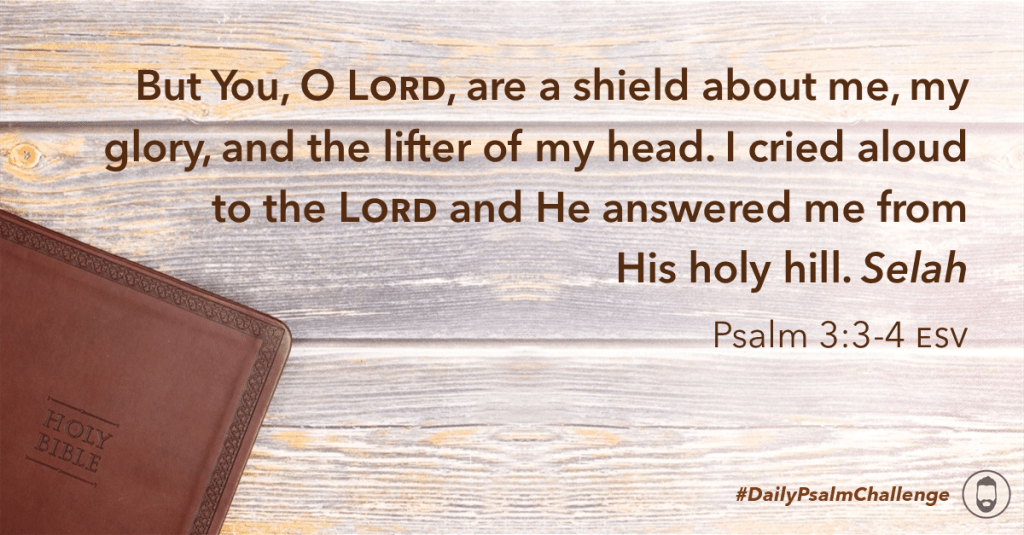
David shifts his focus from his circumstances by declaring to the Lord that He is “a shield about [him], [his] glory, and the lifter of [his] head” (v. 3). His confidence is built on God’s steadfast character and strength rather than what is going on around him. He trusts that his Lord not only hears his cry but that He will answer him from His holy hill (v. 4).
The Calm in the Chaos
It would be understandable for David to be distraught, but we see God providing him with peace. How many of us find it difficult to sleep when we are in the midst of trials and tribulations? Because of his faith in God, David could say, “I lay down and slept; I woke again, for the Lord sustain me” (v. 5). This highlights his faith and teaches us that God watches over His people, especially in times of turmoil and insurmountable circumstances.
The Cry for Deliverance
We see David cry out to the Lord for help and relief: “Arise, O Lord! Save me, O my God!” (v. 7). This echoes the cries of God’s people past and future, asking God to intervene against a powerful foe. David trusts that God will deal justly with the wicked — even if that means Absalom, while affirming that “salvation belongs to the Lord” and asks that His blessing be on His people” (v. 8).
Seeing Jesus in Psalm 3
David’s experience crying out to the Lord in the midst of trial and finding help points forward to the ultimate son of David, Jesus. He faced all that David did and worse — rejection, betrayal, mockery, brutal torture, execution. Jesus bore the full weight of our sin and death on the cross and cried out to His Father. Though surrounded by enemies and taunts like we have never seen, Jesus rested in His Father’s will and the confident assurance in His prophesied resurrection. Jesus’s victory over sin and death ensures that all of us who trust in Him can truly echo David’s cry that “Salvation belongs to the Lord”.
Reflection
Psalm 3 teaches us to bring our fears and burdens to God, recognizing that He can shield us from trouble and sustain us through trials. Jesus is not a distant, detached King; He knows our struggles because He experienced them. He has already overcome them (John 16:33). Whatever troubles you face today, cry out to Him and rest in the assurance that salvation belongs to Him.
The #dailyPSALMSchallenge gives us the opportunity to start 2025 in God’s Word by digging into a psalm a day. Each day will identify a key passage for us to meditate on as well as seeking to help us see Jesus in the psalm and reflect on what we have read.
Luke 12 reminds us to live with eternity in mind, trusting God’s care and seeking His Kingdom above all else. Jesus challenges us to examine where our treasure lies and to remain faithful, prepared for His return. This Advent, as we reflect on Christ’s first coming, may we embrace His call to fearless faith and faithful stewardship, fixing our hearts on eternal treasures and the hope of His promised return.
📖 Revelation 4:1–11In this episode of The King is Coming, Keith Harris and Jamie Harrison move beyond Jesus’s letters to the churches and into the next part of John’s vision. In Revelation 4, John is invited through an open door into heaven—and what he sees is the throne room of God.At the center of everything is a throne, and seated on it is the Lord in all His glory. From this point forward in Revelation, the throne becomes the focal point of the entire book.John describes the scene the best way he can: the brilliance of precious stones, a rainbow surrounding the throne, flashes of lightning and thunder, and a crystal-like sea before it. Surrounding the throne are twenty-four elders and four living creatures who never cease to worship the Lord.Together, Keith and Jamie discuss:✔️ Why Revelation 4 marks a shift from the letters to the churches to John’s heavenly vision✔️ What the throne room reveals about God’s authority and security over all things✔️ Why John uses comparisons (“like” and “as”) to describe the glory he sees✔️ The mystery of the twenty-four elders and what we can—and cannot—know✔️ The constant worship of the living creatures crying “Holy, holy, holy”✔️ Why heaven’s worship centers on God simply because He is worthyIn the throne room, everything points to one truth: God alone is worthy of worship.“Worthy are you, our Lord and God, to receive glory and honor and power, for you created all things, and by your will they existed and were created.” (Revelation 4:11)🔗 If you would like to see a written version of this podcast, complete with footnotes and cross-references, you can find it here.
1 In the meantime, when so many thousands of the people had gathered together that they were trampling one another, he began to say to his disciples first, “Beware of the leaven of the Pharisees, which is hypocrisy. 2 Nothing is covered up that will not be revealed, or hidden that will not be known. 3 Therefore whatever you have said in the dark shall be heard in the light, and what you have whispered in private rooms shall be proclaimed on the housetops.
4 “I tell you, my friends, do not fear those who kill the body, and after that have nothing more that they can do. 5 But I will warn you whom to fear: fear him who, after he has killed, has authority to cast into hell. Yes, I tell you, fear him! 6 Are not five sparrows sold for two pennies? And not one of them is forgotten before God. 7 Why, even the hairs of your head are all numbered. Fear not; you are of more value than many sparrows.
8 “And I tell you, everyone who acknowledges me before men, the Son of Man also will acknowledge before the angels of God, 9 but the one who denies me before men will be denied before the angels of God. 10 And everyone who speaks a word against the Son of Man will be forgiven, but the one who blasphemes against the Holy Spirit will not be forgiven. 11 And when they bring you before the synagogues and the rulers and the authorities, do not be anxious about how you should defend yourself or what you should say, 12 for the Holy Spirit will teach you in that very hour what you ought to say.”
13 Someone in the crowd said to him, “Teacher, tell my brother to divide the inheritance with me.” 14 But he said to him, “Man, who made me a judge or arbitrator over you?” 15 And he said to them, “Take care, and be on your guard against all covetousness, for one’s life does not consist in the abundance of his possessions.” 16 And he told them a parable, saying, “The land of a rich man produced plentifully, 17 and he thought to himself, ‘What shall I do, for I have nowhere to store my crops?’ 18 And he said, ‘I will do this: I will tear down my barns and build larger ones, and there I will store all my grain and my goods. 19 And I will say to my soul, “Soul, you have ample goods laid up for many years; relax, eat, drink, be merry.” ’ 20 But God said to him, ‘Fool! This night your soul is required of you, and the things you have prepared, whose will they be?’ 21 So is the one who lays up treasure for himself and is not rich toward God.”
22 And he said to his disciples, “Therefore I tell you, do not be anxious about your life, what you will eat, nor about your body, what you will put on. 23 For life is more than food, and the body more than clothing. 24 Consider the ravens: they neither sow nor reap, they have neither storehouse nor barn, and yet God feeds them. Of how much more value are you than the birds! 25 And which of you by being anxious can add a single hour to his span of life? 26 If then you are not able to do as small a thing as that, why are you anxious about the rest? 27 Consider the lilies, how they grow: they neither toil nor spin, yet I tell you, even Solomon in all his glory was not arrayed like one of these. 28 But if God so clothes the grass, which is alive in the field today, and tomorrow is thrown into the oven, how much more will he clothe you, O you of little faith! 29 And do not seek what you are to eat and what you are to drink, nor be worried. 30 For all the nations of the world seek after these things, and your Father knows that you need them. 31 Instead, seek his kingdom, and these things will be added to you.
32 “Fear not, little flock, for it is your Father’s good pleasure to give you the kingdom. 33 Sell your possessions, and give to the needy. Provide yourselves with moneybags that do not grow old, with a treasure in the heavens that does not fail, where no thief approaches and no moth destroys. 34 For where your treasure is, there will your heart be also.
35 “Stay dressed for action and keep your lamps burning, 36 and be like men who are waiting for their master to come home from the wedding feast, so that they may open the door to him at once when he comes and knocks. 37 Blessed are those servants whom the master finds awake when he comes. Truly, I say to you, he will dress himself for service and have them recline at table, and he will come and serve them. 38 If he comes in the second watch, or in the third, and finds them awake, blessed are those servants! 39 But know this, that if the master of the house had known at what hour the thief was coming, he would not have left his house to be broken into. 40 You also must be ready, for the Son of Man is coming at an hour you do not expect.”
41 Peter said, “Lord, are you telling this parable for us or for all?” 42 And the Lord said, “Who then is the faithful and wise manager, whom his master will set over his household, to give them their portion of food at the proper time? 43 Blessed is that servant whom his master will find so doing when he comes. 44 Truly, I say to you, he will set him over all his possessions. 45 But if that servant says to himself, ‘My master is delayed in coming,’ and begins to beat the male and female servants, and to eat and drink and get drunk, 46 the master of that servant will come on a day when he does not expect him and at an hour he does not know, and will cut him in pieces and put him with the unfaithful. 47 And that servant who knew his master’s will but did not get ready or act according to his will, will receive a severe beating. 48 But the one who did not know, and did what deserved a beating, will receive a light beating. Everyone to whom much was given, of him much will be required, and from him to whom they entrusted much, they will demand the more.
49 “I came to cast fire on the earth, and would that it were already kindled! 50 I have a baptism to be baptized with, and how great is my distress until it is accomplished! 51 Do you think that I have come to give peace on earth? No, I tell you, but rather division. 52 For from now on in one house there will be five divided, three against two and two against three. 53 They will be divided, father against son and son against father, mother against daughter and daughter against mother, mother-in-law against her daughter-in-law and daughter-in-law against mother-in-law.”
54 He also said to the crowds, “When you see a cloud rising in the west, you say at once, ‘A shower is coming.’ And so it happens. 55 And when you see the south wind blowing, you say, ‘There will be scorching heat,’ and it happens. 56 You hypocrites! You know how to interpret the appearance of earth and sky, but why do you not know how to interpret the present time?
57 “And why do you not judge for yourselves what is right? 58 As you go with your accuser before the magistrate, make an effort to settle with him on the way, lest he drag you to the judge, and the judge hand you over to the officer, and the officer put you in prison. 59 I tell you, you will never get out until you have paid the very last penny.”
[1] Jesus warns His disciples to avoid the corrupting influence of hypocrisy, likening it to leaven that spreads. He reminds them that all secrets will be revealed and calls them to fear God, who holds authority over eternal judgment. At the same time, Jesus reassures them of God’s intimate care and value for each person. He encourages boldness in confessing Him and promises the Holy Spirit’s guidance during persecution.
[2] A man asks Jesus to mediate an inheritance dispute, but Jesus uses the opportunity to warn against greed. Through the parable of a wealthy man storing up goods for himself, Jesus illustrates the folly of hoarding earthly treasures without being “rich toward God” (v. 21). The man’s life ends suddenly, demonstrating the emptiness of trusting in material wealth.
[3] Jesus urges His followers not to worry about daily needs, pointing to God’s provision for birds and flowers as evidence of His care. He calls them to prioritize seeking God’s Kingdom, trusting that their needs will be met. Jesus also challenges them to store up treasures in heaven, for where their treasure is, their hearts will be also.
[4] Jesus teaches His disciples to stay alert and prepared for His return, likening it to servants waiting for their master to return from a wedding feast. The faithful servant will be rewarded, but the unfaithful one, who abuses his position, will face judgment. Jesus emphasizes that those who have been entrusted with much will be held to a higher standard of accountability.
[5] Jesus declares that His mission will bring fire to the earth and division, even among families. His coming forces people to make a choice about following Him, often resulting in conflict and strained relationships.
[6] Jesus criticizes the crowds for their ability to interpret weather signs while failing to recognize the significance of His ministry. He urges them to reconcile with God before it is too late, using the example of settling a legal dispute before it reaches the judge.
Luke 8 highlights the transformative power of God’s Word and the necessity of faith. Jesus shows His authority over nature, demons, sickness, and death, calling us to trust Him in all circumstances. As Advent draws near, let us cultivate hearts like good soil—ready to receive God’s Word, bear fruit, and live by faith. May this season remind us that Jesus brings hope, healing, and new life to all who believe.
📖 Revelation 4:1–11In this episode of The King is Coming, Keith Harris and Jamie Harrison move beyond Jesus’s letters to the churches and into the next part of John’s vision. In Revelation 4, John is invited through an open door into heaven—and what he sees is the throne room of God.At the center of everything is a throne, and seated on it is the Lord in all His glory. From this point forward in Revelation, the throne becomes the focal point of the entire book.John describes the scene the best way he can: the brilliance of precious stones, a rainbow surrounding the throne, flashes of lightning and thunder, and a crystal-like sea before it. Surrounding the throne are twenty-four elders and four living creatures who never cease to worship the Lord.Together, Keith and Jamie discuss:✔️ Why Revelation 4 marks a shift from the letters to the churches to John’s heavenly vision✔️ What the throne room reveals about God’s authority and security over all things✔️ Why John uses comparisons (“like” and “as”) to describe the glory he sees✔️ The mystery of the twenty-four elders and what we can—and cannot—know✔️ The constant worship of the living creatures crying “Holy, holy, holy”✔️ Why heaven’s worship centers on God simply because He is worthyIn the throne room, everything points to one truth: God alone is worthy of worship.“Worthy are you, our Lord and God, to receive glory and honor and power, for you created all things, and by your will they existed and were created.” (Revelation 4:11)🔗 If you would like to see a written version of this podcast, complete with footnotes and cross-references, you can find it here.
1 Soon afterward he went on through cities and villages, proclaiming and bringing the good news of the kingdom of God. And the twelve were with him, 2 and also some women who had been healed of evil spirits and infirmities: Mary, called Magdalene, from whom seven demons had gone out, 3 and Joanna, the wife of Chuza, Herod’s household manager, and Susanna, and many others, who provided for them out of their means.
4 And when a great crowd was gathering and people from town after town came to him, he said in a parable, 5 “A sower went out to sow his seed. And as he sowed, some fell along the path and was trampled underfoot, and the birds of the air devoured it. 6 And some fell on the rock, and as it grew up, it withered away, because it had no moisture. 7 And some fell among thorns, and the thorns grew up with it and choked it. 8 And some fell into good soil and grew and yielded a hundredfold.” As he said these things, he called out, “He who has ears to hear, let him hear.”
9 And when his disciples asked him what this parable meant, 10 he said, “To you it has been given to know the secrets of the kingdom of God, but for others they are in parables, so that ‘seeing they may not see, and hearing they may not understand.’ 11 Now the parable is this: The seed is the word of God. 12 The ones along the path are those who have heard; then the devil comes and takes away the word from their hearts, so that they may not believe and be saved. 13 And the ones on the rock are those who, when they hear the word, receive it with joy. But these have no root; they believe for a while, and in time of testing fall away. 14 And as for what fell among the thorns, they are those who hear, but as they go on their way they are choked by the cares and riches and pleasures of life, and their fruit does not mature. 15 As for that in the good soil, they are those who, hearing the word, hold it fast in an honest and good heart, and bear fruit with patience.
16 “No one after lighting a lamp covers it with a jar or puts it under a bed, but puts it on a stand, so that those who enter may see the light. 17 For nothing is hidden that will not be made manifest, nor is anything secret that will not be known and come to light. 18 Take care then how you hear, for to the one who has, more will be given, and from the one who has not, even what he thinks that he has will be taken away.”
19 Then his mother and his brothers came to him, but they could not reach him because of the crowd. 20 And he was told, “Your mother and your brothers are standing outside, desiring to see you.” 21 But he answered them, “My mother and my brothers are those who hear the word of God and do it.”
22 One day he got into a boat with his disciples, and he said to them, “Let us go across to the other side of the lake.” So they set out, 23 and as they sailed he fell asleep. And a windstorm came down on the lake, and they were filling with water and were in danger. 24 And they went and woke him, saying, “Master, Master, we are perishing!” And he awoke and rebuked the wind and the raging waves, and they ceased, and there was a calm. 25 He said to them, “Where is your faith?” And they were afraid, and they marveled, saying to one another, “Who then is this, that he commands even winds and water, and they obey him?”
26 Then they sailed to the country of the Gerasenes, which is opposite Galilee. 27 When Jesus had stepped out on land, there met him a man from the city who had demons. For a long time he had worn no clothes, and he had not lived in a house but among the tombs. 28 When he saw Jesus, he cried out and fell down before him and said with a loud voice, “What have you to do with me, Jesus, Son of the Most High God? I beg you, do not torment me.” 29 For he had commanded the unclean spirit to come out of the man. (For many a time it had seized him. He was kept under guard and bound with chains and shackles, but he would break the bonds and be driven by the demon into the desert.) 30 Jesus then asked him, “What is your name?” And he said, “Legion,” for many demons had entered him. 31 And they begged him not to command them to depart into the abyss. 32 Now a large herd of pigs was feeding there on the hillside, and they begged him to let them enter these. So he gave them permission. 33 Then the demons came out of the man and entered the pigs, and the herd rushed down the steep bank into the lake and drowned.
34 When the herdsmen saw what had happened, they fled and told it in the city and in the country. 35 Then people went out to see what had happened, and they came to Jesus and found the man from whom the demons had gone, sitting at the feet of Jesus, clothed and in his right mind, and they were afraid. 36 And those who had seen it told them how the demon-possessed man had been healed. 37 Then all the people of the surrounding country of the Gerasenes asked him to depart from them, for they were seized with great fear. So he got into the boat and returned. 38 The man from whom the demons had gone begged that he might be with him, but Jesus sent him away, saying, 39 “Return to your home, and declare how much God has done for you.” And he went away, proclaiming throughout the whole city how much Jesus had done for him.
The Healing of the Woman and Raising of Jairus’s Daughter (8:40-56)[4]
40 Now when Jesus returned, the crowd welcomed him, for they were all waiting for him. 41 And there came a man named Jairus, who was a ruler of the synagogue. And falling at Jesus’ feet, he implored him to come to his house, 42 for he had an only daughter, about twelve years of age, and she was dying.
As Jesus went, the people pressed around him. 43 And there was a woman who had had a discharge of blood for twelve years, and though she had spent all her living on physicians, she could not be healed by anyone. 44 She came up behind him and touched the fringe of his garment, and immediately her discharge of blood ceased. 45 And Jesus said, “Who was it that touched me?” When all denied it, Peter said, “Master, the crowds surround you and are pressing in on you!” 46 But Jesus said, “Someone touched me, for I perceive that power has gone out from me.” 47 And when the woman saw that she was not hidden, she came trembling, and falling down before him declared in the presence of all the people why she had touched him, and how she had been immediately healed. 48 And he said to her, “Daughter, your faith has made you well; go in peace.”
49 While he was still speaking, someone from the ruler’s house came and said, “Your daughter is dead; do not trouble the Teacher any more.” 50 But Jesus on hearing this answered him, “Do not fear; only believe, and she will be well.” 51 And when he came to the house, he allowed no one to enter with him, except Peter and John and James, and the father and mother of the child. 52 And all were weeping and mourning for her, but he said, “Do not weep, for she is not dead but sleeping.” 53 And they laughed at him, knowing that she was dead. 54 But taking her by the hand he called, saying, “Child, arise.” 55 And her spirit returned, and she got up at once. And he directed that something should be given her to eat. 56 And her parents were amazed, but he charged them to tell no one what had happened.
[1] Jesus teaches about the varied responses to God’s Word through the parable of the sower. The seed symbolizes God’s Word, and the soils represent different hearts: some reject it, others fall away under trials, and some are distracted by life’s worries. Only good soil—those who hear, retain, and obey the Word—bears fruit (v. 15). Jesus also compares His Word to a lamp, meant to shine and transform lives. He concludes that His true family are those who hear and obey the Word.
[2] While crossing the Sea of Galilee with His disciples, Jesus calms a fierce storm with a simple command, revealing His authority over nature. The disciples, amazed and fearful, ask, “Who then is this, that he commands even winds and water, and they obey him?” (v. 25). This miracle shows Jesus as God, the Lord of Creation, as even the weather obeys Him.
[3] Jesus heals a man possessed by a legion of demons in the region of the Gerasenes (or Gadarenes). The demons recognize Jesus as “Son of the Most High God” (v. 28) and beg not to be sent into the abyss and instead enter a herd of pigs, which rush into the sea and drown. The man, now healed and in his right mind, becomes a witness to Jesus’ power and grace. Despite this miracle, the townspeople, frightened by what has happened, ask Jesus to leave their region.
[4] A desperate father, Jairus, pleads with Jesus to heal his dying daughter. On the way, a woman suffering from a long-term illness touches the fringe of Jesus’ garment and is healed instantly. Jesus tells her, “Daughter, your faith has made you well; go in peace” (v. 48). Shortly after, Jairus’s daughter dies, but Jesus tells him, “Do not fear; only believe” (v. 50). His healing of the woman and raising of Jairus’s daughter demonstrates His power over both disease and death.
In Luke 7, Jesus reveals His compassion, power, and authority. He heals, raises the dead, and forgives sins, affirming His identity as the Messiah. His reassurance to John the Baptist reminds us to trust God’s plan even in uncertain times. The sinful woman’s story shows that faith in Jesus transforms hearts and leads to love and worship. This Advent, may we open our hearts to His grace, trusting Him as our Savior and Redeemer.
📖 Revelation 4:1–11In this episode of The King is Coming, Keith Harris and Jamie Harrison move beyond Jesus’s letters to the churches and into the next part of John’s vision. In Revelation 4, John is invited through an open door into heaven—and what he sees is the throne room of God.At the center of everything is a throne, and seated on it is the Lord in all His glory. From this point forward in Revelation, the throne becomes the focal point of the entire book.John describes the scene the best way he can: the brilliance of precious stones, a rainbow surrounding the throne, flashes of lightning and thunder, and a crystal-like sea before it. Surrounding the throne are twenty-four elders and four living creatures who never cease to worship the Lord.Together, Keith and Jamie discuss:✔️ Why Revelation 4 marks a shift from the letters to the churches to John’s heavenly vision✔️ What the throne room reveals about God’s authority and security over all things✔️ Why John uses comparisons (“like” and “as”) to describe the glory he sees✔️ The mystery of the twenty-four elders and what we can—and cannot—know✔️ The constant worship of the living creatures crying “Holy, holy, holy”✔️ Why heaven’s worship centers on God simply because He is worthyIn the throne room, everything points to one truth: God alone is worthy of worship.“Worthy are you, our Lord and God, to receive glory and honor and power, for you created all things, and by your will they existed and were created.” (Revelation 4:11)🔗 If you would like to see a written version of this podcast, complete with footnotes and cross-references, you can find it here.
1 After he had finished all his sayings in the hearing of the people, he entered Capernaum. 2 Now a centurion had a servant who was sick and at the point of death, who was highly valued by him. 3 When the centurion heard about Jesus, he sent to him elders of the Jews, asking him to come and heal his servant. 4 And when they came to Jesus, they pleaded with him earnestly, saying, “He is worthy to have you do this for him, 5 for he loves our nation, and he is the one who built us our synagogue.” 6 And Jesus went with them. When he was not far from the house, the centurion sent friends, saying to him, “Lord, do not trouble yourself, for I am not worthy to have you come under my roof. 7 Therefore I did not presume to come to you. But say the word, and let my servant be healed. 8 For I too am a man set under authority, with soldiers under me: and I say to one, ‘Go,’ and he goes; and to another, ‘Come,’ and he comes; and to my servant, ‘Do this,’ and he does it.” 9 When Jesus heard these things, he marveled at him, and turning to the crowd that followed him, said, “I tell you, not even in Israel have I found such faith.” 10 And when those who had been sent returned to the house, they found the servant well.
11 Soon afterward he went to a town called Nain, and his disciples and a great crowd went with him. 12 As he drew near to the gate of the town, behold, a man who had died was being carried out, the only son of his mother, and she was a widow, and a considerable crowd from the town was with her. 13 And when the Lord saw her, he had compassion on her and said to her, “Do not weep.” 14 Then he came up and touched the bier, and the bearers stood still. And he said, “Young man, I say to you, arise.” 15 And the dead man sat up and began to speak, and Jesus gave him to his mother. 16 Fear seized them all, and they glorified God, saying, “A great prophet has arisen among us!” and “God has visited his people!” 17 And this report about him spread through the whole of Judea and all the surrounding country.
18 tThe disciples of John reported all these things to him. And John, 19 calling two of his disciples to him, sent them to the Lord, saying, “Are you the one who is to come, or shall we look for another?” 20 And when the men had come to him, they said, “John the Baptist has sent us to you, saying, ‘Are you the one who is to come, or shall we look for another?’ ” 21 In that hour he healed many people of diseases and plagues and evil spirits, and on many who were blind he bestowed sight. 22 And he answered them, “Go and tell John what you have seen and heard: the blind receive their sight, the lame walk, lepers are cleansed, and the deaf hear, the dead are raised up, the poor have good news preached to them. 23 And blessed is the one who is not offended by me.”
24 When John’s messengers had gone, Jesus began to speak to the crowds concerning John: “What did you go out into the wilderness to see? A reed shaken by the wind? 25 What then did you go out to see? A man dressed in soft clothing? Behold, those who are dressed in splendid clothing and live in luxury are in kings’ courts. 26 What then did you go out to see? A prophet? Yes, I tell you, and more than a prophet. 27 This is he of whom it is written,
“ ‘Behold, I send my messenger before your face, who will prepare your way before you.’
28 I tell you, among those born of women none is greater than John. Yet the one who is least in the kingdom of God is greater than he.” 29 (When all the people heard this, and the tax collectors too, they declared God just, having been baptized with the baptism of John, 30 but the Pharisees and the lawyers rejected the purpose of God for themselves, not having been baptized by him.)
31 “To what then shall I compare the people of this generation, and what are they like? 32 They are like children sitting in the marketplace and calling to one another, “ ‘We played the flute for you, and you did not dance; we sang a dirge, and you did not weep.’
33 For John the Baptist has come eating no bread and drinking no wine, and you say, ‘He has a demon.’ 34 The Son of Man has come eating and drinking, and you say, ‘Look at him! A glutton and a drunkard, a friend of tax collectors and sinners!’ 35 Yet wisdom is justified by all her children.”
36 One of the Pharisees asked him to eat with him, and he went into the Pharisee’s house and reclined at table. 37 And behold, a woman of the city, who was a sinner, when she learned that he was reclining at table in the Pharisee’s house, brought an alabaster flask of ointment, 38 and standing behind him at his feet, weeping, she began to wet his feet with her tears and wiped them with the hair of her head and kissed his feet and anointed them with the ointment. 39 Now when the Pharisee who had invited him saw this, he said to himself, “If this man were a prophet, he would have known who and what sort of woman this is who is touching him, for she is a sinner.” 40 And Jesus answering said to him, “Simon, I have something to say to you.” And he answered, “Say it, Teacher.” 41 “A certain moneylender had two debtors. One owed five hundred denarii, and the other fifty. 42 When they could not pay, he cancelled the debt of both. Now which of them will love him more?” 43 Simon answered, “The one, I suppose, for whom he cancelled the larger debt.” And he said to him, “You have judged rightly.” 44 Then turning toward the woman he said to Simon, “Do you see this woman? I entered your house; you gave me no water for my feet, but she has wet my feet with her tears and wiped them with her hair. 45 You gave me no kiss, but from the time I came in she has not ceased to kiss my feet. 46 You did not anoint my head with oil, but she has anointed my feet with ointment. 47 Therefore I tell you, her sins, which are many, are forgiven—for she loved much. But he who is forgiven little, loves little.” 48 And he said to her, “Your sins are forgiven.” 49 Then those who were at table with him began to say among themselves, “Who is this, who even forgives sins?” 50 And he said to the woman, “Your faith has saved you; go in peace.”
[1] A Roman centurion sends Jewish elders to Jesus, asking for the healing of his servant. His faith is remarkable because he believes that Jesus can heal with just a word, showing a deep understanding of authority. Jesus praises his faith, saying, “Not even in Israel have I found such faith” (v. 9). The servant is healed at that moment, illustrating Jesus’ power to heal beyond physical proximity.
[2] As Jesus approaches the town of Nain, He encounters a funeral procession for a widow’s only son. Moved by compassion, Jesus touches the pall and commands the young man to rise, and he does! This miracle, which demonstrates Jesus’ authority over death, causes the people to glorify God, saying, “A great prophet has arisen among us!” (v. 16).
[3] John the Baptist, in prison for confronting King Herod’s sin, sends his disciples to ask Jesus if He is the promised Messiah. Jesus responds by pointing to His miracles—healing the sick and raising the dead—as evidence of His messianic role (Isaiah 35:5-6; 61:1). Jesus also critiques the religious leaders, comparing them to children who are never satisfied, whether they are called to joy or repentance. Despite their rejection, Jesus praises the faith of those who accept His message.
[4] A Pharisee named Simon invites Jesus to dinner, where a woman known for her sinful life comes to anoint Jesus’ feet with perfume and tears. Simon criticizes Jesus for allowing such a woman to touch Him, but Jesus uses the moment to teach about forgiveness. He tells a parable about two people forgiven of debts, one larger than the other, and emphasizes that the one forgiven more will love more. Jesus forgives the woman’s sins, showing that faith in Him leads to salvation.
I touched on the subject of Jesus as our Advocate in the last entry in the #DailyWisdomChallenge, so I guess this has been on my mind and heart for a few weeks now.
Sin brings guilt, shame, and condemnation. our enemy, Satan, is quick to accuse us, pointing out our failures and declaring us unworthy before God (Revelation 12:10). But in 1 John 2:1-2, we are reminded of the incredible hope we have in Jesus as our Advocate. An advocate is someone who pleads on behalf of another, and Jesus does this perfectly for us. When we sin, He intercedes for us before the Father — not by minimizing our sin but by pointing to His finished work on the cross!
Jesus is described as “the righteous”, the One who lived a sinless life and was perfectly obedient to the Father. Because of His righteousness, He could offer Himself as the perfect sacrifice for our sins. John tells us that Jesus is the “propitiation for our sins” — a wrath-bearing atonement. On the cross, Jesus took upon Himself the punish our sins deserved, fully satisfying God’s justice and turning away His righteous wrath (Romans 3:25-26). His blood covers us, and through Him, we are forgiven and cleansed (1 John 1:7).
Now, when God looks at us, He sees us through the righteousness of His Son. Jesus speaks on our behalf, declaring that our debt has been paid in full and that we belong to Him. Because of Jesus, God does not deal with us according to our sin but according to His grace and mercy (Psalm 103:10-12).
Today, I am thankful that I don’t have to stand before God in my own strength or righteousness. When I fail, Jesus is my Advocate, reminding me that my sin has been dealt with once and for all.
If you are in Christ, this is true for you, too. Let this truth silence the voice of guilt and shame — the voice of our accuser, and fill your heart with gratitude to the Savior who stood in our place.
If you are not in Christ, understand that you stand before God as judge and represent yourself. There’s more than enough evidence of our sin to convict. Turn your life over to Jesus, confess Him as Lord and put your trust in Him. He will save all who call on Him (Romans 10:9-10, 13)!
That’s good news!
All through the month of November, our Christ Community Church family is focusing on what we are thankful for and expressing our thanks to our “great God and Savior Jesus Christ, who gave Himself for us to redeem us” (Titus 2:13-14).
This, like the #DailyWisdomChallenge we went through in October, is a challenge from our pastor John Goldwater — the #GRATITUDEandHOPEchallenge — where we have the opportunity to post Bible passages that move us to thanksgiving or in which we find hope. May this lead you to be grateful and find your hope in Jesus!
I’m thankful for salvation in Christ alone by grace alone through faith alone!
What makes grace so amazing? It’s that God saves us not because of who we are or what we’ve done but because of who He is. In our sin, we are spiritually dead, unable to save ourselves. But God, rich in His mercy and overflowing with His love, makes us alive through Jesus. Salvation is not something we can earn; it is a gift of God’s grace that must be received through faith in Jesus (alone).
This means that our works, our goodness, or even our religious or church activities cannot save us. No one can ever be good enough to meet God’s perfect standard (Romans 3:10, 23) but Jesus (1 John 2:1-2). He lived the sinless life we couldn’t live, died the death we deserved on the cross, and rose again to offer us new life. When we trust in Jesus — put our faith in Him believing that He is enough and that He died and rose again, we are forgiven, made alive, and welcomed into God’s family through adoption (John 1:12, Romans 10:9-10).
Faith is not about trying harder to fix ourselves but about turning to Jesus and trusting Him fully.
Grace means that God does what we cannot do. Jesus makes the dead alive, the lost found, and the broken whole. That’s good news!
Today, if you’ve not experienced this grace, I invite you to put your faith and trust in Jesus. if you’ve already trusted in Christ, let your heart overflow with thankfulness for the gift that you did not earn but He gave freely — salvation by grace alone through faith alone in Christ alone!
This is why I’m thankful, and this is why I have hope. What about you?
All through the month of November, our Christ Community Church family is focusing on what we are thankful for and expressing our thanks to our “great God and Savior Jesus Christ, who gave Himself for us to redeem us” (Titus 2:13-14).
This, like the #DailyWisdomChallenge we went through in October, is a challenge from our pastor John Goldwater — the #GRATITUDEandHOPEchallenge — where we have the opportunity to post Bible passages that move us to thanksgiving or in which we find hope. May this lead you to be grateful and find your hope in Jesus!
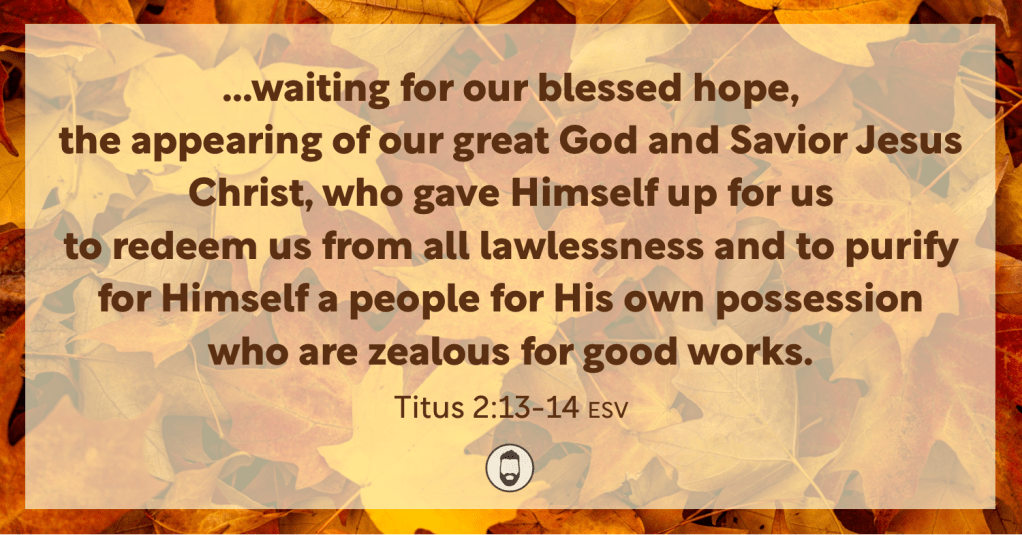
I love that phrase that Paul uses to describe the second coming of Christ in Titus 2:13: “blessed hope”. It is unique and very clearly and carefully describes what those who are in Christ have in Him and how they are able to live in this world with the expectation of Him coming again.
First, to see why I am so thankful, we need to know what Paul meant by “hope”. That word in the original language meant being able to desire something good and expect to obtain it. This is different from the way the word “hope” is used in modern English where it operates closer to a wish. My school kiddos might say something like, “I hope I make a good grade on this test”, but if they stay up until the middle of the night on their phone, fall asleep in the middle of the test, and/or zone out while reading passages, their will fail it. They hoped or wished, maybe merely even wanted, to make a good grade, but there was no real expectation or reason to expect doing well.
Biblical hope is different from that, and primarily because it is not left up to us but left up to Jesus. We can desire His coming and expect to experience it because He has already come, meaning we can trust He will again. We can desire His coming and expect to experience it because He is “our great God and Savior” with the strength and wherewithal to make anything happen. In fact, everything that exists has happened because of Him. His track record is proven and proof.
Second, that word “blessed” adds a whole other level to “hope”. The word translated “blessed” here is the same word that we see in the beatitudes at the beginning of the Sermon on the Mount (Matthew 5:3-12). People have been tempted to translate that word as happy, but happy in English has the connotation of good luck because hap- refers to circumstances. Think about the difference between happy and joyful. Happiness is fleeting and changes based on, well, circumstances. This word “blessed” is not circumstantial but Christ-produced. It is marked by God’s favor and that fullness/satisfaction that comes His Spirit within us.
Blessed hope, then, is the expectation of Jesus, our Redeemer, coming again that has been produced in our heart by God Himself. Blessed hope is saturated in the favor of God because it is a grace-gift to know that the One who redeemed us, purchased us by paying our sin debt with His blood on the cross, is coming to take possession of us. Blessed hope satisfies even in the not yet of life now because God’s very Spirit is already with us now, giving us more than a hypothetical happenstance because of His sure ever-presence.
I know that is a long and nerdy way of saying this, but “blessed hope” is really something else and only exists through Jesus. This world is constantly changing and getting worse the farther we get from the Fall, and if we’re not careful, we can fall into despondency and despair. We need the Holy Spirit reminder that this world is not all there is. We need to be able to trust in something and know that everything will be good eventually. But looking at the world gives us none of that, and the hypothetical hopes fail and hurt us.
We need something better than this world. We need something out of this world. We need Jesus. He’s coming. Our “blessed hope” is coming. And we are waiting for His appearance.
Lord, thank You for being our blessed hope and giving us reason to hope for the future. Thank You for being the God we can trust and know that Your promises will come to pass. Help us to be the people You are redeeming us to be. Help us to live as Your people. Help us to live in the expectation that Your coming will be soon. Amen.
All through the month of November, our Christ Community Church family is focusing on what we are thankful for and expressing our thanks to our “great God and Savior Jesus Christ, who gave Himself for us to redeem us” (Titus 2:13-14).
This, like the #DailyWisdomChallenge we went through in October, is a challenge from our pastor John Goldwater — the #GRATITUDEandHOPEchallenge — where we have the opportunity to post Bible passages that move us to thanksgiving or in which we find hope. May this lead you to be grateful and find your hope in Jesus!
There’s no way I can think of saying this that doesn’t make this sound as if I have some strength or worthiness. I am weak and cannot save myself, nor do I have the strength or fortitude to walk with Christ under my own power.
Paul’s words to the church at Corinth are enough to clarify why I am thankful — and why I am learning to be content with my weaknesses.
Lord, thank You for being strong. Thank You for reminding me that my weakness does not inhibit or hinder You — that You did not choose me because I am worthy, strong, capable, or talented by, rather, You saved me because I was lost and You love me. That’s enough for me. Amen.
All through the month of November, our Christ Community Church family is focusing on what we are thankful for and expressing our thanks to our “great God and Savior Jesus Christ, who gave Himself for us to redeem us” (Titus 2:13-14).
This, like the #DailyWisdomChallenge we went through in October, is a challenge from our pastor John Goldwater — the #GRATITUDEandHOPEchallenge — where we have the opportunity to post Bible passages that move us to thanksgiving or in which we find hope. May this lead you to be grateful and find your hope in Jesus!
Most often, I write the “Songs for Sunday” post on late Friday night or early Saturday mornings because that’s when I get to shift gears in my brain from the weights of the work week to rest and reset on the weekend. That shift helps me get my focus and my priorities back in their proper places. It also serves as a good reminder that Sunday morning worship does not begin on Sunday morning but in the days, and especially the night, before. This week, however, I find myself with surplus time on Friday and a muse to motivate me earlier.
Friday mornings are my favorites of the week because I GET to start with student-led Bible study at school in our FCA/FCS (Fellowship of Christian Athletes/Students). These kids are on fire for Jesus and show it by getting up week after week and sharing testimonies, passages of Scripture, devotions, and sometimes sermons. They challenge me because they are braver than I am. It’s easy to stand up in church and proclaim the Word. It’s a whole other thing to stand up in front of 40-50 peers at school and share your faith. The teachers and staff who show up are superfluous other than getting to silently witness them share their faith. And share their faith they do, compelled to do so by the love of Christ they have experienced and want others to be able to experience, too (2 Corinthians 5:14).
This morning’s devotion stood out to me on two accounts. First, the young lady boldly shared what God had brought her through and the assurance she had in His Word that He would continue to bring her through and would bring others through. Second, she talked about how spending time with God in His Word was a necessity — as vital to maintaining eternal life as oxygen is to life in general. To illustrate that importance she used Colossians 3:16:
“Let the Word of Christ dwell in you richly, teaching and admonishing one another in all wisdom, singing psalms and hymns and spiritual songs, with thankfulness in your hearts to God.”
This is the verse that stays at the forefront of my mind in praying through and planning the Scriptures and songs we will use in our worship gatherings. I have written on it often in these “Songs for Sunday” devotionals. But it hit freshly this morning, and I rejoice in that because I — like we all do — need to be reminded again and again of the grace God gives us.
On Sunday mornings, it is not enough to use the bible, to mention it from time to time, and merely have songs based on it. No, we need it to “dwell in [us] richly”, being the substance of our teaching, our admonishing, and our singing. This is not just for Sunday morning, though. We need to have the Word dwell richly in us throughout the week — Sunday worship spurring us on to continue throughout the week.
We want our songs to be filled with the Word. Psalms meaning that we sing directly from Scripture; hymns meaning we sing and expound the great doctrines found in the Word; and spiritual songs that share our mutual testimony as those who were dead in their trespasses but have been made alive together in Christ.
And we want it — no, we need it to be like that every other day, too.
I am thankful to have been reminded of this today. Rather than singing a refrain of George Jones’s “Finally Friday” like I normally do, I find myself singing “O Come, O Come Emmanuel”, thinking about the good news that He has come and looking forward to Him coming again to receive us to Himself.
What about you?
I hope as you have read this you have been encouraged to get into the Word — to have it dwell in you richly and to impact your life and faith. I hope it motivates you to make plans to gather with other believers on Sunday morning as believers have done since the stone was rolled aside from Jesus’s empty tomb.
If you do not have a church home and are in the Grenada, MS area, we would love to have you at Christ Community. John will open the Word to feed us what God has for us. The praise team will lead us in singing and reading from the Word. And the choir, the congregation, will lift praise and worship to an audience of one — the One who died for us and rose again — the One who lives and cares for us even now — the One who has come and is coming again.
15And I (Paul) said, ‘Who are you, Lord?’ And the Lord said, ‘I am Jesus whom you are persecuting. 16But rise and stand upon your feet, for I have appeared to you for this purpose, to appoint you as a servant and witness to the things in which you have seen me and to those in which I will appear to you, 17delivering you from your people and from the Gentiles—to whom I am sending you 18to open their eyes, so that they may turn from darkness to light and from the power of Satan to God, that they may receive forgiveness of sins and a place among those who are sanctified by faith in me.’
50I tell you this, brothers: flesh and blood cannot inherit the Kingdom of God, nor does the perishable inherit the imperishable. 51Behold! I tell you a mystery. We shall not all sleep, but we shall all be changed, 52in a moment, in the twinkling of an eye, at the last trumpet. For the trumpet will sound, and the dead will be raised imperishable, and we shall be changed. 53For this perishable body must put on the imperishable, and this mortal body must put on immortality. 54When the perishable puts on the imperishable, and the mortal puts on immortality, then shall come to pass the saying that is written:
“Death is swallowed up in victory.” 55“O death, where is your victory? O death, where is your sting?”
56The sting of death is sin, and the power of sin is the law. 57But thanks be to God, who gives us the victory through our Lord Jesus Christ.
If you are reading this, I have good news for you: Jesus Saves! I hope that you’ll read on and see what it means to receive the FREE GIFT He offers us in salvation. If you’ve already received the gift, keep on reading anyway and be reminded of what you’ve been given.
Let’s look at what it means to be saved, why we need to be saved, and how you can be saved.
What It Means to Be Saved
Imagine someone swimming who has gone out over their head and is drowning. They cry out for a lifeguard to help. Thankfully, the lifeguard hears them and is able to rush to their rescue, pulling them to safety on the shore. That person has been saved from drowning.
This could also apply to someone who has been stuck in a burning building and fallen unconscious from inhaling all the smoke. Firefighters are called to the building and discover them. The firefighter picks up this totally helpless individual, carries them out of the building, and gets them to the paramedics. The firefighter and paramedics have saved this person from certain death.
In the same way, God provided Jesus to save or rescue every sinner who puts their trust in Him. No matter what we have done or who we are, Jesus can save us. Through Jesus, we find salvation by and eternal life by putting our faith and trust in Him.
“For God so loved the world, that He gave His only Son, that whoever believes in Him should not perish but have eternal life.”
Why We NEED to Be Saved
You might be thinking: well, it makes sense for someone drowning or trapped in a burning building to need to be saved, but what about me?
The Bible teaches us that all of us have sinned. Sin is an archery term that describes missing the bullseye. The bullseye is perfection and goodness. We might try to do right and good, but we fail at that. God is right and good, and our missing the mark or failing in this way separates us from Him.
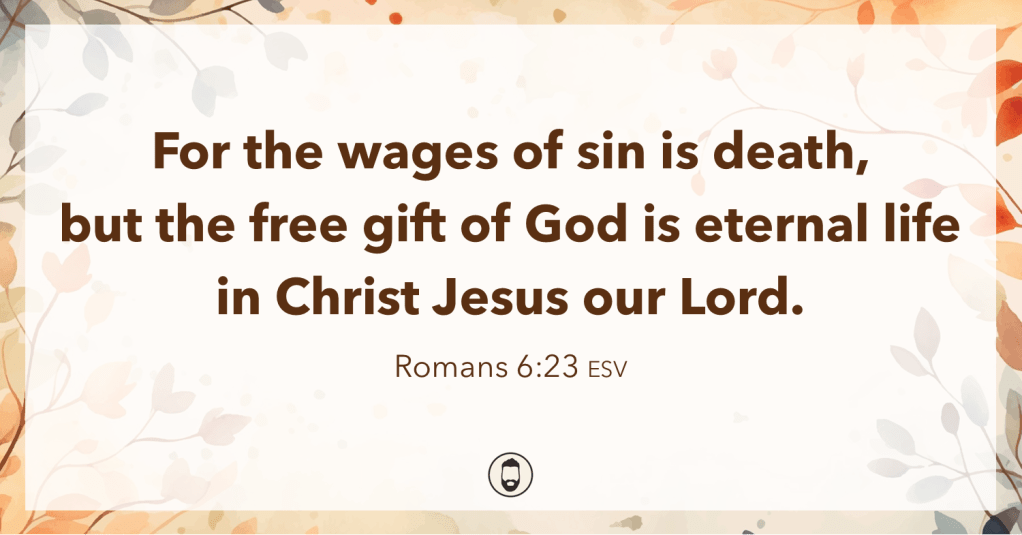
Romans 6:23 tells us that the “wages of sin is death”. This means that our sin has earned us death and that there is nothing we can do to earn our way out of it. Thankfully, that is not the end of Romans 6:23; check out the full verse: “For the wages of sin is death, but the free gift of God is eternal life in Christ Jesus our Lord.” God has made a way for us! Just as John 3:16 tells us above, Jesus paid the penalty for our sin. He died in our place and offers us life instead. That’s good news!
How You Can Be Saved
The only way for us to be saved is to turn from our sins (and the punishment we deserve because of them) to Jesus and put our faith and trust in Him. We turn from our sin because we realize that we are in trouble and deserve death because of them. We turn to Jesus because we realize that, just like the person who was drowning or trapped in the burning building, we cannot save ourselves.
To put our faith and trust in Him means that we believe that Jesus fully paid the penalty for our sins and offers us forgiveness. The Bible teaches us that Jesus “Himself bore our sins in His body on the tree (the cross)” (1 Peter 2:24). Here is how the Bible tells us we can be saved:
“if you confess with your mouth that Jesus is Lord and believe in your heart that God raised Him from the dead, you will be saved. For with the heart one believes and is justified, and with the mouth one confesses and is saved.” (Romans 10:9-10)
This is what it means when we say put our faith and trust in Jesus; we confess Him as Lord and give our lives over to Him, trusting that He knows best and acknowledge He is God, asking Him to take charge of our lives. We tell Him that we believe He is who the Bible says He is: the Savior who died for our sins and rose again. If we do this, not just saying some magic words but genuinely believing and seeking Him, the Bible tells us that we are saved!
Lord, thank you for offering salvation that is free to all who believe but cost so much at the cost of Your Son. Thank You for raising again and offering that life to all who believe and confess You as Lord. Thank You.
All through the month of November, our Christ Community Church family is focusing on what we are thankful for and expressing our thanks to our “great God and Savior Jesus Christ, who gave Himself for us to redeem us” (Titus 2:13-14).
This, like the #DailyWisdomChallenge we went through in October, is a challenge from our pastor John Goldwater — the #GRATITUDEandHOPEchallenge — where we have the opportunity to post Bible passages that move us to thanksgiving or in which we find hope. May this lead you to be grateful and find your hope in Jesus!





 Just Keith Harris