1 I will extol you, O LORD, for you have drawn me up and have not let my foes rejoice over me. 2 O LORD my God, I cried to you for help, and you have healed me. 3 O LORD, you have brought up my soul from Sheol; you restored me to life from among those who go down to the pit.
4 Sing praises to the LORD, O you his saints, and give thanks to his holy name. 5 For his anger is but for a moment, and his favor is for a lifetime. Weeping may tarry for the night, but joy comes with the morning.
6 As for me, I said in my prosperity, “I shall never be moved.” 7 By your favor, O LORD, you made my mountain stand strong; you hid your face; I was dismayed.
8 To you, O LORD, I cry, and to the Lord I plead for mercy: 9 “What profit is there in my death, if I go down to the pit? Will the dust praise you? Will it tell of your faithfulness? 10 Hear, O LORD, and be merciful to me! O LORD, be my helper!”
11 You have turned for me my mourning into dancing; you have loosed my sackcloth and clothed me with gladness, 12 that my glory may sing your praise and not be silent. O LORD my God, I will give thanks to you forever!
9 The true light, which gives light to everyone, was coming into the world. 10 He was in the world, and the world was made through him, yet the world did not know him. 11 He came to his own, and his own people did not receive him. 12 But to all who did receive him, who believed in his name, he gave the right to become children of God, 13 who were born, not of blood nor of the will of the flesh nor of the will of man, but of God.
14 And the Word became flesh and dwelt among us, and we have seen his glory, glory as of the only Son from the Father, full of grace and truth.
Invitation/Preparation for Lord’s Supper | Behold the Lamb (Communion Hymn) — Scripture References / Inspiration for the Song: 1 Corinthians 11:23-26, John 1:29, 1 Peter 1:19, 1 Peter 2:24, Revelation 13:8, Isaiah 53:5-7, 1 John 1:9, Ephesians 2:4-9, Ephesians 4:1, 1 Corinthians 6:19-20, Colossians 3:14, 1 John 1:7, Psalm 51:1-2, 1 Thessalonians 5:15-18, Luke 9:23-27, 1 Corinthians 12:12-13, Philippians 3:10
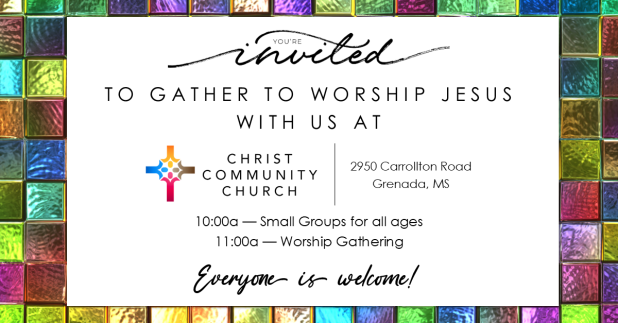
If you have not been gathering, consider gathering with your church family again. We have a 10:00 Bible study where Jamie Harrison is walking us through the book of Revelation. If you are at-risk, this Bible study would be perfect for you so you can spread out (and even dip out the side door before the 11:00 worship gathering begins).
16 “For God so loved the world, that he gave his only Son, that whoever believes in him should not perish but have eternal life. 17 For God did not send his Son into the world to condemn the world, but in order that the world might be saved through him. 18 Whoever believes in him is not condemned, but whoever does not believe is condemned already, because he has not believed in the name of the only Son of God. 19 And this is the judgment: the light has come into the world, and people loved the darkness rather than the light because their works were evil. 20 For everyone who does wicked things hates the light and does not come to the light, lest his works should be exposed. 21 But whoever does what is true comes to the light, so that it may be clearly seen that his works have been carried out in God.”
I have been crucified with Christ. It is no longer I who live, but Christ who lives in me. And the life I now live in the flesh I live by faith in the Son of God, who loved me and gave himself for me.
5 Have this mind among yourselves, which is yours in Christ Jesus, 6 who, though he was in the form of God, did not count equality with God a thing to be grasped, 7 but emptied himself, by taking the form of a servant, being born in the likeness of men. 8 And being found in human form, he humbled himself by becoming obedient to the point of death, even death on a cross. 9 Therefore God has highly exalted him and bestowed on him the name that is above every name, 10 so that at the name of Jesus every knee should bow, in heaven and on earth and under the earth, 11 and every tongue confess that Jesus Christ is Lord, to the glory of God the Father.
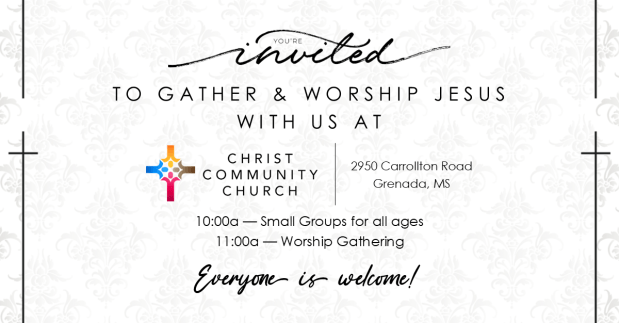
If you have not been gathering, consider gathering with your church family again. We have a 10:00 Bible study where Jamie Harrison is walking us through the book of Revelation. If you are at-risk, this Bible study would be perfect for you so you can spread out (and even dip out the side door before the 11:00 worship gathering begins).
1 Have mercy on me, O God, according to your steadfast love; according to your abundant mercy blot out my transgressions. 2 Wash me thoroughly from my iniquity, and cleanse me from my sin!
3 For I know my transgressions, and my sin is ever before me. 4 Against you, you only, have I sinned and done what is evil in your sight, so that you may be justified in your words and blameless in your judgment. 5 Behold, I was brought forth in iniquity, and in sin did my mother conceive me. 6 Behold, you delight in truth in the inward being, and you teach me wisdom in the secret heart.
7 Purge me with hyssop, and I shall be clean; wash me, and I shall be whiter than snow. 8 Let me hear joy and gladness; let the bones that you have broken rejoice. 9 Hide your face from my sins, and blot out all my iniquities. 10 Create in me a clean heart, O God, and renew a right spirit within me. 11 Cast me not away from your presence, and take not your Holy Spirit from me. 12 Restore to me the joy of your salvation, and uphold me with a willing spirit.
If you have not been gathering, consider gathering with your church family again. We have a 10:00 Bible study where Jamie Harrison is walking us through the book of Revelation. If you are at-risk, this Bible study would be perfect for you so you can spread out (and even dip out the side door before the 11:00 worship gathering begins.
1 If then you have been raised with Christ, seek the things that are above, where Christ is, seated at the right hand of God. 2 Set your minds on things that are above, not on things that are on earth. 3 For you have died, and your life is hidden with Christ in God. 4 When Christ who is your life appears, then you also will appear with him in glory.[1]
📖 Revelation 4:1–11In this episode of The King is Coming, Keith Harris and Jamie Harrison move beyond Jesus’s letters to the churches and into the next part of John’s vision. In Revelation 4, John is invited through an open door into heaven—and what he sees is the throne room of God.At the center of everything is a throne, and seated on it is the Lord in all His glory. From this point forward in Revelation, the throne becomes the focal point of the entire book.John describes the scene the best way he can: the brilliance of precious stones, a rainbow surrounding the throne, flashes of lightning and thunder, and a crystal-like sea before it. Surrounding the throne are twenty-four elders and four living creatures who never cease to worship the Lord.Together, Keith and Jamie discuss:✔️ Why Revelation 4 marks a shift from the letters to the churches to John’s heavenly vision✔️ What the throne room reveals about God’s authority and security over all things✔️ Why John uses comparisons (“like” and “as”) to describe the glory he sees✔️ The mystery of the twenty-four elders and what we can—and cannot—know✔️ The constant worship of the living creatures crying “Holy, holy, holy”✔️ Why heaven’s worship centers on God simply because He is worthyIn the throne room, everything points to one truth: God alone is worthy of worship.“Worthy are you, our Lord and God, to receive glory and honor and power, for you created all things, and by your will they existed and were created.” (Revelation 4:11)🔗 If you would like to see a written version of this podcast, complete with footnotes and cross-references, you can find it here.
I love the way that Paul’s letter to the Colossian church builds and builds and builds. Where we see sections or passages, there was just a letter from an apostle to a church that needed help. Paragraph by paragraph the help he offers them is pointing them to Jesus.
In chapter 1, we see Paul presenting Jesus in a beautiful hymn highlighting how Jesus, God incarnate, is preeminent over all and yet cares for them enough to deliver and redeem them (and us) “from the domain of darkness” to His Kingdom (ch 1:13-14). Chapter 2 saw Paul helping them to understand what it is to be alive in Christ and helped them understand that receiving Christ and walking in Him (ch 2:6-7) is necessary to combat the false teaching attacking their church.
And, as we begin chapter 3 where Paul lays out for the Colossian church – and again, the church today – what new life in Christ is and is not, the final verse from last week’s passage (ch 2:23) strikes me a bit stronger: “These (human precepts and teaching) have indeed an appearance of wisdom in promoting self-made religion and asceticism and severity to the body, but they are of no value in stopping the indulgence of the flesh.”
We looked at it in the context of last week’s passage, and we need to look at it as the hinge that opens the door between last week’s and ours today. The “human precepts and teaching” (ch 2:22) were spoken of in the context of the false teaching plaguing the Colossian church – that people were trying to tack on additional religious practices to the gospel and distract from it. But, as we are about to begin looking at precepts and teaching given by Paul, it is fitting that we clarify the difference between human precepts and those “breathed out by God” (2 Timothy 3:16). Sins are going to be listed – not Paul’s interpretation of a religion but speaking from God as He was “carried along by the Holy Spirit” (2 Peter 1:21). So, as we talk about what is taught in Colossians, we must be careful to focus on and look at what God is saying to the church – then and now – through Paul. We must be careful to recognize the authority of Scripture to teach us what to believe and correct us when we are wrong – to teach us how to live and correct us when we sin – to give us everything we need to live this new life in Him.
There is temptation to blunt what God makes sharp regarding sin – to call good what God called evil (Isaiah 5:20). There is also a temptation to take God’s Word and use it to hurt people rather than to point them to Him. Both are dangerous. Both are trying for “human precepts” instead of the divine. God’s Word says what it says, and it has power. But the former, the man-made or man-twisted have “no value in stopping the indulgence of the flesh”. Thankfully, Paul’s answer to both – the answer that has been consistent throughout Colossians and will continue to be through the end is Jesus.
If You Have Been Raised (vv. 1, 3)
The first word of today’s passage is “if”. As a parent and a high school teacher, I understand that this word carries the utmost importance.
Daddy, can I go to __’s house Friday? Yes, if, you clean your room. Mr. Harris, if we all make __ or above on the assessment, you should buy us donuts. I sure will if you hold up your end of the bargain. When Friday comes or the assessment is over both sides play the parts of expert lawyer explaining how I am bound to do this or how I should change my mind because of how close they got to the agreement. Yet if leaves extraordinarily little wiggle room. If is conditional. Any agreement containing if means that its completion is contingent upon whatever in-the-event-that occurs.
In the case of today’s passage – “Ifthen you have been raised with Christ”, the condition is if someone is in Christ, whether or not they have been “raised with Christ”. One either is or is not. Think back to the way that Paul has presented this state of being in Christ throughout the letter: either in “the domain of darkness” or “the kingdom of His beloved Son” (ch 1:13), either reconciled to Him through “the blood of His cross” or “alienated and hostile in mind, doing evil deeds” (ch 1:20-21), either “dead in your trespasses” or “made alive together with Him” (ch 2:13). So, to say “If then you have been raised with Christ” is to say you are either dead in your sins or raised to “walk in newness of life” (Romans 6:4).
It is important to the message Paul is communicating because the teachings are for those who have been “made alive…with Christ”, saved by grace through faith in Jesus (Ephesians 2:5). These are not principles for a good or successful life. They are not suggestions or even a how-to manual for faith or practice. Look at the rest of that conditional statement: “seek the things that are above, where Christ is seated at the right hand of God”. Basically, if you are in Christ, seek Him. Verse 3 clarifies it even further because, once one is saved, the former pre-salvation life is over and life is “hidden with Christ in God” – eternal life is contingent upon His life, His resurrection.
This is why the new life that comes from being in Christ is not simply a how-to manual or list of instructions – it is real and lasting transformation, life change that occurs when one goes from the “wages of sin”, which is death, to “the free gift of eternal life” (Romans 6:23). Seeking Christ is more than reading His Word or praying to Him as a religious exercise, it is seeking the One who rescued you and redeemed you – who saved you. If you have been raised with Christ, why would you not want to seek Him?
Set Your Minds (vv. 2, 4)
There is good news in the command to seek Jesus, namely that He will be found! Look at this beautiful passage in Isaiah 55:6-7:
Seek the Lord while He may be found; call upon Him while He is near; let the wicked forsake his way, and the unrighteous man his thoughts; let him return to the Lord, that he may have compassion on him, and to our God, for He will abundantly pardon.
This is often viewed as an invitation – which it is – for those who do not know Christ but let us look at what it means for those who do know Him. If you have been raised with Christ, He will be found when sought and near when He is called upon. But also, if one’s wicked ways have been forsaken and unrighteous thoughts laid aside, one surely has sought the Lord and received His compassion and forgiveness – received His life – because human beings do not lay aside their wickedness of choice easily.
The command here moves from seeking Him, though, to setting one’s mind on Him. That word “set” means be mindful of, to be devoted to”.[2] Think about it like we would set a thermostat or an alarm. A thermostat ensures that our house stays within the confines of temperatures that will keep us comfortable. An alarm ensures that appointments are kept and things that one really does not want to miss. As a resident of Mississippi in July, I am devoted to making sure my thermostat is set correctly as the humidity and heat would quickly overtake my home. Alarms are necessities for things I want to make sure I do not miss and things I must do and are set as needed – as often as needed, as often as I need to be mindful of a time or date. What about Jesus?
Paul tells the Colossian church to “set” their minds “on things that are above” – the same thing that he just commanded them to “seek”. The mind of the church, its members, should be set on Jesus “not on things that are on earth”. Set – like a thermostat – to keep one’s mind consistently where it needs to be, on Jesus. Set – like we would an alarm to remind us of where we need to be. Set.
Now, I have heard people say that there is a danger of being so heavenly minded that one is no earthly good, meaning that one can be so focused on “things that are above” that things below are forgotten about. They would have a sort of monastery view that would isolate them from the world.
I would argue that I am of no earthly good if my mind is not set on Christ. When we look at the rest of the larger section that today’s passage begins, what follows comes from setting one’s mind on Jesus. The sins that are crucified are because of focusing on Jesus and the life He gives. The behaviors that characterize the new life follow in the way that He lived – and lives!
This leads to the ultimate goal: meeting Jesus. If we look at verse 4, this is the goal – the expectation of seeking and setting one’s mind on Christ – “When Christ who is your life appears”.
This is the sort of expectant devotion that reminds me of my son. The first day I spend alone with my son, he was barely a month old. He screamed. He cried. He was upset. But everything changed when his mama called to see how everything went. As soon as he hit her arms when she got home, he was at rest. Now, I know it would be hard to say that as an infant he was thinking this or that. Yet last week while my wife – his mama – was chaperoning a youth mission trip for my daughter, every audible car noise from the street brought, “Are Mama and Keri home?” Every buzz on my phone brought questions whether it was his mama on the other end. And, as hard as he tried to play it cool when we picked them up at the church when they got back, everything was right in his world once his mama was home.
Expectantly setting one’s mind on Christ shows devotion. But, more than that, it is a connection between the one you confessed as Lord and the life you actually live. And when He appears – when He returns, He comes to take you with Him. And those who are His will be ready.
Wrapping Up
It is so easy to regiment our lives to fit everything that we want. We can schedule and plan. There are immovable commitments in our lives that will trump anything that comes up. I can be in the middle of something that has everything else in my schedule detouring around it and have it all upended with a single emergency call or text from my wife or kids. In that moment, everything else pales in comparison. The immovable becomes movable.
But how does God fit in my life? Is time with Him immovable in my schedule? I learned – and sadly later than I should have – that there are times that, if I do not schedule time with my wife I will run out of time – the same with my kids. I felt bad initially because it seems so impersonal to schedule things as important as time with my wife and kids. Then, I realized that it is better to schedule than miss something important and that was the reason I had a calendar in the first place – to ensure that important things do not get missed.
I must do the same with for my time with the Lord – in His Word and praying. It has become part of my daily routine (which I know also sounds impersonal). And, if I do not start my day in His Word and in prayer – if I do not set my mind on Him at the very beginning of my day, I will be off. I will be more like the old self than the new.
Important things are set. They are fixed.
And so, it must be for the minds of those who claim to be saved.
If you are reading this and find that you have no desire to set your mind on Christ or that you can make it through days or weeks or months or years without caring about spending time with Him in His Word or praying to Him, there is a problem. Remember that conditional if. If you are His, you will seek Him. If you are His, you will desire to spend time with Him. If you are His, there will have to come a time when you are set – fixed – on Him. It is conditional. Know I am praying for you. I am praying for you to have a desire to meet God in His Word and talk to Him. I am praying for His Spirit to help you set your mind on Him and seek Him while He may be found. And, if you come to realize that you are not in Him, know that I would love to talk with you and pray for you. I would love to introduce you to Jesus.
16 Therefore let no one pass judgment on you in questions of food and drink, or with regard to a festival or a new moon or a Sabbath. 17 These are a shadow of the things to come, but the substance belongs to Christ. 18 Let no one disqualify you, insisting on asceticism and worship of angels, going on in detail about visions, puffed up without reason by his sensuous mind, 19 and not holding fast to the Head, from whom the whole body, nourished and knit together through its joints and ligaments, grows with a growth that is from God.
20 If with Christ you died to the elemental spirits of the world, why, as if you were still alive in the world, do you submit to regulations— 21 “Do not handle, Do not taste, Do not touch” 22 (referring to things that all perish as they are used)—according to human precepts and teachings? 23 These have indeed an appearance of wisdom in promoting self-made religion and asceticism and severity to the body, but they are of no value in stopping the indulgence of the flesh.[1]
📖 Revelation 4:1–11In this episode of The King is Coming, Keith Harris and Jamie Harrison move beyond Jesus’s letters to the churches and into the next part of John’s vision. In Revelation 4, John is invited through an open door into heaven—and what he sees is the throne room of God.At the center of everything is a throne, and seated on it is the Lord in all His glory. From this point forward in Revelation, the throne becomes the focal point of the entire book.John describes the scene the best way he can: the brilliance of precious stones, a rainbow surrounding the throne, flashes of lightning and thunder, and a crystal-like sea before it. Surrounding the throne are twenty-four elders and four living creatures who never cease to worship the Lord.Together, Keith and Jamie discuss:✔️ Why Revelation 4 marks a shift from the letters to the churches to John’s heavenly vision✔️ What the throne room reveals about God’s authority and security over all things✔️ Why John uses comparisons (“like” and “as”) to describe the glory he sees✔️ The mystery of the twenty-four elders and what we can—and cannot—know✔️ The constant worship of the living creatures crying “Holy, holy, holy”✔️ Why heaven’s worship centers on God simply because He is worthyIn the throne room, everything points to one truth: God alone is worthy of worship.“Worthy are you, our Lord and God, to receive glory and honor and power, for you created all things, and by your will they existed and were created.” (Revelation 4:11)🔗 If you would like to see a written version of this podcast, complete with footnotes and cross-references, you can find it here.
I have started and restarted today’s Bible study in my head several times. Over the past few weeks, I have seen several examples of why today’s text is important, and I want to be careful to communicate exactly what it is saying and why it is so important in the life of a believer. It is extremely important to understand that the Bible serves as the guide for Christian practice and not outside sources or traditions.
Before we go any further, there are two passages that are important to form context for this passage. The first is 2 Timothy 3:16-17:
16 All Scripture is breathed out by God and profitable for teaching, for reproof, for correction, and for training in righteousness, 17 that the man of God may be complete, equipped for every good work.
We enter every conversation, every interaction with something called a presupposition – “basic beliefs that are essential for a particular type of study to be conducted”[2] or assumptions we already hold that affect our thinking on a subject. For the Christian, it is imperative – vitally important – that 2 Timothy 3:16-17 be our presupposition; we need to have the belief that the Bible is God’s Word. What we believe about the Bible affects the way we interact with the Bible. Do we see it as important or merely a valuable influence? Does it contain absolute truth, or can it be of value to us as we form our own truth? That matters.
The second passage we need to help us with today’s passage is Ephesians 4:17-24:
17 Now this I say and testify in the Lord, that you must no longer walk as the Gentiles do, in the futility of their minds. 18 They are darkened in their understanding, alienated from the life of God because of the ignorance that is in them, due to their hardness of heart. 19 They have become callous and have given themselves up to sensuality, greedy to practice every kind of impurity. 20 But that is not the way you learned Christ!— 21 assuming that you have heard about him and were taught in him, as the truth is in Jesus, 22 to put off your old self, which belongs to your former manner of life and is corrupt through deceitful desires, 23 and to be renewed in the spirit of your minds, 24 and to put on the new self, created after the likeness of God in true righteousness and holiness.
There are two statements Ephesians 4:20-21 that is vital to us, especially when it comes to passages like ours today: 1) “but that is not the way you learned Christ!”, and 2) “assuming that you heard about Him and were taught in Him, as the truth is in Jesus”. For the church in Ephesus – and the church today, Paul’s statements clarify that there is a difference between knowing Christ (learned Christ, were taught in Him) and not knowing Him. Furthermore, there is a difference in one’s way of life not knowing Christ and knowing Him.
This is an unpopular view, but the Bible means what it means. It had specific meaning for its original audiences and for us today. It is supposed to inform our beliefs and behaviors (part of that 2 Timothy 3:16-17 presupposition). Now, there is freedom within some of those beliefs for variety of action among the saints – grace to practice differently within the confines of Scripture. But there are some beliefs that are so fundamental to the faith that there is no wiggle room. For example, the Bible is clear on salvation and the message of the gospel – no wiggle room. There are, however, choices of personal conviction – or even conviction on the part of a local church – that do not contradict Scripture but take staunch stances on that every church does not have to take. For example, worship style or instrumentation.
For the Colossian church, there were added difficulties, and we have touched on them before. First, their pastor did the best he could with the limited knowledge he had. Second, false teachers saw that limited knowledge and lack of depth in discipleship as an invitation to bring wolves to attack the sheep. The Colossian church had learned Christ (see Ephesians 4:20-21) but there were gaps. And it is the false teaching shoved into those gaps that Paul has been correcting in our passages for the past two weeks. We have looked at what it means for doctrine to be “not according to Christ” (v. 8). We discussed how the false teachers were seeking to take the church “captive by philosophy and empty deceit” (v. 8). Today’s passage is going to get a bit more specific.
Due to the nature of today’s passage and my desire to be even more careful than usual in dealing with them, I want to streamline the way we break down today’s passage. I usually write out the Bible study like I would say it if I were teaching it or preaching it. Today, we are going to take it phrase-by-phrase or sentence-by-sentence through this passage and give brief clarification and application for each.
Phrase-by-Phrase/Sentence-by-Sentence Clarification and Application
Therefore let no one pass judgement on you in questions of food and drink, or with regard to a festival or a new moon or a Sabbath. (v. 16)
The “therefore” points back to verses 13 and 14 that explain what Jesus did for us in salvation and verse 15 that tells us the result of Jesus’ finished work on the cross and through the empty tomb on Satan and his forces. It is because of Jesus’ work that we do not have to allow people to be able to pass judgment on us – because He is the Judge – and His Word prescribes what needs to be prescribed.
The issues of eating and festivals falls into the way that some of the false teachers seemed to try to implement the Jewish dietary laws and Old Testament festivals and observances as necessary for salvation. The point here is not that believers are above judgment – again Jesus is judge and there are issues He has called His church to be watchful over their fellow believers; the issue is that we must be careful who we let prescribe practices to the church. That is part of that 2 Timothy 3:16-17 presupposition: God prescribes practices and gives mission to the church through His Word.
These are a shadow of the things to come, but the substance belongs to Christ. (v. 17)
The Old Testament practices that the false teachers were trying to add to the Colossian church’s practice were not meant for them. Many things in the Old Testament were meant to point to Christ. They were shadows – opportunities to see glimpses of what would be when God’s promises would be fulfilled, but shadow is not tangible (Hebrews 8:1-5). Shadows have the shape of the substance but are not the thing they point to. Jesus is the substance. He is the embodiment – literally – of the Law, and all the Scriptures (OT and NT) point to Him (Luke 24:27).
Let no one disqualify you, insisting on asceticism and worship of angels, going on in detail about visions, puffed up without reason by his sensuous mind, and not holding fast to the Head…. (vv. 18-19a)
The most important phrase in these verses is “and not holding fast to the Head”. This begins Paul’s description of the Church as the body of Christ with Christ Himself being its head. So, before we look at the specific religious beliefs that people wanted to use to disqualify the Colossian church, understand this: they were religious beliefs not centered on Jesus. That needs to sink in, so you may need to hear it again: Jesus is at the center of Christianity. If there is no Christ, there is no Christianity – not Jesus+ but Jesus-centered.
The religious practices in these verses were common in people trying to exhibit their own worthiness and how superior their religious practice was over others around them. That is still common today with people wanting to be holier-than-thou in their practice. In ancient Colossae, these were the practices that the false teachers thought put them above everyone else and, from their perspective, put everyone else below them:
Asceticism is the “voluntary abstention from the satisfaction of bodily and social needs, including food, drink, sexual activity, sleep, clothes, wealth, and social interaction”[3]. It was purposefully doing without to appear humble and more righteous or pious than those around them.
The worship of angels is meant to elevate them to seem like they have a closer connection to heaven. It is a lot like name-dropping in the present to elevate one’s status. It was a means to give the impression that there was a higher plane of religion than following Jesus.
When it says “going on in detail about visions, puffed up without reason by his sensuous mind”, it is referring to people who claimed that they had a vision from Jesus that altered everything that had been proclaimed 1) by Him as contained in the gospels, and 2) by His apostles in the early church. This points to self-made religion created in the image of Christianity. Wicked men wanted to piggyback on the perceived success of Christianity and branch out on their own. It was the equivalent of selling time-shares and staged faith-healing but back in first century Colossae.
…not holding fast to the Head, from whom the whole body, nourished and knit together through its joints and ligaments, grows with a growth that is from God. (v. 19)
As I said earlier, there were people who noticed the growth and spread of Christianity who wanted to try to recreate it in their own ways. But Jesus is not a business model; He is God. He saves people and adopts them into His family. They become a part of His body – the church. Think of how vital a human head is in the operations of a body, all the things that we do not have to think about like breathing, walking, talking, swallowing, keeping our hearts beating, etc. that we take for granted because the brain just makes it happen and keeps it going. Jesus is that for the church.
This highlights the foolishness of the false teacher’s message. Would you rather be put on a ventilator so that you can free your brain up to work on different things? No, that would be a last resort in life-saving efforts. Jesus is the head. He is God and the originator of our faith (Hebrews 12:2). We need to follow Him.
If with Christ you died to the elemental spirits of the world, why, as if you were still alive in the world, do you submit to regulations – “Do not handle, Do not taste, Do not touch” (referring to things that all perish as they are used) – according to human precepts and teachings? (vv. 20-22)
Think back to our previous passage (vv. 13-14a): “And you, who were dead in your trespasses and the uncircumcision of your flesh, God made alive together with Him, having forgiven us all our trespasses, by canceling the record of debt that stood against us with its legal demands.” Paul clarifies that believers were formerly dead in their sin until Jesus made them alive “together with Him”. If you were dead and are now alive, why seek after the things and ways from your death?
Imagine being dead and being resurrected at your wake or funeral. There would be people who were scared, but there would be rejoicing. What if you told your loved ones that, as much as you were glad to see them, you would rather just go on and lay back down in your comfortable coffin, get them to shut the lid, and just carry on? That would be unheard of – you are alive, why take part in the rest of the funeral? If you are in Christ, your being raised to life with Him means that you have died to the old self and the old ways. Trying to go back to the old normal is the same as getting back in the coffin. Following the same old “human precepts and teaching” that did nothing to bring you life is dabbling with death.
These have indeed an appearance of wisdom in promoting self-made religion and asceticism and severity to the body, but they are of no value in stopping the indulgence of the flesh. (v. 23)
All the practices a false teacher offers can seem to offer hope or seem to be of value. But eventually the false teacher is going to want what he or she was after. I compared the false teachers to people selling time shares earlier. Essentially, they want you to buy into their program and promise benefits, but they often take the money and run leaving the followers poor and dejected and alone. There are people who want to try to improve on Christianity, but how does one improve on resurrection? What is better than moving from life to death?
Religious practice can look really good and have attractive qualities, but without Jesus we are still dead in our sins (2 Timothy 3:5). He has value. He has the power. And it is Him alone we need.
Wrapping Up
We are quickly moving to a close in our study of Colossians. As we get into chapter 3 next week, you will see that, like today’s passage, things are moving from beliefs to practice. Things will move a bit more quickly than in chapters 1 and 2. But, before we do, I would like to offer you something different than the false teachers offered the Colossian church.
As we have seen, the false teachers saw the lack of knowledge of the Colossian church and the limitations of their pastor’s knowledge. I would like to offer a few practical applications that can help you not fall into the same traps:
You have access to the Bible. You have something that no one in the Bible had – the entirety of Scripture. You have access to everything than can be known about God, what He has done, and what He has called His church to do. You do not even have to read it because there are so many audio options available, many of which are free (YouVersion, ESV.org). If you claim to be in Christ, you need to be in His Word. Non-negotiable. No excuses. Know what it says or find yourself in danger of either falling prey to a false prophet or finding that you were never saved in the first place.
I am (probably) not your pastor. Unless you are a member of Christ Community Church in Grenada, MS, I am not your pastor. Even if you are a member of CCC, I am not the pastor but one of the pastors there. You need a pastor. The word pastor means shepherd. Pastors are just men – they fail and are not perfect, but their job is to protect their flocks from the wolves and to teach them what it is to be in Christ. If you are not part of a local church, you are in danger. If you are reading this and are currently rationalizing your position of technically being a member but never gathering with your flock, you are in danger. A lone sheep is an invitation for wolves. Or, as in the case of the Bible above, a lack of desire to gather puts you at greater risk of being swayed by outside sources or false teachers and may show you that you were never saved in the first place.
Do not neglect – or grieve – the Holy Spirit. He is better than a pastor because He is God dwelling in the hearts of His people. If you are in the Word and walking with Christ, His Spirit will prompt you when something is not right with someone’s teaching, preaching, or critiques of your faith. That is a good thing. Even better is that, since the Holy Spirit dwells in all believers, someone in your flock may be better situated in the Word to recognize danger before you do (which highlights another reason believers are meant to gather). Trust the Spirit to lead you away from danger. Follow His guidance. If He says run, it is best not to stay. If you have never felt His guidance, seek Him in His Word.
Remember that today’s passage fits in the context of our last two sections and leads to next week’s. If there is something in the discussion of today’s verses that is sticking with you, I urge you to test whether it is issue with the way it is presented, maybe a disagreement or issue, or possibly the Holy Spirit convicting you. Remember that the basis of today’s passage, again, is how it fits in this particular section of Colossians. There were false teachers distracting from following Jesus. Are you distracted by the world or dedicated to Him? Jesus is enough – in fact, He is everything. I love you and hope that this was helpful to you. As always, know I am praying for you. If you are not a part of a local church, I would love to help you connect with one!
1 Therefore, since we have been justified by faith, we have peace with God through our Lord Jesus Christ. 2 Through him we have also obtained access by faith into this grace in which we stand, and we rejoice in hope of the glory of God. 3 Not only that, but we rejoice in our sufferings, knowing that suffering produces endurance, 4 and endurance produces character, and character produces hope, 5 and hope does not put us to shame, because God’s love has been poured into our hearts through the Holy Spirit who has been given to us.
6 For while we were still weak, at the right time Christ died for the ungodly. 7 For one will scarcely die for a righteous person—though perhaps for a good person one would dare even to die— 8 but God shows his love for us in that while we were still sinners, Christ died for us. 9 Since, therefore, we have now been justified by his blood, much more shall we be saved by him from the wrath of God. 10 For if while we were enemies we were reconciled to God by the death of his Son, much more, now that we are reconciled, shall we be saved by his life. 11 More than that, we also rejoice in God through our Lord Jesus Christ, through whom we have now received reconciliation.
If you have not been gathering, consider gathering with your church family again. Various variants are still issues in this prolonged pandemic, but prayerfully consider gathering in the 10:00 Bible study where there is plenty of room for social distancing and one could slip out before the worship crowd comes in for the 11:00 service.
11 In him also you were circumcised with a circumcision made without hands, by putting off the body of the flesh, by the circumcision of Christ, 12 having been buried with him in baptism, in which you were also raised with him through faith in the powerful working of God, who raised him from the dead. 13 And you, who were dead in your trespasses and the uncircumcision of your flesh, God made alive together with him, having forgiven us all our trespasses, 14 by canceling the record of debt that stood against us with its legal demands. This he set aside, nailing it to the cross. 15 He disarmed the rulers and authorities and put them to open shame, by triumphing over them in him.[1]
📖 Revelation 4:1–11In this episode of The King is Coming, Keith Harris and Jamie Harrison move beyond Jesus’s letters to the churches and into the next part of John’s vision. In Revelation 4, John is invited through an open door into heaven—and what he sees is the throne room of God.At the center of everything is a throne, and seated on it is the Lord in all His glory. From this point forward in Revelation, the throne becomes the focal point of the entire book.John describes the scene the best way he can: the brilliance of precious stones, a rainbow surrounding the throne, flashes of lightning and thunder, and a crystal-like sea before it. Surrounding the throne are twenty-four elders and four living creatures who never cease to worship the Lord.Together, Keith and Jamie discuss:✔️ Why Revelation 4 marks a shift from the letters to the churches to John’s heavenly vision✔️ What the throne room reveals about God’s authority and security over all things✔️ Why John uses comparisons (“like” and “as”) to describe the glory he sees✔️ The mystery of the twenty-four elders and what we can—and cannot—know✔️ The constant worship of the living creatures crying “Holy, holy, holy”✔️ Why heaven’s worship centers on God simply because He is worthyIn the throne room, everything points to one truth: God alone is worthy of worship.“Worthy are you, our Lord and God, to receive glory and honor and power, for you created all things, and by your will they existed and were created.” (Revelation 4:11)🔗 If you would like to see a written version of this podcast, complete with footnotes and cross-references, you can find it here.
I know that I have mentioned time and again how Colossians is one of my favorite books of the Bible and that my walk with Christ is seemingly married to this book. Today’s passage gets right to the heart of that. It also illustrates again one of the most beautiful aspects of Paul’s letter to the church at Colossae: Jesus is at the heart of the issues they are facing, He is the solution to their troubles, and He is the hope they have for the future! Jesus – period!
This passage is sandwiched inside of Paul’s response to the false teaching infiltrating the Colossian church. Just prior to this was our passage from last week that told them (and us) what to watch out for that is seeking to capture the church – philosophy, empty deceit, human tradition, elementary principles (v. 8). The issue was that those things were “not according to Christ” (v. 8) who is God (v. 9) and is above all things as “the head of all rule and authority” (v. 10). This highlights something beautiful and important about this letter: every opportunity Paul gets, he makes much of Jesus. He could have offered them philosophies or traditions or strategies to try to fend off false teaching. No, “the surpassing worth of knowing Christ” (Philippians 3:7) stays at the forefront of his writing because that is the foundation of his worship. And what we worship is clearly seen in our lives – and in the solutions we seek ourselves and offer to others.
There is a temptation when looking at passages like this one to dismiss it because of words that seem foreign or that challenge our presuppositions or maybe even hurt our feelings. We need to remember that the Bible is not concerned with keeping our status quo. It is not meant to be twisted and contorted to fit human agendas or to support things contradictory to it. It is, however, meant to point us to its Author, and, in meeting with Him, there are going to be things that challenge us.
My prayer for today’s Bible study is that you find yourself willing to come face to face with Jesus, “the founder (or Author) and perfecter of our faith” (Hebrews 12:2) and see what He has done for those who put their hope in Him. Knowing Jesus – not knowing information about Him or following in the footsteps of people who knew Him – is the only way to eternal life, the truth that transcends everything the world has to offer, and the only hope in the face of the wages of sin.
Let’s Start with Circumcision
I can promise you that this is one of the last subjects I wanted to write about today. It is awkward. It is a little weird to talk about in general. It comes off as very old-covenant, and many preachers and teachers just kind of loosely compare it to baptism and stay on the baptism side of the discussion. I have been one of those guys. But the older I get and the longer I walk with Christ – the more I grow into Him and find my mind renewed by His Spirit (Romans 12:2, Ephesians 4:23-24), I want to hold onto and dig into every part of Scripture I get to study. So, study this we will.
Look at the way Paul brings up this subject. He is writing to the members of the Colossian church – to those who have been saved. He reminds them that not only have they been “filled in Him” (v. 10), but they were “also” circumcised “with a circumcision made without hands” (v. 11). Circumcision was introduced in Genesis 17. God had already made His covenant with Abraham in Genesis 15 to give him offspring that would number like the stars in the heavens (Genesis 15:5), promised the trials of Egypt and the prosperity that would follow (Genesis 15:13-16), and now He continues that covenant calling for Abraham (at this point ninety-nine years old) and all of the males in his household to be circumcised as a sign of their covenant.
Covenants at this time in history were done in very bloody and threatening ways. Throughout the near and mid-East at that time, covenants were known as covenants of halves. If you go back and read Genesis 15, you can see why:
7 And he said to him, “I am the Lord who brought you out from Ur of the Chaldeans to give you this land to possess.” 8 But he said, “O Lord God, how am I to know that I shall possess it?” 9 He said to him, “Bring me a heifer three years old, a female goat three years old, a ram three years old, a turtledove, and a young pigeon.” 10 And he brought him all these, cut them in half, and laid each half over against the other. But he did not cut the birds in half. 11 And when birds of prey came down on the carcasses, Abram drove them away.
12 As the sun was going down, a deep sleep fell on Abram. And behold, dreadful and great darkness fell upon him. 13 Then the Lord said to Abram, “Know for certain that your offspring will be sojourners in a land that is not theirs and will be servants there, and they will be afflicted for four hundred years. 14 But I will bring judgment on the nation that they serve, and afterward they shall come out with great possessions. 15 As for you, you shall go to your fathers in peace; you shall be buried in a good old age. 16 And they shall come back here in the fourth generation, for the iniquity of the Amorites is not yet complete.”
17 When the sun had gone down and it was dark, behold, a smoking fire pot and a flaming torch passed between these pieces. 18 On that day the Lord made a covenant with Abram….
The covenant of halves is illustrated in the way the animals – in this case a heifer, a goat, a ram, a turtledove, and a pigeon – were, well, halved. They were slaughtered and cut in half, leaving a bloody path between the halves. When two parties were going to make a covenant, they would both walk through the bloody halves before agreeing or promising to keep the covenant, giving the understanding that whichever party broke the covenant was forfeiting their life. The one who broke the covenant would share the same end as the animals.
It was a very bloody picture, but it was meant to hold both parties in a covenant to their word. I imagine it was quite a convincing scene! But think about man covenanting with God. Mankind is sinful and deceitful and prone to break covenants. God is the opposite. If God covenanted with mankind like men did with one another, He would have to pour out His wrath again like He had on the world in Noah’s time (Genesis 6-9) but with all mankind and no ark. There is an important difference in God’s covenant and the covenant of men, and it is through two easily overlooked details in Genesis 15:12 and 17: God put Abraham to sleep, and God alone (see the smoking fire pot and flaming torch – that’s Him!) walked through the halves!
God never intended on His covenant needing man to be faithful. He alone is faithful. He already knew that mankind would break the covenant, and He had already decided “before the foundation of the world” (Ephesians 1:4) everything that He would do in Jesus on behalf of the world. God Himself walked the bloody path between the halves. Thousands of years later, He would walk a path to a place called Golgotha to reconcile people to Himself and make peace “by the blood of His cross” (ch 1:19-20).
So, as far as circumcision went from Genesis 17 to the cross, it was a symbol of the bloody sacrifice God took upon Himself. Mankind could not keep the covenant nor would man’s death as a result of breaking the covenant do any good. Circumcision was a way to (forgive the pun) give man opportunity to have a little skin in the game – to have a reminder that there was cost involved. Understanding that circumcision does not equal salvation was important for Israel, but, for the church at Colossae, it was important because there were false teachers known as Judaizers who were proclaiming that they needed Jesus plus circumcision to be saved, which led to Jesus plus the Law and Jesus plus festivals and so on and so forth. Our passage today reminds us of the formulas we saw back at the beginning of this study:
Jesus + nothing = everything Jesus + anything = nothing
Circumcision pointed to the covenant God made with Abraham. But the blood pointed to Jesus. He alone is what the Colossian church and every sinner has ever needed for salvation. To add to Him, to add to His gospel is to give a different one (Galatians 1:6-9). There is no other Jesus (Titus 2:13). There is no other way (John 14:6).
The Importance of What Jesus Did
When we go back to today’s passage, it makes what Paul was saying clearer. The circumcision he is talking about in his letter to the Colossians is not the physical removal of the foreskin of males but “a circumcision made without hands” (v. 11). It reflects the way God through Ezekiel talks about the new covenant that would be made through Jesus: “I will give you a new heart, and a new spirit within you. And I will remove the heart of stone from your flesh and give you a heart of flesh” (Ezekiel 36:26). The idea was not cosmetic surgery; it was a transplant! God knew we could not keep His covenant, so he kept it for us. He knew the “wages of sin is death”, so he prepared a way – through Himself – to transplant people from death to eternal life!
As I mentioned earlier, circumcision and baptism are often talked about together, and the Bible clarifies how. They are both outward symbols of things that occur in the heart, but, more importantly, those activities are supposed ways to proclaim faith in Him. In the Old Testament, circumcision pointed to the way that God ratified His covenant with Father Abraham as we discussed above. But, now with baptism, we see a reflection of Jesus’ death, burial, and resurrection in the way He saves people (see picture below). When one repents of their sin and believes in Jesus, they are saved. That means that when it says that “having been buried with Him in baptism…you were also raised through faith in the powerful working of God” (v. 12), that means you were raised from being dead in your trespasses and sins (v. 13, Ephesians 2:1-2) to be “made alive” in Christ (v. 13, Ephesians 2:4-5)! Paul says it beautifully in Romans 6:4: “We were buried therefore with Him by baptism into death, in order that, just as Christ was raised from the dead by the glory of the Father, we too might walk in newness of life.” That’s good news!
The rest of the picture shared in our passage today is good news, too! Our trespasses – times when we have strayed from the path of what is right and good by sinning – and uncircumcision – lack of faith/covenant in God – produced death in us, just as it did in all people since Adam and Eve in Genesis 3. The emphasis Paul is making to the Colossian church is not that they are still dead and not that they have lost salvation when being led astray by false teachers. He is emphasizing to them that those who are “filled in” (v. 10) Christ have been “made alive” in Him (v. 13)!
This beautiful picture continues to unfold with layer upon layer of God’s love, grace, and mercy through Jesus! He who makes lost sinners found and the dead in sin alive has “forgiven us all our trespasses, by canceling the record of debt that stood against us with its legal demands” (vv. 13-14). This is something we need to understand. If we are in Christ, it is because He has forgiven us – He has changed our standing – He has brought dead sinners to new life in Him! His forgiveness is important because it is God we have sinned against (Psalm 51:4). The “record of debt” and its “legal demands” are results of our sin – death (Romans 6:23). The righteous and holy God who declares what sin is must not shirk payment. It would not be just for Him to simply let people off the hook – payment has been demanded. Thankfully, He is not only just but also the one who justifies (Romans 3:26) those who have faith in Jesus! He paid with His life to cancel our “debt”, “nailing it to the cross” (v. 14, Romans 5:8, 2 Corinthians 5:21, 1 Peter 1:18-19, 1 John 2:1-2).
Once one has put their faith in Christ and believed upon Him, they find themselves living in new territory: freedom. Romans 8:1 tells us that there is “now no condemnation for those who are in Christ Jesus”. He was condemned in our place covering us with His righteousness in the exchange (2 Corinthians 5:21). No one on earth would – or even could – do that for us. And this changes our lives. Galatians 2:20 describes the change: our flesh is “crucified with Christ” that we may live since “Christ lives in [us]”; and the lives we live from that moment forward are lived “by faith in the Son of God, who loved [us] and gave Himself for [us]”. It changes everything.
Satan hates those changes. He hates what God has accomplished in Christ. I often hear people talking of something being final and they describe the circumstances by saying that the final nails have been driven into a coffin, sealing it. The nails on Jesus’ cross (v. 14) ring with that sort of finality for Satan, his demons, and his followers/false teachers. As the Roman hammer nailed Jesus – God in flesh – to the cross, Jesus was disarming “the rulers and authorities and put[ting] them to open shame” – the cross was not a loss for Jesus but triumph (v. 15)! When He arose from the tomb, He “abolished death and brought life and immortality to light through the gospel” (2 Timothy 1:10)! Once again, that is good news!
Wrapping Up
There are so many opportunities to argue and debate over what is and what is not true belief or true religion. I used to be very interested in the field of apologetics and giving a reasoned defense for what the Bible says versus what other religions or other worldviews believe. But I find myself more and more coming back and pleading for the gospel – the good news of Jesus – like Paul did here.
Now, I am not saying that there are not times to “contend for the faith that was once for all delivered to the saints” (Jude 3); there are times and places for that. What I am saying is that there is immense value in sharing what Christ has done. I want to see people come to know Christ more than I want to win a debate. I hope that there would be opportunity for faith in Christ through these Bible studies more than refuting false belief. I specifically pray for this Bible study to be used to point people to Jesus.
But I recognize Paul’s context here. Wolves had entered the sheepfold. False teachers were attacking the Colossian church. The church needed – and needs today – to be protected. But the answer is still the same – the debate is only over one thing: the gospel of Jesus Christ.
So, I ask you, dear Sojourner, as I close today: do you believe in Christ – are you in Christ?
It is easy to get lost in the hustle and bustle of life. It is easy to get side-tracked by focusing on so many distractions that we lose sight of the big things. False teachers are convincing, but our own deceitful hearts are even more convincing. Today is a good day to look at your life and assess where you are – or where you aren’t – with Christ. But, if He has granted you today, there is opportunity for salvation!
1 In the year that King Uzziah died I saw the Lord sitting upon a throne, high and lifted up; and the train of his robe filled the temple. 2 Above him stood the seraphim. Each had six wings: with two he covered his face, and with two he covered his feet, and with two he flew. 3 And one called to another and said:
“Holy, holy, holy is the Lord of hosts; the whole earth is full of his glory!”
4 And the foundations of the thresholds shook at the voice of him who called, and the house was filled with smoke. 5 And I said: “Woe is me! For I am lost; for I am a man of unclean lips, and I dwell in the midst of a people of unclean lips; for my eyes have seen the King, the Lord of hosts!”
6 Then one of the seraphim flew to me, having in his hand a burning coal that he had taken with tongs from the altar. 7 And he touched my mouth and said: “Behold, this has touched your lips; your guilt is taken away, and your sin atoned for.”
8 And I heard the voice of the Lord saying, “Whom shall I send, and who will go for us?” Then I said, “Here I am! Send me.”
14 Since then we have a great high priest who has passed through the heavens, Jesus, the Son of God, let us hold fast our confession. 15 For we do not have a high priest who is unable to sympathize with our weaknesses, but one who in every respect has been tempted as we are, yet without sin. 16 Let us then with confidence draw near to the throne of grace, that we may receive mercy and find grace to help in time of need.
If you have not been gathering, consider gathering with your church family again. Various variants are still issues in this prolonged pandemic, but prayerfully consider gathering in the 10:00 Bible study where there is plenty of room for social distancing and one could slip out before the worship crowd comes in for the 11:00 service.
11 For the grace of God has appeared, bringing salvation for all people, 12 training us to renounce ungodliness and worldly passions, and to live self-controlled, upright, and godly lives in the present age, 13 waiting for our blessed hope, the appearing of the glory of our great God and Savior Jesus Christ, 14 who gave himself for us to redeem us from all lawlessness and to purify for himself a people for his own possession who are zealous for good works.
4 But when the goodness and loving kindness of God our Savior appeared, 5 he saved us, not because of works done by us in righteousness, but according to his own mercy, by the washing of regeneration and renewal of the Holy Spirit, 6 whom he poured out on us richly through Jesus Christ our Savior, 7 so that being justified by his grace we might become heirs according to the hope of eternal life.
If you have not been gathering, consider gathering with your church family again. Various variants are still issues in this prolonged pandemic, but prayerfully consider gathering in the 10:00 Bible study where there is plenty of room for social distancing and one could slip out before the worship crowd comes in for the 11:00 service.
14 And as Moses lifted up the serpent in the wilderness, so must the Son of Man be lifted up, 15 that whoever believes in him may have eternal life. 16 “For God so loved the world, that he gave his only Son, that whoever believes in him should not perish but have eternal life. 17 For God did not send his Son into the world to condemn the world, but in order that the world might be saved through him. 18 Whoever believes in him is not condemned, but whoever does not believe is condemned already, because he has not believed in the name of the only Son of God. 19 And this is the judgment: the light has come into the world, and people loved the darkness rather than the light because their works were evil.
1 And you were dead in the trespasses and sins 2 in which you once walked, following the course of this world, following the prince of the power of the air, the spirit that is now at work in the sons of disobedience— 3 among whom we all once lived in the passions of our flesh, carrying out the desires of the body and the mind, and were by nature children of wrath, like the rest of mankind. 4 But God, being rich in mercy, because of the great love with which he loved us, 5 even when we were dead in our trespasses, made us alive together with Christ—by grace you have been saved— 6 and raised us up with him and seated us with him in the heavenly places in Christ Jesus, 7 so that in the coming ages he might show the immeasurable riches of his grace in kindness toward us in Christ Jesus.
If you have not been gathering, consider gathering with your church family again. Various variants are still issues in this prolonged pandemic, but prayerfully consider gathering in the 10:00 Bible study where there is plenty of room for social distancing and one could slip out before the worship crowd comes in for the 11:00 service.






 Just Keith Harris