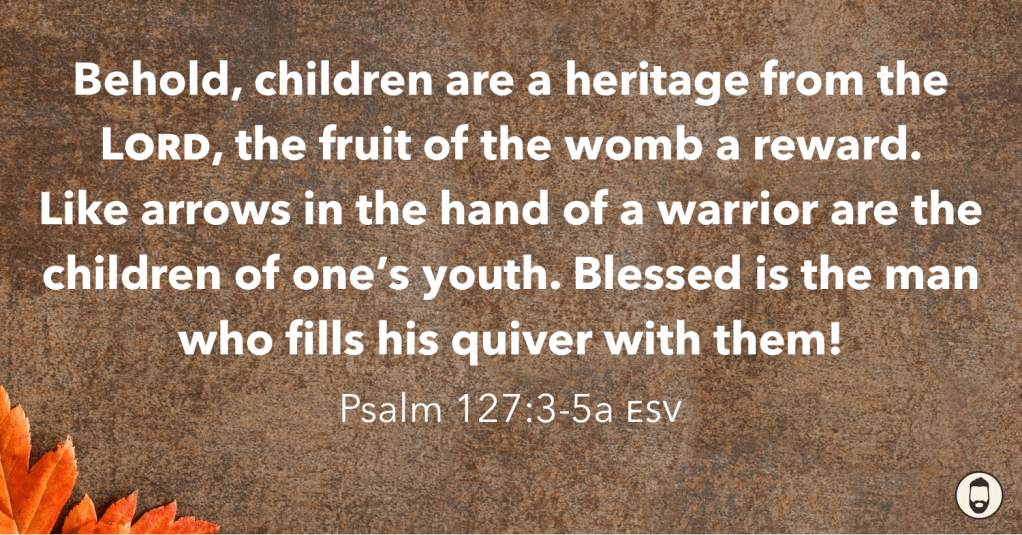
Keri and Xander are such a blessing to me. I’m thankful I get to be their daddy. Seeing them grow, mature, and change is amazing. More than that, I have a front row seat view of the Lord working in and through them.
Keri is kind and, although she hates the spotlight, she loves to serve the Lord and others. She genuinely cares about others and notices those who typically go unnoticed. She is quiet until she decides to let people in, but once she does, they get to see her corny humor and bubbling wit. Keri has also inherited some of her mama’s fire, which makes me happy because she is becoming a force to be reckoned with while balancing that with her typical kindness, care, and thoughtfulness.
Xander is kind, too, and protective of his people. He loves fiercely and often wears his heart on his sleeve. This is not a weakness as those who are loved by Xander can attest. Seeing him with his younger cousins and other littles sees this fast-paced flash slow down and be immensely patient and caring. His infectious laughter is only matched by his growing wit and love for puns. As he loves and serves others, I get glimpses of the man he is growing to be and cannot wait to see what the Lord continues to do in him.
Keri and Xander are not perfect by any means. They inherited that from their father. But I could not be more proud of them or thankful to get to be their daddy.
All through the month of November, our Christ Community Church family is focusing on what we are thankful for and expressing our thanks to our “great God and Savior Jesus Christ, who gave Himself for us to redeem us” (Titus 2:13-14).
This, like the #DailyWisdomChallenge we went through in October, is a challenge from our pastor John Goldwater — the #GRATITUDEandHOPEchallenge — where we have the opportunity to post Bible passages that move us to thanksgiving or in which we find hope. May this lead you to be grateful and find your hope in Jesus!
I’m thankful for the love of God! There is no other love like it. In fact, His love informs all other love — defines all other love.
In John 15:13, Jesus says that there is no “greater love” than one who will lay his life down for His friends. The day after He said that, He died on the cross for us, and proved that there is no “greater love” than His!
He loves us, and having experienced the love He has for us, we love Him in return. It is the same way that children learn what love is. They experience love from their parents and families, and they learn to reciprocate it. But it is not about the love we return. God’s love is so much more powerful and abundant than our meager offering back to Him.
I love the word that John used to describe the extent of God’s love here: propitiation. This is merely a big seminary or theology word. This is a Bible word. It describes a sacrifice that exchanges the wrath of God sinners deserve with the favor of God they don’t. Those who are saved experience the favor of God that His Son Jesus deserves because Jesus bore the wrath that our sin deserves. That’s love. And there’s no “greater love” than that!
Lord, thank You for loving me and all that You have saved. We don’t deserve Your love, especially not me, but I am thankful that You set Your affections on me despite my sin. Thank You for paying for my sin and covering me with Your blood. I love you, too, and long for the Day when we will be together forevermore.
All through the month of November, our Christ Community Church family is focusing on what we are thankful for and expressing our thanks to our “great God and Savior Jesus Christ, who gave Himself for us to redeem us” (Titus 2:13-14).
This, like the #DailyWisdomChallenge we went through in October, is a challenge from our pastor John Goldwater — the #GRATITUDEandHOPEchallenge — where we have the opportunity to post Bible passages that move us to thanksgiving or in which we find hope. May this lead you to be grateful and find your hope in Jesus!
I’m thankful that His steadfast love will never run out.
Every day brings new hardships and trials. It seems sometimes that the difficulties of life are insurmountable. Too often, the idea of merely giving up is more appealing than it should be. But just as the trouble is at its peak — when the waves seem to be flowing over our heads, God brings fresh mercy.
God has more mercy than we will ever have troubles. His love is infinitely flowing and infinitely better than the worst this world has to offer. Every day brings with it trouble, but every morning brings new mercy from the LORD. His faithfulness is great. He will take care of His people.
That’s good news!
What’s more is that trouble has an expiration date. It’s shelf life will run out when our LORD and King returns. Trouble will be over, but God’s mercies and steadfast love will still be infinite!
Lord, thank you for fresh mercy every morning and an infinite supply of Your steadfast love. Thank you for being a God who is bigger than our trouble — bigger and more magnificent than everything, yet still being willing to remember your lowly people. Help us to remember your unfailing steadfast love and mercy when the waves are crashing against us so that we can hold fast to You.
All through the month of November, our Christ Community Church family is focusing on what we are thankful for and expressing our thanks to our “great God and Savior Jesus Christ, who gave Himself for us to redeem us” (Titus 2:13-14).
This, like the #DailyWisdomChallenge we went through in October, is a challenge from our pastor John Goldwater — the #GRATITUDEandHOPEchallenge — where we have the opportunity to post Bible passages that move us to thanksgiving or in which we find hope. May this lead you to be grateful and find your hope in Jesus!
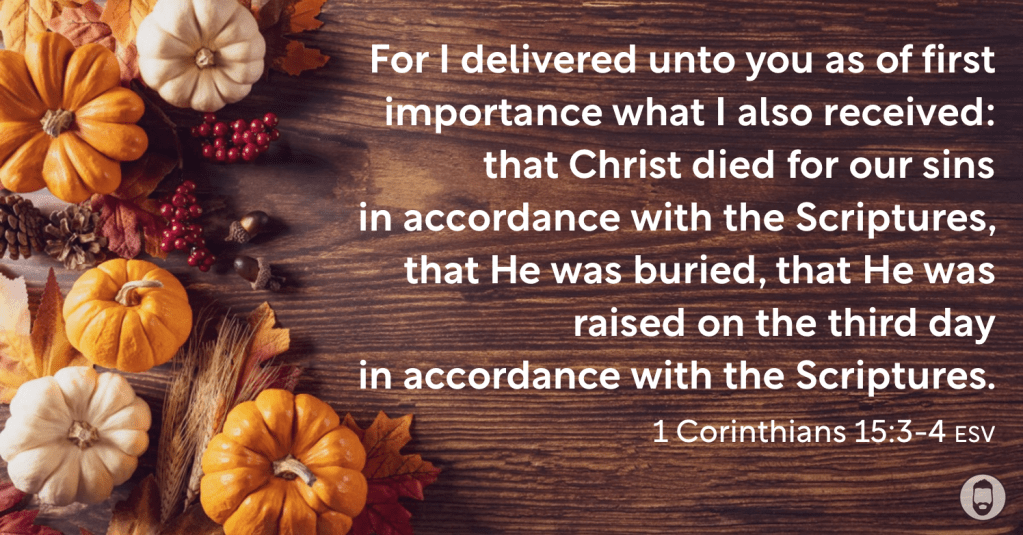
I’m thankful for the gospel — the good news of Jesus Christ — that tells us that He died for our sins on the cross we deserved, was buried, and rose from the dead defeating death, hell, and the grave.
That’s good news!
Literally, that’s what the word “gospel” means: good news!
Lord, thank you for the good news that we do not have to remain dead in our sins. Thank you for being willing to send Your Son to die in our place and giving the opportunity to come to You by grace through faith in Jesus and be made alive in Him.
All through the month of November, our Christ Community Church family is focusing on what we are thankful for and expressing our thanks to our “great God and Savior Jesus Christ, who gave Himself for us to redeem us” (Titus 2:13-14).
This, like the #DailyWisdomChallenge we went through in October, is a challenge from our pastor John Goldwater — the #GRATITUDEandHOPEchallenge — where we have the opportunity to post Bible passages that move us to thanksgiving or in which we find hope. May this lead you to be grateful and find your hope in Jesus!
I have seen this proverb on t-shirts, coffee mugs, and many social media posts. But the place I see it most these days is in my life.
As we have seen throughout the #DailyWisdomChallenge, God’s wisdom is better — and often contrary — to the world’s wisdom. Worldly wisdom teaches men that they are to be self-sufficient, tough, stoic, and unbreakable. If I have learned anything in my decades of life and decades of being an adult man, men are breakable and definitely not entirely sufficient, at least that hasn’t been the case for me. I spent years trying to prove how strong and sufficient I am. Too many of those years were devoid of the kind of friendships that this proverb — that God’s wisdom — prescribes.
The good news is that God’s wisdom can repair the seemingly wasted years.
In the past decade or so, God began bringing Christ-like men into my life who hold me accountable when I go astray, lift me up when I fall down, and come alongside me to support me when I struggle. More than that, they celebrate with me in joyous times and have provided more laughter than I thought possible. I also get to provide the same to them, although not as well as they do for me.
I am better — sharper — because of the friendship of these men. This was God’s intention, hence Proverbs 27:17. God intended saved men to lift each other up and to sharpen each other’s lives and characters. This is contrary to the fickle relationships that pass for some friendships where people are enablers and anchors to negative behaviors or toxic, long-lasting adolescence. No, God provided us brothers who point us to Him and are willing to knock our rough edges off if we need it or help us cut through trouble if that’s what the occasion calls for.
Thank you, Lord, for the brothers you have sent me.
For the month of October (and November for slowpokes like me), we are answering the challenge John Goldwater, pastor of Christ Community Church in Grenada, MS, laid out — the #DailyWisdomChallenge. Each day, we are going to read through a chapter of Proverbs corresponding to the day of the month.
This fits with what we have studied in Colossians, specifically Colossians 3:1-2, namely that we should seek “the things that are above, where Christ is” and set our minds like a thermostat “on things that are above, not on things that are on earth”. Imagine what a month meditating on God’s Word daily can do for us.
Won’t you join us on this #DailyWisdomChallenge and set your minds on Christ?
For the month of October, we are answering the challenge John Goldwater, pastor of Christ Community Church in Grenada, MS, laid out — the #DailyWisdomChallenge. Each day, we are going to read through a chapter of Proverbs corresponding to the day of the month.
This fits with what we have studied in Colossians, specifically Colossians 3:1-2, namely that we should seek “the things that are above, where Christ is” and set our minds like a thermostat “on things that are above, not on things that are on earth”. Imagine what a month meditating on God’s Word daily can do for us.
Won’t you join us on this #DailyWisdomChallenge and set your minds on Christ?
First, let me add a disclaimer that this is not a proverb or post advocating child abuse or the beating of children. God did not mean that in Proverbs 13:24. God is a loving Father who knows what appropriate discipline is for His children — and thereby ours.
Raising children is hard, but it is such a worthwhile thing. I thought I knew what love was until I met Candice; then, I found that my heart had the capacity for more love than I thought possible. Then, I heard Keri’s heartbeat for the first time in the doctor’s office and realized I knew nothing. Then, came Xander and I found yet more room and capacity for love. Add to them my nieces and nephew. I have discovered more love than I knew existed.
If you talk to me for very long or often, my wife and kiddos come up. I write a lot about Candice and our marriage as illustration for various Bible studies, but I try to lay off the kids because, well, the internet and to keep from them thinking their lives are nothing but sermon fodder. My children bring me more joy than I am capable of expressing in words, either spoken or written. Both of them are unique and special. I, of course, am biased. I am their biggest fan (by size only and second only to their mama). They are good kids. And they are bad kids, too.
My kids are not perfect, and I try to live with the understanding that I can never say what they will never do because, like their father, they have the capacity to sin and mess things up. That brings in my least favorite part of parenting: discipline. I hate having to do it. Read that again: HAVING to do it.
I have to discipline them because I want to protect them from dangers outside and inside of them.
I have to discipline them because they need to learn from their mistakes (and ones I have made in the past, too).
I have to discipline them because that is the way God set up parenting in this fallen world. It is the model He gives in the way that He parents us (Hebrews 12:5-8).
Our proverb today says that parents discipline out of love (Proverbs 13:24), and it mirrors the way that “the Lord disciplines the one He loves” (Hebrews 12:6).
I definitely don’t have all of the answers to how to discipline children, and I don’t claim to. What I do know is that the discipline that has to be done is supposed to be borne out of love. If it seems that I am repeating myself, it is because I am. I am repeating for emphasis, and not in a way pointed at others, but as a reminder for myself.
I can remember my daddy telling someone once that he was glad to be in the stage of life when my sister, brother, and I were grown. He said that once the parenting was over, he had gained friends in his children. The person he was talking to asked something, signifying that they thought his comment was odd. What he said after that is what is so poignant for our subject today. Daddy said that he loved spending time with us when we were growing up, but that he loved us too much to try and be our friends when we needed a daddy more than a friend.
When I look at Keri and Xander (and Sophie, Krislyn, Penelope, Caleb, Sunday, and Mae), my heart swells with love that I cannot describe. I love to spend time with them. I love to hear their jokes and their dreams and their complaints and whatever they want to tell me. I am so glad when they talk to me because I know it will not always be the case. As they grow, I will not always be a favorite person. When correction is needed, I am not what they want. But, Lord willing, I will have the Spirit-filled courage to be who they need. Then, when they are all grown up, I can rejoice in what the Lord has done in them and who He has made them to be.
In the meantime, the tough love of discipline is worth it because they are worth it.
17 And whatever you do, in word or deed, do everything in the name of the Lord Jesus, giving thanks to God the Father through him. 18 Wives, submit to your husbands, as is fitting in the Lord. 19 Husbands, love your wives, and do not be harsh with them.[1]
Colossians 3:17-19
Greetings Sojourners!
We are moving into the last leg of our journey through Colossians, and I am praying that, just as these Bible studies have been impacting my own life as I have studied, written, and taught, they will have an impact on your life as well. The impact on my own life has largely come from meditating on the question I asked you to consider in last week’s Bible study: what if all of what Paul told the Colossian church about setting our minds on Christ (Colossians 3:1-4), taking off sin (Colossians 3:5-11), and putting on Christ (Colossians 3:12-17) mattered for real life?
I told you that it is meant to affect every aspect of our lives. Now, we allow God’s Spirit through His Word to meddle in our lives – specifically today, in our marriages.
Before I begin in earnest, I want to clarify something: marriage is not for everyone (check out 1 Corinthians 7 as an example). The primary relationship concern for those who are in Christ is to the Lord. To use the language Paul used there, unmarried men and women are “anxious about the things of the Lord, how to please the Lord” and “be holy in body and spirit” (1 Corinthians 7:32, 34), but married men and women are “anxious about worldly things”, how to please their spouse (1 Corinthians 7:33-34). Marriage is a good thing that should “be held in honor among all” (Hebrews 13:4), but Paul’s word to the unmarried in 1 Corinthians 7:38 is that “he who marries his betrothed does well, and he who refrains from marriage will do even better” in regard to devotion to Christ.
This does a lot to illustrate how whatever we do, “everything [is to be done] in the name of the Lord Jesus, giving thanks to God the Father through Him” (Colossians 3:17). For centuries and even to an extent today, the culture has placed a stigma on remaining unmarried – more harshly on women than on men. The standard is not whether or not we have achieved some level of earthly relationship but on whether or not we have a relationship with Christ, so much so that Paul’s second letter to the church at Corinth told them to “regard no one according to the flesh” because those who are “in Christ” are “a new creation” after being reconciled to God by grace through faith in Jesus (2 Corinthians 5:15-19).
So, if you are reading this and God has called you to, for either the time being or for life, singleness, rejoice in your calling, take what can be applied to your life and relationships and leave what cannot. Everything in Colossians 3:1-17 is to be applied for all believers in all of life. Furthermore, everything in Colossians 3:1-17 matters in the everyday lives of believers in all of life. It needs to be said as we are about to enter today’s Bible study that this is more than just knowledge – it is to be applied and learned. This means that for some – really most of us – there will be some repentance involved. John MacArthur summed it up well in his preface to the commentary on our passage today:
“Genuine Christianity consists of both doctrine and holy living. The New Testament reminds us in many places that an intellectual knowledge of our faith must be accompanied by a life that proves faith’s reality. And such a life can only be lived by vital contact with God in Christ. It is difficult to see how Christianity can have any positive effect on society if it cannot transform its own homes.”[2]
If God has really saved us, change will occur – not us changing for Him to save us but Him changing us. There is no way that Him moving sinners from dead in sin to alive in Him (Ephesians 2:1-5, 4:17-24) does not produce change – produce fruit (Galatians 5:22-23).
So, if you are reading this and are saved by grace through faith in Jesus alone and married, take heed as we see what God has for you. This Bible study will not be exhaustive, meaning that it cannot cover the scope of every aspect of marriage. The goal will be to take the specific teaching Paul gave to the Colossian church and supplement it from the longer teaching Paul gave the Ephesian church so that we have a picture of what it is like in real, everyday marriage to be a husband or wife adorned in Christ.
Wives, Submit to Your Husbands, as is Fitting in the Lord (v. 18)
That one sentence encompasses Paul’s message to the wives in the Colossian congregation, but we need to put in some work to understand how to apply these teachings in our real lives.
What This Does NOT Mean
Simply put: the Scriptural command for wives to “submit” to their husbands does not mean abuse. This is not a call to subservience. Those who have used this to demean or put down their wives or to control them have sinned, plain and simple. Paul told the church at Ephesus that marriage was a picture of the gospel, Christ being the husband and the Church being His bride (Ephesians 5:32), so a marriage that is characterized by a husband demeaning his wife and putting her in the position of servitude does not reflect the husband of the Church who “came not to be served but to serve, and to give His live as a ransom for many” (Matthew 20:28).
This submission is not absolute or all-encompassing nor is it obedience. Obedience in the context of Colossians 3-4 is relegated to children and servants, not wives.[3] For a Christian wife, her obedience and submission is to Christ above her husband. If a husband’s desires deviate from God’s Word, the wife should not submit. It also does not mean that women are inferior. Both males and females are created in God’s “own image” (Genesis 1:27). The New Testament reiterates it and clarifies that in Christ, “there is no male and female” (Galatians 3:28). Now, this is not to say that there are not differences, but those differences do not make one better and the other inferior.
What Does Submit Mean, Then?
The word translated “submit” here means “to place in order”, specifically in the context “a willing personal subjection”.[4] Let us look at a few passages in the New Testament where this word is used to help us get a picture of what the Holy Spirit through Paul was talking about. The best place in the context would be Ephesians 5:21 where Paul tells the church at Ephesus (and thereby us today) that part of doing everything out of thanksgiving to and in the name of Jesus (Ephesians 5:20, Colossians 3:17) means that members of the church are supposed to be “submittingto one another out of reverence to Christ”. The submission for a wife to her husband is to be similar in nature to how members of the Church are to submit. This can be further illustrated in the life of Jesus. In Luke 2:51 after Mary and Joseph had lost Jesus and found Him teaching as a child in the temple, it came time for the family to return home to Nazareth, and Jesus was “submissive” to His parents. Jesus is God, but He submitted to His earthly parents when He “became flesh and dwelt among us” (John 1:14). It can also be illustrated by the way Paul told the church at Rome that they were to be “subject” and therefore live in “subjection” to the authority of the government (Romans 13:1, 5). Obviously, their “citizenship…in heaven” (Philippians 3:20) trumped their Roman citizenry and the law of God superseded the laws of Rome, but in the instances where they did not, God called them to be submissive to the power He had allowed to be in authority.
Looking at that context and the definition, it is clear that Christian wives are to willingly subject themselves to the authority of their husbands. God designed the home and family to work a certain way and this submission is to God’s way as opposed to what the world presents as options. Women, knowing full well that they are equal to their husbands (if not surpassing them, as is the case with my wife), willfully submit themselves to God’s design, trusting that He knows best. The husband is to be the spiritual leader of the home with the wife backing him up. The wife is to help her husband to lead well, meaning that her strengths complement and strengthen his so that the family survives. You cannot have two sources of authority. Think about the tension that exists between Christians trying to be submissive to God but also the government. When government authority begins to outweigh God’s authority, one’s walk with Christ suffers. God’s authority wins out. When a wife leads or finds herself having to lead because of a sinful husband, the family suffers.
When Paul told the Colossian church that this submission of wife to husband was “fitting in the Lord”, he was acknowledging that God’s ways are best – that God, the Creator and inventor of human beings, knows His design and what works best (and what does not). So, Christian wives, I urge you to sit down with your husband and y’all strategize as to how to implement this in your homes. We joke in my house about how my wife, Candice, got sidetracked during our wedding when we were exchanging vows. Her father, who was officiating, asked her to repeat after him that she would submit to me, but Candice did not hear. Her response had everyone in the congregation rolling with laughter: “Wait. What did you say?” Yet, her patient submission and help are what makes me able to lead our family. She holds me accountable. She withdraws her submission when I try to lead in the wrong direction. She holds me to a higher standard than any human being on earth can or wants to, ensuring that I am the husband and father God calls me to be.
Husbands, Love Your Wives, and Do Not Be Harsh with Them (v. 19)
It should be noted here that there is a role for husbands and standards for them as well. In fact, the call for husbands in Ephesians 5 is substantially longer than the call to wives. Look at Ephesians 5:25-31:
25 Husbands, love your wives, as Christ loved the church and gave himself up for her, 26 that he might sanctify her, having cleansed her by the washing of water with the word, 27 so that he might present the church to himself in splendor, without spot or wrinkle or any such thing, that she might be holy and without blemish. 28 In the same way husbands should love their wives as their own bodies. He who loves his wife loves himself. 29 For no one ever hated his own flesh, but nourishes and cherishes it, just as Christ does the church, 30 because we are members of his body. 31 “Therefore a man shall leave his father and mother and hold fast to his wife, and the two shall become one flesh.”
Whereas it seems as if the world places little to no expectation on the part of husbands other than to work and provide and allows men to be functional boys, only with more expensive toys, God has a higher calling for husbands than has been tolerated. He holds them to the standard of Christ for love, care, and leadership.
What This Does NOT Mean
First, this is not meant to belittle or demean men. There are times like Father’s Day when men who are seldom seen darkening the doors of a worship gathering show up only to be heavily rebuked, chastised, and told just how worthless they are and have been. This is meant, just as we did above with God’s call to wives, to show what it looks like for God’s call to impact the real lives and marriages of husbands who have been saved by grace through faith in Jesus.
Second, we need to revisit something we talked about above when we clarified what a wife’s submission is not. The authority of a husband is not absolute nor is he the master of his wife. Too often throughout history, men have tried to rule over their wives like tyrannical dictators, terrible fathers, or terrifying masters. This ain’t that. The example of husbanding is Jesus. Period. Before we get into what that looks like, if you are a saved husband and lording over your wife, trying to punish her for stepping out of your lines, or commanding them to serve or service you, you need to repent. There is no Christ in that. Paul rightly and plainly told the Colossian husbands not to be “harsh” with their wives. The word translated “harsh” here means “to be harsh, angry” with the connotation of making someone else “sharp” or to “embitter” them. Love does not create bitterness. Harshness has no part in love.
What Does it Mean for Husbands to Love Your Wives?
I think that the Ephesians 5 passage on husbands is especially helpful here as both Colossians 3:18 and Ephesians 5:22-24 are both brief in their calls to wives, the only difference being Ephesians 5 clarifies the comparison between wives and the Church. This is something that needs to be elaborated on because Scripture elaborates on it (and most worldly expectations for husbands have woefully fallen short of for centuries in many cultures). We will take Ephesians 5:25-31 sentence by sentence, and sometimes phrase by phrase to help us understand – and by understanding give opportunity for application and/or repentance for saved husbands.
“Husbands, love your wives, as Christ loved the Church and gave Himself up for her….” This love is special and sacrificial. It tells the Story of a King who left His throne and became a lowly peasant that He might redeem His beloved and rescue her from execution. What King would leave His throne to do such, and not only that but to take the place of His beloved in the execution? Husbands are to love their wives in such a way that their own life is of no account to them when it comes to caring for their wife. What is there that a godly husband would not give up for his bride? The answer should be nothing. This is romantic for sure, but more than that, it is a love that is known and demonstrated (John 3:16, Romans 5:8). It communicates counting the other more significant than one’s own self (Philippians 2:5).
“Husbands, love your wives, as Christ loved the Church…that He might sanctify her, having cleansed her by the washing of water with the Word….” If a husband’s love were only wrapped up in being willing to die for his wife, it would be an unfortunate thing for sure. Jesus died for His bride but lives again (Revelation 1:18). That illustrates the nature of earthly husbandly love, too – to be characterized by living for his wife rather than willing to show that love in a one-time event. This is a love that sanctifies one’s wife, sets her apart and gives her to the Lord to be saved and cleansed (Ephesians 5:25-27). The love of a husband does not save, but a godly husband, as spiritual leader of his household, consistently and constantly points his family (beginning with his wife) to the Lord that they may find cleansing according to His Word. This means that the Word is present in the marriage relationship, not being the preacher and interpreter but the one who ensures his wife is thriving in her relationship with God as a fellow believer (Ephesians 5:20-21, Colossians 3:16-17).
“Husbands, love your wives, as Christ loved the Church…so that He might present the Church to Himself in splendor, without spot or wrinkle or any such thing, that she may be holy and without blemish [or blameless]….” Building on the last point, this carries it to completion. Marriage vows rightly say, “till death do we part.” This verse longs to see one’s wife with Christ when death parts. This means consistently continuing in the spiritual leadership role of husband “so long as both shall live” (Ephesians 5:28-29). The wife is not a trophy of conquest possessing a mark of long-remembered beauty. No, she is to be set apart and rejoiced in, ensuring that God keep her not only on earth but all the way to heaven when she no longer be her earthly husband’s bride but part of the Bride of Christ forever with Him in heaven (Revelation 19:7-9). This is a love of safeguarding, protecting, and discipling for all the days of one’s marriage (1 Peter 3:7).
“In the same way, husbands should love their wives as their own bodies. He who loves his wife loves Himself. For no one ever hated his own flesh, but nourishes it and cherishes it, just as Christ does the church, because we are members of His body.” In recent years with the rise of mental illness and the sad effects of the Fall on the human body (especially the mind), this might puzzle some (Romans 8:20-22). People (like the one writing this Bible study) have gone long years without caring for their body (1 Corinthians 6:19-20). People desire to end their lives. We recognize that mental illness exists and that depressing and thoroughly tragic circumstances exist. We should begin to recognize that believers who are husbands who do not love their wives as Christ loves the Church is an aberration as well. Christian husbands should notoriously be more loving and caring when it comes to their wives because Christ has been loving and caring to them (1 John 4:19). A wife is to be cherished and cared for as one’s own body should be cared for (Ephesians 5:28-29). There is no diet version of a godly marriage. There is either healthy or unhealthy (Matthew 7:17-18).
“’Therefore a man shall leave his father and mother and hold fast to his wife, and the two shall become one flesh.’” The marriage relationship is to trump all other earthly relationships. Rightly here, Paul puts the responsibility of the man to leave the home of his adolescence and take his wife to their own home. This relationship is marked by the “one flesh” union produced by physical intimacy. It is a direct quote back to Genesis 2:24 when God Himself performed the first marriage. This is a call for the 1st century church at Ephesus (and Colossae) to return to the design God had for marriage, and it is a call for the 21st century church to do the same (Ephesians 5:32-33, Colossians 3:18-19). Adam and Eve deviated from the plan when they traded God’s plan for their marriage and humankind when Eve ate of the fruit the Serpent offered and Adam stood by without intervening before eating of the fruit himself (Genesis 3:6). The church at Ephesus was marred by the worship of false gods by having relations with cult prostitutes (Acts 19:24-27). The church today must separate from the culture around us where marriage is no longer held in esteem (Hebrews 13:4). And it is the husband, led by the Spirit following the Word of the Lord, who is responsible for correcting the course rather than following the course of this world (Romans 12:2).
Wrapping Up
Ephesians 5:32 says: “This mystery is profound, and I am saying that it refers to Christ and the Church.”
This.
Really.
Matters.
It cannot be faked (Romans 12:9). As I said above, there is no diet version of this – only original formula will do.
This is not a time of being shamed or chewed out for our inability to do marriage right (Romans 8:1). No, that is not what it means by referring marriage back to Jesus and His Bride. The Church can do nothing in her own strength but is made perfect in her weakness because Christ’s strength does and accomplishes everything (2 Corinthians 12:9)!
If you are a believer and a husband to a wife or wife to a husband, this is not a call to give up but a call to hit your knees with one another and seek the husband of the Church to grant repentance and grace in your marriage. This will not be an immediate relief or fix but the beginning of some difficult months or years that will lead to Jesus producing the marriage He gave us in His Word. There will be tears of pain and sorrow, but they can lead to tears of joy and celebration, ultimately to be wiped away in heaven when Jesus’s Bride finally makes it to Him.
It is my prayer for those who will read this to desire a godly marriage – not because of some bit of rule-following or obligation, but because it is worth it. As I have written this, I have found myself conferring increasingly with my bride and asking tough questions. These were not questions of how great I am or how good we have it. No, dear Sojourner, these have been questions of how and why she put up with me when I was a terrible husband – questions of how she could still love me despite laziness and foolishness – questions of how she exemplified Christ’s love when her husband did not. You see, I can testify first-hand that God can produce what He shows us of marriage in His Word. This is not to say that Candice and I have arrived because we have not. But we can testify that by the grace of God we survived my stupidity and have seen God move and work and change us over the past 8-9 years. We can testify of God’s grace in granting repentance and producing forgiveness. We can testify that God’s way works best and that the time and love put into changing is worth more than words can express.
15 And let the peace of Christ rule in your hearts, to which indeed you were called in one body. And be thankful. 16 Let the word of Christ dwell in you richly, teaching and admonishing one another in all wisdom, singing psalms and hymns and spiritual songs, with thankfulness in your hearts to God. 17 And whatever you do, in word or deed, do everything in the name of the Lord Jesus, giving thanks to God the Father through him.[1]
Today’s Bible study is going to be short and sweet. But it is also meant to be challenging, at least it has been for me. Colossians 3:17 is more than just a closing of the section of Colossians that teaches us to “seek the things that are above, where Christ is” (3:1), to set our “minds on things that are above, not on things that are on earth” (3:2), to put/take off our sin and old self (3:5-9), and to put on Christ and the new self He gives (3:9-14). It is also meant to do more than affect the way we act and live with our brothers and sister in Christ in our local churches (3:15-16). No, Colossians 3:17 is a hinge that opens the door to the new life in Christ being part of our real life.
Let that idea sink in a bit: our real life.
Sometimes, it is easy to have different versions of ourself. It is not necessarily something we do on purpose, but it happens. You might have work-you, school-you, church-you, and home-you and none of those versions get at who you are – the you who is who you truly are. When I say real life here, I mean that if you are saved, putting on the new self and taking off the old, it affects and permeates all the areas of your life.
If you claim Christ as your Lord, is He the master of your vocational life? Is He ruling in your home? Is He the Lord over your thoughts and desires?
What I want you to realize is that one’s walk with Christ is meant to take place in all aspects of your life. Paul tells the church at Colossae that “whatever” they do or say – “everything” – should be done “in the name of the Lord Jesus” and out of gratitude to Him for what He has done. Can you stamp His name on the work you have done this week? If the words you have spoken this week were written out as a transcript, could you stamp His name at the bottom as if He approves?
The answer for you is likely as it is for me: I wish He did not know as much about me as He does. But God….
But God, if we are saved, is making us more like Him. He is sanctifying us, setting us apart for His Kingdom work. If He has saved you, there is no aspect of your life that is to be outside His reach and outside the scope of the new life He has given you.
So, as we prepare to open the door so that “whatever you do, in word or deed” – “everything” – be done in His name, consider where Colossians takes us next. Paul speaks of this applying to spouses, children, parents, bondservants, and masters. Every one of us will fit into one aspect or another, if not several.
It is going to feel like God is meddling, that the status quo is in danger of being overturned. Good.
It is going to be convicting for me and for you. Good.
It is going to make it seem like we are supposed to be different than the world around us. Good.
So, we have been talking about what it is to put on Christ like a garment, to have Him cover us in our worship and in our churches, but we are going to see, hopefully, what it is to be adorned with Christ in our marriages, families, and work.
Lord willing, it will be so.
Hallelujah, and amen.
[1]The Holy Bible: English Standard Version (Wheaton, IL: Crossway Bibles, 2016), Col 3:15–17.





 Just Keith Harris