#RomansChallenge | July 13 – 7:1-12

Click here for Romans 7:1-12 audio:


Read it. Pray it. Share it. Live it.

Paul uses a marriage analogy to show that just as death releases a person from the obligations of the law, so believers have died to the law through Christ (vv. 1–4). This death isn’t physical—it’s spiritual. Because we died with Christ, we are no longer bound to the old covenant law, but now belong to Jesus and are called to bear fruit for God. When we lived according to the flesh, the law actually stirred up sinful desires and led to death (v. 5). But now we’ve been released to live by the Spirit in a new way (v. 6).

This raises the question: does that make the law bad? Paul answers clearly: “By no means!” (v. 7). The law isn’t sin—it reveals sin. Without the command not to covet, he wouldn’t have known what coveting truly was. But sin, like a parasite, used the law as an opportunity to grow and deceive, leading to spiritual death (vv. 8–11). Still, Paul affirms, the law itself is “holy and righteous and good” (v. 12). The law shows us God’s standard—but only grace through Christ can free us to live by it.

🎯 Theme: When believers die to the law through Christ, they are set free from sin’s dominion to live and bear fruit by the Spirit.

🌀 Reflection: The law reveals what’s wrong in us, but it can’t make us right. Christ frees us from the law’s condemnation so we can live for Him in the power of the Spirit.

💬 Mission Challenge: Who in your life is still trying to earn God’s favor through being “good enough”? Reach out to them this week—share how Jesus has set you free from the burden of performance, and invite them to experience the grace that can only be found in Him.

#RomansChallenge | July 12 – 6:15-23

Click here for Romans 6:15-23 audio:


Read it. Pray it. Share it. Live it.

Paul circles back to the question from the start of the chapter: if we’re under grace, can we sin freely? Again, he strongly says, “By no means!” (v. 15). Being under grace doesn’t mean freedom to sin—it means freedom from sin. Everyone is a slave to something: either to sin, which leads to death, or to obedience, which leads to righteousness and eternal life (vv. 16, 22).

Paul reminds believers that they used to be slaves to sin, but now, by God’s grace, they have become obedient from the heart and are slaves to righteousness (vv. 17–18). The way of sin may feel like freedom, but it produces shame and death (v. 21). Only God offers true freedom—a new life that bears fruit in sanctification and leads to eternal life (v. 22). As Paul famously sums it up: “For the wages of sin is death, but the free gift of God is eternal life in Christ Jesus our Lord” (v. 23).

🎯 Theme: When people live as slaves to sin, the end is death, but the grace of God sets us free to live for Him and receive eternal life.

🌀 Reflection: Grace isn’t a permission slip to sin—it’s power to live a holy life. We all serve a master; in Christ, that Master leads us to life, not death.

💬 Mission Challenge: Ask yourself today: What fruit is growing from your life? Choose to offer yourself to God and let your actions reflect His righteousness.

#RomansChallenge | July 11 – 6:1-14

Click here for Romans 6:1-14 audio:


Read it. Pray it. Share it. Live it.

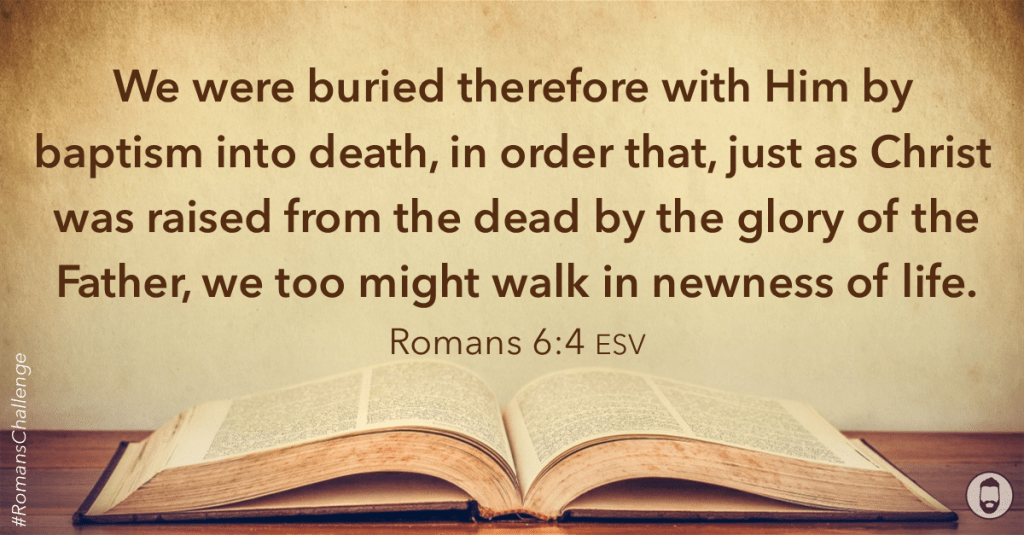
Some people accused Paul of preaching a gospel that encouraged sin, since he had just said that “where sin increased, grace abounded all the more” (Rom. 5:20). But Paul answers with a firm “By no means!” (v. 2). Grace is not a license to sin—it’s the power to live free from sin. Through faith in Jesus, we are united with Him in His death and resurrection. Our “old self” was crucified with Him so that we are no longer enslaved to sin (v. 6). Now, having died with Christ, we also live with Him—alive to God (v. 11).

So Paul calls us to live out what’s already true: sin is no longer our master, because we are not under the law but under grace (v. 14). This grace doesn’t excuse sin; it empowers us to walk in the newness of life.

🎯 Theme: When we are united with Christ, we are no longer ruled by sin but made alive to God through His grace.

🌀 Reflection: God didn’t save us to leave us in our old patterns of sin. In Christ, we are free to live a new life that reflects His righteousness.

💬 Mission Challenge: Identify one area where sin has tried to regain control in your life. Surrender it to God today and walk in the freedom Jesus has already secured for you.

#RomansChallenge | July 10 – 5:12-21

Click here for Romans 5:12-21 audio:


Read it. Pray it. Share it. Live it.

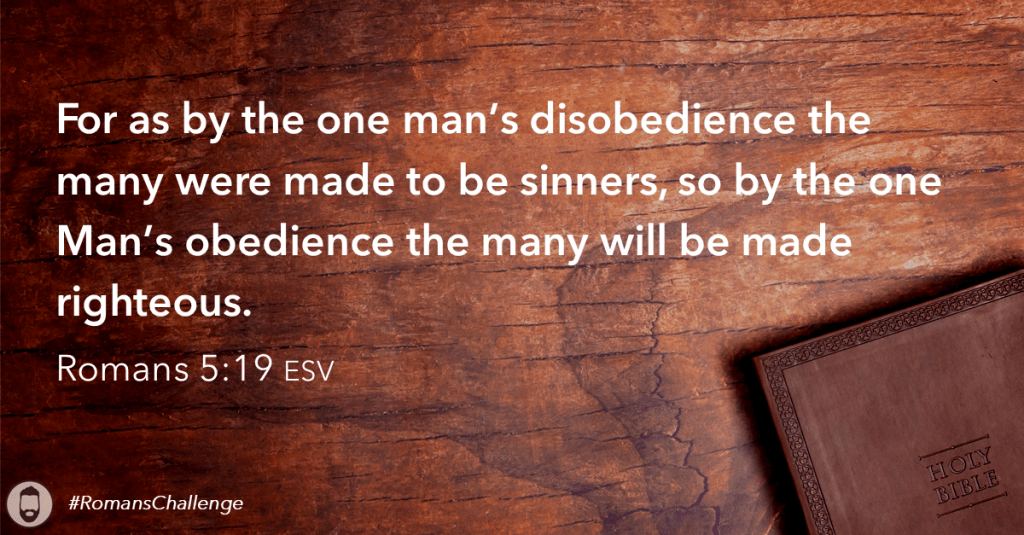
In this powerful passage, Paul contrasts the devastating effects of Adam’s sin with the overflowing grace found in Jesus Christ. Through Adam’s disobedience, sin and death entered the world and spread to all humanity (v. 12). Yet where Adam’s one sin brought condemnation, Christ’s one act of righteousness brings justification and life to all who receive His gift (vv. 15–18). Just as Adam’s sin made many sinners, Jesus’s obedience makes many righteous (v. 19). Grace doesn’t just cancel out sin—it abounds far beyond it, reigning through righteousness and leading to eternal life through Jesus (vv. 20–21).


🎯 Theme: Through one man came death and condemnation, but through Christ comes abounding grace and life.

🌀 Reflection: We are either “in Adam” or “in Christ”—destined for death or made alive through grace. Christ’s obedience didn’t just fix what Adam broke; it accomplished far more, securing eternal life for all who believe.

💬 Mission Challenge: Share the gospel story today using this contrast—how Adam’s sin brought death, but Jesus brings life. Let it shape your testimony as you point someone to the hope found in Christ.

#RomansChallenge | July 9 – 5:1-11

Click here for Romans 5:1-11 audio:


Read it. Pray it. Share it. Live it.

Romans 5 opens a new section of Paul’s letter by showing the rich blessings that come from being justified by faith (v. 1). First, we now have peace with God—not a feeling, but an objective reality where the hostility between us and God is ended (v. 1). Second, we’ve been given access into grace—a permanent standing—and we rejoice in the hope of sharing in God’s glory (v. 2). But the hope we have in Christ doesn’t just carry us into the future; it sustains us in the present. We even rejoice in our sufferings—not because pain is pleasant, but because we know God uses it to shape us (vv. 3–4). Suffering produces endurance, character, and a hope that will never put us to shame, because God has poured His love into our hearts by the Holy Spirit (v. 5).

Paul then points us to the ultimate proof of God’s love: Christ died for us while we were still weak, ungodly, and sinners—not when we cleaned ourselves up, but when we were at our worst (vv. 6–8). If God loved us enough to save us through Christ’s death, we can trust that He will keep us through Christ’s life (vv. 9–10). We’re no longer enemies but friends, no longer under wrath but reconciled, and because of this, we rejoice—not just in what God gives, but in God Himself (v. 11).


🎯 Theme: Justified by faith, we have peace with God, hope in suffering, and confidence in His love through Christ.

🌀 Reflection: Even in your weakest, most unlovable moment, God loved you enough to send Jesus. How much more can you trust Him now, as His child, to carry you through whatever you face?

💬 Mission Challenge: Share Romans 5:8 with someone today and explain what it means that Christ died “while we were still sinners.”

#RomansChallenge | July 8 – 4:13-25

Click here for Romans 4:13-25 audio:


Read it. Pray it. Share it. Live it.

Paul continues to use Abraham as the model of saving faith. Abraham was not made righteous by keeping the law—the law didn’t even exist yet—but by trusting in God’s promise (v. 13). That promise wasn’t only about land or descendants; it ultimately pointed forward to a global inheritance through Christ for everyone who believes (vv. 16–17). The law, Paul says, brings wrath, not righteousness (v. 15). But God’s promise rests on grace and is guaranteed by faith, which is how both Jews and Gentiles can be counted as Abraham’s true children (v. 16).

Even when everything seemed hopeless, Abraham believed. He knew he was old, and Sarah was barren, but he still trusted that God could give life to the dead and bring something out of nothing (vv. 18–21). That kind of faith—fully convinced that God would do what He promised—was “counted to him as righteousness” (v. 22). And the good news is that this wasn’t just for Abraham. It’s for us too—everyone who believes in the God who raised Jesus from the dead, who was delivered up for our sins and raised for our justification (vv. 23–25).


🎯 Theme: Faith in God’s promise, not human effort, is what makes us righteous before Him.

🌀 Reflection: Like Abraham, we are called to believe in the God who gives life to the dead and keeps His promises. Where are you tempted to doubt? Ask God to help you trust Him, even when it doesn’t make sense.

💬 Mission Challenge: Share Romans 4:20–21 with someone today and encourage them to trust in God’s power to do what He has promised.

#RomansChallenge | July 7 – 4:1-12

Click here for Romans 4:1-12 audio:


Read it. Pray it. Share it. Live it.

To prove that we are made right with God through faith and not works, Paul points to the example of Abraham. If Abraham had earned righteousness by good works, he could boast—but Scripture says, “Abraham believed God, and it was counted to him as righteousness” (v. 3; cf. Gen. 15:6). Justification is not a reward for effort but a gracious gift received through faith (vv. 4–5). Paul then brings in the voice of David, who also rejoiced in God’s mercy: “Blessed is the man against whom the Lord will not count his sin” (v. 8; Ps. 32:2).

Abraham was counted righteous before he was circumcised (v. 10), making him the spiritual father not only of believing Jews, but also of all who trust in God by faith—regardless of outward signs or heritage. Circumcision served only as a seal of the faith he already had. This means the way to be made right with God has always been by faith, not by what we do. Salvation is not earned; it is received with open hands and a trusting heart.


🎯 Theme: Justification has always come through faith, not works—just as Abraham was counted righteous before he did anything to earn it.

🌀 Reflection: Whether Jew or Gentile, the only path to righteousness is by trusting God—not by relying on our own efforts. The faith that made Abraham righteous is the same faith we’re called to walk in: believing God’s promises and receiving His grace.

💬 Mission Challenge: Think about someone who feels like they’ve messed up too much for God to forgive them. Share with them how God justifies the ungodly—not because they’re worthy, but because He is gracious—and how Abraham and David both found blessing by faith, not performance.

#RomansChallenge | July 6 – 3:21-31

Click here for Romans 3:21-31 audio:


Read it. Pray it. Share it. Live it.

After exposing the universal guilt of all people (Rom. 1:18–3:20), Paul breaks through with the most glorious words in the letter so far: “But now…” A new way of being made right with God has been revealed—not by works of the law, but through faith in Jesus Christ. This righteousness is available to everyone who believes, because all have sinned and fall short of God’s glory (vv. 22–23).

We are justified—declared righteous—by God’s grace as a gift (v. 24). How? Through the redemption that is in Christ Jesus, who was put forward as a sacrifice to satisfy God’s wrath and forgive our sins (v. 25). This shows that God is both just and the justifier of those who have faith in Jesus (v. 26).

Because this salvation is not earned but received by faith, boasting is excluded (vv. 27–28). Jew and Gentile alike are made right with God the same way—by grace through faith. This doesn’t cancel the law but confirms it, showing that the law’s true purpose was to lead us to Christ (v. 31).


🎯 Theme: God’s righteousness is revealed in Jesus, who justifies sinners by grace through faith.

🌀 Reflection: At the cross, God did what we never could—He satisfied His justice and offered mercy at the same time. Our salvation is not our doing; it’s all God’s grace, received by faith in Christ alone.

💬 Mission Challenge: Boldly share the heart of the gospel with someone this week: that salvation is not about trying harder or being good enough—it’s about trusting Jesus, who gave Himself to make us right with God.

#RomansChallenge | July 5 – 3:1-20

Click here for Romans 3:1-20 audio:


Read it. Pray it. Share it. Live it.

Paul anticipates a question after confronting Jewish hypocrisy: if Jews are just as guilty as Gentiles, is there any value in being Jewish? His answer is yes—they were entrusted with God’s Word (v. 2), which is a great privilege. Yet Paul emphasizes that God’s faithfulness does not depend on human faithfulness. Even when people fail, God remains true to His promises and just in His judgment (v. 4). Still, Paul dismisses the flawed logic of those who argue that sin somehow glorifies God or that more sin could lead to more grace (vv. 5–8). That kind of thinking only leads to condemnation.

He then brings the entire courtroom of humanity before the Judge of all the earth and presents the devastating verdict: no one is righteous—not Jew or Gentile, not even one (vv. 10–12). Through a series of Old Testament quotations, Paul shows that sin affects every part of who we are—our hearts, speech, actions, and relationships (vv. 13–18). The law doesn’t save; it silences. It reveals our guilt and shows that no one can be justified before God by works (v. 20).


🎯 Theme: No one is righteous before God; all are under sin and accountable to His judgment.

🌀 Reflection: Romans 3 confronts our tendency to think we’re the exception to the rule. But when we stand before God’s standard, every mouth is silenced. We all need grace—desperately, equally, and completely.

💬 Mission Challenge: Share your testimony with someone today—not a cleaned-up version, but the honest truth about your need for God’s mercy and how He met you with grace in Christ.

#RomansChallenge | July 4 – 2:17-29

Click here for Romans 2:17-29 audio:


Read it. Pray it. Share it. Live it.

Paul now turns his focus specifically to the Jews, God’s covenant people. They had incredible privileges—God’s law, His promises, and a calling to be a light to the nations (vv. 17–20). But possessing the law is not the same as obeying it. Paul points out the danger of spiritual pride: when people teach others but fail to live by what they teach, they dishonor God and give others reasons to mock His name (vv. 21–24).

Circumcision was meant to be a sign of belonging to God, but it was never just about the outward mark. True belonging to God comes from inward transformation—a circumcision of the heart by the Spirit (vv. 28–29). Paul reminds his readers that God is not impressed by religious performance or heritage. He is looking for people whose hearts have been changed by His grace.


🎯 Theme: Outward religion means nothing without inward transformation by the Spirit.

🌀 Reflection: It’s possible to have all the right words, background, and knowledge—and still miss the heart of God. What matters most is whether the Spirit is at work in us, shaping us to truly follow Christ.

💬 Mission Challenge: Spend time today asking God to show you any areas where your faith is more about appearance than reality. Then talk with someone about what it means to be changed from the inside out.