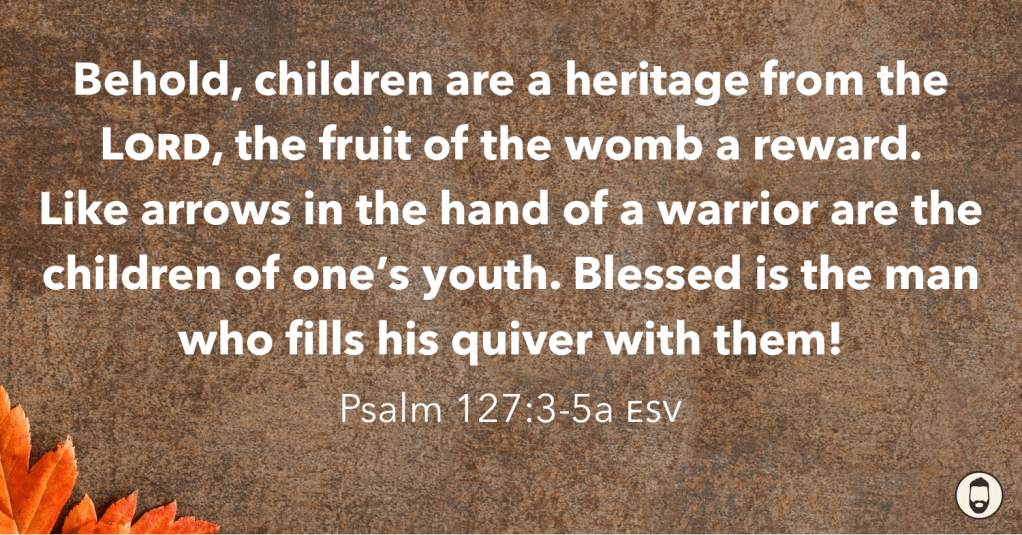
I’m Thankful for My Kiddos — Gratitude & Hope Challenge | November 4

I’m thankful for my kiddos!

Keri and Xander are such a blessing to me. I’m thankful I get to be their daddy. Seeing them grow, mature, and change is amazing. More than that, I have a front row seat view of the Lord working in and through them.

Keri is kind and, although she hates the spotlight, she loves to serve the Lord and others. She genuinely cares about others and notices those who typically go unnoticed. She is quiet until she decides to let people in, but once she does, they get to see her corny humor and bubbling wit. Keri has also inherited some of her mama’s fire, which makes me happy because she is becoming a force to be reckoned with while balancing that with her typical kindness, care, and thoughtfulness.

Xander is kind, too, and protective of his people. He loves fiercely and often wears his heart on his sleeve. This is not a weakness as those who are loved by Xander can attest. Seeing him with his younger cousins and other littles sees this fast-paced flash slow down and be immensely patient and caring. His infectious laughter is only matched by his growing wit and love for puns. As he loves and serves others, I get glimpses of the man he is growing to be and cannot wait to see what the Lord continues to do in him.

Keri and Xander are not perfect by any means. They inherited that from their father. But I could not be more proud of them or thankful to get to be their daddy.

All through the month of November, our Christ Community Church family is focusing on what we are thankful for and expressing our thanks to our “great God and Savior Jesus Christ, who gave Himself for us to redeem us” (Titus 2:13-14).

This, like the #DailyWisdomChallenge we went through in October, is a challenge from our pastor John Goldwater — the #GRATITUDEandHOPEchallenge — where we have the opportunity to post Bible passages that move us to thanksgiving or in which we find hope. May this lead you to be grateful and find your hope in Jesus!

Daily Wisdom Challenge — Proverbs 22

For the month of October, we are answering the challenge John Goldwater, pastor of Christ Community Church in Grenada, MS, laid out — the #DailyWisdomChallenge. Each day, we are going to read through a chapter of Proverbs corresponding to the day of the month.

This fits with what we have studied in Colossians, specifically Colossians 3:1-2, namely that we should seek “the things that are above, where Christ is” and set our minds like a thermostat “on things that are above, not on things that are on earth”. Imagine what a month meditating on God’s Word daily can do for us.

Won’t you join us on this #DailyWisdomChallenge and set your minds on Christ?

Proverbs 22:6 highlights how important it is to guide our children in the ways of the Lord. Parents have the unique role of helping children grow — and grow in their faith so they can learn to love and serve God.

Children are a gift from the Lord, as we see in Psalm 127:3-5, which says they are a heritage and a reward. But raising children can be hard, and sometimes we might forget how special they are. It’s important for us to recognize their value and understand how crucial it is to help them grow spiritually.

In Colossians 3:20, Paul tells children, “Obey your parents in everything, for this pleases the Lord.” This verse shows us that children should learn to respect and listen to their parents. But obedience doesn’t mean just following rules without thinking, especially if it goes against what God says. Instead, it means having a heart that wants to follow God’s truth, even when it’s tough.

At the same time, Paul reminds parents in Colossians 3:21 not to provoke their children to anger but to raise them with discipline and instruction. This means that when we discipline our kids, we should do it with love, not out of frustration. Parents should remember to show grace and mercy, just like God does, because we all make mistakes.

Teaching our children about the gospel is very important. Deuteronomy 6:6-7 encourages us to keep God’s Word close and to share it every day. We should help our children navigate life’s ups and downs, always pointing them back to the Bible. By showing loving discipline and guidance, we prepare our kids to face the world while staying strong in their faith.

Ultimately, our goal as parents is to reflect God’s love and truth. As we work to train our children in the Lord, let’s rely on His grace, trusting that He will help them grow in their hearts and lives, leading them to have a lasting relationship with Him.

Daily Wisdom Challenge — Proverbs 19

For the month of October, we are answering the challenge John Goldwater, pastor of Christ Community Church in Grenada, MS, laid out — the #DailyWisdomChallenge. Each day, we are going to read through a chapter of Proverbs corresponding to the day of the month.

This fits with what we have studied in Colossians, specifically Colossians 3:1-2, namely that we should seek “the things that are above, where Christ is” and set our minds like a thermostat “on things that are above, not on things that are on earth”. Imagine what a month meditating on God’s Word daily can do for us.

Won’t you join us on this #DailyWisdomChallenge and set your minds on Christ?

I love this proverb because it shows hope in a couple of ways that I think we really need to see in this day and age.

First, there is hope to be found in Jesus that is greater than any darkness or depression or depravity. Hope in Jesus is not hypothetical hope, but it is instead fixed and sure, resting on the foundation of what Jesus has done, is doing, and will surely do. His victory transcends everything that remains unknown because He has already “overcome the world” (John 16:33). 

In the context of Proverbs 19:18, there is obvious reference to trouble. Why else would there be need to discipline one’s son? Whatever trouble is pointed to here, it must be bad or represents the sum total of the bad a kid can get into because God in His wisdom advises the parent not “set [their] heart on putting him to death”. Kids, just like their parents, get sideways in sin sometimes. All of them, just like all parents, do. But when you are in the midst of having to discipline this child that you have raised and tried to point in the right direction, some trouble seems like it leaves no room for hope. 

The Jesus-hope this proverb’s God-wisdom points to is pictured well in Romans 5:1-5:
“Therefore, since we have been justified by faith, we have peace with God through our Lord Jesus Christ. Through Him we have also obtained access by faith into this grace in which we stand, and we rejoice in the hope of the glory of God. Not only that, but we rejoice in our sufferings, knowing that suffering produces endurance, and endurance produces character, and character produces hope, and hope does not put us to shame, because God’s love has been poured out in our hearts through the Holy Spirit who has been given to us.”

This sort of hope – hope only found by those who have been “justified by faith”, those who have received “peace” from God stemming from standing in His grace – works differently than worldly hope. Wordly hope is hypothetical and fails when suffering hits. Jesus-hope starts with suffering and grows as God’s Spirit gives endurance. That endurance produces fruit of the Spirit that defines one’s character. And once God has worked Himself into and out through your character, hope is a way of life. It is a byproduct of the eternal life He gives those who believe in Him.

The second hope is one that many do not agree with: as long as a child lives, I believe there is hope. Are there troubles and sins and crimes that have longlasting consequences? Absolutely. Are there things that can happen and be committed that can forever alter the life of a child? Yes. But the hope shown above is for sinners. It is hope for the ones who messed up. It is hope for those whose works earn death. It is hope for children like me – and children like you. 

I find myself having to remind myself of this often as I work with students. 

I find myself having to remind myself of this often as I parent my kiddos.

I find myself having to remind myself of this often because of my parent’s oldest kid (and to a lesser degree my inlaws youngest).

So, if you find yourself in the rough times of parenting and you wonder whether its worth keeping on keeping on with your kiddo, it is. God tells us here in His wisdom that there is hope in bearing with them in discipline. Things may look hopeless from your vantage point, but from the throne of the King of kings, He sees what we can’t. He sees and tells us to hope. And as He told us in Romans, hope will not put us to shame.

Daily Wisdom Challenge — Proverbs 13

For the month of October, we are answering the challenge John Goldwater, pastor of Christ Community Church in Grenada, MS, laid out — the #DailyWisdomChallenge. Each day, we are going to read through a chapter of Proverbs corresponding to the day of the month.

This fits with what we have studied in Colossians, specifically Colossians 3:1-2, namely that we should seek “the things that are above, where Christ is” and set our minds like a thermostat “on things that are above, not on things that are on earth”. Imagine what a month meditating on God’s Word daily can do for us.

Won’t you join us on this #DailyWisdomChallenge and set your minds on Christ?

We spoke of discipline in the #DailyWisdomChallenge for Proverbs 12, and here it shows up again.

First, let me add a disclaimer that this is not a proverb or post advocating child abuse or the beating of children. God did not mean that in Proverbs 13:24. God is a loving Father who knows what appropriate discipline is for His children — and thereby ours.

Raising children is hard, but it is such a worthwhile thing. I thought I knew what love was until I met Candice; then, I found that my heart had the capacity for more love than I thought possible. Then, I heard Keri’s heartbeat for the first time in the doctor’s office and realized I knew nothing. Then, came Xander and I found yet more room and capacity for love. Add to them my nieces and nephew. I have discovered more love than I knew existed.

If you talk to me for very long or often, my wife and kiddos come up. I write a lot about Candice and our marriage as illustration for various Bible studies, but I try to lay off the kids because, well, the internet and to keep from them thinking their lives are nothing but sermon fodder. My children bring me more joy than I am capable of expressing in words, either spoken or written. Both of them are unique and special. I, of course, am biased. I am their biggest fan (by size only and second only to their mama). They are good kids. And they are bad kids, too.

My kids are not perfect, and I try to live with the understanding that I can never say what they will never do because, like their father, they have the capacity to sin and mess things up. That brings in my least favorite part of parenting: discipline. I hate having to do it. Read that again: HAVING to do it.

I have to discipline them because I want to protect them from dangers outside and inside of them.

I have to discipline them because they need to learn from their mistakes (and ones I have made in the past, too).

I have to discipline them because that is the way God set up parenting in this fallen world. It is the model He gives in the way that He parents us (Hebrews 12:5-8).

Our proverb today says that parents discipline out of love (Proverbs 13:24), and it mirrors the way that “the Lord disciplines the one He loves” (Hebrews 12:6).

I definitely don’t have all of the answers to how to discipline children, and I don’t claim to. What I do know is that the discipline that has to be done is supposed to be borne out of love. If it seems that I am repeating myself, it is because I am. I am repeating for emphasis, and not in a way pointed at others, but as a reminder for myself.

I can remember my daddy telling someone once that he was glad to be in the stage of life when my sister, brother, and I were grown. He said that once the parenting was over, he had gained friends in his children. The person he was talking to asked something, signifying that they thought his comment was odd. What he said after that is what is so poignant for our subject today. Daddy said that he loved spending time with us when we were growing up, but that he loved us too much to try and be our friends when we needed a daddy more than a friend.

When I look at Keri and Xander (and Sophie, Krislyn, Penelope, Caleb, Sunday, and Mae), my heart swells with love that I cannot describe. I love to spend time with them. I love to hear their jokes and their dreams and their complaints and whatever they want to tell me. I am so glad when they talk to me because I know it will not always be the case. As they grow, I will not always be a favorite person. When correction is needed, I am not what they want. But, Lord willing, I will have the Spirit-filled courage to be who they need. Then, when they are all grown up, I can rejoice in what the Lord has done in them and who He has made them to be.

In the meantime, the tough love of discipline is worth it because they are worth it.

Songs for Sunday, June 30, 2024 @ Christ Community Church

Sunday’s coming, and I look forward, Lord willing, to gathering with my faith family at Christ Community Church!

I guess you could say that I have been feeling a bit nostalgic lately, but throughout the day today, I have found one particular memory has been vividly on my mind. Maybe it is because the last Refresh & Restore Bible study was on the relationship between parents and children or just thinking about the way that my kids seem to be growing years and inches before my very eyes. Either way, I want to share this memory with you today.

In 2015, I quit ministry for what I thought was going to be forever, or at least a very long time. I had burned out. I needed a break. I needed to remember the love I had for Jesus — no, more than that, the love He had for me — and “repent, and do the works [I] did at first” (Revelation 2:4-5). It was hard though for many reasons, not the least of which was having to learn a new vocation and living with my parents until we could finish work on our house.

This particular memory was on a Wednesday. Xander was not quite a year old and was sick. Candice was exhausted from work and working on our house, too — honestly more so than me. And Keri would not drop the subject of whether or not we were going to church that night.

I had informed Candice and Keri as we left the school in Winona that we would not be returning for church that night because “Daddy needs a break”. With Xander being sick, one of us would have to stay with him, and we could just use the time for family. I can remember Candice silently taking it all in but watching me carefully and a little concerned.

Keri asked again if we were going, almost as if she didn’t understand what I thought I had communicated more than clearly enough. I told her to be quiet, which honestly is hard for five-year-olds under the best of circumstances. We picked Xander up from my in-laws and were headed home when Keri picked up the conversation again, this time getting louder. So I got louder as a response. “Daddy. Needs. A break.” I enunciated this time. And what Keri did next hit me like a ton of bricks.

Keri raised her voice: “You’re my daddy! You’re supposed to want to take me to church!”

I was embarrassed.

I was angry.

I looked over toward Candice to get some support — support for a break from the woman who had been caring for our sick baby before and after work — from the one who would be at my parents’ caring for him if I were to take Keri back to Winona for church (the one needing a break herself). She offered no support and only asked me what I was planning on doing now.

I sped to my parents’ house to drop off Candi and Xander, sped to Winona and walked Keri into the children’s class — late of all things. I crept around the building to slink in the front, hoping not to draw attention to myself and still more than a little bit angry and embarrassed by Keri’s question. As I opened the double doors to enter the worship center, Dr. Tim Mims was praying — more than that was praying for me (even though he didn’t know it at the time).

“Lord, I feel it in my spirit that you want me to pray for someone who just wants to give up — to quit. Lord, help this person….”

He continued to pray. I eased the door shut and crawled quietly up the stairs to the balcony, weeping. I spent the rest of that prayer meeting lying on my face and listening to the Word of God preached, listening to my pastor continuing to pray for myself and others. And all because my baby girl had not been willing to let me be anything other than what I had taught her daddies were supposed to be.

I had let church become a job — become an event. Now, gathering with my faith family was to regain the right place in my life. It would be where I GOT to go instead of something I had to do. The church did not need me, but rather, I needed it — and we need Jesus together!

There’s a verse that I mention in the “Songs for Sunday” posts often that is appropriate here:

“Let us hold fast the confession of our hope without wavering, for He who promised is faithful. And let us consider how to stir up one another to love and good works, not neglecting to meet together, as is the habit of some, but encouraging one another, and all the more as you see the Day drawing near.” (Hebrews 10:23-25)

As Sunday approaches, I ask you to consider your plans — whether you plan to gather with your faith family or not. This is not an effort to guilt or convince. This is a pastoral effort to have you consider some things (like I did all those years ago and again today).

What is the confession of your hope? Is it “Jesus is Lord” (Romans 10:9)?

How does it affect your life to know that “He who promised is faithful” — whether or not we are ourselves?

What does it mean to neglect meeting together “as is the habit of some”?

For me, I had lost sight of the confession of my hope and was more worried that the promises I had made to the Lord had fallen by the wayside. I was saying that it was only going to be one little Wednesday night — not even a Sunday, mind you, but honestly, I wanted out and away as much or as often as I could. You see, I was lying because I was blinded to the promises and plan of God — of His faithfulness despite my bout of faithlessness (2 Timothy 2:13).

Maybe you need to be reminded that we gather not to check off some religious box or to get anything out of it. No, we gather to worship Jesus. We gather to remember what He has done and all He has promised. We gather because He is risen! And we get to stir one another up to love and good works as we do.

I doubt I am as convincing as my five-year-old baby girl yelling from the back seat, but the Holy Spirit is closer than that.

Daddies, yes, you are supposed to want to take your babies to church, but more than that you get to. Mommies, yes, it’s the same. But hear me on this: there is grace for those who have faltered and lost sight. There is grace for those who have missed. There is grace.

So, I ask you as you read this — as an effort to stir you up to love and good works rather than mere church attendance — will you gather?

This Sunday at Christ Community Church, we are going to make much of Jesus. We are going to read about Him from His Word. We are going to sing about Him and to Him. John is going to preach to us from His Word — we get to hear from Jesus by the preaching of His Word and the power of His Spirit!

Won’t you gather with us?

Everyone is welcome!


Here are our Scriptures & songs:

  • Scripture | Lamentations 3:16-24

16He has made my teeth grind on gravel, and made me cower in ashes; 17my soul is bereft of peace; I have forgotten what happiness is; 18so I say, “My endurance has perished; so has my hope from the LORD.

19Remember my affliction and my wanderings, the wormwood and the gall! 20My soul continually remembers it and is bowed down within me. 21But this I call to mind, and therefore I have hope:

22The steadfast love of the LORD never ceases; His mercies never come to an end; 23they are new every morning; great is Your faithfulness. 24“The LORD is my portion,” says my soul, “therefore I will hope in Him.”


  • Song | Grace Wins
    Scripture Inspiration: Romans 3:23, Romans 5:6-8, Romans 5:16-18, Romans 8:1, 1 Timothy 1:13-14, Ephesians 1:6-7, 2 Corinthians 9:8, John 1:16, Ephesians 2:7, Ezekiel 36:26, 2 Thessalonians 1:11-12, Luke 15:11-32, John 4, Matthew 9:27-31, John 9, Luke 16:19-31

  • Song | His Mercy is More
    Scripture Inspiration: Lamentations 3:22-23, James 2:13, Romans 5:20, Hebrews 8:12, Isaiah 40:28, Hebrews 4:13, 1 John 3:20, Micah 7:18-19, Exodus 34:6, Psalm 145:8-9, 1 Timothy 1:15, Luke 14:21, 2 Corinthians 8:9, Colossians 2:13-14, Psalm 107:9, Ephesians 3:20, 2 Corinthians 12:9, Galatians 2:20-21

  • Scripture | Romans 6:4-8

4We were buried therefore with Him in baptism into death, in order that, just as Christ was raised from the dead by the glory of the Father, we too might walk in newness of life.
5For if we have been united with Him in a death like His, we shall certainly be united with Him in a resurrection like His. 6We know that our old self was crucified with Him in order that the body of sin might be brought to nothing, so that we would no longer be enslaved to sin. 7For one who has died has been set free from sin. 8Now if we have died with Christ, we believe that we will also live with Him.


  • Song | Death Was Arrested
    Scripture Inspiration: Ephesians 2:1-5, Romans 5:6-8, Revelation 20:14, Revelation 21:1-5, Galatians 2:19-20, 1 Peter 3:18, Romans 5:1-8, Romans 6:15-23, Colossians 2:13-14, John 19:28-30, 1 Corinthians 15:1-8, Revelation 1:18, Luke 15:11-32

  • Song | Ain’t No Grave
    Scripture Inspiration: John 8:34, Romans 6:6, 1 John 4:8, 1 Chronicles 28:20, 1 Corinthians 15:20-26, 1 Corinthians 15:50-56, John 8:44, 1 Peter 5:8, Revelation 12:9, Genesis 3:15, Ephesians 6:11-18, Isaiah 25:8, Hosea 13:14, 2 Timothy 1:10, Hebrews 2:14, Revelation 5:5, 1 Corinthians 15:3-8

  • Invitation | Because He Lives
    Scripture Inspiration: John 3:16, Isaiah 25:8, Hosea 13:14, 1 Corinthians 15:24-26, 1 Corinthians 15:55-57, 2 Timothy 1:10, Hebrews 2:14, Psalm 28:7-8, Isaiah 40:29-31, 2 Corinthians 12:9-10, John 14:25-27, Romans 8:38-39, 1 Peter 5:6-7, Jeremiah 29:11, Ephesians 2:10, Galatians 2:20, Philippians 4:6-7, Revelation 21:4, 1 Corinthians 11:26


“Adorned With Christ in All of Life: Families” — a Refresh & Restore Bible Study

17 And whatever you do, in word or deed, do everything in the name of the Lord Jesus, giving thanks to God the Father through him.

20 Children, obey your parents in everything, for this pleases the Lord. 21 Fathers, do not provoke your children, lest they become discouraged.[1]

Colossians 3:17, 20-21

Christ Has Come: The Promised King & His Gift of Peace (Advent 2025) Refresh & Restore | A JustKeithHarris.com Podcast

Christ Has Come – Week 3Episode Title: The Promised King & His Gift of JoyLuke 1:39–56In this Advent episode of Christ Has Come, Keith Harris turns to Luke 1 and invites us to slow down and listen to the joy that begins stirring before Bethlehem. Long before angels sing to shepherds, joy breaks the silence in the hill country of Judea—through a Spirit-filled confession, a leaping child, and the worshipful song of a young woman who trusts the promises of God.Together, we explore:What biblical joy is—and what it isn’t, distinguishing it from fleeting happiness or emotional highs.How joy appears before the word is even spoken, as John the Baptist leaps for joy in Elizabeth’s womb at the presence of the unborn Messiah.Why Mary’s joy is rooted not in circumstances but in God’s mercy, as she magnifies the Lord and rejoices in God her Savior.The meaning and message of the Magnificat, a Scripture-saturated song that celebrates God’s great reversal—lifting the lowly, filling the hungry, and humbling the proud.How Mary’s joy points beyond herself to Jesus, the promised King who fulfills God’s covenant promises and secures lasting joy through His saving work.This episode reminds us that joy is not something we manufacture—it’s something we receive, and it grows wherever Jesus is trusted. Advent teaches us that true joy is found not in having life figured out, but in the presence of Christ and the mercy He brings.If you would like to see a written version of this study, complete with footnotes and cross-references, you can find it here.
  1. Christ Has Come: The Promised King & His Gift of Peace (Advent 2025)
  2. Christ Has Come: The Promised King & His Gift of PEACE (Advent 2025)
  3. Christ Has Come: The Promised King & His Gift of HOPE (Advent 2025)

Greetings Sojourners!

I have enjoyed hearing from many of you regarding how our last Bible study was helpful. When Jesus saves us by making us alive in Him (Ephesians 2:4-5), it really does impact our real, everyday lives (Ephesians 2:10), but it is helpful for us to realize that we are not the only ones struggling in our walk with Christ and trying to make it work. When Paul wrote to the Colossians (and us) that “whatever [we] do, in word or deed” – “everything” – is to be done “in the name of the Lord Jesus, giving thanks to God the Father through Him”, he really meant everything, working from inside our homes and families outside to our vocations. Today, we are going to let God meddle in our homes once more.

Before we dive into today’s text, we need to be reminded that children are a blessing. This is not to say that we do not know this, but raising children is hard. From the terrible twos to the terrible teens, there are times when we forget the blessing children are and get caught up in the rigors of child rearing. This reminder also extends beyond parents. It does not matter if you are a grandparent, aunt or uncle, or someone God has put in a position to get to have a Christlike impact on a child; children are a blessing from the Lord – the Bible tells us so:

  • Genesis 33:5 (when Jacob returns and encounters his brother Esau for the first time after plundering his birthright) – And when Esau lifted up his eyes and saw the women and children, he said, “Who are these with you?” Jacob said, “The children whom God has graciously given your servant.”
  • Deuteronomy 7:13a – [The Lord] will love you, bless you, and multiply you. He will also bless the fruit of your womb and the fruit of the ground….
  • Psalm 127:3-5 – Behold, children are a heritage from the Lord, the fruit of the womb a reward. Like arrows in the hand of a warrior are the children of one’s youth. Blessed is the man who fills his quiver with them! He shall not be put to shame when he speaks with his enemies in the gate.
  • Psalm 128:3-4 – Your wife will be like a fruitful vine within your house; your children will be like olive shoots around your table. Behold, thus shall the man be blessed who fears the Lord.
  • Proverbs 17:6 – Grandchildren are the crown of the aged, and the glory of children is their fathers.
  • Matthew 18:1-5 – At that time the disciples came to Jesus, saying, “Who is the greatest in the kingdom of heaven?” And calling to Him a child, He put him in the midst of them and said, “Truly, I say to you, unless you turn and become like children, you will never enter the kingdom of heaven. Whoever humbles himself like this child is the greatest in the kingdom of heaven.
         “Whoever receives one such child in my name receives me, but whoever causes one of these little ones who believe in me to sin, it would be better for him to have a great millstone fastened around his neck and to be drowned in the sea.

Gracious gifts from God, blessings, arrows, olive shoots, crowns, and examples are how the Bible describes children so that we are reminded when sin sets in, so that we remember God’s design and not be left up to our own.

Now, just as Paul did not speak only to the parents in the Colossian church but also to the children, so we, despite the fact that I have fewer readers who are children, will not be silent in reminding the blessing of godly parents to children. They need to know that the parents holding them accountable and trying to help them grow up are a blessing, too:

  • Exodus 20:12 – “Honor your father and mother, that your days may be long in the land that the Lord your God is giving you.
  • Deuteronomy 5:16 – “’Honor your father and your mother, as the Lord your God commanded you, that your days may be long, and that it may go well with you in the land that the Lord your God is giving you.
  • Proverbs 1:8-9 – Hear, my son, your father’s instruction, and forsake not your mother’s teaching, for they are a graceful garland for your head and pendants for your neck.
  • Proverbs 6:20-22 – My son, keep your father’s commandment, and forsake not your mother’s teaching. Bind them on your heart always; tie them around your neck. When you walk, they will lead you; when you lie down, they will watch over you; and when you awake, they will talk with you.

Honor, graceful garlands, pendants, leaders, guardians, and companions are how the Bible describes godly parents and their instruction so that we are reminded when our own sin sets in and parental discipline becomes necessary that God’s design to grow us up in Him is better than getting our own way.

We have our work cut out for us today, Sojourners, and Lord willing, He will meddle in our families for His glory and our good by the power of His Spirit as we study His Word today. Let’s dive in and see what the Lord has for us and for our families today.

Children, Obey Your Parents in Everything,
For This Pleases the Lord (v. 20)

This may come as a shock to you, but Paul is giving this command because children, who were believers or being raised in a way that pointed them to Christ, were being disobedient to their parents. I know that is shocking. It must have been widespread (like it is today), too, because Paul even listed “disobedient to…parents” as a sign of godlessness and difficulty in the last days in 2 Timothy 3:2. If you catch a bit of sarcasm here, it is because disobedient children – even those who have been saved – is not a shocking but normal, or at least worldly. That’s what kids, even the best ones, do. And, furthermore, no one had to teach them how to disobey because sinfulness is part of human nature after the Fall (Romans 5:12). Sin being part of our nature, though, does not excuse it. If we are saved – specifically here, if our children are saved or we are pointing them to Jesus as Savior, disobedience is not excused.

What This Does NOT Mean

Paul here (and in Ephesians 6:1) gives the command for children to “obey” their parents. The word translated “obey” here seems simply enough – for one to do what they are told, but the full understanding is, of course to listen and follow instructions but expands to include yielding “to a superior command or force (without necessarily being willing)”.[2] Like in the biblical design for marriage, there is supposed to be submission to the authority God has in place, in this case parents having authority over their children. But there are limits to that authority.

Just as we did in the last Bible study, we need to clarify here that the limit is within the boundaries of whether the commands of the parents conflict with the command of the Lord. The authority and command of God the Father trumps earthly fathers. So, if a parent (hopefully in rare occasions) gives instruction that contradicts the Bible, the child is to, respectfully, obey the Father “in a spirit of love, not of defiance, since the law of Christ is the law of love”.[3] Being a child of God is to influence being a child of one’s parent, meaning when our earthly parents go astray in their instruction and point us in a way other than toward Christ the conduct and example of the child can help the parent see the error in their ways and be granted repentance (2 Timothy 2:25-26).

What Does It Mean, Then?

To help us understand, we are going to look to the broader context in Paul’s letter to the church at Ephesus, as we did in the last Bible study on marriage. Ephesians 6:1-3 says:

Children, obey your parents in the Lord, for this is right. “Honor your father and mother” (this is the first commandment with a promise), “that it may go well with you and that you may live long in the land.”

The additional content given to the church at Ephesus was not new content but much older, from the Ten Commandments. This fifth commandment is instructional and instrumental as it is the first commandment dealing with earthly or the “horizontal” relationships.[4] Paul instructs them, also, that this commandment was the first “with a promise” – that “it may go well with you and that you may live long in the land”. Under OT Law, there were instances of disobedience like hitting or cursing a parent that could warrant a death penalty (Exodus 21:15, 17), so living long in the land meant coloring inside the lines of acceptable behavior. For things to “go well” meant to make sure that one’s behavior in the familial context was acting within the rules laid out. Thankfully, under the grace we see in Christ Jesus, He paid the death penalty for us and offers us mercy (Colossians 2:14-15, Titus 3:4-5). But what does that look like?

First, as with all sin, Jesus paying the price for our sin, redeeming us, by no means gives us license to continue in sin (Romans 6:1-4). That’s how sin works in children, though; where there once was a tough punishment (OT Law), leniency can sometimes give way to license. The old saying, give an inch and they will take a mile, comes to mind. This ain’t that. This is God giving guidance for children to receive the discipleship that belongs in the biblical parent-child relationship. Part of parents fulfilling the Great Commission in their homes and teaching all that Jesus has commanded (Matthew 28:20) is the child receiving the information, yielding to parental authority (without necessarily being willing), and following in the prescribed way.

This obedience is right and pleases the Lord. It is also very difficult because they are children. I remember working on something with my father in his shop with Xander there “helping” us. Xander was around four years old, so there was a certain amount of correction involved. After one particularly frustrating exchange, Daddy (well, clearly Poppy in this instance) was frustrated, too. I remember being surprised that he wasn’t necessarily on my side or at least more in solidarity, but what he said stuck with me: “I am fifty[whatever] years old, and I don’t like being corrected any more now than I did when I was his age.” Xander did not like the instruction because he did not understand that there were things there that could hurt him. Poppy understood my instruction as well as Xander’s frustration. We have a good example here because clearly Poppy takes instruction from his Father better at fifty-something or now sixty-something than he did then despite any dislike or frustration. Why? Children grow up. And, as we will see in the next section, growing up in the “discipline and instruction of the Lord” (Ephesians 6:4) bears fruit when children are grown.

Fathers, Do Not Provoke Your Children,
Lest They Become Discouraged (v. 21)

Continuing as we have, and considering the volume of what can and needs to be said here, let’s go on and look to Ephesians 6:4 to help us:

Fathers, do not provoke your children to anger, but bring them up in the discipline and instruction of the Lord.

That last phrase concerning bringing “them up in the discipline and instruction of the Lord” (or “nurture and admonition” in some translations) gets to the heart of the command.

What This Does NOT Mean

While this command is straightforward, it will do us good here as we have wives, husbands, and children, to discuss what the command for fathers (and mothers) not to “provoke” their children to anger does not mean. Plain and simple, this does not mean children should not be disciplined. The Bible is clear that part of good, and especially godly parenting, means giving appropriate instruction (Deuteronomy 6:6-7; Proverbs 1:8-9, 6:20-23; 22:6) and discipline (Proverbs 13:24, 19:18, 22:15, 23:13-14, 29:15; Hebrews 12:11). It should also go without saying that the prescribed biblical discipline is not condoning abuse. For example, one can look at passages like Exodus 21:20-21 that teach it to be unlawful for one to beat a slave or servant as guidance for what is also unacceptable for parents. Disciplining is one thing, but cruelty is another. God disciplines His children (Proverbs 3:11-12, Hebrews 12:5-13) but clearly treats His children better than the best earthly fathers (Luke 11:11-13).

What Does it Mean to Parent in a Way That Brings Children Up in the Discipline and Instruction of the Lord While Not Provoking to Anger and Causing Discouragement?

As I said above, the goal of Paul’s instruction to the Colossians, Ephesians, and us today is that children be brought up in the “discipline and instruction of the Lord” (Ephesians 6:4). The key to seeing this is in the words translated “provoke”.

English is less precise sometimes than the original languages, so taking a brief look can give us correct context. The word translated “provoke” in Colossians 3:21 can have more than one meaning. Like many words we use today, the context tells us whether it is meant positively or negatively. The positive meaning of that word would be “to incite or stimulate to action” as used in 2 Corinthians 9:2 to describe their zeal being stirred up, but the negative meaning “to excite, anger, provoke, irritate”.[5] Taken with the word translated as “provoke” in Ephesians 6:4 (“implying movement toward a certain point” like “anger” or “resentment”[6]) gives us the full picture: the goal of biblical parenting is raising them up in the discipline and instruction of the Lord rather than raising them to resent their parents and the Lord. The Amplified Bible rightly sees such provoking as breaking their spirits, leaving them feeling inferior and frustrated. The words translated “provoke” give us two pictures of parenting, one godly and the other worldly – one righteous and the other sinful. One points children to Christ as Savior and is built out of saved parents’ own relationship with Christ. The other seeks to beat down the child’s resolve and determination to get desired behaviors and is built out of fear and control. One provokes and encourages children turning to Christ and having hope in Him, but the other beats children down, breaking theirs spirits and leaving them hopeless. How can we make sure we are in one and not the other?

Parenting is hard. What is not hard is making children angry when they are corrected. This is seen from when babies are first able to communicate. A simple “no” can bring tears and tantrums (Proverbs 22:15). Does this mean that children can never be made angry? Of course, not. Just as we get angry when corrected, so do our children. We want to commit sin (Romans 7:15-20). If trespasses are when we deviate from God’s path (Isaiah 53:6) and sin is missing the bullseye of His righteous standard (Romans 3:23), too often our sin is purposefully veering off course or shooting our shot at what we want rather than where He has us aimed (James 1:14-15). It is no different with our children. Paul is clarifying that our intent is not to provoke or incite them to anger but to stir them up to “love and good works” (Hebrews 10:24) just as we are with our faith family because we are “bound together ‘in the Lord’ as well as by ties of natural kinship”.[7]

Wrapping Up

So, what does that look like? Here’s a simple list for a difficult task. This list is not exhaustive and, as there are many books written on the subject, this next brief section will not suffice to elaborate on all aspects but to help you see what God has for us and to help us course-correct if change is needed. I will include a footnote here[8] to point you to some good resources if you would like to look further, but this list will point you to Christ and have His Spirit help you on your journey:

  1. Teach your children the gospel. In Deuteronomy 6:6-7, Moses lays out some principals to Israelite parents in the wilderness before they pass over the Jordan into the promised land. It is known as the shema, meaning “hear” or “listen” for the purpose of doing and carrying out. So, listen up, Sojourners, and see what the Lord would have us hear and do. First, Moses told them to love God above all else and with all they had: heart, soul, and strength. Second, he tells them that the words he was commanding they should be constantly on their hearts. Finally, he told them that the words should also be on their lips and taught “diligently to [their] children” in all of life, while they were sitting at home and walking and lying down and getting up – that they should be at the forefront of their thoughts as clearly as signs on their hands or written on their doorposts. For Israel, this was to tell their children and children’s children what God had done for them in rescuing them from slavery in Egypt and sustaining them throughout the wilderness despite their sinfulness. You see, the home is where God designed this to be best taught. For us today, it is teaching our children that God put on flesh and dwelt among us to save us from our sin by dying on the cross in our place, raising on the third day, and telling us that all who confess Him as Lord and believe in Him shall be saved. Moses told Israel that this should be done as often as children ask or are able to talk about it (Deuteronomy 6:20). Godly parenting means making sure this comes up and comes up often – talking on it when you sit at home or ride in the car or play catch or ____.
  2. Teach your children how God designed life to work best. I find it easier to talk to my kids about behavior than I do the gospel, which is sad. This part is acknowledging and encouraging you that teaching your kids how to behave is in the job description (Proverbs 22:6). And as we saw in the previous point, home is where God designed for this aspect of discipleship to be taught. Children need to be taught right and wrong because our sin nature pulls us toward wrong like magnetic north to a compass needle (Romans 7:18-19). Your children will need specific guidance that only you can give (Proverbs 1:8-9). You are not alone in this, however; God has given grandparents, aunts, uncles, pastors, church family, and that village that folks are always saying it takes to raise a child (Titus 2:1-4). Just make sure that the Bible sets the course here and not just in the gospel (2 Timothy 3:16-17). The world is vying for a place in your children’s minds and lives, make sure the village or church family you are planted in has the Bible in the place of authority and not as a coaster for worldly living and teaching (Colossians 2:8).
  3. Discipline your children as our Father does us. Hebrews 12:6 (quoting Proverbs 3:12) is the key here as “the Lord disciplines the one he loves”. Love is the key to godly discipline. This is the dividing line between the provoking to anger and the discouragement that can be produced in Colossians 3:21. The difference between disciplining out of love is keeping what the child needs and what God has called you to as a parent at the forefront, rather than letting onlookers and expectations set the pace. Children need to be corrected. Wrong behavior can have all manner of consequences, and the consequences of sin are often much more far-reaching and dangerous than we understand, much less children. But unloving discipline has more in common with abuse than with discipleship. People often quote Proverbs 22:6 as part of this: “Train up a child in the way he should go; even when he is old, he will not depart from it”. This is true and good to know, but part of that means that discipline keeps them in the right lane, in the Way – there are a lot of detours and off-ramps before “when he is old” arrives.
  4. Show your children grace and mercy as your Father has for you. I said it above, but it bears saying again: children are going to mess up. Sometimes it will be small. Others it will be big. Teaching school has taught me a lot about this. I have learned not to say that my children will never ____. That often precedes them nevering like they have never nevered before! No, my children are capable of whatever sin they desire, just as I am capable of whatever sin I desire. There are consequences to my sin (Galatians 6:7), and I am responsible for doling out and enforcing consequences for my children (Proverbs 19:18). Despite the consequences of my sin, however, I have received a lot of grace and mercy from my Father (Ephesians 2:4-5). He does not lessen the punishment, but He also does not lessen His love for me. There is nothing I can do that can separate me from His love (Romans 8:38-39). Children need to know that. I have never been more ashamed than in times when I have confessed sin to my children so that they can learn from my mistakes rather than trying to make the mistakes on their own, but the beauty of the gospel is that I also teach them the good news of a great and powerful Savior who loves me despite my sin and gives me strength so that I am no longer a slave to sin (Romans 6:6). There are times to levy heavy discipline. There are times to withhold (mercy) and give grace instead (James 2:13). This is not religion but relationship – and based off the relationship we have with our Father (Galatians 4:4-7).
  5. Make disciples. The goal of parenting is not to get them in the best colleges or set them up in trades or careers that can help them be set up better financially than you were or your parents before you. The goal is not to get them grown and out of the house. No, the goal is to see them in Christ (3 John 4). This is not a class, nor is it religion. It is a relationship (John 15:4-5).

That list is a good start, but we need to note a very important distinction here: you cannot and do not save your child. You point them to Christ (John 14:6). You teach them His gospel (Mark 16:15). You teach them His ways (Deuteronomy 6:6-7). You instruct them in how He designed life to work best and discipline them when they stray (Proverbs 16:25). But saving them is God’s job (John 6:44). Don’t fret though. He’s good at it! He delights in saving people (1 Timothy 2:3-4)! Having said that, though, this is not something than can be faked. If you are not walking with Christ, your kids already know that. At the same time, kiddos reading this need to know that even if you can fool your parents, the truth will become clear. There is simply no substitute for God saving us because, unless He saves us, we are still dead in our trespasses and sins (Ephesians 2:1-2), and there’s really no way to fake being alive. It’s the genuine article or a corpse.

So, if you find yourself reading this, Sojourner, whether you are a child or a parent, know that there is opportunity for salvation. The same God who gives these directives and instruction on how being a child or parent works best desires to bring people into His family. Those who confess Him as Lord and believe in their hearts that God raised Him from the dead, He saves by grace through faith. He adopts them into His family and loves them as His own because they are His own. If this is you, I would love to talk with you and pray with you.

If you are reading this and are saved, I would love to talk with you and pray with you, too. Parenting is not easy, but God is good, and His grace and strength is enough.

May He grant us the grace and strength to walk with Him in our families – to have our homes adorned with Christ. Hallelujah, and amen!


[1] The Holy Bible: English Standard Version (Wheaton, IL: Crossway Bibles, 2016), Col 3:17, 20-21.

[2] Spiros Zodhiates, The Complete Word Study Dictionary: New Testament (Chattanooga, TN: AMG Publishers, 2000).

[3] F. F. Bruce, The Epistles to the Colossians, to Philemon, and to the Ephesians, The New International Commentary on the New Testament (Grand Rapids, MI: Wm. B. Eerdmans Publishing Co., 1984), 165.

[4] Tony Merida, Exalting Jesus in Ephesians (Nashville, TN: Holman Reference, 2014), 149.

[5] Zodhiates.

[6] Zodhiates.

[7] Bruce, 165.

[8] Here are some books that have been helpful to me as a parent: Shepherding a Child’s Heart (Tedd Tripp, Shepherd Press); Family Driven Faith: Doing What It Takes to Raise Sons and Daughters Who Walk With God (Voddie Baucham, Crossway); and Parenting: 14 Gospel Principles That Can Radically Change Your Family (Paul David Tripp, Crossway). These are not parenting books per se, but 10 Questions Every Teen Should Ask (and Answer) About Christianity (Rebecca McLaughlin, Crossway) was very helpful in talking with my oldest about sin and the world as she approached her teens and Gentle and Lowly: The Heart of Christ for Sinners and Sufferers (Dane Ortlund, Crossway) can be helpful if you need to see how Jesus treats His followers who turn to Him as an example for to point your family to the Savior.