Paul continues to use Abraham as the model of saving faith. Abraham was not made righteous by keeping the law—the law didn’t even exist yet—but by trusting in God’s promise (v. 13). That promise wasn’t only about land or descendants; it ultimately pointed forward to a global inheritance through Christ for everyone who believes (vv. 16–17). The law, Paul says, brings wrath, not righteousness (v. 15). But God’s promise rests on grace and is guaranteed by faith, which is how both Jews and Gentiles can be counted as Abraham’s true children (v. 16).
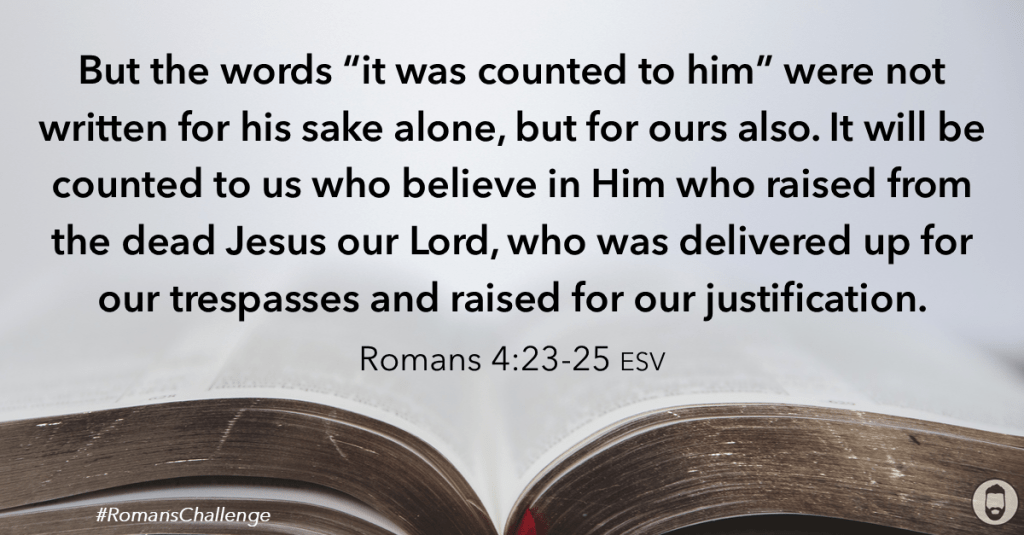
Even when everything seemed hopeless, Abraham believed. He knew he was old, and Sarah was barren, but he still trusted that God could give life to the dead and bring something out of nothing (vv. 18–21). That kind of faith—fully convinced that God would do what He promised—was “counted to him as righteousness” (v. 22). And the good news is that this wasn’t just for Abraham. It’s for us too—everyone who believes in the God who raised Jesus from the dead, who was delivered up for our sins and raised for our justification (vv. 23–25).
🎯 Theme: Faith in God’s promise, not human effort, is what makes us righteous before Him.
🌀 Reflection: Like Abraham, we are called to believe in the God who gives life to the dead and keeps His promises. Where are you tempted to doubt? Ask God to help you trust Him, even when it doesn’t make sense.
💬 Mission Challenge: Share Romans 4:20–21 with someone today and encourage them to trust in God’s power to do what He has promised.
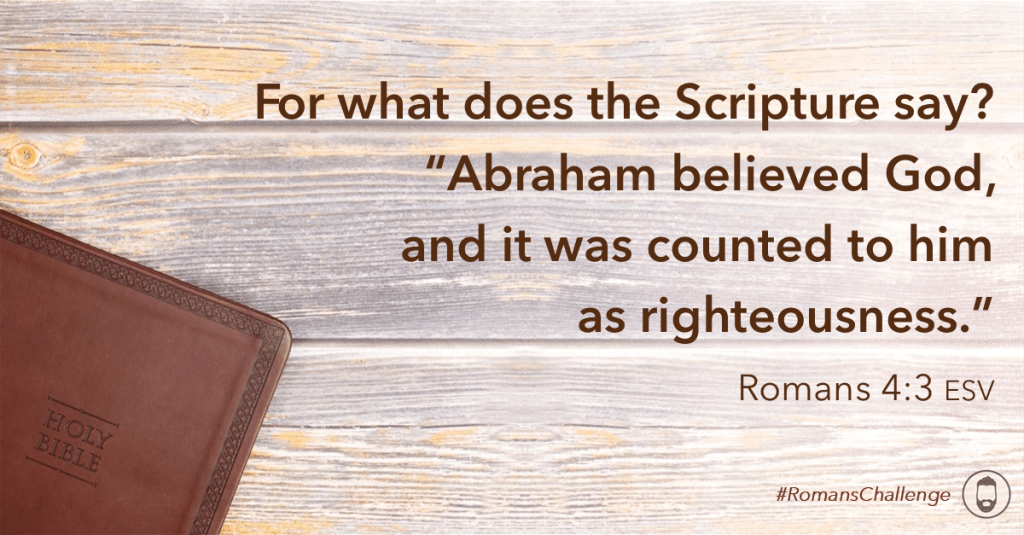
To prove that we are made right with God through faith and not works, Paul points to the example of Abraham. If Abraham had earned righteousness by good works, he could boast—but Scripture says, “Abraham believed God, and it was counted to him as righteousness” (v. 3; cf. Gen. 15:6). Justification is not a reward for effort but a gracious gift received through faith (vv. 4–5). Paul then brings in the voice of David, who also rejoiced in God’s mercy: “Blessed is the man against whom the Lord will not count his sin” (v. 8; Ps. 32:2).
Abraham was counted righteous before he was circumcised (v. 10), making him the spiritual father not only of believing Jews, but also of all who trust in God by faith—regardless of outward signs or heritage. Circumcision served only as a seal of the faith he already had. This means the way to be made right with God has always been by faith, not by what we do. Salvation is not earned; it is received with open hands and a trusting heart.
🎯 Theme: Justification has always come through faith, not works—just as Abraham was counted righteous before he did anything to earn it.
🌀 Reflection: Whether Jew or Gentile, the only path to righteousness is by trusting God—not by relying on our own efforts. The faith that made Abraham righteous is the same faith we’re called to walk in: believing God’s promises and receiving His grace.
💬 Mission Challenge: Think about someone who feels like they’ve messed up too much for God to forgive them. Share with them how God justifies the ungodly—not because they’re worthy, but because He is gracious—and how Abraham and David both found blessing by faith, not performance.
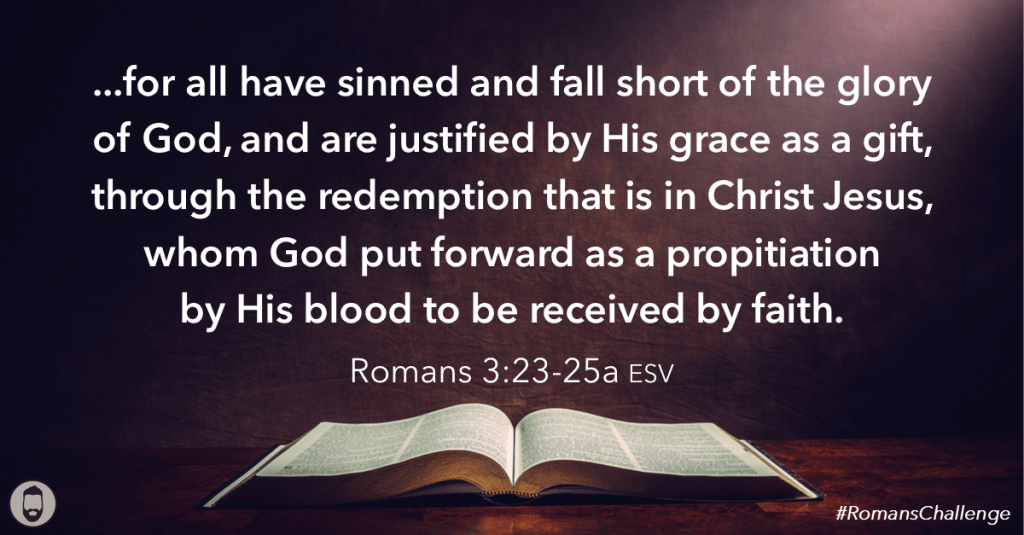
After exposing the universal guilt of all people (Rom. 1:18–3:20), Paul breaks through with the most glorious words in the letter so far: “But now…” A new way of being made right with God has been revealed—not by works of the law, but through faith in Jesus Christ. This righteousness is available to everyone who believes, because all have sinned and fall short of God’s glory (vv. 22–23).
We are justified—declared righteous—by God’s grace as a gift (v. 24). How? Through the redemption that is in Christ Jesus, who was put forward as a sacrifice to satisfy God’s wrath and forgive our sins (v. 25). This shows that God is both just and the justifier of those who have faith in Jesus (v. 26).
Because this salvation is not earned but received by faith, boasting is excluded (vv. 27–28). Jew and Gentile alike are made right with God the same way—by grace through faith. This doesn’t cancel the law but confirms it, showing that the law’s true purpose was to lead us to Christ (v. 31).
🎯 Theme: God’s righteousness is revealed in Jesus, who justifies sinners by grace through faith.
🌀 Reflection: At the cross, God did what we never could—He satisfied His justice and offered mercy at the same time. Our salvation is not our doing; it’s all God’s grace, received by faith in Christ alone.
💬 Mission Challenge: Boldly share the heart of the gospel with someone this week: that salvation is not about trying harder or being good enough—it’s about trusting Jesus, who gave Himself to make us right with God.
Paul anticipates a question after confronting Jewish hypocrisy: if Jews are just as guilty as Gentiles, is there any value in being Jewish? His answer is yes—they were entrusted with God’s Word (v. 2), which is a great privilege. Yet Paul emphasizes that God’s faithfulness does not depend on human faithfulness. Even when people fail, God remains true to His promises and just in His judgment (v. 4). Still, Paul dismisses the flawed logic of those who argue that sin somehow glorifies God or that more sin could lead to more grace (vv. 5–8). That kind of thinking only leads to condemnation.
He then brings the entire courtroom of humanity before the Judge of all the earth and presents the devastating verdict: no one is righteous—not Jew or Gentile, not even one (vv. 10–12). Through a series of Old Testament quotations, Paul shows that sin affects every part of who we are—our hearts, speech, actions, and relationships (vv. 13–18). The law doesn’t save; it silences. It reveals our guilt and shows that no one can be justified before God by works (v. 20).
🎯 Theme: No one is righteous before God; all are under sin and accountable to His judgment.
🌀 Reflection: Romans 3 confronts our tendency to think we’re the exception to the rule. But when we stand before God’s standard, every mouth is silenced. We all need grace—desperately, equally, and completely.
💬 Mission Challenge: Share your testimony with someone today—not a cleaned-up version, but the honest truth about your need for God’s mercy and how He met you with grace in Christ.
Paul now turns his focus specifically to the Jews, God’s covenant people. They had incredible privileges—God’s law, His promises, and a calling to be a light to the nations (vv. 17–20). But possessing the law is not the same as obeying it. Paul points out the danger of spiritual pride: when people teach others but fail to live by what they teach, they dishonor God and give others reasons to mock His name (vv. 21–24).
Circumcision was meant to be a sign of belonging to God, but it was never just about the outward mark. True belonging to God comes from inward transformation—a circumcision of the heart by the Spirit (vv. 28–29). Paul reminds his readers that God is not impressed by religious performance or heritage. He is looking for people whose hearts have been changed by His grace.
🎯 Theme: Outward religion means nothing without inward transformation by the Spirit.
🌀 Reflection: It’s possible to have all the right words, background, and knowledge—and still miss the heart of God. What matters most is whether the Spirit is at work in us, shaping us to truly follow Christ.
💬 Mission Challenge: Spend time today asking God to show you any areas where your faith is more about appearance than reality. Then talk with someone about what it means to be changed from the inside out.
It’s easy to judge others, especially when their sins seem obvious. But Paul warns that when we condemn others for doing wrong while doing the same things ourselves, we’re actually condemning ourselves (v. 1). God’s judgment isn’t based on comparison but on truth, and He sees through every excuse. His kindness is not permission to keep sinning—it’s an invitation to repent (v. 4).
Those who persist in doing good show evidence of a transformed heart, while those who persist in disobedience store up wrath for the day of judgment (vv. 5–8). God will judge everyone impartially—Jews and Gentiles alike—not by what they’ve heard, but by how they’ve lived in response to what they knew (vv. 11–13). Even those without the written law have a moral compass—conscience—that bears witness to right and wrong (vv. 14–15). And on the final day, God will judge not only our actions but even the hidden motives of our hearts through Jesus Christ (v. 16).
🎯 Theme: God’s judgment is impartial and based on truth—no one is exempt.
🌀 Reflection: We all want justice for others but mercy for ourselves. Paul reminds us that the standard is not our own comparison to others but God’s righteous truth and the response of our hearts to it.
💬 Mission Challenge: Instead of criticizing someone today, pray for them. Ask God to help you examine your own heart and respond to His kindness with repentance.
After declaring the gospel as the power of God for salvation (vv. 16–17), Paul explains why we need saving: God’s wrath is being revealed against all ungodliness and unrighteousness of people who suppress the truth (v. 18). The problem isn’t ignorance—God has made Himself known. His eternal power and divine nature have been clearly perceived through creation (vv. 19–20). But rather than glorifying God or giving thanks, people turn from Him.
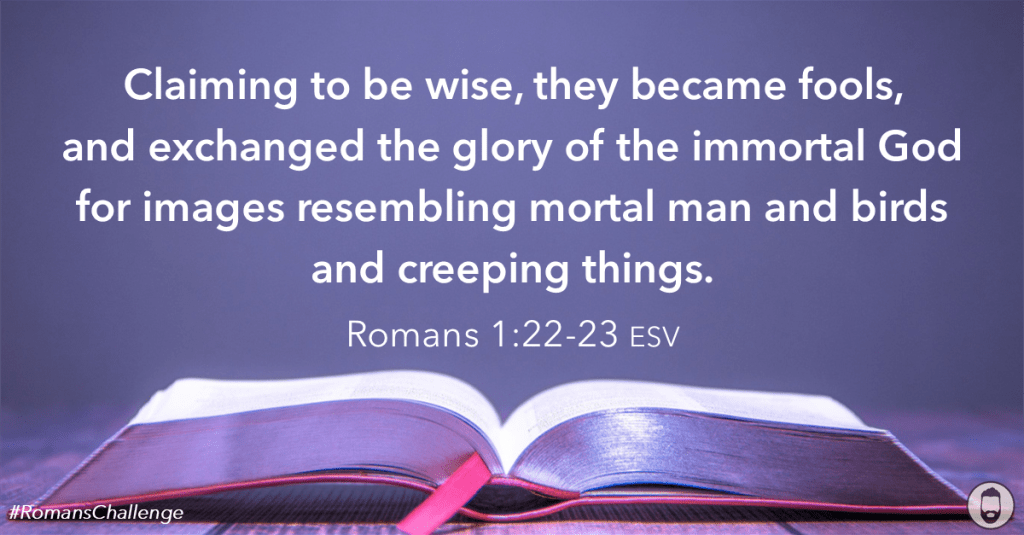
Though they knew God in a general sense, they rejected Him. Their thinking became futile, their hearts darkened, and they exchanged truth for lies (vv. 21–23). Claiming to be wise, they became fools, trading the glory of the immortal God for images of man and animals. This is idolatry—worshiping created things rather than the Creator.
This passage shows how sin begins with failing to honor God. When people reject Him, God gives them over to the sin they desire and the consequences of their rebellion against God. But the gospel is still good news—it rescues us from this cycle and restores us to right worship.
🎯 Theme: When people exchange God’s truth for lies and worshiping creation rather than the Creator, God gives them over to the consequences of their sin as an expression of His holy judgment.
🌀 Reflection: This passage paints a sobering picture of what happens when people reject God. When we stop honoring and thanking Him, our hearts grow dark, and sin takes over. God gives people over to the very things they desire—and the result is spiritual and societal ruin.
💬 Mission Challenge: Share with someone this week one way God has revealed Himself to you—through creation, answered prayer, His Word, or His work in your life. Let that testimony be a bridge to talk about the truth of the gospel.
Paul begins his letter to the Romans by introducing himself as a servant of Christ and laying out the heart of his message—the gospel. This good news (which is what the word “gospel” means) is not a new idea but was promised beforehand through the prophets and fulfilled in Jesus, the Son of God. Paul’s desire is for people from all nations to receive the obedience of faith (v. 5), and he longs to visit Rome to encourage and be encouraged by the church there. Most importantly, Paul boldly declares that the gospel is “the power of God for salvation to everyone who believes” (v. 16). It’s not based on our effort, but on God’s righteousness revealed through faith.
🎯 Theme: The gospel is God’s power to save, and it is received by faith—not works, not status, not strength.
🌀 Reflection: Do you live with the same boldness and confidence in the gospel that Paul expresses here? Are there areas in your life where you need to stop trusting in yourself and instead trust in God’s power to save and sustain?
💬 Mission Challenge: Share the gospel with someone this week—whether it’s your full testimony or a simple word about how Jesus has changed you. Don’t be ashamed (v. 16); be sent.
Romans is one of the most important books in the Bible—and one of the most life-changing. That’s why we’re spending 31 days walking through it together.
Every day during this challenge, you’ll see a short post that includes:
A summary of the day’s reading
🎯 A key theme from the passage
🌀 A reflection to help you think deeply and personally
💬 A mission challenge that invites you to live out what you read
You’ll also see four guiding actions every day:
Read it. Take time to read or listen to the Bible passage.
Pray it. Talk to God about what you read—maybe by praying one of the verses back to Him.
Share it. Don’t keep it to yourself. Share something from the passage with a friend, family member, or even on social media.
Live it. Put the Word into practice. Each post will give you a small mission to help apply what you’ve learned.
Context for the Book of Romans
Romans is a letter written by the apostle Paul around A.D. 57 while he was in Corinth. He wrote it to the believers in Rome—people he had not yet met but hoped to visit. These believers were a mix of Jews and Gentiles, and there were some tensions in the church about how they should live out their faith together. Paul wrote this letter to explain the gospel clearly, to bring unity in the church, and to prepare them to support his mission to Spain (Romans 15:22–24).
How Does Romans Fit Into the Overall Story of the Bible?
Romans shows how God’s promises in the Old Testament are fulfilled in Jesus. It tells how sinful people—both Jews and Gentiles—can be saved by grace through faith in Jesus Christ (Romans 1:16–17). The book reminds us that this good news (the gospel) is for everyone and that God is making a new people for Himself, united by faith.
Romans is a turning point in the story of salvation. It shows that through Jesus’s death and resurrection, God is forming a new covenant family and calling people to live in holiness, love, and hope. In short, Romans helps us understand the gospel and how to live it out.
Big Themes You’ll See in Romans
All people need salvation because all have sinned (Romans 1:18–3:20; 5:12–19).
We are justified by faith—not by works (Romans 3:21–4:25; 9:30–10:21).
Jesus’s death and resurrection are the center of our salvation (Romans 3:21–26; 5:6–11).
We have hope and new life through the Holy Spirit (Romans 5:1–8:39).
God is sovereign in salvation and keeps His promises (Romans 9–11).
The gospel changes how we live, love, and treat others (Romans 12–15).
Let’s dive into the book of Romans together and ask God to change our hearts, our church, and our community as we read His Word. Let’s read it, pray it, share it, and live it—one day at a time.
Actually, excited is probably an understatement. I’m overjoyed, ecstatic, elated, exhilarated, thrilled, rejoicing, and grateful beyond words to be HOME after 18 days and 19 hours in the hospital and rehab. It has been so sweet to be with Candi and the kiddos and things that feel…normal. Now, I am looking forward to being with my faith family at Christ Community on Sunday.
I find myself a bit overwhelmed as I type this out because there is so much that I want to say. It was the same with praying about and picking the Scripture and music for Sunday; everything seemed right and good and appropriate. Thankfully, there’s just nothing better to sing about than Jesus’s finished work on the cross (Hebrews 10:12), His empty tomb (Luke 24:6-7), and His imminent return (Revelation 22:12, Acts 1:11) — about the living hope we have in Jesus (1 Peter 1:3)!
Concerning that living hope, there is a verse that has been on my heart and mind since I have been sick. It’s the verse I share with people who are going through trials to point them to Jesus, so as I preached to myself, it’s the verse I brought to mind to meditate on and remember. When I got to preach in the rehab unit last Sunday, it’s the verse that I shared with my fellow rehabbers to point them to Jesus. That verse is Nahum 1:7.
The LORD is good, a stronghold in the day of trouble; He knows those who take refuge in Him.
“The LORD is good….” That’s who He is, not a mere adjective to describe His actions or tendencies. He cares for His people (1 Peter 5:7). He blesses those who trust in Him (Jeremiah 17:7). He has steadfast love toward His people (Psalm 103:11, Lamentations 3:22-23) and does good to them (Romans 8:28).
“The LORD [is] a stronghold in the day of trouble….” He is a fortress (Psalm 18:2). He is the protector of His people (Psalm 91:1-2). A fortress is a walled structure designed to protect. The specific type the original language references here is a like a mountain stronghold — not walls built out of bricks or blocks by men but the natural relentless strength God built into the mountains when He created them.
In the day of trouble, we can turn to the Lord and know that He’s got us and we are safe (Psalm 46:1). But here’s how strong our God is: He’s strong enough and big enough to keep us in the palm of His hand (John 10:28-29). And even though He’s so strong that no one could ever pluck us from the palm of His hands, He’s gentle and caring enough that by those same mighty hands, He will lift us up because He cares for us (1 Peter 5:6-7, Isaiah 40:11).
“The LORD…knows those who take refuge in Him.” Now, this is beautiful. If you were to be somewhere in Europe or somewhere where the remains (and sometimes ruins) of castles and fortresses exist, those fortresses would not know if you ran into them for refuge. They aren’t alive. And, as I said, some of them are ruins, meaning their ability to provide fortitude has an expiration date. The Lord is different. Those who put their faith and trust in Him are known by Him (2 Timothy 2:19, John 10:14). This is more than knowing about us or knowing who we are; this is intimate knowledge (Psalm 139:1-4). This is deep knowledge of who a person is. Our God is so good that He not only provides refuge but that the refuge provided in our times of deepest trouble comes with Him knowing who we are and comforting us by His very presence and salvation (Psalm 46:1, Psalm 34:18, Zephaniah 3:17, Isaiah 12:2).
This verse hit hard when we had church in the rehab last Sunday. Some were afraid that they’d never regain movement in their body because of a stroke. Some that their broken back might not heal fully or that another injury might mean paralysis. Others were there as caretakers and feeling inadequate about their ability to comfort their loved one while also feeling totally out of control and incapable to do anything to help. But it was good to know that there is a God who saves (Isaiah 45:21, Titus 3:4-6). There is a God who loved them enough to send His Son to die on their behalf (John 3:16, Romans 5:8) and raise from the dead to offer them new life in Him (Romans 6:4-5, 2 Corinthians 5:17).
It was good news to know that if God can save our souls, healing our bodies is small potatoes (Psalm 103:1-5).
It was good news to know that God never leaves us or forsakes us (Deuteronomy 31:6, Hebrews 13:5) even when we find ourselves more alone than ever before in our lives — that we can take refuge in Him right where we are and know that He knows us, our needs, and how to give us the strength and grace we need (Matthew 6:8, 2 Corinthians 12:9, Isaiah 40:29-31).
And it’s good news for all of us as well. If you have put your trust in God — confessed Jesus as Lord and believed God raised Him from the dead and are saved (Romans 10:9-10), He knows you and cares for you, too (John 10:14, 1 Peter 5:7).
I know I’ve said it at least a dozen times, but y’all, that’s good news! And it’s that good news — the good news of our great God and Savior Jesus Christ that we’re singing, reading, and preaching about Sunday.
So if you’re weary, hurting, searching, or could just use some good news — come. Not just to attend a church service, but to come to Jesus. He is the refuge we come to and the risen King who is our living hope. We’ll gather to worship Him, read and sing of His cross and resurrection, and have John remind us from God’s Word the good news — the gospel — of Jesus.
13 He has delivered us from the domain of darkness and transferred us to the kingdom of his beloved Son, 14 in whom we have redemption, the forgiveness of sins. 15 He is the image of the invisible God, the firstborn of all creation. 16 For by him all things were created, in heaven and on earth, visible and invisible, whether thrones or dominions or rulers or authorities—all things were created through him and for him. 17 And he is before all things, and in him all things hold together. 18 And he is the head of the body, the church. He is the beginning, the firstborn from the dead, that in everything he might be preeminent. 19 For in him all the fullness of God was pleased to dwell, 20 and through him to reconcile to himself all things, whether on earth or in heaven, making peace by the blood of his cross.
3 Blessed be the God and Father of our Lord Jesus Christ! According to his great mercy, he has caused us to be born again to a living hope through the resurrection of Jesus Christ from the dead, 4 to an inheritance that is imperishable, undefiled, and unfading, kept in heaven for you, 5 who by God’s power are being guarded through faith for a salvation ready to be revealed in the last time.





 Just Keith Harris