Refresh & Restore — August 26, 2021

28 Come to me, all who labor and are heavy laden, and I will give you rest. 29 Take my yoke upon you, and learn from me, for I am gentle and lowly in heart, and you will find rest for your souls. 30 For my yoke is easy, and my burden is light.”[1]

Matthew 11:28-30

"Kept Through the Trial: Jesus's Letter to the Church at Philadelphia" (The KING is Coming) Refresh & Restore | A JustKeithHarris.com Podcast

📖 Revelation 3:7–13We’re back!After a few months off, The King is Coming returns in 2026 with one of the most encouraging letters in Revelation — Jesus’s message to the faithful church in Philadelphia. In a world filled with opposition and weakness, Jesus opens a door no one can shut.In this episode, Keith Harris and Jamie Harrison explore:✔️ Jesus’s identity as the Holy One, the True One — God Himself✔️ What the “key of David” means and how Jesus alone opens and shuts✔️ The debated phrase “I will keep you from the hour of trial” — and how to read it biblically✔️ Why “little power” doesn’t disqualify faithfulness✔️ How being kept through the trial glorifies Christ’s strength in us✔️ What it means to be a pillar in God’s presence foreverThis church had no rebuke — only encouragement. And Jesus’s call still stands today: “Hold fast what you have, so that no one may seize your crown.” (Revelation 3:11, ESV)🔗 Missed earlier episodes in the series? You can click here to catch up and listen from the beginning.✍️ If you’d like to see a written version of this podcast, complete with footnotes and cross-references, you can find it here.
  1. "Kept Through the Trial: Jesus's Letter to the Church at Philadelphia" (The KING is Coming)
  2. Christ Has Come: The Promised King & His Gift of Love" (Advent 2025)
  3. Christ Has Come: The Promised King & His Gift of Peace (Advent 2025)
  4. Christ Has Come: The Promised King & His Gift of PEACE (Advent 2025)
  5. Christ Has Come: The Promised King & His Gift of HOPE (Advent 2025)

Greetings, Sojourner!

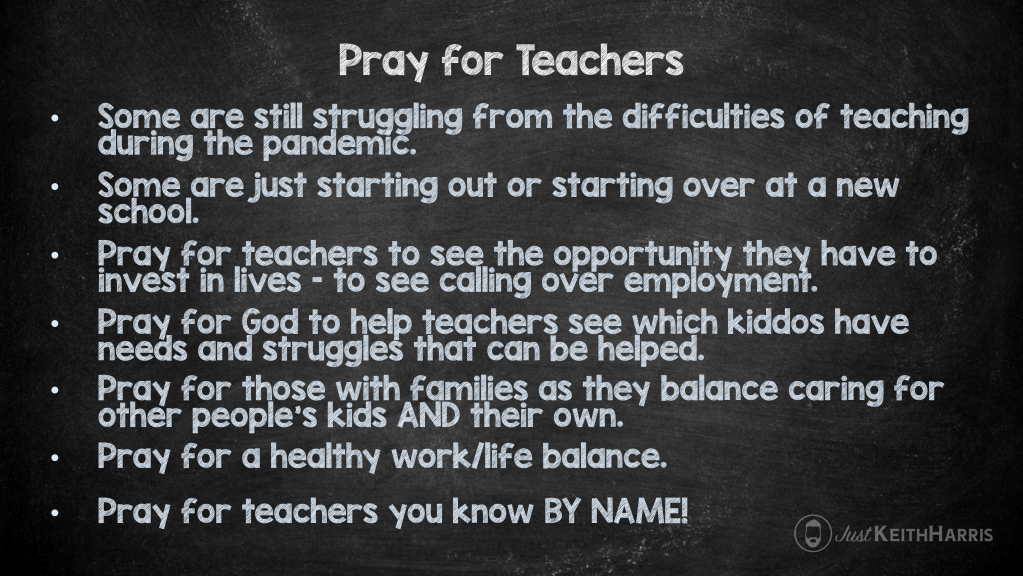
I. Am. Tired. And, chances are, you are too – even if you aren’t a teacher. We all have work at our jobs and work to do at home and work to put into…well, more work.

I use the idea of “teacher-tired” because of the amount of pressure that teachers put on themselves. Many teachers view what they do as more of a calling than a career. They get to mold young minds and influence the entire future of the students they teach. At the same time, there are other pressures that simply come with the job and compound with that internal stress. And, just like many of you have felt, it just seems like there is no way to get everything done. It feels like we are inadequate for the task, and that can be discouraging.

So, maybe you need to hear what I have to tell myself: it’s okay. It is! There are times where I am just not enough, and that’s okay, too. It’s okay because I have a reminder in Christ that He never expected me to be enough – and how I need a constant reminder that He is enough.

No matter what your work is, it is important to have the appropriate balance. Work is important and has a role in the world, but it is not one’s world. Many times we point to God’s cursing the ground and Adam’s “pain” in working among the “thorns and thistles”, focusing on the “sweat of [his] face in laboring (Genesis 3:17-19), but God had already given Adam responsibility to fill the earth and dominion over it before the Fall (Genesis 1:28, 2:19-20). So, work is not the problem; we are.

Lord willing, today’s devotion is meant to help you see that Jesus is enough and that He is able to help us when we feel we do not measure up – to put our work in the right perspective. That’s why I put His words from Matthew 11. They show His heart for us. They show His care for those who work and are weighed down with pressure, expectation, and responsibility. They show the hope that comes from putting our cares and burdens on Him and taking up His rest. And, as always, it is my prayer that His words will refresh and restore you.

Identity in Christ Over Ability

26 For consider your calling, brothers: not many of you were wise according to worldly standards, not many were powerful, not many were of noble birth. 27 But God chose what is foolish in the world to shame the wise; God chose what is weak in the world to shame the strong; 28 God chose what is low and despised in the world, even things that are not, to bring to nothing things that are, 29 so that no human being might boast in the presence of God. 30 And because of him you are in Christ Jesus, who became to us wisdom from God, righteousness and sanctification and redemption, 31 so that, as it is written, “Let the one who boasts, boast in the Lord.”[2]

1 Corinthians 1:26-31

Part of our problem – or at least what I have found to be true for me – is that sometimes we allow our work to become our identity. When we allow what we do to define who we are, our entire identity begins to crumble as soon as struggle sets in. As a teacher, there is a pressure to want every period of every day to go well – for every child to fully get everything I teach. Then again, I felt the same pressure when I was a full-time pastor, and I found myself completely burned out at nearly thirty years old. You see, I was my who-I-was ended up wrapped around my what-I-did, leaving every other aspect of who God had called me to be as His disciple, my wife’s husband, my children’s father, etc. woefully ignored. My entire identity was wrapped up in being Pastor Keith, and, when I quit, Pastor Keith stopped existing. I felt like I stopped existing.

Now, on the other side of that experience, I thank God for the burn out. I thank God for allowing my false identity to crumble. Rather than bitterness and hurt, I now understand David’s prayer to God to “let the bones that You have broken rejoice” (Psalm 51:8)! I thank God that He is bigger than my failures. And I can thank Him because when I got out of the way – when I hit the bottom – I found the Rock, Jesus! As embarrassed as I was of what I saw as failure, I found myself echoing the cry of David in Psalm 61:2-3: “Lead me to the Rock that is higher than I, for you have been my refuge, a strong tower against the enemy.” He had been there all along – my strong tower even when my pride in accomplishment – and employment – was the enemy.

I found myself having to be corrected like Paul did for the Corinthians. According to “worldly standards”, I expected myself to be powerful, noble, and wise. Yet, all the while, I was foolish, weak, and low.

You see, when we pursue “worldly standards”, we boast in our own accomplishments. I remember a seminary professor once saying that we could not simultaneously boast in how awesome God is while trying to convince people how clever we are. The Kingdom of God is contrary to the standards of the world. When we are weak, Christ’s strength can be seen. When we are foolish, Christ’s wisdom can be shared. When we are low and bowed in worship, Christ is boasted in and exalted. Our posture of worship, our identity needs to be based in Him – in who He is, what He has done in our lives, and who He has called us to be.

So, maybe you find yourself feeling like a bit of a failure, but what a joy it is to be able to boast like Paul in the righteousness of God that He shares with His sons and daughters, in sanctification because we know He set us apart for His service fully knowing our flaws, and in redemption where His strength shines through and makes us new in Him!

Faith in Christ Over Feeling Like a Failure

[Humble yourselves], therefore, under the mighty hand of God so that at the proper time he may exalt you, casting all your anxieties on him, because he cares for you.[3]

1 Peter 5:6-7

If you haven’t already, you need to hear this: you are going to fail. I know that doesn’t seem very motivational, but it’s true! We all fail from time to time. I mentioned earlier that teachers put a lot of pressure on themselves to achieve and succeed. Yet every lesson in every class period of every week, day, and year is simply not going to be a homerun. For that matter, even professional baseball players don’t knock it out of the park with every swing – or even once in every game! We often look at failure as humiliating, but I would like to help you reframe your failures as lessons in humility.

Jesus does not expect us not to fail. That’s inherent in His invitation in Matthew 11, recognizing that we will find ourselves “heavy laden” and in need of His “rest”. We just talked about how our identities can be found in the wrong things, but our failures and successes can be wrongly founded, too. When – not if – we mess up, God is not standing in judgment over us to smack or smite us. No, if we belong to Him – if we have been saved by Him – we are adopted into His family. And just like a good Daddy, His hand is waiting to pick us up and dust us off. Now, that does not mean that our Heavenly Father does not meet us with discipline sometimes; in the verses that come before the 1 Peter passage, we are reminded of Proverbs 3:34: “God opposes the proud but gives grace to the humble.” Sometimes His grace grates upon our pride and we find ourselves humbled (not willingly but definitively). Yet in that humbling we find grace. In that humbling, we find the “mighty hand of God”, still bearing the scars of the nails He took for us, reaching out to show “He cares”.

It is in those moments that faith transcends feeling. It is our very hope and foundation. Knowing that He cares for His children no matter what frees us from the fear of failure. Just as my own children have asked me from time to time whether I would always love them, we need to be reassured. Thank God that He wants us to cast all our anxieties – all our insecurities on Him. And, most of all, we should be thankful that He cares for us.

Prioritizing Praise in Prayer Over Problems

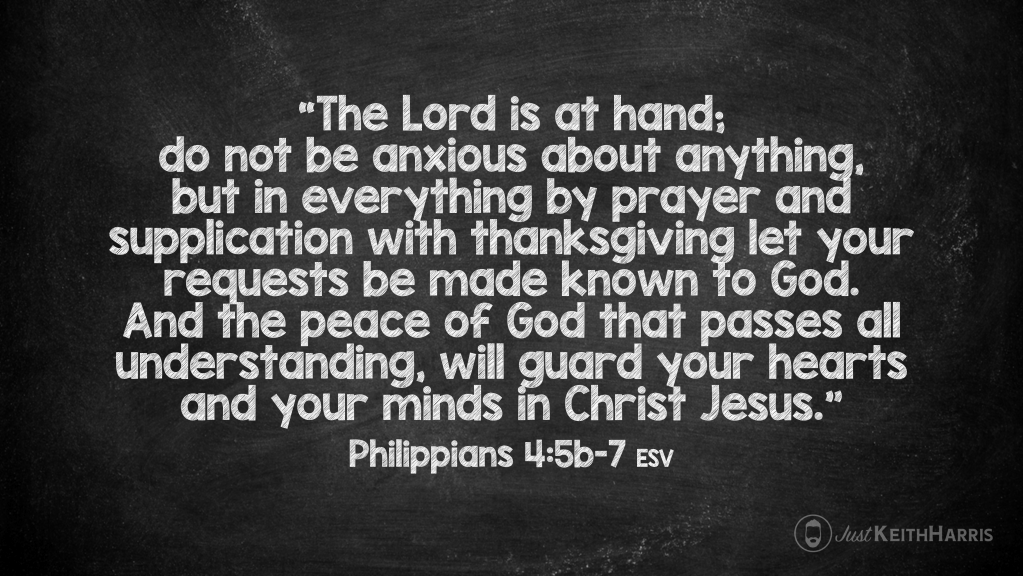
Rejoice in the Lord always; again I will say, rejoice. Let your reasonableness be known to everyone. The Lord is at hand; do not be anxious about anything, but in everything by prayer and supplication with thanksgiving let your requests be made known to God. And the peace of God, which surpasses all understanding, will guard your hearts and your minds in Christ Jesus.[4]

Philippians 4:4-7

I don’t imagine it was too difficult to convince you that you have struggles and difficulties and failures, but it may take a bit more convincing that they are something to “rejoice” over! Let me clarify what the command is here in this passage. Paul is not saying that we rejoice in the difficulties but that we find joy “in the Lord” – in trusting that He, in His sovereign will and might, have the situation under control. We rejoice that He is “at hand” – that His return is imminent. And we rejoice in the fact that He cares enough to listen when we bring all our requests – that He will take our burdens (again, Matthew 11) and trade them for His peace. Even though He fully knows everything we need and even what we think and feel, He cares enough to want us to pray to Him about it.

So, where does the rejoicing come in? Well, look at the context of these verses: our “prayer and supplication” are to be accompanied by “thanksgiving”. In fact, He tells us that He expects all our “requests” to be accompanied by thankfulness. When we put our fears, anxieties, and needs up against all He has done and that we know He can do, they pale in comparison. And, based on the verses that follow, we can trust that the “peace of God” (v. 7) comes when we look at, learn from, receive, and hear from “the God of peace” who is with us (v. 9)! Knowing you are not alone helps; knowing that You are loved and watched over by the sovereign God of the universe heals.

Wrapping Up

As I stated earlier, we learn about work from the very beginning in the garden. That is also where we learn to rest. When God “finished His work that He had done”, “He rested” (Genesis 2:2). He did not rest because He was tired or needed a break. He rested because what He had done was good, and that day of rest began to be known as the Sabbath. While God did not need the Sabbath, He knew we would. And the only way we can truly have that Sabbath rest is to trust in what He has done, is doing, and has promised to do. No matter what your job is or what your responsibilities are, God is still God. There’s no work mess up that unseats Him from His throne. There’s no consequence or boss’ wrath that can undo who He says you are. In fact, one day all of the toil and responsibility and struggle will be gone, and only one’s relationship with Christ will matter. One day, all the days of trusting Him through toil and trouble will fade away when we see Him face-to-face. So, it is my prayer that you can come to Him to find rest – that you trade Him your labor and your being heavy laden and rest, and trust, and have faith in Him alone.


[1] The Holy Bible: English Standard Version (Wheaton, IL: Crossway Bibles, 2016), Mt 11:28–30.

[2] Ibid., 1 Co 1:26–31.

[3] Ibid., 1 Pe 5:6–7.

[4] Ibid., Php 4:4–7.

Songs for Sunday, August 22, 2021

I did not post “Songs for Sunday” last week because I – like many of you – was struggling with the idea of how quickly this new Delta variant is moving through people. I had people who are very close to me who were suffering being sick with it, and I knew what my wife and I had prayerfully decided for our family as far as gathering with God’s church during this continual wave of sickness. But I wavered and did not invite last week.

Then, I read report after report of Christians standing firm in Afghanistan despite the threats of the Taliban – actually promises to harm and likely kill if they remained and more especially if they gathered. My heart hurt for them, and I was more than a little grieved that I wavered in offering others the hope that I knew I was going to partake in, whether I posted or not.

So, this week, I would like to invite you to follow and worship Jesus. I would like to point out that He is of more value than my life. He’s more worthy than Covid is frightening. He’s more glorious than the Taliban is terrifying. And His promises are greater than the threats of either – or any other that this world can throw our way.

In Matthew 13:44-46, He shows us the surpassing worth of following Him – of being adopted into His Kingdom:

44 “The kingdom of heaven is like treasure hidden in a field, which a man found and covered up. Then in his joy he goes and sells all that he has and buys that field.

45 “Again, the kingdom of heaven is like a merchant in search of fine pearls, 46 who, on finding one pearl of great value, went and sold all that he had and bought it.

I want you to notice that He does not resort to fear here. He does not threaten with hell or damnation or things worthy of fear. He presents Himself and eternity with Him of greater value than things that are normally valued here on earth. He’s greater than treasure. He’s greater than jewels. Jesus is greater!

Gathering as His church is not escapism from a world that is against us; it is gathering in His Presence with the full knowledge that He is greater – and worth more – than anything this world can offer, even the dangers it can throw at us!

Paul, who himself was involved in persecuting Christians before he was saved, wrote the following words while he was imprisoned for faith in Christ and waiting to be executed in a Roman prison:

But whatever gain I had, I counted as loss for the sake of Christ. Indeed, I count everything as loss because of the surpassing worth of knowing Christ Jesus my Lord. For his sake I have suffered the loss of all things and count them as rubbish, in order that I may gain Christ and be found in him, not having a righteousness of my own that comes from the law, but that which comes through faith in Christ, the righteousness from God that depends on faith— 10 that I may know him and the power of his resurrection, and may share his sufferings, becoming like him in his death, 11 that by any means possible I may attain the resurrection from the dead.

Philippians 3:7-11

Throughout the ages, and even across the world today, followers of Christ gather – despite risk of personal health and well-being – to worship Him because they see that same “surpassing worth of knowing Christ Jesus”. One such example was that of Jim Elliot who was killed by the Huaorani people of Ecuador in 1956, people he was attempting to share Christ with – to whom God had called him to minister to. Before his death, he gave one of the most profound quotes about following Christ outside of Scripture:

“He is no fool who gives what he cannot keep to gain that which he cannot lose.”

He was echoing Jesus’ words in Luke 9:23-25:

23 And he said to all, “If anyone would come after me, let him deny himself and take up his cross daily and follow me. 24 For whoever would save his life will lose it, but whoever loses his life for my sake will save it. 25 For what does it profit a man if he gains the whole world and loses or forfeits himself?

Elliot left behind a wife and child who were naturally devastated. No one would have blamed them for hating the Huaorani. Had they turned away from the church and God, the world would have wrapped them in its arms and touted understanding. But, again, Christ is greater; His “surpassing worth” lifts His people from the muck and mire of the understandable to follow Him even through the devastating and frightening. His wife Elisabeth and their daughter reached out to the Huaorani – the very ones who killed Jim, and moved into their village in 1958 to share Christ with them. The gospel of Jesus Christ, His Holy Spirit, and the forgiveness He helped Elisabeth gave were used of the Lord to draw those people to faith in Him. It’s nearly unfathomable – from a worldly perspective, it’s downright foolish. Let Elisabeth’s own words speak for her:

“I have one desire now – to live a life of reckless abandon for the Lord, putting all my energy and strength into it.”

So, tomorrow, my family and I will gather with our faith family. Understand that I don’t say this in judgment of any who choose not to gather! But we will surrender to the surpassing worth of knowing Christ. Do we want Covid? Absolutely not! But do we want to gather with our faith family – and in solidarity with those who gather and risk more than a virus around the world, in solidarity with those who acknowledge that there is more value in faith in Christ than fear of the Taliban and “knowing that the same kinds of suffering are being experienced by your brotherhood throughout the world” (1 Peter 5:9).

Today, you have a choice. You get to choose whether or not you will gather in person, whether you and yours will gather around a screen and join in with a live-stream, or if you will just abstain. Whatever you decide, know I am praying for you and love you. If I haven’t seen you in a while, know you are missed even if I am respecting of your distance.

Here are our Scriptures and songs:

  • 2 Corinthians 1:3-5

Blessed be the God and Father of our Lord Jesus Christ, the Father of mercies and God of all comfort, who comforts us in all our affliction, so that we may be able to comfort those who are in any affliction, with the comfort with which we ourselves are comforted by God. For as we share abundantly in Christ’s sufferings, so through Christ we share abundantly in comfort too.

  • Holy Water
  • Jesus Messiah
  • Zephaniah 3:14-17

14 Sing aloud, O daughter of Zion;
shout, O Israel!
Rejoice and exult with all your heart,
O daughter of Jerusalem!
15 The Lord has taken away the judgments against you;
he has cleared away your enemies.
The King of Israel, the Lord, is in your midst;
you shall never again fear evil.
16 On that day it shall be said to Jerusalem:
“Fear not, O Zion;
let not your hands grow weak.
17 The Lord your God is in your midst,
a mighty one who will save;
He will rejoice over you with gladness;
He will quiet you by his love;
He will exult over you with loud singing.

  • Mighty to Save
  • Oceans (Where Feet May Fail)
  • (invitation) The Well

We invite you to join us this Sunday at Christ Community Church in Grenada, MS!

We have Sunday School classes for all ages at 9:30a and worship – everyone is welcome – at 11:00a!

If you are concerned about social distancing or are at-risk, consider gathering with us at 10:00a for a small group Bible study in our worship center. There is plenty of room to spread out, but there is also opportunity to gather with others at the same time! No one will crowd you, and you can exit out of our side door and avoid the crowd coming in to worship after the Bible study!

Refresh & Restore — August 19, 2021

"Kept Through the Trial: Jesus's Letter to the Church at Philadelphia" (The KING is Coming) Refresh & Restore | A JustKeithHarris.com Podcast

📖 Revelation 3:7–13We’re back!After a few months off, The King is Coming returns in 2026 with one of the most encouraging letters in Revelation — Jesus’s message to the faithful church in Philadelphia. In a world filled with opposition and weakness, Jesus opens a door no one can shut.In this episode, Keith Harris and Jamie Harrison explore:✔️ Jesus’s identity as the Holy One, the True One — God Himself✔️ What the “key of David” means and how Jesus alone opens and shuts✔️ The debated phrase “I will keep you from the hour of trial” — and how to read it biblically✔️ Why “little power” doesn’t disqualify faithfulness✔️ How being kept through the trial glorifies Christ’s strength in us✔️ What it means to be a pillar in God’s presence foreverThis church had no rebuke — only encouragement. And Jesus’s call still stands today: “Hold fast what you have, so that no one may seize your crown.” (Revelation 3:11, ESV)🔗 Missed earlier episodes in the series? You can click here to catch up and listen from the beginning.✍️ If you’d like to see a written version of this podcast, complete with footnotes and cross-references, you can find it here.
  1. "Kept Through the Trial: Jesus's Letter to the Church at Philadelphia" (The KING is Coming)
  2. Christ Has Come: The Promised King & His Gift of Love" (Advent 2025)
  3. Christ Has Come: The Promised King & His Gift of Peace (Advent 2025)
  4. Christ Has Come: The Promised King & His Gift of PEACE (Advent 2025)
  5. Christ Has Come: The Promised King & His Gift of HOPE (Advent 2025)

This week, instead of a written devotion, John Goldwater and I looked at the blessings and genealogy at the end of the book of Ruth and discussed what they show us about God’s redemptive plan. It is our prayer that this kind of gospel conversation helps you to see how God’s redemptive plan involved ordinary sinners just like us and how God continues to do so today!


Keith Harris: Welcome to this week’s Refresh & Restore [devotion]! We have a special guest today; John Goldwater, say, “Hello”.

John Goldwater: Hello!

Keith: This is going to act as an epilogue to our Ruth series. So, I’m going to read our Scripture passage, and we’re going to have some interesting conversation if nothing else.

11 Then all the people who were at the gate and the elders said, “We are witnesses. May the Lord make the woman, who is coming into your house, like Rachel and Leah, who together built up the house of Israel. May you act worthily in Ephrathah and be renowned in Bethlehem, 12 and may your house be like the house of Perez, whom Tamar bore to Judah, because of the offspring that the Lord will give you by this young woman.”[1]

Ruth 4:11-12

18 Now these are the generations of Perez: Perez fathered Hezron, 19 Hezron fathered Ram, Ram fathered Amminadab, 20 Amminadab fathered Nahshon, Nahshon fathered Salmon, 21 Salmon fathered Boaz, Boaz fathered Obed, 22 Obed fathered Jesse, and Jesse fathered David.[2]

Ruth 4:18-22

If you have been listening/reading, you know we say we are affiliated with Christ Community Church – a cool place. So, John, whatever this turns out as is what we will have.

John: Awesome. I’m excited! Thanks for having me.

Keith: You’re welcome! As we look at this, one of the things I wanted to talk about is how at the end of the book of Ruth, you’ve got this fairly weird blessing that ends up pointing to the genealogy of Jesus, specifically David and Ruth. So, I’m going to just read a section, and, then, we’ll just kind of talk about it. You kick off whatever you think, and we’ll pause every so-often.

John: Awesome.

Keith: The first thing, you’ve got these elders, they’ve just seen Boaz pass the sandal with the unnamed not-the-redeemer, and looking at how Boaz is now going to be the redeemer. They say, “May the Lord make the woman, who is coming into your house, like Rachel and Leah, who together built up the house of Israel.” So, talk to me about that picture of Jacob, Rachel, and Leah.

John: Yeah, Jacob, Rachel, and Leah – and their cohorts, their handmaids who also added to the family – were extremely important to the nation of Israel for building up the twelve patriarchs. But it doesn’t happen in a way where we would say it’s traditionally good. It’s not a great model for home life, marriage, domestic stuff; like we would suppose they would. They’re in the Bible – they’re wives, they’re leaders – they have good qualities, but it was a dysfunctional home. Usually we think that makes us disqualified, but it seems like that wasn’t the case for Rachel and Leah. 

Keith: Right. It’s definitely not the thing where if we were talking to our kids today or to someone who is about to get married, we’d say, “Wow! We hope you have a long happy marriage of our great-grandparent!” In this case, it’s not. So, in this genealogy at the end of this time of the Judges, everyone is doing what “was right in his own eyes” (Judges 21:25). You definitely see a picture of a whole situation that amasses on other situations like you say with Jacob, Rachel, Leah, the handmaidens, getting back in with Esau and everything co-mingled. It’s just a huge mess.

John: Yeah. It’s a big mess. When I preached on it, I called it “Putting the Fun in Disfunctional”. And we just don’t think of Bible characters that way. It’s pretty cool that they’re in this blessing like this because it kind of tips God’s hand to where He says, you know, “I know what they’ve done; I know who they are.” And, yet, He chose to work through them – with them. That’s pretty awesome.

Keith: It is. And that’s definitely a theme that we see in the book of Ruth that none of the characters…. And we’re very careful to say characters and not heroes, necessarily. Boaz definitely was a – his name was a literal pillar of the temple (1 Kings 7:21), but he himself was imperfect. His mom, Rahab, was a prostitute, but God redeemed that whole situation. You get that beautiful picture. Which moves on to this blessing that, I have to think probably did not make sense to them at the time. Like, maybe God’s Spirit? What do you think?

John: Well, for sure, God certainly inspires His Word, and I think that’s still true for us today in the sense that we may say things and are not quite sure of the whole significance of it. And the significance of the genealogy that you read, they would have no clue. They were just living life. The fact that God was shaping them and their family, as imperfect as they were, to bring out the perfect and only Messiah for mankind. That’s pretty mind-boggling.

Keith: Absolutely. So, you look as God’s Spirit moves on them – at the time, again, they didn’t know that what they were saying was even going to be a part of God’s Word, but they move from there with Rachel and Leah to “may your house be like the house of Perez, whom Tamar bore to [her father-in-law] Judah”.  Ummm….

John: Yeah, we’re calling DHS on them. You know what I’m saying? You’re calling child protective services on them. This is…something went horribly wrong in the Judah-Tamar story. And, because God is our redeemer, He takes our mess makes it a masterpiece, and it’s incredible….

Keith: …and chooses that to be the entire tribe, the entire basis, for that lineage. The entire family tree literally hinges on Israel to Judah. And there were other things that we might be tempted to say, we don’t know that it’s worse, per se, from a human perspective, what Judah did, but God knows what He’s doing. And it’s probably best we don’t get to pick in these situations.

So, you’ve got Rachel and Leah, and Tamar – talking about redeemers, the whole Boaz situation, Judah never should have been in the position to be in that. RIght, he had promised the third son after the first son had died, and then the “issue” with the second one. {John laughs.} Yeah, you can look that one up in Genesis. 

John: That’s right. Look up the word “issue” in Genesis.

Keith: Yes. {Both laugh.} We’re not going….

John: We’re not going to tell you that. You have to look that one up yourself. 

Keith: Yes, we’re not going to go into that. But there wasn’t a redeemer. He says he’s going to promise [Tamar] his son, and, then, Tamar has her people watching Judah while Judah’s people are watching Tamar. They both try to catch each other at the same time, and they, well, they caught each other. And had twins.

John: Wow. Tamar was in a desperate situation, and, you know, she felt like her back was against the wall. Her father-in-law was not – and he wasn’t keeping his word. He was at least very delayed in it. And, nonetheless, this is who God chose. This is the shaping of the genealogy. It doesn’t look perfect to us, but it was perfect because that’s the way God wanted it. It’s pretty wild.

Keith: It is. Like I said, we probably have more to identify with Jacob, more to identify with Judah, with Tamar – our backs against the wall, making the best decisions we think we know how. But we keep running back to that same problem as the end of the book of Judges: “In those days there was no king in Israel. Everyone did what was right in his eyes” (Judges 21:25). Ultimately, that wraps us up. We’ll take a break, and come back and talk about the branch of the genealogy from David’s side.

Alright, so when we look at this next part, we’ve already read the genealogy at the end of Ruth 4. I want to shift now and just, kind of, hit it from a different direction.


The book of the genealogy of Jesus Christ, the son of David, the son of Abraham.

Abraham was the father of Isaac, and Isaac the father of Jacob, and Jacob the father of Judah and his brothers, and Judah the father of Perez and Zerah by Tamar, and Perez the father of Hezron, and Hezron the father of Ram, and Ram the father of Amminadab, and Amminadab the father of Nahshon, and Nahshon the father of Salmon, and Salmon the father of Boaz by Rahab, and Boaz the father of Obed by Ruth, and Obed the father of Jesse, and Jesse the father of David the king.

And David was the father of Solomon by the wife of Uriah….[3]

Matthew 1:1-6

You see a lot of familiar names that we’ve already talked about. You have Jacob father of Judah. We know the whole situation: Jacob, Rachel, Leah, Judah, Tamar; it even mentions all of that. I think it’s cool. I think you said when we were talking [earlier] that we, being on the other side of this get to see the full story. Why don’t you talk to that just a little bit, the full side knowing that this leads to Jesus.

John: It’s really awesome. It really shows, in my opinion, that God is in control, and it gives us a reason to trust. Whether our family history is messed up, you know, in the day-to-day life, we see the mess, we feel the pain, we smell the stink of what’s going on in this world. But there’s a bigger Story. God has a plan. God is weaving together a beautiful tapestry of lives and purpose, and we can’t see it all. 

So, we look at the genealogy, and it has a sense of being clean – being sanitized – if you just look at it and read through it. But when you stop, like we have and you tap on certain areas, you go: oh, man. It got even worse when we got in the New Testament because we bring in David who father’s Solomon by the “wife of Uriah”. And it doesn’t go into, well, who’s the wife of Uriah? And the sinful mess that brought that about. But we see that God used it. God used it all. Now, we don’t – I always have to caution myself when I think of other folks. We don’t have to make any excuse for sin. We don’t need to go out making our own mess. We live in a pretty messy place, and it just happens. But we don’t need to be fatalistic because a lot of folks get that way too now. You know: well, I can’t do it, my parents, upbringing, I just don’t know what I could be good for….

Keith: Or, what’s the use…? I’m going to mess up again.

John: That’s right – just throw in the towel. A genealogy like this, rightly understood, really can make a big difference in this. The first two names: {this is the book…}. These are like our big hero names, and we know the dirt on them. We know the fear and the lying that Abraham, the father of faith, got caught up in. We know the sin of David, the immorality, the cover-up, betrayal, and murder that he got involved in….

Keith: …with the “wife of Uriah”….

John: …OF Uriah, who is in the genealogy of Jesus.

Keith: With that epithet.

John: Yeah. It’s right there. It’s like the both/and. We’re living in our own time, like these people were. Again, we see the mess, we feel the pain, we go through the struggle, but when you see it in the genealogy, it’s like you see it from God’s perspective. God says, yeah, I still used all that for my glory. 

Keith: Right. And I think that is a good example. One of the things you said was sometimes when we read through the genealogies we get this sanitized view. I think part of it is that we don’t…read through the genealogies. We know the parts. Sometimes we have a very Precious Moments, children’s bible view of these things when God has an accurate view of us. 

We’ve been coming back to this verse a lot at Jesus Saves Bro and at Christ Community, I guess over the last month, 1 John 2:1-2: “My little children, I am writing these things to you so that you may not sin…”  – that’s our ideal, sanitized view – “but if anyone does sin, we have an advocate with the Father, Jesus Christ the righteous. He is the propitiation for our sins, and not for ours only but also for the sins of the whole world.”

John: That’s good news!

Keith: It is. You should make that a catch-phrase.

John: That could be a catch-phrase. Hey, that’s good news. That’s something worth telling the whole world about. When we say for folks, just leave me alone or I’ve tried Jesus – tried church – I’ve tried all these things…. It’s like, maybe you just need to let God do what God [does]. He saves. He redeems. Whatever mess you’re in, I daresay, I know I’ve had my share of mess. Then, I read David’s mess, and I feel like I’m just a baby-messer. I’ve just got baby mess in comparison. 

Keith: And I think that’s a good view of it because multiple times in the Scripture – in the Old Testament it was prophesies of David that when basically…Samuel’s talking to Saul saying, hey, your kingship is over; God’s going to send me to get a man who’s after His own heart (1 Samuel 13:14). Then, we see David – he kills Goliath – all these things that give him that hero status – but all the while there’s no perfection. There’s humanity. And it’s in that promise that God made [to] David that one day somebody would be on your throne. I mean, just looking at that, you follow the history of Israel…after Solomon, the kingdom splits, and then, ultimately, after they end up in the exile because of more humanity – more sin – you have people in the lineage of David [like] Zerrubabel who comes back and is just a governor. Like, they’re rebuilding Jerusalem but they don’t….

John: There’s no king.

Keith: There’s no king, there’s no throne.

John: There’s no wall for a minute. No temple. I mean, they’ve got to rebuild from scratch.

Keith: But one thing they don’t have to rebuild is the promise of God – the redemption of God. They didn’t need Zerrubabel sitting on a throne. They’ve had all of David’s grandsons and all of that mess. Now, they’re looking for that Messiah-King.

John: Yeah, who’s going to endure forever. He’s going to be the King over God’s Kingdom forever.

And God used imperfect people – very imperfect – to bring that about, to bring His plan, to bring His promise to fruition. That’s awesome. That’s just the awesome thing about God [being] worthy, He’s brag-worthy. You don’t boast except for in the Lord. Let him who boasts boast in the Lord (2 Corinthians 10:17). We can say, Lord, you didn’t let our weakness spoil Your plan. You didn’t let our sinfulness – our mess – ruin Your promise. And that’s stout. That’s frank and awesome.

Keith: He is willing to let us participate. He redeems us. There’s the verse that L.G. quotes all the time, Ephesians 2:10: For we are His workmanship, created in Christ Jesus for good works, which God prepared beforehand, that we should walk in them.

That He chose us when we were dead in our trespasses and sins (Ephesians 2:1-2), knowing full well the gamut when we were enemies – when we weren’t even on the same team. And He died for us, and knew what He alone could do with us. It’s cool.

John: It is cool. In going over these genealogies and looking at the people, to me, it’s always been a cool thing. You know, I guess I’m interested – maybe you, have you ever thought, God shows us these things about some of the people – I wonder what’s the dirt on the other people? You know, we don’t know all these other guys. We assume that maybe there wasn’t dirt, but no…. We know they had dirt, too; it’s just not listed.

Keith: I think that goes back to the unnamed redeemer. It’s tempting to look at it as cut-and-dry; like, oh, you’re the closer redeemer. Obviously, there was some play there. Elimilech didn’t have a brother sitting in the wings. He didn’t have a brother who was supposed to redeem. You go back and look at Deuteronomy 25, past the brother, there ain’t a list. There ain’t a genealogy. Someone could redeem, but none of them had to. And so it’s tempting to want to judge the unnamed guy harshly because he didn’t want to be a redeemer.

John: Strangely enough, he could have already had a wife that he loved and didn’t want to take on another. Imagine that, right?!

Keith: Or some unknown situation….

John: …not enough money, not wealthy enough….

Keith: What makes the lack of the name there is that he didn’t participate in the redemption. Ultimately, that’s going to be the difference. Not us participating in redeeming but us partaking in the redemption Jesus Christ offers.

John: A door was open to him, and he didn’t take it. We don’t know why.

Keith: We know they didn’t give his name. And they make a huge point to not say his name.

John: Hey, you could have been used to be a part of the genealogy. That’s like life though. We don’t always know. We don’t know what God’s doing. For this guy, he just missed – he was so close…. Again, he might have had very legit reasons.

Keith: And, obviously, God had a very specific plan for all of this. You go back and you look…Rahab….

John: He wanted Rahab’s boy in there!

Keith: And that’s another cool thing – we looked at it early on in the [series] where we realize that Naomi’s prayer for Ruth is that God “deal kindly” with her. Go back and look in Joshua, and Rahab’s deal with the spies was, hey, deal kindly with me. That hesed….

John: There’s plenty of hesed in Ephrathah.

Keith: That symmetry that God agreed – deal kindly; God agreed [again] – deal kindly. And then you get that whole cool picture.

John: One of the things we’re studying in the book of 2 Kings right now – that we notice is that God tells these guys things. Like He told Jehu, you’re going to have four generations to reign on the throne and when that was accomplished, the writer tells us that was the fourth one so God’s Word is fulfilled. And so much of Scripture is like that. God says it, and we see the fulfillment of it. God’s never going to forget anything. You know, if He promised to be kind to a prostitute in Jericho, you know, He’s going to keep His Word all the way down the line. That’s just God.

Keith: And, I think it was W.A. Criswell who kind of did a little play on the scarlet cord that was tied to signify, here’s where we are…. It’s really easy to see that scarlet cord of Christ work through God’s redemption.

John: It is, all the way through the Scripture.

Keith: And it’s cool that we get to participate.

John: Thank You, God.

Keith: Amen.

We’ll do one more little, short section after…break.

For our little wrap-up section, John and I have been chatting, talking about this next section. And one of the things that kind of comes just from our separate, yet shared, experiences is that it’s easy to convince ourselves that our failures are catastrophic. So, we want to kind of bring this back in because we’ve been dancing around the idea – and just haven’t said it yet – we are regular people. And you who are listening/reading are regular people; you have sin and failures, but, if you trust in Christ, He is the same God who dealt kindly with all of these that we’ve talked about. So, we’ve got some verses to kind of wrap it up and bring it together.

11 For the grace of God has appeared, bringing salvation for all people, 12 training us to renounce ungodliness and worldly passions, and to live self-controlled, upright, and godly lives in the present age, 13 waiting for our blessed hope, the appearing of the glory of our great God and Savior Jesus Christ, 14 who gave himself for us to redeem us from all lawlessness and to purify for himself a people for his own possession who are zealous for good works.[4]

Titus 2:11-14

You look at that first part, and we mess that up quick – self-controlled, upright, godly lives. Well, no checks there. But “waiting for our blessed hope”…. So, talk to us about this, John, and kind of bring it together so we can understand.

John:                    This is the lynchpin. We look at our sins; we look at our failures, our mess, and we do think we’ve blown it. And we have blown it for ourselves. We’ve blown it in our performance. We’ve blown it in our morality. We’ve blown it, maybe, physically. Maybe you’re in a place where you’ve hurt yourself through stupid acts. But nothing that we can do is greater than what God has done. We can’t undo God’s plan for us – God’s redemptive plan. That’s what we got from the genealogies – the “glorious appearing of our great God and Savior Jesus Christ”. Well, His first appearing came through really regular people like us – sinful, messy folks. And His second appearing is coming to save folks like us – to rescue us. He died on the cross and rose from the grave in the gospel to save us. He’s coming. It’s a rescue mission. He’s coming to save us, not because we’re worthy or because we have everything in a row, our ducks in a row.

I’ve got a sign in my office at The Foundry that says, “I don’t have ducks. I don’t have a row. I have squirrels, and they’re everywhere.”

Keith:                    The good news is, so is Jesus. {Both laugh}

John:                    Jesus, He’s the one! So, when we look at ourselves, and we get trapped catastrophizing…we make everything so dramatic. It’s as if we’re discounting what God has come to do and what God can do and what He’s going to do.

Keith:                   And has done. And is doing!

John:                    That’s right. And, if anything, we can take courage and say, “Don’t quit. Don’t give up. Keep trusting the Lord.”

Hope is a valid strategy going forward. I hope that my God and Savior – and I don’t say hope as in I’m doubting, I’m saying my hope of any kind of redemption and eternal life all is firmly set on how Christ is good enough. And how He’s big enough, not me, not on my love, not even on my faith. A lot of people say, well, you put your faith in God; well, God gave me faith. That’s a gracious gift from God in the beginning. Everything comes down to God is our Savior – the Savior of real people, messy people, sinners who have blown it bad. And He is the One. That’s good news!

Keith:                    Man, it’s good news! And again, to bring this together, remember we’ve talked about this multiple times today and throughout this series: a Jerichoan prostitute asked for them to deal kindly with her; an Israelite widow prayed over her Moabite daughters-in-law, and said may God deal kindly with you and give you a husband.

You get this beautiful picture of Orpah who did nothing wrong, she went back home just as her mother-in-law bid her to do. She was obedient. But Ruth who was obedient to a higher thing, God was working in her life and says where you go I will go, where you lodge I will lodge, your people will be my people, your God will be my God. You get that picture from Revelation 21 when Jesus comes back, when our “blessed hope” is not distant but realized and we’re in His presence. All of the things that we struggle with, they’re not going to just magically come untrue; that last tear is going to be wiped away by His hand. Now, it’s not, okay, I’m going to be your people. It’ll be like I’m here with you as my people. I’m here with you as your God.

John:                    That, especially that Revelation picture, that reveals what God’s heart has been the whole time. You know, He created people in the garden for fellowship. We fell. We rebelled. We betrayed. We sinned. But God said, I’m not giving up on what my original plan is; I’m going to dwell with you. I’m going to be your God. You’re going to be my people. And  we see in the book of Revelation that happens. He makes it happen.

Keith:                    And Jesus was part of that original plan. And none of this surprises Him.

John:                    We who are looking at the Word and trusting God can afford, like Ruth, to go forward – to go forward in faith, forward in love, forward in hope. Again, you mentioned Orpah, did she do wrong? No, but just think about it superficially…she went backwards, and Ruth went forwards. We make those decisions. I would encourage all of us – I try to do the same for myself – go forward with God. Walk forward with God even if its scary and you don’t think you’re worthy, remembering that God ultimately has a plan for us to be with Him forever through Christ.

Keith:                    I think this is a good time – and we do this often in the devotions, all the time at Jesus Saves Bro, all the time at Christ Community, where we let people know how to receive that redemption.

Romans 10:9 –

because, if you confess with your mouth that Jesus is Lord and believe in your heart that God raised him from the dead, you will be saved.[5]

                              It’s just that simple. If you’re listening/reading today, that’s not an accident, but, if you’re placing your hope in what you can do, think about some of the not-heroes that we’ve talked about and the One hero, Jesus Christ, that we’ve pointed to. As always, if you want to talk or have questions, you can contact us through the website. We’d love to talk to you. Or come check us out Grenada, MS – 2950 Carrollton Road – Christ Community Church, and you can talk to John Goldwater in person. Or any number of people who will be absolutely glad to tell you how Jesus is their blessed hope.


[1] The Holy Bible: English Standard Version (Wheaton, IL: Crossway Bibles, 2016), Ru 4:11–12.

[2] Ibid., Ru 4:18–22.

[3] Ibid., Mt 1:1–6.

[4] Ibid., Tt 2:11–14.

[5] Ibid., Ro 10:9.

Refresh & Restore — August 12, 2021

"Kept Through the Trial: Jesus's Letter to the Church at Philadelphia" (The KING is Coming) Refresh & Restore | A JustKeithHarris.com Podcast

📖 Revelation 3:7–13We’re back!After a few months off, The King is Coming returns in 2026 with one of the most encouraging letters in Revelation — Jesus’s message to the faithful church in Philadelphia. In a world filled with opposition and weakness, Jesus opens a door no one can shut.In this episode, Keith Harris and Jamie Harrison explore:✔️ Jesus’s identity as the Holy One, the True One — God Himself✔️ What the “key of David” means and how Jesus alone opens and shuts✔️ The debated phrase “I will keep you from the hour of trial” — and how to read it biblically✔️ Why “little power” doesn’t disqualify faithfulness✔️ How being kept through the trial glorifies Christ’s strength in us✔️ What it means to be a pillar in God’s presence foreverThis church had no rebuke — only encouragement. And Jesus’s call still stands today: “Hold fast what you have, so that no one may seize your crown.” (Revelation 3:11, ESV)🔗 Missed earlier episodes in the series? You can click here to catch up and listen from the beginning.✍️ If you’d like to see a written version of this podcast, complete with footnotes and cross-references, you can find it here.
  1. "Kept Through the Trial: Jesus's Letter to the Church at Philadelphia" (The KING is Coming)
  2. Christ Has Come: The Promised King & His Gift of Love" (Advent 2025)
  3. Christ Has Come: The Promised King & His Gift of Peace (Advent 2025)
  4. Christ Has Come: The Promised King & His Gift of PEACE (Advent 2025)
  5. Christ Has Come: The Promised King & His Gift of HOPE (Advent 2025)

Now Boaz had gone up to the gate and sat down there. And behold, the redeemer, of whom Boaz had spoken, came by. So Boaz said, “Turn aside, friend; sit down here.” And he turned aside and sat down. And he took ten men of the elders of the city and said, “Sit down here.” So they sat down. Then he said to the redeemer, “Naomi, who has come back from the country of Moab, is selling the parcel of land that belonged to our relative Elimelech. So I thought I would tell you of it and say, ‘Buy it in the presence of those sitting here and in the presence of the elders of my people.’ If you will redeem it, redeem it. But if you will not, tell me, that I may know, for there is no one besides you to redeem it, and I come after you.” And he said, “I will redeem it.” Then Boaz said, “The day you buy the field from the hand of Naomi, you also acquire Ruth the Moabite, the widow of the dead, in order to perpetuate the name of the dead in his inheritance.” Then the redeemer said, “I cannot redeem it for myself, lest I impair my own inheritance. Take my right of redemption yourself, for I cannot redeem it.”

Now this was the custom in former times in Israel concerning redeeming and exchanging: to confirm a transaction, the one drew off his sandal and gave it to the other, and this was the manner of attesting in Israel. So when the redeemer said to Boaz, “Buy it for yourself,” he drew off his sandal. Then Boaz said to the elders and all the people, “You are witnesses this day that I have bought from the hand of Naomi all that belonged to Elimelech and all that belonged to Chilion and to Mahlon. 10 Also Ruth the Moabite, the widow of Mahlon, I have bought to be my wife, to perpetuate the name of the dead in his inheritance, that the name of the dead may not be cut off from among his brothers and from the gate of his native place. You are witnesses this day.” 11 Then all the people who were at the gate and the elders said, “We are witnesses. May the Lord make the woman, who is coming into your house, like Rachel and Leah, who together built up the house of Israel. May you act worthily in Ephrathah and be renowned in Bethlehem, 12 and may your house be like the house of Perez, whom Tamar bore to Judah, because of the offspring that the Lord will give you by this young woman.”

13 So Boaz took Ruth, and she became his wife. And he went in to her, and the Lord gave her conception, and she bore a son. 14 Then the women said to Naomi, “Blessed be the Lord, who has not left you this day without a redeemer, and may his name be renowned in Israel! 15 He shall be to you a restorer of life and a nourisher of your old age, for your daughter-in-law who loves you, who is more to you than seven sons, has given birth to him.” 16 Then Naomi took the child and laid him on her lap and became his nurse. 17 And the women of the neighborhood gave him a name, saying, “A son has been born to Naomi.” They named him Obed. He was the father of Jesse, the father of David.[1]

Ruth 4:1-17

Greetings, Sojourner!

It has been a few weeks since we have last been in our study of God’s Redeeming Love in the book of Ruth, so I am glad to get to return to it today! We last saw Ruth and Naomi discussing Boaz’s promise to ensure that they would be redeemed – if not by him then by the redeemer closer than him (ch 3:12-13). I love how, for the first time since all her losses and throughout her time of grief, we get to see a glimpse of Naomi (Sweet) again where there was only Mara (Bitter). In fact, the last thing we saw in chapter three was an example of her faith and hope in what was to come: “Wait, my daughter [she told Ruth], until you learn how this matter turns out, for the man will not rest but settle the matter today” (ch 3:18).

This position of faith is important for us as we look at this narrative. First, it is important because all reading in God’s Word needs to be understood from a position of faith rather than a mere intellectual exercise or simply reading comprehension; it is, after all, not just a book but the Scriptures that are “God-breathed” (2 Timothy 3:16) and contain all that can be known about God. Second, it is through faith that we can see the beauty, depth, and breadth of God’s redemption for all people as He displays how He had been working behind the scenes in the lives of the clan of Elimelech, showing that He, indeed, is their God and King!

So, join me as we walk through the final scenes in Ruth that display God’s redeeming love, specifically in the lives of these seemingly ordinary individuals while illustrating the especially spectacular love of our great God and Savior! We will be able to see this in both the interactions between Boaz and their unnamed relative and in their beautiful new reality when redemption finally happens.

Do You, Redeemer, Take This Woman?

I have titled this section similarly to the wording of the vows in most contemporary wedding ceremonies. Typically, you will hear the pastor ask: do you {groom} take {bride} to be your lawfully wedded wife? In the case of Naomi and Ruth’s redemption, it was a bit more complicated. You see, there was more than meets our contemporary eyes.

Marriage to Ruth would be what is known as a levirate marriage:

“A law and custom in ancient Israel that if a man died without sons his brother would take the widow for a wife in order to provide male offspring for his dead brother. The children then would be the heirs of their dead father’s land and possessions and the family line would not be broken.”[2]

This was typically meant to honor both lineage and the keeping of the land (see Deuteronomy 25:5-10). In the case of Ruth and Naomi, this would involve taking possession of Elimilech’s land and marrying Ruth; however, this means both marrying a Moabite, the first-born child belonging to Mahlon, and possession of Elimilech’s land reverting to “Mahlon’s child” when he came of age. This would require selflessness and an understanding that it would not be a lucrative long-term investment for the redeemer.  

Boaz did what he promised and followed suit with what is written in Deuteronomy 25. He went to the city gate and waited for the closer relative to see whether he desired to be the redeemer. One thing that stands out in the narrative is that this relative’s name is never mentioned. Sinclair Ferguson holds to the idea that his name is not mentioned because he “will have no role in the advance of God’s kingdom” since he “refuses to fulfil his covenant obligations”[3]. Whether or not this is the case, it is clear that God did not intend for his name to be recorded – as clear as his desire for someone else to take his place in redeeming Ruth and Naomi.

At the gate, Boaz meets him and discusses the situation. All the elders of Bethlehem are witnesses. Boaz first tests the waters by asking if he would be interested in having the land (vv. 3-4), offering the opportunity to buy it right them. The anonymous relative sees the value in the land and the increase it could bring to his financial portfolio and agrees to redeem. Then, Boaz reminds him that he would also “acquire Ruth the Moabite, the widow of the dead, in order to perpetuate the name of the dead in his inheritance” (v. 5). Sadly, the relative sees marrying Ruth as something that would “impair [his] own inheritance” and asks that Boaz take his place. He chose “what was right in his own eyes” (Judges 21:25), just as Elimilech had done years before, and missed out on the blessings of redeeming – in being a part of what God had planned.[4]

I do not want you to miss the sadness and the beauty in this scene. The one who was supposed to be the redeemer saw no value in redeeming even though God laid this out in His Word. Imagine the heartbreak that would have been solidified in Naomi’s heart should redemption be denied her. Imagine the inferiority that Ruth would have felt. Imagine how destitute they would have been with no way to provide for their livelihood. Thankfully, we do not have to imagine, because Boaz wanted to redeem them. He had no qualms about marrying Ruth. In the same way, there is nothing but sadness on the horizon for sinners like us if we wait on the world or people to redeem us or love us, yet there is a Savior “who loves [us] and gave Himself for [us]” (Galatians 2:20). And the redemption that takes place in the lives of these seemingly insignificant people is exactly what God uses to bring us Jesus!

Redemption at Last

I plan on talking about the blessing of the elders and the women in the community next week in a sort of epilogue to this study, so we will move on to the big moment: the marriage!

It seems odd to say marriage instead of wedding, but that is what is emphasized in the text. Boaz did just what he said he would do and married Ruth. Then, “the Lord gave her conception” (v. 13). This is important because, no matter how happy we are for Ruth no longer being alone, we must be happier that God’s will was being carried out in her life and in these circumstances! Three chapters before, Ruth had been a childless widow in a foreign land but now is neither anymore. Three chapters before, Naomi lost both of her children, her husband, and her home and found her heart empty and bitter, but now she “took the child and laid him on her lap and became his nurse” (v. 16). There is no doubt in my mind that Mara (Bitter) was long gone as the cries of that baby boy gave way to joy – to Sweet once again – in her life.

As far as Ruth, Boaz, and Naomi knew, God had visited them just as He had Bethlehem in Ruth 1:6. But we know the fuller and better truth: one day Ruth’s son Obed would marry and have a son of his own named Jesse. Then, Jesse would do the same and have a son named David, and David would be a king in Israel and a man after God’s own heart (1 Samuel 13:14, Acts 13:22). Then, one day centuries later, God Himself would be born of that same lineage in the person of “our Great God and Savior Jesus Christ, who gave Himself for us to redeem us” (Titus 2:13-14).  

While Ruth and Naomi did not know the fulness of what God was putting together in their lives, their hearts were no less full because they had been redeemed. It can be the same for us today!

Just as God worked and loved and redeemed these regular people in their times of trouble, He still works and moves in lives like theirs (ours) today. Maybe you look at your life and think that no one cares, but I assure you that there is a God who cares for you very much (1 Peter 5:7). He cared – no, He loved you enough that He would choose death on your behalf (2 Corinthians 5:21) when no one on earth would even attempt it (Romans 5:7). All one must do to receive redemption is to “confess with your mouth that Jesus is Lord and believe in your heart that God raised Him from the dead” (Romans 10:9), and you will be saved – you can be redeemed.

I do not know your situation or your history, but I would love to talk with you if you have questions or would simply like to have prayer. There is hope to be experienced in Jesus Christ, and it is my prayer that you find and experience it for yourself!


[1] The Holy Bible: English Standard Version (Wheaton, IL: Crossway Bibles, 2016), Ru 4:1–17.

[2] David Witthoff, ed., The Lexham Cultural Ontology Glossary (Bellingham, WA: Lexham Press, 2014).

[3] Sinclair Ferguson, Faithful God: An Exposition of the Book of Ruth (Wales, UK: Bryntirion Press, 2013).

[4] The sandal ceremony has some interesting facts, history, and cross-references, and I would love to discuss it if you find yourself interested. But I do not want to take the focus off of redemption in this devotion.

Songs for Sunday, August 8, 2021

Memory can be a funny thing. I found myself sitting here before a blank screen, thinking about the beautiful thing that gathering together as a local church is, when I found myself reminded of some of my earliest memories of “big church”. One of the joys of getting to participate in worship on Sunday mornings has always been singing. And, in those early memories, no song stands out more than one we used to sing – and sing loudly and joyfully – was based on Psalm 118:24:

This is the day that the LORD has made;
let us rejoice and be glad in it.

While my memories of this song/psalm are fond, they pale in comparison to the joy I find today looking at the context of these verses and why we should rejoice in “this…day that the LORD has made”!

We won’t look at the whole psalm, but just the verses immediately before and after verse 24 – and we will see that Jesus Christ alone is our reason for rejoicing!

Verses 19-20 speak of “gates of righteousness” and a “gate of the LORD” for “the righteous” – all of which makes me think of Jesus as “the Way” in John 14:6. The psalmist talks about this way for the righteous is an answer to his prayer for salvation (v. 21). Don’t miss this: the way that God became his salvation (“you have answered me and become my salvation”) is through Jesus! Look at vv. 22-23:

The stone that the builders rejected
has become the cornerstone.
This is the LORD’s doing;
it is marvelous in our eyes.

Jesus – God Himself (John 1:1) – “became flesh and dwelt among us” (John 1:14); He “emptied Himself, by taking the form of a servant, being born in the likeness of men” and “being found in human form, He humbled Himself by becoming obedient to the point of death, even death on a cross” (Philippians 2:6-7). Willingly, He laid aside glory to be our Substitute (2 Corinthians 5:21) and make a Way for us through His own righteousness (1 John 2:1-2), even when His own people rejected Him (John 1:11).

For all these reasons – and the many more that we find in the Word regarding “the glory of our great God and Savior Jesus Christ” (Titus 2:13) – this is the day, every day is a reason to rejoice because the Lord made it and all He has done on our behalf in Christ!

But the psalmist did not end in rejoicing alone; he recognized our great need for continued salvation in verse 25:

Save us, we pray, O LORD!
O LORD, we pray, give us success!

And that is exactly why we get to gather to rejoice tomorrow – the continued answer to that prayer for all wretched sinners who have found the Way, Jesus – who “will save His people from their sins” (Matthew 1:21). We rejoice not in the beauty of the day but in the beauty of the Savior, not in the church but the Christ, not the salvation alone but the Savior!

Here are our Scriptures and songs:

  • Philippians 3:7-11

But whatever gain I had, I counted as loss for the sake of Christ. Indeed, I count everything as loss because of the surpassing worth of knowing Christ Jesus my Lord. For his sake I have suffered the loss of all things and count them as rubbish, in order that I may gain Christ and be found in him, not having a righteousness of my own that comes from the law, but that which comes through faith in Christ, the righteousness from God that depends on faith— 10 that I may know him and the power of his resurrection, and may share his sufferings, becoming like him in his death, 11 that by any means possible I may attain the resurrection from the dead.

  • Philippians 2:5-11

But whatever gain I had, I counted as loss for the sake of Christ. Indeed, I count everything as loss because of the surpassing worth of knowing Christ Jesus my Lord. For his sake I have suffered the loss of all things and count them as rubbish, in order that I may gain Christ and be found in him, not having a righteousness of my own that comes from the law, but that which comes through faith in Christ, the righteousness from God that depends on faith— 10 that I may know him and the power of his resurrection, and may share his sufferings, becoming like him in his death, 11 that by any means possible I may attain the resurrection from the dead.


We invite you to join us this Sunday at Christ Community Church in Grenada, MS!

We have Sunday School classes for all ages at 9:30a and worship – everyone is welcome – at 11:00a!

If you are concerned about social distancing or are at-risk, consider gathering with us at 10:00a for a small group Bible study in our worship center. There is plenty of room to spread out, but there is also opportunity to gather with others at the same time! No one will crowd you, and you can exit out of our side door and avoid the crowd coming in to worship after the Bible study!

Songs for Sunday, August 1, 2021

There are so many things to fear, and this past year and a half has shone us that the effects of fear are as vast as the reasons. Now, we find ourselves in the midst of a new wave of fear or a new variant of the same old fear.

There is so much that is unknown about all we fear, and, perhaps, it is the unknown that we fear the most. But despite all of that, let me share with you some good news:

Jesus Christ is the same yesterday and today and forever.

Hebrews 13:8

Yes, He is still God and still on His throne in the midst of all the trials of today, has been sovereign through all of the trials already faced, and will continue to rule and reign for the rest of time and beyond. None of the variables or variants of our fears is surprising to Him because He is God and always will be.

So, where does that leave us? What does that have to do with the fears, anxieties, and palpable troubles we face today?

He told us that trials and troubles would come, but He did not leave us to fight our way through by ourselves. Let’s look at three passages where Jesus, God Himself, tells us that He has got this under control and will care for us through the trouble:

  • Matthew 11:28-30: Come to me, all you labor and are heavy laden, and I will give you rest. Take my yoke upon you, and learn from me, for I am gentle and lowly in heart, and you will find rest for your souls. For my yoke is easy, and my burden is light.
  • John 16:32-33: Behold, the hour is coming, indeed it has come, when you will be scattered, each to his own home, and will leave me alone. Yet I am not alone, for the Father is with me. I have said these things to you, that in Me you may have peace. In the world you will have tribulation. But take heart; I have overcome the world.
  • 2 Corinthians 12:9: My grace is sufficient for you, for my power is made perfect in weakness.

So, no matter your fears, failures, or finding yourself just trying to make it through, turn to Jesus. He cares for you. He will carry you through. He has already won. And it’s Him and His name that we are singing about this Sunday – what He has done, what He is doing/can do, and what He has promised to do for His people.

Here are our Scriptures and songs:

  • Psalm 113

Praise the Lord!
Praise, O servants of the Lord,
praise the name of the Lord!

Blessed be the name of the Lord
from this time forth and forevermore!
From the rising of the sun to its setting,
the name of the Lord is to be praised!

The Lord is high above all nations,
and his glory above the heavens!
Who is like the Lord our God,
who is seated on high,
who looks far down
on the heavens and the earth?
He raises the poor from the dust
and lifts the needy from the ash heap,
to make them sit with princes,
with the princes of his people.
He gives the barren woman a home,
making her the joyous mother of children.
Praise the Lord!

  • Colossians 2:13-15

13 And you, who were dead in your trespasses and the uncircumcision of your flesh, God made alive together with him, having forgiven us all our trespasses, 14 by canceling the record of debt that stood against us with its legal demands. This he set aside, nailing it to the cross. 15 He disarmed the rulers and authorities and put them to open shame, by triumphing over them in him.


We invite you to join us this Sunday at Christ Community Church in Grenada, MS!

We have Sunday School classes for all ages at 9:30a and worship – everyone is welcome – at 11:00a!

If you are concerned about social distancing or are at-risk, consider gathering with us at 10:00a for a small group Bible study in our worship center. There is plenty of room to spread out, but there is also opportunity to gather with others at the same time! No one will crowd you, and you can exit out of our side door and avoid the crowd coming in to worship after the Bible study!

Refresh & Restore — July 29, 2021

"Kept Through the Trial: Jesus's Letter to the Church at Philadelphia" (The KING is Coming) Refresh & Restore | A JustKeithHarris.com Podcast

📖 Revelation 3:7–13We’re back!After a few months off, The King is Coming returns in 2026 with one of the most encouraging letters in Revelation — Jesus’s message to the faithful church in Philadelphia. In a world filled with opposition and weakness, Jesus opens a door no one can shut.In this episode, Keith Harris and Jamie Harrison explore:✔️ Jesus’s identity as the Holy One, the True One — God Himself✔️ What the “key of David” means and how Jesus alone opens and shuts✔️ The debated phrase “I will keep you from the hour of trial” — and how to read it biblically✔️ Why “little power” doesn’t disqualify faithfulness✔️ How being kept through the trial glorifies Christ’s strength in us✔️ What it means to be a pillar in God’s presence foreverThis church had no rebuke — only encouragement. And Jesus’s call still stands today: “Hold fast what you have, so that no one may seize your crown.” (Revelation 3:11, ESV)🔗 Missed earlier episodes in the series? You can click here to catch up and listen from the beginning.✍️ If you’d like to see a written version of this podcast, complete with footnotes and cross-references, you can find it here.
  1. "Kept Through the Trial: Jesus's Letter to the Church at Philadelphia" (The KING is Coming)
  2. Christ Has Come: The Promised King & His Gift of Love" (Advent 2025)
  3. Christ Has Come: The Promised King & His Gift of Peace (Advent 2025)
  4. Christ Has Come: The Promised King & His Gift of PEACE (Advent 2025)
  5. Christ Has Come: The Promised King & His Gift of HOPE (Advent 2025)

23  Nevertheless, I am continually with you;
you hold my right hand.
24 You guide me with your counsel,
and afterward you will receive me to glory.
25 Whom have I in heaven but you?
And there is nothing on earth that I desire besides you.
26 My flesh and my heart may fail,
but God is the strength of my heart and my portion forever.

27 For behold, those who are far from you shall perish;
you put an end to everyone who is unfaithful to you.
28 But for me it is good to be near God;
I have made the Lord God my refuge,
that I may tell of all your works.[1]

Psalm 73:23-28

Greetings, Sojourner!

We are going to take a brief break in our Ruth series. I feel like there is someone out there who needs to hear this. If not, maybe I just need to write it.

I struggle.

I just want to lay that out there – I do; I struggle. My mind is often a mess, as is my heart. I do not have it (whatever “it” is) all together. I get depressed. I get stuck in my own head.

I am human. I am a sinner. Like I said, I struggle.

As I was reading the Word and studying this morning, I came across this passage. I was initially going to use it for an upcoming series, but I just could not get it to fit. I also could not get it off my mind and heart – two phrases specifically were sticking with me: “nevertheless” (v. 23) and “but God” (v. 26).

So, if you will indulge me. I would like to share a word with you today for those who struggle – for those who do not have it all together. And, it is my hope, dear Sojourner, that you realize you are not alone.

Nevertheless

In the ESV translation, the publishers titled this psalm “God is My Strength and Portion Forever”. That sounds so positive and good. And that is exactly how Psalm 73 starts out: “Truly God is good to Israel, to those who are pure in heart” (v. 1). That is good news if you are Israel or if your heart is “pure”. However, I feel like we are more likely to fall in with the beginning of v. 2 which says, “But as for me…”.

One of my Bible school kiddos did an excellent job explaining what the conjunction “but” means. He said that it cancels out everything that comes before and replaces it with what comes after. So, all that good news for Israel and pure-hearted folks is cancelled and replaced with the psalmist’s (his name is Asaph[2]) reality. He describes his situation like one whose feet “had almost stumbled” or “had nearly slipped” (v. 2). And what tripped him up was his own heart because he was “envious” of “the prosperity of the wicked” (v. 3).

It is easy to get tripped up. For me, it does not have to be some outside stimulus; to quote Tyler Perry, “I can do bad all by myself.” My own mind has a magnetic pull toward darkness. My heart is drawn toward sin like a moth to a flame. But what Asaph describes shows how disheartening our problem can be since he is jealous of those who blatantly work evil because they seem to be doing well (and you can infer that he is trying to do good and struggling).

If you look at how he describes them, it does not seem as if they are doing very well at all. He says that they are not suffering and have all their appetites filled (v. 4). They do not have the same troubles as other folks, “like the rest of mankind” (v. 5). But he also says that their pride and violence is all over them like clothing (v. 6) and that, while they have their appetites filled, they are actually filled with foolishness (v. 7). Ultimately, that foolishness leads them to mock God and mistreat others (vv. 8-11).

Rather than see their plight for what it truly is, Asaph is blinded by his desire to have his appetites filled – to have his own way. Instead of seeing the danger of their lifestyle, he sees them “at ease” and how “they increase in riches” (v. 12). He feels as if his pursuit of God was “all in vain” (v. 13) because of how difficult it was to follow God rather than his own desires (vv. 14-15).

I love the way that verses 16-17 transition and get us closer to our passage today: “But when I thought how to understand this, it seemed to be a wearisome task, until I went into the sanctuary of God; then I discerned their end.” When he was wallowing in sinful desires and flirting with following the wicked rather than God, it “seemed…wearisome”. It seemed that way until he got alone with God in His “sanctuary”. Then the truth became clear.

That is how that works. When we are with God, spending time with Him in His Word and in prayer, things seem so clear. Yet when we try to live like the world things get muddled. He was jealous of the prosperity of the wicked until he basked in the glory of the only Righteous One! In the presence of God, he could see that those he was jealous of were on “slippery places” and headed toward “ruin” (v. 18). All that prosperity they flaunted would be “destroyed in a moment” (v. 19) as God cast them away like one would a bad dream upon waking (v. 20).

More importantly, Asaph – because of the time he spent with God – saw himself more clearly and honestly! He began to discover that he was closer to the wicked than he was the Righteous One (v. 22)! He found that his “soul was embittered” – he was disheartened. But the good news is that through all of this he was “pricked in the heart” (v. 21). To be pricked in one’s heart is to be sharpened, honed, or taught. In his covetousness of the wealth of the wicked, his heart had become dull. He had grown weary of doing good (2 Thessalonians 3:13).

Not only was it good news that his heart was pricked and repentance began to occur, the fact that he could say “nevertheless” in the midst of those difficulties was good news! This is a beautiful contrast to his early descriptions of slipping and sliding because he realizes God was continually with him and holding his right hand providing strength and support (v. 23)! He realized that he was not going to fall – even though he found himself stumbling – because God was guiding him (v. 24). And he realized that striving after temporary rewards like what the wicked had could not compare with the glory that would come “afterward” from his God (v. 24, 2 Corinthians 4:17)!

But God

How easy it is to veer from the path! It does not take much to steer our hearts and minds in the wrong direction; after all, we are only human! Yet the closer we get to God, and the more we realize that what the Bible says about Him is true, the easier it is to see our desire shift – little by little – from the fading, temporary appetites of the earth to God. Asaph’s desires shift when he realizes that there is no one like God and nothing on earth that can compare with Him (v. 25).

The most common advice is to follow one’s heart. But look at where following his heart got Asaph! He began to learn what we find in Jeremiah 17:9-10:

The heart is deceitful above all things, and desperately sick; who can understand it? “I the Lord search the heart and test the mind, to give every man according to his ways, according to the fruit of his deeds.”

He could see how his heart and flesh would fail him (v. 26). In fact, that was his reality, slipping and sliding on his path instead of following God on the foundation of His Word. The good news – for Asaph and for us today – comes in the middle of verse 26 – “but God”. Remember that “but” cancels everything before it and replaces it with what comes after. The good news here is that God’s strength replaces our failing hearts and minds; God becomes our “portion”, satisfying our hunger, to replace our earthly failings and lusts. That’s good news!

But For [Us]

Asaph wraps up his psalm by sharing what God taught him through this tough and disheartening time: salvation comes from God and that those who are “far from [Him]” and “unfaithful to [Him] will ultimately “perish” (v. 27). That is bad news for those who do not know the Lord, but it is true. This highlights the contrast in verse 28 when Asaph says, “but for me it is good”. Again, we see that “but” changes things up.

Asaph’s “but for me” shows that his faith in God – his nearness and relationship with Him – has cancelled out the perishing that others would experience. Rather than desiring their wealth, he now takes refuge in “the Lord God” and sets out to “tell of all [His] works” (v. 28). We need the same thing for ourselves today. Maybe you are like me and find yourself disheartened from time to time (or depressed, in a funk, whatever you want to call it). The only lasting solution that I have found is that of Asaph – to take up the “wearisome task” of moping our way to “the sanctuary of God” and letting Him set us aright.

If you are not saved, then you have nothing to set right. In fact, you need a new heart altogether (Ezekiel 11:19). But I urge you: “Seek the Lord while He may be found; call on Him while He is near” (Isaiah 55:6). God offers us the same help that He gave to Asaph. Yet we have hope that Asaph did not yet realize. God has already come down to help us in Jesus Christ (John 1:14). He has walked every path that we need to walk, overcome every temptation we will encounter, and paid the price so that “whoever believes in Him should not perish but have everlasting life” (John 3:16).

If you belong to Him but feel like you are slipping, I want to urge you to reach out to Him. Heed Peter’s words from 1 Peter 5:6-7: “Humble yourselves, therefore under the mighty hand of God so that at the proper time He may exalt you, casting all your anxieties on Him because He cares for you.” Then, we can call out to Christ with the words of Asaph:

“Nevertheless, I am continually with you; you hold my right hand.”


[1] The Holy Bible: English Standard Version (Wheaton, IL: Crossway Bibles, 2016), Ps 73:23–28.

[2] Asaph was a worship leader from back in the days of David (1 Chronicles 15:16, Nehemiah 12:46).

Songs for Sunday, July 25, 2021

This week has been VBS at Christ Community Church, and it has been wonderful! There is nothing like the sound of sixty-some-odd children laughing, singing, praising, and learning about Jesus!

That’s what a church should sound like (even from us older folks).

One of the beautiful truths from God’s Word that these kiddos learned was that of EmmanuelGod with us! Usually, this is something we typically focus on in December, but that beautiful and glorious gospel truth that God is still with us is going to drive our worship.

That means we’re going to be a bit Christmas-y in July. This is going to be good for us for a few reasons.

First, even though Christians are an Easter people and find our hope in the death, burial, and – especially – resurrection of Jesus. But, how could He do any of those things if He was not born first? This week at VBS, our kiddos began looking at how great and glorious our God and King is. Look at the verses we started with:

I will extol you, my God and King, and bless your name forever and ever.

Psalm 145:1

and

Great is the Lord, and greatly to be praised, and His greatness is unsearchable.

Psalm 145:3

God is King and Creator – there is none like Him. From there we looked at Isaiah’s vision and the declaration of the seraphim:

“Holy, holy, holy, is the Lord of hosts; the whole earth is full of His glory.”

Isaiah 6:3

In Isaiah’s vision, the Lord was seated on His throne. This is where the importance of Emmanuel comes in: God left His throne, laying aside His glory, to put on flesh and dwell among us in Jesus (John 1:1, 14)! No other king would abdicate his throne to serve the least of his people. But God is not like any other king.

This is highlighted by Thursday’s verse:

…but God shows His love for is in that while we were still sinners Christ died for us.

Romans 5:8

Knowing the full extent of our sin and guilt, He loved us and died in our place. He knew before He came. That’s a gift worth celebrating.

Second, understanding the gift of Jesus (Romans 6:23) should drive us to worship Him all the more. Sometimes, changing the calendar from November to December does not drive us to worship. I heard numerous people remark in both Easter and Christmas 2020 that it just did not “feel” like it. Lord, willing, it will feel like it Sunday. The calendar does not drive us to worship, but the Christ does!

Finally, we have missed a lot of gathering together over the past year. Flippant things like singing a few Christmas-y songs in July will not make up for lost time, but the joy of gathering together is good for us and something we could all use a bit more of.

So, let me kick off our tomorrow with a hearty “Merry Christmas”!

Here are our Scriptures and songs:

  • Isaiah 9:2-7

The people who walked in darkness
have seen a great light;
those who dwelt in a land of deep darkness,
on them has light shone.
3 You have multiplied the nation;
you have increased its joy;
they rejoice before you
as with joy at the harvest,
as they are glad when they divide the spoil.
For the yoke of his burden,
and the staff for his shoulder,
the rod of his oppressor,
you have broken as on the day of Midian.
5 For every boot of the tramping warrior in battle tumult
and every garment rolled in blood
will be burned as fuel for the fire.
6 For to us a child is born,
to us a son is given;
and the government shall be upon his shoulder,
and his name shall be called
Wonderful Counselor, Mighty God,
Everlasting Father, Prince of Peace.
7 Of the increase of his government and of peace
there will be no end,
on the throne of David and over his kingdom,
to establish it and to uphold it
with justice and with righteousness
from this time forth and forevermore.
The zeal of the Lord of hosts will do this.

  • We Have a Savior
  • Born to Die
  • Isaiah 53:10-12

10 Yet it was the will of the Lord to crush him;
when his soul makes an offering for guilt,
he shall see his offspring; he shall prolong his days;
the will of the Lord shall prosper in his hand.
11 Out of the anguish of his soul he shall see and be satisfied;
by his knowledge shall the righteous one, my servant,
make many to be accounted righteous,
and he shall bear their iniquities.
12 Therefore I will divide him a portion with the many,
and he shall divide the spoil with the strong,
because he poured out his soul to death
and was numbered with the transgressors;
yet he bore the sin of many,
and makes intercession for the transgressors.

  • Jesus Paid It All (O Praise the One)
  • King of Kings
  • (invitation) Joy to the World (King is Coming)

We invite you to join us this Sunday at Christ Community Church in Grenada, MS!

We have Sunday School classes for all ages at 9:30a and worship – everyone is welcome – at 11:00a!

If you are still concerned about social distancing or are at-risk, consider gathering with us at 10:00a for a small group Bible study in our worship center. There is plenty of room to spread out, but there is also opportunity to gather with others at the same time! No one will crowd you, and you can exit out of our side door and avoid the crowd coming in to worship after the Bible study!

Refresh & Restore — July 22, 2021

"Kept Through the Trial: Jesus's Letter to the Church at Philadelphia" (The KING is Coming) Refresh & Restore | A JustKeithHarris.com Podcast

📖 Revelation 3:7–13We’re back!After a few months off, The King is Coming returns in 2026 with one of the most encouraging letters in Revelation — Jesus’s message to the faithful church in Philadelphia. In a world filled with opposition and weakness, Jesus opens a door no one can shut.In this episode, Keith Harris and Jamie Harrison explore:✔️ Jesus’s identity as the Holy One, the True One — God Himself✔️ What the “key of David” means and how Jesus alone opens and shuts✔️ The debated phrase “I will keep you from the hour of trial” — and how to read it biblically✔️ Why “little power” doesn’t disqualify faithfulness✔️ How being kept through the trial glorifies Christ’s strength in us✔️ What it means to be a pillar in God’s presence foreverThis church had no rebuke — only encouragement. And Jesus’s call still stands today: “Hold fast what you have, so that no one may seize your crown.” (Revelation 3:11, ESV)🔗 Missed earlier episodes in the series? You can click here to catch up and listen from the beginning.✍️ If you’d like to see a written version of this podcast, complete with footnotes and cross-references, you can find it here.
  1. "Kept Through the Trial: Jesus's Letter to the Church at Philadelphia" (The KING is Coming)
  2. Christ Has Come: The Promised King & His Gift of Love" (Advent 2025)
  3. Christ Has Come: The Promised King & His Gift of Peace (Advent 2025)
  4. Christ Has Come: The Promised King & His Gift of PEACE (Advent 2025)
  5. Christ Has Come: The Promised King & His Gift of HOPE (Advent 2025)

Then Naomi her mother-in-law said to her, “My daughter, should I not seek rest for you, that it may be well with you? Is not Boaz our relative, with whose young women you were? See, he is winnowing barley tonight at the threshing floor. Wash therefore and anoint yourself, and put on your cloak and go down to the threshing floor, but do not make yourself known to the man until he has finished eating and drinking. But when he lies down, observe the place where he lies. Then go and uncover his feet and lie down, and he will tell you what to do.” And she replied, “All that you say I will do.”

So she went down to the threshing floor and did just as her mother-in-law had commanded her. And when Boaz had eaten and drunk, and his heart was merry, he went to lie down at the end of the heap of grain. Then she came softly and uncovered his feet and lay down. At midnight the man was startled and turned over, and behold, a woman lay at his feet! He said, “Who are you?” And she answered, “I am Ruth, your servant. Spread your wings over your servant, for you are a redeemer.” 10 And he said, “May you be blessed by the Lord, my daughter. You have made this last kindness greater than the first in that you have not gone after young men, whether poor or rich. 11 And now, my daughter, do not fear. I will do for you all that you ask, for all my fellow townsmen know that you are a worthy woman. 12 And now it is true that I am a redeemer. Yet there is a redeemer nearer than I. 13 Remain tonight, and in the morning, if he will redeem you, good; let him do it. But if he is not willing to redeem you, then, as the Lord lives, I will redeem you. Lie down until the morning.”

14 So she lay at his feet until the morning, but arose before one could recognize another. And he said, “Let it not be known that the woman came to the threshing floor.” 15 And he said, “Bring the garment you are wearing and hold it out.” So she held it, and he measured out six measures of barley and put it on her. Then she went into the city. 16 And when she came to her mother-in-law, she said, “How did you fare, my daughter?” Then she told her all that the man had done for her, 17 saying, “These six measures of barley he gave to me, for he said to me, ‘You must not go back empty-handed to your mother-in-law.’” 18 She replied, “Wait, my daughter, until you learn how the matter turns out, for the man will not rest but will settle the matter today.”[1]

Ruth 3:1-18

Greetings, Sojourner!

Perhaps it is the fact that my day job is an English teacher or maybe I am just a romantic at heart, but I am loving studying the book of Ruth. I have enjoyed getting to write and help others study the Bible, but looking at this narrative – this story – in God’s Word checks all the boxes for me to thoroughly enjoy (what I already enjoy immensely) even more!

Getting to look at how God moved in the lives of these ordinary people is romantic in and of itself. There is something touching about seeing the way that the King of kings – the almighty God of the universe – stoops from the lofty heights of His heaven and intervenes in the mundane. There is a romance to His redemption: a King leaving His throne to rescue His beloved Bride. And if He cared to do such things so many years ago, we can rest assured that our God, Jesus Christ is “the same yesterday and today and forever” (Hebrews 13:8) and is still redeeming and rescuing.

As I said, this reads like a story and flows like a film. It is engaging. The narrator draws our attention to certain things. The focus has already been on Naomi and Ruth’s close relative – and “worthy man” (ch 2:1) – Boaz. He had heard of Ruth’s devotion to Naomi and engaged himself in their story by protecting Ruth and ensuring that she was able to gather more than enough to support her little family. Because of these events surrounding Boaz, those two ladies who viewed themselves as empty began to be filled with hesed – the loving-kindness of God through the actions of His people, namely Boaz.

I love the way that Tony Merida lays out Ruth 3:

“We read these events like a movie in which time slows down in view of the risk and the possible consequences of Ruth’s actions…the plan, proposal, promise, and provision….”[2]

We will use the way he framed this chapter to launch our look at Naomi’s plan for Ruth and Boaz, Ruth’s proposal in the threshing floor, and how God had a plan for redeeming Ruth and Naomi – and has a plan to redeem people even today.

Naomi’s Plan

Before we dive too far into Naomi’s plan, I want to say as the father of a daughter that I would not recommend such a course of action. This is a good time to mention that just because we find events in the Bible does not mean that we should live them out in our own lives. There are parts of the Bible that are prescriptive – that tell us what to do and how to live (or how not to do or live). This ain’t that. The book of Ruth is descriptive. It describes. And what a description it gives of Naomi’s plan for redemption – thank God He knows what is best when it comes to redemption and does not rely on the plans of hurried humans!

In the beginning of chapter 3, Naomi assesses the way that Boaz has come into their lives and recognizes the potential that such a “worthy man” could have in giving Ruth the “rest” that she had prayed for. I think we see a bit of the “when the Judges ruled” mentality from chapter 1 because Naomi seems to be taking things into her own hands again. Remember during this time Israel “did what was right in [their] own eyes” (Judges 21:25), which led to the deaths of Naomi’s husband and sons in the land of Moab. Here again, she hatches a very risky plan, and the risk falls on Ruth and could have very well outweighed the reward of redemption.

She told Ruth to go out under the cover of night to the threshing floor where Boaz would be working late (v. 2). Before she left, she was to take a bath and put on perfume (“anoint yourself” – v. 3). However, she was not supposed to approach Boaz until he had finished his supper, drank his wine, and laid down to sleep. Once he had fallen asleep, she told Ruth to “go and uncover his feet and lie down”; after that, she said that Boaz would tell her what to do (v. 4).

What a risk! She told her beautiful daughter to go lay down by a sleeping man and that said man would then tell her what to do next…. My dad-heart shudders. We have already seen in chapter 2 that there was risk of Ruth being assaulted as a single foreigner, even in the fields owned by Boaz!

Now, I want to lay things out as honestly as I possibly can here. There are those who try to take this whole “uncover his feet” business and chalk it up to some obscure cultural custom. If it is, it does not appear anywhere else in Scripture or in Jewish history/customs. So, that seems to be a cop out. Also, there are those who would like to sensualize it. The Bible does not shy away from showing people in their true light. If they sin sexually (like Boaz’s great-grandson David and great-great-grandson Solomon or the head of the Moabite tribe Lot), they are portrayed as such without making obscure remarks like “uncover his feet” (even though the word translated “feet” here is translated as “legs” in Daniel 10:6 and threshing floors were known to harbor prostitution from time to time as in Hosea 9:1).

While this situation had a risk of turning into sex outside of marriage – fornication (which would never be God’s plan), God had greater plans than Naomi and had already done a work in Boaz. We should also note the danger in making our own plans that flirt with dangerous territory since we are more likely to walk with God in integrity when we “abstain from all appearance of evil” (1 Thessalonians 5:22 KJV) and reserve threshing floor situations for the “marriage bed” (Hebrews 13:4).

Ruth’s Proposal

Ruth trusted Naomi and promised her: “All that you say I will do” (v. 5). What faith and trust she had for Naomi! She bathed, perfumed, and left for the threshing floor. She waited until Boaz’s “heart was merry” (v. 7) after eating a hearty meal and drinking wine following his long day and evening. Then, when he had fallen asleep, she crept forward undetected, and – sure enough – she “uncovered his feet and lay down” (v. 7).

The scene is not too hard to imagine. We have all woken from sleep with a shiver and sought to re-cover ourselves in bed. But, imagine the shock that Boaz must have felt when he realized he was not alone – that “a woman lay at his feet” (v. 8)! Rather than things taking the most likely path – the path of least resistance when a man and a woman find themselves alone together in the cover of darkness where they should not be, Ruth does not proposition him but proposes. She tells him who she was (because it was that dark). She identifies herself as his servant (as opposed to how foreign she was to him in chapter 2). Then she deviates from the plan and makes an odd request: “Spread your wings over your servant, for you are a redeemer” (v. 9).

Boaz’s Promise

A man outside the providence of the Lord could have taken a different path in this situation. The Hebrew words that Ruth spoke meant both “spread your wings” and “spread your garment”. There was nuance and history that gave context, but there was also the context of an obviously beautiful woman wearing alluring perfume laying down near him (and no one in the world knew they were there alone together…). Yet the nuance of a comment that Boaz made about Ruth’s relationship with God in the previous chapter won out: “The Lord repay you for what you have done [all she did for Naomi and her coming to faith in God], and a full reward be given you by the Lord, the God of Israel, under whose wings you have come to take refuge” (ch 2:12). She reminded Boaz of his prayer for her and let him know that she sought him as an answer to that prayer for her redemption – that God’s protective wings would cover her via Boaz!

It would have been easy to respond as the world would by Boaz wrapping her in his blanket, especially in a time so similar to our own when “everyone did what was right in his own eyes”. Yet his prayers for her redemption overcame, and God spread His wings of protection on both of them that night.

Boaz went on to let her know how flattered he was that she would seek to marry him. He calls her a “worthy woman” (v. 11) which is translated “excellent wife” in Proverbs 12:4 and 31:10[3], showing how pleased he would be to get to redeem her. He was honorable to the customs of his people and let her know that there was “a redeemer nearer than” him (v. 12). But, then, he does something odd. He makes a redemptive promise whether or not he is the one to redeem them.

He tells her that he will talk with the redeemer for them and make sure both Ruth and Naomi were redeemed and cared for (if this other redeemer would not, then he would himself). He gives her enough grain to let Naomi know that he is caring for them and not taking advantage of Ruth. And he sends Ruth away to ensure that her reputation – and his – was left intact. He even tagged on a message to let Naomi know that he knew who had orchestrated the whole thing (v. 17).

God’s Provision Then & Now

Naomi recognized that they were on their way to being redeemed, but she had no idea how good God’s plan of redemption was for them – and for us! Boaz’s integrity in an extremely dangerous and tempting situation shows us how serious our God takes redemption. Now, there are those who would argue and question Boaz’s integrity, but I think that 2 Chronicles 3:17 and 1 Kings 7:21 speak for themselves. When Boaz’s great-great-grandson Solomon was building God’s temple in Jerusalem, he named one of two giant bronze pillars “Boaz”. The son of a Jerichoan prostitute and husband of a Moabitess was viewed as a pillar. Why? Because the Lord was a pillar in the life of Boaz!

We can see today that God still takes redemption seriously. When we find ourselves far from Him in lands where people (even us) do what is right in their own eyes, He still seeks to redeem people – to save people. We can look at Boaz and Ruth and think of Christ and His Bride, the Church. Jesus seeks us out “while we [are] still sinners” (Romans 5:8) and sacrifices Himself on our behalf because He loves us (Galatians 2:20). He sees that we are alone, without hope, without Him (Ephesians 2:12), and shows that there is indeed a redeemer closer than Boaz – God Himself. He redeems us by His own blood and does something that no other romantic hero could ever do – He lives after He dies for His beloved! And in that Him – in His resurrection life – there is hope.

To find Him, you do not have to clean yourself up like Ruth did. She had been mourning her late-husband and needed bathing and anointing to pursue Boaz (2 Samuel 14:2). We do not need to clean ourselves up to come to Christ because, in fact, we cannot clean ourselves (Romans 3:10-23). No, we come to Him for redemption and find cleansing and grace and mercy and love in such abundance that there are not words adequate to describe. We need only come to Him in belief and faith. He calls us to “confess with [our] mouth that Jesus is Lord and believe in [our] hearts that God raised Him from the dead” to be saved (Romans 10:9). And, as sure as Ruth and Naomi found redemption – as sure as they found their emptiness filled with joy, we too can find a redeemer – “our blessed hope…our great God and Savior Jesus Christ, who gave Himself for us to redeem us from all lawlessness and to purify [to cleanse] for Himself a people for His own possession who are zealous for good works” (Titus 2:13-14).

Once that happens, we can look toward eternity with Him, forsake our worldly home, and lift up a cry similar to Ruth’s to our beloved Redeemer: “Your people shall be my people, and you, God, are my God!”

Hallelujah, and Amen!


[1] The Holy Bible: English Standard Version (Wheaton, IL: Crossway Bibles, 2016), Ru 3:1–18.

[2] Tony Merida, Ruth for You, ed. Carl Laferton, God’s Word for You (The Good Book Company, 2020), 94. ***Special Note: These four P’s are borrowed from Tony Merida’s layout of this “scene” in the Biblical narrative. This is not meant to replicate his study but to pay homage to the gifting God has given him in laying out a Bible study schema while making it my own.

[3] Here’s an interesting tidbit for you. In the order that Jewish people put the Old Testament, the book of Ruth immediately follows the book of Proverbs. So, Proverbs ends with chapter 31, talking about the “worthy woman”/ “excellent wife”, and the very next page would be Ruth 1:1!