
1 John 5 on 3/24 | NT260 — Reading & Growing in Christ

Click here for 1 John 5 audio:


Read it. Pray it. Share it. Live it.

John brings faith, love, and obedience together and shows that they cannot be separated. Everyone who believes that Jesus is the Christ has been born of God, and those born of God will love both the Father and His children (1 John 5:1). Love for God is not vague emotion. It is shown by obeying His commandments, and John says those commandments are not burdensome because the new birth changes our hearts (1 John 5:2–3). Those who have been born of God overcome the world — not by personal strength, but by faith in Jesus as the Son of God (1 John 5:4–5). In other words, victory over the world’s lies, pressures, and sinful desires comes through trusting Christ.

John then points to God’s testimony concerning His Son. Jesus came by water and blood, most likely referring to His baptism and His death, and the Spirit also bears witness because the Spirit is truth (1 John 5:6–8). These witnesses agree that Jesus is truly the Son of God. To reject that testimony is not a small matter. It is to call God a liar by refusing what He has plainly said about His Son (1 John 5:9–10). And God’s testimony is wonderfully clear: He has given us eternal life, and that life is found in His Son alone (1 John 5:11). That is why John can speak so plainly: whoever has the Son has life; whoever does not have the Son of God does not have life (1 John 5:12; cf. John 14:6).

John says he wrote so believers may know they have eternal life (1 John 5:13). This assurance is meant to lead to confident prayer. When we ask according to God’s will, He hears us, and we can trust Him with what we have placed before Him (1 John 5:14–15). John also urges believers to pray for a brother or sister caught in sin, showing that real faith cares about the spiritual good of others (1 John 5:16–17). He closes with strong reminders: those born of God do not make a practice of sinning, God protects His people from the evil one, the whole world lies in Satan’s power, and the Son of God has come so that we may know Him who is true (1 John 5:18–20). The final warning, “keep yourselves from idols,” fits the whole letter. Anything false that pulls us away from the true God revealed in Jesus must be rejected (1 John 5:21).

🌀 Reflection:
Do you live as though eternal life is uncertain, or do you rest in God’s testimony about His Son? John wants believers to have settled confidence that life is found in Jesus and nowhere else.

💬 Mission Challenge:
Encourage someone today with the truth that eternal life is found in Christ alone, and pray specifically for a brother or sister who needs help walking faithfully with Him.

Continue reading in our NT260 plan in the rest of Phase 4 — That You May Believe.

1 John 4 on 3/23 | NT260 — Reading & Growing in Christ

Click here for 1 John 4 audio:


Read it. Pray it. Share it. Live it.

John first tells believers not to be spiritually gullible. Not every message, teacher, or spiritual influence is from God, so Christians must test the spirits (1 John 4:1). The main test is what a person says about Jesus. The Spirit of God leads people to confess that Jesus Christ has come in the flesh, truly God and truly man (1 John 4:2). Any spirit that denies the real Jesus is not from God but is part of the spirit of antichrist already at work in the world (1 John 4:3). That is why sound doctrine matters so much. To deny the Son is not a small mistake. It is to reject the truth about the Savior. Yet John does not leave believers trembling. He reminds them that they are from God and have overcome false teachers, because the Holy Spirit in them is greater than Satan and the spirit of error in the world (1 John 4:4–6).

Then John turns again to love, because right doctrine and real love always belong together. Love comes from God, and everyone who has been born of God will show that family likeness by loving others (1 John 4:7). John says plainly, “God is love,” not meaning love is all that God is, but that love is essential to His character and flows from His very being (1 John 4:8). God showed that love most clearly by sending His only Son into the world so that we might live through Him (1 John 4:9; cf. John 3:16). Love did not begin with us reaching up to God. Love began with God reaching down to us, sending His Son to be the propitiation for our sins — the sacrifice that turns away God’s wrath and brings us forgiveness (1 John 4:10; cf. 1 John 2:2). If God has loved us like that, then believers must love one another in real, costly ways (1 John 4:11–12).

John goes on to show that love also brings assurance. We know that we abide in God and He in us because He has given us His Spirit (1 John 4:13). The apostles testified that the Father sent the Son to be the Savior of the world, and all who confess that Jesus is the Son of God show that God abides in them (1 John 4:14–15). As believers come to know and believe God’s love for them, they grow in confidence before Him (1 John 4:16–17). Perfected love drives out fear, especially fear of final judgment, because those who are in Christ no longer stand under condemnation (1 John 4:18; cf. Rom. 8:1). Our love for God is always a response to His prior love for us (1 John 4:19). That is why anyone who claims to love God while hating a brother or sister is lying (1 John 4:20). Love for the unseen God must be made visible in love for His people (1 John 4:21).

🌀 Reflection:
Do you tend to think of God’s love as something you must earn? John reminds us that love starts with God, not with us. The cross is the clearest proof that God has loved us first.

💬 Mission Challenge:
Show God’s love in a concrete way to another believer today — encourage them, pray for them, forgive them, or meet a need in a way that points to the love Christ has shown you.


Continue reading in our NT260 plan in the rest of Phase 4 — That You May Believe.

1 John 3 on 3/22 | NT260 — Reading & Growing in Christ

Click here for 1 John 3 audio:


Read it. Pray it. Share it. Live it.

John begins with wonder: the Father has loved us so greatly that we are called His children — and that is truly what we are (1 John 3:1). The world does not understand believers because it did not know Jesus either (1 John 3:1). But our identity is not just future; it is present. We are God’s children now, even though the fullness of what we will become has not yet been revealed (1 John 3:2). One day, when Christ appears, believers will be like Him in glory, purity, and freedom from sin, because we shall see Him as He is (1 John 3:2; cf. Phil. 3:20–21). This hope is not meant to make us passive. It moves us to pursue holiness now. Those who truly hope in Christ seek to be pure because He is pure (1 John 3:3).

John then draws a sharp contrast between the children of God and the children of the devil. Sin is not small or harmless; it is lawlessness, rebellion against God (1 John 3:4). Jesus appeared to take away sins, and in Him there is no sin at all (1 John 3:5). Therefore, no one who truly abides in Christ can make a settled pattern of sinning (1 John 3:6, 9). John is not saying Christians never sin (cf. 1 John 1:8–2:1), but that a life marked by ongoing, unrepentant sin shows a person does not truly know Christ. By contrast, those born of God practice righteousness because God’s seed abides in them (1 John 3:7–10). Jesus came not only to forgive sin but to destroy the works of the devil (1 John 3:8). That means belonging to Christ changes how a person lives.

John then returns to one of his major themes: love for fellow believers. This is not a new idea but the message Christians have heard from the beginning — that we should love one another (1 John 3:11). Cain becomes the warning example. He hated his brother Abel because Abel’s deeds were righteous and his own were evil (1 John 3:12). In the same way, the world still hates those who belong to God (1 John 3:13). But believers know they have passed from death to life because they love the brothers (1 John 3:14). Hatred is not a minor issue; John says it is the heart of murder (1 John 3:15; cf. Matt. 5:21–22). Real love is seen most clearly in Jesus, who laid down His life for us (1 John 3:16). So Christian love must move beyond words into action. If someone sees a brother in need and refuses to help, John asks how God’s love can truly abide in that person (1 John 3:17–18).

John closes the chapter by showing that loving obedience brings assurance. When believers love in deed and truth, they can know they belong to the truth and can quiet their hearts before God (1 John 3:18–19). Even when our hearts trouble us, God is greater than our hearts and knows everything fully (1 John 3:20). As believers walk in obedient faith, they gain confidence before God in prayer (1 John 3:21–22). John summarizes God’s command simply and clearly: believe in the name of His Son Jesus Christ and love one another (1 John 3:23). Faith in Christ and love for His people belong together. Those who keep His commandments abide in Him, and His abiding presence is confirmed by the Holy Spirit whom He has given us (1 John 3:24).

🌀 Reflection:
Is your hope in Christ’s return making you more like Jesus now? John shows that real assurance is not found in empty claims but in a life shaped by righteousness, repentance, and practical love for others.

💬 Mission Challenge:
Look for one tangible way to love a brother or sister in Christ today — meet a need, give encouragement, or make a sacrifice that reflects the self-giving love of Jesus.


Continue reading in our NT260 plan in the rest of Phase 4 — That You May Believe.

1 John 2 on 3/21 | NT260 — Reading & Growing in Christ

Click here for 1 John 2 audio:


Read it. Pray it. Share it. Live it.

John begins this chapter by reminding believers both of God’s call to holiness and of the grace provided when we fail. He writes so that believers may not sin, yet he also acknowledges that sin still occurs. When it does, Christians are not left without hope: “we have an advocate with the Father, Jesus Christ the righteous” (1 John 2:1). Jesus speaks on behalf of His people before the Father, and His work on the cross is the basis of that defense. John says that Christ is the propitiation for our sins (1 John 2:2) — the sacrifice that satisfied God’s righteous judgment and turned His wrath into favor. This sacrifice is sufficient for the whole world, offered to people everywhere, though it is received only through faith in Christ (cf. John 3:16, 18). Because of Jesus’ work, believers can face their sin honestly while resting in the mercy of God.

John then explains that genuine knowledge of God produces a transformed life. Those who claim to know God but refuse to keep His commands are deceiving themselves (1 John 2:3–4). Obedience does not earn salvation, but it does reveal that someone truly belongs to Christ. Those who abide in Him will seek to walk as Jesus walked (1 John 2:5–6). Central to that obedience is the command to love one another. John calls it both an old commandment — rooted in the message believers heard from the beginning — and a new commandment — made fresh through the life and love of Jesus Himself (1 John 2:7–8; cf. John 13:34). Anyone who claims to live in the light while hating a brother or sister is still in darkness, but those who love their fellow believers walk in the light and avoid stumbling (1 John 2:9–11).

John pauses to encourage his readers by reminding them who they are in Christ: their sins are forgiven, they know the Father, and they have overcome the evil one through the word of God (1 John 2:12–14). Because of this identity, they must guard their hearts from loving the world. John is not speaking of the created world or the people in it, but the sinful system that opposes God. The desires of the flesh, the desires of the eyes, and the pride of life all pull people away from the Father (1 John 2:15–16). Yet this world is temporary and passing away, while those who do the will of God will abide forever (1 John 2:17).

Finally, John warns his readers about false teachers, whom he calls “antichrists.” These individuals had left the church and denied that Jesus is the Christ, revealing that they were never truly part of God’s people (1 John 2:18–19, 22). In contrast, believers have been anointed by the Holy Spirit, who helps them recognize the truth and resist deception (1 John 2:20–21, 27). John urges them to hold fast to the message they heard from the beginning and to abide in Christ so that they may stand confidently when He appears (1 John 2:24–28). Those who truly know the righteous Christ will show it by practicing righteousness, because they have been born of Him (1 John 2:29).

🌀 Reflection:
When you think about your relationship with God, do you lean more toward ignoring sin or toward despair because of it? John calls believers to neither extreme. We are called to pursue holiness, yet when we fail, we look to our Advocate — Jesus Christ the righteous.

💬 Mission Challenge:
Encourage another believer today by reminding them that Jesus not only died for their sins but now speaks for them before the Father as their Advocate.


Continue reading in our NT260 plan in the rest of Phase 4 — That You May Believe.

1 John 1 on 3/20 | NT260 — Reading & Growing in Christ

Click here for 1 John 1 audio:


Read it. Pray it. Share it. Live it.

John begins this letter by grounding everything in the real, historical Jesus Christ. He is not passing along rumors, theories, or private spiritual ideas. He says they heard Him, saw Him, looked upon Him, and even touched Him with their hands (1 John 1:1). The One he proclaims is “the word of life,” the eternal Son who was with the Father and was made manifest to us (1 John 1:1–2; cf. John 1:1, 14). This matters because our faith is built on the true Christ who really came in the flesh, really lived among His people, and really made the Father known. John writes so that his readers may share in fellowship with the apostles — and even more, fellowship with the Father and with His Son Jesus Christ (1 John 1:3). Christianity is not merely knowing facts about Jesus. It is being brought into real communion with God through the Son, and that fellowship leads to full joy (1 John 1:4; cf. John 15:11).

John then gives the message that shapes the rest of the letter: “God is light, and in him is no darkness at all” (1 John 1:5). God is perfectly holy, perfectly true, and perfectly pure. That means no one can honestly claim to know Him while continuing to walk in darkness (1 John 1:6). A life marked by hidden sin, falsehood, and rebellion contradicts a profession of fellowship with God. But John does not call believers to pretend sin is absent. Instead, he says that those who walk in the light have fellowship with one another, and the blood of Jesus His Son cleanses them from all sin (1 John 1:7). Walking in the light does not mean sinless perfection. It means living openly before God, agreeing with His truth, and resting in the cleansing that comes only through Jesus’ atoning blood.

That is why John strongly warns against denying sin. If we say we have no sin, we deceive ourselves, and if we say we have not sinned, we make God a liar (1 John 1:8, 10; cf. Rom. 3:23). The mark of genuine faith is not claiming to be beyond sin, but confessing sin honestly before God. And here is the sweet hope of the gospel: “If we confess our sins, he is faithful and just to forgive us our sins and to cleanse us from all unrighteousness” (1 John 1:9). God does not forgive because sin is small, but because Jesus is sufficient. He is faithful to His promises and just because Christ has paid for sin. So 1 John 1 calls us to live in the open — honest about our sin, confident in Christ, and joyful in fellowship with God.

🌀 Reflection:
Are you more tempted to hide your sin, minimize it, or excuse it? Walking in the light means bringing your sin honestly before God and trusting that the blood of Jesus is enough to cleanse you completely.

💬 Mission Challenge:
Be honest with God today about a specific sin you have been tempted to hide, and then encourage another believer with the hope that in Christ there is real forgiveness and cleansing.


Continue reading in our NT260 plan in the rest of Phase 4 — That You May Believe.

John 21 on 3/19 | NT260 — Reading & Growing in Christ

Click here for John 21 audio:


Read it. Pray it. Share it. Live it.

John 21 shows that the risen Jesus is still present with His disciples, still providing for them, and still calling them to follow Him. Back in Galilee, several disciples go fishing, but after a whole night of work they catch nothing (John 21:1–3). At daybreak Jesus stands on the shore, though they do not recognize Him at first, and tells them where to cast the net (John 21:4–6). The result is a huge catch of fish, and John realizes, “It is the Lord!” (John 21:7). This scene reminds us that apart from Jesus they can do nothing (cf. John 15:5). The risen Christ is not absent from their ordinary lives. He still rules over their work, their needs, and their mission. On the shore He has already prepared a charcoal fire, fish, and bread for them (John 21:9, 12–13). The Lord who died and rose again is still the One who graciously serves His people.

The heart of the chapter is Jesus’ restoration of Peter. Around another charcoal fire — the kind that must have reminded Peter of the place where he denied Jesus three times (John 18:18, 25–27) — Jesus now asks Peter three times, “Do you love me?” (John 21:15–17). Peter had failed badly, but Jesus does not discard him. He restores him and recommissions him: “Feed my lambs,” “Tend my sheep,” and “Feed my sheep” (John 21:15–17). Love for Jesus must lead to faithful care for Jesus’ people. Peter’s calling would not be easy, because Jesus also tells him that one day he will glorify God in death (John 21:18–19). Still, the command is simple and clear: “Follow me” (John 21:19). The Christian life is not built on pretending we have never failed. It is built on the grace of the risen Christ, who forgives, restores, and calls us forward in obedience.

The chapter closes by reminding Peter not to compare his calling with John’s (John 21:20–23). Peter wants to know what will happen to the other disciple, but Jesus turns the focus back where it belongs: “What is that to you? You follow me!” (John 21:22). That is a needed word for all of us. We often want to measure our lives against someone else’s path, gifts, or future, but Jesus calls each disciple to personal faithfulness. John then confirms that this Gospel is true testimony from an eyewitness (John 21:24), and he ends by saying that Jesus did many other things that could never all be written down (John 21:25). In other words, this Gospel ends with wonder. We have been given enough to truly know Jesus, but we will never reach the end of His greatness.

🌀 Reflection:
It is easy to get distracted by your failures behind you or by other people beside you. But Jesus meets His people with grace and calls them to faithful obedience right where they are. Are you spending more time comparing your path to someone else’s than simply following Jesus yourself?

💬 Mission Challenge:
Encourage another believer today who feels disqualified by failure, and remind them that the risen Jesus restores His people and still says, “Follow me.”


Continue reading in our NT260 plan in the rest of Phase 4 — That You May Believe.

John 20 on 3/18 | NT260 — Reading & Growing in Christ

Click here for John 20 audio:


Read it. Pray it. Share it. Live it.

John 20 opens with sorrow and confusion, but it quickly turns into joy and faith. Early on the first day of the week, Mary Magdalene comes to the tomb and finds the stone taken away (John 20:1). She assumes someone has moved Jesus’ body, not that He has risen (John 20:2). Peter and the beloved disciple run to the tomb and find the linen cloths lying there, with the face cloth folded separately (John 20:3–8). These details matter. This was not grave robbery or hurried removal. The empty tomb and the grave clothes quietly testify that Jesus truly rose from the dead (John 20:6–8). John says the disciples still did not yet understand from the Scriptures that Jesus must rise (John 20:9), which reminds us that the resurrection was not something they expected and invented. It was something God did that they had to come to understand.

Then Jesus reveals Himself personally. Mary stays near the tomb weeping until the risen Jesus speaks her name, and everything changes (John 20:11–16). The Shepherd’s sheep know His voice (cf. John 10:3–4), and Mary moves from grief to joyful witness: “I have seen the Lord” (John 20:18). That same day Jesus appears to the disciples behind locked doors and greets them with peace (John 20:19). He shows them His hands and His side, proving that the crucified One is now alive (John 20:20). Then He commissions them: “As the Father has sent me, even so I am sending you” (John 20:21). The risen Christ does not only comfort His people; He sends them out with His message of forgiveness in His name (John 20:21–23). Resurrection peace becomes resurrection mission.

The chapter then narrows in on Thomas, who refuses to believe unless he sees and touches for himself (John 20:24–25). When Jesus appears again, He meets Thomas in mercy, not scorn, and calls him to believe (John 20:26–27). Thomas answers with one of the clearest confessions in all Scripture: “My Lord and my God!” (John 20:28). John ends by telling us why he wrote this Gospel: so that we may believe that Jesus is the Christ, the Son of God, and that by believing we may have life in His name (John 20:30–31). John 20 is not just about an empty tomb in the past. It is about the living Christ who still calls people from unbelief to faith, from fear to peace, and from death to life.

🌀 Reflection:
The resurrection of Jesus is not an added detail to the gospel; it is the proof that Jesus is who He said He is and that His saving work is complete. Where are you tempted to live like hope is gone, like Mary at the tomb or Thomas in his doubt? Let John 20 call you again to believe that Jesus is alive and that life is found in Him alone.

💬 Mission Challenge:
Tell someone today why the resurrection of Jesus matters, and use John 20:31 to explain that eternal life is found by believing in His name.


Continue reading in our NT260 plan in the rest of Phase 4 — That You May Believe.

John 19 on 3/17 | NT260 — Reading & Growing in Christ

Click here for John 19 audio:


Read it. Pray it. Share it. Live it.

John 19 brings us to the cross and shows both the guilt of man and the glory of Jesus. Pilate knows Jesus is innocent and says again that he finds no guilt in Him, yet he still gives Him over to be crucified under pressure from the crowd and the chief priests (John 19:4, 6, 12, 16). The soldiers mock Jesus with a crown of thorns and a purple robe, but in John’s deep irony they are mocking the very King He truly is (John 19:2–3, 14–15, 19). The Jewish leaders reject their own Messiah so completely that they say, “We have no king but Caesar” (John 19:15). In this chapter, everyone seems to think they are judging Jesus, yet the One standing before them is the true King and Judge. Even in suffering, Jesus is not helpless. Pilate’s authority is only “given… from above,” and Jesus goes to the cross in obedience to the Father’s will (John 19:11; cf. John 10:17–18).

At Golgotha, Jesus is crucified between two others, bearing shame, pain, and the curse that sinners deserve (John 19:17–18; cf. Deut. 21:23; Gal. 3:13). John keeps showing that this is not a tragic accident but the fulfillment of Scripture and the plan of God (John 19:24, 28, 36–37). The soldiers divide His garments (John 19:23–24; Ps. 22:18), He is given sour wine in His thirst (John 19:28–29; Ps. 69:21), none of His bones are broken like the Passover lamb (John 19:33, 36; Ex. 12:46), and His pierced body fulfills the word of Zechariah (John 19:34, 37; Zech. 12:10). John wants us to see that Jesus is the true Passover Lamb who takes away the sin of the world (John 1:29; cf. 1 Cor. 5:7). When Jesus cries, “It is finished,” He is not speaking in defeat but in victory (John 19:30). The work the Father gave Him to do has been completed. The debt of sin has been paid in full.

Even in His final moments, Jesus continues to love and care for others. He entrusts His mother to the beloved disciple (John 19:26–27), and after His death, Joseph of Arimathea and Nicodemus step forward to honor Him openly in burial (John 19:38–42). The One the world rejected is the One heaven delights in. The chapter closes not with Jesus abandoned to shame, but laid carefully in a new tomb, with the quiet sense that God’s story is not over. John 19 is heavy with sorrow, but it is also full of hope, because the crucified Christ has finished the work of redemption.

🌀 Reflection:
Jesus did not merely suffer as an example of love; He suffered to accomplish salvation. John 19 calls us to look at the cross and see both the ugliness of our sin and the greatness of Christ’s mercy. Do you live as though His work is unfinished, trying to earn what Jesus has already accomplished? Rest today in the finished work of your crucified King.

💬 Mission Challenge:
Share with someone today what Jesus meant when He said, “It is finished,” and point them to the hope that forgiveness and peace with God are found only through His completed work on the cross.


Continue reading in our NT260 plan in the rest of Phase 4 — That You May Believe.

John 18 on 3/16 | NT260 — Reading & Growing in Christ

Click here for John 18 audio:


Read it. Pray it. Share it. Live it.

John 18 shows Jesus moving steadily toward the cross, but not as a helpless victim. He goes with His disciples into the garden, fully knowing what is about to happen (John 18:1–4). When the soldiers and officers come looking for Him, Jesus steps forward and identifies Himself, and they fall backward to the ground at His word (John 18:5–6). Even in His arrest, Jesus is in control. He protects His disciples, fulfilling His promise that He would lose none the Father had given Him (John 18:8–9; cf. John 6:39; 17:12). When Peter tries to defend Jesus with a sword, Jesus stops him and speaks of drinking the cup the Father has given Him (John 18:10–11). Jesus will not avoid the suffering appointed for Him. He will willingly bear the cup of God’s wrath so His people can be saved.

The chapter then contrasts Jesus’ faithfulness with Peter’s weakness. Jesus is questioned before Annas and remains calm, truthful, and righteous under unjust treatment (John 18:19–23). Peter, however, denies three times that he knows Jesus, and the rooster crows just as Jesus had said (John 18:17, 25–27; cf. John 13:38). John places these scenes side by side so we can feel the difference: Jesus stands firm while Peter falls apart. Yet even here, Peter’s failure is not the end of his story. John wants us to see that our hope does not rest in our courage but in Christ’s obedience. Where we fail, Jesus stands. Where we deny, Jesus remains true.

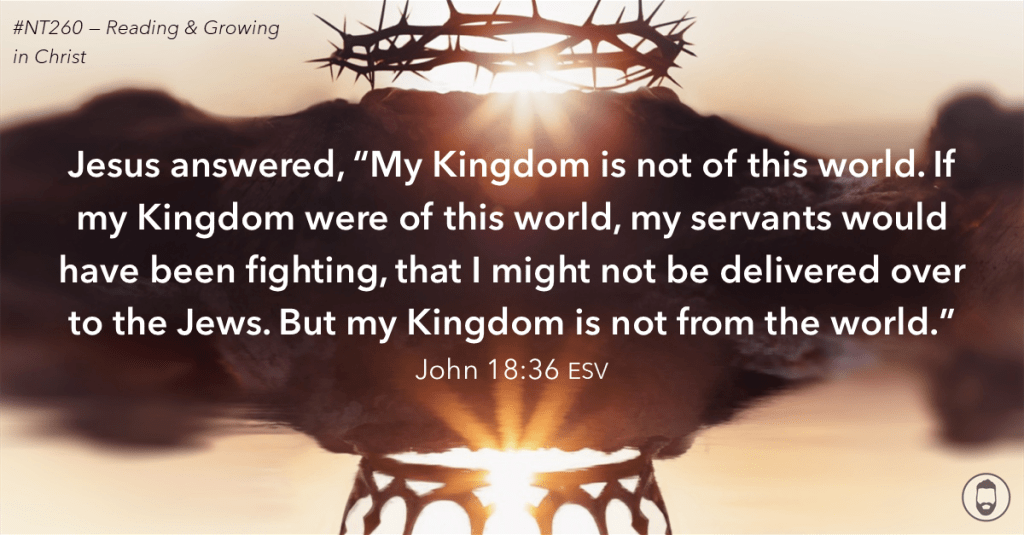
The final part of the chapter centers on Jesus before Pilate. The Jewish leaders want Him executed, but Pilate repeatedly finds no guilt in Him (John 18:28–29, 38). Jesus makes clear that He is indeed a King, but His kingdom is “not of this world” (John 18:36). He did not come to build an earthly political movement by force, but to bear witness to the truth and lay down His life (John 18:36–37). In bitter irony, the crowd rejects the innocent Son of the Father and asks for Barabbas, a robber and insurrectionist, to be released instead (John 18:39–40). The sinless King is condemned while the guilty man goes free. That exchange points us to the heart of the gospel: Jesus takes the place of sinners so that the guilty may be released.

🌀 Reflection:
John 18 reminds us that Jesus was never trapped by events. He chose the path of obedience all the way to the cross. At the same time, Peter’s denials remind us how weak we really are apart from grace. Are you trusting more in your own strength, loyalty, or resolve than in the faithfulness of Christ? Let this chapter humble you, but also comfort you: your salvation rests in the obedient King who stood firm when everyone else failed.

💬 Mission Challenge:
Encourage someone today who feels ashamed of failure by pointing them to Jesus in John 18 — especially the One who stood firm for weak disciples and went to the cross for guilty people.


Continue reading in our NT260 plan in the rest of Phase 4 — That You May Believe.

John 17 on 3/15 | NT260 — Reading & Growing in Christ

Click here for John 17 audio:


Read it. Pray it. Share it. Live it.

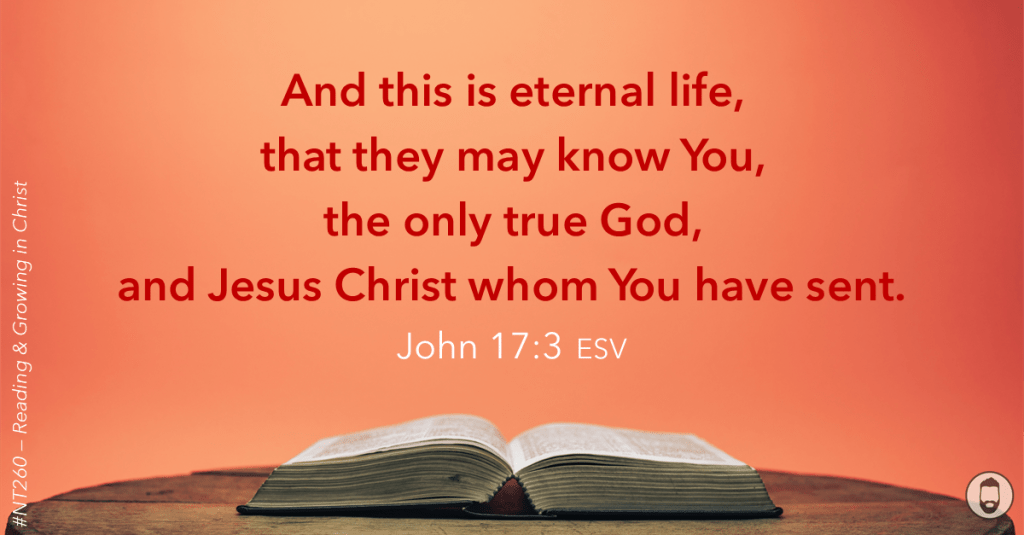
John 17 records Jesus’ great prayer to the Father just before the cross. He first prays for Himself, asking the Father to glorify Him so that He may glorify the Father (John 17:1–5). In John’s Gospel, that glory is tied especially to the cross, resurrection, and return to the Father (John 12:23; 13:31–32). Jesus speaks as the eternal Son who shared glory with the Father before the world existed (John 17:5). He also defines eternal life in deeply personal terms: not merely endless existence, but knowing “the only true God, and Jesus Christ whom you have sent” (John 17:3). Jesus has finished the work the Father gave Him to do in revealing the Father’s name and preparing to lay down His life for His people (John 17:4, 6; cf. John 1:18).

Then Jesus prays for His disciples, those whom the Father had given Him out of the world (John 17:6–19). He says they have received His words and believed that He came from the Father (John 17:8). Because Jesus is about to leave them in the world, He asks the Father to keep them, guard them, fill them with His joy, and protect them from the evil one (John 17:11–15). He does not pray that they would be taken out of the world, but that they would be preserved in the midst of it (John 17:15). They are not of the world, just as Jesus is not of the world (John 17:14, 16). So He asks the Father, “Sanctify them in the truth; your word is truth” (John 17:17). God’s word sets His people apart, shapes them in holiness, and sends them on mission. Just as the Father sent the Son, the Son now sends His people into the world (John 17:18).

Finally, Jesus prays not only for the eleven, but for all who will believe through their word — including us (John 17:20). He prays for the unity of His church, not a shallow unity built on ignoring truth, but a deep, living unity grounded in the Father and the Son (John 17:21–23). This kind of unity becomes a witness to the world that Jesus truly was sent by the Father (John 17:21, 23). Jesus also prays that His people will one day be with Him and see His glory (John 17:24). The prayer ends with love: Jesus has made the Father known and will continue to do so, “that the love with which you have loved me may be in them, and I in them” (John 17:26). This chapter reminds us that our salvation, security, sanctification, unity, mission, and future glory are all held in the loving prayer of Jesus.

🌀 Reflection:
It is a comfort beyond words to realize that before going to the cross, Jesus prayed for His people — and not only for the disciples in that room, but for all who would later believe through their witness. Do you think of eternal life mainly as something future, or as a present relationship of knowing God through Jesus Christ? Let this chapter remind you that to belong to Jesus is to be deeply loved, carefully kept, and purposefully sent.

💬 Mission Challenge:
Pray John 17:17–21 for your church, your family, or a few fellow believers by name, asking God to grow you all in truth, holiness, and Christ-centered unity so the world may better see Jesus.


Continue reading in our NT260 plan in the rest of Phase 4 — That You May Believe.