
Titus 3 on 1/28 | NT260 — Reading & Growing in Christ

Click here for Titus 3 audio:


Read it. Pray it. Share it. Live it.

Paul calls believers to live with a steady, humble witness in the world. Titus is to remind the church to respect authority, be ready to do good, and relate to others with gentleness — refusing slander, avoiding quarrels, and showing real courtesy to all (vv. 1–2). This kind of life stands in sharp contrast to the chaos of false teaching. Where divisive voices stir conflict and prove “unfit for any good work,” Christians are to be known for peaceable, helpful lives that reflect the goodness of the gospel (vv. 1–2, 8; cf. 1:16, 2:14).

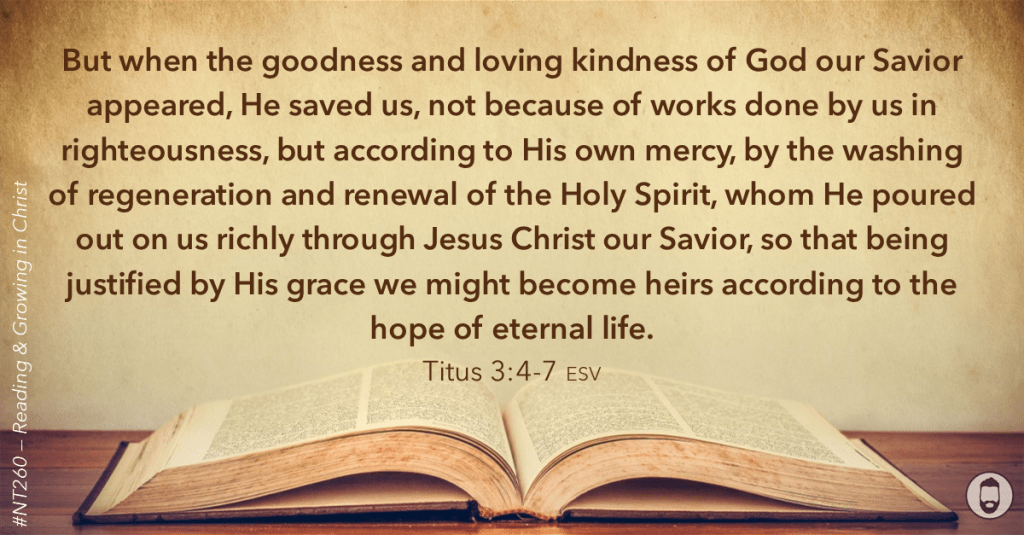
Paul then grounds that calling in God’s saving mercy. We were once foolish, enslaved to sinful desires, and marked by hostility (v. 3). But when God’s kindness appeared in Jesus, He saved us — not because of righteous deeds we had done, but by His mercy — cleansing us through the washing of regeneration and renewing us by the Holy Spirit, poured out richly through Christ (vv. 4–6). Justified by grace, believers become heirs with the sure hope of eternal life (v. 7). That’s why Titus must insist on these truths: grace that saves also creates people who are careful to devote themselves to good works for the good of others (v. 8).

Paul closes by warning against fruitless arguments and persistent division. Foolish controversies only distract from the mission, and a person who refuses correction and continues to divide must eventually be separated from the community for the sake of the church’s health (vv. 9–11). Even the closing greetings and travel plans reinforce the letter’s theme: God’s people are to support gospel workers and meet urgent needs so the church will not be unfruitful (vv. 12–15).

🌀 Reflection:
How does remembering who you once were — and how God saved you by mercy alone — shape the way you speak to and treat people who are difficult, unbelieving, or opposed to the gospel (vv. 2–7)?

💬 Mission Challenge:
Look for one tangible way this week to do good for someone outside your church — serve, encourage, or help meet a real need — so your life quietly points to the grace that saved you (vv. 1, 8, 14).

Click here to return to the contents page for Phase 2.4 — The Savior, His Church, and the Mission.
Titus 2 on 1/27 | NT260 — Reading & Growing in Christ

Click here for Titus 2 audio:


Read it. Pray it. Share it. Live it.

Paul turns from confronting false teachers to instructing Titus on what faithful gospel living looks like in everyday life. Titus is to teach “what accords with sound doctrine,” showing how the truth shapes real people in real relationships, through discipleship (v. 1). Paul addresses the church by age and role — older men and women, younger men and women, and servants — calling each group to lives marked by self-control, integrity, faith, love, and good works (vv. 2–10). Older believers are to model maturity, younger believers are to learn wisdom, and all are to live in ways that protect the reputation of God’s Word and make the gospel attractive to the watching world (vv. 5, 8, 10).

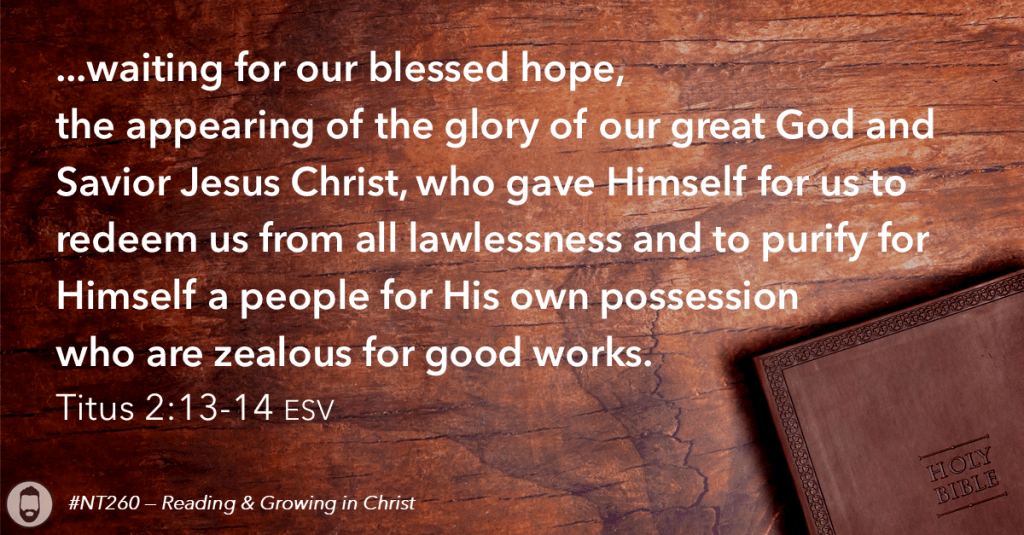
Paul then grounds these commands in the heart of the gospel itself. The grace of God has appeared in Jesus Christ, bringing salvation and training God’s people to say no to sin and yes to godly living in the present age (vv. 11–12). Christians live this way because they are waiting for their “blessed hope” — the return of Jesus, our great God and Savior (v. 13). Christ gave Himself to redeem and purify a people who belong to Him and are eager to do good works (v. 14). Because this message comes with divine authority, Titus is to teach, encourage, and correct boldly, allowing no one to dismiss the transforming power of grace (v. 15).

🌀 Reflection:
How is God’s grace currently training you — not just saving you from sin, but shaping how you live today as you wait for Christ’s return (vv. 11–13)?

💬 Mission Challenge:
Look for one practical way this week to “adorn the doctrine of God our Savior” by intentionally living with integrity, kindness, and self-control in your home, work, or community (v. 10).


Click here to return to the contents page for Phase 2.4 — The Savior, His Church, and the Mission.


Titus 1 on 1/26 | NT260 — Reading & Growing in Christ

Click here for Titus 1 audio:


Read it. Pray it. Share it. Live it.

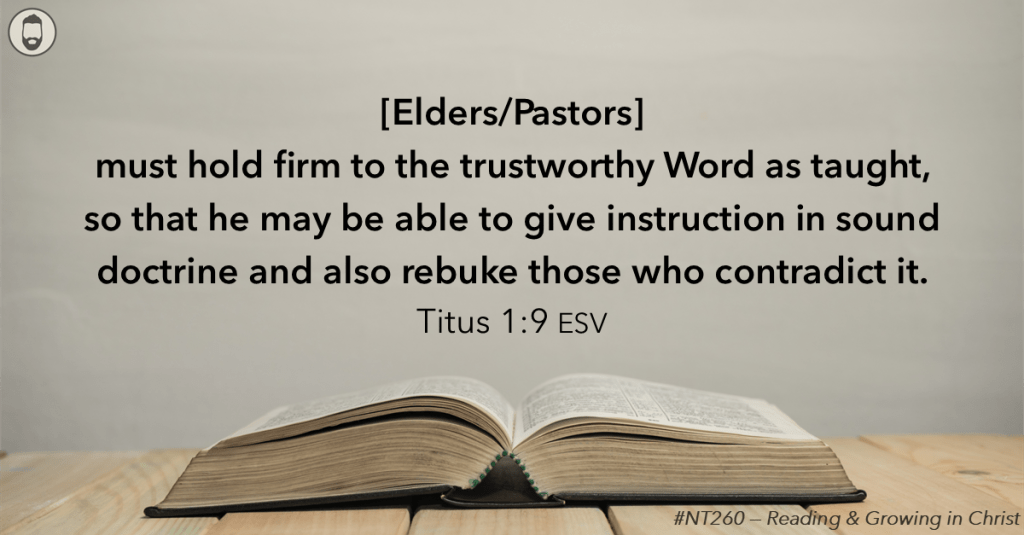
Then Paul explains Titus’s task in Crete: finish what remains and appoint elders (pastors) in every town (v. 5). These leaders must be above reproach at home and in public—faithful, self-controlled, not greedy or hot-tempered, but hospitable and disciplined (vv. 6–8). Just as important, they must hold firmly to the trustworthy Word so they can teach sound doctrine and rebuke error (v. 9). That’s urgent because false teachers were spreading empty talk for shameful gain, upsetting families, and promoting myths and human commands (vv. 10–11, 14). Paul says Titus must confront this firmly so the church becomes “sound in the faith” (v. 13). The problem isn’t external rules but defiled hearts—some profess God yet deny Him by their works, showing they are unfit for good works (vv. 15–16).

🌀 Reflection:
Where do you most need the “truth” of the gospel to shape your everyday choices so your life matches your confession (vv. 1, 16)?

💬 Mission Challenge:
Encourage a pastor/leader this week by thanking them for holding to Scripture—and commit to reject “empty talk” by opening the Word with someone instead (vv. 9–11).


Click here to return to the contents page for Phase 2.4 — The Savior, His Church, and the Mission.