
Philippians 4 on 1/19 | NT260 — Reading & Growing in Christ

Click here for Philippians 4 audio:


Read it. Pray it. Share it. Live it.

Paul closes his letter by urging the Philippians to stand firm in the Lord and to pursue unity for the sake of the gospel (v. 1). He addresses a real conflict between two believers, Euodia and Syntyche, calling them—and the church around them—to be of the same mind in Christ (vv. 2–3). Unity is not optional or secondary; it is essential to faithful gospel witness. Paul’s affection for this church is clear as he calls them his “joy and crown,” reminding them that perseverance in Christ is both a present calling and an eternal hope (v. 1).

From unity, Paul turns to the inner life of faith. He calls believers to rejoice in the Lord always, to display gentleness toward others, and to replace anxiety with prayer marked by thanksgiving (vv. 4–6). The result is not merely emotional calm, but the peace of God, which guards hearts and minds in Christ Jesus—an inner protection rooted in God’s sovereignty and nearness (v. 7). Paul also stresses disciplined thinking: believers are to set their minds on what is true, honorable, just, pure, lovely, and praiseworthy, and to practice what they have learned and seen lived out in faithful examples (vv. 8–9).

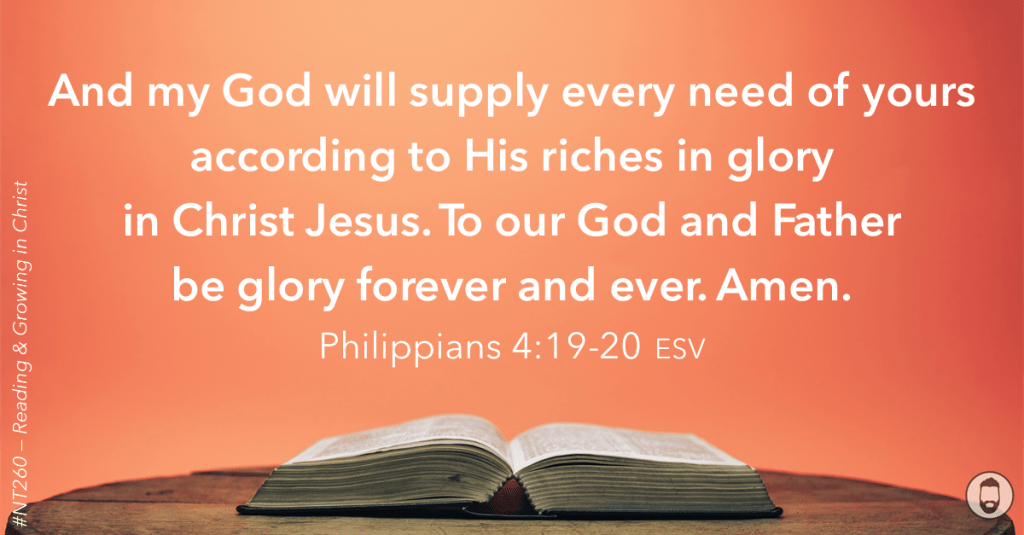
Paul then thanks the Philippians for their generous support, using his own life to model contentment in every circumstance (vv. 10–13). Whether in abundance or need, Paul has learned that strength comes not from circumstances but from Christ who empowers him (v. 13). Their generosity, he explains, is not only a kindness to him but a spiritual offering pleasing to God, and he assures them that God will supply every need according to His riches in Christ Jesus (vv. 18–19). The letter ends with greetings, a doxology, and a final reminder that all of life—from unity to contentment to generosity—exists for the glory of God through the grace of the Lord Jesus Christ (vv. 20–23).

🌀 Reflection:
Where are you tempted toward anxiety, disunity, or dissatisfaction, and how does Paul’s call to prayerful trust and contentment challenge your response?

💬 Mission Challenge:
Practice visible gospel unity and generosity this week—encourage reconciliation, pray with thanksgiving, and meet a tangible need as an act of worship to God.

Click here to return to the contents page for Phase 2.4 — The Savior, His Church, and the Mission.

Philippians 3 on 1/18 | NT260 — Reading & Growing in Christ

Click here for Philippians 3 audio:


Read it. Pray it. Share it. Live it.

Paul begins by calling the Philippians to rejoice in the Lord, then immediately warns them against false teachers who insist that righteousness comes through obedience to the law and outward religious markers (vv. 1–3). With sharp language, he exposes the danger of putting confidence in the flesh—anything outside of Christ—as a false hope. True worship, Paul explains, is by the Spirit of God, true boasting is in Christ Jesus, and true confidence rests not in human effort but in God’s saving work (v. 3, Romans 2:28–29).

To make his point unmistakably clear, Paul turns to his own story. If anyone could claim righteousness by religious pedigree and effort, it was him—circumcised according to the law, an Israelite, a Pharisee, zealous, and outwardly blameless (vv. 4–6). Yet Paul now considers all of those former “gains” as loss compared to the surpassing worth of knowing Christ Jesus (vv. 7–8). He longs to be found in Christ, possessing not a righteousness of his own, but the righteousness that comes from God through faith (v. 9, Romans 3:21–22). This righteousness unites him to Christ’s death and resurrection, shaping both his present suffering and his future hope (vv. 10–11).

Paul then describes the Christian life as a forward-looking pursuit. Though not yet perfect, he presses on toward the goal of full conformity to Christ, forgetting what lies behind and striving toward what lies ahead (vv. 12–14). He calls the Philippians to follow this example and to be discerning about those whose lives are shaped by earthly desires rather than the cross (vv. 17–19). In contrast to such enemies, believers belong to a different kingdom: their citizenship is in heaven, and they eagerly await Jesus, who will transform their lowly bodies to be like His glorious body when He returns (vv. 20–21, 1 Corinthians 15:42–44).

🌀 Reflection:
What are you tempted to place confidence in—past achievements, spiritual effort, or personal credentials—rather than resting fully in Christ?

💬 Mission Challenge:
Identify one way this week to intentionally “press on” toward Christlikeness—letting go of self-reliance and choosing obedience that flows from faith in Jesus.


Click here to return to the contents page for Phase 2.4 — The Savior, His Church, and the Mission.


Philippians 2 on 1/17 | NT260 — Reading & Growing in Christ

Click here for Philippians 2 audio:


Read it. Pray it. Share it. Live it.

Paul calls the Philippians to a life of unity shaped by humility and love. Because believers share encouragement in Christ, fellowship in the Spirit, and God’s deep affection, they are urged to be of the same mind—setting aside rivalry and self-promotion in order to look not only to their own interests but also to the interests of others (vv. 1–4). This unity is not bland sameness but a shared devotion to Christ that expresses itself in self-giving love. Paul knows this kind of humility does not come naturally, so he points them to the ultimate example.

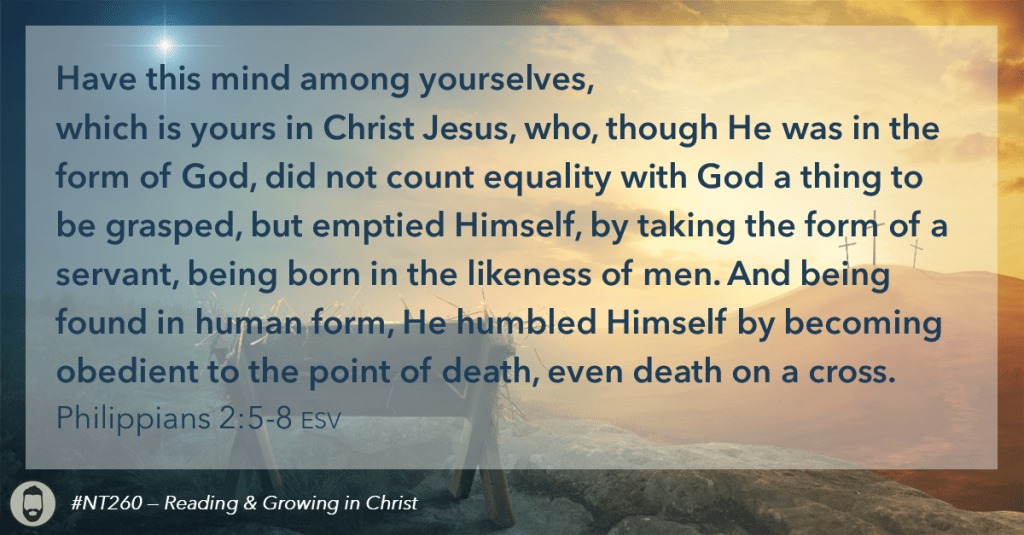
At the heart of the chapter is the stunning picture of Jesus’s humble obedience. Though eternally God, Christ did not cling to His rights or privileges but willingly took the form of a servant, becoming fully human and obedient even to death on a cross (vv. 6–8). Because of this obedience, God highly exalted Him and bestowed on Him the name above every name, so that every knee will bow and every tongue confess that Jesus Christ is Lord—to the glory of God the Father (vv. 9–11, Isaiah 45:23). Paul includes this confession not merely for doctrine, but to shape daily life: humility flows from seeing who Jesus is and what He has done.

With Christ’s example before them, believers are called to “work out” their salvation—not by earning it, but by living out its reality through obedient lives empowered by God Himself (vv. 12–13). They are to shine as lights in a dark and crooked world, holding fast to the word of life with joy rather than grumbling (vv. 14–16). Paul then points to Timothy and Epaphroditus as living examples of this Christlike service—men who put the good of others before themselves and gladly poured out their lives for the gospel (vv. 19–30). The chapter closes by showing that humility, unity, and joyful sacrifice are not abstract ideals but a way of life shaped by Jesus.

🌀 Reflection:
Where is God calling you to lay aside self-interest so that the humility of Christ might be more clearly seen in your relationships?

💬 Mission Challenge:
Intentionally serve someone today in a quiet, unseen way—reflecting the humility of Christ rather than seeking recognition.


Click here to return to the contents page for Phase 2.4 — The Savior, His Church, and the Mission.


Philippians 1 on 1/16 | NT260 — Reading & Growing in Christ

Click here for Philippians 1 audio:


Read it. Pray it. Share it. Live it.

Paul opens his letter with deep affection and gratitude for the believers in Philippi, thanking God for their partnership in the gospel from the very beginning (vv. 3–5). Even while imprisoned, Paul prays for them with joy, confident that the God who began a good work in them will surely bring it to completion at the day of Jesus Christ (v. 6). His prayer centers on love—love that grows in knowledge and discernment so that it results in lives marked by holiness, integrity, and the fruit of righteousness that comes through Jesus Christ, all to the glory of God (vv. 9–11).

Paul then addresses his imprisonment directly, assuring the Philippians that what appears to be a setback has actually served to advance the gospel (v. 12). His chains have opened doors for witness among the imperial guard and have emboldened other believers to proclaim Christ more courageously (vv. 13–14). Even when some preach Christ with wrong motives, Paul rejoices—not because of their intentions, but because Christ is proclaimed (vv. 15–18). His joy is rooted not in circumstances but in the unstoppable progress of the gospel.

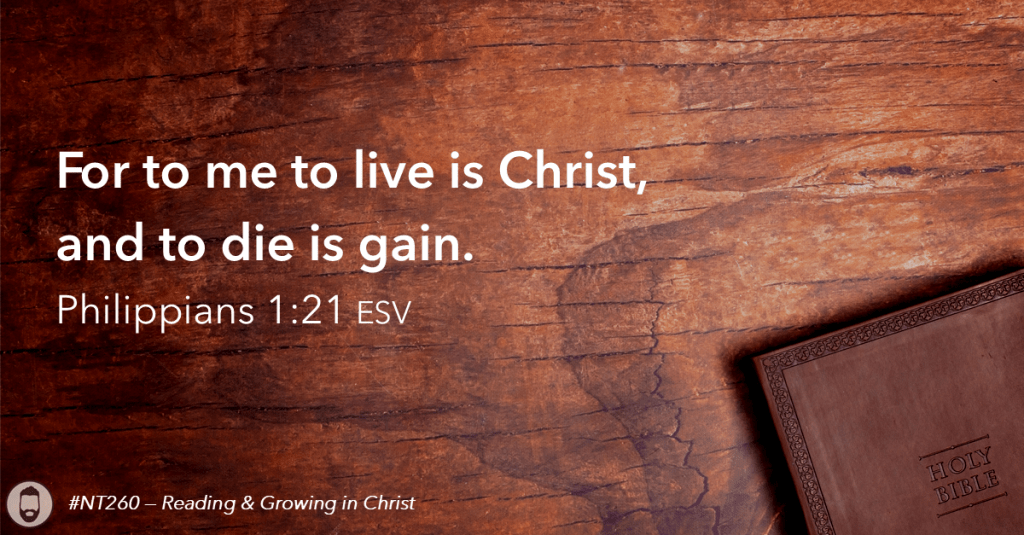
This perspective shapes Paul’s famous confession: “For to me to live is Christ, and to die is gain” (vv. 21). Whether released or executed, Paul’s chief desire is that Christ be honored in his body (v. 20). Though he longs to be with Christ, he is convinced that remaining will serve the Philippians’ progress and joy in the faith (vv. 22–26). He closes the chapter by urging them to live as citizens worthy of the gospel—standing united, unafraid of opposition, and willing to suffer for Christ, knowing that both faith and suffering are gracious gifts from God (vv. 27–30).

🌀 Reflection:
How would your perspective on daily challenges change if your greatest goal—like Paul’s—was simply that Christ be honored, no matter the outcome?

💬 Mission Challenge:
Encourage another believer today by reminding them that God is still at work in their circumstances and will faithfully complete what He has begun.


Click here to return to the contents page for Phase 2.4 — The Savior, His Church, and the Mission.