James 5 on 9/2 | NT260 — Reading & Growing in Christ

Click here for James 5 audio:


Read it. Pray it. Share it. Live it.

James closes his letter with strong warnings and powerful encouragements. He begins by denouncing the wealthy oppressors who hoard riches, defraud workers, and live in selfish luxury, reminding them that their wealth will decay and that the Judge hears the cries of the defrauded (5:1–6). In contrast, believers are called to patience and steadfastness until the Lord’s coming, just like the farmer waits for rain or Job endured suffering (5:7–11). Instead of grumbling or swearing oaths, they are to live with integrity and hope in God’s promises (5:9, 12).

The chapter ends with a strong call to prayer and mutual care in the church. Those who suffer should pray, the cheerful should sing, and the sick should call the elders for prayer and anointing (5:13–15). James highlights the power of prayer by pointing to Elijah, showing how God works mightily through His people when they pray in faith (5:16–18). Finally, he urges the community to lovingly pursue those who wander from the truth, knowing that bringing someone back can save them from death and cover a multitude of sins (5:19–20).

🌀 Reflection: Do you believe prayer is as powerful as James describes? What would change if you consistently brought your struggles, joys, and others’ needs before God with faith?

💬 Mission Challenge: Take time this week to intercede for someone who is sick, suffering, or straying from the Lord. Pray persistently, trusting God to work.

James 4 on 9/1 | NT260 — Reading & Growing in Christ

Click here for James 4 audio:


Read it. Pray it. Share it. Live it.

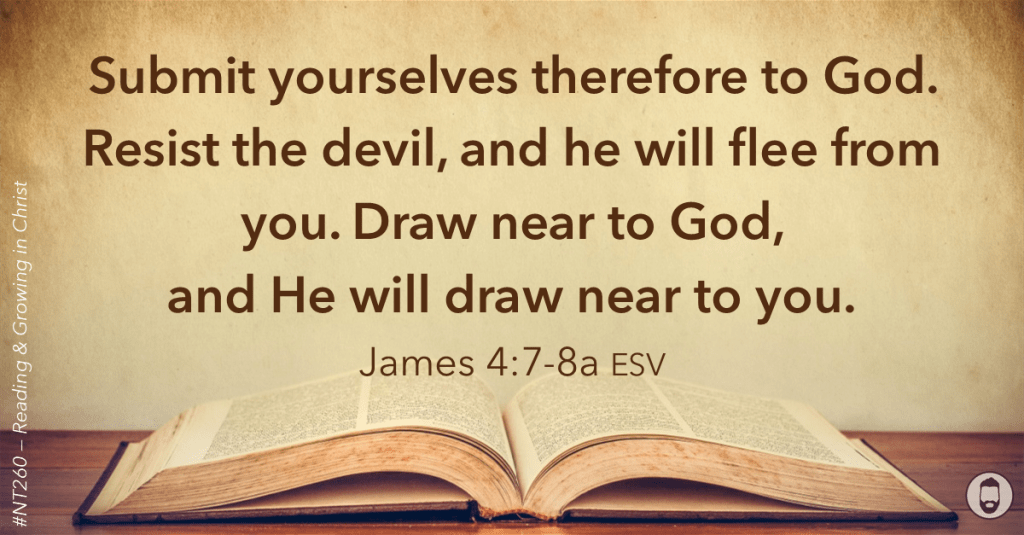
James confronts the root of quarrels and divisions in the church: selfish desires that battle within people’s hearts (4:1–3). Instead of seeking God, they covet, fight, and even pray with wrong motives. Friendship with the world, he warns, is enmity with God (4:4). Yet grace is greater—God opposes the proud but gives grace to the humble (4:6). The way forward is clear: submit to God, resist the devil, draw near to Him, and repent with sincerity (4:7–10). James then reminds believers not to slander or set themselves as judges, since there is only one Lawgiver and Judge—God Himself (4:11–12).

James also warns against arrogance in planning for the future (4:13–17). Life is a mist that quickly vanishes, and every plan must be made in humility, recognizing the Lord’s will. Boasting in tomorrow is sin, and so too is neglecting to do the good we know we ought to do. In all things, James calls for wholehearted devotion to God, humble repentance, and lives that reflect dependence on Him.

🌀 Reflection: Where do selfish desires stir up conflict in your life? What would it look like to humble yourself before God and live with “if the Lord wills” shaping your plans?

💬 Mission Challenge: This week, seek reconciliation with someone you’ve spoken against or quarreled with. Let your words be humble and your actions show you belong fully to God.

James 3 on 8/31 | NT260 — Reading & Growing in Christ

Click here for James 3 audio:


Read it. Pray it. Share it. Live it.

James warns of the power and danger of the tongue. Though small, like a bit in a horse’s mouth or a rudder steering a ship, the tongue can direct the whole course of life (3:1–5). Left unchecked, it becomes a fire set on fire by hell itself, capable of destroying relationships and staining the whole body (3:6–8). With the same mouth we bless God yet curse those made in His image—a contradiction that should not be among believers (3:9–12). Words reveal the condition of the heart, and no one can truly tame the tongue apart from God’s Spirit.

In contrast to earthly, selfish wisdom that produces jealousy, disorder, and strife, James points us to the “wisdom from above”—pure, peaceable, gentle, merciful, impartial, and sincere (3:13–18). This heavenly wisdom brings a harvest of righteousness sown in peace. True wisdom is not shown in clever speech but in humble conduct, meekness, and peacemaking.

🌀 Reflection: Do your words more often build up or tear down? Where do you see the need for God’s wisdom to replace selfish ambition in your speech and relationships?

💬 Mission Challenge: This week, practice peacemaking with your words—whether in conversation, online, or in prayer. Speak truth with gentleness and mercy, showing wisdom from above.

James 2 on 8/30 | NT260 — Reading & Growing in Christ

Click here for James 2 audio:


Read it. Pray it. Share it. Live it.

James warns against showing favoritism in the church. To honor the wealthy while dishonoring the poor is to violate the royal law of love and become “judges with evil thoughts” (2:1–7). God often chooses the poor to be rich in faith, heirs of His kingdom, while the rich of this world are often those who oppress and blaspheme Christ’s name. To show partiality is sin and makes one guilty of breaking God’s whole law (2:8–11). Instead, believers must live and speak as those judged under the “law of liberty,” remembering that mercy triumphs over judgment (2:12–13; Lev. 19:18; Matt. 22:39).

Faith without works is dead (2:14–26). Mere words of blessing for the needy, without action, are useless. Even demons believe the truth about God, but they do not obey Him (2:19). True saving faith always produces works—like Abraham offering Isaac or Rahab protecting the spies. Their obedience demonstrated the reality of their faith. James is not teaching salvation by works, but that genuine faith is never alone; it is proven by what it does (Gen. 15:6; Heb. 11:17, 31).

🌀 Reflection: Do you ever rely on what you say you believe, without living it out? Where might God be calling you to put action behind your confession of faith today?

💬 Mission Challenge: Look for one specific way to live out mercy and love toward someone in need this week—showing that your faith is alive.

James 1 on 8/29 | NT260 — Reading & Growing in Christ

Click here for James 1 audio:


Read it. Pray it. Share it. Live it.

James writes to believers scattered across the world, calling them to live out real faith in the middle of trials (1:1). He says that testing produces steadfastness and maturity, and even when life is hard, we can ask God for wisdom—because He gives generously to those who trust Him without doubting (1:2–8; Prov. 2:1–8). The poor can boast in their exaltation in Christ, while the rich should remember how quickly wealth fades (1:9–11; Isa. 40:6–8). Those who endure trials will receive the crown of life (1:12; Rev. 2:10). Temptation, James reminds us, does not come from God but from our own sinful desires, which lead to sin and death. Instead, every good and perfect gift comes from God, who brought us new life through His Word (1:13–18; Rom. 8:28; 1 Pet. 1:23).

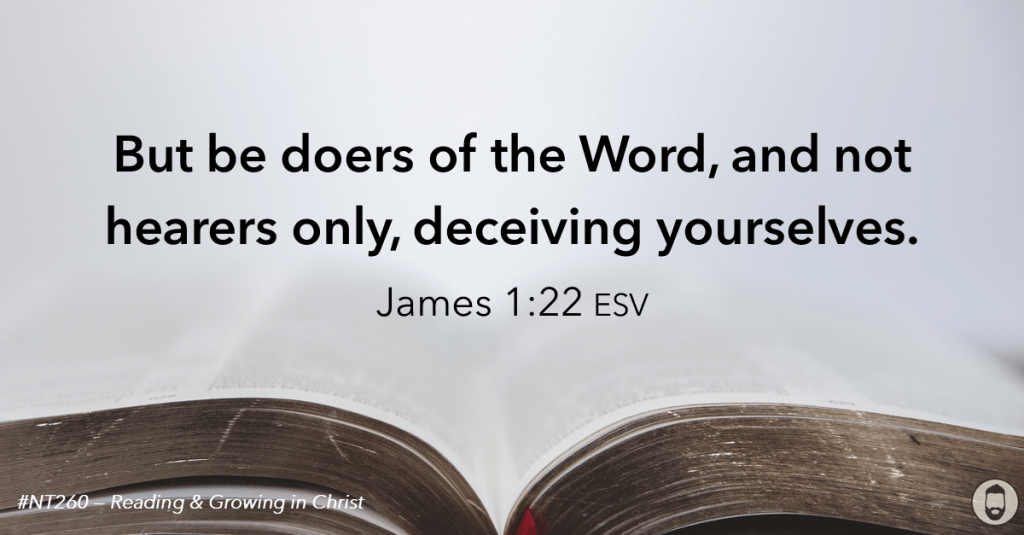
True faith is not just hearing but doing God’s Word (1:19–25). James urges believers to be quick to listen, slow to speak, and slow to anger, putting away sin and receiving the implanted Word that saves (1:19–21; Prov. 10:19; Jer. 31:33). God’s Word is like a mirror—showing us who we are and what needs to change—but blessing comes to those who act on it (1:22–25; Matt. 7:24–27). Real religion is more than words or rituals: it shows up in bridled speech, compassion for the vulnerable, and living unstained by the world (1:26–27; Isa. 1:17; John 13:35).

🌀 Reflection: Are you tempted to only hear God’s Word without living it out? Where might the Spirit be showing you something in the “mirror” of Scripture that needs action today?

💬 Mission Challenge: Look for one way today to put your faith into action—whether by serving someone in need, speaking with kindness, or practicing patience.