
Click here for 1 John 3 audio:
Read it. Pray it. Share it. Live it.
John begins with wonder: the Father has loved us so greatly that we are called His children — and that is truly what we are (1 John 3:1). The world does not understand believers because it did not know Jesus either (1 John 3:1). But our identity is not just future; it is present. We are God’s children now, even though the fullness of what we will become has not yet been revealed (1 John 3:2). One day, when Christ appears, believers will be like Him in glory, purity, and freedom from sin, because we shall see Him as He is (1 John 3:2; cf. Phil. 3:20–21). This hope is not meant to make us passive. It moves us to pursue holiness now. Those who truly hope in Christ seek to be pure because He is pure (1 John 3:3).
John then draws a sharp contrast between the children of God and the children of the devil. Sin is not small or harmless; it is lawlessness, rebellion against God (1 John 3:4). Jesus appeared to take away sins, and in Him there is no sin at all (1 John 3:5). Therefore, no one who truly abides in Christ can make a settled pattern of sinning (1 John 3:6, 9). John is not saying Christians never sin (cf. 1 John 1:8–2:1), but that a life marked by ongoing, unrepentant sin shows a person does not truly know Christ. By contrast, those born of God practice righteousness because God’s seed abides in them (1 John 3:7–10). Jesus came not only to forgive sin but to destroy the works of the devil (1 John 3:8). That means belonging to Christ changes how a person lives.
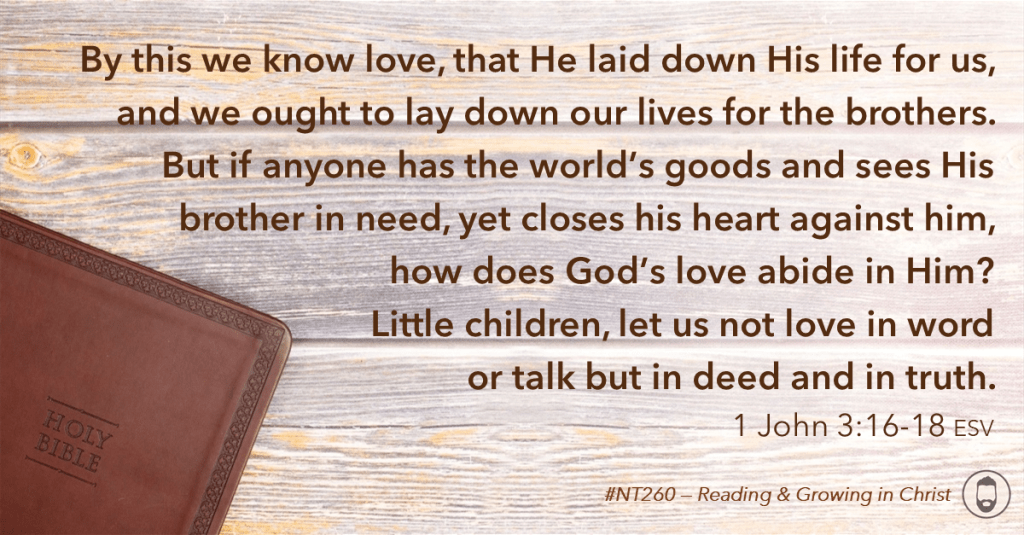
John then returns to one of his major themes: love for fellow believers. This is not a new idea but the message Christians have heard from the beginning — that we should love one another (1 John 3:11). Cain becomes the warning example. He hated his brother Abel because Abel’s deeds were righteous and his own were evil (1 John 3:12). In the same way, the world still hates those who belong to God (1 John 3:13). But believers know they have passed from death to life because they love the brothers (1 John 3:14). Hatred is not a minor issue; John says it is the heart of murder (1 John 3:15; cf. Matt. 5:21–22). Real love is seen most clearly in Jesus, who laid down His life for us (1 John 3:16). So Christian love must move beyond words into action. If someone sees a brother in need and refuses to help, John asks how God’s love can truly abide in that person (1 John 3:17–18).
John closes the chapter by showing that loving obedience brings assurance. When believers love in deed and truth, they can know they belong to the truth and can quiet their hearts before God (1 John 3:18–19). Even when our hearts trouble us, God is greater than our hearts and knows everything fully (1 John 3:20). As believers walk in obedient faith, they gain confidence before God in prayer (1 John 3:21–22). John summarizes God’s command simply and clearly: believe in the name of His Son Jesus Christ and love one another (1 John 3:23). Faith in Christ and love for His people belong together. Those who keep His commandments abide in Him, and His abiding presence is confirmed by the Holy Spirit whom He has given us (1 John 3:24).
🌀 Reflection:
Is your hope in Christ’s return making you more like Jesus now? John shows that real assurance is not found in empty claims but in a life shaped by righteousness, repentance, and practical love for others.
💬 Mission Challenge:
Look for one tangible way to love a brother or sister in Christ today — meet a need, give encouragement, or make a sacrifice that reflects the self-giving love of Jesus.
Continue reading in our NT260 plan in the rest of Phase 4 — That You May Believe.

 Just Keith Harris