
Click here for John 14 audio:
Read it. Pray it. Share it. Live it.
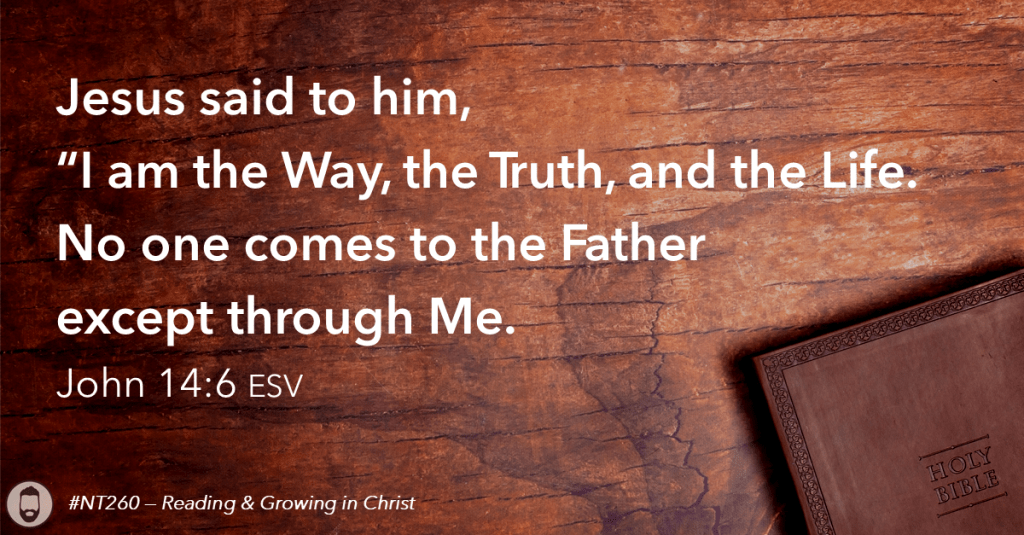
John 14 begins with Jesus speaking peace into troubled hearts. The disciples are confused and shaken because Jesus has told them He is going away, but He tells them to trust Him just as they trust God (John 14:1). His departure is not abandonment. He is going to the Father’s house to prepare a place for His people, and He promises that He will come again and take them to Himself so that they may be with Him forever (John 14:2–3). When Thomas says they do not know the way, Jesus answers with one of the clearest and most glorious statements in all of Scripture: “I am the way, and the truth, and the life” (John 14:6). He does not merely show the way to God. He is the way. He does not simply teach truth. He is the truth. He does not merely offer life. He is the life. That is why no one comes to the Father except through Him (John 14:6; cf. Acts 4:12). Then Jesus tells Philip that to see Him is to see the Father, because He perfectly reveals the Father in His words and works (John 14:8–11).
Jesus goes on to comfort His disciples with the promise that His going away will actually lead to greater blessing. Because He is going to the Father, His followers will continue His work in the power of the Holy Spirit, and the gospel will go farther than it had during His earthly ministry alone (John 14:12). He also calls them to pray in His name — that is, in line with His character, will, and glory — promising to answer so that the Father may be glorified in the Son (John 14:13–14). At the center of this chapter is the promise of “another Helper,” the Holy Spirit, who will be with believers forever (John 14:16–17). Jesus will not leave His disciples as orphans (John 14:18). Through the Spirit, the presence of God will dwell in His people in a new covenant way, and the Father and the Son will make their home with those who love Christ and keep His word (John 14:21, 23; cf. Ezek. 36:26–27).
This chapter also makes clear that love for Jesus is not sentimental or merely verbal. Love shows itself in obedience (John 14:15, 21, 23–24). The Spirit will help the disciples by teaching them and bringing Jesus’ words to their remembrance (John 14:26), and Jesus leaves them not with the shaky peace the world gives, but with His own peace (John 14:27). Even His statement that “the Father is greater than I” does not deny His deity, but reflects His humble mission as the sent Son who obeys the Father and returns to the glory He shared with Him before (John 14:28; cf. John 1:1; 17:5). As the cross draws near, Jesus shows that Satan has no claim on Him (John 14:30). He is not being swept away by dark powers or tragic events. He is moving forward in loving obedience to the Father (John 14:31). John 14 reminds us that in a troubled world, believers have a prepared place, a present Helper, a living Savior, and a peace that cannot be taken away.
🌀 Reflection:
When life feels uncertain, Jesus does not merely give directions — He gives Himself. Our hearts are steadied not by having every answer, but by knowing that Christ is the way to the Father, the truth we can trust, and the life that cannot be destroyed. Because He lives and because His Spirit is with us, we do not face trouble alone (John 14:18–19, 27).
💬 Mission Challenge:
Encourage someone today who is anxious or hurting by sharing John 14:1–6 or John 14:27, and point them to the peace and hope that are found only in Jesus.
Continue reading in our NT260 plan in the rest of Phase 4 — That You May Believe.

 Just Keith Harris
1 Comment