
Click here for John 11 audio:
Read it. Pray it. Share it. Live it.
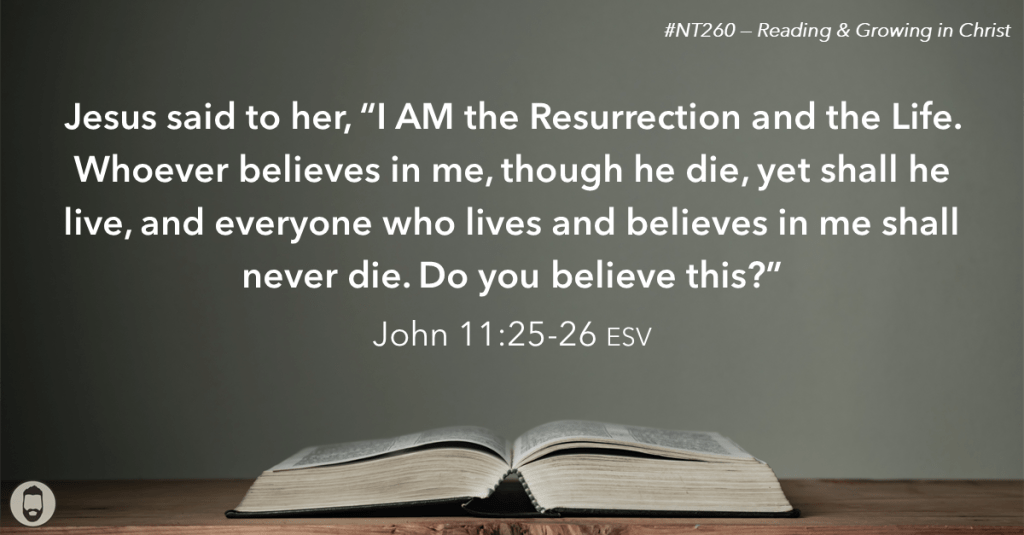
John 11 brings us to one of the most powerful signs in the whole Gospel. Lazarus, the beloved brother of Mary and Martha, becomes sick, and the sisters send word to Jesus (John 11:1–3). Yet Jesus does not rush there immediately. Because He loves them, He delays, so that the glory of God might be displayed and the faith of His disciples might be strengthened (John 11:4–6, 15). By the time Jesus arrives, Lazarus has been in the tomb four days (John 11:17). Both Martha and Mary say the same grieving words: “Lord, if you had been here, my brother would not have died” (John 11:21, 32). They know Jesus could have healed him, but they do not yet understand what He is about to reveal. Jesus then speaks one of the greatest truths in Scripture: “I am the resurrection and the life” (John 11:25). Resurrection is not merely an event at the end of time; it is bound up in the person of Jesus Himself.
As Jesus speaks with Martha, He calls her to personal faith, not just belief in a doctrine (John 11:23–27). Martha responds with a beautiful confession that Jesus is the Christ, the Son of God (John 11:27). Then Jesus comes to the tomb, sees the grief around Him, and is deeply moved (John 11:33, 38). He weeps (John 11:35). These are not tears of helplessness, but of holy sorrow in a world broken by sin and death. Then, after praying aloud so the people may know the Father sent Him, Jesus cries out, “Lazarus, come out” (John 11:41–43). And the man who had died comes out of the tomb (John 11:44). The One who is the light of the world now shows Himself as Lord even over the grave. This sign points beyond Lazarus to the greater victory that is coming through Jesus’ own death and resurrection (John 11:25–26; cf. John 5:25–29).
But as often happens in John, the miracle brings both faith and opposition. Many believe in Jesus because of what they have seen (John 11:45), yet others go to the Pharisees, and the miracle becomes the event that pushes the leaders toward a final decision to kill Him (John 11:46, 53). Caiaphas, meaning only political expediency, says it is better for one man to die for the people than for the whole nation to perish (John 11:49–50). Yet John shows that God is overruling even this wicked plan: Jesus really will die for the nation, and not for the nation only, but to gather into one the children of God scattered abroad (John 11:51–52). John 11 reminds us that Jesus’ path to glory runs through death — but not death as defeat. He is the resurrection and the life, and even the grave must obey His voice.
🌀 Reflection:
John 11 reminds us that Jesus is not absent in our grief, even when His timing is hard to understand. He may delay in ways that confuse us, but He never stops loving His people. The same Savior who wept at Lazarus’s tomb also stood before it in power. That means our sorrow is real, but it is never hopeless for those who belong to Christ.
💬 Mission Challenge:
Comfort someone who is hurting today by sharing John 11:25–26 with them and reminding them that for all who believe in Jesus, death is not the end.
Continue reading in our NT260 plan in the rest of Phase 4 — That You May Believe.

 Just Keith Harris
1 Comment