
Click here for 1 Peter 4 audio:
Read it. Pray it. Share it. Live it.
Peter calls suffering believers to think like Jesus. Since Christ suffered in the flesh, we “arm” ourselves with the same mindset: obedience to God is worth the cost (v. 1). When we’re willing to suffer rather than sin, it reveals a real break with our old way of life—we’re no longer living for human passions but for the will of God (vv. 1–2). Peter is blunt about what that old life looked like: sensuality, drunkenness, wild living, and idolatry (v. 3). And when you stop running with the crowd, the crowd notices. They may be shocked, offended, and even malicious—because your new life quietly exposes what they still love (v. 4). But Peter reminds us: the final verdict doesn’t belong to critics; everyone will give account to the Judge of the living and the dead (v. 5). Even Christians who have since died are not “lost” or disproven—death doesn’t cancel the gospel. Though judged in the flesh like all people (they die), they live in the spirit by God’s power (v. 6).
Because “the end of all things is at hand,” Peter doesn’t tell the church to panic—he tells them to pray. Be self-controlled and sober-minded so your prayers aren’t choked out by frenzy, fear, or distraction (v. 7). Then he turns to what sustains a church under pressure: earnest love that’s quick to forgive and slow to keep score (v. 8; cf. Proverbs 10:12). Keep opening your lives and your homes—hospitality without grumbling—because suffering has a way of making people either selfish or sacrificial (v. 9). And don’t hoard your gifts. God has given every believer grace to steward—some in speaking, some in serving—so that the whole body is strengthened and, in the end, God gets the glory through Jesus Christ (vv. 10–11; cf. Romans 12:6–8, 1 Corinthians 12:4–7).
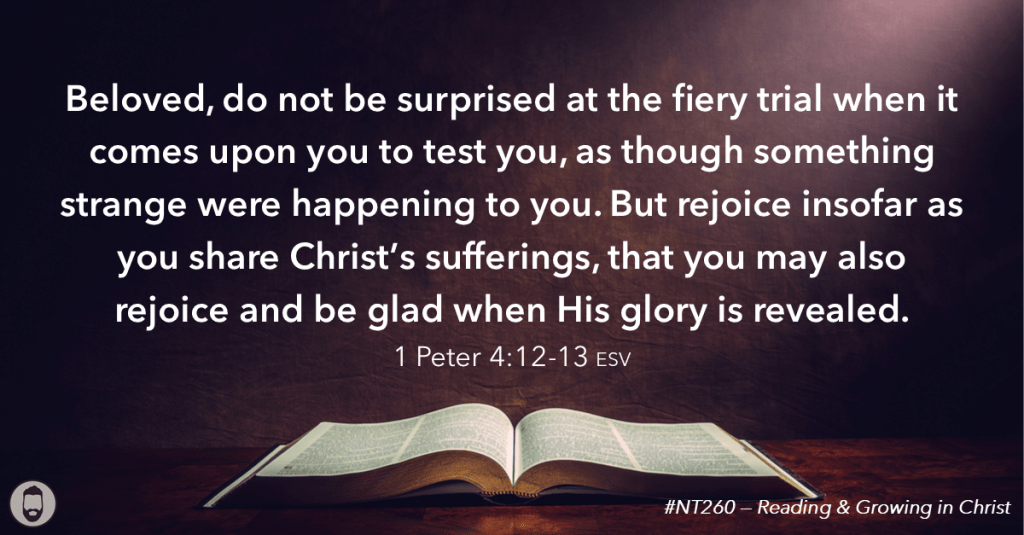
Finally, Peter addresses the “fiery trial” head-on. Don’t treat persecution as strange, accidental, or unfair—as though something random is happening (v. 12). If you suffer because you belong to Christ, you are blessed, and the Spirit of glory rests upon you (vv. 13–14). But Peter also insists we examine ourselves: don’t suffer as an evildoer—or even as a meddler—because there is no honor in suffering for sin (v. 15). Yet if you suffer “as a Christian,” don’t be ashamed; glorify God in that name (v. 16). Peter frames these trials as a purifying “judgment” that begins with God’s household—not condemnation, but refining (vv. 17–18; cf. Ezekiel 9:1–6, Malachi 3:1–4). And he closes with the posture that sums up the letter: keep doing good, and entrust your soul to a faithful Creator—depositing yourself with God for safe keeping, just as Jesus did (v. 19; cf. 2:23).
🌀 Reflection:
Where are you most tempted to blend in so you won’t be misunderstood—or to lash out when you are? Ask the Lord for Christ’s mindset: a steady resolve to obey God even when it costs you (vv. 1–2, 16, 19).
💬 Mission Challenge:
Use your gift to serve the church this week: encourage someone with God’s Word or meet a practical need—do it intentionally “by the strength that God supplies,” so God gets the glory (vv. 10–11).
Continue reading in our NT260 plan in the rest of Phase 3 — Persevering in the Last Day.

 Just Keith Harris
1 Comment