
Click here for Ephesians 5 audio:
Read it. Pray it. Share it. Live it.
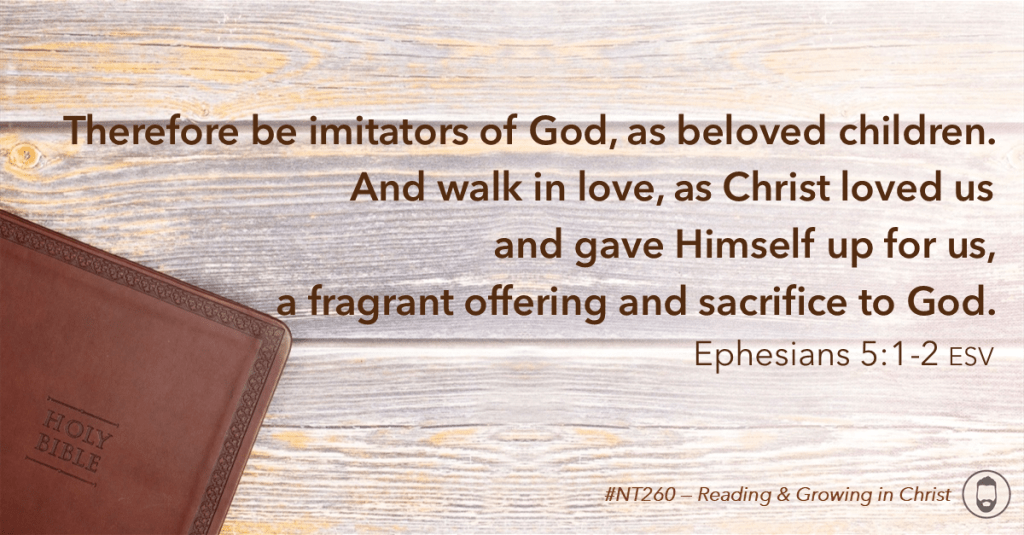
Paul calls believers to live like who they now are: “beloved children” of God (v. 1). The shape of that life is love—specifically, the self-giving love of Jesus, who “loved us and gave himself up for us” (v. 2; cf. 4:32). So Christian holiness is not cold rule-keeping; it’s imitation of our Father that flows out of being loved by Christ. That love shows up in what we refuse and what we replace. Paul is blunt: sexual immorality, impurity, and greedy desire don’t belong among the saints—not even as accepted, joked-about norms (vv. 3–4). Greed is not just “wanting more”; it’s a kind of idolatry that puts something else where God belongs (v. 5). And Paul warns against a deadly lie: that someone can claim Christ while living in a settled, unrepentant pattern of sin and still have peace with God (v. 6). Christians aren’t called to avoid all contact with unbelievers, but they must not partner with darkness by joining in its deeds (v. 7).
The reason is identity: you once were darkness, but now you are light in the Lord—so “walk as children of light” (v. 8). Light produces fruit—goodness, righteousness, and truth (v. 9)—and it learns to discern what pleases God in real-life situations (v. 10). Instead of participating in the “fruitless works of darkness,” believers expose them—carefully, wisely, and without slander—by the clarity of the Word and the contrast of a holy life (vv. 11–13). Paul even breaks into what sounds like an early hymn: “Awake, O sleeper… and Christ will shine on you” (v. 14). Then he urges wise living in an evil age: watch how you walk, redeem the time, and seek God’s revealed will—not secret clues, but Scripture-shaped wisdom for daily life (vv. 15–17). And at the center of wisdom is this: don’t be mastered by anything that distorts and controls (like drunkenness), but be continually filled with the Spirit (v. 18). A Spirit-filled church is marked by worship that overflows, gratitude that endures, and relationships shaped by humble, Christ-centered submission (vv. 19–21).
From there, Paul applies Spirit-filled life to the home. In marriage, wives are called to willingly submit to their own husbands as to the Lord, and husbands are called to love with Christlike sacrifice—laying down their lives for their wives’ good (vv. 22–25, 33). Paul roots this in the picture of Christ and the church: Christ is the Head and Savior who gave himself to make his bride holy, clean, and radiant (vv. 23, 26–27). Husbands are to love their wives as their own bodies because in God’s design the two become “one flesh” (vv. 28–31; cf. Genesis 2:24). And then Paul lifts our eyes higher: this “one flesh” union was always meant to point beyond itself—marriage is a living signpost toward the “mystery” now revealed, the covenant love between Christ and his church (v. 32).
🌀 Reflection:
Where are you most tempted to treat holiness like a private matter—something you can “manage” while still flirting with darkness (vv. 7–12)? What would walking as a child of light look like in that area this week (vv. 8–10)?
💬 Mission Challenge:
Redeem one opportunity today by doing a clear “light” action: encourage someone with worshipful words, give thanks out loud, or lovingly refuse participation in something you can’t do “to please the Lord” (vv. 10, 16, 19–20).
Click here to return to the contents page for Phase 2.4 — The Savior, His Church, and the Mission.

 Just Keith Harris
1 Comment