
Click here for Ephesians 3 audio:
Read it. Pray it. Share it. Live it.
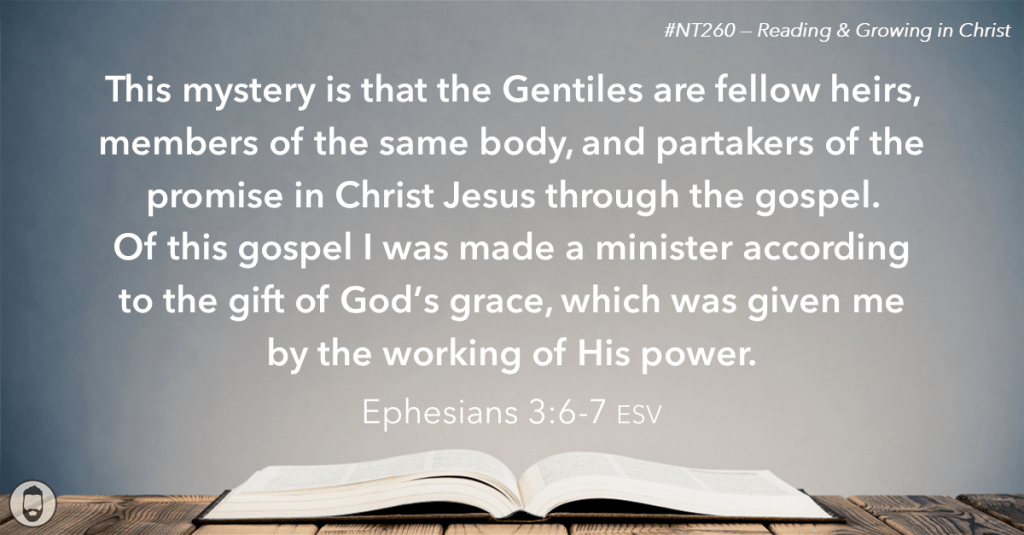
Paul reminds the Ephesians that his suffering and imprisonment are not random setbacks—they are part of his calling “on behalf of you Gentiles” (vv. 1, 13). God gave Paul a stewardship of grace: to announce and explain a “mystery” that was once hidden but has now been revealed by the Spirit through Christ’s apostles and prophets (vv. 2–5). That mystery is wonderfully clear: Gentiles are full members of God’s family in Christ—fellow heirs, fellow members of the same body, and fellow partakers of the promise through the gospel (v. 6; cf. Galatians 3:28–29). In other words, there aren’t “first-class” Jewish Christians and “second-class” Gentile Christians. In Christ, God has made one people (cf. 2:14–16).
Paul says this calling still amazes him. He knows what he used to be—a persecutor of the church—so he calls himself “less than the least” of the saints (v. 8). Yet God appointed him to preach “the unfathomable riches of Christ” and to bring to light God’s plan for forming this new, united people (vv. 8–9). And here’s the jaw-dropper: through the church—this reconciled, multiethnic body—God is displaying His manifold wisdom to rulers and authorities in the heavenly places (v. 10). The church is not an afterthought; it’s part of God’s eternal purpose accomplished in Christ (v. 11). Because of Jesus, believers now have confident access to God—not self-confidence, but Christ-confidence—through faith (v. 12; cf. Hebrews 4:16). So Paul urges them not to lose heart over his tribulations; God is using even suffering to produce glory for His people (v. 13; cf. Romans 8:17–18).
Then Paul returns to what he started in v. 1 and prays. He kneels before the Father who names every family in heaven and on earth (vv. 14–15). His request isn’t mainly for easier circumstances but for deeper strength: that the Spirit would strengthen believers in their inner being, that Christ would dwell in their hearts with power as they trust Him, and that they would be rooted and grounded in love (vv. 16–17). He prays they would grasp—together with all the saints—the vastness of Christ’s love, and that they would know it in a real, lived way, even though it will always be bigger than our understanding (vv. 18–19). And he closes with worship: God is able to do far more than we ask or think, and the goal of it all is His glory in the church and in Christ forever (vv. 20–21).
🌀 Reflection:
Do you treat the church like a spiritual “add-on,” or do you see it the way Paul does—as God’s living display of His wisdom and grace in the world (vv. 10, 21)? What would change in how you love, serve, and show up?
💬 Mission Challenge:
Encourage someone who is suffering. Send a message or have a conversation that gently reframes hardship through the lens of Ephesians 3—God is not absent, and He can use trials to strengthen faith and spread glory (vv. 13, 16–17; cf. 2 Corinthians 4:16–18).
Click here to return to the contents page for Phase 2.4 — The Savior, His Church, and the Mission.

 Just Keith Harris
1 Comment