
Click here for 1 Corinthians 8 audio:
Read it. Pray it. Share it. Live it.
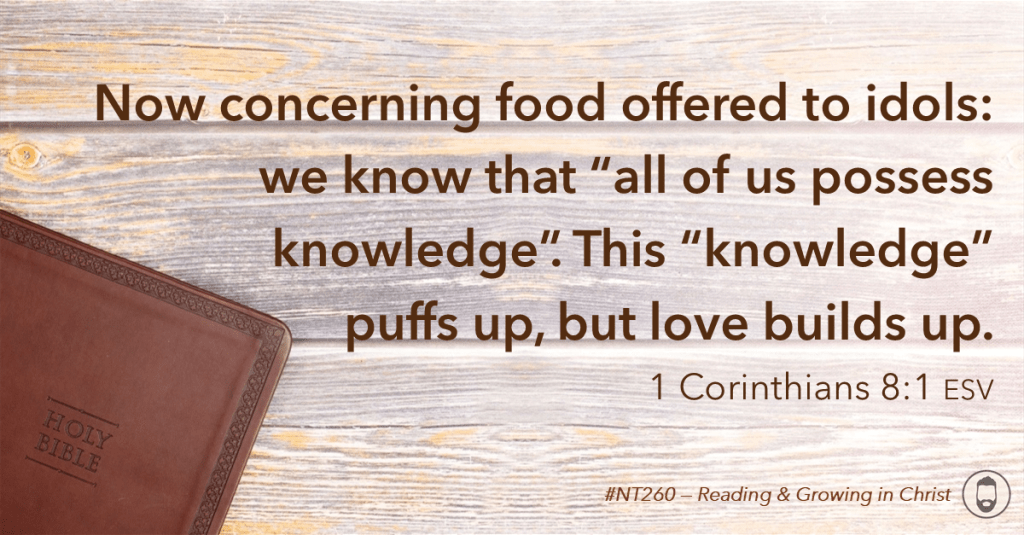
Some believers in Corinth were saying, “We all possess knowledge” (v. 1), meaning they understood that idols are “nothing” and therefore felt free to eat food connected to pagan temples (v. 4). Paul agrees that there is only one God and one Lord, Jesus Christ (vv. 4–6), but he warns that knowledge without love becomes prideful and dangerous. Not every believer’s conscience is equally formed; some, freshly saved out of idol worship, still feel genuinely troubled by eating such food (v. 7). If mature believers use their freedom carelessly, their example could draw a “weaker” brother or sister back toward idolatry—something Paul calls a serious sin against Christ Himself (vv. 9–12).
Because love builds up, Paul urges Christians to lay aside any freedom that endangers another believer’s walk with Jesus. Even if the meat is spiritually neutral (v. 8), participating in pagan temple meals could confuse or even “destroy” someone whose conscience is tender (vv. 10–11; cf. Rom. 14:13, 20). For Paul, the good of others is worth far more than exercising personal rights. His conclusion is simple and sacrificial: he would rather never eat meat again than cause a fellow believer to stumble back into sin (v. 13).
🌀 Reflection:
Where might you be clinging to a spiritual “right” that could actually harm someone newer or weaker in the faith? Ask God to help you desire love over personal freedom, and to make your life a steady encouragement—not a stumbling block—to those walking beside you.
💬 Mission Challenge:
Choose one area of personal freedom—entertainment, habits, speech, or online choices—and intentionally lay it down today if it might confuse or burden someone around you. Let your love build others up in Christ.
Click here to return to the contents page for Phase 2.2 — The Savior, His Church, and the Mission.

 Just Keith Harris
1 Comment