For the month of October, we are answering the challenge John Goldwater, pastor of Christ Community Church in Grenada, MS, laid out — the #DailyWisdomChallenge. Each day, we are going to read through a chapter of Proverbs corresponding to the day of the month.
This fits with what we have studied in Colossians, specifically Colossians 3:1-2, namely that we should seek “the things that are above, where Christ is” and set our minds like a thermostat “on things that are above, not on things that are on earth”. Imagine what a month meditating on God’s Word daily can do for us.
Won’t you join us on this #DailyWisdomChallenge and set your minds on Christ?
Proverbs 7 begins with the imagery of a father speaking to his son. It is a beautiful picture of God the Father speaking to His children about His purpose in giving wisdom in His word, specifically in the proverbs. This advice is given in five different phrases.
The first advises keeping God’s “words” and treasuring up His “commandments”. This calls back to the language of Proverbs 2:1 that tells the son that if he received his father’s words and treasures his father’s commandments (and listens to them and understands them), then he “will understand the fear of the LORD and find the knowledge of God” (Proverbs 2:5). God does not repeat things in His Word accidently like we do when we forget. No, God is reiterating this and repeating for emphasis that we may listen to His words, keeping them in our hearts and treasuring them, recognizing their eternal value and present-day importance.
The second advises to “keep [the father’s] commandments and live”. This is not a means of earning God’s favor or working for His eternal life. No, this is God the Father reminding His children that He knows best. We saw how the adulterous woman’s anti-wisdom is an example of not keeping God’s commandments in Proverbs 5. Her “feet go down to death”, and “her steps follow the path to Sheol” (Proverbs 5:5). God’s commandments lay out paths that lead to life, and following in that Way exhibits the life He has put within those He saves.
The third advises to “keep [the father’s] teaching as the apple of your eye”. This is wisdom I have to ask God to guard my heart with. Many believers fall into the trap of preferring our favorite popular teachers (whether writers or preachers) and trusting them without checking God’s teaching in His Word. We will fly to their writings or broadcasts like moths to a flame. It is the teaching of God’s Word that is to be our favorite, and this is a good reminder that believers have God Himself as a teacher — His Spirit surely being closer than any page or podcast — who will be truest to His Word (John 14:26, 16:13; 1 Corinthians 2:12-13). That phrase “apple of your eye” means the choicest fruit that draws our attention and whets our appetites. May God’s Word and His teaching be our favorite with His Spirit being our go-to teacher.
The fourth and fifth work together: “bind them on your fingers; write them on the tablet of your heart”. We need to keep God’s Word on our minds, and that takes effort. I got a text from my friend Keisha showing how she had written the memory verse from the 10:00a Bible Study at Christ Community written on her bathroom mirror. I remember one particular time of intense persecution in a previous ministry assignment when my wife Candice had taken a dry-erase marker and written Scripture on the glass doors and some of the windows, reminding me that I belonged to Christ and those who came to the house to attack that we were in the care of God Almighty. We need to keep the Word so much in our focus that it might as well be strings tied to our fingers to jog our memories, but the image is much more powerful because writing on the tablets of our hearts is God’s work.
The new covenant Jesus ushered in tells us that God will put His law in our minds and write it on our hearts (Jeremiah 31:33, Hebrews 8:10). That’s good news! It is good news because we don’t have to be sons resting on how well we can obey. No, we get to be sons and daughters of God who are adopted into His family and filled with His Spirit who gives the strength to listen and obey and moves our hearts — those same hearts on which He wrote His commandments — to follow Him!
For the month of October, we are answering the challenge John Goldwater, pastor of Christ Community Church in Grenada, MS, laid out — the #DailyWisdomChallenge. Each day, we are going to read through a chapter of Proverbs corresponding to the day of the month.
This fits with what we have studied in Colossians, specifically Colossians 3:1-2, namely that we should seek “the things that are above, where Christ is” and set our minds like a thermostat “on things that are above, not on things that are on earth”. Imagine what a month meditating on God’s Word daily can do for us.
Won’t you join us on this #DailyWisdomChallenge and set your minds on Christ?
Proverbs 5 is tough — as it should be, because there is real danger and wickedness in the world that actively seeks to lead us astray.
Right there in Proverbs 5:1, we see the same call to attentiveness to “wisdom” in order to gain “insight” (Proverbs 4:1) and “understanding” as in our last post. The specific nature of the wisdom offered in Proverbs 5 is about the temptation of adultery, and it uses the illustration of the words (anti-wisdom, if you will) that come from the “lips of a forbidden woman” (Proverbs 5:3).
I chose Proverbs 5:18 as the focus verse because it very clearly illustrates a few things about the way that God’s plan and wisdom unfold.
First, God is not some cosmic killjoy trying to keep us from having fun and enjoyment. We need to be attentive to God’s wisdom because He knows best, and especially because He knows and sees beyond what we can. We might get caught up in listening to the anti-wisdom and think it’s “honey” because its rhetoric is “smoother than oil” (Proverbs 5:3), but in reality, that honey is laced with “wormwood” (poison) and seeks to cut us down as with a “two-edged sword” (Proverbs 5:4).
Second, God’s ways are not empty of enjoyment. Proverbs 5:18 gives contrast to the poison anti-wisdom and allure of adultery by reminding that there is rejoicing in one’s own wife, one’s own spouse. Furthermore (and not something I am going into here), the following verses show that all of the enjoyment promised by the forbidden woman (without the danger and death) can be more truly and completely found in one’s own marriage! In fact, that’s God’s design. Read on in Proverbs 5 and be attentive to see what I’m talking about.
Lastly, following God’s design and heeding His wise counsel leads to life. The forbidden woman “does not ponder the path of life” (Proverbs 5:6) and “her steps follow the path to Sheol” (Proverbs 5:5). Let me translate that for you: she doesn’t care that the wages of sin is death because she’s on the broad road that leads to destruction, to Hell (Romans 6:23, Matthew 7:13). You may not know it, but there is more going on than someone tempting spouses to cheat; as Paul said in Ephesians 6:12, “we do not wrestle against flesh and blood, but against the rulers, against the authorities, against the cosmic powers over this present darkness, against the spiritual forces of evil in the heavenly places”. Be attentive to the wisdom of God and not tempted by the smooth honey poison of the devil and this world.
To sum all this up, and especially if you are married, God’s ways are best and the husband or wife He has given you is where you are to find your delight.
Lord, help us enjoy our marriage and be attentive to your wisdom and ways. Protect our marriages and strengthen them in you. Shield us from the evil attacks around us and keep our attention and ears tuned into what You have for us.
For the month of October, we are answering the challenge John Goldwater, pastor of Christ Community Church in Grenada, MS, laid out — the #DailyWisdomChallenge. Each day, we are going to read through a chapter of Proverbs corresponding to the day of the month.
This fits with what we have studied in Colossians, specifically Colossians 3:1-2, namely that we should seek “the things that are above, where Christ is” and set our minds like a thermostat “on things that are above, not on things that are on earth”. Imagine what a month meditating on God’s Word daily can do for us.
Won’t you join us on this #DailyWisdomChallenge and set your minds on Christ?
This section of proverbs is written father-to-son and gives a good picture of why the wisdom of God is good for us — and better than the wisdom of the world.
There is a phrase in English that is meant to convey this: father knows best. There was even a TV show with that name in the 1950s. Well, it ain’t the 1950s anymore. Fathers don’t always know best or give the best advice; they don’t always give the best example to follow and aren’t too consistent (even absent in too many cases).
The phrase “father knows best” doesn’t mean what it once did. And, truth be told, it didn’t mean it as often as folks would like to believe then. Here’s some good news, though: God the Father knows best. Always. His wise counsel is worth following. His example is worth following. He is the very definition of consistent. And because He is God, He is never absent!
The picture we get in Proverbs 4 is instruction for the son to “be attentive” in order to “gain insight”. So, for us in this #DailyWisdomChallenge (and for all the days that follow until we stand before the Father), we should be attentive to what God the Father has to tell us in His Word. That will give us insight into how He intended us to live, and since He is God — the inventor of humanity and the giver of life, He knows how He designed life to work best. God the Father knows best.
Here’s some more good news: we never have to wonder if God is leading or guiding us the right way. Earthly fathers are fickle and often fail (I am unfortunately an example of this), but God the Father always gives us “good precepts”. He never leads us wrongly. So, don’t forsake His teaching but follow it wholeheartedly.
Lord, help us to hear you and be attentive to Your Word. Instill in us a trust for You as Father that may not come easy to us, and give us the strength and opportunity to live out your “good precepts”. Amen.
For the month of October, we are answering the challenge John Goldwater, pastor of Christ Community Church in Grenada, MS, laid out — the #DailyWisdomChallenge. Each day, we are going to read through a chapter of Proverbs corresponding to the day of the month.
This fits with what we have studied in Colossians, specifically Colossians 3:1-2, namely that we should seek “the things that are above, where Christ is” and set our minds like a thermostat “on things that are above, not on things that are on earth”. Imagine what a month meditating on God’s Word daily can do for us.
Won’t you join us on this #DailyWisdomChallenge and set your minds on Christ?
Trust is difficult, especially in times when you feel like there is no one you can trust. In the case of today’s Scripture, it is you — your own heart — that you cannot trust.
We can, however, trust in the LORD!
What we have here is an either/or situation. We are either trusting in the Lord or we are trusting in ourselves. Everything in the world tells us to listen to our hearts and follow our hearts and be true to ourselves and so on and so forth. All of that has us doing what we want when we want it. It sounds pretty good, at least on the surface. The issue is that we often want the wrong things.
Take for instance what I want right now. As I sit here writing this, I want a double cheeseburger and some crunchy tater tots. I want to wash it down with an full-sugar green Mt. Dew. For good measure, a couple of Little Debbie snacks could top me off and leave me sitting fat and happy. That flies in the face of the hard work I have done the last several months of trying to eat healthier and live healthier so as to honor the Lord with my body and be healthy enough to be the husband, father, pastor, and teacher I have been called to be. My wanter is broken.
The things I want are wrong for me. Yes, they satisfy whatever whims I come up with, but left to myself, I will never want to make healthy choices — or in the context of Proverbs, wise choices. Yes, sometimes we want to be dumb; it’s called willful ignorance. So, how can we trust ourselves if our desires long for sin and stupidity? We can’t. We need someone trustworthy to keep us on track.
If you are saved and follow the Lord, you know that you can trust in Him and not lean on your own understanding. You can put yourself fully in His hands and trust that He will take care of you. You can trust that God the Father knows best and has your best interests at heart. When your understanding calls for the contrary, you can trust Him when He leads you in His ways.
When it says “in all your ways acknowledge Him”, it means give Him control in all of your ways. That is, after all, what it means for Him to be Lord. He calls the shots. You follow in the way He directs. He will “make straight your paths” and keep you going where He leads!
So, what will you do: trust in the Lord or go your own way?
Lord, help us to follow you. You know we want things that are bad for us. You know the sin we struggle with is the sin we desire. Please fix our hearts and help us to want what You have for us and to understand that Your ways are better. Help us to trust You with our lives and live it according to Your wisdom rather than the wisdom of the world. Amen.
17 And whatever you do, in word or deed, do everything in the name of the Lord Jesus, giving thanks to God the Father through him. —
22 Bondservants, obey in everything those who are your earthly masters, not by way of eye-service, as people-pleasers, but with sincerity of heart, fearing the Lord. 23 Whatever you do, work heartily, as for the Lord and not for men, 24 knowing that from the Lord you will receive the inheritance as your reward. You are serving the Lord Christ. 25 For the wrongdoer will be paid back for the wrong he has done, and there is no partiality. 4:1Masters, treat your bondservants justly and fairly, knowing that you also have a Master in heaven.[1]
📖 Revelation 4:1–11In this episode of The King is Coming, Keith Harris and Jamie Harrison move beyond Jesus’s letters to the churches and into the next part of John’s vision. In Revelation 4, John is invited through an open door into heaven—and what he sees is the throne room of God.At the center of everything is a throne, and seated on it is the Lord in all His glory. From this point forward in Revelation, the throne becomes the focal point of the entire book.John describes the scene the best way he can: the brilliance of precious stones, a rainbow surrounding the throne, flashes of lightning and thunder, and a crystal-like sea before it. Surrounding the throne are twenty-four elders and four living creatures who never cease to worship the Lord.Together, Keith and Jamie discuss:✔️ Why Revelation 4 marks a shift from the letters to the churches to John’s heavenly vision✔️ What the throne room reveals about God’s authority and security over all things✔️ Why John uses comparisons (“like” and “as”) to describe the glory he sees✔️ The mystery of the twenty-four elders and what we can—and cannot—know✔️ The constant worship of the living creatures crying “Holy, holy, holy”✔️ Why heaven’s worship centers on God simply because He is worthyIn the throne room, everything points to one truth: God alone is worthy of worship.“Worthy are you, our Lord and God, to receive glory and honor and power, for you created all things, and by your will they existed and were created.” (Revelation 4:11)🔗 If you would like to see a written version of this podcast, complete with footnotes and cross-references, you can find it here.
Today’s Bible study has put me through the wringer. As I have said many times over, these Bible studies are not just for you but that they work on me first. It hit me as I type this final version that there is a great irony to how it has taken me so long to finish this Bible study. This Bible study is on what it means to be adorned with Christ in our vocations, and one of my vocations being an English teacher, one would think that the irony of me being unable to find the time to serve the Lord in writing this Bible study is because I have been working much more than usual. More than realizing the irony, though, is me sitting here and pondering whether my hard work of the last month or so has been “as for the Lord” or “for men” (Colossians 3:23).
For me, work has always been an easy idol. I like to work. I thrive when I get to multitask (with a reasonable number of tasks). I like the feeling of accomplishment I get when a task is complete, or a project goes well. Both of my vocations stem from God’s calling on my life and involve helping people in various capacities. Getting to see people receive needed help, whether it be the lightbulb clicking on when a student learns something or helping someone seek Christ, gives me an indescribable feeling. But, if I am not careful, I will take on more and more and more until I lose myself in the work.
I need accountability in this area, and I have people who are committed to helping me strike a correct balance in this area of my life so that I do not overindulge. I know I am a workaholic. I must be careful because I am a teetotaler and will add and add and add until I burn myself out. I know this because I have been there, having burned out and swapped careers just before my 30th birthday. It is part of the reason that I believe the Lord has allowed me to slowly ease back into pastoral ministry. I had to divorce my identity from my work and let Him define me in light of who He has made, is making, and will make me to be.
So, to answer my earlier question – and unfortunately confess to y’all, dear Sojourners: I have leaned more toward working for man than God as of late. Knowing that is, as they say, half the battle. Now, is the time for repentance.
Lest you think I am exaggerating because work is a good thing invented by God, too much of it or having it out of the balance of rest that exhibits faith in Jesus’s strength over my own reveals that I am not bearing fruit accordingly, namely the self-control that comes from being in Christ (Galatians 5:22-23). Look at a few passages of Scripture that illustrate this:
Proverb 25:16 – If you have found honey, eat only enough for you, lest you have your fill of it and vomit.
1 Corinthians 9:25 – Every athlete exercises self-control in all things. They do it to receive a perishable wreath, but we an imperishable.
Titus 2:11-12 – For the grace of God has appeared, bringing salvation for all people, training us to renounce ungodliness and worldly passions, and to live self-controlled, upright, and godly lives in the present age.
We will revisit these later on as we seek to apply our passage today, but it should be clear here that too much of a good thing can be bad – and yes, God invented work, so it is (or at least it was meant to be) good when done according to His Word and will.
In Genesis 2:15, we see that God put Adam into “the garden of Eden to work it and keep it”. This is not so much a mandate as it is a role or calling for Adam, and as his descendants, we have roles and callings as well. Initially, this work was easy for Adam as he was tasked with naming the animals in Eden and later his wife. God gave Adam the task of being “fruitful” and multiplying in order that the earth would be filled in Genesis 1:28, which the Bible describes as a part of God blessing them. These tasks were good and enjoyable – and probably much less of the toil we associate with work because, at the time, there was no sin in the world, no death (Genesis 1:31, Romans 5:12). Once the Fall occurred when Adam and Eve ate of the fruit of the tree of the knowledge of good and evil (Genesis 3:6), death and sin began to reign in the earth (Romans 5:17), and God cursed the ground, the very same ground that Adam had been tasked to keep and work (Genesis 3:17-19). Adam’s sin took that good and fruitful work and turned it to toil with the addition of pain and thorns and thistles and sweat and dust (Genesis 3:17-19). Work went from something that was good and revolved around the role God assigned and calling He gave as a blessing and introduced the toil and fruitless labor that we know all too well.
This is why we need Colossians 3:22-4:1. Because of the Fall, the image of God in us has been marred by sin, but God, when He saves us, begins conforming us to the image of His Son Jesus rather than the world around us (Romans 8:29, 12:1-2). We saw this earlier in Colossians 3:9-10 when Paul told the Colossian church (and us) that we are to be putting “off the old self with its practices” and putting “on the new self, which is being renewed in knowledge after the image of its creator”. We need Colossians 3:22-4:1 to see what we need to take off and what we need to put on. We need to understand that God has placed us in our vocations as His ambassadors and missionaries (2 Corinthians 5:19-20) and ask the Lord to let our work be adorned with Christ rather than conformed to this fallen world.
Bondservants, Obey in Everything Those Who are Your Earthly Masters (vv. 3:22-25)
On the surface, this passage is about slaves obeying their masters. That is what it is about.
What This Does NOT Mean
As we covered in our study of Philemon, the God of the Bible is not associated with the slavery that comes to mind from colonial America or present-day human trafficking. You can look back at the Appendices from that Bible study and see God’s stance on the treatment of slaves and on the ungodly horrors visited on people in chattel slavery and around the world today; He is against such things. When the Holy Spirit breathed this out and had Paul to write it down, He was not condoning chattel slavery or human trafficking – plain and simple (see Appendix III — Bible Passages Condemning Practices Related to Chattel Slavery and Modern-Day Slavery/Human Trafficking). So, operating under the presupposition that what Paul is talking about here is not that[2], let’s dive in and see what He does mean here.
What Does It Mean, Then?
The word translated “bondservant” in the ESV is the Greek word doulos. It can – and probably should – be simply translated as slave, but there is a connotation[3] in the present that is wrapped up in the sinful atrocities of chattel slavery as well as in the continued sinful treatment of African Americans in the century plus following the Civil War in the Deep South. Bondservant does not really have a connotation and allows for the denotation, or definition, of what God has for us here. That word doulos refered to a slave, “one who is in a permanent relation of servitude to another” where their will is “altogether consumed in the will of the other”, and it references one being “bound to serve”.[4] It is closer to the modern understanding of an indentured servant than it is to modern understanding of slavery.
It would be a cop-out and over-generalization to say that this is all that there was, especially throughout the Roman empire and around the world at that time. There were wicked masters, and when they were bad, they were terrible. Some slaves were severely mistreated. But there were those who served out their debt and returned to regular life. There were even some who would seek to remain in the service of their master after their debt was paid. Roman slavery was associated with vocation. These bondservants could be teachers or builders or whatever skills they had that could generate enough revenue to pay off their debt. In some cases, it was quite like work releases for people who are incarcerated today – or even in the way trustees are given responsibility or management oversight.
The emphasis here is less about the way they were taught and more about how those who found themselves bonded to a master and have confessed Jesus as Lord will serve. The emphasis is on their service rather than the quality of their master. Their service is to be marked by obedience “in everything” (Colossians 3:22). Their service is to flow out of sincere hearts and their fear of the Lord rather than “by way of eye-service, as people-pleasers” (Colossians 3:22). Whatever was required of them was a call to “work heartily, as for the Lord and not for men” because they were “serving the Lord Christ” and receiving the only reward that mattered from Him (Colossians 3:23-24). Those who are saved have submitted themselves to Jesus as Lord – as kurios, the Greek word for the master of a doulos. And this is what their heavenly Lord and Master required of them – what He requires of us.
Now, did this mean that they refused to be paid or for their debt to be worked off? Absolutely not. What it meant was, if they were in Christ, the fruit borne by their lives reflected an inheritance greater than any paycheck and that their redemption by the blood of Jesus meant more than being redeemed from earthly servitude. This also does not mean that they are above punishment if they did wrong because, with God, “there is no partiality” and “the wrongdoer will be paid back for the wrong he has done” (Colossians 3:25). This would also cover if an earthly master required a sinful act from their slave or bondservant. Just like we looked at in the relationships of fathers to children and husbands to wives, being in service to God above all means that we refuse to bow to the call of the world and sin even and especially if it means punishment or persecution (1 Peter 2:20-23). To clarify, this would not include the way a wicked master would punish but is meant to help us understand that, even for saved people, there are consequences for sin.
To be adorned in Christ as one works and serves means that they are serving the Lord above all, no matter their vocation. It means that Jesus has a plan for your vocation that goes beyond what you can see (Ephesians 2:10)! It means your quality of work matters, not because of your earthly masters or bosses but because you belong to Jesus and He has set you apart to shine His “marvelous light” in your workplace and find opportunity to “proclaim the excellencies of Him who called you out of darkness” (1 Peter 2:9).
Masters, Treat Your Bondservants Justly and Fairly (v. 4:1)
Since slavery was an integrated part of the Roman Empire and the Colossian church clearly had masters in her members, like Philemon, it is important for God to set a standard for how those masters would operate. This extends to those in both vocational authority and other areas of oversight or administration.
What Does It Mean, Then, to Be a Master Who is Just and Fair?
The way that Paul wrote it here is pretty clear who is in charge: “knowing you also have a Master in heaven” (Colossians 4:1). Earthly masters who are saved imitate their heavenly Master, their Lord Jesus Christ. I do not want to oversimplify this, but it means you are going to be different than most masters, the vast majority of bosses.
In the case of Roman slavery, it could have been a call for them to lose revenue by not having debts paid back because their Lord was calling them to free slaves – completely contrary to the culture around them (see Appendix II — Bible Passages Discussing the Release of Slaves). In the case of vocational authority today – being a boss or having oversight/authority over people, it means that you are called to bear fruit of God’s Spirit being in you. Earthly leaders and bosses like to lead with intimidation, but Jesus was a servant leader. He did not hesitate to humble Himself and wash His disciples feet. Saved bosses can lead by serving and humility as well. Earthly bosses can threaten and demoralize, but Jesus lifts up the lowly. Saved bosses can do the same.
Now, does this mean that a boss or leader who is saved is a pushover and allows their employees to run rough-shod over them? Absolutely not! Jesus holds people accountable for their actions. Jesus is a Master who has expectations for His people, but Jesus is consistent with who He is as He disciplines and corrects. So, if you are an earthly boss and Jesus is Lord, you do not conform to the ways of this world for material or vocational gain; no, you allow who His Spirit has transformed and is transforming you into – how He is conforming you back to the image of God in Christ – set the course for how you deal with people.
In a sense, those bosses who are saved and adorned in Christ function in regard to Christ as Paul describes a bondservant to serve. Saved bosses have a “sincerity of heart” stemming from their fear of the Lord (Colossians 3:22). They “work heartily, as for the Lord and not for men, knowing that from the Lord [they] will receive the inheritance as [their] reward (Colossians 3:23). They serve the “Lord Christ” (Colossians 3:24).
The remainder of Colossians 4:1 highlights what that looks like as Paul tells the masters that they should treat their bondservants “justly and fairly”. This is where the tough part of leadership comes in. If an employee has committed some sort of infraction that necessitates firing them, a godly master fires them. If there is a process that is to be followed to do so, the process is followed. This would prohibit office politics and replace it with a yearning to be just and fair as Jesus has been just and fair with them. In some cases, where grace and mercy can be shown, this calls for that, too – all in balance with how the Word teaches us and the Spirit of God leads, and all contrary to the way that this fallen world operates.
Wrapping Up
So, what does that look like? If you are like me, you look at some of this and it seems like this is a good way to get taken advantage of or to sign up to get a lot of extra junk to put up with at work. It is important to remember that our work is not our identity. Jesus gives us an identity in Him by redeeming us from the power of sin and death, rescuing us from the wrath of God, and eternally adopting us into His family. And we get to be adorned with Him and bear His family name into whatever vocation He has for us.
Here are some principles to consider:
Do everything for the Lord (v. 3:17). Whatever your job and whatever your task, work as if Jesus Himself had tasked you with it. This gives work meaning and views it in light of the Kingdom of God and not in whatever earthly kingdom you are employed at.
Work with sincerity and integrity (v. 3:22). Employees should not work merely for status and approval but should consistently act with the understanding that their ultimate accountability is to God.
Work heartily and diligently (v. 3:23). Workers should put their best effort into their work, recognizing that this is part of the calling of their Lord Jesus Christ. This calls for a strong work ethic – not a calling for workaholism – because the work is as to the Lord not men.
Focus on eternal rewards rather than temporal ones (v. 3:24). Earthly compensation matters. It does. It is a big reason why we have and need jobs. The Bible is not against us earning wages and even says if you do not work, you do not eat. But there is more to working than a paycheck. There is an inheritance from the Father for those who serve Him. This mindset helps maintain perspective, especially if your work environment is challenging or worse. If you work for a paycheck or merely for retirement, there are limits to your service. If you work for the One who has made a place for you in heaven (and based on His merit, not yours), your perspective changes.
Be accountable for what you do wrong (v. 3:25). Remember, God is a just God and is pro-discipline. An earmark of being in Christ is repentance. One of the best ways you can exhibit what Jesus has done in you through His salvation is by repenting when you have messed up. This is not a popular viewpoint, but even if your wrongdoing costs you your job, your standing with Jesus is based on His righteousness not your own — which is good news: God is pro-grace!
If you have authority over employees, treat them justly and fairly(v. 4:1). Treat employees as Jesus treats you. It really is that simple. No amount of earthly success or status is worth conforming to the world when Jesus has transformed you into something better.
Realize you are accountable to God (v. 4:1). This is true for believers whether you are a boss or an employee. If you have confessed Jesus as Lord, He is your master. He calls the shots. What He says goes. And serving Him even at the expense of losing a job is worth it. He will still be here when all of this passes away.
Do not let work become an idol (Proverb 25:16, 1 Corinthians 9:25, Titus 2:11-12). It is easy to get into the mindset that because you work as unto the Lord that you cannot quit or stop. The God who ordained work also ordained rest. He did not bring us from death to life in Him for our lives to be wrapped up in our vocations. Jesus gives us wisdom and self-control. While He may call some people to a single vocation and calling for their whole lives, He does not do that with everyone. Follow Him and be willing to change or quit if that is what He has for you. At the same token, be willing to dig in where you are if that is what He has for you.
This has not been my favorite Bible study. I have had to take a step back and realize that I am susceptible to getting my work life out of whack, even when I thought I had it all worked out. The good news is Jesus is the God who saves and a Lord who is active in the lives of His servants. No matter how many times I mess up, I can approach His throne and receive grace and mercy, which He has in an inexhaustible supply.
What about you? I do not mean to meddle, but I exhort you, dear Sojourner, to look at your life and your work and test it according to the Word of God. How can you apply this and shine more brightly His marvelous light rather than working in such a way that you hide the light of Christ.
Know this: I am praying for you and asking God to work in and through your work.
Those God has saved have a wonderful privilege and opportunity. We GET to gather and worship Him. We GET to serve Him. We GET to tell others about Him and all He has done. And with all we GET to do, there is great opportunity to point people to Him!
I am reminded of Paul in Philippians 3. He lists all of the reasons he has “for confidence in the flesh” in vv. 3-6. He was one of God’s chosen people. He bore the sign of the old covenant in circumcision. He could trace his heritage all the way back — “tribe of Benjamin, a Hebrew of Hebrews”. And on top of all of that, he had been a zealous Pharisee to the point of persecuting the Church and fully righteous based on man’s understanding of the law.
On paper, he had everything.
In the eyes of religious men, he was perfect.
But what matters is his (and our) standing before God.
Look at how Paul shows us that he thinks on his former lofty status:
“But whatever gain I had, I counted as loss for the sake of Christ. Indeed, I count everything as loss because of the surpassing worth of knowing Christ Jesus my Lord. For His sake I have suffered the loss of all things and count them as rubbish, in order that I may gain Christ and be found in Him, not having a righteousness of my own that comes from the law, but that which comes through faith in Christ, the righteousness of God that depends on faith….” (vv. 7-9)
He willingly lost — set aside, trashed, cast away — all of that worldly standing because of “the surpassing worth of knowing Christ [as] Lord”! All of those things that took all of his life to attain were cast aside in a moment when he found something — someONE — better!
What about you?
Once Paul met Jesus, all of the good he thought he had was like filthy garbage or fecal matter (look up that word for “rubbish” in the Greek if you don’t believe me). If you claim Christ, are you carrying His gospel and proclaiming Him or are you walking around carrying garbage or worse?
Here’s a challenge, Christ Community fam: think of one person you know that you are not sure (or maybe you are sure) whether they know Christ as Lord; pray for them, asking God to give you courage and opportunity to share Him and invite them to come with you Sunday; and do it — invite them!
Bringing folks to church is not sharing the gospel, but it is a sweet thing to point people to the One who saved you. It is a good way to tell folks that you don’t have it all together and that, because of the “surpassing worth of knowing Christ”, you put your faith in Him, believed in Him and confessed Him as Lord (Romans 10:9-10)!
John will be preaching from the Word. We will be reading from the Word together and singing about and to Jesus according to the Word.
16For God so loved the world, that He gave His only Son, that whoever believes in Him should not perish but have eternal life. 17For God did not send His Son into the world to condemn the world, but in order that the world might be saved through Him. 18Whoever believes in Him is not condemned, but whoever does not believe is condemned already, because He has not believed in the name of the only Son of God. 19And this is the judgment: the light has come into the world, and people love the darkness rather than the light because their works are evil. 20For everyone who does wicked things hates the light and does not come to the light, lest his works should be exposed. 21But whoever does what is true comes to the light, so that it may be clearly seen that his works have been carried out in God.”
5And one of the elders said to me, “Weep no more; behold, the Lion of the tribe of Judah, the Root of David, has conquered, so that He can open the scroll and its seven seals.” 6And between the throne and the four living creatures and among the elders I saw a Lamb standing, as though slain, with seven horns and with seven eyes, which are the seven spirits of God sent out into all the earth. 7And He went and took the scroll from the right hand of Him who was seated on the throne. 8And when He had taken the scroll, the four living creatures and the twenty-four elders fell down before the Lamb, each holding a harp, and golden bowls full of incense, which are the prayers of the saints. 9And they sang a new song, saying,
“Worthy are You to take the scroll and to open its seals, for You were slain, and by Your blood, You ransomed people for God from every tribe and language and people and nation, 10and You have made them a Kingdom and priests to our God, and they shall reign on the earth.”
Do you ever feel like you are living in between two realities — like there’s a tension in where you are and where you want to be?
In a sense, all of us are, especially if you are saved. There is the reality of what Jesus has done in dying for our sins and raising again (1 Corinthians 15:3-4). There’s the reality of when His Spirit convicted us of our sin and we turned — repented — from our sin and put our faith and trust in Jesus (John 16:8, Acts 2:38)….
Those who are saved know and understand that reality. They understand that confessing Jesus as Lord and believing He is risen is an eternal-life altering moment (Romans 10:9-10). And with that comes the assurance that Jesus is alive and reigning despite the way this world is going (Ephesians 1:20-21, Colossians 1:17-18). There is assurance that Jesus cannot be defeated. There is assurance that Jesus has promised to return for His Bride, the Church, in victory and bring her to be with Him forever and ever (John 14:3, Revelation 19:7-9). There is assurance that He who promised is faithful (Hebrews 10:23).
But living in between those bookends is tough. Salvation is already and, at the same time, not yet. There is a tension because we struggle with sin inside us and without us (Romans 7:21-25). There is a spiritual battle being waged (Ephesians 6:12), and with it comes pain and struggle and sorrow and danger and mourning and threat and…well, that list can go on and on, can’t it?
I’ve been thinking about that tension a lot this week, and, thankfully, the tension drove me to Jesus in His Word. Let’s look at the bookends of Romans 8 to see just how faithful and powerful our God is!
There is therefore now no condemnation for those who are in Christ Jesus. For the law of the Spirit of life has set you free in Christ Jesus from the law of sin and death.
God tells us here that, for those who are in Christ, there is NOW “no condemnation”. If Jesus has saved you, you are saved. He has paid the death penalty for your sin and given you His righteousness (2 Corinthians 5:21).
Before He saves us, we are captives of our own sin yet we have no idea. We had a sort of sad Stockholm syndrome with our sin and could not see that our captor — the sin that we so enjoyed and pursued — was actively trying to kill us. But Jesus comes in as a powerful warrior King and rescues us from our captivity. He rides in and paid the price to free us. As the old hymn says, He sought us and bought us with His redeeming blood. Death and sin no longer own those He saves. He bore our sin and paid our price by His death to set us free and give us His life.
This is a powerful bookend — a significant beginning where our lifeless corpse, killed by the wages of our sin, is filled with life better than anything we could even hope for. But the life we have is still in a world where death and sin is rampant. The Fall is everywhere and still falling. There are temporal dangers that bring fear and reminders of captivity. They breathe threats that we still deserve condemnation. And our physical bodies, despite our eternal life, are decaying and dying.
Here in the middle is a scary place to be sometimes.
What then shall we say to these things? If God is for us, who can be against us? He who did not spare His own Son but gave Him up for us all, how will He not also with Him graciously give us all things? Who shall bring any charge against God’s elect? It is God who justifies. Who is to condemn? Christ is the One who died — more than that, who was raised — who is at the right hand of God, who indeed is interceding for us. Who shall separate us from the love of Christ? Shall tribulation, or distress, or persecution, or famine, or danger, or sword?
These rhetorical questions are helpful here in the tension of living eternal life in this fallen world.
The accuser can throw our sin in our faces all he wants to. Our past can testify against us as vehemently as it wants to. If God is for us, none can stand against us. He gave His Son to save us and will not withhold His grace. There is no condemnation because Jesus justifies those He saves — justifies in the present-tense because Jesus is alive and seated at the right-hand of His Father and actively interceding for us!
So, in the midst of fear — in the midst of those frightening things Paul listed in v. 36: tribulation, distress, persecution, famine, danger, death by the sword — the answer to the question of “Who shall separate us from the love of Christ?” is a clear and definite NO ONE!
If Jesus has saved you, the world can throw its worst at you, and its greatest threat — death — is your greatest reward. Death brings those who are in Christ TO Christ (Philippians 1:21-23). I don’t know about you, but that comforts me. I don’t have to survive to thrive. Jesus has saved me, so I thrive in Him and eternally no matter what happens here (John 10:28-29, 1 Peter 1:3-5). The greatest threats in the midst of tension are merely part of a testimony of what Jesus is bringing me through, even and especially when I can’t see it right now (Romans 8:28)! I can know that because my Savior lives and reigns and intercedes for me even now (Hebrews 7:25, Romans 8:34)!
How about you?
Are you in Christ?
If not, I invite you to call out to Him to save you (Romans 10:13)! He is still that valiant warrior King — the God who saves! He delights in reconciling sinners to Him (Zephaniah 3:17, 2 Corinthians 5:18-19)! He has the power to bring you from dead in sin to alive in Him (Ephesians 2:4-5).
If you are in Him, I invite you to breathe a sigh of relief because God has got you no matter what (John 16:33, Psalm 46:1-2). One way or the other, He is bringing you to Him (2 Corinthians 4:16-18), so let the things of this earth pale in comparison to His light and glory (Colossians 3:1-4)!
I invite you all to gather with us tomorrow at Christ Community as we sing to and about Jesus, all He has done and is doing. John will open the Word and point us to Jesus, the living Word of God (John 1:1, 14).
I can hardly wait.
In the midst of the tension between salvation and eternal life, we are going to remind each other of what He has done and can do — get a glimpse of what it will be to stand around His throne and worship Him — the Lamb who was slain, the Lion of the tribe of Judah, our great God and Savior, Jesus Christ — forever and ever (Revelation 5:5-6, Titus 2:13).
21But now the righteousness of God has been manifested apart from the law, although the Law and the Prophets bear witness to it— 22the righteousness of God through faith in Jesus Christ for all who believe. For there is no distinction: 23for all have sinned and fall short of the glory of God, 24and are justified by his grace as a gift, through the redemption that is in Christ Jesus, 25whom God put forward as a propitiation by his blood, to be received by faith. This was to show God’s righteousness, because in his divine forbearance he had passed over former sins. 26It was to show his righteousness at the present time, so that he might be just and the justifier of the one who has faith in Jesus.
9But we see him who for a little while was made lower than the angels, namely Jesus, crowned with glory and honor because of the suffering of death, so that by the grace of God he might taste death for everyone. 10For it was fitting that he, for whom and by whom all things exist, in bringing many sons to glory, should make the founder of their salvation perfect through suffering. 11For he who sanctifies and those who are sanctified all have one source. That is why he is not ashamed to call them brothers, 12saying,
“I will tell of your name to my brothers; in the midst of the congregation I will sing your praise.”
13And again,
“I will put my trust in him.”
And again,
“Behold, I and the children God has given me.”
14Since therefore the children share in flesh and blood, he himself likewise partook of the same things, that through death he might destroy the one who has the power of death, that is, the devil, 15and deliver all those who through fear of death were subject to lifelong slavery.
1 Paul, a prisoner for Christ Jesus, and Timothy our brother,
To Philemon our beloved fellow worker 2 and Apphia our sister and Archippus our fellow soldier, and the church in your house:
3 Grace to you and peace from God our Father and the Lord Jesus Christ.
4 I thank my God always when I remember you in my prayers, 5 because I hear of your love and of the faith that you have toward the Lord Jesus and for all the saints, 6 and I pray that the sharing of your faith may become effective for the full knowledge of every good thing that is in us for the sake of Christ. 7 For I have derived much joy and comfort from your love, my brother, because the hearts of the saints have been refreshed through you.
8 Accordingly, though I am bold enough in Christ to command you to do what is required, 9 yet for love’s sake I prefer to appeal to you—I, Paul, an old man and now a prisoner also for Christ Jesus— 10 I appeal to you for my child, Onesimus, whose father I became in my imprisonment. 11 (Formerly he was useless to you, but now he is indeed useful to you and to me.) 12 I am sending him back to you, sending my very heart. 13 I would have been glad to keep him with me, in order that he might serve me on your behalf during my imprisonment for the gospel, 14 but I preferred to do nothing without your consent in order that your goodness might not be by compulsion but of your own accord. 15 For this perhaps is why he was parted from you for a while, that you might have him back forever, 16 no longer as a bondservant but more than a bondservant, as a beloved brother—especially to me, but how much more to you, both in the flesh and in the Lord.
17 So if you consider me your partner, receive him as you would receive me. 18 If he has wronged you at all, or owes you anything, charge that to my account. 19 I, Paul, write this with my own hand: I will repay it—to say nothing of your owing me even your own self. 20 Yes, brother, I want some benefit from you in the Lord. Refresh my heart in Christ.
21 Confident of your obedience, I write to you, knowing that you will do even more than I say. 22 At the same time, prepare a guest room for me, for I am hoping that through your prayers I will be graciously given to you.
23 Epaphras, my fellow prisoner in Christ Jesus, sends greetings to you, 24 and so do Mark, Aristarchus, Demas, and Luke, my fellow workers.
25 The grace of the Lord Jesus Christ be with your spirit.[i]
Greetings Sojourners!
I am excited to introduce you today to the epistle (letter) to Philemon. It is unique and necessary for us to understand the upcoming Bible study from Colossians 3:22-4:1 because Philemon, as a member of the church of Colossae, was not only the recipient of this letter but of the letter to the Colossians as well.
So, the letter to Philemon is in the context of his being “delivered” from the “domain of darkness and transferred…to the Kingdom of [God’s] beloved Son” (Colossians 1:13). When the church at Colossae had gathered and listened to Paul’s letter to them being read, Philemon would have heard about His preeminent God and Savior, Jesus Christ, who was “before all things” and is holding everything together (Colossians 1:17), who is the head of the church (Colossians 1:18), whose gospel and Spirit are making His followers “mature in Christ” (Colossians 1:28). Philemon would have been instructed by the Holy Spirit through Paul to walk in Christ as he had received Him, “rooted and built up in Him and established in the faith” (Colossians 2:6-7). And when the letter said “just as you were taught” (Colossians 2:7), it meant that the lives of those in the Colossian church were intended to be in step with Christ – that they were to set their minds on Christ rather than earth and take off/kill the old sin and self that sought to do them harm and put on Christ (Colossians 3:1-17).
At the end of the reading of that letter, there was another letter – a letter to Philemon.
The letter to Philemon is not often read and easily overlooked, and that is a pity, for it is instructive in the way that the gospel is to affect our real, everyday lives. This little book of the Bible can be quite instructive in our understanding of how God would have us treat others as well as giving us a biblical lens through which we can understand how God’s authority through apostles, which we have in the New Testament today, is meant to impact our lives. To get right to it, if we are saved, we belong to Jesus. Yes, you read that right, if you are saved, you belong to Jesus because He redeemed you, meaning you “are not your own, for you were bought with a price” (1 Corinthians 6:19-20), and He redeemed you “from all lawlessness” and to make you a part of those He set aside for Himself, “a people for His own possession who are zealous for good works” (Titus 2:14).
In the Greco-Roman world, they would have noticed what you are likely picking up on: wait, if He owns us…does that mean…? Simply put, yes, it does mean that He owns us. He is Lord – literally Master (Greek kurios) – and we are His servants – literally slaves (Greek doulos). Thankfully, our God is not a wicked Master or a tyrannical ruler. He could absolutely make us do whatever He saw fit. He is God Almighty. He paid the price for our sin debt (Colossians 2:14) – His life was the price He paid to make us His own (1 Corinthians 6:19-20), and He would be righteous to exercise His ownership of those He has saved. Thankfully, though, God did not give us “the spirit of slavery to fall back into fear” but instead gave us “the Spirit of adoption as sons, by whom we cry, ‘Abba! Father!’ (Romans 8:15). So, the price that bought us and made Him our master was the price of our adoption rather than our slave price. The reality is that His purchasing us actually frees us (Romans 6:15-18), and that’s good news because once we submit to God, once we confess Him as Lord” (Romans 10:9), we are protected and free forevermore!
Now, where I live in Mississippi, the word slave has a massively negative connotation, and it should. This makes studying passages of the Bible like Paul’s letter to Philemon and our next passage in Colossians (3:22-4:1) necessary for us to study for what I will generalize into two quick reasons.
First, when the Bible talks about God being our master and saved folks being His slaves, it is not describing a relationship like the slave trade that spanned Europe and Colonial/Early America from the 15th century (Spain/Portugal), 16th century (Britain), 17th century (France and Britain in its colonies, including America), and terrorized people up until its abolishment in the 19th century (and continuation through the aftermath of the Civil War up to the Civil Rights issues in the Jim Crow south and even today). Furthermore, the relationship between the Lord and His people is not like the current situation with around the 50 million slaves in the world today according to the United Nations, of which about 23% are victims of sex trafficking and 14% are children (more than half of which are victims of sexual exploitation). That is not our God, and I have outlined all passages of Scripture on the subject in the attached documents (Appendix I[ii], Appendix II[iii], & Appendix III[iv]) for you to check yourself. God’s Word testifies to His character, and who He is contrasts clearly to all the evil in the world – the darkness has not and cannot overshadow His Light (John 1:4-5).
Second, unlike the slavery of the 15th century through the present, those who Jesus saves willingly confess Him as Lord (Romans 10:9-13). There are no forced relationships here, no mistreatment, no kidnapping, no exploitation – only love, grace, mercy, and adoption into His family (Galatians 4:4-5, Romans 8:15). People want to argue whether it is God who chooses and saves or people choosing Him and seeking His salvation (an argument for a different day), but the Bible is clear that it is true that God does choose, or elect, unto salvation as well as every, single instance of salvation being willing participants who call upon Him to save them (Romans 10:13). You do not have to take my word on it; check His Word.
It is tempting to say something like, “The problem with Philemon is….” But that is not the case. Current culture and the events of the last four centuries is the problems. You see, the issue of slavery here is not only in God purchasing us as His own; Philemon owned a slave, and that slave, named Onesimus, escaped, and found his way to Paul – potentially after having stolen from Philemon. Once Onesimus made it to Paul, Paul introduced Him to Jesus through the gospel, and Onesimus was saved. Paul wrote this letter to Philemon to instruct him – to disciple him – on how believers are to treat other believers, despite social status or past wrongs done to them.
The Holy Spirit through Paul was instructing Philemon, and us, in a way contemporary believers desperately need to see. We need to see that God’s Word commands our lives – that when our Lord speaks, we listen. We need to see the example of men of God exhorting God’s people to live lives that bear the fruit of His Spirit rather than our sin. We need to see the care that Paul takes in helping Philemon realize what he needs to do rather than browbeating him into submission because our Lord is merciful and kind and contrasts with the evil masters of this world. And we need to see that the teachings of Colossians are to be listened to and obeyed.
If Colossians is to teach us that Jesus is Over All as we have been studying, Philemon is surely a lesson that Jesus is Over Us. So, if we are going to understand Philemon – and God’s redemptive purpose for this being “breathed out by God” (2 Timothy 3:16) and not a mere letter containing Paul’s opinions, we have to understand that faith is required – the same faith that Onesimus had in Jesus that led him to return to Philemon, the same faith that Paul had in Jesus that led him not to command Philemon but to encourage him, the same faith in Jesus that comes by grace and saves even today.
So, let us get to work and dig into the letter to Philemon and see what it means for Jesus to be over us.
Onesimus’s Story and Testimony
Onesimus’s story is about the transformative power of the gospel. Onesimus was in a tight spot worldly speaking because he was a slave who had run away and possibly stolen from his master (vv. 12, 18-19). We do not know whether Onesimus was a slave in the traditional sense or indentured to Philemon for some crime committed or debt owed, but we know that Onesimus, as an escaped slave, does not have a legal leg to stand on in either case.
One cool aspect of this narrative is Onesimus’s name. Onesimus meant “useful”.[v] So, when Paul speaks of Onesimus by saying that formerly he was “useless” to Philemon but now “he is indeed useful” to Philemon and to himself (v. 11), he is testifying that Onesimus has been redeemed. Jesus has taken him from useless to useful. This is a good look at the contrast between eternal realities versus worldly realities. Onesimus escaped and interacted with Paul, and Paul convinced Onesimus to return to the master he had wronged. In a worldly sense, this is terrible and dangerous advice. The eternal reality is that when Jesus saves us – when Useless truly becomes Onesimus (Useful) – there is a new life, new works “which God prepared beforehand that we should walk in them” (Ephesians 2:10). Paul was even clear that slaves who could become free should “avail” themselves of the opportunity (1 Corinthians 7:21) and is clearly appealing for Philemon to consider releasing Onesimus (vv. 8-12). In a worldly sense, Onesimus should just keep on trucking rather than returning to Philemon. The eternal reality is that the reconciliation of Onesimus to Philemon – whether he is freed or not – is a picture of the gospel and that whatever wrong or debt incurred should be paid for (vv. 18-19). It is a matter of faith – in the God who saves and His Spirit indwelling your brothers and sisters who have been saved by grace through faith in Jesus.
Whether or not Onesimus is released, though, He has been set free by Jesus (Isaiah 61:1, Galatians 5:1)! Furthermore, his earthly status no longer matters. Onesimus’s heavenly citizenship (Philippians 3:20) and new life in Christ (Colossians 3:10) means that in Christ, distinctions such as Jew or Greek, slave or free, or male or female no longer determine one’s standing – at least not in an eternal sense, but rather one’s standing is determined as to whether or not they are “in Christ Jesus” (Galatians 3:28). So, confident in his standing in Christ and trusting the apostle Paul’s judgment, Onesimus heads home to Colossae – home to Philemon, the master he wronged, with the letter to the church at Colossae and the letter to Philemon in hand (Colossians 4:8-9).
Philemon’s Story and Paul’s Appeal
Paul testifies to Philemon’s character and reputation as one who has faith and love for Jesus. Knowing Paul is not one for puffing people up with flattery, this is a genuine acknowledgment of Philemon’s role in Colossae, especially in the church at Colossae where he has a clear influence on its members (vv. 4-7). Philemon was active in sharing the gospel in Colossae and discipling members of the church (v. 6). Paul finds joy in hearing Philemon’s testimony and reputation because the church at Colossae has been “refreshed” through him (v. 7). It is because of this reputation that Paul appeals to him regarding Onesimus; Philemon reconciling with Onesimus is consistent with new life in Christ (Colossians 1:19-20, 2 Corinthians 5:19-21).
As an apostle, Paul could have commanded Philemon to either reconcile with Onesimus, which would have been just because Paul was willing to satisfy whatever debt or loss of revenue Philemon would have suffered at Onesimus’s absence out of his own pocket. Paul could have commanded him to free Onesimus, which would have, again, been consistent with his writing in 1 Corinthians 7:21. Yet Paul did not use his authority as an apostle. For “love’s sake”, he chose to “appeal” to Philemon to do “what is required” (vv. 8-9), which must have been to forgive Onesimus for the wrongs committed – wrongs that had been forgiven and paid for by Jesus on the cross (Colossians 2:14). This appeal is for Philemon to take Onesimus in once more, “no longer as a bondservant but more than a bondservant, as a beloved brother” (vv. 15-16). And lest one tries to argue that it was just an appeal to view him based on spiritual standing as brothers, Paul removes that as a possibility as he told Philemon that it was “both in the flesh and in the Lord” (v. 16).
Paul was confident that Philemon would not only obey but go above and beyond his appeal (v. 21). More than that, he was expecting Philemon to treat Onesimus the same as he would have treated Paul (v. 17) and acknowledged that he would repay Philemon for any costs incurred – either repaying Onesimus’s debt or any loss of funds caused by the pursuit of Onesimus or revenue Onesimus would have brought him during the period of his escape (v. 19). And Paul was so sure that Philemon would obey, considering him a partner, that he made a request that is different than one would expect: “Refresh my heart in Christ” (v. 20). What a testimony that is to the work God had done in Philemon’s life that Paul sought to be refreshed or relieved through Philemon in the same way that his brothers and sisters in the church at Colossae had (v. 7)! So, while we do not know explicitly whether Philemon obeyed, we have the testimony of all that God had done in Philemon’s life and the assurance that those who love the Lord obey His commandments (John 14:15).
Wrapping Up
What does this mean for us?
There are several applications for the letter to Philemon that are important for us to see – and to apply – as it pertains to God having ultimate authority and Lordship in the lives of those who are saved, those who confess Him as Lord.
When Jesus saves us, He transforms us. Just as Onesimus was transformed from useless to useful, God does not save us to leave us the same. It is popular in contemporary Christianity to say that Jesus wants us just as we are, and in a sense, that is true. However, He has no intention of leaving us as we were. Those who are not saved are “dead in the trespasses and sins in which [they] once walked” (Ephesians 2:1), but God clearly does not intend on leaving us dead but rather making us alive by grace through faith in Jesus because of His great love and rich mercy (Ephesians 2:4-9). This does not just go for Onesimus being redeemed from slavery but also extends to Philemon. In Christ, both were bought with a price and no longer their own (1 Corinthians 6:19-20). In Christ, if we are saved, we were too.
Reconciliation is a theme, not only in our own salvation, but throughout our lives as believers. Reconciliation shows up in Philemon in Paul’s appeal for Philemon to receive and free Onesimus. It also shows up in the letter to the Colossians. We see in Colossians 1:20 that God reconciles sinners to Himself “by the blood of His cross.” This means that those who were His enemies are now His beloved because His has paid the price to redeem them from their sin (Colossians 2:14). Furthermore, we see that reconciliation pictured in the lives of believers in that they who once were “alienated and hostile in mind, doing evil deeds” are changed in their “flesh by His death” to have faith and be “holy and blameless and above reproach before Him” and standing firm in the “hope of the gospel” (Colossians 1:21-23). This reconciliation does not only exist in our relationship with Jesus but extends to our relationships with others, especially our brothers and sisters in Jesus. We live in a world that is wrapped up in vengeance and equity, but an earmark of those who have been forgiven by Jesus is to forgive “as the Lord has forgiven you” (Colossians 3:13).
How we treat humans created in the image of God – and especially our brothers and sisters in Christ – matters. I mentioned in the introduction to this Bible study that the word “slave” has extremely negative connotations. One sad and unfortunate one is that there were many who professed to be Christians who took part in the slave trade of the 15th-19th centuries either by owning slaves who had been ripped from their homelands themselves or by silence or indifference to the evils that were occurring. Each slave who was treated as chattel was a human being created in the image of God. Sadly, there were evil men who claimed the name of Christ yet committed evils like their father the devil. Yes, there were those who were convicted of their part in the atrocities like John Newton and William Wilberforce who repented and became abolitionists, but that list is woefully short. How we treat people matters. This goes doubly for our brothers and sisters in Christ. What should not be tolerated treatment for any human being must assuredly not exist between brothers and sisters in Christ. God’s Word makes it clear that those who profess love for God are liars if they have no love for their brother (1 John 4:20).
It is a non-negotiable truth that believers bear fruit of God’s Spirit. Look at the way Paul described Philemon in vv. 4-7. Paul had heard of his love for Jesus and his brothers and sisters in the church (v. 5). He had heard that Philemon was active in sharing his faith with others (v. 6). He had heard that Philemon’s love was a source of “much joy and comfort” and that his brothers and sisters had been “refreshed” through him (v. 7). Paul’s confidence in Philemon’s obedience was not based on the testimony of Philemon’s faithfulness. No, his confidence was in the faithfulness of the Spirit inside Philemon. The good works Paul praised were not a means to puff up Philemon but to rejoice in the work God was doing in and through him. The fruit of the Spirit is not to be like apples on an apple tree or roses on a rose bush, evidencing the eternal life for the glory of God! Paul was recognizing the fruit of the Spirit in Philemon’s life and had faith that the “good works” prepared for Philemon by the Spirit would be carried out (Ephesians 2:10). It is the same for all believers.
If we confess Jesus is Lord, His lordship will be evident in our lives (or at least in our repentance). This is more than uttering the words “Jesus is Lord”. He either is – or He ain’t. I am not speaking of sinless perfection here. But I am speaking of how one’s life is evidence of who is in charge. For me, Jesus’s lordship is more clearly seen in my repentance than in the fruit I bear at first. Fruit of the Spirit, like fruit of trees and bushes, requires a bit of pruning sometimes – getting all that is in the way out so that the fruit can blossom (John 15:1-2). God’s commands for us are not mere suggestions. He is Lord. His commands are to be met with our obedience. While Paul chose to appeal to Philemon rather than commanding him out of his God-given authority as an apostle does not change things. The appeal was expected to be heeded and obeyed. It is the same with Jesus and His people.
That essentially is what the letter to Philemon means for us. If we are saved, Jesus is over us. He is Lord. He is in charge. We trust that He knows best because He is a kind and merciful Master. He is just and righteous. He is benevolent, but He is still Lord.
I do not know where this leaves you, but I know that this past month that I have studied and written this Bible study has weighed heavily on my heart. I have been convicted to look at my own life and examine the fruit of God’s Spirit within it. I am not perfect, but praise be to God, I am His! I would rather belong to Him than have any worldly status. I would rather be a servant in His Kingdom than have a name for myself and any level of rank or status. I have tried it both ways, and the only satisfaction comes from the surpassing worth of knowing Jesus. I am thankful that He would have me at all.
I hope the letter to Philemon is convicting for you as well, dear Sojourner. I hope it causes you to dig deep and take a long honest look at your life. I hope it causes you to evaluate your claim that Jesus is Lord and that it finds you as His own. But it is necessary work. As I said earlier, we can have – need to have – hard conversations, especially as they pertain to making sure we belong to Him. If you find that you are not His and want to know Him, contact me; I would love to help you find Him. If you find that you are His and need repentance, know that He is a merciful God who specializes in reconciliation. Turn to Him, and you will find Him there.
As always, dear Sojourner, know that I am praying for you and love you. May you be refreshed by Philemon as Paul was and I have been. Hallelujah, and God bless.
[ii]Appendix I – Bible Passages Discussing the Treatment of Slaves or Servants
Old Testament
Exodus 21:2-11gives regulations concerning Hebrew slaves: they serve for six years and are released in the seventh year. If a slave chooses to stay with his master, his ear is pierced as a mark of lifelong servitude. It also addresses the treatment of female slaves, ensuring their rights and dignity are protected within the household of their master.
2 When you buy a Hebrew slave, he shall serve six years, and in the seventh he shall go out free, for nothing. 3 If he comes in single, he shall go out single; if he comes in married, then his wife shall go out with him. 4 If his master gives him a wife and she bears him sons or daughters, the wife and her children shall be her master’s, and he shall go out alone. 5 But if the slave plainly says, ‘I love my master, my wife, and my children; I will not go out free,’ 6 then his master shall bring him to God, and he shall bring him to the door or the doorpost. And his master shall bore his ear through with an awl, and he shall be his slave forever.
7 “When a man sells his daughter as a slave, she shall not go out as the male slaves do. 8 If she does not please her master, who has designated her for himself, then he shall let her be redeemed. He shall have no right to sell her to a foreign people, since he has broken faith with her. 9 If he designates her for his son, he shall deal with her as with a daughter. 10 If he takes another wife to himself, he shall not diminish her food, her clothing, or her marital rights. 11 And if he does not do these three things for her, she shall go out for nothing, without payment of money.
Exodus 21:20-21specifies that if a slave dies immediately after being struck by their master, the master is to be punished. However, if the slave survives for a day or two, no punishment is required, as the slave is considered the master’s property.
20 “When a man strikes his slave, male or female, with a rod and the slave dies under his hand, he shall be avenged. 21 But if the slave survives a day or two, he is not to be avenged, for the slave is his money.
Leviticus 25:39-46distinguishes between Hebrew servants, who must be treated as hired workers and released in the Year of Jubilee, and foreign slaves, who may be owned as property and passed down as inheritance. It emphasizes humane treatment of fellow Israelites and prohibits harsh rule over them, reminding the people to fear God in their dealings.
39 “If your brother becomes poor beside you and sells himself to you, you shall not make him serve as a slave: 40 he shall be with you as a hired worker and as a sojourner. He shall serve with you until the year of the jubilee. 41 Then he shall go out from you, he and his children with him, and go back to his own clan and return to the possession of his fathers. 42 For they are my servants, whom I brought out of the land of Egypt; they shall not be sold as slaves. 43 You shall not rule over him ruthlessly but shall fear your God. 44 As for your male and female slaves whom you may have: you may buy male and female slaves from among the nations that are around you. 45 You may also buy from among the strangers who sojourn with you and their clans that are with you, who have been born in your land, and they may be your property. 46 You may bequeath them to your sons after you to inherit as a possession forever. You may make slaves of them, but over your brothers the people of Israel you shall not rule, one over another ruthlessly.
Deuteronomy 15:12-18distinguishes between Hebrew servants, who are to be treated as hired workers and released in the Year of Jubilee, and foreign slaves, who may be owned as property and passed down as inheritance. Israelites are commanded not to treat their fellow Hebrews harshly but to remember that all are servants of God.
12 “If your brother, a Hebrew man or a Hebrew woman, is sold to you, he shall serve you six years, and in the seventh year you shall let him go free from you. 13 And when you let him go free from you, you shall not let him go empty-handed. 14 You shall furnish him liberally out of your flock, out of your threshing floor, and out of your winepress. As the Lord your God has blessed you, you shall give to him. 15 You shall remember that you were a slave in the land of Egypt, and the Lord your God redeemed you; therefore I command you this today. 16 But if he says to you, ‘I will not go out from you,’ because he loves you and your household, since he is well-off with you, 17 then you shall take an awl, and put it through his ear into the door, and he shall be your slave forever. And to your female slave you shall do the same. 18 It shall not seem hard to you when you let him go free from you, for at half the cost of a hired worker he has served you six years. So the Lord your God will bless you in all that you do.
Deuteronomy 23:15-16commands that escaped slaves seeking refuge among the Israelites must not be returned to their masters. Instead, they are to be allowed to live freely among the Israelites in whatever place they choose, and they must not be oppressed or mistreated.
15 “You shall not give up to his master a slave who has escaped from his master to you. 16 He shall dwell with you, in your midst, in the place that he shall choose within one of your towns, wherever it suits him. You shall not wrong him.
Deuteronomy 24:14-15commands fair treatment of hired workers, emphasizing that they should be paid promptly because they rely on their wages. Failure to do so is considered a sin before the Lord.
14 “You shall not oppress a hired worker who is poor and needy, whether he is one of your brothers or one of the sojourners who are in your land within your towns. 15 You shall give him his wages on the same day, before the sun sets (for he is poor and counts on it), lest he cry against you to the Lord, and you be guilty of sin.
Proverbs 22:16warns against oppressing the poor to gain wealth or showing favoritism to the rich, asserting that such actions will ultimately lead to poverty.
16 Whoever oppresses the poor to increase his own wealth, or gives to the rich, will only come to poverty.
New Testament
Ephesians 6:5-9instructs bondservants to obey their earthly masters sincerely and with reverence, serving as if they were serving Christ himself, not out of mere external performance but from the heart. Masters are urged to treat their bondservants with fairness and kindness, knowing that they too have a Master in heaven who shows no partiality.
5 Bondservants, obey your earthly masters with fear and trembling, with a sincere heart, as you would Christ, 6 not by the way of eye-service, as people-pleasers, but as bondservants of Christ, doing the will of God from the heart, 7 rendering service with a good will as to the Lord and not to man, 8 knowing that whatever good anyone does, this he will receive back from the Lord, whether he is a bondservant or is free. 9 Masters, do the same to them, and stop your threatening, knowing that he who is both their Master and yours is in heaven, and that there is no partiality with him.
Colossians 3:22-4:1exhorts bondservants to obey their earthly masters wholeheartedly, not for appearance but with sincerity, as if serving the Lord Christ. It emphasizes that both bondservants and masters are accountable to God, who judges impartially. Masters are urged to treat their bondservants justly and fairly, recognizing their own accountability to their heavenly Master.
3:22 Bondservants, obey in everything those who are your earthly masters, not by way of eye-service, as people-pleasers, but with sincerity of heart, fearing the Lord. 23 Whatever you do, work heartily, as for the Lord and not for men, 24 knowing that from the Lord you will receive the inheritance as your reward. You are serving the Lord Christ. 25 For the wrongdoer will be paid back for the wrong he has done, and there is no partiality.
4:1 Masters, treat your bondservants justly and fairly, knowing that you also have a Master in heaven.
1 Timothy 6:1-2instructs bondservants to honor their masters, especially if their masters are believers, to avoid bringing dishonor to God’s name and teachings. They are encouraged to serve diligently, recognizing the mutual benefit and respect in their relationship.
1 Let all who are under a yoke as bondservants regard their own masters as worthy of all honor, so that the name of God and the teaching may not be reviled. 2 Those who have believing masters must not be disrespectful on the ground that they are brothers; rather they must serve all the better since those who benefit by their good service are believers and beloved.
Teach and urge these things.
Titus 2:9-10advises bondservants to be submissive to their masters in all things, aiming to please them and not engage in arguments or theft. They are encouraged to demonstrate good faith, thereby reflecting the teachings of God our Savior in their conduct.
9 Bondservants are to be submissive to their own masters in everything; they are to be well-pleasing, not argumentative, 10 not pilfering, but showing all good faith, so that in everything they may adorn the doctrine of God our Savior.
1 Peter 2:18-20instructs servants to submit to their masters with respect, even when treated unjustly. Enduring suffering for doing good, rather than for wrongdoing, is regarded as commendable in God’s sight.
18 Servants, be subject to your masters with all respect, not only to the good and gentle but also to the unjust. 19 For this is a gracious thing, when, mindful of God, one endures sorrows while suffering unjustly. 20 For what credit is it if, when you sin and are beaten for it, you endure? But if when you do good and suffer for it you endure, this is a gracious thing in the sight of God.
[iii]Appendix II – Bible Passages Discussing the Release of Slaves
Old Testament
Exodus 21:2states that when a Hebrew slave is purchased, they are to serve for six years, and in the seventh year, they are to be released without payment, enjoying freedom.
2 When you buy a Hebrew slave, he shall serve six years, and in the seventh he shall go out free, for nothing.
Deuteronomy 15:12-18outlines the regulations concerning Hebrew slaves. A Hebrew man or woman sold into servitude is to serve for six years, and in the seventh year, they are to be released with provisions and not sent away empty-handed. If the slave chooses to remain with their master out of love and loyalty, their ear is pierced as a sign of lifelong servitude. This law emphasizes compassionate treatment of slaves, reflecting God’s redemption of the Israelites from slavery in Egypt.
12 “If your brother, a Hebrew man or a Hebrew woman, is sold to you, he shall serve you six years, and in the seventh year you shall let him go free from you. 13 And when you let him go free from you, you shall not let him go empty-handed. 14 You shall furnish him liberally out of your flock, out of your threshing floor, and out of your winepress. As the Lord your God has blessed you, you shall give to him. 15 You shall remember that you were a slave in the land of Egypt, and the Lord your God redeemed you; therefore I command you this today. 16 But if he says to you, ‘I will not go out from you,’ because he loves you and your household, since he is well-off with you, 17 then you shall take an awl, and put it through his ear into the door, and he shall be your slave forever. And to your female slave you shall do the same. 18 It shall not seem hard to you when you let him go free from you, for at half the cost of a hired worker he has served you six years. So the Lord your God will bless you in all that you do.
Leviticus 25:10institutes the Year of Jubilee, occurring every fiftieth year, when liberty is proclaimed throughout the land for all its inhabitants. During this year, each person returns to their ancestral property and clan, highlighting God’s provision for restoration and freedom.
10 And you shall consecrate the fiftieth year, and proclaim liberty throughout the land to all its inhabitants. It shall be a jubilee for you, when each of you shall return to his property and each of you shall return to his clan.
Nehemiah 5:1-13recounts Nehemiah’s response to a crisis among the Jews where some were forced to mortgage their properties due to famine and pay heavy taxes. Outraged, Nehemiah confronts the nobles and officials for exacting interest from their own people and enslaving their fellow Jews. He calls for justice, urging the return of seized properties and the cessation of oppressive practices, ultimately securing a commitment from the assembly to rectify their wrongs before God.
1 Now there arose a great outcry of the people and of their wives against their Jewish brothers. 2 For there were those who said, “With our sons and our daughters, we are many. So let us get grain, that we may eat and keep alive.” 3 There were also those who said, “We are mortgaging our fields, our vineyards, and our houses to get grain because of the famine.” 4 And there were those who said, “We have borrowed money for the king’s tax on our fields and our vineyards. 5 Now our flesh is as the flesh of our brothers, our children are as their children. Yet we are forcing our sons and our daughters to be slaves, and some of our daughters have already been enslaved, but it is not in our power to help it, for other men have our fields and our vineyards.”
6 I was very angry when I heard their outcry and these words. 7 I took counsel with myself, and I brought charges against the nobles and the officials. I said to them, “You are exacting interest, each from his brother.” And I held a great assembly against them 8 and said to them, “We, as far as we are able, have bought back our Jewish brothers who have been sold to the nations, but you even sell your brothers that they may be sold to us!” They were silent and could not find a word to say. 9 So I said, “The thing that you are doing is not good. Ought you not to walk in the fear of our God to prevent the taunts of the nations our enemies? 10 Moreover, I and my brothers and my servants are lending them money and grain. Let us abandon this exacting of interest. 11 Return to them this very day their fields, their vineyards, their olive orchards, and their houses, and the percentage of money, grain, wine, and oil that you have been exacting from them.” 12 Then they said, “We will restore these and require nothing from them. We will do as you say.” And I called the priests and made them swear to do as they had promised. 13 I also shook out the fold of my garment and said, “So may God shake out every man from his house and from his labor who does not keep this promise. So may he be shaken out and emptied.” And all the assembly said “Amen” and praised the Lord. And the people did as they had promised.
Isaiah 61:1-3declares the mission of the anointed servant of the Lord. He is empowered by the Spirit to bring good news to the poor, heal the brokenhearted, proclaim liberty to captives, and release those imprisoned. This passage foretells God’s plan for restoration, comfort, and transformation, symbolized by exchanging mourning for joy and despair for praise, ultimately glorifying the Lord through the transformation of His people.
1 The Spirit of the Lord God is upon me, because the Lord has anointed me to bring good news to the poor; he has sent me to bind up the brokenhearted, to proclaim liberty to the captives, and the opening of the prison to those who are bound; 2 to proclaim the year of the Lord’s favor, and the day of vengeance of our God; to comfort all who mourn; 3 to grant to those who mourn in Zion—to give them a beautiful headdress instead of ashes, the oil of gladness instead of mourning, the garment of praise instead of a faint spirit; that they may be called oaks of righteousness, the planting of the Lord, that he may be glorified.
Jeremiah 34:8-22recounts how King Zedekiah and the people of Jerusalem initially made a covenant to proclaim liberty to their Hebrew slaves, fulfilling the commandment to release them after six years of service. However, they later reneged on this covenant and enslaved them again. God rebukes them through Jeremiah, emphasizing that their actions profaned His name and broke the covenant made when He delivered their ancestors from slavery in Egypt. As a consequence, God declares impending judgment, including war, famine, and captivity by their enemies, as punishment for their disobedience and injustice.
8 The word that came to Jeremiah from the Lord, after King Zedekiah had made a covenant with all the people in Jerusalem to make a proclamation of liberty to them, 9 that everyone should set free his Hebrew slaves, male and female, so that no one should enslave a Jew, his brother. 10 And they obeyed, all the officials and all the people who had entered into the covenant that everyone would set free his slave, male or female, so that they would not be enslaved again. They obeyed and set them free. 11 But afterward they turned around and took back the male and female slaves they had set free, and brought them into subjection as slaves. 12 The word of the Lord came to Jeremiah from the Lord: 13 “Thus says the Lord, the God of Israel: I myself made a covenant with your fathers when I brought them out of the land of Egypt, out of the house of slavery, saying, 14 ‘At the end of seven years each of you must set free the fellow Hebrew who has been sold to you and has served you six years; you must set him free from your service.’ But your fathers did not listen to me or incline their ears to me. 15 You recently repented and did what was right in my eyes by proclaiming liberty, each to his neighbor, and you made a covenant before me in the house that is called by my name, 16 but then you turned around and profaned my name when each of you took back his male and female slaves, whom you had set free according to their desire, and you brought them into subjection to be your slaves.
17 “Therefore, thus says the Lord: You have not obeyed me by proclaiming liberty, every one to his brother and to his neighbor; behold, I proclaim to you liberty to the sword, to pestilence, and to famine, declares the Lord. I will make you a horror to all the kingdoms of the earth. 18 And the men who transgressed my covenant and did not keep the terms of the covenant that they made before me, I will make them like the calf that they cut in two and passed between its parts— 19 the officials of Judah, the officials of Jerusalem, the eunuchs, the priests, and all the people of the land who passed between the parts of the calf. 20 And I will give them into the hand of their enemies and into the hand of those who seek their lives. Their dead bodies shall be food for the birds of the air and the beasts of the earth. 21 And Zedekiah king of Judah and his officials I will give into the hand of their enemies and into the hand of those who seek their lives, into the hand of the army of the king of Babylon which has withdrawn from you. 22 Behold, I will command, declares the Lord, and will bring them back to this city. And they will fight against it and take it and burn it with fire. I will make the cities of Judah a desolation without inhabitant.”
New Testament
1 Corinthians 7:21-24advises bondservants (slaves) who become Christians to not overly concern themselves with their status, but if they have the opportunity to gain freedom, they should take it. Whether free or enslaved, they are encouraged to live for the Lord, recognizing that they belong to Christ and not to human masters. The passage emphasizes spiritual freedom in Christ as paramount, regardless of one’s earthly circumstances.
21 Were you a bondservant when called? Do not be concerned about it. (But if you can gain your freedom, avail yourself of the opportunity.) 22 For he who was called in the Lord as a bondservant is a freedman of the Lord. Likewise he who was free when called is a bondservant of Christ. 23 You were bought with a price; do not become bondservants of men. 24 So, brothers, in whatever condition each was called, there let him remain with God.
Philemonis a personal letter from the apostle Paul to Philemon, a Christian in Colossae. It addresses the return of Philemon’s runaway slave Onesimus, whom Paul had converted to Christianity during his imprisonment. Paul appeals to Philemon to receive Onesimus back, not as a slave but as a beloved brother in Christ, urging Philemon to forgive him and treat him with kindness. The letter demonstrates Paul’s advocacy for reconciliation and equality among believers, regardless of their social status.
[iv]Appendix III – Bible Passages Condemning Practices Related to Chattel Slavery and Modern-Day Slavery/Human Trafficking
Old Testament
Exodus 21:16commands that anyone who kidnaps and sells a person, and anyone found in possession of the kidnapped person, is to be put to death. This law underscores the seriousness with which God views the crime of human trafficking and abduction, ensuring severe consequences for those involved.
16 “Whoever steals a man and sells him, and anyone found in possession of him, shall be put to death.
Leviticus 19:18instructs to avoid seeking revenge or holding grudges against fellow Israelites but instead to love them as oneself, emphasizing the principle of love and justice grounded in reverence for the Lord.
18 You shall not take vengeance or bear a grudge against the sons of your own people, but you shall love your neighbor as yourself: I am the Lord.
Leviticus 24:17-22establishes principles of justice and accountability for both Israelites and foreigners. It mandates capital punishment for murder and restitution for harm caused, following the principle of “life for life” and “eye for eye.” This passage emphasizes the equality of law and justice before God, ensuring fairness and protection for all within the community.
17 “Whoever takes a human life shall surely be put to death. 18 Whoever takes an animal’s life shall make it good, life for life. 19 If anyone injures his neighbor, as he has done it shall be done to him, 20 fracture for fracture, eye for eye, tooth for tooth; whatever injury he has given a person shall be given to him. 21 Whoever kills an animal shall make it good, and whoever kills a person shall be put to death. 22 You shall have the same rule for the sojourner and for the native, for I am the Lord your God.”
Deuteronomy 22:25-29outlines laws concerning sexual assault and rape in ancient Israel. If a man rapes a betrothed woman in the open country, he is to be put to death, and the woman is not held responsible. This law emphasizes the severity of the crime and protects the victim’s innocence. If the woman is not betrothed, and she is raped, the perpetrator is required to marry her, pay her father compensation, and is prohibited from divorcing her. This law aims to ensure the victim’s welfare and dignity in a society where women’s security and honor were paramount concerns.
25 “But if in the open country a man meets a young woman who is betrothed, and the man seizes her and lies with her, then only the man who lay with her shall die. 26 But you shall do nothing to the young woman; she has committed no offense punishable by death. For this case is like that of a man attacking and murdering his neighbor, 27 because he met her in the open country, and though the betrothed young woman cried for help there was no one to rescue her.
28 “If a man meets a virgin who is not betrothed, and seizes her and lies with her, and they are found, 29 then the man who lay with her shall give to the father of the young woman fifty shekels of silver, and she shall be his wife, because he has violated her. He may not divorce her all his days.
Deuteronomy 24:7specifies that anyone found kidnapping a fellow Israelite and treating them as a slave or selling them is to be put to death. This severe punishment is mandated to remove such evil from the community, underscoring the value of human life and the prohibition against human trafficking or slavery among the Israelites.
7 “If a man is found stealing one of his brothers of the people of Israel, and if he treats him as a slave or sells him, then that thief shall die. So you shall purge the evil from your midst.
Job 31:13-15reflects Job’s commitment to justice and fairness towards his servants. He declares that if he has ever denied the rights or mistreated his male or female servants when they brought a complaint against him, he would have no defense when God judges him. Job acknowledges that both he and his servants were created by the same God, implying that they deserve equal respect and fair treatment.
13 “If I have rejected the cause of my manservant or my maidservant, when they brought a complaint against me, 14 what then shall I do when God rises up? When he makes inquiry, what shall I answer him? 15 Did not he who made me in the womb make him? And did not one fashion us in the womb?
Proverbs 6:16-19lists seven things that the Lord hates and considers an abomination: haughty eyes, a lying tongue, hands that shed innocent blood, a heart that devises wicked plans, feet that are quick to run to evil, a false witness who speaks lies, and someone who causes strife among brothers. This passage highlights behaviors and attitudes that are contrary to God’s righteousness and promote harm and discord among people.
16 There are six things that the Lord hates, seven that are an abomination to him: 17 haughty eyes, a lying tongue, and hands that shed innocent blood, 18 a heart that devises wicked plans, feet that make haste to run to evil, 19 a false witness who breathes out lies, and one who sows discord among brothers.
Micah 2:1-2pronounces a woe upon those who plot evil and carry out wicked deeds, particularly those who covet and seize property, oppressing individuals and their families. The passage condemns those who exploit their power and wealth to unjustly take away the possessions and inheritance of others, highlighting God’s judgment against such actions.
1 Woe to those who devise wickedness and work evil on their beds! When the morning dawns, they perform it, because it is in the power of their hand. 2 They covet fields and seize them, and houses, and take them away; they oppress a man and his house, a man and his inheritance.
New Testament
1 Corinthians 6:9-10warns that the unrighteous will not inherit the kingdom of God. It lists several behaviors that are incompatible with God’s kingdom, including sexual immorality, idolatry, adultery, homosexuality, theft, greed, drunkenness, verbal abuse, and swindling. This passage underscores the importance of living a life that aligns with God’s standards of righteousness and warns against practices that lead away from His kingdom.
9 Or do you not know that the unrighteous will not inherit the kingdom of God? Do not be deceived: neither the sexually immoral, nor idolaters, nor adulterers, nor men who practice homosexuality, 10 nor thieves, nor the greedy, nor drunkards, nor revilers, nor swindlers will inherit the kingdom of God.
Galatians 3:27-29teaches that those who have been baptized into Christ have clothed themselves with Christ. It emphasizes that in Christ, distinctions such as Jew or Greek, slave or free, and male and female do not define one’s standing before God, for all believers are united as one in Christ Jesus. Furthermore, it affirms that if believers belong to Christ, they are also considered heirs according to God’s promises made to Abraham, highlighting the unity and inheritance shared among all who are in Christ.
27 For as many of you as were baptized into Christ have put on Christ. 28 There is neither Jew nor Greek, there is neither slave nor free, there is no male and female, for you are all one in Christ Jesus. 29 And if you are Christ’s, then you are Abraham’s offspring, heirs according to promise.
Galatians 5:19-21outlines the works of the flesh, which are evident and include various immoral behaviors and attitudes such as sexual immorality, impurity, sensuality, idolatry, sorcery, enmity, strife, jealousy, fits of anger, rivalries, dissensions, divisions, envy, drunkenness, orgies, and similar actions. The passage warns that those who persist in such behaviors will not inherit the kingdom of God, underscoring the importance of living a life characterized by the Spirit rather than indulging in sinful desires.
19 Now the works of the flesh are evident: sexual immorality, impurity, sensuality, 20 idolatry, sorcery, enmity, strife, jealousy, fits of anger, rivalries, dissensions, divisions, 21 envy, drunkenness, orgies, and things like these. I warn you, as I warned you before, that those who do such things will not inherit the kingdom of God.
Ephesians 5:3-5instructs believers to avoid sexual immorality, impurity, and covetousness, emphasizing that such behaviors should not even be mentioned among them, as befits those who are holy. The passage further warns against filthiness, foolish talk, and crude joking, which are inappropriate for followers of Christ. It emphasizes that those who persist in such sins, including covetousness (which is equated with idolatry), will not inherit the kingdom of Christ and God, underscoring the seriousness of maintaining moral purity and reverence in one’s conduct.
3 But sexual immorality and all impurity or covetousness must not even be named among you, as is proper among saints. 4 Let there be no filthiness nor foolish talk nor crude joking, which are out of place, but instead let there be thanksgiving. 5 For you may be sure of this, that everyone who is sexually immoral or impure, or who is covetous (that is, an idolater), has no inheritance in the kingdom of Christ and God.
1 Timothy 1:8-11affirms the goodness of the law when used rightly, emphasizing that it is intended for those who are lawless, disobedient, ungodly, sinners, unholy, and profane. He lists various specific sins that the law addresses, including those who strike their parents, murderers, the sexually immoral, men who practice homosexuality, enslavers, liars, perjurers, and others who act contrary to sound doctrine. This is aligned with the gospel of the glory of God entrusted to Paul, highlighting the law’s role in addressing sinful behaviors and upholding righteousness in accordance with God’s standards.
8 Now we know that the law is good, if one uses it lawfully, 9 understanding this, that the law is not laid down for the just but for the lawless and disobedient, for the ungodly and sinners, for the unholy and profane, for those who strike their fathers and mothers, for murderers, 10 the sexually immoral, men who practice homosexuality, enslavers, liars, perjurers, and whatever else is contrary to sound doctrine, 11 in accordance with the gospel of the glory of the blessed God with which I have been entrusted.
James 5:1-6delivers a scathing rebuke to the rich who have amassed wealth through unjust means. He warns them of impending judgment and calls them to repentance, highlighting how their ill-gotten gains have led to the oppression of the poor and deprived laborers of their just wages. He condemns their luxurious and self-indulgent lifestyles, contrasting it with the righteous who suffer under their unjust actions, noting that their actions bring condemnation upon themselves.
1 Come now, you rich, weep and howl for the miseries that are coming upon you. 2 Your riches have rotted and your garments are moth-eaten. 3 Your gold and silver have corroded, and their corrosion will be evidence against you and will eat your flesh like fire. You have laid up treasure in the last days. 4 Behold, the wages of the laborers who mowed your fields, which you kept back by fraud, are crying out against you, and the cries of the harvesters have reached the ears of the Lord of hosts. 5 You have lived on the earth in luxury and in self-indulgence. You have fattened your hearts in a day of slaughter. 6 You have condemned and murdered the righteous person. He does not resist you.
Revelation 18:11-13depicts the lament of the merchants over the fall of Babylon, a symbolic representation of a corrupt and oppressive worldly system. The list of goods they mourn includes luxurious items and commodities, notably including “slaves, that is, human souls,” highlighting the extent of exploitation and commerce in human lives within this condemned system.
11 And the merchants of the earth weep and mourn for her, since no one buys their cargo anymore, 12 cargo of gold, silver, jewels, pearls, fine linen, purple cloth, silk, scarlet cloth, all kinds of scented wood, all kinds of articles of ivory, all kinds of articles of costly wood, bronze, iron and marble, 13 cinnamon, spice, incense, myrrh, frankincense, wine, oil, fine flour, wheat, cattle and sheep, horses and chariots, and slaves, that is, human souls.
The Bible teaches us that it is good to meditate on God’s Word so that, as the Lord told Joshua, we “may be careful to do everything written in it” (Joshua 1:8). To meditate on it means that we are doing more than reading or comprehending it because we are dwelling on it, allowing it to stay on our minds and hearts throughout the day. This is a practice the Bible attributes to those who “delight” or “love” God’s Word and want the words of their mouths and meditation of their hearts to be pleasing in the sight of God (Psalm 1:2, 19:14, 119:97).
Meditation Monday is an opportunity for us to take a short passage of Scripture — no more than a few verses, consider what it means, and store it in our minds so that we think on it throughout the day and it make its way into our hearts and lives.
Here is today’s passage:
Psalm 119 is all about God’s Word. It is 176 verses long and has 22 sections (one for each letter of the Hebrew alphabet). It is a very long poem of adoration and worship to God for giving His Word and providing His people with it. There are eight words the psalmist uses to talk about the Word of God: law, testimonies, ways, precepts, statutes, commandments, rules, and, of course, word. We are going to be spending a while on Mondays looking at some highlights from Psalm 119 to help train our minds and hearts to meditate on God’s Word.
Today’s passage helps us understand how viewing life in light of eternal life can help keep us from focusing on “worthless things”.
If we are not careful, we can get caught up in all of the evil and darkness of this world and begin to feel like all that is light, good, or godly is being extinguished. Hopelessness takes root easily because we cannot see a way forward and it seems like the forces for good are few and weak in the face of overwhelming evil. But that is not the case. How can I say that with assurance? To use the words of the beloved children’s song: “The Bible tells me so”:
There are many Bible passages that I could give, but two from John’s gospel are very clear and comforting:
John 1:1-5 — “In the beginning was the Word, and the Word was with God, and the Word was God. He was in the beginning with God. All things were made through him, and without him was not any thing made that was made. In him was life, and the life was the light of men. The light shines in the darkness, and the darkness has not overcome it.”
John 16:29-33 — “His disciples said, ‘Ah, now you are speaking plainly and not using figurative speech! Now we know that you know all things and do not need anyone to question you; this is why we believe that you came from God.’ Jesus answered them, ‘Do you now believe? Behold, the hour is coming, indeed it has come, when you will be scattered, each to his own home, and will leave me alone. Yet I am not alone, for the Father is with me. I have said these things to you, that in me you may have peace. In the world you will have tribulation. But take heart; I have overcome the world.’”
In these verses we get needed perspective and an illustration of our need for God, through His Word and His Spirit within us, to turn our eyes from the “worthless things” of this world toward the “life” that comes from His “ways”. The darkness is not powerful enough to extinguish the light because Jesus is the Light of the world (John 8:12)! He is God and has already “overcome the world”!
If our eyes are fixed on our social media feeds and news outlets, we will be in constant fear, but if our eyes are fixed on Jesus, there is no need to fear. You might be tempted argue against this, but it is the Bible that defines what is worthless and what is worth focusing on. The things above where Jesus is are where our eyes and focus should be fixed (Colossians 3:1-3). The “worthless things” are here below.
So, meditate on God’s Word today and find life in His ways.
Actually, I’ve been excited all week because we have been having VBS at Christ Community Church! The theme of the week has been “Start the Party: Celebrate the Good News” and has been filled with celebrations of Jesus inviting people to follow Him — to come to Him! He’s STILL inviting people to come to Him to be saved, and that’s good news worth celebrating!
What does it mean to be saved?
Imagine someone swimming who has gone out over their head and is drowning. They can’t swim their way out, so they cry out for a lifeguard or someone to help them. If, thankfully, the lifeguard hears them and is able to rush to their rescue and pull them to safety on the shore, that person has been saved from drowning.
That same principle could also apply to someone who is stuck in a burning building and has fallen unconscious from smoke inhalation. Firefighters are called to the building and find them laying there. The firefighters pick up this totally helpless person, carry them out of the building, and get them the medical attention they need. The firefighters and paramedics have saved this person from danger and death.
In that same way, God provided Jesus to save or rescue sinners who put their trust in Him. That’s what being saved is: sinners putting their faith (trust/belief) in Jesus and asking Him to save them. No matter what we have done or who we are, Jesus can save us.
“For God so loved the world, that He gave His only Son, that whoever believes in Him should not perish but have eternal life.”
Why do we need to be saved?
You might look at the illustration of the person drowning or trapped in a burning building and think that makes sense for them but not see yourself in any danger or in need of being saved. We need to be saved from the consequences of our sin, namely death (Romans 6:23). Sin is anything we think, say, or do that goes against God and what He has declared right.
The Bible teaches us that all of us have sinned (Romans 3:23), that “none is righteous, no not one” (Romans 3:10). The word used for sin in the Bible is an archery term that describes missing the bullseye, except it’s not quite that simple. God’s righteous standard is the bullseye, but we aren’t exactly aiming for the bullseye. In our sinfulness, we are aiming at whatever we want, thinking, saying, or doing whatever we want.
You see, sin is not an accidental miss of God’s bullseye because our aim is messed up with sin; no, our sin is us deciding we have a god-like ability to choose our own target or decide that what we want and the way we want to live is the bullseye. Imagine being at an archery tournament and, as the archers line up to take their shot, someone walks down the course, peels the target paper off of the designated holder, and walks over and just sticks it wherever they want. They could set it right in front of them a foot away or even tack it on to one of their competitors or simply take an arrow from their quiver and stick it straight through the middle. Would they win the competition? Absolutely not! You can’t have a moving target. And we do not get to decide what the standard is — what the bullseye is. God does.
That’s why the Bible describes all of us as sinners like this:
“…for all have sinned and fall short of the glory of God….” (Romans 3:23).
The “glory of God” is His perfection, His holiness, and because of our sin, we miss the mark completely.
Romans 6:23 tells us that the “wages of sin is death”. This means that our sin earns us death and that there is nothing we can do to earn our way out of it. Thankfully, though, that is not the end of Romans 6:23! Check out the full verse:
“For the wages of sin is death, BUT the free gift of God is eternal life in Christ Jesus our Lord.”
God has made a way for us! Just as we saw above in John 3:16, we see that Jesus paid the penalty for our sin by dying in our place and offers us life instead. That little word “but” in Romans 6:23 shows us that we do not have to get the death our sin earned us because we can trust in Jesus and confess Him as Lord and receive His free gift of eternal life instead! That’s good news!
How can you be saved?
The only way for us to be saved is to turn from our sins (and the punishment — death — we deserve because of it) to Jesus and put of faith and trust in Him. We turn from our sin because we realize we are in trouble and deserve death because of them. We turn to Jesus because we realize that, just like the illustration of the drowning person or the one trapped in the burning building, we cannot save ourselves. We need a Savior. The problem is, there aren’t people lined up to save sinners. Jesus is different. Look at the beautiful picture of God’s love in Jesus from Romans 5:8:
“God demonstrated His love for us in that, while we were still sinners, Christ died for us.”
Jesus saves sinners.
To put or faith and trust in Him means that we believe that Jesus fully paid the penalty for our sins by dying on the cross and raising from the dead (1 Corinthians 15:3-4). It is trusting in what He has done for us, what He has earned. It is having faith that when He offers forgiveness, He means it and has paid the price to do it (Colossians 2:13-14)!
Here is how the Bible tells us we can be saved:
“if you confess with your mouth that Jesus is Lord and believe in your heart that God raised Him from the dead, you will be saved. For with the heart one believes and is justified, and with the mouth one confesses and is saved.” (Romans 10:9-10)
To be saved, one must confess Him as Lord, meaning we give our lives over to Him, trusting that He knows best and acknowledge He is God, asking Him to take charge of our lives. We tell Him that we believe He is who the Bible says He is: the Savior who died for our sins and rose again!
If we do this, not just saying the words but genuinely believing in Him and seeking Him, the Bible tells us that we are saved (Romans 10:13)!
That’s good news!
So, in the spirit of our celebration of that good news this week at VBS, I would like to offer you an invitation to come to Jesus — to look at your life and your sin and put your hope in Jesus. He is not a moving target but a loving and living Savior who wants to save. He is able to save.
That good news, really that “great God and Savior Jesus Christ” (Titus 2:13), is why we do what we do every Sunday at Christ Community. He is the subject and recipient of all we sing about. He through His Word is the substance of all of our preaching. We cannot offer social capital or monetary benefit, but we GET to point people to the God of the universe who is mighty to save!
Won’t you gather with us this Sunday?
And if you have read this and know you are not saved, I want to invite you to come and talk with us as we would love to introduce you to our great God and Savior!
24Now to Him who is able to keep you from stumbling and to present you blameless before the presence of His glory with great joy, 25to the only God, our Savior, through Jesus Christ our Lord, be glory, majesty, dominion, and authority, before all time and now and forever. Amen.
15The saying is trustworthy and deserving of full acceptance, that Christ Jesus came into the world to save sinners, of whom I am the foremost. 16But I received mercy for this reason, that in me, as the foremost, Jesus Christ might display His perfect patience as an example to those who were to believe in Him for eternal life. 17To the King of the ages, immortal, invisible, the only God, be honor and glory forever and ever. Amen.

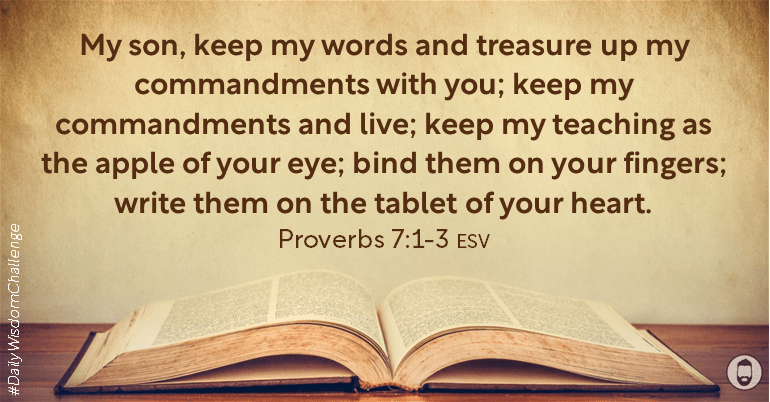







 Just Keith Harris